Thursday, February 18, 2010

229. MUNDKŪR: Obscure pages of history


Mundkur Durga Parameshwari temple celebrates annual car festival this year on 18th February 2010.
A friendly comment by M.A. Acharya, on an earlier rather hastily written post on ‘MunDkūr’ prompts me to add some additional data on the obscure history of this place:
Mundkur [pronounced ‘MunDukoor’] is a large village that can be met on the way from Murukaveri to Belman. Murukaveri is a place name derived from ‘three ‘kayar’. It can be reached either from Kinnigoli or Kateel. Inna hamlet that can be accessed from the Padubidri -Karkal main road constitutes northern part of the Mundkur village.
River Shāmbavi
Mundkur village is located on the bank of River Shāmbavi. River Shāmbavi originates near Saānur and flows westward and meets the Arabian Sea near Mulki town. Hence it is also known as Mulki River. Interestingly, it takes an unusual rectangular U shaped bend south of Mundkur village. This unusual shaped fluvial path has been induced by tectonic movements in the Earth surface.
Origin of the name of the river is not clear. It appears that the name ‘Shāmbavi’ is a variant of ‘Jāmbavi’ the female counterpart of ‘Jāmbava’. The name ‘Jāmbava’ is a Tulu form of ‘Jāmbavantha’, a bear character associated with Sugriva in Ramayana. A bear spirit named Jumādi (or ‘Doomavathi’) is being worshipped in Tulunadu. Thus, the River Shāmbavi has possibly been named after the ancient spirit of the region, Jumādi.
It may be recalled that a river flowing in Kundapur Taluk has been named Varāhi, possibly after the cult of Panjurli, the ancient spirit of a wild boar.
The name Shāmbavi has been considered as an incarnation of Goddess Shakti, but there are no known temples dedicated to the worship of Shāmbavi in the region.
Place-name: Mundkur
The place name Mundkur (munD+kur) has been attributed to one demon called Mundāsura, who was exterminated by Goddess Durga Parameshwari according to the Puranic lores. Apart from this, the place name carries significant vestiges of the early history of Tulunadu. The ancient words ‘mund’ and ‘munDa’ have remained in our vocabulary as a fossils providing evidence to the notion that tribes belonging to Toda and Munda group survived in these region in the past.
Toda mund
The word ‘mund’ represents a hamlet in Toda language. And the word ‘munda’ represents ‘village headman’ in Munda group of languages. The word ‘munda’ (=young man) has also survived in languages like Punjabi.
Toda tribes now live in Niligiri are a hilly tracts of Tamilnadu. It is said they migrated to southern India from the north. Toda tribes used to follow polyandry like Tibetans. Polyandry was followed among certain tribal communities in the past. Mahabharata has documented polyandry among Pandavas, with Draupati being married to five Pandava brothers. Toda were traditionally dairy farmers, closely associated buffaloes and activities. They traditionally live in huts with semicircular to conical roof sloping in either directions.
It appears that Toda tribes lived in Mundkur and Kallamundkur region in the past. There is also another village in the neighborhood known as ‘Todar’, near Mudabidri, distinctly named after Toda tribes.

Toda-Munda
Robert Caldwell and succeeding linguists have classified the language of Toda tribes under Dravidian Group of languages. However, the basic Toda word for house, ‘mund’ and its relation to the word ‘munda’ suggests connection with Munda group. It is possible that some of the tribes and their languages now linguistically classified under Dravidian were formerly members of the older Munda group of langauges.
Mundala tribe
There are several places in the West coast that carry Munda tags such as Mundadi, Mundaje, Mundugodu, Kallamundkur, Hermunde, etc. The ‘Mundāla’ tribes of the Karavali - Tulunadu are the surviving members of the ancient Munda tribes that pervaded large parts of the southern peninsula once upon a time in the antiquity. The Munda Group of Austro-asiatic tribes, are now distributed in parts of Central India like Orissa, Jharkand, Chattisgarh, Madhya Pradesh, apparently were spread all over southern India in the antiquity. Their languages have not been studied in detail. And it is possible that some of the languages presently classified under the Dravidian Group may might actually be evolved remnants of the older Munda group of languages.
Kallamundkur village is located to the south of Mundkur, separated by River Shāmbavi. Apparently, the southern Kalla-mundkur was distinguished from northern Mundkur at a later time. The ‘ kalla’ prefix in Kallamundkur probably refers to the rocky (‘kallu’=stone) outcrops in the area rather than to the kallar/ kannar or kalavar tribes.
‘Kotrupadi’ area, reminiscent of ancient ‘Kotru’ or ‘Koitur’ Gonda tribes , is a hamlet in the northern part of Kallamundkur.

Spatial suffix –kūr
The spatial suffix ‘-kūr’(or -koor) is less common in Tulunadu. It appears it developed as ‘ku’+’oor’ (= good +village). Apart from Mundkūr, we have Nandikūr village towards north. Nandi represents bull.
Some people believe that the name of Bārkūr, a major historical city of Tulunadu was derived from the words ‘bār+kūr’, where bār means paddy. However, analogy of similar place names duplicating along the West coast (such as Kalyana, Uchila, Pandeshwara, Bārke, etc) suggest that Barkur was Barka + oor. Historical reports of Ptolemy ( ca. 150 BC) for example refer to the Gulf of Cutch as Gulf of Baraka. Similarly, the Barkur during the early historical period was located in the gulf or estuary of Seetha and Swarna rivers. The combined river mouth of Seetha -Swarna has been altered during subsequent history. Besides, the estuary of Kudroli -Bokkapatna was known as ‘Barke’. The name Barke near Bokkapatna, Mangalore still exists.
Bellar: White tribes
One of the interesting features in the ancient history of Tulunadu is the documentation of arrival and settling of white races. There is a distinct set of villages carrying names of ‘Bel ‘or ‘Bellar’ (kannada) and ‘’ or ‘Bollar’(Tulu).
Tulunadu There are several villages around Mundkur that carry the names of Bella/Bolla/Vella (=white) tribes. Originally the southern India was a habitat of dark skinned tribes. Fair or white skinned tribes immigrated into these areas at a later period in the history. Village names Belman, Bola, Beluvayi, Balkunje (originally this village might have been known as ‘Belkunje’) and probably also ‘Inna’ suggest the invasion of white skinned tribes. These villages are located on the either periphery of Toda-Munda villages and probably there were historical clashes between the Toda Mundas and Bella tribes, possibly during the early centuries of the Common Era. The clashes have been glorified and reflected in the theme of Devi Mahatme.
Inna
Inna is also a strange name without any appropriate meaning in the native languages. It is possible that ‘Inna’ represents an immigrant tribe from Caucasian/Russian region. Possibly the villages with ‘kencha-‘ (=reddish) prefix also refer to such reddish tanned European immigrated into these areas during the early history.
Gururaja Bhat (2009 edition) has cited the presence of Bellar tribes in Tulunadu and other parts of southern India. He opined that they existed during the Rigveda period. Therefore it may be tentatively proposed that ‘Bellar’ white skinned immigrants entered southern India during the period ca.1200-800 BC.

Durga Parameshwari
The idol of Mundkur Durgadevi temple has been identified as Mahisha Mardini. Durga Devi is known as Durga Parameshwari in the region suggesting supremacy of Shakti cult. (‘Parameshwari’= parama + eshwari=supreme goddess).The idol in the Durga temple is 75cm in height with slim body holding conch (‘shanka’) and wheel (‘chakra’) in upper hands. It has a small crown on the head. The lower left hand is carved showing the act of seizing the tail of ‘Mahisha’ (the buffalo demon)and the lower right hand holds the trident-spear (‘trishula’) vertically slaying the Mahisha.
Based on the sculptural style, the idol has been dated at 6th Century CE. (Murulidhara Upadhya & Narasimha Murthy, 2000).
Mahisha Mardini
Several versions of “Devi Mahatme” puranas, describing the prowess of the goddess Durga Devi are in vogue. Historians believe that the Bhagavathi cult during the waning stages of Buddhism in southern India , probably under the influence of Hindu revivalist sages like Shankaracharya later developed into Durga worship cults in Kerala and Tulunadu. Devi Mahatme envisages several villainous Asura characters like like Chanda, Munda and Mahisha, who were ultimately slained by the Goddess Durga. She acquired the name ‘Mahisha Mardhini’ (mahisha=buffalo, mardhini=slayer) after slaying the Mahisha-asura. ‘Mundkur kshetra Mahatme’, a variant of ‘Devi Mahatme’ envisages that the place name Mundakūr came into being, consequent upon Goddess Durga killing the Asura Munda.
Infact, Asura tribes were one of the members of Munda tribes. Ancient tribes like Munda and Toda , being dairy farmers, held ‘mahisha ‘(=buffalo) in respect. Or in other words, the dairy animal buffalo was representative of the Todas and Mundas.
It appears that the entire concept ‘Devi Mahatme’ (ca. 6 century CE) consisting of extermination of the buffalo- demon (‘Mahishasura’) was probably built on the theme of driving off Toda tribes from the region. Buffaloes were integral part of Toda culture. The ‘Asura’ were also a sub-sect of Munda tribes. And the cult of ‘Mahisha Asura’ probably depicted the villainous elements among the Toda Munda tribes that clashed with Bellar tribes over various socio-political issues, before being driven out of the area.
Todas tribes possibly had evacuated the region (ca. 1-3 century CE) before the creation of the legend. And Mundkur region might have been the original site where the concept poetic theme of buffalo slayer ‘Mahisha Mardini’ in Devi Mahatme was conceived.
The West face: Vāstu
Originally the main entrance to the temple and the idol was built and installed facing towards the West facing the proximal segment of the Shāmbavi River. An old ‘kalyani’ (temple pond) still exists on the Western boundary of the temple, providing substantial evidence to this fact. Later the main entrance and the idol were changed to face the East direction. This appears to be the result of a major shift in the architectural (Vāstu ) concept during this period. The main entrance of many old Shiva/ Durga temples of Karavali like Sharavu (Mangalore), Chitrapura, Bappanadu etc still face Western direction. It is a Vastu concept that the devotee should face eastern direction while praying to the God.This concept might have been initiated on account of Sun worship wherein the devotee to faces Sun in the East direction. Therefore,in the Vastu concept, to enable the devotees to pray towards east the idol and the main entrance are to be placed facing west.
Somehow this concept underwent changes apparently during the eminence of Natha cult.Thus, Mangaladevi temple, Mangalore, has been built with idol and main entrance facing towards East. The Kadri Shiva temple faces north,but the main entrance to the temple premise faces East. Thus, it seems the periodical changes in the Vastu concepts,during the history, prompted alteration in the direction of idol and entrance in the Mundkur Durga temple.
®

Saturday, February 13, 2010

228. Beeri, Kotekar

Many toponym words in Karavali –Tulunadu, as we have discussed in older posts, happen to be inscrutable in general. There is a suburban road junction in southern part of Mangalore along National Highway 17 near Kotekar , called ‘Beeri’. The place name ‘Beeri’ may evoke some random meanings mnemonically based on similar sounding homonyms, in Tulu language!
However, Beeri is an ancient word originating from Munda group of languages. [We have discussed in many of the earlier posts strings of data relating to the relict signatures of Munda tribes and place names in Tulunadu.]
Beeri : the forest
‘Beeri ‘ or ‘bir’ means forest in Munda languages. Mundas tribes have been considered as ancient tribes of Austo-Asiatic origin, who entered India from the south Asian and eastern routes and settled in India in the prehistoric days probably before Dravidians. However, Munda tribes and Mon Khmer Austro Asiatic tribes and languages after their initial separation in Southeast Asia in the antiquity, have evolved independently, possibly owing to the powerful influence of lingual substrata in the lands they settled in. Mon Khmer languages are characterized by rising accent pattern whereas, the Munda languages distinctly show falling accent patterns, like many other Indian languages.(Donegan & Stampe, 1983,2004).
Though, Munda and Mon Khmer have followed linguistically divergent evolutionary paths, a few Munda words can be traced to their Austro-Asiatic roots. ‘Bir’ is one such antique word whose equivalents can be traced in Mon Khmer as well.
Thus, since the toponym ‘Beeri ‘means forest we can conclude that the place was a forest and there were tribes in the area conversant with Munda languages in the antiquity. That Beeri was a forest is also corroborated by the name of the village in the vicinity, Kotekar. The ‘kār’ in this place name ‘Kotekar ‘also signifies a forest.[ The word ‘kote’ may represent :(1) a tribe or (2) a fort. The first meaning suits here]
Biruva: forest tribe
The 'biru'(=bow) was an devise invented in the forest for hunting the wild life.The derived word 'biruve' thus not only means (1) an archer, but also (2) a person from the wilderness or a forest tribe. It is possible that the word 'biruva' might be older than the other equivalent word 'bhil' or 'billava'.This indirectly also purports that 'biruva' tribes were a part of the early Munda tribal groups in Tulunadu.
The Munda tribes are characteristically known to have O2 type of Y-chromosome haplogroups. Thus,when extensive genome data are available on Tulu people,it would be interesting to compare and study the genetic traits of 'biruva' tribes .
Beeri: wild, fire
However, the word ‘beeri’ has been absorbed and adapted by Tulu and other languages in this land. ‘Beeri ‘, subsequently also meant (1) wilderness,(2) forest fire and (3) wild, unbridled temperament. Later, it also meant (4) to catch fire, or get burnt off (5) wild pig (female species), (6) wrath of Spirits [metaphorical forest fire?] (7) to brag and (8) to harass.
From ‘wild unbridled temperament ‘, evolved more refined ‘valiant nature’ and ‘heroism’. Thus, ‘bir’ > evolved to ‘bira’ (hero). (‘Vir ‘ in Tamil and ‘Veer’ in Hindi and Sanskrit). From ‘brag’ evolved ‘flattery’ of the Spirits. (‘Satyolena bira panpini ‘).
GanDu beeri: tomboy
Apparently, the usage of wild female pig has been adopted later in Kannada as ‘ganDu beeri’ , to designate a wild, unbridled girl who behaves like a tomboy.
®

Tuesday, February 2, 2010

227. Tondru adde: another Iddli

Tulu language has several archaic words that are going into oblivion on account of displacement by potent alternate words. ‘Tondru’ is one of such ticklish word, now rarely heard in city areas. It is a special domestic steam boiled dish, similar to ‘Iddli’ in baking technology, prepared during ceremonies such as religious festivals. Nowadays, this word ‘Tondru adde’ is rarely heard except in villages. ['Adde' is a special dish - cake, pudding or steam-baked bread - prepared out of ground rice. Ingredients mixed with rice flour in variety of dishes are black gram, green gram, coconut, jaggery, cucumber of different types, fenugreek (Mente), cardamom, jack fruit, etc.]
Our popular native dishes ‘Iddli and sambhar’ have been globalised and are available in hotels worldwide. It is now a universal name for the dish we know in rural Tulunadu as ‘Tonduru’ or ‘Tondru’.
In fact, there are a variety of traditional of steam baked rice+black gram fermented dishes, that can be branded as precursors of modern iddli, in Tulunadu known under names such as ‘moode’, ‘gunda’,’kottige’ etc.
Sri Krishna Janmashtami
On the birthday of Lord Krishna in the month of August family members in Tulunadu partake this dish accompanied with coconut milk mixed with jaggery, after offering ‘Pooja’ at Tulasi Katte (Tulasi Vrindavana = a decorative pedestal for basil plant), commemorating the birth of Shri Krishna after midnight. Tulasi pedestal (‘Tulsi Katte’) by convention is located at North-East (‘Ishaanya’) corner of every Hindu household. This dish made out of fermented mixture of finely ground rice and black gram is a sumptuous meal. The steam boiled dish remains fresh for 3 to 4 days and is usually made in plenty during festivities. Sometimes, uncontrolled over-eating of this protein rich dish, may lead to unpleasant digestive problems. On account of this, a Tulu proverb is popular in the rural sectors: “Tondru (tindunda) tondare” (=Over eating ‘Tondru’ may lead to problems). There is also another rather sarcastic remark on the abundance of eatables on a festive day:
'Parbodani naayida beelodula adye undu'.(Everyone, including their pet dogs, are tired of eating the abundantly available dishes during festivals . So it is funnily assumed that even sundry dog rolls over special dishes, till it sticks to its tail.)

Etymology
‘Tondru’ is funny to hear and is a ticklish word. Does anyone ever think of finding out the origin of this word?

‘Tondare’ or ‘Tondruda kara’ is a special, circular custom made utensil for steam baking this foodstuff. The utensil is usually made of bronze, copper. Nowadays, it is available in aluminum or stainless steel. Its original predecessor must have be an earthen vessel, as evident by the word ‘kara’ (earthen cooking pot). Preparation takes for two days – first day for grinding rice and black gram (‘Urudu’), mixing rice and black gram pastes and keeping the mixed paste, dough (‘banda’ in Tulu) over night for fermenting. This process is termed as ‘Urugere deepini’(=keeping for fermentation). The fermented dough is steam baked like iddli on next day. These days the fermented paste can be stored in fridge for some more days.

Sondu-tondu
The word ‘tond(e)’ (‘d’ is pronounced as ‘th’ in ‘then’) is ‘to swell, distend, dilate or get swollen due to internal pressure '. The swelling is the outcome of fermentation. The fermented paste is put in circular cups and steam-backed in a round shaped vessel. So the puffed up foodstuff is round. Thus, it means, ‘tond (e) is a puffed up round thing.
On the other hand, reviewing from another angle, the Tulu word ‘sondu’ (=to do a tiresome work’) may be derivatively related to this word ‘tondu’, since preparation of ‘tondru’ is a tiresome job.
Deft words
Note the cleverness of our forefathers in naming the special preparation ‘tondru’. The dish is also available in the alternate name of ‘Iddli’ or ‘Idali’. In an older post we have suggested that the word ‘Iddli’ might have been named after the tribes ‘Iddya’ (also known as ‘Yedeya’), probably the inventors of this dish in the antiquity.

Iddli pun
‘Idu’ in Kannada is to ‘to put in a place’. Final paste is poured in circular bogunis (cups) and these cups are stacked in layers on the perforated circular plate in the aforesaid circular vessel. In Kannada, there is a jocular usage with double meaning: “Nimage (=for you) ondondu (=one by one) kodaliyo, idaliyo (May I ‘give’ or ‘put’, one each)? This normally means, ‘May I give more and more ‘Idli?
However, indirectly, the funny sentence means, ‘Shall I give you a blow’. The words ‘koDu’ (=to give) and ‘iDu’ (=to put in place) are related synonyms. The implied ‘blow’ is an alliterate word.

‘Tonde’, the big or bloated
The meaning: “Big, bloated, swollen, puffed up” in Tonde can be seen in the following Tulu words:

1.‘tonde’ = a kind of fish, which is normally not eaten. It has bellows-type under-belly. When we puff up air, it dilates like a balloon. In ‘ramponi’ type of fishing, this fish is thrown away. Playful children in the beach used to fill air by mouth and throw this bloated fish to water to float.

2. ‘tonde kappe’ =a big-bellied frog. One must have read in school days the story of a bragging frog, which lost its life, on challenge, by puffing up to make it bloat as big as possible.

3. tonde banji: = a big round belly.

Tulu Lexicon and DED too confirm the above meanings. Note the Entries 3507, 3508 and 3516 in DED:
Tamil: Tonti (=large belly), abdomen, fold or collop of fat. Dondi (=big belly).
Malayalam: Tonti (Pot belly).
Tulu: Tonde (=big, distended. Tonde banji (=a big belly).
Telugu: Doddu (=One who is pot bellied).
It seems the Kannada word ‘tonDe kayi’[=manoli, 'finger gourd'] smallish but swollen vegetable,finger gourd, is related in derivation.

Tondarannaya
There is a clan/lineage (bari) name known as Tondarannaya. The surname is possibly initiated after an unusually fat person, but rarely heard these days.

**
‘Tondru’ has remained in rustic Tulu tongue but its taste is relished in its equivalent ‘Iddli’ everywhere. Fried ‘iddli’ tastes still better. Secret! Ask the hotelier

-Hosabettu Vishwanath

Friday, January 29, 2010

226. Tēr, the idol car


The annual car festivals popularly known as ‘Rathotsva’ in the temples of Tulunadu are celebrated with pomp and gaiety. Taking the 'Utsava Moorthy' (=procession idol) of the temple, decked in a chariot, in a procession around temple and bye-lanes of the village provides devotees a better glimpse of the idol of deity, which is otherwise kept inside the sanctum sanctorum of the temple. This has psychological benefits to the devotees as it fills them up with certain positive energy and wards off any untoward fear and ill-omens. Besides, pulling the chariot on the festive occasion gives a psychological relief and satisfaction to devotees.
In Tulu, the temple idol car is known as ‘tēr’. Similar words exist in other sister southern Indian Dravidian languages ( ‘ter’ Tamil and Malayalam, ‘teru’ Kannada and Telugu). It would be interesting to explore the origin of this custom along with the origin of the word.
Structure of Tēr
The temple cars or the idol chariots of Tulunadu typically consist of four large and heavy wooden wheels that carry a superstructure of consisting of a large and massive, wooden circular pedestal that is wider at top and narrows down toward the wheel base. A decorated wooden enclosure (room like built structure) is mounted on the massive pedestal to accommodate the idol and the priests. Above the idol room, a large globular superstructure is built and systematically decorated with uniform sized colored flags. The whole decorated chariot structure readied to roll on the four wooden wheels makes an impressive sight that invokes pious emotions among the devotees, year after year.

The decoration of the ‘superstructure’ with flags etc., seems specific to regions. The famous sculpted rock chariot of Vijayanagar period (14 century CE) at Hampi, Bellary district, for example, does not sport this kind of superstructure. The famous chariots of Lord Jagannath temples of Puri , Orissa have a pyramidal superstructure rather than globular as in the Karavali.
The ‘tēr ‘ festivity associated with Hindu temples, probably evolved during 6th Century CE onwards.
Etymology
Bhadriraju Krishnamurthy (2003) in his famous work “The Dravidian languages”( p.19)reports that “there was no word for cart and a wheel until much later time. In literary languages there was ancient word *tēr ‘chariot’ used on the battle field or as temple car… The word occurs in South Dravidian I and Telugu. The origin of this word is not clear.”
The unclear origin of the word is probably due to clubbing of the words ‘tēr’ and ‘dēr’ together in the Dravidian Etymological Dictionary (DEDR) entry No 3459. The other two related words cited in DEDR [3459] are:
1. Kota word: ‘dēr’= god, possession of a diviner by god. ‘Tēr kārn‘ =‘diviner’.
2. Toda’ tor od ‘(shaman) is dancing and divining.
The confusion apparently is because of unintentional clubbing together of analogous but semantically different words.

Wheels
However, on analysis it appears that the Dravidian word ‘tēr’ could one of the ancient original words for the basic circular structure or the wheels! It could be directly related to one of the Proto-Dravidian (PD) root words, ‘tir’ constructed by Bhadriraju Krishnamurthy (2003).
The word ‘tir’ means to turn, move or change (direction etc).The word ‘tēr’ is a derivative or variant of ‘tir’. Or, the proto word ‘tēr’ may be considered as another PD, related to the PD ‘tir’. There are other derived words in Tulu that attest to the existence of independent word tēr, such as ‘teriya’, ‘teran țe’ etc. Therefore, PD. ‘tēr’=wheel, coil, circular form, revolve, speed off etc.
‘teriya’= a head pad of cloth; a long strip of cloth fashioned into circular ring (equal or smaller than the diameter size of head) to be used as a protective pad for carrying head loads in the past.
teranțe= a millipede, a worm that commonly coils into a circular form on fear.
Besides, the word ‘teraisu’ (=to run away) used in medieval Kannada texts may be cited here.
Divine dēr
The word ‘dēr ‘ as a slang of ‘dever’(= the God), was probably introduced, along with the proliferation of the temple cult. Earlier to introduction of temple cult in Tulunadu, Spirits (known as ‘Satyolu’ or ‘deyyolu’) were the major form of worship. The word ‘deyya’ (Holy Spirit) later got corrupted and acquired the derisive meaning of devil as in Kannada.
The word form ‘dēr ‘cited in DEDR as a Kota word, also exists in Tulu. There are several place names in Tulunadu such as Derlakatte, Derebail etc. 'Dever Kattegu baripini', is the phrase associated with designated 'katte' (a platform of stone around a peepal tree), from where the temple deity idol or a new wooden statue of Maariamma for the annual festival is carried in procession.

In Spirit worship it was customary since ancient days for impersonator of the Spirit to invoke the Spirits on his body. During the transition of religious faiths from Spirit worship to temple cults, the priests had to imitate the shamans act especially during the ceremony of entering the idol car. The temple priest carrying the idol on his head, mildly shivering as if in a state of trance, saunters in dancing steps forward and backward several times in front of chariot and finally climbs the steps and places the idol inside the chariot. Even today this is one of the impressive rather mesmerizing scenarios associated with the festival of temple idol cars.
**
However, the word 'dēr' is not free from overall confusion,since 'dēr'(2, =drive off) can also mean drive away it may represent driving off 'Maari'(contagious disease, notionally) or driving cattle for grazing in a grass field.It seems the dēr2(=drive off) is derived from tēr(=revolve or speed away).

There are two more words related to wheels and carts: banďi and gāďi :

Pandi-bandi
The word ‘Bandi ‘(=cart; Tulu, Kannada, Telugu) or ‘vanti’ (‘Tamil, Malayalam) is said to have been derived from the Sanskrit word ‘bhanda’(=goods) and Prakrit word ’ bhandi’. However, while word ‘banda ‘(= goods) is also available in Tulu (as in ‘banďasāle’), it appears that these could have been derived from or related to an older word ‘pāndi’ (=a large merchant boat, carrying goods). It seems pāndi> bandi. Similar p>b transitions are there, for example, pangala >bangala.
Gāli, gāna
Another old native word for wheel/ cart is ‘gāďi ‘,gāņa’, ‘gāli’,(Tulu Kannada), ‘gāņu’, ‘gālu’(Telugu) or kāl (Tamil). Bhadriraju Krishnamurthy [2003]suggest that the word is related to kāl (leg).
It is here the concept of PD words require reassessment.
We have been suggesting in our earlier posts that many Dravidian words formed or evolved over an older substratum of pre-Dravidian words. We have designated this pre-Dravidian as older Munda substrata. We find several relicts of this older Munda words in many of the Tulunadu place names.
In these many proto-words characteristically had short words with simple CV notation. Some of such preserved short words are na, mi, mu, ku etc. Let us designate them as proto-Munda words.
In this case, the original proto word was ‘ga’(‘ka’ in Tamil) which represented motion , rotation or movement. From the ‘gā’ root, gāli, gāLi, gāna, gādi etc words evolved later on. The same ‘ga’ was also root for Sanskrit ‘gamana’(=attention, movement etc).

-with Hosabettu Vishwanath.
®

Saturday, January 23, 2010

225. Mura, the laterite


Languages, like those of Dravidian Group, are like large botanical farms spread over millions of hectares of land, with lateral variations in morphology.Like farms, the languages also grow and evolve in situ in the region. But the words are like seeds or seedlings.They can be brought from other regions or can be carried to other regions along with the migrants. When we decipher that so and so word may have been brought from an African or other source people jump to negate instantly comparing that the two languages (donor and receipent) are starkly different in terms of linguistic structure and composition.
Like the farms, languages are not static. They evolve over a period of time. History is a prolonged period of time.The past may have been tumultuous periods when one set of well grown languages, due to socio-cultural clashes, were eventually overpowered and modified over a period of time into another set of languages.
East African word
To the list of words derived from African sources, we may add one more word now familiar in Tulu language. In the coastal region laterite is a common occurrence.Most of the area is covered by a hard cap of reddish or brownish rock known as ‘laterite’ and we call it ‘mura’ or murakallu. Murakallu is a familiar soft rock rock that hardens upon exposure to daylight.Murum is used in civil engineering also. While levelling and paving or ashpalting, rubbles are spread and murrum is put over these stone pieces.
It is difficult to estimate the period when the laterite were cut into bricks and used for construction of houses.However, if you see the traditional large axe that is employed to cut the bricks, you may be reminded of the legends of Parasurama.

The laterite in East Africa is known as ‘murrum’ in their language. It is possible that early human migrants carried this word from East Africa to the Tulunadu.
®

Friday, January 22, 2010

224. Mittabāgilu


A panorama of Kudremukh ranges from Mittabagilu area (Photo: Padmashree.)

One of the most enchanting panoramic splendors in the Dakshina Kannada district can be witnessed if you travel from Ujire on the Suria- Mittabāgilu- Didupe road, in the northeastern part of Belthangadi Taluk, bordering Chikmagalur district. You can witness the charming beauty and glory of the southern part of Kudremukh iron ore ranges from Mittabāgilu village.

The simple sounding place name ‘mitta-bāgilu’ is a bit perplexing. Literally, ‘mitta’ (=upper) and ‘bagilu’ (=door) can simply mean upper door. But can a village name be something like ‘upper door’? Did the beauty of the panorama prompted people to describe the village-name as upper door or door to heaven? However, this is not the actual or originally intended meaning of this village!
The village was originally ‘Mitta bāgelu ‘named after ‘Bage+ilu’ or the habitation of ‘Bage’ sect of Munda tribes.
Bage: Munda tribes
The clue to the place name lies in the name of tribes called ‘Bage’. The Bage is a surname among Munda tribes now distributed in parts of central and eastern India. However, the occurrence and distribution of numerous place names after them suggest that these tribes lived in peninsular India including the Karavali during early history.The Puranic names of Bagiratha and River Bagirathi could have direct affinity to the ancient Bage tribes.
 There are several villages and hamlets named after these tribal groups in the Karavali and in the mainland of Karnataka. Bagvādi (Kundapaur Taluk), Bagabila, Kotebagilu (Mangalore taluk), Bagalodi (Bantval Taluk),Bagepalli (Kolar district), Bagalur and Bagalagunte(Bangalore), Bagilakote and Bagevādi (Bijapur distrct) are some examples.
Bagambila
There is a hamlet known as ‘Bagambila’ near Someshwara –Kotekar villages of Mangalore Taluk. This introduces the word ‘bila’(=cavern) used as a spatial attribute in the early history. Similarly there is one ‘Todambila’ ( hamlet of Toda tribes) near Bantval Muda village.
Bagalkote
The place name ‘Bagalkote’possibly has special historical significance. Incidentally, the word ‘Bagal-kote’ mentions location of a fort (‘kote’) of ‘Bage’ tribes! It could also be fusion of two subtribes of Bagelu and Kote. Similar sounding Kote-bagilu is a habitation in Mudabidri town, Mangalore Taluk.This leads us to speculate whether during early historic days, probably pre-Dravidian era, the Bage tribes were ruling in the Bagalkote region.
Bagilthaya, Bhagyantaya
The’ bari’ lineage evidences suggest that with passage of time the ‘Bage’ tribes of Karavali have been assimilated seamlessly into the mainstream of Tulu people. Bagalthaya surname has been preserved in Tulu Brahmin communities. Similarly ‘Bagyantaya’ is a lineage name (‘bari’) among the Bunt- Nadavas of Dakshina Kannada.
®

Wednesday, January 20, 2010

223. Okku in Tulu

The formation of words from a root word is an interesting subject in any language. The simple word 'Okk’ or Okku' in Tulu language (of Pancha Dravida group) is such a root word from which many derivatives and compound words were formed. It is a verb but gives extended meanings in its derivatives. Tulu language has many such words, some of which are losing their usage in present generation, mostly exposed to urban culture.

Okku
'Okku’ or specifically ‘Okkunu', simply means to search, pick up, gather or look up for a thing from a heap or mass. As a corollary, it means digging or scratching soil and shuffling the earth all around aimlessly. For example, fowls, birds and pigs scatter earth with their fork like toes in search of food particles or worms. Picking up nit or lice from the hairs (‘Tare Okkuni’) applies to primates or human being.

Okku/Okkunu' in Tulu also means turning the sides (as in Baru okkuni). Paddy is soaked in water for a day and then boiled. It is then spread over in a court-yard to dry. It was customary to stir up these drying paddy grains every now and then to make it dry completely and fit for pounding in 'Barakalas' (=household pounding places for paddy in the olden days).

There are many sayings and idiomatic usages in Tulu related to 'okku’ or ‘okkuni:

1)'Korila Okkuni tan(na) kaaradite!': Hen too scrabbles earth under it legs only. This means, one strives for one's benefits only, i.e. The selfish nature of beings.

2)'Okkunaatu nakru tikkunda, panjilaa pakka pOvandu' (Means a pig goes on scrambling in one place if it finds more and more earthworms). It can be inferred that howsoever a work is difficult or dangerous, one is not tired of sticking to it if it is profitable.

Okka.1
Okka in general means one or one class. Eg. Okkai (=single handed), Okkannu or Okkanna (=one eye/eyed), Okkatteru (=persons belonging to one community, as is customary to address agriculturists of Tulunadu), Okkoota (=association of people with identical interests or professions), Okkuduve (=only one son), Okkaaru (=one leg), Okkoralu(=with one voice)etc.

Okka 2
Okka 2 means hip, waist or loin. This is a well known Tulu word identified by Michel Witzel in Rigveda to have been borrowed by Sanskrit of early Vedic period . More or less, similar meanings are found in other Dravidian languages.
Some of the derived words in Tulu are noteworthy:
1. Okkanul, Okkaderi: Okkanul means a string or a thin girdle, worn around a waist. With civilization and the development of sense of modesty human beings began to hide their private parts behind bunch of leaves in aboriginal state or later a piece of cloth tied with the help of this thin string. Affluent people started using silver or golden girdles known as ‘okkada nevala’. It was customary for elderly people to give such precious girdles to newly born wards. The traditional loin-cloths, which were common in yester years , naturally minimised the hernia type of problems. These are slowly becoming a thing of the past, with nowadays ’ jungas, briefs and panties taking their place.
Oracle of a Bhuta (Divine spirit) in Spirit worship wears an ornamental girdle, called 'okkaderi' around his waist.

2. Okkada-kuntu: It is a short cloth piece (‘tundu-kuntu’) worn around the waist in earlier years by elderly people in a village. The cloth worn by males was square in size and checquered. At times, they were using it as towel, while bathing in household ponds (These household ponds, dug mainly for watering coconut groves, etc, have disappeared, yielding place to borewells).
3.Tundu-kuntu, forerunner of present day gagras or petticoat, (oblong in shape/size with checks and mostly in red colour) were worn by females, wrapped around waists and downwards upto knee). These were preserver of their chastity and dignity.
There is a funny proverb related to ‘okkada kuntu’ : “ Okkada-kuntu gatti ittunduda, pakkodaye daane malpuve?” (If cloth piece is securely fastened, what can a neighbour do to outrage her modesty?)

At the southern end of Hosabettu village, there was a weaver family, engaged in weaving tundu-kuntu and okkada-kuntu and also cotton blankets. Senior weaver of that family used to vend his wares in the village and in other villages as well. Naughty boys of the village used to tease him by asking: Ireda iruver podepuna kamboli unde? (=Have you a blanket, which can wrap two persons)? He used to retort: “Yes, there is one, which can cover your mother and me (Hna, yanula ninnna appela ottugu podepuna kamboli undu).

4.Okkada panavu
(Money tied near waist). There was a system of father giving pocket money to a bride especially in affluent Bunts families, while she was going to her in-laws' house. She used to tie it in a corner of her saree on the waist. This money comes handy for her to give tips to servants of her in-laws house.
5.Okkada cheela
It is a cotton purse, traditionally stuck near waist by women.

Okku
As said earlier, Okku means 'to scatter earth to find out something'. Plough is used to till a field to grow paddy. Words related to Okku are: okkeltana (agriculture), Okkalige/Okkelme (People engaged traditionally in farming).
There is an 'Okkattur' village near Vitla, Bantval Taluk.

Okkelu, Okkele means a tenant of a farming land. According to the land tenancy system of yester years, a tenant occupies farm house (‘okkeladi’), given by a landlord, tills land and gives an agreed portion of yield to his landlord. Mark the sayings:

(1)Okkelu dani ave; Dani okkelu ave (Tenant may become landlord and landlord may become a tenant by quirk of fate). The acquired and general meaning of the term 'Okkelu' is 'occupier of a tenement', whether owned or rented. 'Il okkelu' = conducting house-warming ceremony before occupying

(2)Unandi brananula, undi okkelayanula kenakodchi: Means 'Do not irritate a starving brahmin and a well-fed farmer'. Brahmins, being Learned in scriptures, are known for cursing and farmers are used as soldiers in off crop-seasons by feudal lords if need arises. Hence these farmers are called as 'Bunts, meaning valiant fighters'.
Orgu
There is one more variant of Okka:
Okku = Orgu > Oggu means 'capable of, compatible, palatable or agreeable.

In a laissez-faire society, group or class of people were following traditional occupations. It was a principle of complete non-interference. This brought forth specialised groups, bound by their own moral rules and rituals. Economy was based on barter system. This can still be observed in Tulunadu by the word 'keka' and 'kekadil', 'kekadangadi'.
'Keka' means an agreement between two (professional) classes to exchange their produce, thus becoming a seller and buyer at the same time. With money unit becoming a means of exchange, supplier of goods becomes seller and one who buys these goods for a fixed price is a buyer. 'Kekadil' means an orally chartered arrangement on faith with the blessings of village divine spirit, to have permanent dealings with assigned houses in a village. This tacit arrangement cannot be transgressed (unless there is a specific permission from a vendor). This system is still current among fisher-women to sell fish bartering it to paddy with assigned houses away from coast.
What we want to stress here how from a root verb 'okku', 'okkelu', and Okkelme have come to stay for the traditional tilling groups, which later on came to be considered as a community, now popularly known as 'Bunts'. Designating communities by professions is a custom, evolved through course of time.

Okku- a slang
There is a naughty slang 'Okku' in a list of Srilankan Tamil slangs. It is swear word, meaning “to have intercourse”. 'Okku' in Tulu means ' to stir up or dig up and
scatter mud. The Srilankan Tamil word has got the acquired meaning of groping or fumbling as in a love-making act.

Dravidian Etymological Dictionary
Dravidian Etymological Dictionary (DED), compiled by T. Burrow & M.B. Emenean, has the following meanings (entries:564,926 and 927)
Tamil: Ukkam (waist), Ukkal (side), Ukklai (the hips), Okkal/Okkalai (hip, side of body).
Malayalam: Ukkam/Ukkal (Middle, hip, side), Okku (hip, loins), Okkil (waist, hip?).
Kodava: Uk (Part of waist-cloth on each hip).
Tulu: Okka (hip, waist)
Sanskrit: Ukha (a particular part of upper leg).
Malayalam: Okkuka (to indent or make furrows)
Prakrit: Okkendi, Okia (a dwelling, residence)
Kannada (Bark.): Okki (to scratch as fowls)
Tulu: Okkuni ((to scratch)
Kor.(T): Ogi (to cut)
Gond (M): Uhcana (To scratch)
Tamil: Ukir (to scratch).
Malayalam: Okkuka (verb) ( Cattle to trample upon sheaves of corn. Noun: Okkal.
Kodava: Ok/Oki (To drive - cattle – round in threshing. Okl (act of threshing one lot of grain completely.
Toda: Wik, Wiky (Bullocks go round in threshng)
*Kannada: Okku (To tread out corn, remove corn from the ears by treading of oxen or thresh with sticks.
*Telugu: Nokku (Verb) (to press, squeeze, pinch. Noun: dent, pressure, squeeze.
(*Note: This usage is in Tulu also).

- Hosabettu Vishwanath.

* *
In summary, we can decipher three root words possibly derived from three different ambient lingual sources:
1. Oku= one. Old form of ‘ek’ (=one).source Prakrit?
2. Okka=waist. Dravidian/Tulu. Early Vedic period. (>1500 BC)
3. Okku =(a) pick up, gather tubers (>3000 BC) . Munda word, later adopted by Dravidian.
Okku= (b) pick up, gather food grains (<.2500 BC).Munda word, later adopted by Dravidian.

Two ‘okku’ usages
Evolution of the two meanings of the ancient Munda word ‘Okku’ are interesting to visualize. Early human tribes, after the hunting stage, resorted to picking and gathering edible tubers from the soils. They applied the word ‘okku’ (as in Tulu) for this process of gathering tubers.In the next stage, especially in the south central peninsular India, they grew pulses like kudu(=horsegram),padengi (=green gram),togori(=redgram) etc.These grains had to be separated from their pods by thrashing on the floor. They re-applied the same word ‘okku’ (as used in Kannada, Telugu etc) for this process of gathering the grains.
Interestingly, the ‘okku’(b) usage is not there in Tulu language. Reason is simple to grasp. While pulses were grown in the Bellary-Andhra region of peninsular India, the same could not be adapted to coastal environs dominated by high rainfall! Rice suitable for high rainfall conditions was not introduced in southern India until ca. 800 BC! Therefore, the coastal tribes had to pursue their ‘okku' (a), tuber gathering habits, till the introduction of rice by the immigrant Tulu Dravidians!
And after the introduction of rice, probably a wooden device known as ‘paDi-manchav’ was also introduced that looked after the process of thrashing the grains.Therefore, the Okku(b) usage was not adopted by the coastal/Tulu tribes.
Okkel
The word Okkel (=farm house)and its equivalents were developed in the due course from the root 'Okku'.
In Tulu : Okkel=Okku+il. (Kannada: ‘Okkalu’)
In Prakrit : Okkiya=Okku+iya ; or Okkendi=Okku+andi.
Therefore, il=iya. . The suffix -iya is Prakrit equivalent of Dravida –il, the house or habitation. Or 'iya' is a variant of 'il'.There are numerous village names in Tulunadu that carry the suffix –iya. (Sullia, Murulia,Sampya etc. cf: Older posts). While Tulu has not taken in ‘Okkiya’ in place of ‘Okkel’, it is astonishing that many places in Tulunadu have spatial suffix of –iya, indicating the dominant influence of Prakrit speakers on Tulunadu during a specific period of time.
Thus we can infer that Prakrit speakers in Tulunadu were not farmers since ‘okkel’ has not changed to ‘Okkiya’! On the other hand, place names ending with –iya suffix connote the domination of Buddhism (who spoke Prakrit or Pali) in Tulunadu possibly during the period 3rd century BC to 4the century CE.

®

Blog Archive

Books for Reference

  • A Comparative Study of Tulu Dialects By Dr. Padmanabha Kekunnaya. Govinda Pai Reserach Centre, UDupi. 1994
  • Koti Chennaya: Janapadiya Adhyayana. By Dr. Vamana Nandavar. Hemanshu Prakashana ,Mangalore.2001.
  • Male kudiyaru. Dr B. A.Viveka Rai and D.Yadupathi Gowda, Mangalore University,1996.
  • Mogaveera Samskriti By Venkataraja Punimchattaya. Karnataka Sahitya Academy.1993.
  • Mugeraru:Jananga Janapada Adhyayana. By Dr Abhaya Kumar Kaukradi.Kannada & Culture Directorate,Bangalore & Karnataka Tulu Academy, Mangalore,1997.
  • Puttubalakeya Pad-danagalu. Ed: Dr B.A.Viveka Rai,Yadupati Gowda and Rajashri, Sri Dharmasthala Manjunatheswara Tulu Peeta. Mangalore University.2004
  • Se'erige. Ed:Dr K.Chinnapa Gowda.Madipu Prakashana,Mangalagangotri,2000.
  • Studies in Tuluva History and Culture.by Dr P Gururaja Bhat (1975).Milagres College,Kallinapur,Udupi.
  • Taulava Sanskriti by Dr.B.A.Viveka Rai, Sahyadri Prakashana,Mysore 1977
  • TuLu naaDu-nuDi By Dr.PalthaDi Ramakrishna Achar, Puttur.
  • TuLu NighanTu. (Editor in Chief: Dr U.P.Upadhyaya, Govinda Pai Research Centre,Udupi. Six volumes. 1988 to 1997
  • Tulu Patero-A Philology & Grammar of Tulu Language by Budhananda Shivalli.2004.Mandira Prakashana Mangalore. p.317. (The book is in Tulu Language using Kannada script)
  • TuLunadina ShasanagaLa Sanskritika Adhyayana. By Shaila T. Verma (2002) Jnanodaya Prakashana,Bangalore, p.304.(Kannada)
  • Tuluvala Baliyendre. Compiled by N.A.Sheenappa Hegde,Polali,Sri Devi Prakashana,Parkala,1929/1999

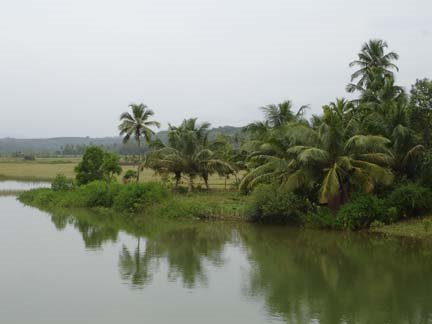
A Coastal estuary

A Coastal estuary
Holegadde near Honavar,Uttara Kannada dist, Karnataka

Copy? Right - but kindly remember to acknowledge!

Creative Commons License
This work is licensed under a Creative Commons Attribution 3.0 License.

" tulu-research.blogspot." ತುಳು ರಿಸರ್ಚ್. ಬ್ಲಾಗ್‌ಸ್ಪಾಟ್‌. ಇನ್

" tulu-research.blogspot."  ತುಳು  ರಿಸರ್ಚ್.  ಬ್ಲಾಗ್‌ಸ್ಪಾಟ್‌. ಇನ್
Have a nice day !