Mangalore has changed immensely during the last five millennia! The city of Mangalore initially evolved as a group of agricultural villages located on ancient river banks some 5000 years ago! The position (flow-paths) of the ancient rivers of Mangalore, have changed with passage of time, but the original agricultural signature villages have remained as fossil place names!
India was populated by early humans migrating since ca.120,000 years according to recent studies. Early pre-history of Mangalore is hazy but it was definitely home for numerous ancient tribal immigrants from Africa, northern India and Austro-Asiatics from Southeast Asia as found and immortalised in the numerous ethnonyms preserved to this date.
Kudla
The familiar Tulu name for Mangalore is ‘Kudla’. Often the name ‘Kudla’ has been confused with ‘Koodla’ (=confluence of rivers). However, the confluence of two rivers that bound the Mangalore city at present, namely Phalguni (Gurupur) and Netravathi, happened only in the year 1887. (Cf: Post 98 in this blog). Before that period the two rivers were flowing independently and not showing any features of confluence! Therfore, the ‘koodla’ or confluence definition for kudla ventured in older posts herein (No16, 17) or other inspired texts requires amendments.
The word ‘Kudla’ (kuD+la) should be understood as agricultural village on river bank. Let us look into this explanation in detail.
Ancient Agricultural phase :(ca.3000 BC-400 BC)
Tulu rural people have a special fascination for the humble horse-gram (‘kuDu’), do you know why? ‘KuDu’ (Tulu) or ‘Huruli’ (Kannada), or the horse gram was the earliest agricultural food crop preferentially grown by our ancestors some 4 to 5 millenia ago as found out by archeo-botanical studies in southern India!
Within Mangalore there are atleast four areas that were formerly (ancient, ca. 3000-1500BC) dedicated to the cultivation of earliest known crop, the horse gram (‘kudu’). Of these, the place names ‘Kudla’ and ‘Kudupu’ are well known.
Ancient Rivers of Mangalore: Phalguni
Geological studies (conducted by our team during the last two decades) evince interesting historical and paleo-geographic data on the rivers of Mangalore. The flow paths (channels) of the two rivers of Mangalore, namely Phalguni (Gurupur) and Netravathi, have continuously changed paths several times during the period of last 10,000 years or more.
One of the interesting aspects of geological and historical data correlation is that the River Phalguni was flowing along what is presently known as Kodialbail (recognisible as a paleo-valley paths), cutting across Mahatma Gandhi Road near TA Pai convention center and flowing across Alake and joined the Sea near Kuduroli. As far as geological evidences for the existence of river channel are concerned, you can see distinct presence of water worn quartz pebbles preserved in the soil zones all along the paleo- river path described above.
The ancient village names actually support the geological findings. The name Kudla suggests agricultural/farm area (kuD) beside a river (‘ala’). Similarly ’Alake’ (Ala+ke) is a village on river bank, ‘ke’ being a spatial suffix of south-east Asian Austro-asiatic origin. Thus we can correlate the time of flow of Phalguni along Kodialbail to the ancient agricultural Kudla phase estimated at ca.3000-2000 BC, based on archeo-botanical studies in southern India.
Further, Kuduroli represents a village (Oli= village) of ‘kuduru’s (=riverine islands). The ‘Kuduroli’ place name may be slightly later in time and coined after the period the river shifted its position northwards from Alake- Kuduroli area.
Kudu, horse gram
Kud (u) =meant agricultural land ( ‘kuDu’, pre-Dravidian word of Munda origin: ku+du, ku=good,prosperous; du=land).Kudu (=horse gram) represented one of the earliest grown and consumed cereal grain in southern India. According to paleo-botanical evidences, Rice, the major food crop of the south, was introduced in southern India probably during ca.800-400 BC period. (Kudugol, Kannada word, is an agricultural/farming, crop cutting sickle.).
Incidentally the equivalent Kannada word ‘huruli’ is a modification of ‘uruli’, where uru=land and uru+li means product of earth. Thus both the words ‘kudu as well as ‘uruli’ reflect the deep respect early farmers had toward the earth.
Kudla= A habitation formed during ‘kudu’ phase. (Kud+la, Kud=agricultural land, la= a habitation beside a flowing stream,river).The word ‘Kudla’ has been also interpreted as kooD+la or confluence of rivers, but the agricultural explanation appears more appropriate because in the original area identified as ‘Kudla’ (or Kodialbail) proper, there is no evidence of any sort of confluence of rivers!
Kudupu= An agricultural (Kudu) village.
Kudthadka (near Bajal) = A field (aDka) dedicated to farming. kuDuta +aDka
Kudpadi (Jeppu)= A shady zone (shrub or tree grown area=’pāDi’) dedicated to Kudu farming.
Almost all these places were originally on the banks of river, now with passage of time most of the rivers have changed their flow paths due to earth movements. KuDupa (=farmer) was one of the ancient proper names among Tulu people.
It can be seen that ‘koDipu’ (=to sprout) evolved from the original word ‘kuDu’. With this, ‘koDi’ and ‘koDa’ place names like Kodipadi, Kodavur etc evolved.
Pre-Dravidian signatures
Kudu place names are not exclusive to Tulunadu. Infact Tulu people have inherited this word from the pre-Dravidian culture of Munda civilization had dominated in southern India, before the advent of Dravidian speakers. Even though there were skirmishes between the Munda aborigines and Dravidian immigrants as testified in 'Devi Mahatme' and other epics of the period, Dravidian culture gradually absorbed essence of of the older Munda language and culture as testified by the presence of older Munda words as well as continuation of Munda place names in Tulunadu and other pats of southern India. As a proof you of pervasive Munda civilization in southern India, you can find kudu place names in other parts of Karnataka and Maharastra such as Kudle, Kudne, Kuditi, Kuditini etc. Besides, ‘Kudubi’ or ‘Kudumbi’ were an ancient agricultural tribes.
Associated Naga cult
One of the possibilities apparent in the analysis of Kudu village names is the growth and association of Naga worship cults along with the Munda agricultural phase. Prehistoric agricultural development in Tulunadu lead to destruction of natural forest areas and the wild serpents began to invade cultivated farm areas. The farming tribes were appalled at the sight of snakes that had magical powers to terminate people by their venomous stings. The early farmer had no other choice but to pray ardently to these serpents for the security of his family and livestock.
The Kudupu village was an ancient centre of Naga worship.(Later it was transformed to centre of Kumara/Skanda worship). The derived word ‘koDapu’ means to sting (like a serpent bite). And the word ‘koDa’ also represented a ‘Naga’ or serpent. A special word in this connection is ‘koDamaNi’ (as found in the name of the Tulu Spirit Kodamanittaya) which possibly represents the ‘Nagamani’ or the mythical gemstone found on the hood of cobra.
®

A heritage blog by: Ravindra Mundkur & Hosabettu Vishwanatha
Sunday, September 26, 2010


Tuesday, September 14, 2010
252. Rediscovering Tulunadu
Strikingly odd conclusions or opinions, which go beyond ordinary understanding of a reader, attract a ridicule or disdain. More often than not, he (reader) is sceptical of the findings. This situation is more pertinent to the Posts, discussing Place-names of Tulunadu in this Blog. These place-names are a sort of riddles, hard to crack. The other day, I confronted Ravi with a teaser on Bijai and Bejja (Post-251). I observed, “Our obsession to ‘African Tribes’ should not be over-emphasised.” His quiet reply was very direct: “Many of the history items are obviously obscure. These aspects are not documented so far totally. I am only to thread through these strings, using logical evidences of migration patterns. I know that you are sceptical of these all. Naturally, anyone should be sceptical to begin with. But what makes a sense is that when deduced strings are logically matching with one another. Alternate explanation, if any, should correlate in space and time, to be realistic.” Yes, Ravi is ‘ploughing a lonely furrow’ when he is not following trodden path.
Evolved Language
It is difficult to sift, weigh and conclude when materials are scattered. These are available in the form of monuments, inscriptions, popular legends, historical writings (genuine or skewed), some loose strands of writings, i.e. superficial data, and fossil/archaic words, traceable in place-names but hinting to some base language, lost, assimilated or forgotten. Origin of such words is not clear. Evocative words or some other links tend to rouse some interest or impulse to search for some long-lost or forgotten materials of history.
Obelisks of Persepolis
Not so long, I chanced to glance through a Book: ‘A History of Babylonia and Assyria’, written in 1900 AD by Roberts William Rogers. He gives a vivid picture of how the strange language(s) used in inscriptions on the Obelisks or Pillars of Persepolis in Persia (erstwhile Iran) are deciphered. This involved several travellers and decipherers, spanning from 14th Century to 19th Century. They are all laymen in history and linguistics. Being ignorant about the history of these pillars, locals engaged in pillage of these structures for building purposes and/or in spoiling the ruins. Noting and observations of way-farers, led the group of learned men to decipher three languages. A simply small note by a European Friar, named Odorific(us), in his Travelogues in 14th C. inspired European travellers and instigated other European States to send ambassadors to Iran. They picked up the thread left by their predecessors. Method used by George F. Grotefend (a German born on June 9, 1775) was ridiculed as unscientific and his decipherment was rejected. Gottingen Academy of Sciences refused to publish his Paper, fearing of risking a bad name. His Paper saw the light of the day with the help of his personal friend A.H.L. Heeren, who published it in his book on Ancient World, as an Appendix. Others who followed Grotefend proved him to be correct.
Tulu Studies
Let the readers know that we are not historians in the real sense, i.e. learned ones, nor linguists. It is our inquisitiveness and interest that drives us to dabble.in the subject. It is for readers to reject or accept the postulations wholly or partially. Indifference by readers is discernible by the negligible comments or feed-backs coming forth. Note how the successive attempts to solve the mystery of inscriptions of Persepolis ruins culminated in adding up ‘materials in a new and substantially correct form’. It is a slow process but aimed at the purpose to leave materials for others to carry forward and improve. Consensus of opinion is possible only when a group of like-minded people – learned or otherwise – work together. The rediscovery of Babylonian and Assyrian languages (considered as ‘wonder of ages’) is made in Iran, away from those Lands. Let us rediscover our Land, called the Tulunadu, mention of which is found in place-names in travelogues of foreigners.
Hosabettu Vishwanath, Pune
13th September, 2010
Evolved Language
It is difficult to sift, weigh and conclude when materials are scattered. These are available in the form of monuments, inscriptions, popular legends, historical writings (genuine or skewed), some loose strands of writings, i.e. superficial data, and fossil/archaic words, traceable in place-names but hinting to some base language, lost, assimilated or forgotten. Origin of such words is not clear. Evocative words or some other links tend to rouse some interest or impulse to search for some long-lost or forgotten materials of history.
Obelisks of Persepolis
Not so long, I chanced to glance through a Book: ‘A History of Babylonia and Assyria’, written in 1900 AD by Roberts William Rogers. He gives a vivid picture of how the strange language(s) used in inscriptions on the Obelisks or Pillars of Persepolis in Persia (erstwhile Iran) are deciphered. This involved several travellers and decipherers, spanning from 14th Century to 19th Century. They are all laymen in history and linguistics. Being ignorant about the history of these pillars, locals engaged in pillage of these structures for building purposes and/or in spoiling the ruins. Noting and observations of way-farers, led the group of learned men to decipher three languages. A simply small note by a European Friar, named Odorific(us), in his Travelogues in 14th C. inspired European travellers and instigated other European States to send ambassadors to Iran. They picked up the thread left by their predecessors. Method used by George F. Grotefend (a German born on June 9, 1775) was ridiculed as unscientific and his decipherment was rejected. Gottingen Academy of Sciences refused to publish his Paper, fearing of risking a bad name. His Paper saw the light of the day with the help of his personal friend A.H.L. Heeren, who published it in his book on Ancient World, as an Appendix. Others who followed Grotefend proved him to be correct.
Tulu Studies
Let the readers know that we are not historians in the real sense, i.e. learned ones, nor linguists. It is our inquisitiveness and interest that drives us to dabble.in the subject. It is for readers to reject or accept the postulations wholly or partially. Indifference by readers is discernible by the negligible comments or feed-backs coming forth. Note how the successive attempts to solve the mystery of inscriptions of Persepolis ruins culminated in adding up ‘materials in a new and substantially correct form’. It is a slow process but aimed at the purpose to leave materials for others to carry forward and improve. Consensus of opinion is possible only when a group of like-minded people – learned or otherwise – work together. The rediscovery of Babylonian and Assyrian languages (considered as ‘wonder of ages’) is made in Iran, away from those Lands. Let us rediscover our Land, called the Tulunadu, mention of which is found in place-names in travelogues of foreigners.
Hosabettu Vishwanath, Pune
13th September, 2010
Thursday, September 2, 2010
251. The ethnic Bijai : Bijapur
The Mangalore city area north of Kodialbail (the original ‘Kudla’) around KSRTC Bus station and Bharath Mall etc is known as ‘Bijai’ area, usually pronounced like ‘bijayi’ or ‘bejayi’. The word ‘bijay’ sounds like Bengali equivalent of ‘vijay’ (= victory) to begin with.
Have you ever wondered about the origin of this place name Bijai?
Bijai
The odd sounding place name can be analysed as Bija+ayi or Beja+ayi, where in ‘ayi ‘means spatial dimension. In general we may assume that ‘bija’ stands for seed or even cashew nut. However, this sounds somewhat mysterious as the rugged topography of the area might neither had represented any agricultural or seed area; nor cashew was documented as an ancient plant in Tulunadu.
Bijadi
There are other places along the coast that carry the ethnic prefix: Bija. For example, Bijadi in coastal Kundapur Taluk, Udupi district.
Bijapur
Other analogous names include Bijapur, Bijayavada (Vijayvada), Bijaynagar (Vijaynagar), etc. While Bijapur again reminds of ‘bija’, the seed, ‘Bijayvada’ or ‘Bijaynagar’ may reminds us of the historical regal battles and victories against their less fortunate foes.
Interestingly, the Bijapur was known as 'Beja-pore' or 'Beja poor' during the British period.
Beja tribes & villages
If you look beyond the bija=seed theory, you shall find that there are numerous villages and towns around the world carrying the name of Beja (or Bija).There is a Beja vllage close to Mangalore,near Manjeshwara, Kerala. Similarly there is another ‘Beja’ village in Ludhiyana district of Punjab.There may be more such villages and hamlets, but these examples in different language zones of India may help us to visualize the regional spread of this particular ethnonym Beja.
Similarly, you shall find villages or towns named Beja (or Bija, Bejai, Bejala, Bejar, Bejak Bejan, Bejaja etc) in diverse countries of the world like Pakistan, Latvia, Laos, Brazil, Guinea Bissau, Portugal , Columbia, Spain and Tunisia. These villages were named after a nomadic pastoral tribes known as ‘Beja’, that originally lived in African zone between Red sea and River Nile , in Sudan to Egypt and migrated during the past history to diverse regions of the world.
According to Encyclopaedia Brittanica the Beja tribes are ca.4000 BC old .They speak Bejawi or Bedawi language, occupy mountain country between Red sea and River Nile.They were archers in historical armies.
These data suggest that these nomadic Beja tribes originally from Sudan Ethiopia and adjoining regions of Africa migrated during the history to different parts of the world including southern India and Tulunadu. It is also possible that these were related to the Beda tribes (Beja>Beda) of India, considering that their language ‘Bejawi’ is also known as ‘Bedawi’.
Beja is also the name of a former princely state and its capital in Himachal Pradesh in northem India.
Beja is also the name of a former princely state and its capital in Himachal Pradesh in northem India.
In Bejja village near Moodambail, Manjeshwara, Kerala, there is a Bejja guttu. The name ‘Bijja’ or ‘Bejja’ also exists as a tribal proper name among Badaga and several other south Indian tribes. Bijja and Bejja surnames still exist in India (and also other countries). ‘Bijjala’ was the name of the Kannada King during the life and times of social reformer Saint Basaveshwara (Basavanna). Similarly, Bijja Mahadevi was the name of a Lingayath nun.
Similarly, the Tulu proper name ‘Becha’ (as in ‘Bechanna’) of yester years appears as a fossil variant of the tribal name Beja. In Orissa, we find proper names like 'Biju' (for example,Biju Patnaik).
In view of these, the Bijai place name of Mangalore or Bijadi of Kundapur or even Bijapur or Vijayavada , like other hosts of 'Beja' village names, may actually represent ancient colonies of Beja tribes in southern India. The ancient Beja tribes that left their signature ethnic names as fossil imprints in our place names, now totally forgotten in our cultures and regions, have obviously been seamlessly assimilated during the history into various Tulu Kannada and other Indian communities.
*
Bejjara = Vajra
A curious endpiece worth pondering over:
H. Vishwanath has pointed out the relevant word ‘Bejjara’. Incidentally, ‘Bajjara’, the Pali /Prakrit word, has been considered as ‘tadbava’ (derivative) of the Sanskrit word ‘Vajra’ (=diamond).
Africa, the original home of Bejja tribes, is also well known for large diamond deposits and mines. One possibility is that the diamond was introduced in India in the antiquity by the Bejja immigrants from Africa. And hence the word ‘ bejj+ara’ ( stone brought by Bejja) might have been coined in the ancient Indian languages like Prakrit or their precursor languages.
In that case, the refined word ‘Vajra’ appears to have been derived from the earlier coined word ‘bajjara’ or ‘bejra’.
H Vishwanath provides some more interesting additions to the meaning and scope of word 'Bejja':
'Bejja' (Sanskrit Vejja) means 'hole'. Bejja localities apparently were in a hole-like or narrow strip of land in between two hills.
Bejjawada (Sanskritised Vijayawada) possibly got its name because of the narrow passage of Krishna river between two hills, forming a bejja, that is is a deep hole-like passage (Ref: Bharatiya Sthalanama Patrike Vol.8, Page 43). 'Potare' in Kannada means a bejja/vejja in a tree.
The other meaning of Bejja is Baidya/Vaidya (Doctor). Baidya was a sect dealing with herbal medicine among the Bhils (>Billava) or Beda tribes. It appears that these tribes were responsible for the introduction and evolution of herbal medicines and Ayurveda in India. The renowned Tulu heroes Koti and Chennaya were born to a lady called ' Devi Baideti' who was proficient in administering herbal medicines.
In Bengali also bejja means a doctor.
®
Friday, August 20, 2010
250. From ‘OLA SAVARI’ to ‘VARASARI’
 |
| A decorated Bhoota (Spirit) with attendants, [Courtesy: :www.Mangalore.com] |
Varasari
‘Varasari’, an antique word in Tulu, was engaging my mind for quite some time.
If one had spent ones childhood in Tulunadu, one would have heard some of the following phrases or idiomatic usages in Tulu language:
1) Admonition from elders: “Mulpa varasari malpochhi, pidayi po_du gobbule” (Meaning: Don’t run here and there nor make noise here. Go and play outside). ‘Varasari ‘here means noisy movements to and fro and in all directions, creating obstruction to elders in doing their work.
2) Unkemptness and disorder: “Illada varasaridu odegula povera aapuji” (Meaning: Things of the house are lying here and there, making the place untidy. Putting them in order takes so much of time that I am not finding time to go out).
3) Disunity in a house: Sentence at point (2) may also mean disunity in a house on account of chaos. Mark this statement: “Illada varasariye muggyuji.” (There is no end to disturbing activities in the house).
Spirit worship
Narrating a nostaliagic childhood episode may not be out of place. I take you way back to about 65 years to Hosabettu, then a sleepy coastal village without much modernity creeping in its stride. The Primary School was nestled between a verdant ‘Bailare’ (a stretch of low-lying, water-logged agricultural land) in the East and greenery all around with cashew, mango, coconut and casuarinas trees. A spacious ‘Goda’ (=gymnasium) – open on all sides - was standing on the North. Teacher (in charge 2 to 3 classes in those days) used take out pupils to this Goda for memorising the Tables, teaching numbers and letters, to be written on sandy surface. When teacher was late or absent from class, children used to play a game, having relevance to Bhoota (Divine Spirit) worship. Hosabettu has a Jarandaya Shrine where a 3-day Nemotsava is taking place in nights, concerning Jarandaya, Jumadi and Banta/Bunta Spirits. Fag end of the annual ceremony, a game is played with ‘Marlu Bhoota’ (In some Temples or Bhoota shrines ball games are played in adjoining agricultural field).
Taking a cue from this game, children used to play a game of ‘Marlu Bhoota’. The boy, who was always made to play the part of ‘Marlu Bhoota’, was Laxman (son of ‘Mulyada Poojari'1 Jannu). A fake impersonator holds a stick or some other twigs, while Other boys act as teasers and tormentors. Leader of the group entreats the Bhoota by saying “Marlu Bhoota pattodu pannaga pattodu, budodu pannaga budodu” (The mad spirit should possess the impersonator when told to do so and leave his body when told to leave). On beating of drums (i.e. brass plates carried to school for midday meal) and shrill music of wind instruments (made of coconut leaves) the impersonator starts to shiver as if he is possessed by the spirit and beats whosoever comes near him for teasing in words and in action, i.e. making fun of the spirit by throwing whatever things comes to hand. This game turns violent when either impersonator or any teaser is badly hurt. When it turns to personal fighting, the spirit is pacified and told to stop manifesting. Movements, shouting, swearing and littering the area with dried coconut or palm leaves, twigs and shreds of roof-tiles bring home the meaning of ‘Varasari’. (Note: In the real ritual, burning torches are used).
Ritualistic Connection
‘Varasari’ is a variant of ‘Ola Savari’ – a terminology connected with ritualistic worship of Divine Spirits of Tulunadu. Tulu Lexicon gives various versions of ‘Olasavari’, such as ‘Olasari, Varasari, Olasaru, O_lasiri (Oolasiri) or Vaalasiri’. It means “A ritual of Bhoota worship in which the Bhoota impersonator goes out of the arena in procession.”
 |
| A decorated Bhoota in trance.(courtesy: www) |
‘Bhootaradhane ’ – an Overview
Bhootaradhane (Divine Spirit Worship) is a time-honoured ritualistic tradition of Brihad Tulunadu spread from Gokarn to Kasaragod (but now limited to Dakshina Kannada and Udupi Districts of Karnataka). Northern parts of Kerala, which includes Kasaragod District, evince Bhootaradhane, in the form of Theyyam.
There is a subtle difference between ritual and religion. Religion is a system of specific beliefs, based on doctrines or theologies, and revelations, involving the worship of supernatural forces or beings. Rites or rituals are a set of symbolic actions, formulated by a religion and/or Religious Gurus (teachers) or by the traditions of an individual family, community or a society, comprising a village or cluster of villages (‘seeme ‘or ‘maagane’s). Religious rites are religion-centric and traditional rituals have landed down from pre-societies, centring around hero-worship; say of Kings and their chieftains after death (Compare this with Paraohs – Priest Kings - of Egypt). These traditional rituals are not falling into any specific religious category.
With Brahmanism taking root in Tulunadu and synchronising with Dravidian cultures, the Bhoota shrines are located inside main Temples of Vedic Gods or vice versa. Being super-natural beings and remaining attendant to main deities, they protect their devotees. Hence there is conceptual statement in Tulu: “Deveregu dooteru, nambina manushyaregu daateru” (=Attendants to God and Benevolent to believing masses). Fear for these Divine Spirits – Upholders of Dharma - is more than that for main deities.
Communities of a region take part in Bhoota rituals, irrespective of religious leanings. All aspects of the life, teachings and after-death-life of great and noble historical figures are represented in these rituals. Their frailties notwithstanding, these legendary figures attained divinity after death. There are several historical figures, such as Chamundi/ Ma(h)ankaldi, Posappe, Panjurli, Maisandaya, Ullaya, Ullalthi, Jarantaya, Jumadi (Dhoomavati), Babbarya (Bobbarya), Vishnumurti, Varte, Kallurti, Kalkuda, Guliga, Koddabbu (Koteda Babbu), Koti & Chennaya (twins), Siri, Abbaga, Daraga, Pilichamnundi, Nandigona and so on. Saga of these heroes are perpetuated in lengthy oral poems, popularly called as PaDdanas, some of which are now documented. These PaDdanas are enacted during annual or specific festivals, called by different names, eg. Kola, (Dharmada) Nema, Tambila, Agelu, Bandi, Jatra, Maime, Mechchi, Kajambu, Jaalata, Kenda Seve, Ottekola, Panarata, etc.
There are some variations in ritualistic actions and text of songs due to regional difference and dearth of traditional singers with full knowledge of these orally handed down epic songs.
There are classified glossary evolved through past and present societies regarding flag-hoisting, special gestures, words for invoking and entreating deities, assurance given by oracles, specific make up and ornamental dress, dances to special music according to the sequence of ritual performance, pompous procession of initiated persons, called Poojaris, and dance performers, along with retinue of high-ranked persons (‘Gurikaras’, i.e. community leaders, and other dignitaries) to the beating of drums and blowing of trumpets and wind pipes.
Purpose of worship
1. Obliging religious and traditional beliefs of individuals, groups or societies, as a mark of respect and submission - an awe-inspired reverence.
2. Satisfying emotional needs during personal discomfitures, fears, and epidemics.
3. Spiritual needs.
4. Social solidarity: It is an occasion to extend and confirm social bonds by sharing common beliefs. It creates and strengthens a sense of group identity.
5. Social justice: Strengthening moral education. Right and wrong deed by an individual, group or a village is decided at the instance of divine spirit with tacit approval/acceptance of main deity of a particular temple.
Ola savari, Olasari to Varasari
Annual rituals ,as aforesaid, last for a day or two or three days, except ‘Deyi Nalike’, as in vogue in region to region. The first day is inauguration by taking ‘Bhandara’ from dedicated store-house and raising the dedicated flag (Kodi eruni). ‘Angana Seve’ (cleaning, decorating the pandol and invoking the deities (Daivas) through initiated persons, called Poojaris. The second or third day is called the ‘Ola Savari’ It is the inter-action of Poojaris and Trance-drama performers (impersonators). Tradition holds that these dance performers are from Nalike, Pambada, Parava, etc. They are artists, fashioned out of customs, to sing and dance according to epic lore and are sustained by Temples, Chieftains, village groups and communities.
‘Deyi Nalike’ is a composite Bhoota ritual in a royal household, or a big family for offering annual oblations for many Bhootas, one after another. This festival lasts for several days with rituals relevant to each and every Bhoota, dance and entertainments.
Invocation stages
There are different stages of invocation of Divine Spirits in these traditional dances. Following will give an idea about this ritual to an outsider.
Osaya Sandi (=Invocatory singing): A particular PadDana (Folk Epic) is sung by the Bhoota impersonator or mostly by his family in front of the idol or mask of the concerned Bhoota in order to invoke a Bhoota. ‘Tembare’ (a small drum) is beaten by Paratti (wife of Parava). There is saying: “Tembare pandavodu paratti, kola kattodu parave (Paratti has to beat the small drum, Parava has to dance). It means, essentially each one has to do his job assigned to him.
Siri singara: Auspicious costume, made of tender leaves of coconut. Leaves (in one piece) are split into thin strings and this piece is wrapped up from waist downwards. There are specific steps for this ‘siri kattuni’ dance with music. Bhoota impersonator goes into trance with this sacred dress. This is called ‘Siri singarada echchi’ (Dance-movements with ‘siri singara’ until being possessed by the particular Spirit).
Gaggarada Echchi: ‘Gaggara’ is a big boat-shaped anklet with jingling bells set inside. ‘Beetal leaf with nut’ is given to impersonator as a mark of permission to wear the ‘gaggara’. This permission is called as ‘gaggarada boolya’. Bhoota impersonators (mostly two – one for main deity and the other for his attendant) make several rounds to and fro, swerving, frolicking and leaping, running and making gestures to assembled dignitaries in front row or seated in assigned structure opposite to the pandol, where masks (muga) of deities are adorned, seeking permission for tying the jingling anklet. They dance according to changing music tunes till getting possessed or going into trance.
Ani kattuni: Ani is a kind of ornamental, halo-like structure made of areca spathes, cloth, tender coconut leaves or metal materials and worn on the back by the Bhoota dancer. Dance with ‘ani’ (crown) is a last leg of awe-inspiring Bhoota dance. There is inter-action with initiated Poojaris, conversation between the possessed impersonator and Gurikaras (in case of family festival, chief householder), show of approval, annoyance by shouting, disapproval by banging the ‘jeetige’(= a torch, made of cloth wrapped round the end of a stick in metal cup and soaked in oil, usually held before the deity or priest) to his chest every now and then, pacification of deity by entreating words (madu panpini) by Gurikaras and dignitaries, representing many castes). There is a pompous and tumultuous procession around the main shrine. There is a ‘badikara bali or badikara paravuni’ dance ritual, involving initiated person (Paatri) holding the ‘badikara’ (= a pot containing auspicious objects) and Bhoota impersonator.
Madipu: Prayer by devotees and enquiry, settlement and assurances by Bhoota impersonator in trance by giving ‘gandha prasada’. After ‘madipu’, Bhandara is taken back to the ear-marked store room.
Conclusion
‘Sari’ means to move. In short, inside and outside to and fro movements of invocated Divine Spirits, with frisking, leaping, swerving, gesturing, etc. to the deafening music of wind instruments and drums are called Olasari and Varsari during Kola or Nema Festival. Pell-mell created is awesome.
Divinity in man is not an accident. It is there during life and after death. The concept of Supreme Soul and ramification of this Soul in all creations of the Universe is a universal truth. This truth has no religion. With simplicity of living, depending on the Nature, man lived as a child of the Nature. With technological developments, man lost his touch with the Nature, thereby separating himself with Divinity. Revelation of one’s true nature comes in one’s life with concentration of thought process, that is ‘Self Enquiry’ – ‘Who am I?’ He becomes a man of God then and there and for ever, with qualities of God himself. This is how tradition of adoring the Divine Spirits has come to stay. Connecting oneself with this Divine Supernatural beings is an expression of humanity, i.e. acceptance of divinity pervading in all human beings. This traditional worship becomes a culture of a society, as is evident in Tulunadu.
Notes:
1.‘Moolyada Pujari means an initiated man in charge of the images or masks (pāpe) of Spirit-Gods, armoury, ornaments and other things. He is entrusted with performing Pooja and maintaining the cleanliness of the Shrine (Daiva Sana) where periodical Kola ceremonies are held.
2. Readers may refer to older Posts No.32 (Origin of animal and spirit worship), 62 (Characterization of spirits of Tulunadu ), 94 (Antiquity of Siri) and 233 (Panjurli).
3. Thanks to Tulu Lexicon for documenting the words, phrases and idioms concerning this ritualistic art-form – Bhootaradhane.
20.08.2010 - H. Vishwanath
Friday, August 6, 2010
249. Origin of Sangam

Do you the know the real origin and meaning of the word Sangam?
The word ‘sangam’ means confluence of rivers in Indian languages. By usage, it also means an association (of people). The Sangam literatures in ancient Tamil have been benchmark documents for Dravidian socio-linguistic studies. The Tamil Sangam literatures were compiled originally by a group of poet-sages like the Vedas.
We have suggested in the previous posts that the immortal Tulu Siri pāDdana were created in the similar fashion by unknown and unsung Tulu Sangam poets. The word Sangam, normally attributed to Sanskrit, is analysed as ‘sam+gam’ or get together.
However, the real origin or source of the word Sangam could be a bit strange! Let us explore!
Migration of tribes
Human evolution and heritage are so obscure and complex that the origin, trail and trace of many of the common words may have been totally forgotten or misunderstood. Scientists have documented that anatomically modern human being originated and evovled in Africa and with passage of time human tribes later migrated to different continents.Migrating tribes from Africa during ca 60,000 years ago appear to be the earliest tribes to settle in southern India. One of the branches of human tribes that settled in East Asian countries known as Austro- Asiatic tribes, in another episode of migration, entered in India from the northeast and settled in different parts of India.
During the prolonged history of human evolution, human tribes settled in various continents developed and evolved independant languages, with the result we have several families of languages at present in the world. It is obvious that the earliest languages must have been simple sounds that evolved more or less independantly and developed grammatical complexities with passage of time.
Many question the basic and established tenets of human migration on the ground that the basic structure of languages in the place of origin and place of settlement are entirely different.It should be realized that many of these diverse sounding languages share common words that point towards common or shared origin of many of these languages.This could have been possible because the ancient words travelled to different continents along with migrating people rather than the languages and their grammatical structures.In some ways it also indirectly explains the resistance of the dominant native tribes vis-a vis invaders and immigrants.
We have explored in previous posts many of the African words surviving in our languages like Tulu as word fossils that document episodes of past history of human immigration. We shall explore some of the Austro-asiatic words that have been seamlessly absorbed in our languages.
Sangabettu to Sankala-kariya
Before we explore the possibe real origin of the common Indian word ‘Sangam’( the confluence of rivers), let us analyse some of the place names that are genetically related to this word such as Sangabettu, Sangolli, Sangli,Sankeshwar, Sankala-kariya etc. Infact there are numerous such village names all over India that carry the mysterious prefix ‘Sang’. (Sangner (Rajastan ), Sangariya (Rajastan), Sangareddy (Andhra Pradesh), Sangameshwar (Maharastra), Sangamner (Maharastra), Sangrur(Punjab) .. etc)
Sangabettu (Bantval taluk, Dakshina Kannada) is a village on the bank of river Phalguni (Gurupur) and is located on the Bantval- Mudabidri connecting road. The ‘bettu’ suffix in Sanga+bettu explains that it is a ‘bettu’ a hilly or elavated terrain.Sang prefix in the Sangabettu reminds us of ancient Buddhist or literary ‘Sangh’s. But also keep in mind the common factor ‘Sang’ in Sangam and Sangabettu.
Sangolli is a village in Belagaum District, Karnataka whereas Sangli is a place in Maharastra. The similar sounding Sangolli (Sang+olli) and Sangli (Sang+ (o)lli> Sangli) appear to be two regional variants of the same toponym, wherein ‘Oli’ or ‘Olli’ means a village.
Sangameshwar (Ratnagiri Dist. Mah) is situated at the confluence of Sonavi and Shastri Rivers.
Sangrur in Sangrur District of Punjab, historically first inhabited by people from Sindh and Baluchistan, supposedly around 2300 BC. However, the present Sangrur City is said to have been founded by one Sanghu, a Jatt, about 400 years ago.
Sangameshwar (Ratnagiri Dist. Mah) is situated at the confluence of Sonavi and Shastri Rivers.
Sangrur in Sangrur District of Punjab, historically first inhabited by people from Sindh and Baluchistan, supposedly around 2300 BC. However, the present Sangrur City is said to have been founded by one Sanghu, a Jatt, about 400 years ago.
Sankala-kariya (Mangalore Taluk, Dakshina Kannada) is a hamlet on the bank of River Shambavi (Mulki) on Kateel-Murukaveri- Mundkur-Belman stretch of road.The suffix ‘kariya’ represents a ferry point, whereas the prefix ‘Sankala’ appears a bit strange since ‘sankala’ means a chain. However after a perspective analysis we feel that this word was originally ‘Sang-kala’ rather than sankala. The word ‘kala’ (pronounced kaLa) means a field or a plot (usually devoted to Spirit worship in the antiquity ) as we seen in numerous place names like Aikala, Bekala,Par(a)kala, Mabukala etc,
The common prefix among the word Sangam and the village names of Sangabettu (Bantval taluk), Sangkala-kariya Mangalore Taluk, Sangolli (Belgaum district) and Sangli (Maharastra) obviously is the word ‘Sang’! And the common natural factor among these words is these are all physiographically related to or proximal to Rivers.
Thus, it is clear that these village names share the (prefix) mysterious word ‘sang’.Besides , all these villages are located on the banks of rivers.
Song, the River!
The mystery ends when you find that the Vietnamese word ‘Song’ means a river*. The original Austro-asiatic word ‘Song‘ has been adapted in India as Sang! It can be recalled that ancient Austro-Asiatic tribes entered India from the North east in the antiquity and with time spread and settled in different parts of India.The Austro-Asiatic word ‘Song’ (=river) has been assimilated seamlessly as ‘sang’ into Indian languages during the historical antiquity.
Sangam
Therefore, it appears that the word Sangam before it was adapted into various Indian languages was originally ‘songam’ or sang+am, the confluence of rivers or simply ‘rivers’ to begin with.
®
*Word Source: Keith Weller Taylor: “The Birth of Vietnam”. Google books.
Saturday, July 24, 2010
248. Delantabettu

Many people based on an indistinct inference of available human genome haplotype studies believe that Dravidians were the aborigines in southern India. This inference also presumes that Dravidian languages existed and evolved in this terrain since the inception of human evolution. However, the existence of records for input of possible ‘foreign’ language elements in the antiquity may have to be considered in the current linguistic and genetic studies.
Delanta-bettu is a rural region near Surathkal and Surinje in Mangalore Taluk. You may be aware that ‘delanta’ (d in de pronounced mild as in English ‘the’) is a not common word in Tulu parlance! The Tulu suffix ‘bettu’ (like Kannada ‘betta’ or Gujarathi ‘bett’) means an elevated or hilly terrain.
There are other similar place names in other areas of Tulunadu like Delantabettu in Bantval Taluk, Delanta-majalu , near Manila, Bantval Taluk and Delantottu.
But what does the word ‘delanta’ means?
De, the body
The available indications suggest that the ancient root word ‘de’ originally meant ‘human body’ or ‘divine person’. It signifies that human body or persona was treated with utmost respect in the ancient days and the demised persons were worshipped in the form of Spirits. Later words ‘deha’ (=body) and ‘deva’ (=god) evolved with time from the original word ‘de’. It is interesting to note that the word ‘deva’ has other two meanings such as (1) body and (2) male genitalia (cf. Tulu Nighantu, p.1650), implying the origin and evolution of this particular word.This also signifies the transition of original Spirit cult to the worship of anthropo-morphic Gods with passage of time.
Thus the old Tulu word ‘dela’ suggests corpse or dead body.The word dela is found in the word ‘dela-gooDu’, which is a traditional decorated structure built at the site of a buried or cremated corpse. It can be understood that these structures (dela gooDu) were built as a symbol of reverence to the departed soul.These can be compared to the ancient cult of construction of elaborated pyramids to house the departed noble persons in Egypt and other countries. Similarly, Tulu words ‘deyyo’ (=Spirit) and later ‘daiva’ (=Spirit, God) evolved from the original ‘de’. In other languages like Kannada, where the cult of Spirit worship took a back seat with passage of time, this was modified to ‘devva’ (=Ghost or apparition).
With passage of time ‘dela’ also meant temple. Evolving Buddhist cults introduced early temples in India in the form of ‘Stoopa’ where mortal remains of Buddha were preserved and sanctified.Thus Buddhists Stoopa were continuation and improvement of the ancient delagoodu concept.Later Hindu temples evolved following the archetechtural styles invented and introduced by the Buddhists.Thus ‘dela’ became ‘degula’, ‘devala’ or ‘devaālaya’ (=temple).
After the word ‘dela’ was adapted to temples (ca. 4-6 Century CE), it appears that the word ‘delanta’ in Old Tulu was used to indicate aspects relating to divinity or worship and and area or zones reserved for priests.Thus ‘agrahara’ areas related to the temple were known as Delanta -majalu, Delanta-bettu, Delant-ottu etc.The 'Delanta bettu' in Tulu is almost equivalent of 'Devara dibba/gudda' in Kannada.
Delanta in Ethiopia
However, the analysis of the word ‘delanta’ as above is not so simple or conclusive. The roots of the core word ‘de’ suggested above, could have been a word originally invented by an early generation of human beings in Africa. Ethiopian region in Africa, where oldest dated human forms were discovered has been considered as the cradle of human species.
Secondly, the word ‘delanta’ as we find in ‘Delantabettu’, like the root word ‘de’, could have been imported to Karavali from Africa along with immigrants during one of the early cycle of human migration from Africa to India. And during the introduction of temple cult period, the pre-existing ancient imported word ‘delanta’ could have been redefined to reflect ‘devanta’ or divine sentiments as per the requirrements of ambient time period.
Delanta is a plateau region or place (name) in Ethiopia Africa known for occurrence of a mineral ‘opal’. There are many people around the globe with a name or surname of ‘Delanta’ or ‘Delante’.
Origin of some of the Tulu words and place names appear mysterious as we delve more deep.However, these mysteries reflect and conform to the overall scheme of human evolution and migration across the continents as accepted currently by the scientists.
®
Saturday, July 10, 2010
247. Mangalore place names
A mini dictionary of place names in and around Mangalore city is provided below alphabetically: Most of these PLACE NAMES have been covered or explained in earlier R POSTS. Alternate possible explanations for the place names are given as (1), (2) etc.
Readers are requested to Check up the list and offer viewpoints wherever they disagree.
Adyapadi= An initial settelement of an unspecified ancient tribes.
Adyar= A field with tree groves. ADi= tree.
Alape, Alupe =A village on the bank of river. Alupe is the original home of Alupa Kings.
Alike= (1) An area on the bank of river (2) An administrative area. (3). A word modified from original ‘Aluve’?
Aluve= An estuary where river joins the Sea.
Attavara= Open area on the other bank of the river.
Baikampadi= A settelment of (1) ‘baikam’ (=beggars) wandering Buddhist monks. Or (2) ‘Baiy’, Baite or ’ Bey sub sect of Munda tribes.
Bajal= A dry area on the river bank.
Bajape=A habitation with dry land (poor water sources) characteristics.
Bijai = An ancient area reserved for Seed (beeja) storage?
Bokkapatna = A port named after Vijaynagar King Bokka.
Bolār= An open field of Bola, white immigrant tribes.
Bolur= A village of Bola, white immigrant tribes
BonDāntila= An habitation of Bond subsect of Munda tribes
Bondel = Originally Bandale, modified by Missionaries.’Bond’ or ‘Bandh’ was a sub sect of Munda tribes.
Derebail =(1) River valley of Dere sect, Dere a sub sect of Munda tribes (2) Devare bail= River valley of Dieties.
Dongarakeri= A colony of Donga subtribes.
Guliga bittil: A colony named after Guliga Spirit. ( This was the old name for the 'old bus stand' area located between Punja Arcade and Bavutagudde (Old light house).)
Gurupur= A village of Gurus (Lingayath preists). 17th CCE.
Hampankatte= A shade under a tree named after a legendary ‘Appanna’ who used to offer water to thiersty travelers.
Hosabettu= A new settlement on a ridge.
Iddya = A village of ‘Ideya’(Yadava) cowherd tribes.
Innoli = (1) A village on the bank of a rough river Netravati. (2) A village of Inna tribes?
Jeppina moger= A river bank where the Netravati river ‘lowered its level’ (ie shifted) during the history.
Kadri= Kadire= (1) A paddy corn distributed during annual agricultural festival. (2) An area legendary for distribution of rice corns.
Kankanadi= A village of Kanka tribes.
Kapikad= A reserved forest (Once upon a time!).
Kannur= (1) A villge of Kanna tribes, (2) An eye shaped island within the Netravati river.
Karangalpadi= A settlement of Karanga (Koranga> Koraga) tribes.
Kavur= A village with reserved, protected groves.(Once upon a time!).
Kinya = (1) An divine African word brought by immigrants, Kin+iya. (2) Small?
Kodikal = A standing pillar like rock on the edge of the village. (Now no longer not exist!)
Kodialbail= The original ‘Kudla’ word has been modified into ‘Kodiyal’.
Kolya= A settelement of Kol tribes.
Konāje= (1) A field (aje) on a corner (‘kona’).(2) A field of buffaloes.
Konchādi= A habitation of Koncha tribes.
Kottara= (1) An open field of Kota or Kotia tribes, or (2) A storage area.
Kudala = (1)An ancient agricultural village on a river bank. (The River has now dried up!). (2) A confluence of two rivers.
Kudroli= Kuduru+Oli. An village on river island. (The old estuary has now been dried up).
Kudumbi-bittil:A colony of Kudumbi tribes.( An area near Phalnir).
Kudupu = An ancient agricultural village.
Kulai= A village with a lake(kula).
Kulshekara= An area named after Alupa King Kulashekara.
Kulur = A village beside a lake (Kula).
Maikala= Mayikala. A town named after an ancient Buddhist temple devoted to Māyi or Mayadevi.
Māladi= A habitation (aDi) of Māle tribes
Mālemar = An agricultural field (mār) of Māle tribes.
Mangala=Later modification (6-9 CCE) of the word, Mangār.
Mangar= (1) An open field of Mang subtribes, or (2) ma+ang+ar= An elevated open field.
Manki= A n village of a) Mang subtribes Mang+ki , or (2) on an elevated area.
Mannagudde = A hill of reddish soils.
Manjanādi= (1) A settlement of Manja tribes (2) A settlement on a elevated land?
Marakada= A river ford beside village of Marava tribes.
Maravur= A village of Marava tribes.
Maroli= A village of Marava tribes.
Mudupu = A reserved village.
Mulur=An ancient village of aboriginal (Moola>. Moolya) tribes.
Naguri= A village named after Nāga (worship) or Nāga tribes.
Nantur= A habitation on a steep cliff.
Neermarga= A road by the side of a river. (The said river is now dried up!)
PachanāDi= A habitation of greenery.
Padavinangadi = An urban area (with shops) on the elevated plateau
Padavu = An elevated lateritic plateau or zone.
PaDavu= A sunken area, formerly occupied by streams.
Padil = An ancient deserted field.
Panambur =A village of Panaba tribes
Pandela= A sea port, a boat yard. Pandi=a large boat.
Pandeshwara =Later modification (6-8 CCE) of the word Pandela.
Parari= A large settlement. Possibly originally it was ‘PerāDi’.
Pavur= A village beside river (Pav=river /flow, a Toda word). (2) A village named after ‘Pāv’ (=snake) or Nāgas?
Permanki= A large habitation of (a) Mang subtribes or (2) on an elevated area.
Phalnir= Pala Neer.Pāl +nir. Old river course.Area where an ancient river (now dried up) in braided form (or split up).
Saravu= A habitation beside a lake (=’Sara’).Now modified to ‘Sharavu’.
Shaktinagar= A colony named after Ramashakti Mission. (ca. 19th CCE)
Shedigudda = A hill of clays.
Surathkal = Rocks (on the beach ) washed by waves.(Originally ‘Toratt-kall’).
Tannirbāvi= A place named after a cool fresh water well on the beach.
Tiruvail= Originally Tiruvoil. An area where the river Gurupur took a sudden shift turn ( An historical incident of change of river course ) .
Tokkottu = A village/settlement (‘ottu’) on a river valley (‘toke’).Toke+ottu.
Tokur= A village on a valley. Toke+uru.
Uchila = A Village named after ‘Uchu’ (=Nāga).Uchu+ila. Ila=house,habitation,settlement.
Ulaibettu= An island with hilly area. [Probably original name ‘Uliya bettu’ has been modified into Ulaibettu. And the river has shifted its path during the course of history.]
Uliya= an island.
Ullal= Ulla +al= river inside the village. [Ula or Ola=interior or linside; ala=water;river. Now the former river inside Ullal town has been dried up.]
Urwa= Uru+va. A settlement of urban land.
Vamanjur= (1) A village named after Vāma or Oma tribes (2) A village of Vāma/ Oma crop?
Yekkur= A village of Yekka .
Yeyyadi = An habitation of Yeya (>.Yeda, Yadava) cowherd tribes.
®
Readers are requested to Check up the list and offer viewpoints wherever they disagree.
Adyapadi= An initial settelement of an unspecified ancient tribes.
Adyar= A field with tree groves. ADi= tree.
Alape, Alupe =A village on the bank of river. Alupe is the original home of Alupa Kings.
Alike= (1) An area on the bank of river (2) An administrative area. (3). A word modified from original ‘Aluve’?
Aluve= An estuary where river joins the Sea.
Attavara= Open area on the other bank of the river.
Baikampadi= A settelment of (1) ‘baikam’ (=beggars) wandering Buddhist monks. Or (2) ‘Baiy’, Baite or ’ Bey sub sect of Munda tribes.
Bajal= A dry area on the river bank.
Bajape=A habitation with dry land (poor water sources) characteristics.
Bijai = An ancient area reserved for Seed (beeja) storage?
Bokkapatna = A port named after Vijaynagar King Bokka.
Bolār= An open field of Bola, white immigrant tribes.
Bolur= A village of Bola, white immigrant tribes
BonDāntila= An habitation of Bond subsect of Munda tribes
Bondel = Originally Bandale, modified by Missionaries.’Bond’ or ‘Bandh’ was a sub sect of Munda tribes.
Derebail =(1) River valley of Dere sect, Dere a sub sect of Munda tribes (2) Devare bail= River valley of Dieties.
Dongarakeri= A colony of Donga subtribes.
Guliga bittil: A colony named after Guliga Spirit. ( This was the old name for the 'old bus stand' area located between Punja Arcade and Bavutagudde (Old light house).)
Gurupur= A village of Gurus (Lingayath preists). 17th CCE.
Hampankatte= A shade under a tree named after a legendary ‘Appanna’ who used to offer water to thiersty travelers.
Hosabettu= A new settlement on a ridge.
Iddya = A village of ‘Ideya’(Yadava) cowherd tribes.
Innoli = (1) A village on the bank of a rough river Netravati. (2) A village of Inna tribes?
Jeppina moger= A river bank where the Netravati river ‘lowered its level’ (ie shifted) during the history.
Kadri= Kadire= (1) A paddy corn distributed during annual agricultural festival. (2) An area legendary for distribution of rice corns.
Kankanadi= A village of Kanka tribes.
Kapikad= A reserved forest (Once upon a time!).
Kannur= (1) A villge of Kanna tribes, (2) An eye shaped island within the Netravati river.
Karangalpadi= A settlement of Karanga (Koranga> Koraga) tribes.
Kavur= A village with reserved, protected groves.(Once upon a time!).
Kinya = (1) An divine African word brought by immigrants, Kin+iya. (2) Small?
Kodikal = A standing pillar like rock on the edge of the village. (Now no longer not exist!)
Kodialbail= The original ‘Kudla’ word has been modified into ‘Kodiyal’.
Kolya= A settelement of Kol tribes.
Konāje= (1) A field (aje) on a corner (‘kona’).(2) A field of buffaloes.
Konchādi= A habitation of Koncha tribes.
Kottara= (1) An open field of Kota or Kotia tribes, or (2) A storage area.
Kudala = (1)An ancient agricultural village on a river bank. (The River has now dried up!). (2) A confluence of two rivers.
Kudroli= Kuduru+Oli. An village on river island. (The old estuary has now been dried up).
Kudumbi-bittil:A colony of Kudumbi tribes.( An area near Phalnir).
Kudupu = An ancient agricultural village.
Kulai= A village with a lake(kula).
Kulshekara= An area named after Alupa King Kulashekara.
Kulur = A village beside a lake (Kula).
Maikala= Mayikala. A town named after an ancient Buddhist temple devoted to Māyi or Mayadevi.
Māladi= A habitation (aDi) of Māle tribes
Mālemar = An agricultural field (mār) of Māle tribes.
Mangala=Later modification (6-9 CCE) of the word, Mangār.
Mangar= (1) An open field of Mang subtribes, or (2) ma+ang+ar= An elevated open field.
Manki= A n village of a) Mang subtribes Mang+ki , or (2) on an elevated area.
Mannagudde = A hill of reddish soils.
Manjanādi= (1) A settlement of Manja tribes (2) A settlement on a elevated land?
Marakada= A river ford beside village of Marava tribes.
Maravur= A village of Marava tribes.
Maroli= A village of Marava tribes.
Mudupu = A reserved village.
Mulur=An ancient village of aboriginal (Moola>. Moolya) tribes.
Naguri= A village named after Nāga (worship) or Nāga tribes.
Nantur= A habitation on a steep cliff.
Neermarga= A road by the side of a river. (The said river is now dried up!)
PachanāDi= A habitation of greenery.
Padavinangadi = An urban area (with shops) on the elevated plateau
Padavu = An elevated lateritic plateau or zone.
PaDavu= A sunken area, formerly occupied by streams.
Padil = An ancient deserted field.
Panambur =A village of Panaba tribes
Pandela= A sea port, a boat yard. Pandi=a large boat.
Pandeshwara =Later modification (6-8 CCE) of the word Pandela.
Parari= A large settlement. Possibly originally it was ‘PerāDi’.
Pavur= A village beside river (Pav=river /flow, a Toda word). (2) A village named after ‘Pāv’ (=snake) or Nāgas?
Permanki= A large habitation of (a) Mang subtribes or (2) on an elevated area.
Phalnir= Pala Neer.Pāl +nir. Old river course.Area where an ancient river (now dried up) in braided form (or split up).
Saravu= A habitation beside a lake (=’Sara’).Now modified to ‘Sharavu’.
Shaktinagar= A colony named after Ramashakti Mission. (ca. 19th CCE)
Shedigudda = A hill of clays.
Surathkal = Rocks (on the beach ) washed by waves.(Originally ‘Toratt-kall’).
Tannirbāvi= A place named after a cool fresh water well on the beach.
Tiruvail= Originally Tiruvoil. An area where the river Gurupur took a sudden shift turn ( An historical incident of change of river course ) .
Tokkottu = A village/settlement (‘ottu’) on a river valley (‘toke’).Toke+ottu.
Tokur= A village on a valley. Toke+uru.
Uchila = A Village named after ‘Uchu’ (=Nāga).Uchu+ila. Ila=house,habitation,settlement.
Ulaibettu= An island with hilly area. [Probably original name ‘Uliya bettu’ has been modified into Ulaibettu. And the river has shifted its path during the course of history.]
Uliya= an island.
Ullal= Ulla +al= river inside the village. [Ula or Ola=interior or linside; ala=water;river. Now the former river inside Ullal town has been dried up.]
Urwa= Uru+va. A settlement of urban land.
Vamanjur= (1) A village named after Vāma or Oma tribes (2) A village of Vāma/ Oma crop?
Yekkur= A village of Yekka .
Yeyyadi = An habitation of Yeya (>.Yeda, Yadava) cowherd tribes.
®
Subscribe to:
Posts (Atom)
A Coastal estuary
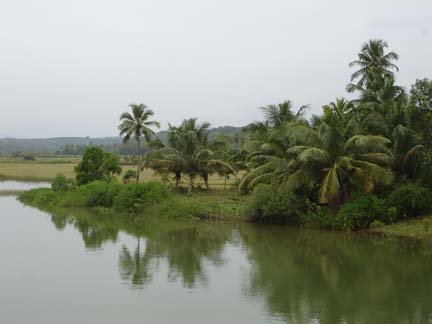
Holegadde near Honavar,Uttara Kannada dist, Karnataka
Copy? Right - but kindly remember to acknowledge!

" tulu-research.blogspot." ತುಳು ರಿಸರ್ಚ್. ಬ್ಲಾಗ್ಸ್ಪಾಟ್. ಇನ್

Have a nice day !