Saturday, May 14, 2011

279. Sorake, Sornadu, Swarga


  While travelling from Vitla to Punacha in Bantval Taluk, Dakshina Kannada, you may find an interesting place name usually written as ‘Swarga’ in the descriptive plate of most of the buses. Swarga means heaven, so a village with such an unusual name is bound to create certain amount of curiosity.
However, analysis of related place names like Sorake (Puttur Taluk), Sornadu (Bantval Taluk) is likely to solve this confusion.The village name Swarga apparently was Soraga to begin with, that was transformed in the due course to Swarga due to enthuasism of Sanskrit word lovers.
Sorake, Soraga
Infact both the place names ‘Sorake’ and ‘Soraga’ mean settlement of an ancient Austro-Asiatic tribe called ‘Sora’ people that inhabited parts of ancient Tulunadu. The suffix ke is suffix of Singapur origin and means a settlement in Austro-Asiatic languages. The suffix, ‘–ga’ common in south Indian place namesd, appears to be an evolved form of suffix ‘ke’.
Thus, Sorake means Sora+ke, the village or settlement (ke) of Sora tribes.
Soraga, the village (‘ga’ ) of Sora tribes.
Sornadu or Soranadu: the nāDu (area) of Sora tribes.
Sora, Sabara tribes
Sora tribe is a subgroup of Austro-Asiatic Munda tribes of India, now predominantly found in parts of Orissa,Madhya Pradesh, Maharastra  and Chattisgarh. Sora tribes are also alternately known as Savara or Sabara tribes.In present day Orissa they usually converse in a dialect known as Kui.
 There are also places in Tulunadu connected with Sabara tribes like Sabara-bail (Bantval taluk). The village Sarapadi in Bantval Taluk could have originally been Sorapadi.Similarly, in Shimoga district ‘Soraba’ is name of a Taluk place.,wherein suffix ‘–ba’ (as in place names Kadaba, Perabe,etc) is a spatial indicator. The Shoranur (or Soranur) town in Palakkad district of Kerala is another place bearing the signature of Sora tribes in Southern India.
The presence of ancient place names like Sorandu, Sorake, Soraga ( Swarga) and Sabara-bail in Tulunadu reveal that these tribes inhabited parts of Tulunadu in the antiquity.
®                                                                                                       

Friday, May 6, 2011

278. ‘Pula’ and ‘Pola’ & their Derivatives


Meanings of words evolve over a period of time from their initial usage to current usage.  Original meanings may eventually become dim and hidden and hence, create confusion. This observation is applicable specifically to South Indian Dravidian words. 

 ‘Pula’ and ‘ Pola’, proto- Dravidian words, used to mean pasturage to cultivation in Dravidian group of languages, bear testimony to development of newer shades of meanings, besides retaining their original meanings to some extent.   In some cases, words are equated to people and their professions.
Comparative meanings are available in the works of linguists, such as Tulu Nighantu (Tulu Lexicon)-1997, Vol. 1 to 6, Rashtrakavi Govind Pai Sanshodhana Kendra, Udupi, Karnataka/India, Dravidian Etymological Dictionary by T. Burrow & M.B. Emeneau and other dictionaries in Kannada, Tamil, Malayalam, Kodagu, Toda, Badaga, Sri Lanka, etc.  Let us study the meanings given by Tulu Lexicon (TL) and DED:
Pula (ಪುಲ) = 1.Field, pasturage, grazing, grazing land, suitable land. 2.Ground, place where child birth has taken place. Pulavadu (ಪುಲವಾಡ್) = Broad area or pasturage. (TL , p.2073, 2147-48). Pulam (=field, rice field), in Tamil and Malayalam. (Derivatives in Tamil: pulan, pullavu = arable land, pulampan = chief or lord of a maritime tract. Originally, pulampan was chief of a village in the maritime tract.) DED 4303.
Pullel (ಪುಲ್ಲೆಲ್) = Increase, abundance.
Poli (ಪೊಲಿ) = 1.Wealth in the form of crops, corn, etc., granary. 2. Interest given in the form of grains for grains borrowed.( An ancient practice of borrowing and returning food grains)
Polisappu (ಪೊಲಿಸಪ್ಪು) = The ancient custom of bringing home leaves  [of Jack, mango, bamboo and tumbe ] ceremoniously along with the spike of corn annually on the first harvesting occasion.
 (Tumbe is a kind of medicinal plant; white Dead Nettle – Phlomes indica, Linn. Labiatae – used as remedy for indigestion, rheumatism, sore, scabs, fainting, etc.).
Polsudi (ಪೊಲ್ಸುಡಿ) = A folk song sung during the time of bringing first harvested crop into a house ‘Poli, poli ‘ is chanted while bringing in new paddy. (cf: Post 206. Poli Poli. Aug 30, 2009).
Pullu (ಪುಲ್ಲು) = 1. Grass, rush . 2. Skin of a cock between feather & flesh. ‘Pul’ means grass in Tamil, Kannada, Tulu, Malayalam, Kota and Toda languages. In Tamil ‘pul’ also means plants of grass family like bamboo or palms (DED 4300). In Sinhalese, ‘pol’ means coconut palm. (cf: TamilNet).
Tolkapiam classifies plants into ‘pul’ and ‘maram’ : All those plants for which the exterior is harder than core are ‘pul’ and all those for which the core is harder than the exterior are ‘maram’ (Tholkaapiam 27: 86-87).
‘Pol’, meant ‘coconut’, in ancient Tulu also.  Consider this word ‘Palembu’ (ಪಾಳೆಮ್ಬು).  It means a spathe or pod of coconut flower.
( We would cut out the dried ‘palembu’ in the shape of a boat. With sails attached to it, we used play in shallow water of sea or else in ponds during our childhood days at native place.)
In Kannada, ‘pulle’ (>.hulle) represents a deer, an animal feeding on grass.
Pulle, pulya= dawn, early morning. Pulle, pullya, pullyakela, pullayakāla (Tulu).  Equivalents: ‘pular’ (Tamil), ‘pularukka’ (Malayalam), ‘pola’ (Kodagu). DED 4305.
Pulli (ಪುಲ್ಲಿ) = 1.Outer leaf of a plant, filament of stamen (DED 256).  2. A grand-child.
Pille (Pulle):  An offshoot from bulbous plants, like plantain; seedling of a paddy plant. (TL, P.2030-31). Phrase: ‘pulle puDavuni’ means sprouting of buds; in a paddy field, it is a picturesque and pleasing sight.
‘Pola’ (>.Hola)’ is a common Dravidian word in Tulu, Kannada, Tamil, Malayalam, Kodagu, etc. ‘Poli’ is a derivative, connected to harvesting activities and it is extensively used in various Tulu phrases, such as :
‘Poli aapuni’ (ಪೊಲಿ ಆಪುನಿ; = attaining prosperity),
 ‘Poli echchi’  (ಪೊಲಿ ಎಚ್ಚಿ) = It is a style of measuring newly harvested paddy with the wish of one measure more, two measure more, etc. instead of straight counting one, two, three and so on),
 ‘Poli barpuni’ (ಪೊಲಿ ಬರ್ಪುಣಿ ) = Increasing agricultural wealth,
 ‘Poli pāDuni’ (ಪೊಲಿಪಾಡುಣಿ) = A magical cult of heaping and sprinkling ashes for safety from insects and thieves, et
In Tulu 'polampuni' meaning is 'to clean, wash, rinse. The term ‘poladavaru’ is applied to people of Gatti community.
‘Polanadu’ means a border or the ridges of rice fields in Malayalam.  ‘Polanadu Kalian’ or ‘Mallan’ is a local deity there. (Gundert’s Malayalam Dictionary ,p.80 , quoted by Gustav Soloman Oppert in his book “On the Origin of Inhabitants of Bharatavarsa or India – The Dravidian”.)
Pola festival
 ‘Pola’ is an important festival of Maharashtra, related to starting of harvest operations.  On this day cattle, especially bullocks, are worshipped.  In Maharashtra and parts of southern India , bullocks are used for ploughing as against male water buffaloes in coastal tracts of India. They are bathed, colourfully decorated, and taken out in a procession with much fanfare to accompaniment of drum-beats and ‘lezhim’ (a jingling instrument made of wood, fitted iron chain full of metallic pieces).  This produces a musical sound in the dance of rhythmic movements.    
Naughty: procreation
In south Indian languages like Kannada ‘pőli’ means naughty or sexy. The word may have strange origin in the antiquity, as we find when  comparing with European equivalent word!
In Romania ‘pola’ means procreative organs like ‘penis’ or ‘vagina’ and hence an offensive swear-word.  The procreation leads to increase in population.  Similarly the Dravidian word ‘poli’, means increment, multiplication, thereby auspiciousness and prosperity.  Linguists are finding influence of Dravidian languages in Mediterranean and European countries.  It is curious to see how the wide meaning of ‘pula’. Romanian word ‘pola’ somehow has been narrowed down only to mean subjugation and procreation. Incidentally, there was a comment on our ‘Post-206: Poli, Poli’ from a Romanian or   Russian reader, touching upon the vulgar aspect of the word pola and poli. 
‘Pola’ is a popular proper name in Western countries.  Pula or Pola is a maritime city of Istria (Austria), a littoral region ruled by Roman and Austro-Hungarian monarch and later on Italy and Germany.  It is located in Adriatic Sea. It will be interesting to note that ‘pula’ has the meaning of ‘raft’, ‘to float’ or ‘ship’ (DED-4321).  In Tulu ‘pulavini’ means to float.  Compare this to ‘plava’ of Sanskrit.
Evolution of words
Human migration for trade and communication and flair for travelling through regions and countries around the Globe have contributed towards migration and exchange of words enriching languages.  A loaned and assimilated word from one language to another undergoes change over a long period of time.  So attaching definite or relevant meaning defies all explanations.  We wish that the nationalistic sentiments, or plain chauvinism, which probably were absent in remote past, now should not play a spoil sport.
-Hosabettu Vishwanath .

Sunday, May 1, 2011

277. Pāvur, Pāvanje

Location map of Pavur, Pavanje and Todar

In a multi-lingual society like ours, tracing origin and meaning of ancient place names can be a complex exercise, often misleading to erroneous conclusions. One has to consider historical perspectives that complement with the logical conclusions, in case the aim of the explorer is to genuinely unravel and understand the course of history.
Let us take the example of two Tulu place names: Pavur and Pavanje.
Pavur
Pavur is a village located on the southern bank of River Netravathi in Mangalore Taluk, Dakshina Kannada. Similarly there is also a village known as 'Pavur' in Kasargod district of Kerala
Most of us, with a  general background knowledge of Kannada, would prefer to conclude that ‘Pavur’ (pāv+ur) is a village of snake, because ‘pāv’ in old Kannada represents a snake. The pāv of old Kannada has become ‘hāv’ or ‘hāvu’ (=snake) in modern Kannada as a consequence of p>h transition. One would normally believe in such an explanation since ancient cult of serpent worship (nāga aradhana) is explicit in Tulunadu.
However, this may not be the real or original meaning of the place designated and meant by our ancestors. First, the word pāv is not generally used in Tulu for snake.

Pāv, the river
The other possible source is the ancient Indiam word ‘pāv’ which means to flow or move.Thus pāv means river in Toda language. There are distinct signatures of existence of Toda tribes in Tulunadu in place names such as Todar.It has been suggested in older posts herein that the water buffaloes in Karvali that became the insignia of Kambala sport of Tulunadu were probably introduced by ancient Toda tribes.

Toda words
It can be inferred from the existence of Toda words that the Toda language was in use in parts of ancient Tulunadu during an unknown but specific time interval in the history of this land.
It can be seen that the root word pāv (=to flow, to move, to change position) has been adapted during the evolutionary history variously into different languages as seen from the following examples:
Pāv= to flow, to move, to creep.
Pāv=river, flowing water. (Toda  language). Compare with pāvana (=to bathe in river; to cleanse, to purify) in Sanskrit. And also ‘pavitra’(Sanskrit) = cleaned.
Pāv= snake , creeping animal. (Kannada language).pāv> hāvu
Pāv=leg or feet, body part used for changing position (Prakrit, Hindi, Konkani languages). Compare with ‘pāda’ (=feet) in Sanskrit.
In present Tulu, the root word ‘pāv’ for river, has not been retained, except in these place names. The equivalent Tulu words, based on flow of water, appear to be ‘par’ (=to drink) and ‘parapu’ (= to flow).
This could serve as an example to show how words preferences and languages change in an area, with socio-cultural evolution and dominance of certain tribes at the expense of others.

Pāvanje & Pāvur
Both of these place names, Pavur and Pavanje are located on the banks of river, justifying the explanation that pāv in these names means river.Thus the logical analysis of these placenames would be:
Pavur= pav+ur: A   village (‘oor’) by the side of river (‘pāv’).
Pavanje=pav+anje: A   land area (‘anje’) beside a river (‘pāv’).
The minor river flowing beside the Pavanje village in northern Mangalore near Surathkal is also known as Pavanje River.


Pavagadh, Pavagad
There are other places in India that carry the fluvial prefix of 'pav', like Pavagadh in Gujarath and Pavagad in Tumkur district of Karnataka.  Gadh, gad= fort. Pavagadh is located close to a river.Similarly Pavagad was on the bank of stream that has dried up in recent years.
®

Tuesday, April 19, 2011

276. Kambala: Kambula


Kambala is a traditional ritualistic sport of Tulunadu, involving race of domesticated water buffaloes in specially prepared slushy fields. Nobody can surely say when this ritual sport was introduced in the history of this land.However the ritual and the sport has been designed to activate and invigorate the buffaloes that take important role in the agriculture as well to prepare the agricultural field for rich harvest, which was considered as wealth and prosperity (‘poli’) in the days of early civilization.
Preparations for  buffaloe race in Kadri Kambala Mangalore, December 2010
It is said that there are more than 200 locations in Tulunadu known for staging buffaloe races in the Kambala fields.Many of these Kambala field areas have become defunct during the course of history but the name Kambala attached to them have survived as toponyms.

Shekar Ajekar has compiled available historical data and calendar of Tulunadu Kambala events in an internet edition (Kannada) in www.ajekar.co.cc.
Pookare
There is a specially decorated post (or pole) erected in the the Kambala fields and it is traditionally known as 'Pookare' kamba, attributed with special magical powers. The pole is decorated usually with flowers or other material such as leaves or  coconut fronds. The post is erected to pray for the proper conduct and success of the Kambala race ceremony as well to ward off evil spirits in the process.In other words, 'pookare' represents  a decorated victory pole. The Pookare post is considered to have special magical powers to ward off evil spirits as well as to increase prosperity of the persons conducting the ceremony.In the olden days,  kings  used send their servants stealthily to steal the famous 'Pookare ' posts belonging to their rivals in order to acquire the the prosperity amassed by the latter.
Kare: Kair , totem tree.
The importance attached to 'Pookare' post suggest that it is a vestige of ancient totemistic  tree worship cult, which latter evolved into totem poles and later into 'pookare' poles. The  memory of  ancient totem tree cult is explicit in the word Poo+kare wherein 'poo' represents the decorated, flowery aspect and 'kare' is a modification of 'kair'  the symbolic  totem or victory tree of many of the ancient  tribes. The word 'kair', of African origin, means victory.It can be noted that the identity of 'kair' tree represented different arboreal species in different tribal cultures: North Indian 'kair' tree was different from Tulunadu 'kayar'. And  among the Munda(la) tribal people (and also Kadambas) 'Kaim' or 'Karm' ( also known as Kadamba.) has been the totem tree. In the last case, note the word analogy between Kair and Kaim/Karm.
Pookare victory poles have evolved along with the civilization and the modified 'pookare' poles in pairs, usually ornate with mango leaves, or with areca-nut fruits were being used  at the entrances for auspicious ceremonies. Similarly, banana plant trunks are used as welcome poles at the entrance to the ceremonial halls.In modern days, multiple  pookare poles decorated with colourful fabric designs coupled with electric lamps are used extensively in modern stage crafts by set designers like Dr Mohan Alva.

Emotion runs high during this event, as is in a 'korikattada kala' (cock fight battle field, a popular pastime in Tulunadu).  It is a game of manliness and grit, besides show of pomp and pride. Procession of participating buffaloes with their owners is a sight to enjoy.To run in a slush is a tough job, that too managing  buffaloes running in different angles or trying to skip the race.


Nowadays, in Kambala races the buffaloes are treated not very harshly, thanks to protests from animal lovers.However, in the olden days, the merciless beating of buffaloes by enraged driver , was a pitiable sight.    Oozing of blood from the body of these animals was paining to see.  There is a saying in Tulu: "ಒಂಜಿ ಕಂಬುಲ ತೂಯೀನಂಡ  ಏಳು ದೀಪ ತೂವೋಡ್ಗೆ" (Onji kambula tuuyinanduda eelu deepa tuvodge! - meaning: If you see a 'Kambula' event, you have to see seven earthen lamps, obviously, lit before a God's temple and home temple. This wise saying might have originated from the belief that it is considered a sin to see the inhuman treatment meted out  to these mute animals. 
Origin of the word: Kambala
What does the word Kambala signifies? Does it refer to the sport, the agricultural field or the buffaloe race? Let us analyse the word Kambala.
Kambala (Kannada) is popularly known as ‘Kambula’ or ‘Kambola’ in Tulu.
Kambola= kan + pola. (p>b transition occurs while the two words fuse together).
Kan= soft, tender, good, appropriate etc.
Pola=agricultural field.
Thus, ‘Poli’= agricultural produce. Agricultural produce was equated with wealth and proseperity in those days.
Kan: The ancient word ‘kan’ may appear strange to some readers. The word ‘kan’ has survived in modern Tulu in words like ‘kanni’ which also means soft, tender, young or virgin. The Tulu word ‘kanda’ has been explained as soft or good and appropriate area (kan+Da) for agriculture. The word kanda adapted into Sanskrit aquirred meanings such as a piece or piece of land or an expanse of land (=continent) in due course.The word ‘kanni-ponnu’ refers to virgin girl. The word ‘kanni-panti’ means tender grass.
It can be seen that the word 'kanni' ( as in kanni-ponnu) has been adapted into Sanskrit as 'kanya', the virgin.
Similarly, kaNNu (=eye), kan+nu represents delicate organ in the body.
Kannada: Incidentally the word Kannada may be explained as kan+naDa or soft agricultural land, wherein the adjective soft alludes to the black soil that is found expansively in northern Karnataka where Kannada was groomed during the early history.
Therefore, the word Kambola or Kambula refers to soft slushy field prepared for the sport of buffaloe race. Further, the essential sequence of the evolution of this word might have been   like this:
Kampola.>Kambola.> Kambula .> Kambala.>Kambla.

Kampa

 Some people have tried to explain the origin of the word Kambala as derived from 'kampa-kala '. or kampa+ala. In fact, the word 'Kampa'  is genetically related to 'Kambala'. 'Kampa' or 'gampa' also means slushy, muddy field. The origin of the word Kampa is kan+pa, wherein 'kan-' represents soft or slushy and  the suffix  '-pa' represents an areal attribute. (For examples of usage of '-pa' as spatial suffix, check place names like Bajape, Alape, Didupe, etc).

Kamba-ala
Vishwanath suggests that there is one more angle to look at the etymology of 'Kambla'.  Consider: Kamba (a Post or Pole with 'Nishana' (Aiming Point by means of a banner or flag) for judging height )+ la (water, i.e. water spurt during race by different buffalo pairs). 
 Poles are planted somewhere in middle of the race track length.  These poles on either sides are connected with a rope with buntings or flag. This 'nishana' is meant for pairs of buffaloes tied down with a 'palayi' (wooden pane) with holes.  The driver of buffaloes thumps as hard as possible on this pane when he nears the 'nishana'.  Water spurts so high but may not reach the mark.  One who reaches the mark early is declared a winner.  Race of buffaloes without the panes is judged by the speed.


-With Hosabettu Vishwanath.
®

Sunday, April 17, 2011

275. Geography in Puranas : Concept of Continents


Place names reflect to physical divisions of a land, mostly surrounded by a water-body.  This is revealed in toponymic studies of any region. While delving into Tulu studies, one is confronted by place names, like Khandige, Kandevu, Kandy, Kanda, etc. Similar place names also exist all over India and elsewhere outside India. These names remind one to the basic truth of geographical division of land, meeting different factors, such as ethnography, topography, profession and polity. Readers may recall the legend of ‘Kandevu’ in Post- 110 (April 20, 2008) on Mukka.
Cosmogony
Indian theological concept of the Universe revolves around   such divisions.  These divisions are mostly seen as physical ones, i.e. geographical.  In a mystic thinking, it is understood on spiritual planes as is conveyed by Indian Puranas (Historical Scriptures).  So this division could be related to   either terrestrial or astral matter.
When we talk about our Universe, i.e. a cluster of stars and planets in our Milky Way, we come across Earth Planet (Dharani Mandala), the Planet we live in.  Earth Planet is divided into seven divisions, known as ‘Khandas’ (Continents).  In Indian Scriptures, they are described as ‘Dwipas’ (Islands).
Sapta Dwipas (Seven Islands)
Vishnu Purana gives a vivid description of formation of Seven Islands of the Earth, ruled by Priyavrata, son of Swayambhuva Manu.  According to the Puranas, dwipas also refer to the seven continents of the Universe. 
Priyavrata had ten illustrious sons, besides daughters.  Three sons, namely Medha, Agnivahu and Putra, fully devoted to religious life, gave up worldly pleasures.   So kingship of these seven islands is distributed among his remaining seven sons. Their progenies ruled this Earth for 71 Cycles.
1.       Jambu Dwipa (ruled by Agnidhara), so named as Jambu (Rose Apple) trees grow in plenty there.  Area: Hundred thousand yojanas (1 Yojana = 15 Km approx.  Earth occupies 50 Crore Yojanas).
-          Surrounded by Lavana Samudra (Sea of Salt).
2.       Plaksha Dwipa (ruled by Medhathiti), so called as fig trees grow on it.  Area: Twice the size of Jambu. Worship the Moon. Inhabitants:  Aryakas and other castes
-          Surrounded by sea of Molasses (Ikshu Samudra). This is encircled by Shalmali Dwipa.
3.       Shalmali Dwipa (ruled by Vapushmat) so called because Silk Cotton (Shalmali) trees grow there.  There are seven divisions, taking names of 7 sons of Vapushmat (Sweta, Harita, Jimuta, Rohita, Vaidyuta, Manasa, and Suprabha).  Seven mountain ranges, four castes, seven rivers, capable of removing of all sins of people.
-          Surrounded by Suroda (Wine) Ocean
4.       Kusha Dwipa (ruled by Jyotishmat) so called as Kush grass grows there.  4 Castes, 7 seas, 7 continents
-          Surrounded by Ghrita Sea (Ocean of Clarified Butter), which is surrounded by Krauncha Dwipa.
5.       Krauncha Dwipa (ruled by Dyutiman), twice the size of Kusha Dwipa, seven Varshas (Divisions), named after seven sons of Dyutiman, King of Krauncha.  People are free from fear, live along with celestials.  In this Continent, the Brahamanas, the Kshatriyas, the Vaishyas and the Shudra are known as Pushkaras, Pushkalas, Dhanyas and Tishyas respectively.  Along with the 7 important rivers, there are number of small rivers.  Here Great Janardana is worshipped in the form of Rudra. (Krauncha means heron).
-          Surrounded by the Sea of Curd.  Sea of Curd is encircled by Shaka Dwipa.
6.       Shaka Dwipa (ruled by Bhavya), so called as Shaka (Teak) trees grow there.  There are 7 boundary mountains (Meru*, Malaya, Jaladhara, Raivata, Syama, Dugdasata and Kesara), which are excellent and charming.  There is a large teak tree, which is frequented by Siddhas and Gandharvas. The four castes present there are Mriga (Brahamana), Magadha (Kshatriya), Manasa (Vaishya) and Mandaga (Shudra). Shaka Dwipi Brahamans are worshippers of the Sun.  They migrated to Gujarat and Bihar (Magadha).  They are also known as Maga Brahamanas.
-          Shaka Dwipa is surrounded by the Sea of Milk (Kshiroda) on all sides, which is surrounded by Pushkara Dwipa on all sides.
-          *Note: Meru is identified with ‘Meroe’ of Sudan, or a primeval Meroe that was lost (Refer web page  ‘Shaka Dwipa in Matya Purana).
7.       Pushkara Dwipa, ruled by Savala (Savana?), Twice  the size of Shaka Dwipa. Nyagroda  (Fiscus indica) tree grows here.   Only one mighty range of Manasottara, which runs in a circular direction like an armlet. Mountain is 5000 Yojanas in height and the same in breadth – circular on all sides.  People here live for 10,000 years free from disease, sorrow, anger, and jealousy.  There is neither virtue nor vice, no jealousy, envy, fear, hatred, malice nor any moral delinquency.  The Varsha on the outside of Manasottara is called Mahavira and the one inside is called Dhataka. They are frequented by the celestials and Danavas.  In Pushkara Dwipa, there is no distinction of caste or order.  The people lived here do not perform any rites and the three Vedas, the Puranas, Ethics, Polity and laws of services are completely unknown.
-          This Dwipa is encircled by Syaduka Sea, i.e. Sea of Fresh Water.
In conclusion, we can say that the seven insular Continents are encircled by 7 seas and each ocean and island is twice the size of that which precedes it.  The water in all these oceans remains the same at all seasons, excepting dilations due to heat.  Food in Pushkara Dwipa is produced spontaneously and people there enjoy life.
Relevance of Pauranic (scriptural) Geographical System
Identification of these Sapta Dwipas (7 Continents) is conceivable but it is subjective and hence at variance.  Col. Wilfred has supposed these Dwipas as: (1) Jambhu – India, (2) Kusha – Kush of the scriptures or the countries between Mesopotamia and India, (3) Plaksha – Asia Minor, (4) Shalmali – Eastern Europe, (5) Krauncha – Germany, (6) Shaka – the British Isles and (7) Pushkara – Iceland.
The learned Narayan A. Bangera identifies them  (Ref:  Mogaveera Monthly – August 2010 Issue in his Exposition of ‘Kanakadasara Hari Bhakti Sara) as under:
Plaksha  -  South America, Pushkara – North America, Krauncha – Africa, Jambu – Asia including Bharat Varsha, Shaka – Europe, Shalmali – Australia, Kusha – Oceanea (i.e. several Pacific Ocean Islands, New Zealand, Melanesia, etc.)
Patala Khand (Subterranean region)
Thus, Parashara Muni explained to Maitreya the extent of surface of the Earth.  He further explained the depth below the surface, which is supposedly 70,000 Yojanas.  Each of the seven regions of Patala (Nether region) is called Atala, Vitala, Nitala, Gabhasmat, Mahatala, Sutala and Patala.  In the Bhagavat and Padma Purana, they are mentioned as Atala, Vitala, Sutala, Talatala, Mahatala, Rasatala and Patala.  These regions are inhabited by Danavas, Daityas, Yakshas and Great Snake Gods.  They lived delightfully in stately palaces.  The pomp and pleasure in Patala Lokas was more than that in the Heaven.  Swayamprabha Lambaka section in Brihat Katha tells stories of adventures of mortal heroes with the Naga Kanyas (Snake Nymphs).
Primordial Truth
These data, collected by us, are from Indian religious scriptures.  These religious writings of sages of par excellence are sacred truths, hidden in allegories.  Enlightened souls of sages of yore could concentrate, contemplate and enjoy the unknown mysteries of the Universe.  Theories of these sages at different ages may vary here and there but the fundamental truth remains the same.  These truths dawn upon the receptive minds of modern scientists. This unfolding, more often than not, is a mere accident.  This confirms the affinity of souls of mystics of the epic days to souls of all ages to come.  Super natural truths transcend through ages, thus confirming universal brotherhood.  Truth, trickled down orally and spread in various tongues, was encapsulated in Vedas and their branches from time to time.  Migration and communication skills of those days were instrumental in spread of knowledge – both spiritual and worldly.
- Hosabettu Vishwanath, Pune.

Saturday, April 16, 2011

274. Kata and Kandiya


Apart from the ancient spirit Gods like Kapri and Kuti, we discussed in previous post, there were lesser known Spirit Gods in ancient Tulunadu like Kata and Kandiya.  Ramappa Vormika, a traditional Shanobogue working in the Kundapur area during the British administration of Kanara territories in a report dating back to 1819 mentioned Kata and Kandiya forms of worship among the aboriginal tribes of Karavali.


Kata
Kata is a Spirit God worshipped since antiquity by Koraga tribes of Tulunadu. Like most of the primitive Spirit Gods of this land, Kata is represented by a simple piece of stone, placed usually on a pedestal, under a tree. The Koraga word 'kata' has also found place in Tamil, wherein 'Katavul' means God.However, it seems the word is missing in modern Tulu.
Very little is known at present about the origin or evolution of the cult of Spirit known as Kata.  The Koraga people also refer to 'marathadithaaye' (literally, the spirit under the tree). Places like Kata-pādi, spread in different parts of southern India,inclusive of Tulunadu, [example, (a) near Udupi and (b) near Chennai] could have been the ancient places dedicated to the cult of ancient Spirit God known as Kata.

Kandiya
The Spirit God Kandiya apparently was worshipped by ancient agricultural communities since the word   ‘kanDa’ represents an agricultural land in Tulu. Kandiya is said to have been the Spirit God worshipped by non-Koraga communities.
The origin of the word ‘kanDa’ is interesting. The Munda word ‘kan+Da’ means good land. (Kan=good, Da=land, area). The word ‘kanDa’ has been adopted in Sanskrit as (1) a   piece (of land) or (2) a continent.
Kandiya or Khandiya has evolved into several later forms like Kandevu and Khandoba. Ancient places of Khandiya worship were apparently known as Khandige. There are numerous places hamlets known as 'Kandige' in different parts of Tulunadu.
In northern Karnataka, Khandoba is popular as a Spirit God  depicted astride on a horse like the Bermer Spirit of Tulunadu.
Kandevu appears to be the old name for places now usually referred to as Kandige or Khandige. Kandevu ancient spirit worship with passage of time has apparently been replaced by subsequent and current forms of worship.
Kandevi was a form of tribal language akin to Paisachi-Prakrit and it gradually evolved into present form of  Konkani.

Kandiya was also the old name for a Greek port known presently as   Heraklion. It was founded in the 9th century   and was the capital of Crete until 1841.

®

Sunday, April 10, 2011

273. Kaprigudda, Mangalore


With regard to ancient place names handed over to us by our forefathers, we normally accept   them without questioning. We generally do not bother ourselves over their meaning, antiquity or origin. Or if we do not like just change them or replace them with some modern stylish sounding alternate place name. Infact, some of these place names are windows to the past and serve as fossil clues to a bygone dark era in the past history of this land.
One such strange placename in Mangalore city is Kaprigudda! It is another positive clue in understanding   the migration of ancient tribes from Africa to India in the remote past and concomitant transfer of their cults and beliefs.
Kaprigudda
Kaprigudda is a residential area east of Attavar or south of Phalnir, more or less corresponding with western part of Highlands. It is usually pronounced as ‘Kyāpri-guDDa’ If you ask someone aound in the area, regarding the meaning or origin of the word ‘Kyāpri’ you may not possibly get any positive answers! Capri is a common surname among Western people, so one of the possibilities   is that it was named after some special person called Capri.  Capri is also an island near Naples, Italy.But there is another clue that leads us to ancient cult of Kepheri prevalent in Egypt and surrounding African countries.
Kapri God
One interesting data recently reported in Kannada TV channels was that fishermen of Karwar were offering seasonal prayers to one ‘Kyapri devaru’ or Kapri God!
Kapri is an ancient Spirit God among coastal tribes of Karavali. The cult is still prevalent in parts of Karawar and surrounding areas. Fishermen, especially from Gaabid sect, in these areas look for the blessings of Spirit God Kapri. Generally, they offer liquor in a coconut shell bowl and lighted aroma sticks (agrabathi) to appease the Spirit that is said to wander in their wards like an old man during night times.
Apart from Kapri some of these tribes also worship a Spirit God called Kuti.
Kapri surname
Kapri is also a surname among Gorkha tribes of Nepal. The ethnonym could have been acquired from ancient migrant tribes from Africa. Bishnu Kapri, a gorkha Nepali, settled in US hosts a  ’ Kapri samaj’ page in facebok.
Kapra-Kampra
Kapra or Kaapira was also a common proper name among Tulu people. Another related proper name was Kampra or Kampara. There is a place known as Kapra-majalu near Vitla and a Kampra-bail in Bantval Taluk. Therefore the cult of Kapra or Kampara was not restricted to the Coastal track alone. Kampara is also a place in Uganda, Africa. These data suggest that Kapra and Kampra were ancient ethnonyms of African origin.

Khepri : An Egyptian God
Khepri is an ancient Egyptian God (the concept dating back to ca 2500 BC) , representing a giant Scarab beetle that can roll the Sun like a ball through the sky each morning so that it becomes morning and roll back into underworld in the evening so that the world embraces darkness! The God Khepri also known as Chepri, kheper, khepera or Kehperi etc was considered as a God of resurrection, overseeing the cycle of life and death. The emblem of Egyptian Khepri God, shows a winged Scarab beetle carrying red sun.
Migration

View of the foregoing discussion, one of the strong possibilities is that the Kapri-gudda near Attavar, Mangalore, might have been named after the Spirit God Kapri (Khepri) by some of the early African tribal settlers in this part of Mangalore. The existence of cults of Kapri Spirit God (though modified through centuries of influence of other cults of Hinduism) in Karawar area serves as a clue for further research in this dark pages of early history and civilization.
Ω
Acknowledgement: 1.Shri Vishnu Bovi for discussion on Kapri devaru of Karavar.
2.Shri Kawdoor Narayan Shetty. 


-With H Vishwanath.

®

Blog Archive

Books for Reference

  • A Comparative Study of Tulu Dialects By Dr. Padmanabha Kekunnaya. Govinda Pai Reserach Centre, UDupi. 1994
  • Koti Chennaya: Janapadiya Adhyayana. By Dr. Vamana Nandavar. Hemanshu Prakashana ,Mangalore.2001.
  • Male kudiyaru. Dr B. A.Viveka Rai and D.Yadupathi Gowda, Mangalore University,1996.
  • Mogaveera Samskriti By Venkataraja Punimchattaya. Karnataka Sahitya Academy.1993.
  • Mugeraru:Jananga Janapada Adhyayana. By Dr Abhaya Kumar Kaukradi.Kannada & Culture Directorate,Bangalore & Karnataka Tulu Academy, Mangalore,1997.
  • Puttubalakeya Pad-danagalu. Ed: Dr B.A.Viveka Rai,Yadupati Gowda and Rajashri, Sri Dharmasthala Manjunatheswara Tulu Peeta. Mangalore University.2004
  • Se'erige. Ed:Dr K.Chinnapa Gowda.Madipu Prakashana,Mangalagangotri,2000.
  • Studies in Tuluva History and Culture.by Dr P Gururaja Bhat (1975).Milagres College,Kallinapur,Udupi.
  • Taulava Sanskriti by Dr.B.A.Viveka Rai, Sahyadri Prakashana,Mysore 1977
  • TuLu naaDu-nuDi By Dr.PalthaDi Ramakrishna Achar, Puttur.
  • TuLu NighanTu. (Editor in Chief: Dr U.P.Upadhyaya, Govinda Pai Research Centre,Udupi. Six volumes. 1988 to 1997
  • Tulu Patero-A Philology & Grammar of Tulu Language by Budhananda Shivalli.2004.Mandira Prakashana Mangalore. p.317. (The book is in Tulu Language using Kannada script)
  • TuLunadina ShasanagaLa Sanskritika Adhyayana. By Shaila T. Verma (2002) Jnanodaya Prakashana,Bangalore, p.304.(Kannada)
  • Tuluvala Baliyendre. Compiled by N.A.Sheenappa Hegde,Polali,Sri Devi Prakashana,Parkala,1929/1999

A Coastal estuary

A Coastal estuary
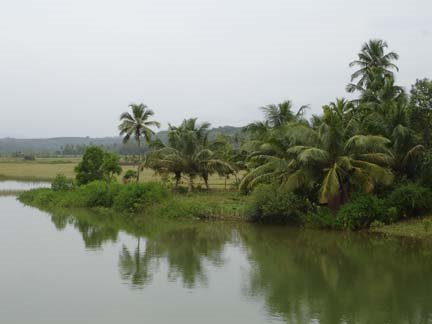
Holegadde near Honavar,Uttara Kannada dist, Karnataka

Copy? Right - but kindly remember to acknowledge!

Creative Commons License
This work is licensed under a Creative Commons Attribution 3.0 License.

" tulu-research.blogspot." ತುಳು ರಿಸರ್ಚ್. ಬ್ಲಾಗ್‌ಸ್ಪಾಟ್‌. ಇನ್

" tulu-research.blogspot."  ತುಳು  ರಿಸರ್ಚ್.  ಬ್ಲಾಗ್‌ಸ್ಪಾಟ್‌. ಇನ್
Have a nice day !