Saturday, September 3, 2011

286. Bari system predates Castes


The recognition and practice of human genetic lineages or the Lineage system (alternately known as Bari, Bali or Gotra system) among civilized ancient communities in India is distinctly older in origin and date than the caste system.

A reader has asked about the caste of Tulu people that migrated into southern Tamil country during early history corresponding with Sangam age.In my opinion, there were no modern castes (like Bunt, Billawa, Mogaveera) in Tulunadu at that time. In the early period the Tulu People were recognized by their bari lineages (matrilineal and patrilineal) and persons of the same bari could be seen practicing different professions like those of Bunt (warrior and defense assistant), Billawa (archer), Salian(weaver), Baidya (tribal doctor), Nadava (cultivator; one who plants crops), Okkeleme(farm worker; farm settler), Poojari(tribal preist), Maddela (washerman), Mogera (fish catcher), Kottari (Store-keeper), Kulala (potter) Sapalya(musician) etc without people being assigned to or divided into distinct caste/community  groups as known now.And those who did not subscribed this bari system of genetic lineage recognition, especially older generation of tribals, were recognized by various tribal group names.

Alupas of four lineages

The aspect of antiquity of existence of Baris over castes shall be more evident when we study the lineages of Alupa Kings who ruled early Tulunadu.  Data from early inscriptions reveal that Alupas belonged to four lineages which suggest that in the progress of time Alupas had offsprings from persons hailing from four different lineages; however the specific castes have not been attributed to Alupas in the inscriptions, because castes in Tulunadu did not exist at that point of time. Alupas also had matrimonial relationships with Kannada Kings like Kadamba, Chalukya and Rastrakutas.

Ancient Bari lineages in Tulunadu
In other words, to begin with there were no castes but only lineages in early India. And the distict division of people into dufferent castes developed later in the history.This is especially evident in Tulunadu which provides distinct evidences in favour of antiquity of the lineage system over the caste system.
The Gotra system prevailed among the Vedic sages-cowherds of ancient Indo-Aryan communities of Indian subcontinent appears to be as old as 1900 BC or older.It seems ‘bari’ or ‘bali’ linege types of genetic identification or recognition system similar to Gotra lineage system coupled with recognition of original place of domicile /settlement (‘Moolastana’) prevailed among Dravidian communities contemporaneous to early Vedic sages. Multan in Prakrit language means the Moolastana. Multan in present day Pakistan still carries the name of one of the earliest Dravidian settlements in Northwest Indian subcontinent and is useful in tracking the route of early Dravidian (including Tulu) immigrants into southern India.
Tulu Baris
Indira Hegde (2001) compiled a list of 61 Baris currently prevailing among Bunts and Nadavas. She has also enlisted some 55 Baris recorded in inscriptions and generally considered to extinct at present. Similarly there are some 20 known baris enlisted among Mogaveers. Mogaveeras have Amin, Bangera, Chandan, Gujaran, Kanchan, Karkera, Kotian, Kunder, Maindan, Mendon, Naika, Pangal, Puthran, Rao, Salian, Sapaliga, Shriyan, Suvarna, Thingalaya, and Tholar lineages. And Billawas and other Tulu communities also have numerous baris.Even Tulu Brahmins adopted a system of bari lineages.New Baris have evolved and were added throughout the history with passage of time.Similarly, many baris must have been lost during the long history of our communities due to various natural factors.

Baris before Caste system
However, on analysis we find that atleast five baris are common to most of the Tulu communities.This leads us to propose that such common baris have been in existence before the arrival of distict caste system in Tulunadu. We find that Bari lineages known as Banger (or Banga), Salia (or Salian), Putra (or Putran), Kundra (or Kundaran) and Gujar (or Gujaran) are common to many of the Tulu Castes at present. The presence of common bari lineages among diverse castes suggest prevalence of these baris before the consolidation of caste system in Tulunadu.It appears that there were  more such baris common to different castes but became partially or fully extinct. Among the common bari examples that became partially extinct in some Tulu communities, we may include Suvarna and Tingalaya baris. The Suvarna bari has been preserved among Mogaveers and Billawas. Tingalaya bari/surname is found retained among Mogaveers and Brahmins.Similarly, Menda/Mendon and Tolar bari lineages are shared among the present day Bunts and Mogaveers.
We shall discuss the five bari lineages generally found distributed in most of the communities/castes of Tulunadu.
Banga, Banger.
In an early post in this blog we considered that Bangera were the settlers in Bengare (Sand Spits) areas in the coast.This earlier interpretation of Bengare settlers may not be appropriate as we find ‘Bangera’ or ‘Banger’ (Banga+yer) in Tulu language is a respectful version of the Banga lineage, who ruled parts of Tulunadu as Jain Kings.


Banga tribes: Banga or Bangera appears to be one of the oldest lineages in Tulunadu. Ancient tribes known as ‘Banga’ still survive in parts of Nigeria in Africa. In India, the delta region of River Ganga is traditionally known as Banga or Vanga desha. (It is alternately known as Gowda or Gaur desh also). The regional place names Bangal (or Bengal) [Banga+al] means river-side settlements of the Banga tribes. Banga dance form is still popular in Kalingga region of Phillipines.Banga means earthen pot in Phillipines. It is possible that early Banga tribes were potters by profession. The association of terms ‘Banga’ and ‘Kalingga’ in Phillipines is interesting to note. In India, Banga (Bangal) region exists by the side of Kalinga (Orissa)!

According to some the term Banga is derived from Bong which was Sun God (Sing Bonga) worshipped by Munda tribes of Austro-Asiatic origin. Thus, the Banga tribes relate to either early African immigrants or subsequent Austro Asiatic immigrants into Gangetic delta. The tribes from Gangetic delta migrated to West coast probably before the advent of Dravidians forming the Banga or Bangera lineage.
There is also a Banga town in Punjab. Surnames Bangar (Bangad/Bangur) exists among Marwari/Marathi communities and proper names such as Bangari among Telugu (Bangarusamy, Bangaramma) people.
Bangalore: The origin of the place name of capital of Karnataka, Bengaluru is generally attributed to the phrase ‘benda kalu ooru’ (Village of boiled pulses). However, it could have been originally Bang+al+oor also, where the term 'Bangal' originally  referred to a settlement of ancient Banga tribes. (All the ancient Banga tribes need not necessarily be considered as Bengalis, as  erroneously interpreted by certain historians.) In support of the Banga+al theory cited here ('al'= water source like river, or a settlement besides a water course), geological data suggests that a tributary of Kaveri flowed in the western side of Bangalore during early history that dried up later.

Salia, Salian
Salia or Talia represents spider in Tulu language.One of the oldest known bari lineage, apparently derived from the ancient weavers of cloths or tribes having a totem of Spider. The Sāl tree [the silk cotton tree] also represents weaving of cloths and it was a holy tree traditionally worshipped by several early Munda tribes.Some historians opine that the ‘Saluva’ dynasty that ruled Vijayanagar Empire is related to Salia or Salian lineage. 

Putra, Putran
Exact origin of the surname Putra or Putran is not available at present.However two possibilities can be discussed.1. The word Puto or Putra in Prakrit generally represents a town For example the cpital of Magadha Empire was Pataliputra. Similarly King Ashoka mentioned ‘Satiaputo’ which is considered to represent (possibly a part of) Tulunadu. Therefore we can consider that Putran means a person from the ‘Putra’ possibly ancient city of Pataliputra.2. Putra in Sanskrit and many of the Indian languages mean son. Since relevance to this meaning of the word can only guessed we can wait for additional data on the origin of this surname.The lineage is also known as Putrannaya. There are Putra surnames in Indonesia and also in Saudi Arabia.

Kundra, Kundaran
Budhi Kundaran an Indian international cricketer of yester years hailing from Mogaveera community of Udupi, was one of the first among coastal Tuluvas in the recent years to popularize the surname of Kundars. Similarly, recent Hindi Film industry in Mumbai (Bollywood) has a celebrity known as Shirish Kundar. Shirish Kunder, who is an Electronic Engineer from SDM College of Engineering & Technology, Dharwad,   became a celebrity in Bollyhood as an Editor and Director of Hindi Films.  He has married Farah Khan, a famous Choreographer and Director of Hindi Films. In the recent years popular Bollywood heroine Shilpa Shetty, originally from Mangalore has popularized the Kundar surname in Tulunadu after her marriage with Raj Kundra of north Indian origin.


While the exact origin of the name Kundar is not available at present, it can be traced to ancient Kunda tribes of African heritage. However we find that early Jains and Buddhist literatures carry the term Kunda. Originally the Kundars in ancient India could have been a tribe specialized in the skill of gold smelting since the term ‘kunda’ generally refers to (1) gold and (2) melt. A popular sweet dish in Belgaum produced from the desiccated milk and sugar is known as ‘kunda’. In common Tulu parlance ‘kunda’ means a pillar.

Kundar: A lineage (‘bari’) based surname among Bunts and Mogaveers, originally derived from an ancient immigrant Kundra or Kundar ancestor from northern India. Kundarannaya   means a person born in the Kundaran lineage.

There are numerous place names having a prefix or suffix of Kunda all over India.For example, Kundapur, Kundagola, Navalgunda, Nargunda etc. It is possible that the kunda in such ancient place names refer to ancient victory pillars (totem poles) erected in those villages.


Gujar, Gujaran
Gujar or Gujaran is a surviving surname that provides solid support to the theory of amalgamation of immigrant tribes among Tulu and other communities in the antiquity. It is said that Gujars originated in Georgia, in southern Russia ( Georgia is  also known as Gurjiya in Persian) and migrated to Afghanistan, Pakistan and India during the early centuries of Common Era.Descendants of ancient Gujar migrants are found in the States of Kashmir, Punjab, Rajastan  and Gujarat. Incidentally, the State of ‘Gujarat’ derives its name from Gujar tribes.
A famous hero of Tulunadu, Agoli Manjanna was from the Gujaran lineage of Bunts.
Gujaran: A lineage (‘bari’) based surname among Bunts and Mogaveers, originally derived from an ancient immigrant Gujar ancestor. Gujarannaya means a person from the Gujaran lineage.
Gujje: A species of Jack fruit apparently introduced originally by Gujar tribes. Presently the term is applied to any variety of unripe or raw jack fruit.
Gujjadi: A place named after Gujj or Gujar tribes in Udupi district.
Gujjarabettu:  An elevated dryland (plateau) named after Gujar tribes near Kemmannu village in coastal Udupi Taluk.
Gujjarkere:  An ancient pond, presently dried up named after Gujar tribes in Jappina mogaru locality, southern part of Mangalore.


Suvarna
The Suvarna bari has been preserved among the present day Billawa and Mogaveer communities.The origin of Suvarna bari name can be interpreted based on data existing on the words like Suvarna and Suvarnbhumi. The term ‘Suvarna’ means (1) good colour and (2) gold. Sanskrit and Buddhist texts referred to Burma, Indonesia, Java, Sumatra countries as Suvarnabhumi. It appears that the term ‘Suvarna bhumi’ referred to people of golden (yellowish) skin colour rather than golden land. This leads us to infer that originally the ancient ‘Suvarna’ people of Austro-Asiatic heritage came to Tulunadu from Suvarnabhumi countries.It can also be recalled that a coastal river flowing in Udupi district is also called ‘Suvarna’ or ‘Swarna’ River.


***
End piece Trivia:


It is obvious that Words sounding similar can have divergent meanings. Bangar as well as Suvarna in Tulu and Kannada  means gold.
Prajwal pointed out that 'Bangar' in Marathi/Mumbai Hindi as well as 'Gujari' in Tulu/Kannada refers to scraps! 

-With inputs from H. Vishwanath.
®

Enhanced by Zemanta

Saturday, August 13, 2011

285. Nagavanshi Kshatriyas


In the recent years some of the communities, like some Rajaputs, Jats, Nairs and Bunts, are claiming that they are Nagavanshi Kshatriyas. Nagavanshi means one derived from the dynasty of the Naga or the serpent. And the term ‘kshatriya’ represents the warrior community.
Bari, Gotra and Vamsha
During the Vedic period, the identification, recognition and classification system among groups of civilized people was essentially based on the concept of gotras . The term "Go-tra" refered to the name of the cattle-shed to which a family of blood relatives  engaged in managing a specific herd of cows were connected, during those times (ca.1500-2000 BC).
Apparently, the "Vamsha" concept was floated later to differentiate different dynasties of rulers. Rulers during the history usually declared that they were either from "Surya Vansha" or  from "Chandra Vansha" literally tracing origin of their families directly to Sun or Moon.
Ancient Tulu people followed a heritage system of genetic   identification, classification and recognition known as bari or bali system which was similar to the concept of Gotras.. Since the Bari system is analogous to the system of Gotras followed during Vedic times, we can assume that it is as old as, if not older than, the Gotra system.
Tulu people also followed a system of recognition of original places or Mulastaana (literally, the original place of domicile). The concept of Moolastaana (place of origin or original place/settlement of  the particular group of people)  is still prevalent among Tulu communities living in Tulunadu.
For instance, the town of Multan (mool=origin + taan =place), now located in present Pakistan, still carries the ancient name of one of such original place of ancient settlement/domicile of Tulu and Dravidian and other tribes who migrated to their present homelands following  this route of migration during the early history. We suggest that ancient Tulu people also followed this migration route since the ancient concept of Moolastaana do still exist among Tuluvas.

Chaturvarna
 The recognition of communities based on the division of labour or profession was said to have been initiated during the regime of Chandragupta Maurya. The broad brush communities (Chaturvarna, literally four colours) of Brahmana (preist), Kshatriya (warrior), Vaishya (merchant) and Shudra (menial servant) were recognised and uncivilized tribes were treated as Panchams (the fifth category).

Vansha
Ancient Kings considered themselves to be off springs of great dynasties originating from major celestial bodies like Sun and Moon. Thus the imaginative attribution of dynasties of Sun (Surya Vamsha) and Moon (Chandra Vamsha) were popular among ancient rulers. It appears that ancient Kings adopted such fancy dynasty names to glorify themselves. Legends describe that during the Gupta regime, some of the pre-Aryan Nāga tribes were elevated into the status of ‘kshatriyas’. Thus, it appears that fancy dynasty titles like Naga Vansha (=Dynasty of Serpent) and Agni Vamsha (Dynasty of Fire God) were added later as part of regal glorification processes.

Naga cult: Antiquity and spread

The fear and worship of Naaga   is one of the oldest cults in the world   that dates back to early days of civilization. This fear lead to worship of serpents among early tribes. Distribution of such cults revering the serpents is widespread all over the world suggesting that  it is an very ancient cult that was spread among the tribes along with ancient tribal migrations.

Totem Surnames: Besides, many ancient tribes considered that they were originated or derived from specific animals like tigers, lions, serpents, rabbits, rats, ants or even spiders. This was the concept of totems. A symbolic totem pole was erected at the entrance of the community settlement. Even these totem concepts do exist among Tulu tribes as we find for instance surnames like "Sanil" (named after totem of rabbit, Sanil/Chanil), "Saliyan" (named after totem of spider, Taliya/Salia) etc.

In this fashion, some of the ancient tribes considered themselves to have originated from totem of serpents or the Naagas.There are still tribes that designate them as Naagas in northern and northeastern parts of India. There is a suggestion that Naga were a tribe originally from ancient Ethiopia. Ethiopia in Africa has been considered as the cradle of earliest   human civilization. Some believe that ancient Naga tribes from Ethiopia, migrated and ruled parts of ancient India. There are persons in Ethiopia having the name of Naga. 
However, cities named Naga are found far and wide in Phillipines as well in Japan (Nagasaki), showing the spread of this ancient cult. There are Naga tribes of Austro-Asiatic origin in northeastern part of India and in parts of Kashmir. The spread of Naga cult can also be found in Srilanka where Kings with surnames of Naga ruled during the early centuries of the Common Era.
It appears that during the compilation of Puranas in India, the Nāga tribes had become rare minorities. Some of the Puranas and legends, imaginatively described the Naga tribes as mythical creatures with half-human, half-serpent bodies.
It appears that Old Indian words ‘nagna’, ‘nanga’ and old English word ‘naked’ are all genetically connected to the word Nāga.

Nāga worship
In Tulunadu, there are no distinct evidences to suggest that the ancient rulers were from Naga tribes or considered themselves as kshatriyas distinctly or were derived exclusively from any specific Nāga dynasty.
 The cult of worshiping Nāgas,  no doubt, was not exclusive to Tulunadu but widespread all over India. It should be understood that Tulunadu still hosts a number of cults and traditions which formerly existed all over India. However, it is difficult at present to pin point which Tulu community was derived exclusively from ancient Nāga tribes. The available evidences rather suggest that most of Tulu communities are admixtures of several ancient tribes through the dark lanes of prolonged history. The Alupa rulers were basically marine merchants and that may be one of the reason why they exclusively categorised themselves with four division Chaturvarna classification. Even the Bunt-Nadavas of Tulunadu were professional admixtures of warriors (Bunt), cultivators (Nadava) and merchants (Shetty< Shresti).
Vansha vs. Bari
Some of our Readers have enquired innocently whether Mogaveeras are also derived from Nagavanshi kshatriyas, since some of the Bunts claim that they were from such a Nagavanshi dynasty.
Our inference is that only warrior communities (kshatriyas) derived directly from the ancient Nāga tribes should claim such a descent. 
In Tulunadu, as well as in rest of Karavali and Karnataka, you will find many ancient place-names reminding the presence of ancient  settlements of certain Naga tribes such as Nagur, Nagori, Nagarakatti, Nagarbavi, Nagasandra, Nagarahole, Nagapatna, Nagavara, Nagamangala etc. 
However, the available data suggest that the ancient Nāga tribe was only one of the numerous ancient tribes that existed in ancient India. Basically, as discussed already, none of the communities and castes in Tulunadu described themselves exclusively as ‘Kshatriyas’ during the history, because they (especially, the part time warrior groups) adopted multiple professions in their lifetime.

Thus, it may be summarized that it may not be appropriate to adopt some fancy titles adopted by bygone rulers unless you are convinced of your exclusive derivation from any specific Naga tribal lineage. 
In case you are looking for your original roots, the Tulu ‘bari’ lineage genetic recognition system would  be more meaningful and appropriate heritage link than the rather superfluous Vansha system.

® updated on 28-10-015

Friday, July 22, 2011

284. Vorkady : An Ethnonym


“Eeru Enmura Deyyu? Moole balle Orkaaduda kurle jaitu paadla”
Translation from Tulu: “Are you Deyyu of Enmur? Come here, and listen: Go and defeat the piglets of Vorkady.”
(It is a string of a Tulu PaDdana, cited in Tulu Lexicon). 
(Male pig is usually called as ‘vargale’ in Tulu language.  Thus the term ‘kurle’(=piglet) might have been used in a contemptuous manner. This we can imagine scenes from the history of frequent fighting among feudal kings of yore in Tulu Nadu.)
On the trail of Vorkady
Vorkady is a village of Manjeshwara taluka, Kasaragod District, Kerala.  Kasaragod was the southern tip of Tulu Nadu earlier, now merged with Kerala State.According to the 'Gramapaddhati', Tulunadu is divided into 32 Villages - 16 Western and 16 Eastern.   Varkadi. or Vorkady is one of the sixteen Western Villages of Tulunadu wherein Brahmanas are settled originally.The rivulet is a tributary of Bangra Manjeshwar River. There is an ancient about 600year old  Subrahmanya temple in this village.‘Vorku’ or ‘Orku’ in general means ‘increasing in volume’ (like liquids, etc.).  We cannot say how it applies to Vorkady.  An attempt is made to analyse this Place name.
1.     Varaka+di: Varaka means jack fruit in Tamil and Sri Lanka.  In Tulu, it is known as ‘Barake/Barike or Barke’ (Note: Transition of ‘va’ to ‘ba’ is common in Indian languages). ‘Barike’ is used tautologically in ‘Barike Pelakkāyi, meaning a variety of jack-fruit with hard supple edible pulp. Here ‘Barike’ has dual meaning as ‘hard or tough’, besides jack-fruit itself in repetition. So it could be a village where jack fruits are available in plenty.
2.     Varike (Barike>Barke) + adi: If we quote from Census of India-1901, “Barika literally means a village watchman.  In the Deccan Districts, they are usually ‘Balijas’ and entries of the name is clubbed with the caste.”  In Tulu Nadu, Barike/Barke is a title of landed gentry, serving feudal Chieftain of the area (as is the case with Bhondaries of Ganjam, Orissa – q.v. Census-1901). These clans are known by their manor houses, like Barike, Guttu, Parari, etc.  They are below the ‘Beeduda’ (‘Booduda’) Arasu (King).  So Vorkady (Varike+ady) is a village having manor house of a Bunt with the status of Varike/Barike.  When Hoysala Ballals ruled Tulu Nadu, their Chieftains were assisted by Barike Gaudas/Gouds, who migrated from Kodagu and Hasan on the eastern slope of Sahyadri (Western Ghats).  Even when there is a change of overlordship, those Gaudas stayed back and served under local chieftains. Gaudas are tough people.  It is possible that  Barike/Barke gained the meaning of ‘hard’ (supple), as the pulp of a fruit (cf DED 5268).  Jack-fruit with soft pulp is called ‘Tuluve (soft juicy pulpy) pelakkayi’ in Tulu.

The other possibilities are:
3.     Vor+ka+adi : One portion of forest region. A dry region with forest cover.
4.     Varak+adi:  Varaku/Varak means ‘foil or leaf of gold’.  Could it be a place named after goldsmiths (Merchant class of artisans), who possibly outnumbered other class of people?
5.     Varaka +adi:  Varaka (Oraka) has meaning of ‘a spring or fountain’ (q.v. TL-p.2782). The Village could have a watershed, providing perennial water supply. There is a small rivulet and an ancient and famous Subramanya Temple is located on one of its banks.’ Varu/Varaka’ has the meaning of canal for irrigation in Southern Dravidian languages. In Kui language, it means ‘water channel, stream, torrent or flood’ (q.v. DED-S/N-4342).
Conclusion
We could conclude, based on the expositions, that Vorkady is an ethnonym and eponym, possibly derived from the name of the ‘Barke’ families once upon a time. Or it could have been village famous for a class of jack fruits.  The families must be the representatives of the Feudal Lord of the region for local administration.
-Hosabettu Vishwanath, Pune

Saturday, July 16, 2011

283. Aggargona, Agumbe: Aga/Agher tribes

A river flowing by Kumta town and to the South of piligrimage centre of Gokarna in Uttara Kannada District is known as Aghanäshini. Aghanäshini in Sanskrit means destroyer (näshini) of sins (agha).While you may be wondering why this particular river was named as destroyer of sins, you shall encounter a place called ‘Aggar-goNa’ in the surrounding region.
Aggargona is a village in Kumta Taluk named after ‘Agher’ (pronounced as Agyer or ‘Aaghers’). Aaghers are a backward tribe distributed in parts of Uttara Kannada district. Aagher is a collective noun wherein the plural suffix ‘–er’ refer to a group of Aga tribes.In Munda tribal belts of Northern India they are known as Agariya.
The place name Aggar-gona could have come from agar, the Marathi word for salt pan, or from the Agher  (Agar or Agari) communities that involved themselves traditionally in the manufacture os common salt from the sea water.
Thus, it can be suggested that Agha in the River name Agha-nashini is derived from the Aagha tribes. And the suffix Näshini was attached to the Agha just to complete the Sanskrit nomenclature. Some of the random places named after Aga tribes in India have been recalled here below:
Agumbe, the hill station famous for a charming sunset on the Sahyadri range in Shimoga district is again named after the Agha tribes.
Agari is a hamlet near Bajpe, Mangalore Taluk.
Agadi: Aga+di village in Belgaum district is suggestive of an ancient habitation of Aga tribes.
Agartala: A place named after Aga(r) tribes.
Agastya: An ancient sage mentioned in Sanskrit as well as Tamil Sangam literature. In his name you can find the prefix ‘Ag(h)a’ suggesting his connection with Agha tribes.
Aga/ Agariya tribes: The Aga or Agariya are an Austro-Asiatic Munda group of tribes, possibly part of the pre-Dravidian settlers in India.
Similarly, 'Agri'  appears to be an variant of the tribe 'Ag'.  'Agri' and 'Koli' are original ethnic (fisherman) tribes of Mumbai and other Konkan coastal belt.  Agri (Ag+ri) is a village in Ghansoli of New Mumbai. There is one 'Agripada' in Central Mumbai and other at Danda-Agripada in Bandra-Khar belt.  Similarly Agari hamlets exist in the Karavli also. Kolis speak Marathi and Agri-Kolis speaks a mixture of Marathi, Hindi, Sanskrit and Kannada .
Like Kols the Aga/Agar/Agariya tribes were involved with metal smelting. The tribal word ‘Ag’ probably supplied the root for the Prakrit /Hindi word ‘Aag’ for fire.
Salt makers
Agar in Marathi means salt pan or bounded farm. In Uttara Kannada district,Karnataka, near Aggargona and Gokarna, traditional salt making industries do exist. The saline water from the tidal stretches are spread on open agricultural fields and are allowed to dry up under the Sun. Desiccation of saline water forms crystals of common salt that are eventually gathered and marketed.Similar native salt making industries prevailed all along the coast since antiquity.
According to legends prevailing among Agari (also known as Agle) tribes in Maharastra, Agela and Mangela were two sons of the sage Agastya.On growing up Agela pursued the art of producing common salt from sea water, wheras Mangela became a fisherman.

Mangala Poojari
Mahakulastri Ammanavaru temple at Benne Kuduru near Barkur, Udupi district is the major centre of worship for Mogaveeras of Tulunadu. The mother Goddess temple is managed by preists designated as Mangala Pojaris. The origin of the word Mangala comes from the name of fisher tribe of Maharastra, the Mangelas. It term reveals that the temple was traditionally owned and maintained by fisher tribes of Mangela who have been known as Mangala Poojaris with passage of time.
-Ravi and Vishwanath.
®

Wednesday, June 29, 2011

282. On the quest of Kavrady


How an object interests a person for its antiquity and/or customs!  This is a matter for study.  This statement is proved true when the name ‘Kavrady’ (pronounced Kaa-vra-_Di) captured my attention in a wrapper of ‘chakkuli’ (Chakkuli is an eatable made of rice flour with black gram, salt, etc., circular shaped and deep fried in oil). I purchased this packet at Kundapur State Transport Depot when Pune bound KSRTC luxury bus stopped there for tea break during my return journey (May 20th).  My curiosity grew owing to the peculiarity of the name, unheard by me.
Kavrady in Kundapur
Kavrady (Kavradi) is a village in Kundapur Taluk of Udupi District (carved out of erstwhile Dakshina Kannada District).  Kundapur is Taluk Headquarters (36 km north of Udupi) and it takes the name from the Kundeshwara Temple around Panchagangavali River, built by Alupa King Kundavarma.  Kundapur is also famous for Kunda (i.e. jasmine) flowers.  Kunda also means a pillar.  Kundapur is a peninsula, surrounded by Panchagangavali River on the North, Kalaghar River on the East and Kodi backwaters of Arabian Sea on the West.  Basrur is a historical place and is a natural port. Traders from foreign countries used to bring their boats and ships in olden days, bartering their goods for pepper and fine quality rice.  Trading Guilds   were  powerful here in those days.
Place names are culture-centric, emerging from a specific time. It is perspicuous from our Posts on some place names.  Surviving trace or memorial of custom, period, people, etc. comes handy in discerning things existing in the past.  Let me explore some odd corners of history around Kavrady.
Examining Kavrady
1.On dissection of the compound word ‘Ka_vra_di’, we get Kavu (garden/forest) + ur (place/village) + adi (place). ‘Adi’ is apparently is a needless addition.  Kavu has traditional meaning of preserved and protected forest, holy or sacred grove or a forest area in simple sense. Firstly, Kavrady thus means a village area with protected and holy grove or forest. 
2.Secondly, ‘Kāva ’ could be keeper of kavu. It is also a  surname or clan name among Bunts (q.v.  Tulu Lexicon).  So ‘Kavradi’ could be bifurcated as ‘Kavara (Kava clan’s) + Adi (Dwelling place/Habitat).  
3.Thirdly, in Malayalam, ‘Kāvara’ is a tribe trading with glass bracelets and bangles, baskets, etc.  In Kannada, ‘gavariga’ means a man of the basket and mat-maker caste (Note the transformation of ‘ka’ to ‘ga’).   In Tamil, it is a ‘Balija’ caste among the Telugas. (DED 1118).
4.Fourthly, it could be a junction of two roads, overseen by a ‘Kapari’ (keeper or watcher). In olden feudal society, traditional boundaries of feudal lords are demarcated and road tax (ಸುಂಕ) (a precursor of modern day octroi or commercial duty was collected.


5.Fifthly , it may mean topographically a forked shape area (Y) on analyzing Kavrady as Kavar (= kabar or kabe, i.e. cloved or forked) +adi (place).  ‘Kavar’ or ‘Kabar’ could be a land split by a stream or river. (Note: No field study is done by me.  Locals could give us a feedback).
6.‘Kāvara’ is a mint, furnace or smith’s work-place since ‘kavu’ or ‘kavara’ also means heat/heating (besides desire or thirst). [Example: Please note the word ‘honnagaavara, i.e. honna (gold’s) + Kaavara (Mint) = Mint of golden coins, used by M. Govinda Pai in one of his poems in ‘Gilivindu’). There might have been once a mint of Alupa Kings or some metal works in Kavrady. Alupa Kings ruled over Tulunadu for more than thousand years (CE 5th to 15th).
A  vestige of sacred grove?
There are similar village names with prefix or suffix ‘Kavu’ in Tulunadu and other southern States, namely Kavoor (a suburb of Mangalore), Kavugoli (in Kasargod District), Mujumgavu (Mujum+kavu), etc.  This ‘Kavu’ (sacred grove) culture is an early tribal culture, probably pre-Dravidian in Tulunadu and in other parts of India. It is known later by other equivalent  names in Tulunadu, such as Bana, Kapu, Kaana and ‘devara kadu’ (in Kannada). They are mostly found near mounds, hilly areas, riverine places and within family and community properties.  ‘Kapiri Gudde’ (Kapiri Hill), which is explained as an Ethnonym in our Post-273: Kaprigudda, Mangalore, might have also been a sacred grove.     [ ‘Kapiri’ also means a Negro in Malayalam.]
Sacred Groves
‘Sacred Grove’ is a cult, practiced all over the globe, and invariably followed throughout India right from prehistoric period.  It is known as ‘Temenos’ in Greco-Roman, ‘hÕergr’(Note: ‘o’ is an umlaut and spelt ‘oe’) in Norse (Scandinavian), ‘Nemeton’ in Celtic (France), Baltic Russian ‘Romowe’ (Some are still surviving like ‘Sventybrasis’), in Lithuania ‘Alka(s)’, etc. In Nigeria, sacred groves are dedicated to Fertility God of Yoruba mythology. ‘Nemetons’ are fenced by means of ditch and wooden palisades in quadrangular shape. Particular type of trees or deities is worshipped with sacrificing of animals during annual rites in these groves.
In North-Eastern part of India (Orissa, Bengal, Jharkhand, Bihar, etc.),in Austro Asiatic Munda tribal communities, these sacred groves are called as ‘Sarana or Sarna’(1). In Kerala, these sacred groves are called ‘Kavus’.  It is habitual among Kerala Hindus to set apart some land around the house for Goddess Durga and create a small sacred forest (Kavu) (2).  In Tamil Nadu, Sacred groves are important traditional method of both in situ and ex situ conservation of economically and spiritually valuable tree species.  An extensive survey of 266 sacred Groves of Tamil Nadu was conducted in order to conserve them (3).  In village Minor, Kumaon Region of Uttarkhand, the Deity Golu Devata is venerated by restoration of Sacred Grove (4).  Birhor Tribe clans think themselves to have been descended from a common ancestor, belonging to a particular hill or mountain and feel kinship relation among them all (5).  Villagers in Kumaon, Himalayas, discovered that Gods were the best guards for their forests (6).  Folklore plays an important role in the preservation of Sacred Groves.  Not only tribal people but rural people also preserved the sacred groves by traditional customs, rituals, ceremonies and folk belief (7).  In Maharashtra it is called ‘Devari’ and ‘Varana’ in Rajasthan.
Original tribes of Tulu Nadu are Naga (snake) worshipping people.  Sacred groves are called as ‘Nagabanas’ here.  These are natural or reserved forests for Naga (Snake) worship, along with other divine spirits.   There are around 6000 Naga Banas in undivided Dakshina Kannada District (q.v. Dr.Paltadi Ramakrishna Achar’s book ‘Naga Berma’, p.27). In Kodagu too, there are many sacred groves.
Protection of sacred groves is one of the traditional conservation practices followed by Tribal as they are priceless treasure houses of some of the most rare and important flora and fauna. Tribal festivals, revolving around these groves, are linked to specific deities.  Orissa tribal worship nature for keeping the Nature satisfied.  Common objects of worship are the Sun, the Earth, hills, rivers, streams, rain, forests and trees.  ‘Sarna dharma’ is followed by Pauri Bhuyan, Kandhs, Santhals, Oraons, and Munda.  ‘Sarna’ is a Mundari word.  A tree in a Sarna is not damaged or felled. Pantheon of Munda is composed of ‘Sing Bhong (The Sun God) at the apex and the Nature Gods, ancestral spirits, village deities.  Tribals have imbibed instinctively strong and deep sense of love for the Nature from primeval days.
These days, ‘corridors of power-that would be’ are ignoring the utilitarian, ecological and environmental and socio-cultural importance of such protected groves.  Rapid industrialization of rural areas is playing havoc on the lives of project-affected people.  Vitiation of marine life, trees and water resources is detrimental to the economy of local people of such regions, as is evidenced in coastal belt of Mangalore and Udupi.  Readers would do well if they read the Seminar Paper of Jayakara Bhandary to find out the reasons for degradation and destruction of sacred groves. Theme: ‘Tussle between Development and Displacement’ is rightly depicted in the Tulu Film ‘Oriyardori assal’ (ಒರಿಯರ್ದೋರಿ ಅಸ್ಸಲ್, i.e. One is smarter than the other), based on a Tulu Drama.
Mercantile, Cultivator & Warrior Class
Hunter-gatherer man is a classless entity in the pre-historical past. How elitism had a sway on masses on basis of customs, religion, ruler & ruled, and professions is subject-matter of history. Power-clash between Vedic and Non-Vedic societies/cults is etched in history. Fermenting and transition period culminated in fusion of all beliefs in Hinduism, showing the sagacity of our seers from time to time. This is visible from scriptures, inscriptions, legends, fossils, surrounding Vedic and Non-Vedic Society. Evolving Hinduism gave birth to Chaturvarna system that is four classes of Society (Brahman, Kshatriya, Vaishya and Shudra) with scriptural injunctions for righteous living in four stages of life. Cults of original inhabitants were accepted by Aryans (say Brahmans) and gradually assimilated.  This can be seen in the addition of fourth Veda, say Atharva Veda.  The first three Vedas are on cosmological knowledge and the fourth on mystic and magical knowledge of non-Aryans. Hierarchical order resulted in the Supreme class disliking the royal class (Kshatriyas) and vice versa. These are seen in curses by priests (in Puranas).    This led to emergence of new merchant class, who were either supporters of Vedic class or adherents of non-Vedic Sects, such as Jainism and Buddhism.  Migration, cross-fertilization and assimilation were seen as a continuing process.  Being warrior class, merchants had their own security system in the guise of merchant or trade guilds, located near rivers and sea ports. Being landed gentry, they worked as cultivators and also warriors when a need arose.  Some of the trader-cultivator-warrior group could build kingdoms, as we see in Alupa Dynasty of Alvakheda, i.e. Tulu Nadu.
Coming to ‘Kava(s)’, we can deduce that they were trader-agriculturists, shouldering the mantle of soldiers in times of war.  Sea trade was an essential part of their mercantile profession, making them to settle down in different regions and countries.  Kavara tribe is mostly spread in the South. 
Among Balija of Andhra, who share history with Bunts, Kunubi of Maharashtra and Kapus of Telugu, has following sub-groups:
(1)       Balija Chettis or Setti (aka Shetty Balija): In the Annals of Vijayanagara Empire, they were said to be wealthy merchants, who controlled powerful trading guilds.  Vijayanagara Kings made them Desai’s or Superintendents of all castes in the country to secure their loyalty.  There is another view (by David Rudner) that Balija Chettis branched off from Balija Nayakas, having close relationship to Nayakas.  Veera Banajigas were mentioned in the inscriptions of the Chalukyas.
(2)       Gajula (Gaju = Glass) Balija/Kavara Balija/Sugavansi (pure) Balija:  Myth is that Parvati, Lord Shiva’s wife, did a penance for looking prettier to please Shiva.  A man sprang from the sacrificial fire bringing forth cosmetics for her.  Thus, this man became ancestor for Gajula Balija.  The Gajula Balijas are known as ‘Kavarai’ in Tamil Nadu, having Titles of Naidu, Nayakan, Chetti, Sethi and Nayaka.  They claim connection to Kurus of Mahabharata and that Kavarai is corrupt form of Kauravas.
(3)       Kambalattars/Thottiyars: Refers to cultivators.
(4)       Gopita (Gopa/Golla = Cattle-herder) Balijas.  [Note: ‘Gopita’ may be ‘Gupta’, as I had a Telugu acquaintance from Andhra, having this surname when I was staying in a Lodge in Pimpri in initial years of my arrival (July 14th, 1968) in Pune.  I thought him to be a Marwari Maheshwari (Vaishya) as my boss was Jagan Nath Gupta ].
(5)       Rajamahendravaram Balija or Musukkama Balija – They are traders in ear ornaments.
(6)       Pusa/Poosala
(7)       Kannadian / Ravuth
(8)       Adi Balija.  A sub-caste in Hyderabad Karnataka.
There are numerous branches of Balija.  Some were named after Villages.  Some are odd names, like Mulaka, a tribe, Meriyala (pepper traders), Vyas and Tota.  Difference between sub-castes appears to have been wiped out in the sands of time.  (Note:  Mulaka may give us a lead to decipher the place name Mulki, which was earlier known as Mulaka.)
In divine spirit worship in Tulu Nadu, some spirit impersonators address local feudal chief as ‘Baler’.  This ‘addressing’ is also available in Tulu PaDdanas. We can definitely draw a kinship between Balija and Baler (Child).  This 'Bale' in Tulu or Bala (Child) has parallel in Maheshwari Vaish’s of Rajasthan.  Maheshwari means ‘Children of Shiva’, as he is instrumental in bringing back the Kshatriya Prince of Khandela and his 72 trusted soldiers, who were turned into statues by the curse of seven Rishis, to life. In short, they are called as ‘Bala’.  Legends about transition from Kshatriya to Vaishya are available in web-pages.
In Rajasthan, the mercantile community (Bania) is generally divided into two groups: (1) Shravaks (Jains) and (2) Meswari, i.e. Maheshwari (Hindu).  Maheshwaris are predominantly found in Mewar of Rajasthan and in Gujarat.  The nomenclature ‘Maheshwari’ is derived from Mahesh as they are followers of Shiva.  They are originally Kshatriyas but later on converted to Vaishyas, a community of traders with 72 clan names in the beginning, such as Agarwal, Bidla (Birla), Bajaj, Gupta, Khandelwal, Kabra, etc. Birlas are the first Maheshwari community who started a jute mill in Bengal in 1918.  Mark the similarity between ‘Kabra’ (one of the surnames of Maheshwari community) and ‘Kavara’. 
How maritime trade was prospering during days gone by in Tulunadu is still found in the following expression, made when a man sits downcast. "Daane ancha kudondini? Ninna kappal murukuduna?" (Why you are sitting like this.  Is your ship sunk?)
Kavaratti, a cognate
Mark the cognate of Kavradi:  Kavaratti, a blue lagoon island and a favourite tourist destination.  It is an island town/city and the smallest Capital of the Union Territory of Lakshadweep, an archipelago of 36 corals islands, off Kerala coast. It is famous for ornately carved pillars and roofs of 52 Mosques, lining the unspoiled beach.  Last ruler was Cheraman Perumal of Cannanore in 8th Century. Fishing, cultivating coconut trees and coir making are economic activities here. Until State re-organization in 1956, local administration was partly under erstwhile South Kanara (Dakshina Kannada) and partly under Malabar Districts.
Conclusion
Kavradi could have been  an ethnonym referring to the habitat of Kavar(a) people.  ‘Kavar’ could be (1)a keeper of ‘kavu’ groves   or(2) a professional connected with smelting metals. 
Political and socio-religious changes have a bearing on place names. This can be applied to ‘Kavrady’.
References
ENVIS Centre on Conservation of Ecological Heritage & Sacred Sites of India, quoted following sources:
1.       Hindu Survey of the Environment, pp.120-130, 1998)
2.       The Sacred Groves of Kerala/The WWF India Quarterly Vol.11, pp. 3-4, 15-16)
3.       Sacred Groves in Tamil Nadu – Annual Report 1996-97 (p.28-35)
4.       Adhikari S.S. & R.S. Adhikari – Journal of American Science Vol.3 (2), pp.45-49 (2007)
5.       Adhikari A.K. – Society & World View of Birhor, Memoir No.60, Anthropological Survey of India, Calcutta (1984)
6.       Agarwal R. – ‘Divine Protection’, Down to Earth, Vol.11(11), p.44(11.10.2002
7.       Amrithalingam M. ‘Folklore of Sacred Groves’, Indian Folk Life, Vol.1(3),  pp.8-9 (Oct. 2000)
Jayakara Bhandary, “God’s own pharmacies – The Sacred Groves of Udupi & Dakshina Kannada as the Treasure Houses of Medicinal Plants”, a Paper read on Oct. 4 & 5, 2008 at MM Science College Sirsi during National Seminar.
-Hosabettu Vishwanath, Pune 

Tuesday, June 28, 2011

281. Koda tribes: Kodavur, Kodagu


Our antique Place names have preserved invaluable vestiges of history that would have been mostly inscrutable otherwise in the absence of systematic documentation of our early ancient history.

Koda tribes

Koda tribes are a subgroup of Austro-Asiatic Munda tribes of India, presently their distribution being restricted to parts of Orissa, Bihar, Madhya Pradesh, Bengal and surrounding regions. However, our ancient place names suggest that once upon a time the Koda tribes were distributed in many parts of Tulunadu and southern India.
We have discussed about the origin and scope of the word Koda and Kodamanittaya in earlier post in connection with Kudupu and Kodavur. However, the identity of Koda tribes was not discussed.
Koda tribes are alternately known as Kora (Khaira, Khayara) tribes in northern India.In Bangladesh they are also known as Kuda tribes or Mirdha.In Kerala Koodan and Kootan tribes and Kota tribes of West Coast might be the other variants of Koda tribes.
We shall review some of the place names that bear the signatures of ancient Koda tribes in Tulunadu and surrounding regions:
Kodavur: (Near Malpe, Udupi Taluk). KoDa+Oor,  A village of Koda tribes.
Kodapadavu: (Near Vitla, Bantval taluk). KoDa+padavu, A   plateau inhabited by Koda tribes.
Kodakkal : (1.Near Padil, Mangalore; 2 .Near Mudipu, Bantval Taluk, etc.). KoDa+kal, A settlement of Koda tribes.The place names Kodakkal have another implication. Kodakkal also refers to umbrella (koDa,koDe) shaped Megalithic  rocky burial structures occurring as relics in many parts of peninsular India.We shall carry a separate post on these ancient burial structures.
Kotakkal: (Kerala). A variant of the place name: Kodakkal. Kota tribes appear to be another variant of Koda people.
Kodgi: (Kundapur taluk). KoDa+gi, A  village of Koda tribes.
Kodachadri: A hill range (part of Sahyadris) bordering between Udupi and Shimoga districts, near Kollur (famous for Mookambika Temple) and named after Koda-cha tribes.
Kodamogge : (A Village in Kundapur taluk).KoDa+mogge. , An area of Koda tribes.
Kodladi : (A Village in Kundapur taluk). KoDa+la+aDi, A tree covered hamlet of Koda tribes.
Koodige: (A Village near Kushalnagar,Kodagu). KoDa+i+ge, A village of Kuda/Koda tribes.
Kodettur: A hamlet near Ullanje, located between Kateel and Kinnigoli, Mangalore taluk.
Kodagu: (A district largely consisting of Kodaga tribes). Kodaga appears to be an evolved version of Koda tribes. (= Koda+ga). An area of Koda/Kodaga tribes. (Compare with Koraga=Kora+ga).
Kodiyala or Kodial: (1. A part of Mangalore. 2. A village in Puttur Taluk). Kodiyala might have been originally Kodayala (Koda+ala). It appears to a riverside settlement (ala) of Koda tribes. Since, Koda and Kuda are the alternate names of the same tribe in Bangaldesh, similarly   ‘Kudala’(=Kuda+ala) , the alternate ancient name of Mangalore, appears to be another variant of Kodayala. Compare with place name ‘Kudle’ beach near Gokarna, near Kumta, Uttar Kannda District.
KoDaikanal: A hillstation in Tamilandu. An arera of Koda tribes.

The words: Koda, Kodamani
1.Koda= ko+Da. Divine area or tribe (Ko= divine, God. Da= (a) settlement or (b) entity; as in Kovil= temple ; ko+yil=Gods house). 
Koda, the divine entity, possibly represented Naga, the snake God, considering that the word Kodamani as in Kodamanittaya possibly represents a Nagamani or the mythical gemstone on the hood of a cobra. 
2.The word 'koDe' means umbrella: 
3.Alternately hood of a serpent shape also can be liked to an umbrella, as we find instances of mega-serpents  described in Puranic lores like Adishesha forming umbrella to Lord Vishnu.
4. Koda may also mean an earthen metal or wooden pitcher, pot or vessel usually used to collect water. Usually known as 'Kodapaana' in Tulu.
5. Koda may mean an end or terminal part (as in kODi.)
6. Kodi  means a flag (like the one hoisted on temple post).KoDi-mara means a temple flag post.
7. Kodi  also means a sprout or younger offshoot of a plant.
The 'Koda' place names are not unique to parts of Southern or Eastern India. There are ancient places known as Koda in Ethiopia, Nigeria, Afghanistan and Russia.

KőDaga, the monkey
The word KôDaga (long o as in port) in Kannada represents a monkey.The possible genetic connection between the words Koda and Kodaga may be explored further.
®

Blog Archive

Books for Reference

  • A Comparative Study of Tulu Dialects By Dr. Padmanabha Kekunnaya. Govinda Pai Reserach Centre, UDupi. 1994
  • Koti Chennaya: Janapadiya Adhyayana. By Dr. Vamana Nandavar. Hemanshu Prakashana ,Mangalore.2001.
  • Male kudiyaru. Dr B. A.Viveka Rai and D.Yadupathi Gowda, Mangalore University,1996.
  • Mogaveera Samskriti By Venkataraja Punimchattaya. Karnataka Sahitya Academy.1993.
  • Mugeraru:Jananga Janapada Adhyayana. By Dr Abhaya Kumar Kaukradi.Kannada & Culture Directorate,Bangalore & Karnataka Tulu Academy, Mangalore,1997.
  • Puttubalakeya Pad-danagalu. Ed: Dr B.A.Viveka Rai,Yadupati Gowda and Rajashri, Sri Dharmasthala Manjunatheswara Tulu Peeta. Mangalore University.2004
  • Se'erige. Ed:Dr K.Chinnapa Gowda.Madipu Prakashana,Mangalagangotri,2000.
  • Studies in Tuluva History and Culture.by Dr P Gururaja Bhat (1975).Milagres College,Kallinapur,Udupi.
  • Taulava Sanskriti by Dr.B.A.Viveka Rai, Sahyadri Prakashana,Mysore 1977
  • TuLu naaDu-nuDi By Dr.PalthaDi Ramakrishna Achar, Puttur.
  • TuLu NighanTu. (Editor in Chief: Dr U.P.Upadhyaya, Govinda Pai Research Centre,Udupi. Six volumes. 1988 to 1997
  • Tulu Patero-A Philology & Grammar of Tulu Language by Budhananda Shivalli.2004.Mandira Prakashana Mangalore. p.317. (The book is in Tulu Language using Kannada script)
  • TuLunadina ShasanagaLa Sanskritika Adhyayana. By Shaila T. Verma (2002) Jnanodaya Prakashana,Bangalore, p.304.(Kannada)
  • Tuluvala Baliyendre. Compiled by N.A.Sheenappa Hegde,Polali,Sri Devi Prakashana,Parkala,1929/1999

A Coastal estuary

A Coastal estuary
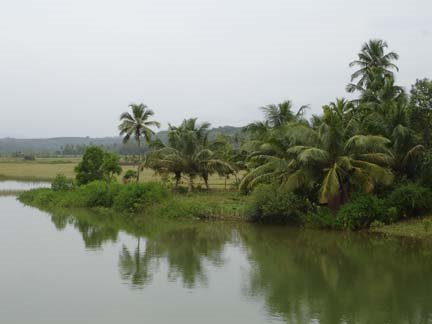
Holegadde near Honavar,Uttara Kannada dist, Karnataka

Copy? Right - but kindly remember to acknowledge!

Creative Commons License
This work is licensed under a Creative Commons Attribution 3.0 License.

" tulu-research.blogspot." ತುಳು ರಿಸರ್ಚ್. ಬ್ಲಾಗ್‌ಸ್ಪಾಟ್‌. ಇನ್

" tulu-research.blogspot."  ತುಳು  ರಿಸರ್ಚ್.  ಬ್ಲಾಗ್‌ಸ್ಪಾಟ್‌. ಇನ್
Have a nice day !