Showing posts with label bari. Show all posts

Sunday, October 28, 2018

410. Homonyms in Tulu language.


The antique vs.the modern: Relics of  regalia in Barkur town, Udupi district.

Ancient words that have survived in a region, when properly recognized and analysed without bias, are like old antique coins that can be useful tools in deciphering the paleo (past) socio-linguistic environment of the terrain. This is true of coastal Karnataka and the Tulunadu. In this context, I would like to point out that some of our old words, inclusive of place names, have been grossly misinterpreted, especially because of the dual or more than two possible meanings associated with them.
 The homonyms in English language are similar sounding words with differing meanings. For example, the English homonymous word ‘fair’ basically has dual meanings such as (1) a festive congregation or exhibition or (2) justified, free from dishonesty.  In the similar vein, we can find homonym words, words sounding similar but with differing meaning in Tulu language.
A homophone is a type of homonym where the sound is similar but the spelling and the meaning are different. Homonyms and homophones in a language may possibly indicate incorporation of similar sounding words from ancient cultures that prevailed once upon a time in the region.
Homonyms and homophones prevailing in Tulu language have a special historical significance as they can through significant light on the obscure aspects of socio-linguistic heritage we have inherited.
 We shall discuss in this post a few Tulu and relevant coastal homonyms and homophones, whose original meanings have largely been either obscure or misinterpreted or misunderstood features of our heritage.

Bari
Bari is a well known common Tulu word used for distinguishing the inherited surname of an individual. A person can have two “bari” tags inherited from his or her two parents, but usually matrilineal ‘bari’ is recognized and honored especially while deciding traditional matrimonial alliances in community circles.
Bari in Tulu is a homonymous word. Even though, the word ‘bari’ is a common word in Tulu, most of the Tulu people consider the ordinary meaning of the word: namely, the side. In Kannada areas of the coast, the word has been morphed into ‘bari’ > ‘bali’ or   even “balli” especially in Kundapura and in parts of Uttara Kannada. Interestingly, the Kannada words ‘bali’ means proximity and “balli” means tendril or creeper or thread.
However, the ancient word ‘bari’ has another meaning namely, the house. In ancient days a person in the community was identified by the name of his house!  This practice was also common in Kerala where they use the word “illam” or the house. This original meaning of the word “bari” has unfortunately been forgotten during the course of prolonged history!
Similarly, especially in northern India, in ancient days, the persons were identified (or tagged) by the name of their cowsheds (‘goshāla’) or the “gothra”.
Incidentally, the homonymous word ‘bari’ signifies the ancient heritage of Tulu language. The word was a part of Munda/Prakrit language and sub-cultures that prevailed in this land during early centuries of the Common Era. The word ‘bari’, having the meaning of house, still exists in eastern and northeastern parts of India especially in Bengali and other allied languages.

Nari
‘Nari’  (short a; ನರಿ ) is not a common word in Tulu. It is a common Kannada word for jackal. The common word for jackal in Tulu is ‘kuduke’. However, you can find place names in Tulunadu such as ‘Naringana’(ನರಿಂಗಣ) and ‘Narimogaru’ (ನರಿಮೊಗರು).
The ancient word ‘nari’ in tribal languages represented tiger (not jackal) and we can find this still preserved and existing in the neighboring Kodava language. Incidentally, Tulu has forgotten the original tribal word ‘nari’ which has been shifted to jackal and original tribal word replaced by ‘pili’ (ಪಿಲಿ), a word from Dravida lingual lineage.
The word " nari" in Tulu has another meanings such as (a) dented  (b) broken or (c) wet, soft and rotten.  But these meanings would not appear appropriate in terms of toponyms.

 Nayi
Nāyi (ನಾಯಿ) is a common name for dog in most of the Dravidian languages including Tulu and Kannada. Therefore, while analyzing   place names like Nayampali, Nayibasadi etc. in Tulu region, some of our earlier researchers have attributed the meaning of dog to the word nāyi. It is interesting to note that there are ancient place names all over India containing the prefix of nayi. The word nayi (ನಯಿ), originally   derived from Prakrit, in all India context suggests new and not dog!
Historical correlations as pointed out above also suggest that the Prakrit was a dominant language in parts of south India especially ancient equivalents of Maharashtra, Karnataka and coastal Tulunadu. Thus it is logical to assume that the word nayi in ancient place names of Tulunadu also means new rather than dog! Further it was a common practice to name new towns with prefix tags suggestive of newness such as pudu, posa, hosa, nayi, nava etc.
Gokarna
Gokarna is a well known coastal place in Uttara Kannada district, often interpreted as northern boundary of ancient Tulunadu. The place name is usually interpreted based on its usual sound that echoes a Sanskrit word go+karna which simply means ear of the cow. 
However, if we look for Prakrit words in the place name then we find that the word gokar means serpent, snake or Nāga. Since –Na is a common spatial suffix indicative of settlement or village (as we find in place names like Marne, Muddann, Belmann, etc), the Prakrit word Gokarna is equivalent of Nāgur or even Uchila in connotation. As a counter proof, we find numerous villages across India containing the word gokar including the place name Gokarana. (see: Post 366. Mystery of Gokarna and Havyaka).
Thus,  gokar (Prakrit) = Nāga, serpent . Gokar+Na= Nāga village; Nāgur.
Further the Gokarna region is also known as  Havika, Haviga(> Haiga) or Havyaka. A simple analysis of the word reveals that these words are Kannada equivalents of the word Gokarna.
 (Haviga= hāvu+ga. Havika= hāvu +ka;  hāvu=serpent; ka or ga= village).

Gokarna, Havyaka and the Nāga cult
It is well known that the ancient cult of Nāga worship, once widely prevalent all over India, has remained steadfast in coastal Karnataka, especially in Tulunadu. The original meaning associated with the word Gokarna and Havika (Havyaka), as explained here, further strengthens our notion of historical prevalence of the ancient Naga cult in Uttara Kannada, where the influence of Nāga cult is under waning stage as a consequence of domination of subsequent religious cults.

Summary
Homonyms and their dual meanings discussed in this post are:
(a) Bari (ಬರಿ) =1.Side (Dravida origin); 2.House (Munda derivation)
(b) Nari (ನರಿ) =1.Jackal 2. Tiger (Tribal origin, also exists now in Kodava)
(c) Nayi=1.Dog (< nāyi, ನಾಯಿ); 2. New. ( ನಯಿ:Prakrit derivation).
(d) Gokarna (ಗೋಕರ್ಣ) =1. Cow’s  ear. (Sanskrit   derivation);  2. Nāga village (< gokar+Na. Prakrit derivation)

Feedback
Readers may contribute their considered opinions in the comment section, with or without including their independent analysis of words and place names, for the benefit of healthy discussions and further interpretations.
R

Saturday, December 24, 2016

374. Banga and Bangera Bari

The Bangera ‘bari ‘( ‘gotra’) is one of the common lineage systems prevalent in Tulunadu  and found in most of the Tulu communities. We shall make an attempt to decipher the origin etymology and distribution of this particular lineage.
 It has been summarized in the older posts in this blog that most of the prevailing ‘ bari’ groups had origin as tribal groups in the antiquity which in the due course merged into different communities and castes formed based on lines of profession adopted by the people. In other words the “bari” system is older in the historical timeline than the caste and community system in our society as we find specific baris’ distributed among different castes.
We can find Bangera lineage in Mogaveera, Billava Bunt and communities. Even Koraga, Mundala and other communities also have Bangera lineage.

Banga and Bangera
The word “Banga” in the context of Tulunadu refers to one of the Jain dynasties that ruled the land. Places like Bangavadi, Bangra Kulur, Bangra Manjeshwar, Bangera-padavu  have remained testimony for the Banga rulers. While the Jain term “Banga” has remained as such, among the ancient tribes the Banga persons were referred to respectably as “Bangera”. The Banger(+a) in Tulu is a plural and honorific form used for respected persons. Thus it can be inferred that the “Banga” and “Bangera” were originally the same tribes in the antiquity.

Banga:  Benga+al
The term “Banga” in the epics, legends and historical documents refers commonly to the “Bengal” region of India. The Bengal is the modification introduced by the British rulers to the ancient word Banga. The spatial suffix –al commonly found in place names in Tulunadu, as well as in rest of India, represents a habitation (village) located on the bank of a river.
Origin of the term “Banga” is not clear among the Indian historians. Some consider it as indicative of the region whereas others consider it to refer to a specific ancient tribe. It has been said that the Banga tribes were mentioned in several ancient texts. Thus, it can be inferred that the term Banga refers both to the region and a specific tribe from that region. 

Banga places in Thailand
It is interesting to note that the Bang place names can be found extensively in Thailand and surrounding South–east Asian countries. The capital of Thailand is Bangkok. According to linguists “bang” in Thai language is a village located on the bank of a stream or river.  (The “kok” is a olive like tree). Some of the bang place names in Thailand .
Bang (Thai) = Village located near a stream   or river;  [Ala= village on river bank]. 
The origin of the term Banga is = ban (=water)+ ga (=village).
 Dispersion of Banga tribes as evident from the distribution of ancient Bang- place names (TR.374.)
Some of the Bang villages in Thailand : Bangkok, Bangna, Bangbo, Bangsare, Bang Rachan,  Bangsak,  Bangsak, Bangtao, Bang Bao,  BangPat, ,Bang Chan etc.
Thailand has a history influenced by India as reflected by evidences of Buddhist and Hindu religious elements that can be seen in their routine life. Similarly ancient Indian archeo-history has evidences of immigration of Austro-Asiatic (inclusive of South East Asians) into India in the past.
Thus it can be visualized that “bang” people migrated to India as a tribe in archeo-history and settled in regions like Bangal. (ie. the original form of Bengal) . We can apply the Thai meaning for ‘bang’ and ‘banga’ for the immigrant tribes and as well as the region where they settled in larger numbers.
It is quite interesting that the word “Bangal” consists of two words ‘banga’ + ’al ‘ having similar meaning but originated from different sources. It is possible that (a) the regional term Banga came into being because of the Banga tribes or (b) the tribes living in the Banga region would have later been known as Banga tribes.
In other words, the   “Bangal” represents the riverside region inhabited by ‘banga’ tribes.


Banga: earthen pot

Villages named Banga, Banga-an etc can be found in Philippines also. However, in Philippines the term “banga” also means earthen or clay pot. In a sense, the “banga“(=village) and the “banga”(=pot) are connected, since the clay required for  making pots is normally available in river side areas.
In Philippines a native dance form involving a series of earthen pots serially placed on the head is also known as “banga” dance.

Banga -place names in India
The census of India data for 2011 reveals that there are more than 717 villages (excluding hamlets) in India carrying the signature tag of Banga tribes. These are distributed in Uttar Pradesh (100), Assam (95), Bihar (92), Orissa (71), West Bengal (58), Madhya Pradesh (44), Jharkhand (41), Uttara Khand (36), Chattisgarh (31), Andhra Pradesh (30), Meghalaya (23), Maharashtra (19), Punjab (19), Rajasthan (19), Himachal Pradesh (12), Karnataka (11), Arunachal Pradesh (4), Tripura (3), Haryana (3), Tamilnadu (2), Gujarat(2), J&K (1), Andaman (1), Kerala (1), Sikkim(1), Lakshadweep (1) in the decreasing order of abundance given in brackets. (Note that in official village names the names of hamlets and settlements are not included.)

Some of the common banga village names in India are Banga, Bangi, Bangal, Bangla, Bangaon, Bangram, Bangoli, Bangori, Bangte, Banggo, Bangkong, Bangar, Bangera, Bangra, Bangapalli, angarpalle, Bangalbari, Bangawadi, Bangar wadi, Bangari-gada, Bangaru chelka, Bangaruvalasa, Bangaliguda, Bangapal, Banglera, Bangran, Bangranj, Bangergund, Bangre, Bangra, Bangoda, Bangaljhor etc.

Bangra

 The etymology of 'Bangra' as in place names Bangra Kulur and Bangra Manjeshwar is  Bang+ra , (or Banga+ra), where suffix -ra represents English 'of' and thus bangra means area related to the Banga people.

Bengal+uru
The conventional explanation attached to the city of Bengaluru is village of boiled beans/pulse or “benda kāluru” to be specific. It is rather odd that a name like ‘benda-kāluru’ should become Bengaluru with passage of time.
How about finding an alternate explanation for this place name naturally as “Bang+al+ur”?
If you accept the explanation of   bang+al+uru for Bengaluru, then   it suggests that (a) the Banga tribes had settled in the place known now as Bengaluru and (b) the original location of Bengaluru was on the bank of a river.
The western side of Bengaluru city represents a linear river valley (presently dried up) trending along more or less N-S direction. Even the existence of numerous lakes in Bengaluru  (now unfortunately encroached upon by the greedy land mafia) also indicate remnants of former stream system. Thus the geographic and geological data suggests that Bengaluru was on the bank of streams in the antiquity.

Banga: Panga
During early historical days many languages lacked differentiation between the consonants p and b. Even today, Tamil uses a common consonant for p and b. Thus “banga” was pronounced as “panga” in several areas during early history. Thus,  for example, we have “Pangala” a riverside village near Udupi instead of  Bangala. Similarly there are a large number of ethnonyms of ancient villages and hamlets having a prefix of ‘panga’ instead of ‘banga’.

Further it is interesting to note that place names like “Pangala” (pan+ga+ala) [similar to the word ‘Bangala’] contain repetition of word units with same meaning, since both “panga “ (or “banga”) and “ala” mean  village/habitation beside water. An ancient case of pleonasm or tautology in the  formation of words.


Further note that similar to pāni (=water), the word “pani” (ie with short a) means a drop of water,  in Tulu, Kannada and other sister languages. Also compare the Kannada word ”ibbani” (= dew drops) derived from ir+pani or two drops.

Panga- Pangal place names
There are some 310 villages having the prefix of “Panga” in India. These are distributed in  Maharastra (107),  Jharkhand (85), Orissa (44), Madhya Pradesh (24), Arunachal Pradesh (17),  Andhra Pradesh (14), Chattisgarh (12), Uttara Khand (11), Manipur (9), Assam (9), Jammu & Kashmir( 8), Tamilnadu (7), Himachal Pradesh (7), Uttar Pradesh (6), Nagaland (5), Mizoram (4), Karnataka (4), Gujarat(2), Kerala (2), Bihar (2), Punjab (2), West Bengal (2), Haryana (1), Rajasthan (1), Meghalaya(1), Sikkim (1) in the decreasing order of abundance.
Some of the Panga village names are: Panga, Pangi, Pangala, Pangola, Pangeri,  Pangarga, Pangna, Pangaon, Pangri, Pangara, Pangam, Pangarbari, Pangalthur, Pangali, Pangudi,  Pangode,  Pangar, Pangur,Pangra, Panglar, Pangdo, Pangna,  etc.


Differences in the levels of abundance of distribution of Banga vs. Panga place names in various regions represented by different states of India, possibly suggests the influence of different languages and chronological episode  in the background.

Banga: Vanga
Refinement of the Prakrit group of languages (Sanskritization ) resulted in changes in place names.  Thus under this scheme Banga became Vanga. For example, our epics describe Bengal as “Vanga” desha.

Vanga -place names
There  are some 58 official Vanga villages in India, distributed in Andhra Pradesh (23), Gujarat  (9),  Maharashtra (8), Tamilnadu (7), Karnataka (4), Uttar Pradesh (4),  Mizoram (2) and Manipur (1).


Tracing the Bangera bari from Banga tribes
In conclusion, the name of Bangera bari (lineage) has been derived from the Banga tribes. In Jains of Tulunadu the name ‘Banga’ has remained as a name of the minor dynasty as such, whereas in the case of other Tulu tribes the Banga were designated respectfully by other fellow tribes as seen by the usage the plural form of Bangera. The term Bangera (literally means the Bangas’) is the plural form of Banga. 


There is a suggestion that the etymology of  Bangera   could be ban + kera >Bangera. This leads to the interpretation of Bangera as one who winnows in water ie. Boatman or fisherman, fishing being one of the basic profession next to hunting of early humans.  However, I prefer the banga+er,  ie  the Bangas as a tribe which is reflected in Banga/Vanga region (Bengal apart from numerous villages of Banga and their modified variants Panga and Vanga) in India as well as the existence of Banga as a dynasty of Jains.

Thus we can trace the historical migration of the Banga (tribes of Bangera bari ) from the immigrants of South East Asia (probably Thailand region)   through Bengal region to Tulunadu. There are also other evidences for migration of tribes from Banga/Bengal to Tulunadu in place names. For example, check the place names in Tulunadu like "Shibaroor" and "Shibrikere", where "Shiba" is used in typical Bengali style instead of "Shiva".

R 

Saturday, August 13, 2016

360. Origin of words: Bari and Kepulo

Ancient words in any language are like fossils and can be useful in understanding the mysteries of antiquity. Ancient words in Tulu language similarly provide us useful hints that enlighten factors relating to the origin and evolution.
Linguists have traced dual features of south central and southern Dravidian trends of evolution in Tulu language ( ref:) though there has not been clear explanation of this duality. Earlier posts in this blog have identified and explored explicit evidences of an Austro-Asiatic base of Munda group of language under the Dravidian linguistic heritage in the evolution of Tulu language.
Ancient words like paggu (=first month in Tulu calendar), tude (=river), tāri (=toddy palm), urdu(=black gram)……. etc apart from numerous place names in Tulunadu that still carry  a prefix of Munda- or manki or related words –are all suggestive of an explicit undercurrent of an older layer of Adi-Dravida or pre-Dravida traditions in this land, before the onset of  Dravidian phase of socio-cultural and linguistic evolution.
Relicts of ancient Austro-Asiatic Munda culture and language still exist in Eastern and North eastern India. Bengalis and Odiyas sport such ancient words as Desi in their languages.
Let us discuss two of such ancient desi words, surviving in Bengali language, struck me because of their significance in the evolution of Tulu language and culture here below:
Bari
Bari is a very common word in Tulu language representing genetic lineage of person. It was used traditionally to identify a person and distinguish him or her from persons of other lineages especially in matrimonial proposals.  Persons from the same bari were considered traditionally to be blood relatives among whom marriage was a taboo. Bari is alternately known as bali, gotra, bedagu or illam in other socio-cultural groups. The origin of bari or gotra system predates the introduction of caste based communities as we discussed in an older post.
The analogy between the words bari (Tulu) and bali (Kannada) earlier led us to suggest that bari was an alternate form of the word bali (balli) which usually meant a plant creeper. The Tulu word bari at present means a side or margin. The meaning was adopted by some since it approximately conveys the connotation of a lineage.
However, the understanding that bari is a desi word of Austro-Asiatic origin existing in Bengali suggests fresh dimension of origin and meaning to the Tulu word bari.  The word bari of Austro-Asiatic origin means home in Bengali.
 Thus it is possible that the heritage word bari in existing in Tulu language means the name of the home or the original house of person. In ancient cultures a person was identified by the name of his home. In this way it appears synonymous with the term illam (=home) used by Malayalis or gotra (name of cowshed) used by cowherds in northern India during the ancient history   for lineage.
Pulo
In the same vein we can see that the word pulo means a flower in Bengali. We can compare pulo with phool in Hindi.
Kepulo
A red colored wild flower (usually occurring as a bunch of flowers or inflorescence) commonly seen in rural settings is known as kepulo or kepula.  We can understand the origin of the name of this wild red flower as it is ke+pulo,  where ke represents red and pulo means  flower.
We also may understand that with passage of time, the original pulo has been reduced to poo (= flower) and the original ke has become kempu (=red).


Significance

Tulu language has absorbed words from Austro-Asiatic and other pre-existing   languages during the prolonged course of evolution.  Many of these words are pre-Dravidian in nature, and the presence of such ancient words in contemporary Tulu suggests partial or selective socio-cultural assimilation of ancient tribes with Dravidians during the history. This explains the basic reason for the exposition of dual South-central and Southern Dravidian   linguistic trends in the evolution of Tulu language.

R

Monday, February 29, 2016

356. Kooda bari – A pre-requisite in Tulu Marriages


Matrilineal system is followed predominantly in Tulu Nadu.  More or less identical ‘bari’ names (Clan / lineage names or Gotra) are invariably followed by majority of original inhabitantsof this land (See Post-211/30.10.2010: Genetic tags & 286/03.09.2011: Bari system predates castes).
On reading our article on Billavas (Post-314/03.08.2013) one of our readers, Nithesh M.R., wants us to explain the meaning of ‘Kooda bari’ in Tulu. 
It is a well-known compound word:  Kooda (mixable/ enjoinable) + bari (Gotra or Clan name).  ‘Koodu’ means ‘to come together or unite’. The compound word denotes compliance with certain customs or social rules prevailing in natives of this land while accepting a marriage proposal.  It is a prerequisite consistently followed in Tulu Nadu so far (excepting the present day developments)and for that matter,elsewhere too.
Koodabari
‘Madumegu koodabariye aavodu, bete ovvulu bari aavandu’ (ಮದುಮೆಗು ಕೂಡು/ ಕೂಡಬರಿಯೇ ಆವೊಡು, ಬೇತೆ ಒವ್ವುಲ ಬರಿ ಆವಂದು). Before agreeing upon a marriage proposal, elders from both sides of groom and bride take care to see that alliance to be compatible fathers and mothers are from different genetic lineage (Bari). This is the meaning of the statement in Tulu quoted above.
Essentially, the term “kooda bari” means permissible lineages for fixing marriage of a bride and a bride groom. The maternal lineage of the bride and the bridegroom should not be the same ‘bari’ or linage.
When elders say that ‘bari tappunu’ (ಬರಿ ತಪ್ಪುನು), it means, clan name differs; it is a signal to go ahead discussing further nitty-grittyand finalizing the proposal.

Harm in marrying among kinships
In matriarchal system, surnames of both the fathers and mothers are taken into account. Marriage between maternal uncle and niece is specifically banned.  In patrilineal, tallying of genetic lineage of fathers is paramount. There is a custom of maternal uncle marrying his niece in patriarchal families.
Scientifically, the underlying principle in having different ‘bari’ is to procreate a healthy child.  Marital relationship is forbidden between girl and boy, having parents of same blood or nearest kinship.  Consanguineous marriage may continue the defects in blood of concerned families, thus contributing to poor health of would be progeny. This wisdom of our forefathers has been sometimes ignored by present day generation with changes in professions and in life-style.
Types of marriages
Characteristics of various types of traditional marriages are defined in our ancient knowledge.  There were eight types of marriage in our country in the past:
Brahmya: Marriage solemnized after acquiring knowledge during celibacy period.  This is a marriage between educated, religious and righteous minded couple.
Daiva:  This is to marry a boy, engaged in religious rites, say sacrificial religious performances (Yajnas).
Aarsha:  This is a boy, marrying a girl, by giving dowry to bride’s father.
Prajapatya:  This is a marriage to fulfil duties of propagation of family line and family traditions.
Aasura:  To marry by giving something to both groom and bride.
Gandharva:  This is a marriage by mutual consent but without following the traditional customs.
Rakshasa:  Here, marriage is preceded by a fight.  Girl is forcibly married.
Paishacha: This is marrying a girl after raping when she is sleeping or intoxicant.
All above types fall under endogamy or exogamy custom of marrying.  Some of the types of marriage cited above are not relevant now but some are still relevant in some ghastly form or the other in our so called civilized society.

Conclusion
There is a sea-change in our marriage traditions.  ‘Marriage’ is a vast subject.  This article is only to satisfy the curiosity of our reader Nithesh.

-Hosabettu Vishwanath, Pune


Saturday, September 3, 2011

286. Bari system predates Castes


The recognition and practice of human genetic lineages or the Lineage system (alternately known as Bari, Bali or Gotra system) among civilized ancient communities in India is distinctly older in origin and date than the caste system.

A reader has asked about the caste of Tulu people that migrated into southern Tamil country during early history corresponding with Sangam age.In my opinion, there were no modern castes (like Bunt, Billawa, Mogaveera) in Tulunadu at that time. In the early period the Tulu People were recognized by their bari lineages (matrilineal and patrilineal) and persons of the same bari could be seen practicing different professions like those of Bunt (warrior and defense assistant), Billawa (archer), Salian(weaver), Baidya (tribal doctor), Nadava (cultivator; one who plants crops), Okkeleme(farm worker; farm settler), Poojari(tribal preist), Maddela (washerman), Mogera (fish catcher), Kottari (Store-keeper), Kulala (potter) Sapalya(musician) etc without people being assigned to or divided into distinct caste/community  groups as known now.And those who did not subscribed this bari system of genetic lineage recognition, especially older generation of tribals, were recognized by various tribal group names.

Alupas of four lineages

The aspect of antiquity of existence of Baris over castes shall be more evident when we study the lineages of Alupa Kings who ruled early Tulunadu.  Data from early inscriptions reveal that Alupas belonged to four lineages which suggest that in the progress of time Alupas had offsprings from persons hailing from four different lineages; however the specific castes have not been attributed to Alupas in the inscriptions, because castes in Tulunadu did not exist at that point of time. Alupas also had matrimonial relationships with Kannada Kings like Kadamba, Chalukya and Rastrakutas.

Ancient Bari lineages in Tulunadu
In other words, to begin with there were no castes but only lineages in early India. And the distict division of people into dufferent castes developed later in the history.This is especially evident in Tulunadu which provides distinct evidences in favour of antiquity of the lineage system over the caste system.
The Gotra system prevailed among the Vedic sages-cowherds of ancient Indo-Aryan communities of Indian subcontinent appears to be as old as 1900 BC or older.It seems ‘bari’ or ‘bali’ linege types of genetic identification or recognition system similar to Gotra lineage system coupled with recognition of original place of domicile /settlement (‘Moolastana’) prevailed among Dravidian communities contemporaneous to early Vedic sages. Multan in Prakrit language means the Moolastana. Multan in present day Pakistan still carries the name of one of the earliest Dravidian settlements in Northwest Indian subcontinent and is useful in tracking the route of early Dravidian (including Tulu) immigrants into southern India.
Tulu Baris
Indira Hegde (2001) compiled a list of 61 Baris currently prevailing among Bunts and Nadavas. She has also enlisted some 55 Baris recorded in inscriptions and generally considered to extinct at present. Similarly there are some 20 known baris enlisted among Mogaveers. Mogaveeras have Amin, Bangera, Chandan, Gujaran, Kanchan, Karkera, Kotian, Kunder, Maindan, Mendon, Naika, Pangal, Puthran, Rao, Salian, Sapaliga, Shriyan, Suvarna, Thingalaya, and Tholar lineages. And Billawas and other Tulu communities also have numerous baris.Even Tulu Brahmins adopted a system of bari lineages.New Baris have evolved and were added throughout the history with passage of time.Similarly, many baris must have been lost during the long history of our communities due to various natural factors.

Baris before Caste system
However, on analysis we find that atleast five baris are common to most of the Tulu communities.This leads us to propose that such common baris have been in existence before the arrival of distict caste system in Tulunadu. We find that Bari lineages known as Banger (or Banga), Salia (or Salian), Putra (or Putran), Kundra (or Kundaran) and Gujar (or Gujaran) are common to many of the Tulu Castes at present. The presence of common bari lineages among diverse castes suggest prevalence of these baris before the consolidation of caste system in Tulunadu.It appears that there were  more such baris common to different castes but became partially or fully extinct. Among the common bari examples that became partially extinct in some Tulu communities, we may include Suvarna and Tingalaya baris. The Suvarna bari has been preserved among Mogaveers and Billawas. Tingalaya bari/surname is found retained among Mogaveers and Brahmins.Similarly, Menda/Mendon and Tolar bari lineages are shared among the present day Bunts and Mogaveers.
We shall discuss the five bari lineages generally found distributed in most of the communities/castes of Tulunadu.
Banga, Banger.
In an early post in this blog we considered that Bangera were the settlers in Bengare (Sand Spits) areas in the coast.This earlier interpretation of Bengare settlers may not be appropriate as we find ‘Bangera’ or ‘Banger’ (Banga+yer) in Tulu language is a respectful version of the Banga lineage, who ruled parts of Tulunadu as Jain Kings.


Banga tribes: Banga or Bangera appears to be one of the oldest lineages in Tulunadu. Ancient tribes known as ‘Banga’ still survive in parts of Nigeria in Africa. In India, the delta region of River Ganga is traditionally known as Banga or Vanga desha. (It is alternately known as Gowda or Gaur desh also). The regional place names Bangal (or Bengal) [Banga+al] means river-side settlements of the Banga tribes. Banga dance form is still popular in Kalingga region of Phillipines.Banga means earthen pot in Phillipines. It is possible that early Banga tribes were potters by profession. The association of terms ‘Banga’ and ‘Kalingga’ in Phillipines is interesting to note. In India, Banga (Bangal) region exists by the side of Kalinga (Orissa)!

According to some the term Banga is derived from Bong which was Sun God (Sing Bonga) worshipped by Munda tribes of Austro-Asiatic origin. Thus, the Banga tribes relate to either early African immigrants or subsequent Austro Asiatic immigrants into Gangetic delta. The tribes from Gangetic delta migrated to West coast probably before the advent of Dravidians forming the Banga or Bangera lineage.
There is also a Banga town in Punjab. Surnames Bangar (Bangad/Bangur) exists among Marwari/Marathi communities and proper names such as Bangari among Telugu (Bangarusamy, Bangaramma) people.
Bangalore: The origin of the place name of capital of Karnataka, Bengaluru is generally attributed to the phrase ‘benda kalu ooru’ (Village of boiled pulses). However, it could have been originally Bang+al+oor also, where the term 'Bangal' originally  referred to a settlement of ancient Banga tribes. (All the ancient Banga tribes need not necessarily be considered as Bengalis, as  erroneously interpreted by certain historians.) In support of the Banga+al theory cited here ('al'= water source like river, or a settlement besides a water course), geological data suggests that a tributary of Kaveri flowed in the western side of Bangalore during early history that dried up later.

Salia, Salian
Salia or Talia represents spider in Tulu language.One of the oldest known bari lineage, apparently derived from the ancient weavers of cloths or tribes having a totem of Spider. The Sāl tree [the silk cotton tree] also represents weaving of cloths and it was a holy tree traditionally worshipped by several early Munda tribes.Some historians opine that the ‘Saluva’ dynasty that ruled Vijayanagar Empire is related to Salia or Salian lineage. 

Putra, Putran
Exact origin of the surname Putra or Putran is not available at present.However two possibilities can be discussed.1. The word Puto or Putra in Prakrit generally represents a town For example the cpital of Magadha Empire was Pataliputra. Similarly King Ashoka mentioned ‘Satiaputo’ which is considered to represent (possibly a part of) Tulunadu. Therefore we can consider that Putran means a person from the ‘Putra’ possibly ancient city of Pataliputra.2. Putra in Sanskrit and many of the Indian languages mean son. Since relevance to this meaning of the word can only guessed we can wait for additional data on the origin of this surname.The lineage is also known as Putrannaya. There are Putra surnames in Indonesia and also in Saudi Arabia.

Kundra, Kundaran
Budhi Kundaran an Indian international cricketer of yester years hailing from Mogaveera community of Udupi, was one of the first among coastal Tuluvas in the recent years to popularize the surname of Kundars. Similarly, recent Hindi Film industry in Mumbai (Bollywood) has a celebrity known as Shirish Kundar. Shirish Kunder, who is an Electronic Engineer from SDM College of Engineering & Technology, Dharwad,   became a celebrity in Bollyhood as an Editor and Director of Hindi Films.  He has married Farah Khan, a famous Choreographer and Director of Hindi Films. In the recent years popular Bollywood heroine Shilpa Shetty, originally from Mangalore has popularized the Kundar surname in Tulunadu after her marriage with Raj Kundra of north Indian origin.


While the exact origin of the name Kundar is not available at present, it can be traced to ancient Kunda tribes of African heritage. However we find that early Jains and Buddhist literatures carry the term Kunda. Originally the Kundars in ancient India could have been a tribe specialized in the skill of gold smelting since the term ‘kunda’ generally refers to (1) gold and (2) melt. A popular sweet dish in Belgaum produced from the desiccated milk and sugar is known as ‘kunda’. In common Tulu parlance ‘kunda’ means a pillar.

Kundar: A lineage (‘bari’) based surname among Bunts and Mogaveers, originally derived from an ancient immigrant Kundra or Kundar ancestor from northern India. Kundarannaya   means a person born in the Kundaran lineage.

There are numerous place names having a prefix or suffix of Kunda all over India.For example, Kundapur, Kundagola, Navalgunda, Nargunda etc. It is possible that the kunda in such ancient place names refer to ancient victory pillars (totem poles) erected in those villages.


Gujar, Gujaran
Gujar or Gujaran is a surviving surname that provides solid support to the theory of amalgamation of immigrant tribes among Tulu and other communities in the antiquity. It is said that Gujars originated in Georgia, in southern Russia ( Georgia is  also known as Gurjiya in Persian) and migrated to Afghanistan, Pakistan and India during the early centuries of Common Era.Descendants of ancient Gujar migrants are found in the States of Kashmir, Punjab, Rajastan  and Gujarat. Incidentally, the State of ‘Gujarat’ derives its name from Gujar tribes.
A famous hero of Tulunadu, Agoli Manjanna was from the Gujaran lineage of Bunts.
Gujaran: A lineage (‘bari’) based surname among Bunts and Mogaveers, originally derived from an ancient immigrant Gujar ancestor. Gujarannaya means a person from the Gujaran lineage.
Gujje: A species of Jack fruit apparently introduced originally by Gujar tribes. Presently the term is applied to any variety of unripe or raw jack fruit.
Gujjadi: A place named after Gujj or Gujar tribes in Udupi district.
Gujjarabettu:  An elevated dryland (plateau) named after Gujar tribes near Kemmannu village in coastal Udupi Taluk.
Gujjarkere:  An ancient pond, presently dried up named after Gujar tribes in Jappina mogaru locality, southern part of Mangalore.


Suvarna
The Suvarna bari has been preserved among the present day Billawa and Mogaveer communities.The origin of Suvarna bari name can be interpreted based on data existing on the words like Suvarna and Suvarnbhumi. The term ‘Suvarna’ means (1) good colour and (2) gold. Sanskrit and Buddhist texts referred to Burma, Indonesia, Java, Sumatra countries as Suvarnabhumi. It appears that the term ‘Suvarna bhumi’ referred to people of golden (yellowish) skin colour rather than golden land. This leads us to infer that originally the ancient ‘Suvarna’ people of Austro-Asiatic heritage came to Tulunadu from Suvarnabhumi countries.It can also be recalled that a coastal river flowing in Udupi district is also called ‘Suvarna’ or ‘Swarna’ River.


***
End piece Trivia:


It is obvious that Words sounding similar can have divergent meanings. Bangar as well as Suvarna in Tulu and Kannada  means gold.
Prajwal pointed out that 'Bangar' in Marathi/Mumbai Hindi as well as 'Gujari' in Tulu/Kannada refers to scraps! 

-With inputs from H. Vishwanath.
®

Enhanced by Zemanta

Blog Archive

Books for Reference

  • A Comparative Study of Tulu Dialects By Dr. Padmanabha Kekunnaya. Govinda Pai Reserach Centre, UDupi. 1994
  • Koti Chennaya: Janapadiya Adhyayana. By Dr. Vamana Nandavar. Hemanshu Prakashana ,Mangalore.2001.
  • Male kudiyaru. Dr B. A.Viveka Rai and D.Yadupathi Gowda, Mangalore University,1996.
  • Mogaveera Samskriti By Venkataraja Punimchattaya. Karnataka Sahitya Academy.1993.
  • Mugeraru:Jananga Janapada Adhyayana. By Dr Abhaya Kumar Kaukradi.Kannada & Culture Directorate,Bangalore & Karnataka Tulu Academy, Mangalore,1997.
  • Puttubalakeya Pad-danagalu. Ed: Dr B.A.Viveka Rai,Yadupati Gowda and Rajashri, Sri Dharmasthala Manjunatheswara Tulu Peeta. Mangalore University.2004
  • Se'erige. Ed:Dr K.Chinnapa Gowda.Madipu Prakashana,Mangalagangotri,2000.
  • Studies in Tuluva History and Culture.by Dr P Gururaja Bhat (1975).Milagres College,Kallinapur,Udupi.
  • Taulava Sanskriti by Dr.B.A.Viveka Rai, Sahyadri Prakashana,Mysore 1977
  • TuLu naaDu-nuDi By Dr.PalthaDi Ramakrishna Achar, Puttur.
  • TuLu NighanTu. (Editor in Chief: Dr U.P.Upadhyaya, Govinda Pai Research Centre,Udupi. Six volumes. 1988 to 1997
  • Tulu Patero-A Philology & Grammar of Tulu Language by Budhananda Shivalli.2004.Mandira Prakashana Mangalore. p.317. (The book is in Tulu Language using Kannada script)
  • TuLunadina ShasanagaLa Sanskritika Adhyayana. By Shaila T. Verma (2002) Jnanodaya Prakashana,Bangalore, p.304.(Kannada)
  • Tuluvala Baliyendre. Compiled by N.A.Sheenappa Hegde,Polali,Sri Devi Prakashana,Parkala,1929/1999

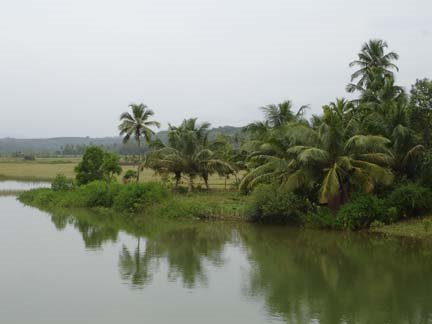
A Coastal estuary

A Coastal estuary
Holegadde near Honavar,Uttara Kannada dist, Karnataka

Copy? Right - but kindly remember to acknowledge!

Creative Commons License
This work is licensed under a Creative Commons Attribution 3.0 License.

" tulu-research.blogspot." ತುಳು ರಿಸರ್ಚ್. ಬ್ಲಾಗ್‌ಸ್ಪಾಟ್‌. ಇನ್

" tulu-research.blogspot."  ತುಳು  ರಿಸರ್ಚ್.  ಬ್ಲಾಗ್‌ಸ್ಪಾಟ್‌. ಇನ್
Have a nice day !