Showing posts with label Dravidian. Show all posts

Saturday, August 13, 2016

360. Origin of words: Bari and Kepulo

Ancient words in any language are like fossils and can be useful in understanding the mysteries of antiquity. Ancient words in Tulu language similarly provide us useful hints that enlighten factors relating to the origin and evolution.
Linguists have traced dual features of south central and southern Dravidian trends of evolution in Tulu language ( ref:) though there has not been clear explanation of this duality. Earlier posts in this blog have identified and explored explicit evidences of an Austro-Asiatic base of Munda group of language under the Dravidian linguistic heritage in the evolution of Tulu language.
Ancient words like paggu (=first month in Tulu calendar), tude (=river), tāri (=toddy palm), urdu(=black gram)……. etc apart from numerous place names in Tulunadu that still carry  a prefix of Munda- or manki or related words –are all suggestive of an explicit undercurrent of an older layer of Adi-Dravida or pre-Dravida traditions in this land, before the onset of  Dravidian phase of socio-cultural and linguistic evolution.
Relicts of ancient Austro-Asiatic Munda culture and language still exist in Eastern and North eastern India. Bengalis and Odiyas sport such ancient words as Desi in their languages.
Let us discuss two of such ancient desi words, surviving in Bengali language, struck me because of their significance in the evolution of Tulu language and culture here below:
Bari
Bari is a very common word in Tulu language representing genetic lineage of person. It was used traditionally to identify a person and distinguish him or her from persons of other lineages especially in matrimonial proposals.  Persons from the same bari were considered traditionally to be blood relatives among whom marriage was a taboo. Bari is alternately known as bali, gotra, bedagu or illam in other socio-cultural groups. The origin of bari or gotra system predates the introduction of caste based communities as we discussed in an older post.
The analogy between the words bari (Tulu) and bali (Kannada) earlier led us to suggest that bari was an alternate form of the word bali (balli) which usually meant a plant creeper. The Tulu word bari at present means a side or margin. The meaning was adopted by some since it approximately conveys the connotation of a lineage.
However, the understanding that bari is a desi word of Austro-Asiatic origin existing in Bengali suggests fresh dimension of origin and meaning to the Tulu word bari.  The word bari of Austro-Asiatic origin means home in Bengali.
 Thus it is possible that the heritage word bari in existing in Tulu language means the name of the home or the original house of person. In ancient cultures a person was identified by the name of his home. In this way it appears synonymous with the term illam (=home) used by Malayalis or gotra (name of cowshed) used by cowherds in northern India during the ancient history   for lineage.
Pulo
In the same vein we can see that the word pulo means a flower in Bengali. We can compare pulo with phool in Hindi.
Kepulo
A red colored wild flower (usually occurring as a bunch of flowers or inflorescence) commonly seen in rural settings is known as kepulo or kepula.  We can understand the origin of the name of this wild red flower as it is ke+pulo,  where ke represents red and pulo means  flower.
We also may understand that with passage of time, the original pulo has been reduced to poo (= flower) and the original ke has become kempu (=red).


Significance

Tulu language has absorbed words from Austro-Asiatic and other pre-existing   languages during the prolonged course of evolution.  Many of these words are pre-Dravidian in nature, and the presence of such ancient words in contemporary Tulu suggests partial or selective socio-cultural assimilation of ancient tribes with Dravidians during the history. This explains the basic reason for the exposition of dual South-central and Southern Dravidian   linguistic trends in the evolution of Tulu language.

R

Sunday, December 26, 2010

264. Genetic Assimilations: Ashoka Period

Before Ashoka period Paisachi languages were in vogue in southern peninsular India, known as ‘Bekinata’ during Vedic period (ca.1700-1500BC). Paisachi language apparently became obsolete in southern India, during the period ca 200-100BC as a result of replacement by Prakrit language as well as introduction of Dravidian languages. Influx of white immigrants (ca 500-400BC) was apparently one of the reasons for downfall of pre-existing language (Paisachi) and culture (Munda) in southern India.By Ashoka period (ca.250) the Bellar/Boller/Vellala white tribes not only admixed and assimilated with dark skinned aborigines consisting of early immigrants (60,000-10,000 BC) from Africa as well as early Munda tribes of Austro-Asiatic origin, but also superseded the aborigines in terms of socio-political advantages.
The Bellar immigrants introduced proto- Dravidian languages that evolved on a basement of Paisachi language, in southern India. The Dravidian languages Tamil, Kannada, Telugu, Tulu and Malayalam gradually evolved in different regions of the southern India. The languages developed individual identities depending on regional features and the nature of basement language.
King Ashoka (ca.304BC -232 BC) of Mauryan dynasty employed Brahmi script for engraving rock edicts (inscriptions) in Prakrit, the main administrative language of that period in India.Prakrit flourished along with Buddhism in parts of southern India probably till 400CE. Prakrit was influenced by evolving Sanskrit and vice-versa.
After 400 CE, Sanskrit and later Early Kannada replaced Prakrit as administrative language, especially in northern Karnataka.
Immigrant Bellar tribes (Vellala, Boller)
All over southern India, immigration of white (fair) skinned tribes into the peninsula has been distinctly marked out in place names.Karavali Tulu aborigines called them ‘Boller’ (=white people), Kannada aborigines designated them as ‘Bellar’(=white people), Tamils and Telugus noted them as Vellals(white persons).It is possible that in northern India these white immigrants were known as ‘deva’s (or Gods). Sanskrit Vedic texts and Puranas described wars between Deva and Asurs. Asur is the name of the subtribe of Munda aboriginal tribes of India. Who are these ‘Gods’ referred to by texts?
King Ashoka has described himself as ‘devanam priya’ or ‘devanām priyadarshi.’ ie One who is beloved (favourite) of Gods.  By the term ‘deva’ (or Gods), Ashoka meant fair skinned people who were abundant in his kingdom that spanned all over the north India and extended upto present Afghanistan.Following Alexander’s Indian expedition, Greek and other Mediterranean people were frequenting northern India before and during the time of Ashoka.
Considering the explanation given by King Ashoka, the major period of immigration of these white skinned people into southern India probably corresponded with ca. 500-400 BC. However faired skinned tribes were evidently present in north-western Indian subcontinent as early as 1700 BC, the period of compilation of Rigveda.
Evolution of Indian Languages with passage of time.

Assimilation with Bellar ‘Gods’
In the Koppala Gavimata inscription (Koppal district, Karnataka) and in Brahmagiri inscriptions King Ashoka describes that people of the ‘Jambudwipa’ (ie south Indian peninsula), who were not mixing earlier with Devas (=Gods’), are now mixing with them (‘Gods’).
In the edicts Ashoka points out that earlier (before ca.250 BC) the southern Indians were not mixing with each other, but at the time of erecting the edicts Ashoka found that then devas and south Indians were widely mixing.
Thus epigraphs of Ashoka document a major period of genetic assimilation of white immigrants with dark skinned aborigines in southern India.
®

Thursday, March 4, 2010

230. Fossil words


Evolution of languages is a less understood domain, in spite of extensive studies. Linguistic paleontology attempts to reconstruct the possible course of evolution of a language based on the available inputs. Similarly, several aspects of origin and evolution of the Dravidian languages are also indistinct and often controversial.
Analysis of ancient place names of Tulunadu, [and also different parts of peninsular India] reveal the presence of a number of strange words for which we may not find meanings in any of the dictionaries of Dravidian languages. Such strange forgotten words could simply be the fossil words from languages that were spoken in this land before the spread of Dravidian languages proper.
For example, based on the existence of variety of ancient place names in Tulunadu, we have been able to trace the vestigial signature words of Toda, Munda and Gond languages and tribes in this land which logically predates the spread of Dravidian languages proper.
Some of the fossil words still prevailing as place names point to the prevalence of fossil layers of fossil languages that played active role in the past in shaping the linguistic structure and foundation of this terrain.
Munda languages
Munda languages of India are recognized as of Austro-Asiatic origin, suggestive of introduction by ancient tribes who migrated into India from the south- East Asian countries in the antiquity. However, the essential linguistic structure of the Munda languages, differ from that of Mon Khmer languages of Southeast Asia. The former are characterized by falling accents, whereas the latter show rising accents.
It seems that the falling accent pattern is the inherent and essential linguistic characteristic of peninsular India. Dravidian languages have this kind of falling accent patterns. The fact that Munda languages adopted by immigrant tribes preceding Dravidians proper also show falling accent pattern, leads to the inference that this linguistic feature was already an established pattern in peninsular India before the immigration and settling of Munda tribes.
 Munda languages once upon a time prevalent in many parts of the southern India, with passage of time have been relegated certain parts of central and eastern India as seen at present.
Fossil language layers
This chain of logic leads us to conclude that a specific precursor language with falling accent pattern existed in peninsular India before the immigration of Munda tribes. The available data suggests that Munda languages evolved in India evolved on the basement of a preexisting native linguistic structure. Let us tentatively designate this precursor fossil language as ‘Indica’ for the purpose of discussions.

The structural and temporal sequence of evolution of languages in southern India can be represented as follows. This is essentially a graphical, visual representation of the sequence of evolution of languages in southern India. The contact lines between the languages may have been diffused. Time sequence is shown but the exact time durations and transitions are yet to be ascertained based on further studies.
A couple of general inferences on evolution of languages can be made from the above set of observations:
1. Languages grow and evolve on a platform of linguistic structure prevailing in the terrain.
2. Migrating tribes have carried some of their earlier ‘words’ from their place of origin to newer place of domicile. The number of immigrants being smaller in number compared to the natives, the later evolved languages carried on the linguistic structure of the natives of the land.
®

Monday, October 12, 2009

209. Dravidian place-name cognates


In Post-186 (Traces of common regional lingual history in Tulu Place Names), we have just illustrated the affinities between Place- names in Tulunadu and other near and far States and far away countries. In the materialistic world, a layman is lukewarm about understanding the origin and meaning of Place-names. In the first place, affinities are not noticed in hurly-burly of one’s routine life. Secondly, relevance of these similarities is ignored as coincidence. Revelation of such similarities is misunderstood by parochial feelings and is construed as offensive.

Cognate place-names
Cognate place-names, spread all over India and neighbouring countries, do not neccessarily mean that one area was occupied by a later arrived other tribes. As the behavioural pattern of early mankind, each group/tribe lived in isolation side by side but they mingled at appointed days in a barter-economy society. Each group maintained their uniqueness, at the same time having some commonality with regard to languages and customs. This is because of some base language of a tribe, which branched off into different tribes in gradual evolution.

Dravidian languages
Dravidian languages are geographically distributed in and around India. There are around 26 to 27 languages in the family of Dravidian languages in India, out of which five languages, known as ‘Panch Dravida Bhasa’, have emerged prominent in South India, having more or less similar Brahmi Script in the beginning. They are Tamil, Kannada, Telugu, Malayalam and Tulu. Former four languages have rich literary tradition, which Tulu fails to measure up. Though Tulu is having a script of its own and some written literature, it fell into disuse on the political influence of Kannada overlords. Tulu is considered as a dialect of Kannada but it is not so. All the languages have branched out of the Proto-Dravidian language, which has a bearing on all the languages spoken in India. Tulu is still vibrant in Tulunadu in Tulu Folklores and PaDdanas. PaDdanas are oral poems about heroic deeds of the Tulu ancestors, who are later on deitified and are worshipped. These lengthy ballads have trickled down orally through ages.

In North India, Dravidian languages were lost through absorption of Prakrita and Sanskrit. In South India, in Marhatti (Marathi) area, Sanskrit engulfed the Dravidian language (B.M.Shri– ‘Poorvada Halegannada mattu Tamil’, p.168. Earlier Old Kannada & Tamil). Respected B.M.Shri opines in this article that Telugu was spilt first from Proto Dravidian language and then Tamil and Kannada.

Olden literary works are indicators of linguistic interactions. In ‘Puranaarooru’ (a literary work in Tamil of circa 2nd C), there are two poems describing Hoysala Dynasty (Source: Anthology of B.M. Shri’s writings p.302). I have read somewhere that Karnataka Bharata Kathamanjari, popularly known as Gadugina Bharata of Naranappa (Kumaravyasa), was translated into Marathi in those days itself.

There are many scholars and researchers conversant with many languages of the world who do research on comparative history of Dravidian languages. Robert Caldwell is the forerunner in the academic field of Dravidian linguistics. There are around 75 languages all over the world (including 27 languages spoken in India) with or without scripts.
The word ‘Dravidian’ refers to a peninsular region, surrounded by seas (Arabian and Indian Seas and Bay of Bengal) and is based on Sanskrit word: Dramila > Dramida > Dravida. It is a designation for the entire people, living in South India below the Vindhya ranges, and not a description of race.

Recent international genetic research has ruled out the postulations of Aryan and Dravidian races. The European imperialists perpetuated racial theories of European intellectuals of 18th -19th Century. In his article ‘The Aryan-Dravidian Controversy’, David Frawley writes: “The Nineteenth Century was the era of Europeans’ imperialism. Many Europeans did, in fact, believe that they belonged to a superior race and that their religion, Christianity, was a superior religion and all other religions were barbaric, particularly a religion like Hinduism, which uses many idols………..European thinkers of the era were dominated by a racial theory of man, which was interpreted primarily in terms of the colour. They saw themselves as belonging to superior ‘White’ or Caucasian Race. They had enslaved the Negroid or ‘Black’ race. As Hindus were also dark in or coloured, they were similarly deemed inferior. The British thus, not surprisingly, looked upon the culture of India in a similar way as having been a land of a light-skinned or Aryan Race (the North Indians), ruling a dark or Dravidian race (the South Indians).”

All traditional thoughts are based on powerful under-current of reality and its reflection in land and nature. Our remotest ancestors were emotionally integrated with nature with respect to their beliefs about Universe and their relationship with places, animals, plants and other people. (Source: Australian Aboriginal Personal & Place Names – John S. Ryan). So these people, as is evident in many place names, like to be called as ‘a man from……..’ (as reflected in ethnonyms, eponyms, euonyms and toponyms).

Legends give some input about historicity of place names but pure legends may not decide the origin of a place name. Archaeological findings help solving ‘mysteries of antiquity’. It is advocated that probes of linguists can give clues only when it is ‘relied on linguistic substrata, linguistic paleontology, dialectical geography and loan words’.

Tribes and migration
The recent researches talk of wandering tribes. The Nature’s fury displaces land mass – sometimes, devouring the entire civilisations, eg. Mayans, Atlantis, Lemuria, etc. Geographical and political upheavals and escapades of inhabitants with their lifestyle and languages are interesting, though pathetic.


Amitabh Sinha writes in The Indian Express (dated 6th October 2009, p. 1): ‘1 in 3 Indians a migrant, 1 in 7 wordwide’, based on Human Development Report of UNDP.” Further, “… Migration process, globally, has today become much bigger than that, though it has been mostly silent and spontaneous and largely beneficial to people, unlike the one that was forced by Partition.” Migration was a continuing process in bygone days as is the trend even today; HDR Report calls it a healthy trend.

In his Epilogue to his Book: ‘Search for Vedic India’, Devamrita Swami says, “Everything that has come down to us from heathendom is wrapped up in a thick fog. It belongs to a space of time we cannot measure. We know it is older than Christiandom, but whether by a couple of years or even by more than a millennium we can do no more than guess.” He tells about the surprises – both on the land and skies – in the year 2001, viz. (1) Discovery of two more planetary systems, not resembling each other nor anything else in the solar system, (2) Mystery of consciousness, i.e. medical research (at Caltech) that points to consciousness surviving after the brain ceases and a person is clinically dead, (3) New Discoveries by Russian and American Archaeologists of more than 4000 years old ancient civilization during the biggest quake of 2001 in Republics of Turkmenistan and Uzbekistan, in Central Asia. He writes, “The newfound civilization comprises settlements that cover an area of in Central Asia 300 to 400 miles long and 50 miles wide. Who the people were or what they called themselves is a mystery. Lacking a name for the culture, archaeologists call it the Bactria Margiana archaeology Complex (Bmac). Dr. Victor H. Mair, a specialist in ancient Asian languages and culture, stated that these ruins of an unknown advanced culture had emerged in a region where there was thought to be just space and emptiness. The discovery indicated that more than 4,000 years ago Asians were not as isolated as scholars thought, he said, but probably had continent-wide connections.”

When we glean lot of information for comparison, we observe a frenzied hanker for proving superiority. This is seen in some of the comments to Blogs/Articles. Unsubstantiated carping leaves ‘Q’ mark on toadyism, i.e. a servile sycophancy. Controversies in history are always there. However it should be realized that the history is written and rewritten based on surfacing of new facts.

Kol tribes
When available data is analysed, through insight, in an objective manner, it is naturally away from the trodden path. Our attempt is only to unravel the mystery of place names, made of archaic compound words, with comparable prefixes and suffixes. For example, mark these word parts: Koli/Karava (= fisherman), Kola/Kolli/Kula(m)/ Kolam(b)e (= Pond/tank/water body/bay/low land/marshy land). Some examples of place names are in Post-186), Kola/Kolla/Kolle (= man engaged in mining and smelting, i.e. blacksmith/ coppersmith/goldsmith – both kola/kole works with liquids or water, i.e. drava or rasa), kol (= iron/metal. So kolame means furnace > kolamekotya). Mark place names: Kolara, Kolluru, Kolnadu, Kolya, Kolchar, Kollamogaru, Kolivada, Kollam, and Kollegal.

Race and fossil words
What are we – a single race with intermingling but at the same time trying to maintain an identity? Vedanta teaches a Philosophy of ‘Samanya’ and ‘Asamanya’. It is a classification and is the secret of progress. In Vedanta, pre-state of Universe before creation is known as ‘Unknown or Unexpressed’. That nameless one-mass is ‘formless’ and hence ‘endless and limitless’. What has remained ‘unknown’ is Samanya (common) and what is known is Asamanya (not common and hence with special qualities or attributes). It is called ‘Prakriti’ , the Nature. It has an end and so limited and changeable. Changed part of ‘expressed whole’ (Asamanya) again becomes ‘special with epithets’ and that which remained unchanged is ‘Samanya’, e.g. Srishti , the Nature, expressed as Movable & Unmovable, Life & Lifeless. Lifeless is expressed as Earth & Water. Earth, in turn, is classified as ‘stones, soil, iron’. Life - in trees, animals, insects, mankind. These epithets again become common and we can understand their uniqueness by differentiation. One class but many people. This gives rise to origin, caste (based on profession), group, habitats, village, province, country, language – all traceable in ‘equal’ and ‘unequal’. By comparison, we can identify strings of commonalities. Intemperate expression of ‘inequality’ creates a tense situation, disturbing peaceful co-existence.

In nutshell, place names with fossils of old words, are indicators of our ancestors’ itinerary. Prof. Arysio Nunes dos Santos , a Nuclear Physicist, Geologist and Climatologist, and a linguist, writes in Introduction to ‘The Mysterious Origin of the Guanches’: “Ethnologists generally admit that languages afford the strongest evidence of close affinity – not necessarily ethnic, between different civilizations. The a-priori probabilities of random coincidences between several words in the two languages under comparison are essentially nil.”

-Hosabettu Vishwanath


®

Thursday, October 11, 2007

43. Evolution of Tulu Language


I propose a three stage evolution of Tulu language. Other Dravidian languages also share this global heritage.
Stage I: ca.4000-2000 BC - Proto Tulu
Proto Tulu originated in Ethiopia. It contained lot of words derived from Sumerian languages and African languages. Some of these words still survive in our language. Other Proto-Dravidian languages also were originated in the region.
Around 2000 BC severe desertification of northern Africa occurred with formation of Sahara desert. The adverse environmental conditions forced many human tribes to leave Africa and migrate to greener areas with basic amenities. Tulu and other Proto Dravidian tribes left Africa and migrated.
Stage II: ca.2000-500 BC - Early Tulu
Migrating Tulu tribes and proto-Dravidians settled in the Pirak region in Central Asia, now part of Pakistan. Pirak region had a native language: Early Prakrit. They interacted with Indo-Aryans that came from Eastern Iran. A group of Indo-Aryan sages were engaged in the oral composition of Vedas. Early Tulu and Dravidians tribes learnt rice cultivation in this area. Again unfavorable environmental conditions enticed these Tulu/Dravidian tribes to migrate into greener pastures of India.
Stage III: ca.500-300 BC - Tulu
Early Tulu and Dravidian tribes migrated into India. They traveled and settled for some time in different regions of northwestern India, interacted with local language groups and further migrated to West coast of India. Interaction of Dravidian tribes with Marathi tribes contributed exchange of words between Dravidian and Marathi. Marathi language is an evolved form of Early Prakrit.
Tulu tribes settled in Karavali region that is popularly known as Tulunadu. Early Kannada tribes settled in plains of Karnataka. (The names Kannada and Karnataka may have evolved later.) Early Malayalees traveled further south and settled in Malabar. Tamils moved further and settled in Early-Madhurai, somewhere in the southern coast of India. The Early-Madhurai was destroyed by the transgression of the Sea and Tamils resettled in inland townships designated again as Madhurai.
At that time Munda group of languages and culture prevailed all over southern India. Munda tribes were adept in agriculture.They were growing a variety of crops like wheat, barley, jowar, ragi, cow pea (kadale), black gram (urd), green gram (padengi), horse gram (kudu), togari etc. The incoming tribes interacted with Munda tribes leading to assimilation of Munda language and culture in Tulu and other Dravidian languages and culture. Dravidian groups introduced rice cultivation methods acquired from their earlier settlements.
®

Blog Archive

Books for Reference

  • A Comparative Study of Tulu Dialects By Dr. Padmanabha Kekunnaya. Govinda Pai Reserach Centre, UDupi. 1994
  • Koti Chennaya: Janapadiya Adhyayana. By Dr. Vamana Nandavar. Hemanshu Prakashana ,Mangalore.2001.
  • Male kudiyaru. Dr B. A.Viveka Rai and D.Yadupathi Gowda, Mangalore University,1996.
  • Mogaveera Samskriti By Venkataraja Punimchattaya. Karnataka Sahitya Academy.1993.
  • Mugeraru:Jananga Janapada Adhyayana. By Dr Abhaya Kumar Kaukradi.Kannada & Culture Directorate,Bangalore & Karnataka Tulu Academy, Mangalore,1997.
  • Puttubalakeya Pad-danagalu. Ed: Dr B.A.Viveka Rai,Yadupati Gowda and Rajashri, Sri Dharmasthala Manjunatheswara Tulu Peeta. Mangalore University.2004
  • Se'erige. Ed:Dr K.Chinnapa Gowda.Madipu Prakashana,Mangalagangotri,2000.
  • Studies in Tuluva History and Culture.by Dr P Gururaja Bhat (1975).Milagres College,Kallinapur,Udupi.
  • Taulava Sanskriti by Dr.B.A.Viveka Rai, Sahyadri Prakashana,Mysore 1977
  • TuLu naaDu-nuDi By Dr.PalthaDi Ramakrishna Achar, Puttur.
  • TuLu NighanTu. (Editor in Chief: Dr U.P.Upadhyaya, Govinda Pai Research Centre,Udupi. Six volumes. 1988 to 1997
  • Tulu Patero-A Philology & Grammar of Tulu Language by Budhananda Shivalli.2004.Mandira Prakashana Mangalore. p.317. (The book is in Tulu Language using Kannada script)
  • TuLunadina ShasanagaLa Sanskritika Adhyayana. By Shaila T. Verma (2002) Jnanodaya Prakashana,Bangalore, p.304.(Kannada)
  • Tuluvala Baliyendre. Compiled by N.A.Sheenappa Hegde,Polali,Sri Devi Prakashana,Parkala,1929/1999

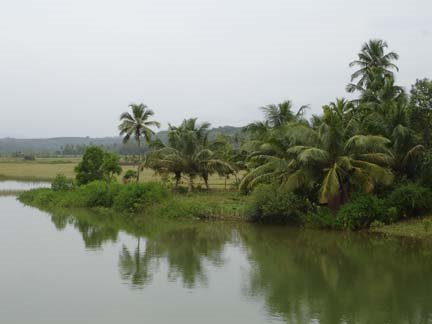
A Coastal estuary

A Coastal estuary
Holegadde near Honavar,Uttara Kannada dist, Karnataka

Copy? Right - but kindly remember to acknowledge!

Creative Commons License
This work is licensed under a Creative Commons Attribution 3.0 License.

" tulu-research.blogspot." ತುಳು ರಿಸರ್ಚ್. ಬ್ಲಾಗ್‌ಸ್ಪಾಟ್‌. ಇನ್

" tulu-research.blogspot."  ತುಳು  ರಿಸರ್ಚ್.  ಬ್ಲಾಗ್‌ಸ್ಪಾಟ್‌. ಇನ್
Have a nice day !