Showing posts with label Ashoka. Show all posts

Sunday, December 26, 2010

264. Genetic Assimilations: Ashoka Period

Before Ashoka period Paisachi languages were in vogue in southern peninsular India, known as ‘Bekinata’ during Vedic period (ca.1700-1500BC). Paisachi language apparently became obsolete in southern India, during the period ca 200-100BC as a result of replacement by Prakrit language as well as introduction of Dravidian languages. Influx of white immigrants (ca 500-400BC) was apparently one of the reasons for downfall of pre-existing language (Paisachi) and culture (Munda) in southern India.By Ashoka period (ca.250) the Bellar/Boller/Vellala white tribes not only admixed and assimilated with dark skinned aborigines consisting of early immigrants (60,000-10,000 BC) from Africa as well as early Munda tribes of Austro-Asiatic origin, but also superseded the aborigines in terms of socio-political advantages.
The Bellar immigrants introduced proto- Dravidian languages that evolved on a basement of Paisachi language, in southern India. The Dravidian languages Tamil, Kannada, Telugu, Tulu and Malayalam gradually evolved in different regions of the southern India. The languages developed individual identities depending on regional features and the nature of basement language.
King Ashoka (ca.304BC -232 BC) of Mauryan dynasty employed Brahmi script for engraving rock edicts (inscriptions) in Prakrit, the main administrative language of that period in India.Prakrit flourished along with Buddhism in parts of southern India probably till 400CE. Prakrit was influenced by evolving Sanskrit and vice-versa.
After 400 CE, Sanskrit and later Early Kannada replaced Prakrit as administrative language, especially in northern Karnataka.
Immigrant Bellar tribes (Vellala, Boller)
All over southern India, immigration of white (fair) skinned tribes into the peninsula has been distinctly marked out in place names.Karavali Tulu aborigines called them ‘Boller’ (=white people), Kannada aborigines designated them as ‘Bellar’(=white people), Tamils and Telugus noted them as Vellals(white persons).It is possible that in northern India these white immigrants were known as ‘deva’s (or Gods). Sanskrit Vedic texts and Puranas described wars between Deva and Asurs. Asur is the name of the subtribe of Munda aboriginal tribes of India. Who are these ‘Gods’ referred to by texts?
King Ashoka has described himself as ‘devanam priya’ or ‘devanām priyadarshi.’ ie One who is beloved (favourite) of Gods.  By the term ‘deva’ (or Gods), Ashoka meant fair skinned people who were abundant in his kingdom that spanned all over the north India and extended upto present Afghanistan.Following Alexander’s Indian expedition, Greek and other Mediterranean people were frequenting northern India before and during the time of Ashoka.
Considering the explanation given by King Ashoka, the major period of immigration of these white skinned people into southern India probably corresponded with ca. 500-400 BC. However faired skinned tribes were evidently present in north-western Indian subcontinent as early as 1700 BC, the period of compilation of Rigveda.
Evolution of Indian Languages with passage of time.

Assimilation with Bellar ‘Gods’
In the Koppala Gavimata inscription (Koppal district, Karnataka) and in Brahmagiri inscriptions King Ashoka describes that people of the ‘Jambudwipa’ (ie south Indian peninsula), who were not mixing earlier with Devas (=Gods’), are now mixing with them (‘Gods’).
In the edicts Ashoka points out that earlier (before ca.250 BC) the southern Indians were not mixing with each other, but at the time of erecting the edicts Ashoka found that then devas and south Indians were widely mixing.
Thus epigraphs of Ashoka document a major period of genetic assimilation of white immigrants with dark skinned aborigines in southern India.
®

Thursday, February 21, 2008

94. Antiquity of Siri

The living oral ballads in Tulu language known popularly as paDdanas are unwritten ancient documents that evolved along with the Tulu people, culture and language over a prolonged period of time. They not only reflect the poetic emotive talents of our ancestors, but are also mirrors of the changing culture, values and ethos of our people.

Evolved paDdanas
But the paDdanas that survived amidst us at present are the intensely evolved versions. Since paDdana are orally transmitted folk ballads generation to generation, it is logical to expect modifications over the years reflective of the environmental perspectives of the person reciting it. In the current digital parlance, they can be compared to the Microsoft Windows Vista or the Adobe Photoshop CS3. I take the liberty of this odd comparison just to convince you the difficulty of visualizing and reconstructing the earliest version of paD-danas using the current versions. And given the prolonged evolutionary history Tulu people incurred the oldest, original form of any paDdana is nebulous to decipher. Still there are some glowing indices in the current versions of paDdanas that through light on their antiquity and overall Tulu cultural evolution.

Ancient Siri paDdana
The evidences discussed below permit me to propose that the original version of the Tulu paDdana on Siri may have been orally composed during ca. 300 BC or earlier.

1.Satyanapura
The first proof: King Ashoka’s Girnar rock edict in Pali language (ca.300 BC) describes a southern State of ‘Satiyaputto’ that can be translated as Satyapura. The name of the palace in the Siri paDdana, Satyanapura is akin to Satyapura or Sati(y)aputto.
Now there are no towns having the name of Satyanapura in Tulunadu. However, it can be presumed that ‘Satyanapura’(.>Satiaputo) was a prominent Tulu City-State during the period of King Ashoka.

2.Siri -A Pali word
Second proof of the antiquity of Siri is the word itself. Siri is the heroine of the Siri paDdana. The name Siri is not commonly used name for present day Tulu females.
The word ‘Siri’ exists in Tulu language and it means tender leafy shoot of a plant like coconut palm. In Pali language the word Siri represented the Godess of luck.There is some parallelism between the two meanings: (1) tender shoot (Tulu) and (2).luck (Pali). The growth of tender shoot (Siri) is perceived as lucky.
Normally, we are taught in schools that the word ‘Siri’ is the derivative (‘tatbhava’) of the Sanskrit word ‘Shri’. But this is questionable and the truth may be the other way round, since the mythology of Lord Vishnu and his wife Shri (Lakshmi) evolved as late as 500BC or still later. The Pali and related Prakrit language existed before Vedas and it can be considered logically that Sanskrit (= refined) was a refined, evolved language after the older Prakrit (=natural) language. Since, it can be established that religious cults have borrowed from each other, it can be proposed that ‘Siri’, the Godess of luck of early Buddhist period, eventually evolved into ‘Shri’, the Godess of wealth.
To summarize: Siri.> Shri.
Thus the Pali word ‘Siri’ in the said PaDdana displays unmistakable shadows of early Buddhism in the early Tulu history dating back to ca.300 BC.

3. Ancient cult of Possession.
Third proof for the antiquity of the original Siri paDdana is the persistence of the ancient cult of possession attached to the Siri festivals.
The annual celebration of Siri festival is quite unique and unlike other kola, nema etc celebrations associated with other Tulu spirits. It is a celebration of the ancient art of trances or possessions. This cult was prevalent during the early history of the southern India and is well documented in Tamil Sangham literature that is estimated to have been compiled between the periods ca.200BC to 200AD.George Hart discusses some aspects of the cult of possessions described in Sangham literature.

4. Chenne mane: An ancient game
Peter Claus reports that Chenne Mane, a rural game associated with the Siri cult (or Mancala game as known in other parts of India and Srilanka) is known to have been played by rural folks since ca.200 BC. The game is prevalent in parts of Africa and Middle East, a fact suggestive of origin of the game in Africa-Mediterranean region. The game may have been brought to Tulunadu by the Early Tulu immigrants.

Evidently, the Siri paDdana has evolved extensively since its inception during early years of Buddhism in Tulunadu. The implicit indications of Jainism attached to it in the current versions of Tulu Siri paDdana are only reflective of the theological evolutions in the Tulunadu with the passage of times.
®

Sunday, January 13, 2008

73. Satiyaputto-Satyapura

A rock epigraph of King Ashoka found at Girnar, written in Prakrit language describes several states of southern India under the control of Ashoka the Great. There is mention of Satiyaputto along with Ketalaputto. The Satiyaputto has widely been considered as the ancient Tulunad or Karavali since it is found associated with Ketalaputto (Kerala).

Timeline: ca.250 BC.Ashoka
Original of second rock inscription of Priyadarshi Ashoka in Prakrit is as follows:

“Sarvatra vijitammi devanam priyasa priyadasino raajno evamapi prachantesu yatha choDa paaDa satiyaputto ketalaputto aatamba paraNi antiyako yonaraajaye vaapi tasa antiya kasa saameepam raajano sarvatra devanam priyasa priyadasino dvechikeechakataa manusachikeechaa chapasu chiki chaacha osaDaani chayani manusopagaanicha pasopagaani chayata naasti saravatra haarapitani cha ropapiatni cha moolaani cha falaani cha yata yata naasti sarvatra haarapitani cha ropapiatni cha pandesu koopa khaanapita”

Translation of above(from an online source):

“Everywhere within Beloved-of-the-Gods, King Piyadasi's domain, and among the people beyond the borders, the Cholas, the Pandyas, the Satiyaputras, the Keralaputras, as far as Tamraparni and where the Greek king Antiochos rules, and among the kings who are neighbors of Antiochos, everywhere has Beloved-of-the-Gods, King Piyadasi, made provision for two types of medical treatment: medical treatment for humans and medical treatment for animals. Wherever medical herbs suitable for humans or animals are not available, I have had them imported and grown. Wherever medical roots or fruits are not available I have had them imported and grown. Along roads I have had wells dug and trees planted for the benefit of humans and animals.”

In the original it has been written as Satiyaputto. Putto in Prakrit is same as putra (as in Patali putra) or ‘pura’ in Sanskrit.
Satyapura
Hence, the word Satiyaputto can be considered as Satiyaputra or Satyapura.It follows that the Karavali/Tulunad was known as ‘Satyapura’ during Ashoka’s period ca.250 BC. The nature and origin of this epithet Satiyaputto has been discussed by many investigators.
The Tulu Spirit-Gods are generally referred to as ‘Satyolu’ (in the sense of ‘real, supreme powers’ or ‘supreme faiths’). From this line of usage, the place/State name ‘Satiyaputto’ may have been derived. Similar line of opinion has been expressed by Dr. Vamana Nandavar in his thesis on twin heroes ‘Koti –Chennaya’.
The word ‘Satyo’(=supreme power) might have originally been derived from the Early Munda languages, as was the words ‘Karam’ and ‘Dharam’.
Satyanapura
The nearest reference to Satyapura occurs in Tulunada Siri PaDdana. The folklore (paDdana) of Siri revolves around the palace of Satyanapura. The exact historical time of Siri is not known, but reference to Satyanapura which corresponds with King Ashoka’s Satiyaputto is notable.
It seems the Satyanapura was a major landmark in the history of Karavali since the time of Ashoka (ca.250 BC), even though it is difficult at this juncture to decipher the original location of the Satyapura or the Satyanapura. The theme, apparently, was further repeated through the history for several centuries in the oral tradition of paDdanas.
Satyadevata - Satya-narayana
Theme of Satyolu was revived further along the timeline in the mainstream worship of Gods. Evolution of special Satya deities such as Satya- devata and Satyanarayana may be the byproducts of this saga of ancient ‘Satylou’.
®

Blog Archive

Books for Reference

  • A Comparative Study of Tulu Dialects By Dr. Padmanabha Kekunnaya. Govinda Pai Reserach Centre, UDupi. 1994
  • Koti Chennaya: Janapadiya Adhyayana. By Dr. Vamana Nandavar. Hemanshu Prakashana ,Mangalore.2001.
  • Male kudiyaru. Dr B. A.Viveka Rai and D.Yadupathi Gowda, Mangalore University,1996.
  • Mogaveera Samskriti By Venkataraja Punimchattaya. Karnataka Sahitya Academy.1993.
  • Mugeraru:Jananga Janapada Adhyayana. By Dr Abhaya Kumar Kaukradi.Kannada & Culture Directorate,Bangalore & Karnataka Tulu Academy, Mangalore,1997.
  • Puttubalakeya Pad-danagalu. Ed: Dr B.A.Viveka Rai,Yadupati Gowda and Rajashri, Sri Dharmasthala Manjunatheswara Tulu Peeta. Mangalore University.2004
  • Se'erige. Ed:Dr K.Chinnapa Gowda.Madipu Prakashana,Mangalagangotri,2000.
  • Studies in Tuluva History and Culture.by Dr P Gururaja Bhat (1975).Milagres College,Kallinapur,Udupi.
  • Taulava Sanskriti by Dr.B.A.Viveka Rai, Sahyadri Prakashana,Mysore 1977
  • TuLu naaDu-nuDi By Dr.PalthaDi Ramakrishna Achar, Puttur.
  • TuLu NighanTu. (Editor in Chief: Dr U.P.Upadhyaya, Govinda Pai Research Centre,Udupi. Six volumes. 1988 to 1997
  • Tulu Patero-A Philology & Grammar of Tulu Language by Budhananda Shivalli.2004.Mandira Prakashana Mangalore. p.317. (The book is in Tulu Language using Kannada script)
  • TuLunadina ShasanagaLa Sanskritika Adhyayana. By Shaila T. Verma (2002) Jnanodaya Prakashana,Bangalore, p.304.(Kannada)
  • Tuluvala Baliyendre. Compiled by N.A.Sheenappa Hegde,Polali,Sri Devi Prakashana,Parkala,1929/1999

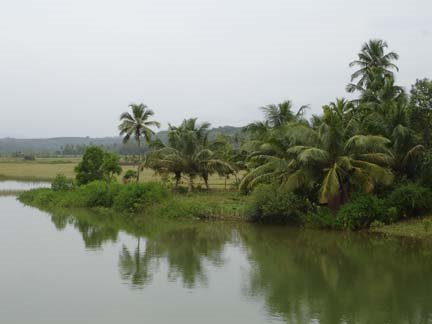
A Coastal estuary

A Coastal estuary
Holegadde near Honavar,Uttara Kannada dist, Karnataka

Copy? Right - but kindly remember to acknowledge!

Creative Commons License
This work is licensed under a Creative Commons Attribution 3.0 License.

" tulu-research.blogspot." ತುಳು ರಿಸರ್ಚ್. ಬ್ಲಾಗ್‌ಸ್ಪಾಟ್‌. ಇನ್

" tulu-research.blogspot."  ತುಳು  ರಿಸರ್ಚ್.  ಬ್ಲಾಗ್‌ಸ್ಪಾಟ್‌. ಇನ್
Have a nice day !