Showing posts with label assimilation. Show all posts

Sunday, December 26, 2010

264. Genetic Assimilations: Ashoka Period

Before Ashoka period Paisachi languages were in vogue in southern peninsular India, known as ‘Bekinata’ during Vedic period (ca.1700-1500BC). Paisachi language apparently became obsolete in southern India, during the period ca 200-100BC as a result of replacement by Prakrit language as well as introduction of Dravidian languages. Influx of white immigrants (ca 500-400BC) was apparently one of the reasons for downfall of pre-existing language (Paisachi) and culture (Munda) in southern India.By Ashoka period (ca.250) the Bellar/Boller/Vellala white tribes not only admixed and assimilated with dark skinned aborigines consisting of early immigrants (60,000-10,000 BC) from Africa as well as early Munda tribes of Austro-Asiatic origin, but also superseded the aborigines in terms of socio-political advantages.
The Bellar immigrants introduced proto- Dravidian languages that evolved on a basement of Paisachi language, in southern India. The Dravidian languages Tamil, Kannada, Telugu, Tulu and Malayalam gradually evolved in different regions of the southern India. The languages developed individual identities depending on regional features and the nature of basement language.
King Ashoka (ca.304BC -232 BC) of Mauryan dynasty employed Brahmi script for engraving rock edicts (inscriptions) in Prakrit, the main administrative language of that period in India.Prakrit flourished along with Buddhism in parts of southern India probably till 400CE. Prakrit was influenced by evolving Sanskrit and vice-versa.
After 400 CE, Sanskrit and later Early Kannada replaced Prakrit as administrative language, especially in northern Karnataka.
Immigrant Bellar tribes (Vellala, Boller)
All over southern India, immigration of white (fair) skinned tribes into the peninsula has been distinctly marked out in place names.Karavali Tulu aborigines called them ‘Boller’ (=white people), Kannada aborigines designated them as ‘Bellar’(=white people), Tamils and Telugus noted them as Vellals(white persons).It is possible that in northern India these white immigrants were known as ‘deva’s (or Gods). Sanskrit Vedic texts and Puranas described wars between Deva and Asurs. Asur is the name of the subtribe of Munda aboriginal tribes of India. Who are these ‘Gods’ referred to by texts?
King Ashoka has described himself as ‘devanam priya’ or ‘devanām priyadarshi.’ ie One who is beloved (favourite) of Gods.  By the term ‘deva’ (or Gods), Ashoka meant fair skinned people who were abundant in his kingdom that spanned all over the north India and extended upto present Afghanistan.Following Alexander’s Indian expedition, Greek and other Mediterranean people were frequenting northern India before and during the time of Ashoka.
Considering the explanation given by King Ashoka, the major period of immigration of these white skinned people into southern India probably corresponded with ca. 500-400 BC. However faired skinned tribes were evidently present in north-western Indian subcontinent as early as 1700 BC, the period of compilation of Rigveda.
Evolution of Indian Languages with passage of time.

Assimilation with Bellar ‘Gods’
In the Koppala Gavimata inscription (Koppal district, Karnataka) and in Brahmagiri inscriptions King Ashoka describes that people of the ‘Jambudwipa’ (ie south Indian peninsula), who were not mixing earlier with Devas (=Gods’), are now mixing with them (‘Gods’).
In the edicts Ashoka points out that earlier (before ca.250 BC) the southern Indians were not mixing with each other, but at the time of erecting the edicts Ashoka found that then devas and south Indians were widely mixing.
Thus epigraphs of Ashoka document a major period of genetic assimilation of white immigrants with dark skinned aborigines in southern India.
®

Sunday, December 9, 2007

56. Assimilation of Indo –Aryans

The Indo-Aryan invasion hypothesis needs to be mended and modified in the light of recent scientific data! The fact is that Indo-Aryan immigrants did not invaded India as proposed earlier. The number of Indo-Aryans who immigrated was quite few.
The Y-chromosomal genetic data compiled by Sanghamitra Sahoo et al (2006) suggested a minor influx, of people of the Indo-Aryan language family from regions north and west of India. The Vedas were composed a group (about a dozen in number) of sages. With time the Vedic sages apparently had marital relations with natives and were gradually absorbed and assimilated into the pre-existing lingo-cultural fabric of India.
S. Sharma et al. (2007) in their recent paper (“The Autochthonous Origin and a Tribal Link of Indian Brahmins: Evaluation Through Molecular Genetic Markers “- abstract-cited in Dienekes anthropological blog) reported as follows:
“..we screened 621 Y-chromosomes (of Brahmins, Dalits and Tribals) with fifty-five Y-chromosomal binary markers and Y-microsatellite markers and compiled a data set of 2809 Y-chromosomes (681 Brahmins, 2128 Tribals and Dalits) for conclusions. Overall, no consistent difference was observed in Y-haplogroups distribution between Brahmins, Dalits and Tribals, except for some differences confined to a given geographical region.
A peculiar observation of highest frequency (upto 72.22%) of Y-haplogroups R1a1* in Brahmins, hinted at its presence as a founder lineage for this caste group. The widespread distribution and high frequency across Eurasia and Central Asia of R1a1* as well as scanty representation of its ancestral (R*, R1* and R1a*) and derived lineages across the region has kept the origin of this haplogroup unresolved. The analyses of a pooled dataset of 530 Indians, 224 Pakistanis and 276 Central Asians and Eurasians, bearing R1a1* haplogroup resolved the controversy of origin of R1a1*.
The conclusion was drawn on the basis of: i) presence of this haplogroup in many of the tribal populations such as, Saharia (present study) and Chenchu tribe in high frequency, ii) the highest ever reported presence of R1a* (ancestral haplogroup of R1a1*) in Kashmiri Pandits (Brahmins) and Saharia tribe, and iii) associated averaged phylogenetic ages of R1a* (~18,478 years) and R1a1* (~13,768 years) in India. The study supported the autochthonous origin of R1a1 lineage and a tribal link to Indian Brahmins.”

Brahmin-ization
The cited genetic study suggests that the native Indian tribes evolved in the land since 11 to 16 thousand years BC. The study also points to brahmin-ization of native tribes. And this could have happened ca.800-600BC, the magic period when Indo-Aryans and Early Dravidians entered the Indian mainland from the northwest. The Vedas were composed by a group of Indo-Aryan immigrants to NW Indian subcontinent ca 1900 to 800 BC. The Indo-Aryan immigrants were few in number as they immigrated into the Indian mainland and they gradually culturally assimilated with the natives. Select natives must have been absorbed into Vedic schools and were educated in Sanskrit.
The native tribes had evolved pockets of well developed religions and cultures. Some of them joined the Vedic tradition and contributed their talents in composing the great Puranas and Epics of India. Many examples exist in the legends in support of this theory. Valmiki who compiled and composed Ramayan was a bhil, a native archer. Sage Agasthya was a former washer-man (dhobi) from the fold of natives. Jabali was originally from the native tribes. Vedavyasa, the famed dark-skinned (‘Krishna’ Dwaipayana) and talented composer of Mahabharata was born to a woman of lower caste.
Therefore the Early Indian caste system (500-300 BC) was created out of the evolved fraction of native groups.
®.

Sunday, November 18, 2007

54. The legend of Bali

Deepavali is a very popular festival in India and the significance is explained as a celebration symbolic of our innate aspiration to progress towards light from darkness, towards knowledge from ignorance and towards prosperity from poverty. It is also described as a festival of thanks-giving to the Mother Nature. Deepavali means array of lights.
In spite of this modern, positive-thinking style of explanations, the fact remains that the festival was originally conceived and celebrated by his subjects as an annual welcome- back ceremony for their beloved exiled King Bali. King Bali variously described as Baliyendra or Bali or Maha-Bali or Bali Chakravarthy (emperor).Remnants of what was originally a pan-Indian custom in ancient days of early civilization remains even today in Tulunadu and Kerala.
Vamana incarnation
The legend of King Bali and Vamana, the dwarf, has been absorbed into Purana-s, with Vamana considered as one of the incarnations of Lord Vishnu. (cf. Post 34: Ten incarnations).According to the viewpoint of Vishnu’s followers, Bali (a follower of Shiva cult) was pictured as a despicable Asura who deserved to be subjugated. This was in conformity with the Sura-Asura conflict of pro-Vishnu and pro-Shiva cultures in ancient India.
However, the other side of the story is more interesting and throws light on the theological-cultural conflicts during the early historical period.
Asura King Bali
What was the great sin done by this Asura Bali?
He was a philanthropist to the core, who willingly gave away free gifts to the needy people!
If we brush aside all humanly impossible fantasies woven into the said legend, the remaining core story is that King Bali, was fond of giving away gifts desired by the recipient! The standing offers was that Bali would give whatever is asked of him! One clever, dwarf beggar (Vamana) came and begged him to grant land enough to place his three steps.(Or maybe, he asked that he should be given wherever he places his steps ).King Bali agreed to provide him whatever the dwarf desired and the mischievous Vamana placed his foot on Bali’s head! Thus, Bali had no other choice than offer himself to the wishes of the dwarf, who sent him to exile to a place called Patala.
The word ‘bali-daan’ (means ‘sacrifice’, but literally ‘gift of Bali’) might have been coined from the self-sacrificing act of King Bali.
Patala
The concept of Patala in Purana-s, describe it as a nether world, a parallel world beneath the Earth. Since, there is no realistic/scientific basis for such a illusory world, we can presume that the ‘Patala’ fantasy represented a sinking island beneath the sea level. Early historical Greek reports like ‘Indika’ report a sinking island called ‘Patala’ near the Gulf of Cutch.
Deepavali in Tulunadu
In spite of depiction of Bali as a villain by the followers of Vishnu, the actual subjects of Bali fondly remembered and continued to respect their exiled King! They believed that their King would return and pay a visit to his subjects once in a year. They celebrated annual welcome their King festival in the form of Deepavali!
The chant of ‘Poli Poli Baliyendra’ in rural Tulunadu during the Deepavali night echoes the age-old custom of welcoming King Bali. Similar customs prevail in Kerala also.
Onam
Dr Zacharias Thundy in his ‘Kerala story’ reports similar legends on Bali from Kerala. Onam, in Kerala, is the celebration of the return of Maha Bali,(or 'Maveli') the legendary former and future king of the land. The King Bali according to the folklores, ruled over the Kerala during the Golden Age before castes existed, "when all men were equal, when no one was poor, when there was neither theft nor dread of thieves.
Mahabalipuram, Mavalli
It appears that in the early historical (pre-Sangam) period, the legend of Bali pervaded throughout the south India. In Tamilnadu, Mahabalipuram in the East coast is a town built in honour of King Bali.
Similarly,the town Mavelikkara in Kerala is named after the Maveli or the Mahabali.There are villages named Mavalli in Karnataka also.(One such 'Mavalli' is part of Bangalore city now)
Asura-Munda culture
Dr.Thundy reports that the Munda tribes of Chotanagapur area also have legends (somewhat different from those prevalent in Tulunadu and Kerala) built around their Asura King Bali. Asura is a group within Munda tribes. Bali is a common name among Munda tribes.
Munda substratum
All these data lead to the suggestion that King Bali was ruling Munda people in early historical days before. It was before the castes existed according to folklores. Caste system was systematically enforced ca.300 BC during the reign of Maurya dynasty. A large section of Early Munda people that inhabited all over southern India once upon a time were a civilized society that honored truth, democracy, philanthropy and other good values of life. Munda tribes were ruled by benevolent Kings like Bali. Possibly this led to the conceptual classification of civilization era into Satya, Treta, Dwapara and Kali Yuga-s (epochs).
Assimilation of cultural components
The immigrant Tulu, Malayali and Tamil and other (south) early Dravidian tribes that came and settled in various parts of southern India during the period 700 to 400 BC, peacefully coexisted, merged and assimilated with the early Munda culture. In the subsequent years Dravidian languages became powerful vehicles of mass communication. Consequently, the independant identity of early Munda culture in southern India was totally masked under the burden of evolving societies. Remnants of original Munda tribes in southern India are represented by some of the tribal groups living today.
Genetic studies
The genetic haplogroup studies apparently are in favor of such a theory of assimilation of immigrant tribes with the aborigines that settled and evolved in southern India during Paleolithic- Neolithic period. Manjunath is making concerted efforts to compile the available data on the genome studies done so far.

The current Tulu, Malayalam Tamil and other south Dravidian languages still carry an implicit undercurrent of Munda cultural elements and words in them. The persisting legend of King Bali in Tulunadu and Kerala is only an example of such assimilated undercurrent of Munda elements in our unified culture.

Blog Archive

Books for Reference

  • A Comparative Study of Tulu Dialects By Dr. Padmanabha Kekunnaya. Govinda Pai Reserach Centre, UDupi. 1994
  • Koti Chennaya: Janapadiya Adhyayana. By Dr. Vamana Nandavar. Hemanshu Prakashana ,Mangalore.2001.
  • Male kudiyaru. Dr B. A.Viveka Rai and D.Yadupathi Gowda, Mangalore University,1996.
  • Mogaveera Samskriti By Venkataraja Punimchattaya. Karnataka Sahitya Academy.1993.
  • Mugeraru:Jananga Janapada Adhyayana. By Dr Abhaya Kumar Kaukradi.Kannada & Culture Directorate,Bangalore & Karnataka Tulu Academy, Mangalore,1997.
  • Puttubalakeya Pad-danagalu. Ed: Dr B.A.Viveka Rai,Yadupati Gowda and Rajashri, Sri Dharmasthala Manjunatheswara Tulu Peeta. Mangalore University.2004
  • Se'erige. Ed:Dr K.Chinnapa Gowda.Madipu Prakashana,Mangalagangotri,2000.
  • Studies in Tuluva History and Culture.by Dr P Gururaja Bhat (1975).Milagres College,Kallinapur,Udupi.
  • Taulava Sanskriti by Dr.B.A.Viveka Rai, Sahyadri Prakashana,Mysore 1977
  • TuLu naaDu-nuDi By Dr.PalthaDi Ramakrishna Achar, Puttur.
  • TuLu NighanTu. (Editor in Chief: Dr U.P.Upadhyaya, Govinda Pai Research Centre,Udupi. Six volumes. 1988 to 1997
  • Tulu Patero-A Philology & Grammar of Tulu Language by Budhananda Shivalli.2004.Mandira Prakashana Mangalore. p.317. (The book is in Tulu Language using Kannada script)
  • TuLunadina ShasanagaLa Sanskritika Adhyayana. By Shaila T. Verma (2002) Jnanodaya Prakashana,Bangalore, p.304.(Kannada)
  • Tuluvala Baliyendre. Compiled by N.A.Sheenappa Hegde,Polali,Sri Devi Prakashana,Parkala,1929/1999

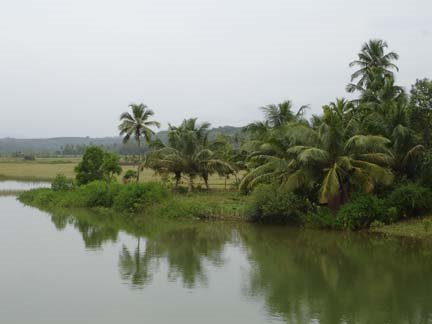
A Coastal estuary

A Coastal estuary
Holegadde near Honavar,Uttara Kannada dist, Karnataka

Copy? Right - but kindly remember to acknowledge!

Creative Commons License
This work is licensed under a Creative Commons Attribution 3.0 License.

" tulu-research.blogspot." ತುಳು ರಿಸರ್ಚ್. ಬ್ಲಾಗ್‌ಸ್ಪಾಟ್‌. ಇನ್

" tulu-research.blogspot."  ತುಳು  ರಿಸರ್ಚ್.  ಬ್ಲಾಗ್‌ಸ್ಪಾಟ್‌. ಇನ್
Have a nice day !