Showing posts with label Deepavali. Show all posts

Friday, November 5, 2010

Festival of Lights


Let there be light everywhere: in every heart, every mind !
Light is symbolic of positive aspects of our life,.like awareness, knowledge, happiness, progress and prosperity.

Sunday, August 30, 2009

206. Poli Poli

The emotive chant of “Poli Poli Baliyendra” has been reverberating in Tulunadu during annual Deepavali, festival of lights, since centuries. The word ‘poli’ has been accepted in this environs as representative of the prosperity. Let us explore the origin and evolution of this word. Pola The word ‘pola’(=agricultural field) is not familiar at present to Tuluvas as it is not employed in current usuage in general. However there are indications that the word (pola) was in frequent usuage in Tulu also in olden days. Pola is the ancient equivalent of ‘hola’ or the agricultural field as used in current Kannada. In Kannada language during evolutionary transition from old to middle Kannada p>h consonant replacement has taken place. Therefore, the word 'pola' existed in Kannada language also during the early centuries of CE.But the widespread occurrence of the word 'pola' suggests that it could be ancient Dravida or Munda word existing in India since early farming days. Thus it seems the original meaning of poli is the produce from the pola. During early days of civilization the agricultural produce was the measure of wealth and prosperity. Good crops meant prosperity. Thus the word ‘poli’ (agricultural produce from the pola) came to be accepted as prosperity and wealth. Pola festival The word pola however is not unique to Tulu and Kannada areas.It was spread widely all over India during ancient days. During Shravan Amavyasa (New-moon) day mostly in the month of August, rural folks celeberate pola festival annually in Maharastra, Madhya Pradesh, Uttara Pradesh , Bihar and other surrounding regions. Possibly the original meaning of the word ‘pola’(=agricultural field) has unfortunately been lost even in all these areas, even though the celebration has persisted over the centuries. During the Pola festival rural folks decorate and worship their cattles. In other words, the Pola festival has remained in these rural societies as token of thanksgiving to the animals that work in the agricultural field and contribute directly to the prosperity of the farmers. Dairy and farming were the major source of revenue during early periods of civilization . Thus cows,oxens and bullocks that are traditionally employed for agricultural field works are worshiped and sweetmeats like poli, kichidi etc are distributed. In other words, the Pola festival of Maharastra and northern India in its present state is equivalent of ‘Gow-puja’ (cattle worship) celebrated in Tulunadu during Deepavali. Note the name of the important sweetmeat distributed during the festival: Poli. Poli The sweetmeat name ‘poli’ (or poLi) may also appear unfamiliar to most Tulu and Kannada people, even though it is familiar in most of the other parts of India.However Tulu and Kannada people are aware of the sweet-dish ‘holige’ very well! Infact the ‘poli’ is presently known as ‘holige’ in Tulu and Kannada areas. It is also called as Obbattu or Bobbattu in other areas. If you again realize that p>h transitions that have taken place in kannada, it becomes clear that present ‘holige’ was known as ‘polige’ in olden days in Kannada areas. Idli : The addition of suffix ‘–ige’ to edible dishes seems speciality of old Kannada. Even the popular steam-baked rice-black gram dish ‘iDli’ was known as ‘iDDalige’ during the writing period of the first recorded Kannada text “Vaddaradane”( pron. vaDDārādane) of 10th century CE.The addition of suffix -ige could be considered as a feature of regional variance of those times. It has been suggested in an earlier post herein that Idli in the beginning was possibly invented or designed by or named after the Iddya (= Ediya, Yedia or Yadava) communities. In any case the name Idli has been named after them. Also note that both Iddli and Poli have suffix –li suggesting that the suffix (–li ) was applied to the name of the dishes in those days. Thus these discussions clarify that the dish holige was known as poLi even in Tulu and parts of Kannada areas during early centuries of CE. Poli = polige,holige, obbattu, bobbattu etc. The basic ingredients used for the preparation of poli (holige) are bengal gram, wheat flour and jaggery.These are all products of agriculture or derived from the pola! A 'poli' is a thin circular roasted pancake of wheat flour (nowadays replaced by maida) that contains within it a soft sweetish mixture (purana) of cooked gram and jaggery. Pūrana Northern Indians designate this sweet-dish as ‘purana poli’. The word ‘pūrana’ means the filler and refers to contents present inside the poli or the holige. (The word ‘pūrana’ is not to be confused with ‘purāNa’ =the ancient). The word ‘pūraNa’(=filler) still exists in Tulu language. It may be vestigial word brought by the immigrant tribes. Deepavali Deepavali festival has evolved to encompass several themes such as the return of exiled King Bali, execution of Narakasura,Cattle worship originally from the Pola festival, Worship of the place of business (shop, factory etc) etc apart from the festival of lights. During the coming Deepavali, if you happen to be in your rural environs where your folks chant ‘Poli poli Baliyendra’ try to recollect the related strings of evolution behind these words. The difference and the timing of these seasonal festivals 'Poli' (part of Deepavali in Dravidian languages speaking areas) and 'pola' (in Maharashtra and other Northern regions) is apparently governed by regional variations in weather conditions. These are festivals of Nature worship and Thanksgiving for Natures beauty and bounty.In other words Nature and the components of the Nature(like cattle) were considered as the primary divine force.
 Bringing harvested crop to home with devotion and joy is the essence of 'poli' festival. This is modified as 'Puddar'(=new rice) in Tulunadu, 'Huttari'(<. putt+ari =new rice) in Kodagu, 'Onam'(<.soNa or Shravana) in Kerala and celebrated during July-August months. These are the occasion of bringing home first spikes of paddy and having ceremonial special meal of new rice. Kural/Koral paduna/ kattuna parba) and Bali Padya during Deepavali (Oct.-Nov ). These are the occasions of remembering Bali Chakravarti and cattle-worship by farmers (See Post 'Bridge on mud crack'). The 'Pola' festival in Maharashtra and other parts of northern India represents the beginning of ploughing and sowing season whereas,during the Dussera /Deepavali time cattle are worshiped in the Karavali. 
 The other related harvest festivals are Pongal (in Tamilnadu and Srilanka, when the Sun and cattle are worshipped), Vasantotsava and Baisaki or Vaishakhi. 

  Rituals and language: Customs and rituals enrich a language. Poli vindicates this statement of truth. Expressions 'Pola' (=agricultural field) to 'Poli' (=crop) are tangible, but extention of the meaning of 'Poli' into auspiciousness and abundant wealth, is a perception of positive mind. Quoting some usages in Tulu Lexicon (p.2148) may not be irrelevant. Mark the following words and phrases: 
Poli = Granary 
Poli ODDaavuni = To bring first harvested crop into house. 
Poli paaDuni = To pile up paddy crop and sprinkle ashes in the form of lines on it. This gave rise to an idiom: 'Poli paaDandye baar aleppaDa' (Don't measure paddy prior to piling and sprinkling ashes around the pile in a linear form). This is an advice to farmers. This ensures protection of paddy - both from insects and pilferage. 
Poli = Interest, i.e. interest paid in the form of grains while returning borrowed grains (in a barter economy). 
Poli kanapuni = to borrow grains, promising to give more grains as interest while repaying. While the word 'poli' stood for auspiciousness and positivity in Tulu culture, the word 'pola' also gave rise to derived words like 'polus' (= soil,mud or dirt) which acquired different shades of meanings in different Dravidian languages in the due course. The interrelated words 'pola' and 'poli' and their regional distribution remind us the wider spread of the under currents of Dravidian language, culture and heritage in various parts of India in the antiquity. 
 -with Hosabettu Vishwanath ®

Sunday, November 18, 2007

54. The legend of Bali

Deepavali is a very popular festival in India and the significance is explained as a celebration symbolic of our innate aspiration to progress towards light from darkness, towards knowledge from ignorance and towards prosperity from poverty. It is also described as a festival of thanks-giving to the Mother Nature. Deepavali means array of lights.
In spite of this modern, positive-thinking style of explanations, the fact remains that the festival was originally conceived and celebrated by his subjects as an annual welcome- back ceremony for their beloved exiled King Bali. King Bali variously described as Baliyendra or Bali or Maha-Bali or Bali Chakravarthy (emperor).Remnants of what was originally a pan-Indian custom in ancient days of early civilization remains even today in Tulunadu and Kerala.
Vamana incarnation
The legend of King Bali and Vamana, the dwarf, has been absorbed into Purana-s, with Vamana considered as one of the incarnations of Lord Vishnu. (cf. Post 34: Ten incarnations).According to the viewpoint of Vishnu’s followers, Bali (a follower of Shiva cult) was pictured as a despicable Asura who deserved to be subjugated. This was in conformity with the Sura-Asura conflict of pro-Vishnu and pro-Shiva cultures in ancient India.
However, the other side of the story is more interesting and throws light on the theological-cultural conflicts during the early historical period.
Asura King Bali
What was the great sin done by this Asura Bali?
He was a philanthropist to the core, who willingly gave away free gifts to the needy people!
If we brush aside all humanly impossible fantasies woven into the said legend, the remaining core story is that King Bali, was fond of giving away gifts desired by the recipient! The standing offers was that Bali would give whatever is asked of him! One clever, dwarf beggar (Vamana) came and begged him to grant land enough to place his three steps.(Or maybe, he asked that he should be given wherever he places his steps ).King Bali agreed to provide him whatever the dwarf desired and the mischievous Vamana placed his foot on Bali’s head! Thus, Bali had no other choice than offer himself to the wishes of the dwarf, who sent him to exile to a place called Patala.
The word ‘bali-daan’ (means ‘sacrifice’, but literally ‘gift of Bali’) might have been coined from the self-sacrificing act of King Bali.
Patala
The concept of Patala in Purana-s, describe it as a nether world, a parallel world beneath the Earth. Since, there is no realistic/scientific basis for such a illusory world, we can presume that the ‘Patala’ fantasy represented a sinking island beneath the sea level. Early historical Greek reports like ‘Indika’ report a sinking island called ‘Patala’ near the Gulf of Cutch.
Deepavali in Tulunadu
In spite of depiction of Bali as a villain by the followers of Vishnu, the actual subjects of Bali fondly remembered and continued to respect their exiled King! They believed that their King would return and pay a visit to his subjects once in a year. They celebrated annual welcome their King festival in the form of Deepavali!
The chant of ‘Poli Poli Baliyendra’ in rural Tulunadu during the Deepavali night echoes the age-old custom of welcoming King Bali. Similar customs prevail in Kerala also.
Onam
Dr Zacharias Thundy in his ‘Kerala story’ reports similar legends on Bali from Kerala. Onam, in Kerala, is the celebration of the return of Maha Bali,(or 'Maveli') the legendary former and future king of the land. The King Bali according to the folklores, ruled over the Kerala during the Golden Age before castes existed, "when all men were equal, when no one was poor, when there was neither theft nor dread of thieves.
Mahabalipuram, Mavalli
It appears that in the early historical (pre-Sangam) period, the legend of Bali pervaded throughout the south India. In Tamilnadu, Mahabalipuram in the East coast is a town built in honour of King Bali.
Similarly,the town Mavelikkara in Kerala is named after the Maveli or the Mahabali.There are villages named Mavalli in Karnataka also.(One such 'Mavalli' is part of Bangalore city now)
Asura-Munda culture
Dr.Thundy reports that the Munda tribes of Chotanagapur area also have legends (somewhat different from those prevalent in Tulunadu and Kerala) built around their Asura King Bali. Asura is a group within Munda tribes. Bali is a common name among Munda tribes.
Munda substratum
All these data lead to the suggestion that King Bali was ruling Munda people in early historical days before. It was before the castes existed according to folklores. Caste system was systematically enforced ca.300 BC during the reign of Maurya dynasty. A large section of Early Munda people that inhabited all over southern India once upon a time were a civilized society that honored truth, democracy, philanthropy and other good values of life. Munda tribes were ruled by benevolent Kings like Bali. Possibly this led to the conceptual classification of civilization era into Satya, Treta, Dwapara and Kali Yuga-s (epochs).
Assimilation of cultural components
The immigrant Tulu, Malayali and Tamil and other (south) early Dravidian tribes that came and settled in various parts of southern India during the period 700 to 400 BC, peacefully coexisted, merged and assimilated with the early Munda culture. In the subsequent years Dravidian languages became powerful vehicles of mass communication. Consequently, the independant identity of early Munda culture in southern India was totally masked under the burden of evolving societies. Remnants of original Munda tribes in southern India are represented by some of the tribal groups living today.
Genetic studies
The genetic haplogroup studies apparently are in favor of such a theory of assimilation of immigrant tribes with the aborigines that settled and evolved in southern India during Paleolithic- Neolithic period. Manjunath is making concerted efforts to compile the available data on the genome studies done so far.

The current Tulu, Malayalam Tamil and other south Dravidian languages still carry an implicit undercurrent of Munda cultural elements and words in them. The persisting legend of King Bali in Tulunadu and Kerala is only an example of such assimilated undercurrent of Munda elements in our unified culture.

Blog Archive

Books for Reference

  • A Comparative Study of Tulu Dialects By Dr. Padmanabha Kekunnaya. Govinda Pai Reserach Centre, UDupi. 1994
  • Koti Chennaya: Janapadiya Adhyayana. By Dr. Vamana Nandavar. Hemanshu Prakashana ,Mangalore.2001.
  • Male kudiyaru. Dr B. A.Viveka Rai and D.Yadupathi Gowda, Mangalore University,1996.
  • Mogaveera Samskriti By Venkataraja Punimchattaya. Karnataka Sahitya Academy.1993.
  • Mugeraru:Jananga Janapada Adhyayana. By Dr Abhaya Kumar Kaukradi.Kannada & Culture Directorate,Bangalore & Karnataka Tulu Academy, Mangalore,1997.
  • Puttubalakeya Pad-danagalu. Ed: Dr B.A.Viveka Rai,Yadupati Gowda and Rajashri, Sri Dharmasthala Manjunatheswara Tulu Peeta. Mangalore University.2004
  • Se'erige. Ed:Dr K.Chinnapa Gowda.Madipu Prakashana,Mangalagangotri,2000.
  • Studies in Tuluva History and Culture.by Dr P Gururaja Bhat (1975).Milagres College,Kallinapur,Udupi.
  • Taulava Sanskriti by Dr.B.A.Viveka Rai, Sahyadri Prakashana,Mysore 1977
  • TuLu naaDu-nuDi By Dr.PalthaDi Ramakrishna Achar, Puttur.
  • TuLu NighanTu. (Editor in Chief: Dr U.P.Upadhyaya, Govinda Pai Research Centre,Udupi. Six volumes. 1988 to 1997
  • Tulu Patero-A Philology & Grammar of Tulu Language by Budhananda Shivalli.2004.Mandira Prakashana Mangalore. p.317. (The book is in Tulu Language using Kannada script)
  • TuLunadina ShasanagaLa Sanskritika Adhyayana. By Shaila T. Verma (2002) Jnanodaya Prakashana,Bangalore, p.304.(Kannada)
  • Tuluvala Baliyendre. Compiled by N.A.Sheenappa Hegde,Polali,Sri Devi Prakashana,Parkala,1929/1999

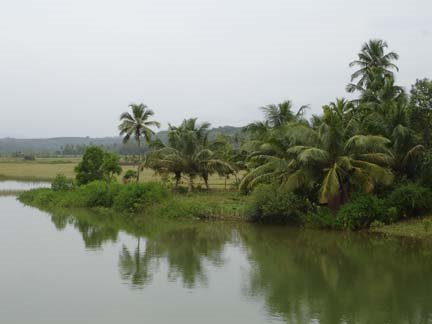
A Coastal estuary

A Coastal estuary
Holegadde near Honavar,Uttara Kannada dist, Karnataka

Copy? Right - but kindly remember to acknowledge!

Creative Commons License
This work is licensed under a Creative Commons Attribution 3.0 License.

" tulu-research.blogspot." ತುಳು ರಿಸರ್ಚ್. ಬ್ಲಾಗ್‌ಸ್ಪಾಟ್‌. ಇನ್

" tulu-research.blogspot."  ತುಳು  ರಿಸರ್ಚ್.  ಬ್ಲಾಗ್‌ಸ್ಪಾಟ್‌. ಇನ್
Have a nice day !