Showing posts with label lineage. Show all posts

Saturday, December 24, 2016

374. Banga and Bangera Bari

The Bangera ‘bari ‘( ‘gotra’) is one of the common lineage systems prevalent in Tulunadu  and found in most of the Tulu communities. We shall make an attempt to decipher the origin etymology and distribution of this particular lineage.
 It has been summarized in the older posts in this blog that most of the prevailing ‘ bari’ groups had origin as tribal groups in the antiquity which in the due course merged into different communities and castes formed based on lines of profession adopted by the people. In other words the “bari” system is older in the historical timeline than the caste and community system in our society as we find specific baris’ distributed among different castes.
We can find Bangera lineage in Mogaveera, Billava Bunt and communities. Even Koraga, Mundala and other communities also have Bangera lineage.

Banga and Bangera
The word “Banga” in the context of Tulunadu refers to one of the Jain dynasties that ruled the land. Places like Bangavadi, Bangra Kulur, Bangra Manjeshwar, Bangera-padavu  have remained testimony for the Banga rulers. While the Jain term “Banga” has remained as such, among the ancient tribes the Banga persons were referred to respectably as “Bangera”. The Banger(+a) in Tulu is a plural and honorific form used for respected persons. Thus it can be inferred that the “Banga” and “Bangera” were originally the same tribes in the antiquity.

Banga:  Benga+al
The term “Banga” in the epics, legends and historical documents refers commonly to the “Bengal” region of India. The Bengal is the modification introduced by the British rulers to the ancient word Banga. The spatial suffix –al commonly found in place names in Tulunadu, as well as in rest of India, represents a habitation (village) located on the bank of a river.
Origin of the term “Banga” is not clear among the Indian historians. Some consider it as indicative of the region whereas others consider it to refer to a specific ancient tribe. It has been said that the Banga tribes were mentioned in several ancient texts. Thus, it can be inferred that the term Banga refers both to the region and a specific tribe from that region. 

Banga places in Thailand
It is interesting to note that the Bang place names can be found extensively in Thailand and surrounding South–east Asian countries. The capital of Thailand is Bangkok. According to linguists “bang” in Thai language is a village located on the bank of a stream or river.  (The “kok” is a olive like tree). Some of the bang place names in Thailand .
Bang (Thai) = Village located near a stream   or river;  [Ala= village on river bank]. 
The origin of the term Banga is = ban (=water)+ ga (=village).
 Dispersion of Banga tribes as evident from the distribution of ancient Bang- place names (TR.374.)
Some of the Bang villages in Thailand : Bangkok, Bangna, Bangbo, Bangsare, Bang Rachan,  Bangsak,  Bangsak, Bangtao, Bang Bao,  BangPat, ,Bang Chan etc.
Thailand has a history influenced by India as reflected by evidences of Buddhist and Hindu religious elements that can be seen in their routine life. Similarly ancient Indian archeo-history has evidences of immigration of Austro-Asiatic (inclusive of South East Asians) into India in the past.
Thus it can be visualized that “bang” people migrated to India as a tribe in archeo-history and settled in regions like Bangal. (ie. the original form of Bengal) . We can apply the Thai meaning for ‘bang’ and ‘banga’ for the immigrant tribes and as well as the region where they settled in larger numbers.
It is quite interesting that the word “Bangal” consists of two words ‘banga’ + ’al ‘ having similar meaning but originated from different sources. It is possible that (a) the regional term Banga came into being because of the Banga tribes or (b) the tribes living in the Banga region would have later been known as Banga tribes.
In other words, the   “Bangal” represents the riverside region inhabited by ‘banga’ tribes.


Banga: earthen pot

Villages named Banga, Banga-an etc can be found in Philippines also. However, in Philippines the term “banga” also means earthen or clay pot. In a sense, the “banga“(=village) and the “banga”(=pot) are connected, since the clay required for  making pots is normally available in river side areas.
In Philippines a native dance form involving a series of earthen pots serially placed on the head is also known as “banga” dance.

Banga -place names in India
The census of India data for 2011 reveals that there are more than 717 villages (excluding hamlets) in India carrying the signature tag of Banga tribes. These are distributed in Uttar Pradesh (100), Assam (95), Bihar (92), Orissa (71), West Bengal (58), Madhya Pradesh (44), Jharkhand (41), Uttara Khand (36), Chattisgarh (31), Andhra Pradesh (30), Meghalaya (23), Maharashtra (19), Punjab (19), Rajasthan (19), Himachal Pradesh (12), Karnataka (11), Arunachal Pradesh (4), Tripura (3), Haryana (3), Tamilnadu (2), Gujarat(2), J&K (1), Andaman (1), Kerala (1), Sikkim(1), Lakshadweep (1) in the decreasing order of abundance given in brackets. (Note that in official village names the names of hamlets and settlements are not included.)

Some of the common banga village names in India are Banga, Bangi, Bangal, Bangla, Bangaon, Bangram, Bangoli, Bangori, Bangte, Banggo, Bangkong, Bangar, Bangera, Bangra, Bangapalli, angarpalle, Bangalbari, Bangawadi, Bangar wadi, Bangari-gada, Bangaru chelka, Bangaruvalasa, Bangaliguda, Bangapal, Banglera, Bangran, Bangranj, Bangergund, Bangre, Bangra, Bangoda, Bangaljhor etc.

Bangra

 The etymology of 'Bangra' as in place names Bangra Kulur and Bangra Manjeshwar is  Bang+ra , (or Banga+ra), where suffix -ra represents English 'of' and thus bangra means area related to the Banga people.

Bengal+uru
The conventional explanation attached to the city of Bengaluru is village of boiled beans/pulse or “benda kāluru” to be specific. It is rather odd that a name like ‘benda-kāluru’ should become Bengaluru with passage of time.
How about finding an alternate explanation for this place name naturally as “Bang+al+ur”?
If you accept the explanation of   bang+al+uru for Bengaluru, then   it suggests that (a) the Banga tribes had settled in the place known now as Bengaluru and (b) the original location of Bengaluru was on the bank of a river.
The western side of Bengaluru city represents a linear river valley (presently dried up) trending along more or less N-S direction. Even the existence of numerous lakes in Bengaluru  (now unfortunately encroached upon by the greedy land mafia) also indicate remnants of former stream system. Thus the geographic and geological data suggests that Bengaluru was on the bank of streams in the antiquity.

Banga: Panga
During early historical days many languages lacked differentiation between the consonants p and b. Even today, Tamil uses a common consonant for p and b. Thus “banga” was pronounced as “panga” in several areas during early history. Thus,  for example, we have “Pangala” a riverside village near Udupi instead of  Bangala. Similarly there are a large number of ethnonyms of ancient villages and hamlets having a prefix of ‘panga’ instead of ‘banga’.

Further it is interesting to note that place names like “Pangala” (pan+ga+ala) [similar to the word ‘Bangala’] contain repetition of word units with same meaning, since both “panga “ (or “banga”) and “ala” mean  village/habitation beside water. An ancient case of pleonasm or tautology in the  formation of words.


Further note that similar to pāni (=water), the word “pani” (ie with short a) means a drop of water,  in Tulu, Kannada and other sister languages. Also compare the Kannada word ”ibbani” (= dew drops) derived from ir+pani or two drops.

Panga- Pangal place names
There are some 310 villages having the prefix of “Panga” in India. These are distributed in  Maharastra (107),  Jharkhand (85), Orissa (44), Madhya Pradesh (24), Arunachal Pradesh (17),  Andhra Pradesh (14), Chattisgarh (12), Uttara Khand (11), Manipur (9), Assam (9), Jammu & Kashmir( 8), Tamilnadu (7), Himachal Pradesh (7), Uttar Pradesh (6), Nagaland (5), Mizoram (4), Karnataka (4), Gujarat(2), Kerala (2), Bihar (2), Punjab (2), West Bengal (2), Haryana (1), Rajasthan (1), Meghalaya(1), Sikkim (1) in the decreasing order of abundance.
Some of the Panga village names are: Panga, Pangi, Pangala, Pangola, Pangeri,  Pangarga, Pangna, Pangaon, Pangri, Pangara, Pangam, Pangarbari, Pangalthur, Pangali, Pangudi,  Pangode,  Pangar, Pangur,Pangra, Panglar, Pangdo, Pangna,  etc.


Differences in the levels of abundance of distribution of Banga vs. Panga place names in various regions represented by different states of India, possibly suggests the influence of different languages and chronological episode  in the background.

Banga: Vanga
Refinement of the Prakrit group of languages (Sanskritization ) resulted in changes in place names.  Thus under this scheme Banga became Vanga. For example, our epics describe Bengal as “Vanga” desha.

Vanga -place names
There  are some 58 official Vanga villages in India, distributed in Andhra Pradesh (23), Gujarat  (9),  Maharashtra (8), Tamilnadu (7), Karnataka (4), Uttar Pradesh (4),  Mizoram (2) and Manipur (1).


Tracing the Bangera bari from Banga tribes
In conclusion, the name of Bangera bari (lineage) has been derived from the Banga tribes. In Jains of Tulunadu the name ‘Banga’ has remained as a name of the minor dynasty as such, whereas in the case of other Tulu tribes the Banga were designated respectfully by other fellow tribes as seen by the usage the plural form of Bangera. The term Bangera (literally means the Bangas’) is the plural form of Banga. 


There is a suggestion that the etymology of  Bangera   could be ban + kera >Bangera. This leads to the interpretation of Bangera as one who winnows in water ie. Boatman or fisherman, fishing being one of the basic profession next to hunting of early humans.  However, I prefer the banga+er,  ie  the Bangas as a tribe which is reflected in Banga/Vanga region (Bengal apart from numerous villages of Banga and their modified variants Panga and Vanga) in India as well as the existence of Banga as a dynasty of Jains.

Thus we can trace the historical migration of the Banga (tribes of Bangera bari ) from the immigrants of South East Asia (probably Thailand region)   through Bengal region to Tulunadu. There are also other evidences for migration of tribes from Banga/Bengal to Tulunadu in place names. For example, check the place names in Tulunadu like "Shibaroor" and "Shibrikere", where "Shiba" is used in typical Bengali style instead of "Shiva".

R 

Monday, February 29, 2016

356. Kooda bari – A pre-requisite in Tulu Marriages


Matrilineal system is followed predominantly in Tulu Nadu.  More or less identical ‘bari’ names (Clan / lineage names or Gotra) are invariably followed by majority of original inhabitantsof this land (See Post-211/30.10.2010: Genetic tags & 286/03.09.2011: Bari system predates castes).
On reading our article on Billavas (Post-314/03.08.2013) one of our readers, Nithesh M.R., wants us to explain the meaning of ‘Kooda bari’ in Tulu. 
It is a well-known compound word:  Kooda (mixable/ enjoinable) + bari (Gotra or Clan name).  ‘Koodu’ means ‘to come together or unite’. The compound word denotes compliance with certain customs or social rules prevailing in natives of this land while accepting a marriage proposal.  It is a prerequisite consistently followed in Tulu Nadu so far (excepting the present day developments)and for that matter,elsewhere too.
Koodabari
‘Madumegu koodabariye aavodu, bete ovvulu bari aavandu’ (ಮದುಮೆಗು ಕೂಡು/ ಕೂಡಬರಿಯೇ ಆವೊಡು, ಬೇತೆ ಒವ್ವುಲ ಬರಿ ಆವಂದು). Before agreeing upon a marriage proposal, elders from both sides of groom and bride take care to see that alliance to be compatible fathers and mothers are from different genetic lineage (Bari). This is the meaning of the statement in Tulu quoted above.
Essentially, the term “kooda bari” means permissible lineages for fixing marriage of a bride and a bride groom. The maternal lineage of the bride and the bridegroom should not be the same ‘bari’ or linage.
When elders say that ‘bari tappunu’ (ಬರಿ ತಪ್ಪುನು), it means, clan name differs; it is a signal to go ahead discussing further nitty-grittyand finalizing the proposal.

Harm in marrying among kinships
In matriarchal system, surnames of both the fathers and mothers are taken into account. Marriage between maternal uncle and niece is specifically banned.  In patrilineal, tallying of genetic lineage of fathers is paramount. There is a custom of maternal uncle marrying his niece in patriarchal families.
Scientifically, the underlying principle in having different ‘bari’ is to procreate a healthy child.  Marital relationship is forbidden between girl and boy, having parents of same blood or nearest kinship.  Consanguineous marriage may continue the defects in blood of concerned families, thus contributing to poor health of would be progeny. This wisdom of our forefathers has been sometimes ignored by present day generation with changes in professions and in life-style.
Types of marriages
Characteristics of various types of traditional marriages are defined in our ancient knowledge.  There were eight types of marriage in our country in the past:
Brahmya: Marriage solemnized after acquiring knowledge during celibacy period.  This is a marriage between educated, religious and righteous minded couple.
Daiva:  This is to marry a boy, engaged in religious rites, say sacrificial religious performances (Yajnas).
Aarsha:  This is a boy, marrying a girl, by giving dowry to bride’s father.
Prajapatya:  This is a marriage to fulfil duties of propagation of family line and family traditions.
Aasura:  To marry by giving something to both groom and bride.
Gandharva:  This is a marriage by mutual consent but without following the traditional customs.
Rakshasa:  Here, marriage is preceded by a fight.  Girl is forcibly married.
Paishacha: This is marrying a girl after raping when she is sleeping or intoxicant.
All above types fall under endogamy or exogamy custom of marrying.  Some of the types of marriage cited above are not relevant now but some are still relevant in some ghastly form or the other in our so called civilized society.

Conclusion
There is a sea-change in our marriage traditions.  ‘Marriage’ is a vast subject.  This article is only to satisfy the curiosity of our reader Nithesh.

-Hosabettu Vishwanath, Pune


Sunday, March 13, 2011

271. Nanda Kings and Kongas in Sangam.


We have discussed some rudimentary data on the Nanda Kings of ancient Tulunadu in Post.268. Tamil Sangam literatures allude to Nannan, Konga and Punnata Kings who were conspicuous by their presence during the Sangam period.
One interesting analytical work in Kannada on the status and features of Kannada Nādu during Tamil Sangam period based on the analysis of Tamil Sangam literature by Professor Sh. Shettar throws some light on these obscure ancient Kings of western Karnataka and Tulunadu.
Tamils of Sangam period referred to ‘neDumoLi’(=people with imperfect Tamil) and ‘tiruvmoLi’(= people with impure Tamil) etc in their works to designate neighbours with imperfect command in Tamil language.
Tolkappiyam
Tolkappiyam (ca. 1 century CE) has been considered as one of the earliest Tamil Sangam literature dealing essentially with aspects of Tamil grammar. The title of the work, Tolkappiyam has been explained as ancient composition, wherein, Tol=ancient; kāppiyam=composition. One of the possibility is that the word ‘kāppiyam’ is influenced from the Sanskrit word ‘kāvya’ for poetry or vice versa. Similarly, one wonders if the word ‘tol’ was Tamil analogous of the word ‘Tulu’.
During the Sangam period it is said that derivation of Tamil words from Sanskrit did take place. One example given is the transformation of the word ‘Rājan’ (=king, Sanksrit).
 Rājan.(Sanskrit) >a+rajan.>arasan (Tamil).
According to Tolkappiyam the Tamil kingdoms of the Sangam period extended from ‘Kumari’ (Kanyakumari) in the south to ‘Vengadam’ (Venkatadri or Tirupati) in the north. The western or northwestern borders of the ancint Tamilgam have not been mentioned. However, Tolkappiyam mentions ‘Vadugar’(=northern people),’Vadamol’ or ‘Vadasol ‘ (=northern language; Sanskrit ? ) etc.
Erumai-nādu, Mysore.
These ‘Vadugar’ are distinguished from people of ‘Erumai-nādu’ (ancient Mysore area).The word ‘Erumai’ (=buffalo) is notable as it indicates that, like in Tulu and Tamil, the original word in old Kannada for buffalo was ‘erumai’ which transformed into ‘emme’ in later Kannada. In the later period, the ancient ‘Erumai-nadu’ or ‘Erumai-nalnadu’ under the influence of Sanskrit was renamed as ‘Mahisha-mandala’. Mahisha-mandala later became ‘Mahishur’ and ‘Mysore’ with passage of time.
Ashoka and Satiyaputo
It is opined that the Prakrit and Pali languages were apparently known in southern India because of spread of Buddhism and Jainism in the south, since ca. 3rd century BC. Pali written in Brahmi script was prevalent in ancient Srilanka (Tāmraparni) also.
Ashoka in his rock edicts, written in Pali language with Brahmi script, cites the three kings (muvendra) of south namely (Chola, Chera and Pandya) besides ‘Satiyoputo’. He does not mention any of the Erumai, Punnata, Konga, Tulu, Katumba (Kadamba), Mohur and Kosar rulers of the south. Prof Shettar suggests that these rulers were left out in the edicts because they did not comply with Ashokas religious principles or political directives.
Nan(d)an
The King Nannan (Nandan?) cited by more than twenty Sangam poets including Mamulnar, appears to be one of the Nanda Kings of the southern Karavali and Kodagu. Nannan has been depicted as king of Konga tribes in Sangam literature. He has been described as king of Konkan hill area (Eliyal hill) in Purananur. There is also reference to an area reknown for gold deposits. It could be that one of the Nannan (Nanda) King extended his kigdom upto Kolar known for substantial gold deposits. Incidentally there is a place near Kolar is called Nandagudi.
When a Chola King confronted Nannan Udayan (Nandaraya Udaya) near Karur in a war ,the latter made combined alliance with Arai, Ganga (Kangan), Punnata Kings and beheaded the Chola Commander so that Chola King had to rush to the warfield personally to take guide the army.
 Agananur cites that Nannan subjugated Pindan in the Eliyal hill and that he drove off Kosars from Tulunadu.It appears that Nannan was ruling over Tulu Konkan regions located to the northwest of Tamilgam.He was said to have had  a five layered fortress in Eliyal hill. He had another fort with high walls separated by deep trenches in Agappa hill to the north of Umablkad (= forest of elephants).
There are references to ‘Eliyal hill’, the abode of Nanda Kings, in Sangam literature. There are several possible Eliyal hills in Tulunadu or in northern Kerala.The word Eli has created confusion as it also means a rat. Elu means number seven. Otherwise ‘Eliya’ were an ancient tribe that inhabited these coastal regions.In Kerala Elimalai or Ezhimalai is a coastal hill where at present a naval academy is being built. Keralites believe that Elimali is the Eliyal hill referred to in Sangam literature.
One Eliyar padavu is located south of Mangalore near Amblamogaru village.Sangam poets refer to ‘Umblakadu’. Was this a place close to Amblamogaru? Besides, there is an Elimale in Sullia taluk. There is also one Elinje near Kinnigoli. Anyway possibly there is an interesting link between the Nanda Kings and the abode of Eliyar tribes.
There were skirmishes between Nannan and Chera Kings. In one of the wars, Noormadi Cheral surrendered his crown and necklace to Nannan. In one of the wars, Chera and Pasum Pandya (along with his subordinate Neduman Anji)combined themselves and fought against the valiant Nannan; In that skirmish Atiyaras lost his head to the pleasure of jubilant Kongas carrying shining swords.
The King Nannan cited in Tamil Sangam ultimately died in the warfield near Wagai, Tamilanadu, when fighting against a Chera King.
Konga
Shilappadigaram has described Konga tribes hailing from Kodagu area. Accordging to Sangam ‘Paditrupattu’, at one period Kongas ruled Karur in Tamilnadu and Chola Kings struggled to defeat them. The word ‘Konga’ in Tamil means honey apart from the name of the tribe.Possibly Konga tribes could have been a honey collecting tribes in the beginning. Some believe that Konga were the rulers later known   as ‘Ganga’ dynasty in Talakad, in Mysore region.
Where there Kongas in Tulunadu?
Yes, we have described in the older posts several signature villages of ancient Kom tribes in Tulunadu such as Kompadavu, Komdodi, Konchadi etc. It appears that the Kom were subsequently known as ‘Konga’. (Like Kor were subsequently known as Koraga.) The suffix –ga in these names indicates person or the group.
Kom+ga=Konga.
Kor+ga=Koraga.
At places ‘Kom’ were also known as ‘Komcha’ (as in place name ‘Konchadi’, northern Mangalore) wherein  the suffix   ‘–cha’ refers to tribes or people.
The word Konkan that refers to part of West Coast also might have had origin from Kong tribes. Such as Kong+an=Konkan.
It appears that subsequently the Kom or Kong tribes pervaded many areas of southern India. Kongas lived in areas endowed with ‘kadiru-mani’ (ruby corundum) according to Purananur. Regions to the east of Sullia, Subrahmanya, Kodagu ,Arakalagud in Hassan, Kabini  and southern Mysore are the areas known to have good deposits of ruby corundum. Konga tribes were fond of decorating themselves with rubies and yellow flowers known as ‘Kongilavam’.
There is a Komara beedu in Mysore city. Kannada people of Mysore region usually use the word ‘Kongaru’ for the Tamil people.Parts of Coimbatore and Salem districts of Tamilnadu were known as Kongu-desha in history.
Kong tribes were valiant fighters. According to Paditrupattu they employed lever based machinery (probably wooden) to throw large stones at the opponents. There were also Konga rajas during the history in Kerala. Probably a group of Kongas were later known to have formed the Ganga dynasty.One of the founders of the Ganga dynasty was known as Konguni Varma.

Assimilation
The ancient Nanda (Nandara, Nandarannaya lineages), Kom (Kommatti lineage) and Konga (Kongaru or Kongarannaya lineages) tribes have at least partly been assimilated with the Bunt-Nadava diaspora community during the progress of the Tulu history. The corresponding lineage names have survived as genetic testimonies to this observation.
*

References:
Sh. Shettar (2010). ‘Shangam Tamilagam mattu Kannada Naadu-Nudi’.  (In Kannada). Abhinava, Bangalore, p.261.
Murkot Ramunny (1993)   Ezhimala: the abode of the Naval Academy, p 104.Google books.
 
®

Saturday, April 21, 2007

18. Locations of Moolasthanas in Dakshina Kannada & Udupi districts

The Moolasthanas are the original settlements of Tulu tribes before they split into various castes based on their occupations. It can be estimated based on crude markers that the Tulu migrant tribes settled in coastal parts of Karnataka about 2200(±200) years ago. The estimation of settling date can be made more accurate with availability of more accurate markers. Fishing was, apparently, one of the earliest occupations they could adapt to.

The ‘Mogaveera’ monthly, Mumbai, (March 2007) has published a list of Tulu Moolasthanas that celebrate annual festivities during March to May period this year. The list is provided for studying some of the locations of Moolasthanas in the coast. There could be more Moolasthanas than given in the list. Documentation of more than one Moolasthana for a lineage possibly indicates subsequent migration of the fraction of the

Lineage

Location

Village

District

Amin

Yermal

Tenka

Udupi

Bangera

Hoode

Udupi

Gujaran

Sultan-battery

Bolur

Mangalore

Kanchan

Polipu

Udupi

Karkera

Baikampadi

Mangalore

Karkera

Yermal

Bada

Udupi

Kotiankar

Kaup

Udupi

Kundar

Kodi

Hejmadi

Mangalore

Maindan

Mulki

Mangalore

Mendon

Kote

Katpadi

Udupi

Pangalannaya

Baikamapdi

Mangalore

Puthran

Mulki

Mangalore

Puthran

Tadambail

Surathkal

Mangalore

Salian

Kadike

Haleangadi

Mangalore

Salian

Yermal

Bada

Udupi

Salian

Palimar

Udupi

Shriyan

Gudde

Pangala

Udupi

Shriyan

Kadapi kariya

Kuloor

Mangalore

Suvarna

Hiriyadka

Udupi

Suvarna

Kulai

Mangalore

Tingalya

Kadike

Haleangadi

Mangalore

lineage.

Saturday, March 24, 2007

9.The Moolasthana concept

Do we have moolasthana concept in other parts of India?

Many of the TuLu communities have the concept of a moolasthana, moola (original) +sthana (place), where the ancestors of their lineage originally settled and lived. The lineage is called bari (pronounced as short ba as in bun) in Tulu. It is equivalent of bali (pronounced as short ba as in bun, li as heavy Li common in south Indian languages) or baLLi in Uttara Kannada and gotra in Brahmin communities. The term baLLi means plant creeper, which is symbolic of the family lineage. The term bari must be Tulu equivalent of the word old Kannada word baLLi. This explanation is required because in TuLu, word bari has another meaning ‘the side’.

The moolasthanas in Tulunad have a small temple dedicated to the divine spirit (Daiva or Bootha), Naaga or the Bermer′. As a consequence of socio-cultural evolution, many of these moolasthanas have replaced the original deities with subsequent deities like Durga or other Gods and are located near the beaches or in the proximal areas in the coast. Tulu families have a ritual of visiting their respective moolasthanas at least annually. At the small temple there they conduct ceremonial worships.

I visited one such moolasthana near Hoode, about ten kilometers north of Udupi town. Hoode hamlet is located near the estuary of Sita and Swarna rivers. The word Hoode is a place indicator. ‘Ade, ide, ode’ etc place indicators mean ‘there,here,where’ respectively in Tulu.(Similar words exist in Malayalam).

The moolasthana is located at Bengare near Hoode. The word bengare or bangere has equivalent meaning of a sand spit. Ben+kare stands for ‘a place opposite coastline or beach ’. The lineage indicator bangera is apparently derived from bangare. This is the moolasthana of TuLu people of bangera lineage. Interestingly, all TuLu communities belonging to the lineage of bangera have designated this site as their moolasthana. The present day castes like poojari, sapalya, moolya, marakala etc have been formed on the basis of their trades or professions. But all these TuLu communities carry common lineages tags (surnames) like bangera, putran, anchan etc. Lineage of a person is affixed based on the lineage of his mother (as in matriarchic society).

The common lineage for diverse communities indicates that the lineage system predates the classification of people into diverse communities based on trade or profession. It seems the trade based classification, the varna system, came into being in the post Vedic times after elucidation of chaturvarna. By Chandragupta (ca. 340-293 BC) and Chanakya period (ca. 350-283 BC), it was firmly entrenched in Indian society as reported by Greek historians. Therefore, it can be inferred that the maternal lineage system of Tuluva people is probably of late Vedic age.

The moolasthanas appear to the earliest settlements of Tulu people in the west coast. (Possibly, there were other inhabitants in the land before the arrival of Tulu tribes. Like, the early Munda tribes that gave plethora of village names with Munda prefix. (cf. 8.Mundkur, Munder) It is interesting to note there is a similar sounding place Mool-thaan (Multan) near Salt Ranges. The word thaan in Prakrit is analogous to sthan in Sanskrit. The inhabitants of Pirak and Mehrgarh area had settled near a place they called Multan or original place.

However, due to various reasons, several families migrated southward through Rajasthan Gujarat, Maharastra and settled in sites in the West Coast. It appears that when their offsprings/progenies migrated again within Tulunad, these coastal settlements were again called moolasthanas.

Do we have moolasthana concept in other parts of India?

I request other researchers to comment or contribute with any relevant information that they may have.

Blog Archive

Books for Reference

  • A Comparative Study of Tulu Dialects By Dr. Padmanabha Kekunnaya. Govinda Pai Reserach Centre, UDupi. 1994
  • Koti Chennaya: Janapadiya Adhyayana. By Dr. Vamana Nandavar. Hemanshu Prakashana ,Mangalore.2001.
  • Male kudiyaru. Dr B. A.Viveka Rai and D.Yadupathi Gowda, Mangalore University,1996.
  • Mogaveera Samskriti By Venkataraja Punimchattaya. Karnataka Sahitya Academy.1993.
  • Mugeraru:Jananga Janapada Adhyayana. By Dr Abhaya Kumar Kaukradi.Kannada & Culture Directorate,Bangalore & Karnataka Tulu Academy, Mangalore,1997.
  • Puttubalakeya Pad-danagalu. Ed: Dr B.A.Viveka Rai,Yadupati Gowda and Rajashri, Sri Dharmasthala Manjunatheswara Tulu Peeta. Mangalore University.2004
  • Se'erige. Ed:Dr K.Chinnapa Gowda.Madipu Prakashana,Mangalagangotri,2000.
  • Studies in Tuluva History and Culture.by Dr P Gururaja Bhat (1975).Milagres College,Kallinapur,Udupi.
  • Taulava Sanskriti by Dr.B.A.Viveka Rai, Sahyadri Prakashana,Mysore 1977
  • TuLu naaDu-nuDi By Dr.PalthaDi Ramakrishna Achar, Puttur.
  • TuLu NighanTu. (Editor in Chief: Dr U.P.Upadhyaya, Govinda Pai Research Centre,Udupi. Six volumes. 1988 to 1997
  • Tulu Patero-A Philology & Grammar of Tulu Language by Budhananda Shivalli.2004.Mandira Prakashana Mangalore. p.317. (The book is in Tulu Language using Kannada script)
  • TuLunadina ShasanagaLa Sanskritika Adhyayana. By Shaila T. Verma (2002) Jnanodaya Prakashana,Bangalore, p.304.(Kannada)
  • Tuluvala Baliyendre. Compiled by N.A.Sheenappa Hegde,Polali,Sri Devi Prakashana,Parkala,1929/1999

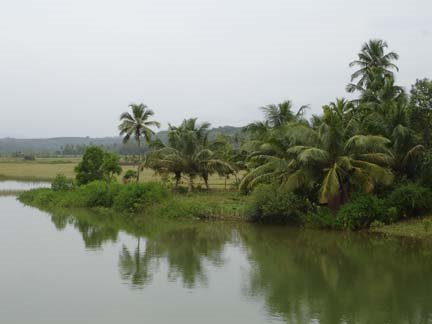
A Coastal estuary

A Coastal estuary
Holegadde near Honavar,Uttara Kannada dist, Karnataka

Copy? Right - but kindly remember to acknowledge!

Creative Commons License
This work is licensed under a Creative Commons Attribution 3.0 License.

" tulu-research.blogspot." ತುಳು ರಿಸರ್ಚ್. ಬ್ಲಾಗ್‌ಸ್ಪಾಟ್‌. ಇನ್

" tulu-research.blogspot."  ತುಳು  ರಿಸರ್ಚ್.  ಬ್ಲಾಗ್‌ಸ್ಪಾಟ್‌. ಇನ್
Have a nice day !