Wednesday, April 23, 2014

335. Pudu, Puduvettu, Puttur: The New Villages


Scientists explain that our forefathers, the human beings, evolved at a place in Africa and migrated to different parts of the world with passage of time.  Naturally, the primitive words which formed the building blocks of the early languages and vocabulary also travelled with migrating people to different parts of the world. The existence of common analogous words in different languages, stand mute testimony to this essential fact. Of the numerous basic words adopted and inherited by our people, Putu/Pudu appears to be one such basic word.
Location of Pudu Village

Pudu: A place name
Travellers frequenting on the Mangalore-Bangalore Highway might have been familiar with a place known as Farangipete, located about 14 km from Mangalore. It is situated on the northern bank of River Netravati. The “Farangi-pete” as the name reveals was a settlement of farangis (=the foreigners). (pEte/ pEnte =township; pEte, Kannada; pEnte, Tulu). It can be presumed from the place name that the early colony of Farangipet was adopted by probably British people who settled in this area during the period 17th or 18th Century CE.
However, since the Farangipete is an integral part of the village known as Pudu, we can infer that the original name of Farangipete was Pudu.
We shall discuss the place name Pudu and its possible significance in the evolutionary history of Tulu language and the Karavali. Incidentally, our survey shall also include the place name Puttur which now people preferentially interpret as Poota-oor or the village of flowers.

Pudu
The ancient place name Pudu originally meant a new settlement. It can be emphatically said because numerous villages all over India still carry the prefix of Pudu in the place names. However, we find that in Tamilnadu villages with Pudu prefix abound as can be seen in the following  section : Pudu villages in India.
The term Pudu in the sense of new settlement does not explicitly exist in present Tulu usage that shows the nature of changes that the language has undergone over the historical evolution.
Please note that the word Pudu also has another meaning in Tulu:  Pudu2=dove, pigeon.

Puduvettu
Puduvettu is a remote village in Belthangadi taluk, Dakshina Kannada on the foothills of Sahyadri (Western Ghat) ranges. However this place name is not exclusive to Tulunadu; we can find similar place names in Tamilnadu.

Puttur
Puttur is a major town and a Taluk headquarters in Dakshina Kannada district. The place name Put+ur reveals that it was a new village when built probably about two millennia ago. However, now Tulu people in general have forgotten the original meaning of the word Putu and interprete the word as poo (=flower) or pootta (=related to flower) resulting in the meaning of the  Puttur town being interpreted as village of flowers.


Puthige, Puthila
The place name Puthila (Putu+ila) refers to a new settlement. Similarly Puthige (Putu+ige) also means a newly built place.

Satiyaputo
Satiyaputo was the name of a capital town in Tulunadu during the regime of King  Asoka regime (ca 300 BC). Possibly the Satiayaputo is the Pali/Prakrit version of the place known as ‘Satyanapura’ in the famous Siri  PaDdana. (This blogger in an earlier Post (No 309)has suggested that the Satiyaputo refers to Saccheripete area, the centre stage of Siri paDdana).

Thus the Pali/Prakrit term Puto is equivalent of Putu or Pudu in Tulu and other Dravidian languages. The Pali term puto possibly evolved into pura in Sanskrit. (Some people may like to think vice versa depending upon their preset conceptions).

The Tulu Village names Pudu and Puduvettu now basically sound like Tamil words, since ‘Pudu’ prefix is a most common in Tamilnadu and it is almost obsolete in current Tulu.

Alternately, it can be inferred that the word existed in early Tulu and vanished from the usage later. Probably the early Tulu was much similar to ancient Tamil as also suggested by references to ” Tulunatta Tamil”  in ancient Tamil Sangam texts.

Puta : An Ancient Word
Put, Puta is an ancient word for new, or new born. In ancient Sumerian language the word ‘puta’ meant womb, the organ responsible for the birth of the new baby. In many languages, it has retained the original meaning of new born or newly established/created especially in Dravidian and Prakrit and related  / derived Indian languages.

Relevant Tulu words
Posat='new' (festival); also known as  Puddar festival; festival celebrating arrival of new paddy from the fields.
Puddar= put/pud+ bār  (=New paddy: Newly harvested   paddy).  Pudbār > Puddar. An annual traditional farming  festival celebrating the advent of   new harvest.  Also known as ‘Posat’ (= New).
Podu= new (matrimonial) alliance.
Pudar=put+ar= Name: A newly designated word (=name) to a person or object.
Pudu, Pudur,Puttur = new town. The Old Tulu word was apparently quite analogous to Old Tamil in the beginning? 


Puttubari / Puttupurapu =  family profile, family honour and traditions.
Puttu/Putta/Puru = small (Putta baale, Purubaale).
Puttu = Beloved child, ( female or male ).

Puttye = Ant hill. ( A earthen structure built by ants and occupied by Snakes)  
(There is an alternate proposal for the place name  Puttur that can  be explained from Puttye or ant hill.)
Pudelu = wild bush or sapling.
Purye= roof,ceiling or shelter. Note the Tulu proverb: "Taregonji purye bodu" ( =Every head needs a shelter)

Other  Dravida /derived languages
Pudu, Putu (Tamil), Put+u(r)= newly established settlement.
Puttari   (Kodava)=put+ari (= New rice: Newly harvested rice). Kodava  synonym for Puddar festival.  Huttari ( Kannada). Puttari> Huttari.
Putu (Malayalam and Beary )= baby, boy . Pudu-varsham (Malayalam)= New Year.

Pudu in Prakrit, Punjabi and Sanskrit usages
Puttar (Punjabi)= baby; son/daughter. Puta, putra1=newly arrived baby; boy
Putra2= (Prakrit/Pali)= newly built  town.  For example, Pataliputra.
Putri= new baby girl.

Pudu villages in India
Andamans: Pudumadurai
Andhra Pradesh: Pudu, Pudur, Puduru,
Arunachala Pradesh: Puduwan.
Assam: Pudum Pukhuri
Chattisgarh: Pudu.
Karnataka: Pudu-kallahalli, Pudu, Puduvettu, Puttur.
Kerala: Pudussery, Puducode.
Manipur: Pudunamei.
Orissa: Puduni, Pudunisaga, Pudunbadi,Puduga pathor,Pudugabali, Pundungi padar, Pudugasil.
 Puducherry: Pudukuppam.
Tamilnadu:Pudugummidipundi,Pudupalyam,Puduvoyal,Pudupakkam,Puducheri,Pudukuppam,
Pudumaealnagi,Pudupattu,Puduppair,Pudupattinam,Pudupattu,Pudukesavaram,Pudur,Puduppadi,Pudurnadu,Pudupatti,Pudukottai,Pudukotti,Puduchengam,Puduchekkadi,Pudupalapattu,Pudukalani,Pudupuliyampatti,Puducombai,Pudupeerkadavu,Puduvadi,Puduruthamanur,Pudukudi,Pudukkudi,Pudurpalyam,Pudunaduvalur,Puduvettagudi,Pudumapalayam,Pudukkodai,Pudukuraipettai,Puduthurai,Pudupathur,Pududevangudi,Pudunagar,PudukottaiUllur,Pudukottagam,Pudunagar,Pudurivayal,Pudunilavayal,Puduvakkadu,Puduvettivayal,Pudukilavachi,Pudukkulam,Pudusukkampatti,Pudukulam,Pudur,Pudumadam, etc.

West Bengal: Pudung Kasmaral.

Origin of Shades of meaning
The term Puta (=womb) or its equivalents Putu/Pudu appears to be one of the oldest words for creation known to our forefathers since  Sumerian Period which is generally considered to be one of the oldest documented languages in the world. Creations, as in the perspectives of the early ages, generally referred to the production of new babies, agricultural crops or the construction of new townships.
Thus originally the term appears to have represented (a) newly born baby, (b) newly established/created village or hamlet or (c) birth related reproductive organs. 
Various derived or modified or corrupted forms of the word Put/Pudu are in current usage in several  European as well as Indo-Aryan and Dravidian languages. (For example puta in Greek means a Goddess of agriculture or a Roman Goddess of pruning trees. However, in Hebrew  the word refers   to female genitalia. In Portuguese and Spanish it means a bitch or whore and so on. Similar usages can also be seen in Tulu and other Indian languages.)

Significance of Pudu place names
The Pudu, as far as place names concerned, appears to represent newly constructed village or townships in ancient days. The word is still exists in Tamil and Malayalam but has become obsolete in Tulu. However, the existence of Pudu Villages in Tulunadu (such as Pudu, Puduvettu, Puttur etc.,) reveal that the word existed in early Tulu. In that case the places like Pudu, Puduvettu and Puttur were established quite early in the history probably corresponding to early centuries of the Common Era.
However, even though the word pudu has been vanished in current Tulu usage it has been modified or evolved to usages such as podu (in Tulu) which means a new matrimonial proposal or alliance.

⃝

Tuesday, March 25, 2014

334. Secret of Ambagilu


We have seen that words, denoting name or action, come into usage every now and then with specific meaning or significance. Some of them become inscrutable with the passage of time.  It is a leap in dark attempting to decipher or interpretsuch words. This is very much true in the case of place names.
Ambagilu, which is located between Kalyanpur (See Note) and Udupi (town entry point) is an example to be studied.
Enigma of Ambagilu
It seems to be an easy and plain word but there is something curious about it. Every time when I cross Ambagilu or Ambagalu, the curious name provokes me to find out its exact meaning.  It rhymes with Mumbagilu (Front door) or Himbagilu (Back door) in Kannada.  The Tulu Lexicon (Page 29)splits the word as “Am? + Bakilu” and gives a generalized meaning as ‘Main entrance (of a colony, residential area, etc’) or ‘Spacious veranda in front of a house’.  Both in Tulu (Bakilu) and Kannada (Bagilu) letters ‘k’ and ‘g’ are interchangeable. Bakil/Bagilu means ‘door or entrance’ (Skt. Dwara).
A.Manner’s “Tulu-English Dictionary” also gives the meaning of ‘Ambakilu’ as (1) a kind of veranda, (2) an outer gate or door.
What is then the meaning ‘Am (ಅಂ)’, pronounced as ‘um’ in umbrella?
Am = Water
‘Am’ means water, perhaps a shortened word of ‘Ambu’.  Consider words like:
‘Ambi’ = Boat, ‘Ambiga’ = Boatman.
‘Ambalike/Lambalike = Daughter of water, i.e. the Goddess who sprang out from water.
‘Ambhrani’, a powerful mother Goddess, who was not a Vedic Goddess in the beginning. Vedic Hyms of Eight-stanza, known as ‘Vagambhrani (Vak+Ambhrani) Sukta’ entered Rigveda on later period of it.  She is akin toPrimordial Mother Aditi, comparable to ‘Amman’ of Nile Civilization and ‘Aphrodite’ of Mediterranean and Saraswati, Goddess of Speech -  all Mother Goddesses of Jalatatva (Water element principle) as opposed to Agnitatva (Principle of Fire of Vedic people).
‘Amara’ = (in paddy field), a dividing hump or bund or a ditch or small canal for water outflow from paddy field (TL-133).
Am + bagilu – a sea Port?
Ambakilu/Ambagilu means a place where the river meets sea.  This bids me to think that Ambagilu must have been an earlier location of estuary of River Swarna as against the present estuary at Kodi Bengre-Hoode-Kemmannu where now River Seeta too joins before debauching to Arabian Sea.  All the west-flowing rivers originate from Sahyadri Range, i.e. Western Ghats.Most of the rivers were navigable for marine trade in olden days. R. Seeta originates from Agumbe Ghat, western part of Shimoga district and is famous for rapids boating sport these days.
It is also worth pondering whether it could be R. Udyavara many many years before. The last (recorded) shifting of river courses to southwards in West coasts took place around 1887 (See Posts on different names of Mangalore and Kordel).
Synonyms of Ambakilu
The following culling from Tulu Lexicon and Dravidian Etymological Dictionary (DED) would adduce that ‘Ambakilu’ is an estuary in the unknown past and not associated with any tribe ‘Am’, as we are tempted to argue.
Aruveda Bakilu = (1) The place where river joins sea, (2) The entrance to a harbour Aruvebagilu > Aribagilu > Alubakil > Ambakil.
Aruve Saysira = (1) Marine Department, (2) Sea Customs.
Aruve Sayira Katte = Custom House    (all TL-162). 
AaNa = (1) The entrance to a harbour, (2) sea which is not deep (TL-233).  See Note on Kalianpur.*
In fishing profession, this gives rise to phrases like:
ANagu popuni/kulluni: Fishing in shallow waters,
ANevera barpinni/ANevunu = Boats coming to shore after fishing.

DED ENTRIES
Ta: Ari (Entry 278, page 26) Place where the lagoon joins sea.  Arivay = Sand-bank at the mouth of a river or harbour.
Arivi = inlet to a backwater, mouth of a river.
Ma: Ari bar = River mouth
Ka: Arave = mouth of a river in which tide ebbs and flows, bar.
Tu: Aluve = mouth of a river, harbour
B-K: Ana = the entrance to a harbour
Kor (M) Alubagalu = mouth of a river
Te: Ana = Bank or a dam

Eponym or Ethnonym Angle
Alternatively, it could be considered whether there was a clan/tribe called Am/Amba or not. But suffix ‘Bakilu’ does not permit us to think that it is a settlement of so called ‘Am’ people.
Conclusion
Place names suggest geographical features throughout West Coast [Eg. Uran (New Mumbai), Arne, Verne, ANav, Aluvaye (Kerala), Barakur (Udupi District) and so on]. All the above words indicate to topographical and geographical features near water bodies.The reason for the specific element ‘Am’ is now lost and hence the difficulty in understanding. The generic part ‘Bakilu’ means ‘entrance’ is very clear. However, our interpretation is not a last word. Assenting voice (from knowledgeable quarters) helps in further exploring and setting at rest the ‘Riddle of Ambagilu’.
*Note on Kalyanapur
This place name has also undergone change on arrival of Europeans for marine trade and on introduction of Christianity.  The old name was and should be, in all practical sense, “Kalia+an+pura” as we find its cognates in Maharashtra, eg. Kalyan (Kali+an), a hinter land marine trade port on River Ulhas, a wide and deep navigable river in olden days. But before journeying onward to drain into Arabian Sea near Bhayandar-Vasai the Main Riverbranches outitself near Kalwa (Kal+wa) and hastens its joining Arabian Sea through Thane Lagoon (now called as Thane Creek).   ‘Kal/Kalia’ refers to rocky region, ‘an’ river bank or harbour and ‘wa’ means place/area. Kalina, a marshy land of Mithi River, becomes ‘Koli Kalyan’ on conversion of Koli people to Christianity.

-Hosabettu Vishwanath, Pune

333. Origin of the word: Kailas


The mythical abode of Lord Shiva, the Mount Kailas(h), in the mountains of Himalaya ranges has been a sacred peak for Hindus, Jains and, Buddhists since time immemorial.  Probably the special dome shaped peak of the mountain peak, made people to recognize as a holy abode.
Lord Shiva has been considered the original master of Yoga and the dance forms. The dark coloured ancient God, clad in a deer skin loin cloth appears to have been modeled in the form of a tribal hero.  The garland of serpent around his neck merely signifies his power to subdue dangerous and poisonous creatures. The moon and the river Ganges tied up in his knotted hairs   symbolize his ability to control heavenly objects as well as to regulate elusive flows of water. The appearance of Lord Shiva evinces the antiquity of the cult that dates back to tribal days.

However, the origin, meaning and antiquity of the word Kailas (or Kailash) is not clear even though some (for example in Wikipedia) presume that it could have been derived from the Hindi word ‘kelas’ which means a crystal. In this post, We shall attempt to decipher, analyse and understand this word Kailas in order to propose a possible source or origin of the word.

Kailas
The place name Kailas is   neither unique nor uncommon in India. We can find numerous places named after Kailas such as Kailaspur(a) in different parts of India. Besides, there are places known as Kail, Kaila and Kaili which formed the root of the word Kailas.  Besides, there are also places like Kailai, Kailakh, Kailoori, Kail gaon, Kailawad, etc.  In these, since   -as, (or -asi   or –ase); -ai;-oori; gaon, wad; etc,  are spatial suffixes (denoting habitation) [eg. Banavasi, Varanasi, Gandasi, Amase(bail), Teggarse, Vaddarse, etc] by analogy, we can infer the origin of  the place name Kailas as Kail+as.
Thus the overall meaning of the word Kailas appears to be an abode or homely habitation.
Kail
Kail is an interesting word, possibly of ancient Munda lingual origin.  For example in Tulu language where the word Kail has survived as a less familiar fossil word, it is used for representing (large) dwelling houses or probably also habitations occupied by Munda(la) tribal people.(Tulu Nighantu/Lexicon). However, the term kail is not restricted to Mundala of Tulunadu. The word also exists among people of Munda origin in other parts of India, suggesting that the word was prevalent all over India once upon a time.

Other kails
However, the term kail do have other meanings also, derived probably from other languages of the region.
1. The term kail2 in Tulu means a shoot consisting of a bunch of fruits (for example of bananas). Perhaps it is connected to the Munda word Kail which means the dwelling place for a group of (related) individuals.
2. Among Kodagu people, a traditional  warrior tribe,  Kail3 podu (or Kail  muhurta ) means weapon festival of worshipping  weapons also known as ayudha pooja in other areas.


Kail / Kaila villages in India
The term kail as a place name is quite widespread in India. There are some 194 Kail villages having the prefix of   ‘kail’ in India.

Andhra Pradesh :  Kailapur, Kailas patham,
Assam:  Kailaspur, Kailel kepjan, Kaila disha.
Bihar:  Kail, Kaila, Kaili, Kailaratti, Kailakh, Kailani, Kailashmath,
Chattisgarh: Kailashpur, Kailasgadh
Haryana:  Kail, Kailram, Kailash, Kailana, Kail Gaon,
Himachal Pradesh:  Kail, Kiala, Kailvin, Kailaspur, Kailar, Kaila,
J &K : Kailtri, Kail,
Jharkhand: Kailan, Kail Kanhar, Kailpur, Kailudih, Kailkha, Kaile,
Karnataka: Kailaspur.
Madhya Pradesh: Kailaras, Kailaspuri, Kaili Ry,  Kailware kalan, Kailwas, Kail
Maharastra: Kailasnagar, Kailaspur, Kailaswad, Kailenjang,
Orissa: Kailash, Kailani, Kailasnagar, Kailamba, Kailaspur,
Punjab: Kailan, Kailpur, Kaila, Kailash,  Kailowal
Rajastan: Kailoori, Kailaspura, Kailadevi, Kailai, Kaila ke bas, Kailaspur
Tamilnadu: Kailasgiri
Uttar Pradesh: Kailanpur, Kailawada,  Kailmundi, Kaili, Kailbakri, Kailsa,Kailora etc.

Kailas  -  a Munda/ Gond word
In case the origin of the word Kailas is considered to be of ancient Munda lingual origin, it would further throw light on the antiquity and origin of theosophy and legends of Lord Shiva.
The Gond tribes  of Madhya Pradesh can be considered a transitional tribe between Austro-Asiatic Munda and Dravidian tribes., since there are  (a) Munda and (b) Dravidian variants in the Gond language.

The Gonds have dormitories called Gotuls to discipline and train unmarried youngsters in the ways of life. The deity of Gotul is known as Ling Pen. The term ‘ling’ represented the ancient cult of phallus worship and the term ‘pen’ represents Spirit God or deity. It is well known that the ancient cult of phallus worship Ling Pen was assimilated into Shiva worship and even today Shiva is worshipped in the form Linga.

Lingayats are a major community in Karnataka and they worship Lord Shiva in the form symbolic Linga. Interestingly, a devout Lingayat is referred to as Sharana. The term ‘Sharana’ appears to have derived from the ‘Sarna’ cult of Munda tribes. The Munda tribes traditionally have the cult of worshiping   groves of trees which are known “Sarna”.
The tradition of preserving a part of forest as a sacred grove (bana or kāvu) and the cult of worshiping trees prevailed all over India. The vestiges of the tree worshiping cult can be seen even now in Tulunadu and in other parts of Karnataka.

[
Readers may kindly share their opinions without prejudice.


Wednesday, March 5, 2014

332. Gadi and Gadivādu


On the background of socio-religious setting, words are born out of  ideas and experiences in physical and mental planes, as well as objects and events. Some words possess acquired or derived meanings,besides the original, with a tint of sacredness as we have seen in the case of ‘Odi’ elsewhere in our Tulu Studies.  Gadi and Gaduvaadu are the words, which have acquired sacredness in Tulu psyche over the years.
Beliefs and Rituals
As Voltaire* says, “If God did not exist, it would be necessary to invent Him”. Religion is a system of beliefs, inter alia, involving worship of natural and super natural powerful forces or beings. Awe and fear inspiring phenomena are the basis of all religions from primitive era to present and are ever evolving in various levels of advancement of mankind.
In organized religions of civilized societies, known as ‘large-scale societies’, there are priests and priestesses. In small-scale societies, we see mediums, shamans and mediators. Believers in unorganized societies live in isolated pockets ofvillages and hilly tracts and mountainous areas.
Natural religion is the religion of primitive races, who still live in tribal communities.  Their Gods are personification of natural forces.  Their family bond-ship is paramount in contrast to large-scale societies. They are very much active in recreating and revitalizing their own culture when threatened of acculturation to the culture of another society that dominates them. This millenarian movement was evident when Brahmanism entered Tulu Nadu many centuries before pre-Christian era (qv Parashurama legend).  Brahmans were brought again to Tulu Nadu by Kadamba King Mayurvarma.  Subsequently even they espoused animanism and started worshipping ancestral spirits and other spirits, embodied in natural objects. Now,many Brahmin households have their own family deities in Tulu Nadu, besides Vedic Gods.The assimilation of Vedic culture and Non-Vedic culture is evident in the worship of Divine spirits within the precincts of Temples, under the supervision of Brahmins, local feudal chieftains and merchant class and community leaders.
Rituals, irrespective of various cultures, are performances in a peculiar style at a place and at a set location and arerepetitive in nature year after year.  These rituals are both religious and non-religious, i.e. secular.  Secular things are mostly worldly and are specific customs of a village or group of villages.
Gadbad vs. Gaduvādu
While travelling in an Express Bus during my recent visit to native place,I descried  the word Gaduvaadu in a banner about a Kola or Nema (=annual celebration) of a certain Bhoota (=Divine Spirit). I had heard of ‘Gadbad Kola’ in my formative days in native place.  The notion being entertained by me then was that it is an annual celebration full of noise, disturbance and confusion (a mixed up thing as is ‘Gadbad Ice Cream’, which is a preparation of milk and fruit varieties mixed and cooled, giving varied tastes).
Let us study relevant words, surrounding spirit worship, which acquired ‘sacredness’ from the word ‘gadi’.
Gadi and Gadu
Means a boundary, limit and frontier, signifying authority.  In day to day usage, gaDi (D pronounced as in Daughter) means wound, cut, opening, path, part of a broken coconut, and space in time and place. There is an opinion that ‘gaDi’ is derived from ‘gati’, which means support and protection.
Gaduvādu
The word means ‘stay or halt’.  The place of halting is called ‘gaduvādu jāge’ (qv. Tulu Lexicon, p. 1047).  In Divine Spirit (Bhoota) worship, it means ‘a dedicated place for performing Bhoota Kola around a temple or shrine.  So it signifies to jurisdiction of a spirit in between two localities. Here, we can visualize the confrontation between divine spirits over the lordship of an area. Specific ‘paDdanas’ highlight heroic deeds of these spirits. It is not possible to delve deep into these Ballads for the sake of brevity.
Gadivādu/Gaduvādu Bhoota
A Bhoota worshipped in a fixed place or a locality or border of a region (qv. TL, p. 1046).
Gadupadi Kola
It is a ritual of Bhoota worship arranged in a fixed time. (TL, p.1045)
Gadi Maryāde
It means the honour given to the head of a village or community (TL,p. 1044).
Gadi Enne Korpuni
Before initiating a patri or impersonator for ‘Darshan’, i.e. possession of a deity on the medium, coconut oil is given with a prayer. He applies this oil to his head and take a bath and stands ready for Darshan.
Gadipattuni
It is a ‘preliminary ritual in Bhoota worship, in which the impersonator goes towards the border regions coming under the influence of that shrine to establish his authority over the region.
Gadi Prasada                                  
It is a ‘prasada’ (symbolic blessings of the deity, in the form of sandal paste in a betel leaf with flowers), given at the border of jurisdiction of the deity.  In temple procession, it is the ‘prasada’ given to the organizer of by the ‘patri’, carrying the idol.
Gaditta Bante
He is the ‘guardian angel of a village’.

Superstition & Daivāradhane
Superstition is a belief in super natural causation that one event leads to the cause of another without any natural process.  It is a blindly accepted belief or notion   on particular thing, circumstance, occurrence, proceeding or the like.  Two events are linked here, as we find in astrology, omen, witchcraft, etc.
There was a political move to bring in a Bill to prohibit superstitions, inter alia, bringing ancient Daivaaradhane culture (Worship of Divine Spirits), vibrant in Tulu Nadu and tribal belts, under the purview of Superstitions.  This move was abandoned on popular uproar and discussions in social forums.  Men in authority glossed over the matter that the move was a loud thinking.

Conclusion
It is worthwhile to consider whether Daiva (Divine Spirit) worship is a superstition or otherwise. It is a universal belief that souls or spirits are indestructible. Modern Science also admits this. They are only the subtle parts of the manifested forms of the Absolute Power or Energy (Para Brahma)at rest or not manifest.  They acquire super natural power or divinity on death of bodies in which they reincarnated.  They are worshiped as family deities and deities of a village or communities spanning several villages.  They don the garb of a secular deities to punish wrong-doers and protect the upright.
The act of interceding with deities is done by a guttinaar, gurikara (village head or community leader) or any honourable person.  They are all anointed persons. Daivaaradhane is a time-honoured custom, having a psychologically healing effect

*Note on Voltaire
Francois-Maire Arouet(1694-1778), a French writer, philosopher, playwright and historian with Penname “Voltaire”, was famous for his wit, his attacks on the established Catholic Church and advocacy of freedom of religion, freedom of expression and separation of Church and State.  His unorthodox views cost him imprisonment several times by monarchial regime. He was against the then prevailing conception on historyof documenting only of political, military and diplomatic events.  He emphasized on the cultural history - the arts, the science and the customs. His own words on God are:
“It is perfectly evident to my mind that there exists a   necessary, eternal, supreme intelligent being.  This is no matter of faith but of reason.”

Suggested Reading:
·     Our previous Posts Nos. 62 (Characterisation of Spirits-1), 233 (Panjurli), 250 (Olasari to Varsari), 306 (Mayandaal), etc.
·         Anthropology of Religion
·         Tulu Nadu by Dr. Padur Gururaja Bhat.

-Hosabettu Vishwanath, Pune

Blog Archive

Books for Reference

  • A Comparative Study of Tulu Dialects By Dr. Padmanabha Kekunnaya. Govinda Pai Reserach Centre, UDupi. 1994
  • Koti Chennaya: Janapadiya Adhyayana. By Dr. Vamana Nandavar. Hemanshu Prakashana ,Mangalore.2001.
  • Male kudiyaru. Dr B. A.Viveka Rai and D.Yadupathi Gowda, Mangalore University,1996.
  • Mogaveera Samskriti By Venkataraja Punimchattaya. Karnataka Sahitya Academy.1993.
  • Mugeraru:Jananga Janapada Adhyayana. By Dr Abhaya Kumar Kaukradi.Kannada & Culture Directorate,Bangalore & Karnataka Tulu Academy, Mangalore,1997.
  • Puttubalakeya Pad-danagalu. Ed: Dr B.A.Viveka Rai,Yadupati Gowda and Rajashri, Sri Dharmasthala Manjunatheswara Tulu Peeta. Mangalore University.2004
  • Se'erige. Ed:Dr K.Chinnapa Gowda.Madipu Prakashana,Mangalagangotri,2000.
  • Studies in Tuluva History and Culture.by Dr P Gururaja Bhat (1975).Milagres College,Kallinapur,Udupi.
  • Taulava Sanskriti by Dr.B.A.Viveka Rai, Sahyadri Prakashana,Mysore 1977
  • TuLu naaDu-nuDi By Dr.PalthaDi Ramakrishna Achar, Puttur.
  • TuLu NighanTu. (Editor in Chief: Dr U.P.Upadhyaya, Govinda Pai Research Centre,Udupi. Six volumes. 1988 to 1997
  • Tulu Patero-A Philology & Grammar of Tulu Language by Budhananda Shivalli.2004.Mandira Prakashana Mangalore. p.317. (The book is in Tulu Language using Kannada script)
  • TuLunadina ShasanagaLa Sanskritika Adhyayana. By Shaila T. Verma (2002) Jnanodaya Prakashana,Bangalore, p.304.(Kannada)
  • Tuluvala Baliyendre. Compiled by N.A.Sheenappa Hegde,Polali,Sri Devi Prakashana,Parkala,1929/1999

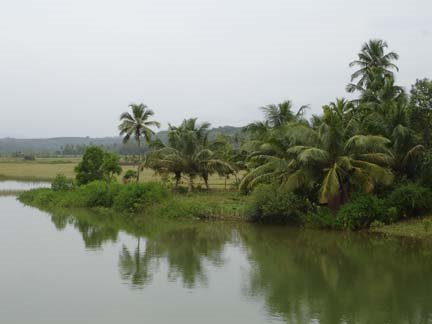
A Coastal estuary

A Coastal estuary
Holegadde near Honavar,Uttara Kannada dist, Karnataka

Copy? Right - but kindly remember to acknowledge!

Creative Commons License
This work is licensed under a Creative Commons Attribution 3.0 License.

" tulu-research.blogspot." ತುಳು ರಿಸರ್ಚ್. ಬ್ಲಾಗ್‌ಸ್ಪಾಟ್‌. ಇನ್

" tulu-research.blogspot."  ತುಳು  ರಿಸರ್ಚ್.  ಬ್ಲಾಗ್‌ಸ್ಪಾಟ್‌. ಇನ್
Have a nice day !