Showing posts with label kavu. Show all posts

Tuesday, March 25, 2014

333. Origin of the word: Kailas


The mythical abode of Lord Shiva, the Mount Kailas(h), in the mountains of Himalaya ranges has been a sacred peak for Hindus, Jains and, Buddhists since time immemorial.  Probably the special dome shaped peak of the mountain peak, made people to recognize as a holy abode.
Lord Shiva has been considered the original master of Yoga and the dance forms. The dark coloured ancient God, clad in a deer skin loin cloth appears to have been modeled in the form of a tribal hero.  The garland of serpent around his neck merely signifies his power to subdue dangerous and poisonous creatures. The moon and the river Ganges tied up in his knotted hairs   symbolize his ability to control heavenly objects as well as to regulate elusive flows of water. The appearance of Lord Shiva evinces the antiquity of the cult that dates back to tribal days.

However, the origin, meaning and antiquity of the word Kailas (or Kailash) is not clear even though some (for example in Wikipedia) presume that it could have been derived from the Hindi word ‘kelas’ which means a crystal. In this post, We shall attempt to decipher, analyse and understand this word Kailas in order to propose a possible source or origin of the word.

Kailas
The place name Kailas is   neither unique nor uncommon in India. We can find numerous places named after Kailas such as Kailaspur(a) in different parts of India. Besides, there are places known as Kail, Kaila and Kaili which formed the root of the word Kailas.  Besides, there are also places like Kailai, Kailakh, Kailoori, Kail gaon, Kailawad, etc.  In these, since   -as, (or -asi   or –ase); -ai;-oori; gaon, wad; etc,  are spatial suffixes (denoting habitation) [eg. Banavasi, Varanasi, Gandasi, Amase(bail), Teggarse, Vaddarse, etc] by analogy, we can infer the origin of  the place name Kailas as Kail+as.
Thus the overall meaning of the word Kailas appears to be an abode or homely habitation.
Kail
Kail is an interesting word, possibly of ancient Munda lingual origin.  For example in Tulu language where the word Kail has survived as a less familiar fossil word, it is used for representing (large) dwelling houses or probably also habitations occupied by Munda(la) tribal people.(Tulu Nighantu/Lexicon). However, the term kail is not restricted to Mundala of Tulunadu. The word also exists among people of Munda origin in other parts of India, suggesting that the word was prevalent all over India once upon a time.

Other kails
However, the term kail do have other meanings also, derived probably from other languages of the region.
1. The term kail2 in Tulu means a shoot consisting of a bunch of fruits (for example of bananas). Perhaps it is connected to the Munda word Kail which means the dwelling place for a group of (related) individuals.
2. Among Kodagu people, a traditional  warrior tribe,  Kail3 podu (or Kail  muhurta ) means weapon festival of worshipping  weapons also known as ayudha pooja in other areas.


Kail / Kaila villages in India
The term kail as a place name is quite widespread in India. There are some 194 Kail villages having the prefix of   ‘kail’ in India.

Andhra Pradesh :  Kailapur, Kailas patham,
Assam:  Kailaspur, Kailel kepjan, Kaila disha.
Bihar:  Kail, Kaila, Kaili, Kailaratti, Kailakh, Kailani, Kailashmath,
Chattisgarh: Kailashpur, Kailasgadh
Haryana:  Kail, Kailram, Kailash, Kailana, Kail Gaon,
Himachal Pradesh:  Kail, Kiala, Kailvin, Kailaspur, Kailar, Kaila,
J &K : Kailtri, Kail,
Jharkhand: Kailan, Kail Kanhar, Kailpur, Kailudih, Kailkha, Kaile,
Karnataka: Kailaspur.
Madhya Pradesh: Kailaras, Kailaspuri, Kaili Ry,  Kailware kalan, Kailwas, Kail
Maharastra: Kailasnagar, Kailaspur, Kailaswad, Kailenjang,
Orissa: Kailash, Kailani, Kailasnagar, Kailamba, Kailaspur,
Punjab: Kailan, Kailpur, Kaila, Kailash,  Kailowal
Rajastan: Kailoori, Kailaspura, Kailadevi, Kailai, Kaila ke bas, Kailaspur
Tamilnadu: Kailasgiri
Uttar Pradesh: Kailanpur, Kailawada,  Kailmundi, Kaili, Kailbakri, Kailsa,Kailora etc.

Kailas  -  a Munda/ Gond word
In case the origin of the word Kailas is considered to be of ancient Munda lingual origin, it would further throw light on the antiquity and origin of theosophy and legends of Lord Shiva.
The Gond tribes  of Madhya Pradesh can be considered a transitional tribe between Austro-Asiatic Munda and Dravidian tribes., since there are  (a) Munda and (b) Dravidian variants in the Gond language.

The Gonds have dormitories called Gotuls to discipline and train unmarried youngsters in the ways of life. The deity of Gotul is known as Ling Pen. The term ‘ling’ represented the ancient cult of phallus worship and the term ‘pen’ represents Spirit God or deity. It is well known that the ancient cult of phallus worship Ling Pen was assimilated into Shiva worship and even today Shiva is worshipped in the form Linga.

Lingayats are a major community in Karnataka and they worship Lord Shiva in the form symbolic Linga. Interestingly, a devout Lingayat is referred to as Sharana. The term ‘Sharana’ appears to have derived from the ‘Sarna’ cult of Munda tribes. The Munda tribes traditionally have the cult of worshiping   groves of trees which are known “Sarna”.
The tradition of preserving a part of forest as a sacred grove (bana or kāvu) and the cult of worshiping trees prevailed all over India. The vestiges of the tree worshiping cult can be seen even now in Tulunadu and in other parts of Karnataka.

[
Readers may kindly share their opinions without prejudice.


Sunday, April 13, 2008

108. Koraga language: A primer

A simple word can prompt different people to think in different dimensions and probe different shades of meanings leading to better appreciation of the genesis and evolution of the words.
Kavu:>Kapu
The derivation of the word kavu:>kapu / kayu in one of my previous post elicited some further analysis by Manjunath where he concluded that ‘kavu’ could be a Dravidian word. The word ‘kavu’ has been cited as a Koraga word (Ramakrishna Shetty, 2007). The frequency of occurrence of the words ‘Kavu’ and ‘Kapu’ as place names in Karavali Tulunad tempted me to conclude that Tulu word ‘Kapu’ has been derived from the pre-Tulu word ‘Kavu’
The word ‘kavu’ has several shades of meaning, as reminded by Hosabettu Viswanath, which includes (a) heat (b) husk(c) dark-coloured cloth or soil -‘kavi’ (d) to wait etc., apart from the place names that mean (e) reserved area (common in place names such as Kavu, Kavur, Kavugoli, Kapu, Kapikad, Modankapu, etc).

Early Munda groups
Normally, the Indian people have been classified into Dravidian, Aryan and Austro-Asiatic origins. In the earlier posts I have tried to support the existing theories that the point that Aryan and Dravidian ancestors immigrated into India during the period 1900-800 BC. At the time of arrival of these Aryan and Dravidian groups, the ancient India was not an empty zone. It was already manned by inhabitants who are generally designated as Austro-asiatics .The Austro-asiatics are at presented represented by Munda group of people who are distributed mainly in Chotanagpur and surrounding tribal areas. Various evidences and cultural vestiges in Tulu and other Dravidians suggest that these tribal groups were once distributed widely in different parts of India. To account for the pre-Tulu and pre-Dravidian lingual-cultural elements, I introduced the concept of “Early Munda tribes” that inhabited whole of southern India, especially at the time of arrival of Dravidians ca. 800-600BC.Somehow the phrase ‘Early Munda groups’ has confused many of the readers because of the present Munda tribes whose present distribution has been reduced to certain tribal pockets of India. Added to this, tribal groups like Koragas and Bhils are usually not classified as part of the present Munda tribes.

Early Indians tribes
My concept of introducing the phrase ‘Early Munda groups’ was to represent all those tribes that inhabited India before the arrival of Dravidians/Aryans into India. Since the usage of the phrase (‘Early Munda groups’) in my earlier posts has lead to confusion, I would to replace it with the phrase ‘Early Indian tribes’ to encompass the whole gamut of early settlers in India before 1900-800 BC periods.
These distinctions may be of help in further detailed philological and genetic studies of our evolution.

Koragas
Koragas are a distinct usually dark coloured tribal group that inhabit the Karavali area. It is not certain right now whether these tribes should be classified under Austro-Asiatics or under those migrated from Africa during the initial or subsequent stages of human evolution. Evidences of presence of relict Koraga words in Kannada, Tamil and Malayalam suggests that the Koragas groups thrived in different parts of southern India. Kurumba, Korava, Korama, Kuruvan and other tribes may be variants of Koragas of Tulunad. Kannada researcher, Sham. Baa.Joshi has suggested that the Kannada word ‘Kuruba’ (=Shepard)is derived from ‘Kurumba,’ wherein the word ‘Kuru’ stands for hilly region.
Koraga Subgroups: Several subgroups have been distinguished among Koragas of Karavali zone.Edgar Thurston (1975) recognized Ande Koraga,Vastrada Koraga,Tippi Koragaand Panti Koraga subgroups. D.N. Shankara Bhat (1971) recognized Ande Koraga, Onti Koraga, Tappu Koraga and Moodu Koraga,. Aravinda Malagatti and Odeyar Heggade distinguished Ande Koraga, Soppu Koraga, Chippu Koraga, Mundu Koraga and Bakuda Koraga. The 'bakuda', apparently is also a part of the Munda group of tribes.Ramakrishna Shetty (2007) concluded that the Koraga is not a sub-dialect of Tulu and it is an independent language. The following analysis of Koraga words is based on the cited research paper by Ramakrishna Shetty.

Koraga words adapted into Tulu language
During the spatial- temporal evolution, the Tulu ancestral people have borrowed several words that were in usage among the native Koraga tribes. Some of the Koraga words that were adapted into Tulu language are:

gaDi1 (=wound),
gaDi 2 (=mark made on the land to distinguish boundary),
koTTa>koTya (=hut,shed),
booru (=sleep)>booru (to fall),
koru:>keru’(=kill),
ijji.>ee (thou,you),
nikal:>nikul (=you people),
nakal.>.nama (=we people),
ayi:>aye (=he).
pakki =bird),
dina (=day),
pooja (=worship)
pari.> par (=drink)
oli.>olipu/leppu(=to call)
kudpu.>kudpu (=to peck)
kavu.>kapu (=to wait, reserve?)
laak.>lakk(=to get up)
kall.>kalpu(=to learn)
chanka.>tanka(=heart)

.. etc.

Koraga words adapted into Kannada language
Adoption of Koraga words was not restricted to Tulu people. Ancestors of Kannada Tamil and Malayalam ancestors have borrowed Koraga word from their respective areas. Some of the Koraga words that were adapted into Kannada language are:

gaDi 2(=mark made on the land to distinguish boundary),
koTTa.>koTTige.,
koru:>kollu(=kill),
nakal:>naavu (=We),
ayi:>ava(=he),
add’.>adu(=it),
nikal.>neevu (=you people),
kavu.>kayu(=to wait)
kall.>kali(=to learn)
kel.>keLu (to listen,hear)
ganDe.>ganDu (=male)
maavu.>maavu(=mango)
puDdu/ huDdu.>hiDi.(=to hold)

..etc.

Koraga Weekdays
The immigrant Tulu ancestral people brought the names for seven days of the week from the north. Thus the Tulu week names are similar to or derived from Sanskrit (or Prakrit derived) week-names based on names of solar planets and the Sun. Aitara (<.adityavara), Somara(<.Somavara), Angare(<.Angaraka is Mars),Budaara(<.Budhvara) etc.
But Koraga week names are distinctly different and not imitated from Prakrit/Tulu week names. For example, Koraga tribes use the word ‘Pooja dina’ for Sunday! It leads us to conclude that words like pooja(=worship), dina(=day), pakki (=bird), kodanTi(=wooden club) etc are originally derived from Koraga language.

Week days in Koraga language
Sunday= Pooja dina
Monday= Kunjar dina
Tuesday=Gadige dina
Wednesday=Pakki dina
Thursday=kodanTi dina
Saturday=Maral dina

Koraga community words
Similarly Koraga words that refer to certain communities of the Tulunad throw light on some ancient words. For example the word ‘Ajal’ refers to ‘authority, jurisdiction, religious rights ‘ etc (Tulu NighanTu,Vol.I,1988).Before the arrival of Tulu/Dravida tribes into Karavali, the ‘Billava’ (a part of the ancient Bhil tribes) were the authorized people to conduct the religious ceremonies in the Early Indian society. So the Koraga tribes used the words 'Ajalai' and 'Ajalthi' to refer to the religious authority of the Billava men and women during the pre-Vedic days. It is a pity that the word ‘Ajal’ has lost its original shade of meaning with passage of time.
The ‘Baida’ were the native doctors of that time. Hence the word ‘baida’ in Koraga means medicine! The ‘Baider’ sect later merged into Billava-Poojari community.
The fishermen constructed ‘pattana’ (colony) or ‘patna’ in their fishing villages and settlements. Hence they were referred to as ‘Patle’ (one from Patna) and ‘Patandi’( woman from the Patna)

Community words in Koraga langauge
Ajalai= Poojari billawa
Ajalthi=Billawa woman
Bonkudayi=Kumbare,Odari
Bonkudadd=Odari woman
duverdayi=Beary
kanchallayi=Christian
kanchald=Christian woman
Korre korai=Koraga male
Korr korti=Koraga woman
Melade=Kelasi(barber)
Patle=Marakale(Fisherman)
Patandi=Fisherlady

Pre-Dravida Koraga
It appears that the Koraga may be one of the pre-Dravida languages that supplied root words to Tulu and other Dravidian languages during the course of lingual evolution. Assimilation of the pre-Dravidian roots in the Dravidian languages must have taken place in the course of time after 800-600 BC.

*
Reference:
Ramakrishna T Shetty (2007) “Tulu-Koraga Bhashe”(in Kannada)..In: ‘Tulu Sahitya Charitre’.(Eds: AV Navada et al), pp.300-307. Kannada University, Hampi.

Blog Archive

Books for Reference

  • A Comparative Study of Tulu Dialects By Dr. Padmanabha Kekunnaya. Govinda Pai Reserach Centre, UDupi. 1994
  • Koti Chennaya: Janapadiya Adhyayana. By Dr. Vamana Nandavar. Hemanshu Prakashana ,Mangalore.2001.
  • Male kudiyaru. Dr B. A.Viveka Rai and D.Yadupathi Gowda, Mangalore University,1996.
  • Mogaveera Samskriti By Venkataraja Punimchattaya. Karnataka Sahitya Academy.1993.
  • Mugeraru:Jananga Janapada Adhyayana. By Dr Abhaya Kumar Kaukradi.Kannada & Culture Directorate,Bangalore & Karnataka Tulu Academy, Mangalore,1997.
  • Puttubalakeya Pad-danagalu. Ed: Dr B.A.Viveka Rai,Yadupati Gowda and Rajashri, Sri Dharmasthala Manjunatheswara Tulu Peeta. Mangalore University.2004
  • Se'erige. Ed:Dr K.Chinnapa Gowda.Madipu Prakashana,Mangalagangotri,2000.
  • Studies in Tuluva History and Culture.by Dr P Gururaja Bhat (1975).Milagres College,Kallinapur,Udupi.
  • Taulava Sanskriti by Dr.B.A.Viveka Rai, Sahyadri Prakashana,Mysore 1977
  • TuLu naaDu-nuDi By Dr.PalthaDi Ramakrishna Achar, Puttur.
  • TuLu NighanTu. (Editor in Chief: Dr U.P.Upadhyaya, Govinda Pai Research Centre,Udupi. Six volumes. 1988 to 1997
  • Tulu Patero-A Philology & Grammar of Tulu Language by Budhananda Shivalli.2004.Mandira Prakashana Mangalore. p.317. (The book is in Tulu Language using Kannada script)
  • TuLunadina ShasanagaLa Sanskritika Adhyayana. By Shaila T. Verma (2002) Jnanodaya Prakashana,Bangalore, p.304.(Kannada)
  • Tuluvala Baliyendre. Compiled by N.A.Sheenappa Hegde,Polali,Sri Devi Prakashana,Parkala,1929/1999

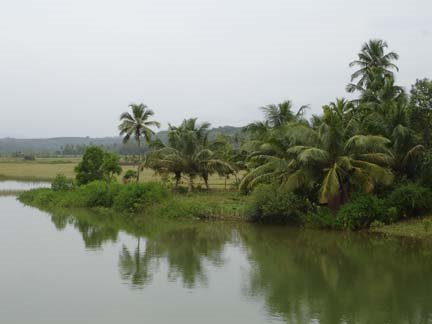
A Coastal estuary

A Coastal estuary
Holegadde near Honavar,Uttara Kannada dist, Karnataka

Copy? Right - but kindly remember to acknowledge!

Creative Commons License
This work is licensed under a Creative Commons Attribution 3.0 License.

" tulu-research.blogspot." ತುಳು ರಿಸರ್ಚ್. ಬ್ಲಾಗ್‌ಸ್ಪಾಟ್‌. ಇನ್

" tulu-research.blogspot."  ತುಳು  ರಿಸರ್ಚ್.  ಬ್ಲಾಗ್‌ಸ್ಪಾಟ್‌. ಇನ್
Have a nice day !