Showing posts with label Angadi. Show all posts

Sunday, November 5, 2017

392. Masked early history of Padangadi


The Padanagdi (alias Padavinangadi) is a vibrant locality on the Airport road leading from Yeyyadi to Bondel- Kavur in Northeastern part of Mangaluru city.
The “Padangadi” ( padangaDi : first d pronounced as in English word: the; second D as in English Dog) is an ancient Tulu locality name  that is also known by its Kannada   version “PadavinangaDi”.
There is also a serene village known as “Padangadi” (pronounced paDangaDi: both D as in Dog) in Beltangadi Taluk of Dakshina Kannada district, Karnataka.
Location map of Padangadi, Mangaluru.


Ancient words
The words in ancient place names are like preserved old coins that are useful in understanding stages of generally masked or obscure pages of early history of this land which has not been documented otherwise. In other words, the surviving ancient words can be compared to fossils in the science of paleontology that throw significant light on the reconstruction of bygone days of past life history,  paleo-ecology and  environment.

Padangadi vs. Padavinangadi
Now, of the two (Tulu- Padangadi /Kannada- Padavinangadi) names for the Mangaluru locality under study, which one is the older? 

Going by the regional   linguistic evolutionary analysis carried out in the older posts in this blog, it can be summarized that during the early three to four centuries of the Common Era, Prakrit was the dominant/administrative language in Karnataka including coastal Tulunadu. During fourth century CE onwards old Kannada (“Halegannada”) was introduced by Kadambas as administrative language as we find in Halmidi inscription. At that time, Old Tulu was in usage in coastal Tulunadu. Old Tulu and Old Kannada were closely related languages by then, more like regional variants of a single language, as we find many Tulu equivalent words ( that are now obsolete or modified in modern Kannada) in the Halmidi inscription.

Subsequently, Kannada was imposed as administrative language in coastal Karnataka (Tulunadu) by the Vijayanagar Kings during and after 12th century CE.  Under this program parts of Tulu regions around Barkur were brought under the intensive influence of Kannada.   During the Kannada period, most of the local names were translated   to  Kannada  prevalent in the period.
Therefore, the Kannada version of the locality name Padavinangadi can be dated to 12th Century CE or later, attributable to the influence of ambient Kannada kings.

Padangadi
What could be the original meaning of the composite word Padangadi ?
For a simplistic analysis, if you split the word into pad(a) + angadi: we can find 9 possible meanings for the words ‘pad’ and ‘pada’ in Tulu Nighantu, Vol. 5 .

Pad = (a) ten (b)shrink;
Pada =(c) level, status (d) word (e) song (f) maturity (g) square pattern (h) tranquility and (i) sole or foot step.

It can seen that those who translated the original Tulu word ‘Padangadi ‘  into ‘Padavinangadi’ under the  regional “Kannadaization” program,  utilized the meaning  #(c) ie., the level ground. The Tulu geographic term “padavu” represents a lateritic plateau or a planar open field.

As a contrast, the term “angadi” (pronounced: angaDi) is a common word for a shop or a marketing stall in most of the Dravidian languages, including Tulu and Kannada.
If you analyze this particular word as ang+Di,   you get the meaning of an open area or open field. The ang means open; as in angai (ang+kai=open hand; palm of hand). Or as in Tulu phrase: bāyi angāvu open (your) mouth.

~Di , as in angadi,  is a spatial suffix in ancient Indian languages.  (Examples: Garodi, Gardadi, Tadadi, etc).  From the   suffix ~Di,   further suffixes  ~Adi and ~Odi have evolved.

The original meaning of the word angadi, as courtyard or open field is still preserved in Parji language.
 Since early days of civilization open fields or yards were used for selling goods on a designated day of the week. The open market was known as “santhe”.  From the ancient markets in open yards, the usage of the word angadi was later applied to shops.

PaDangaDi
There is another interesting twist to the story offered by the “Padangadi”, name of the village in Beltangadi Taluk, located on the Guruvāyana-kere - Venur stretch of road. This particular village name is pronounced locally as   “paDangaDi” (D as in Dog) adding a tinge of   dilemma  to our derivation of the meaning of the place name.
Which of the two toponymic   pronunciations: padangaDi and paDangaDi - is original one and which one was modified with passage of time?
Cenang beach, Kedah, Langkawi, Malaysia

Padang : Southeast Asia connection
Since ~Di, is an ancient spatial indicator suffix, we can also think of analyzing the word Padangadi  as Padang+Di or Padang+aDi. Thus, we confront with a   new word Padang.

A recent   visit on tour to Malaysia and Singapore, enlightened me regarding the word Padang.  The Padang is a usual toponymic word in Malaysia, Singapore, Indonesia, Mynamar and other Southeast Asian countries. Besides, the place name “Padang” also means an open field in Malayan language.
Incidentally, there are many place names in these Southeast Asian countries that contain the suffix ~ang, such as Padang, Penang, Kallang, Cenang etc.
By the bye, the words containing Padang are not limited to coastal Tulunadu alone. Similar  place names are also found in   parts of Orissa and Rajasthan suggesting the wide distribution of early phases of Austro-Asiatic cultures in different parts of India.
 Thus after an overall analysis, we can conclude that the ancient place name Padangadi evolved from the words of Austro-Asiatic- Munda origin, namely:  padang+adi .

Austro-Asiatic languages
Early forms of Munda languages had their sway in southern India during and before the early centuries of the Common Era, as evident from the existence of umpteen fossil Munda words and related cultural vestiges preserved in Tulu and other Dravidian languages. ( Older posts in this blog.). The Munda languages of India (now surviving mainly in central and eastern parts of India) are considered to be a part of the ancient Austro-Asiatic language family.

R

Monday, February 9, 2009

174. Mudarangadi

Mudarangadi is a modest suburban village in the southern part of Udupi Taluk. It is about seven km from Padubidri located on the Nadisal- Shirva road.
Mudara
The village Mudara-angadi carries the name of the person Mudara. The meaning of the word -a bit unusual in the current context- leads us to visualize the mindset of the people of agricultural-farming stage of human evolution some 3000 to 3800 years ago. The word 'mudara' means 'fertile soil'. It was a popular male name among early tribes for centuries until Sanskrit style of proper names became vogue(ca. 500 CE and thereafter).The name continued to exist among the present generation of natives and tribes until recently. The meaning shows that the nature(fertility) of the soil was of paramount importance during the time-period when agriculture played key role in shaping the destiny of the people.
Angadi
We have discussed the meaning of the word 'angaDi' earlier. Angadi was a bazaar or open shop(s) in the olden days that is now applied to protected shops within enclosures.
The legend prevailing among the locals of Mudarangadi helps us to visualize the nature of shops in the olden days. According to natives of the suburb, once upon a time a person called Mudara had an open shop under the shade of a tree on the roadside near the (present) St Francis School. The materials of the shop were kept for sale on a raised platform ('kaTTe') built around a tree.
The situation describes the word 'angadi' clearly: 'ang'(=open place) + 'aDi' (=under/ the shade of tree).

The ancient style of open shops under the shade of trees (angadis) have evolved into the present posh shops, well secured within fortified enclosures.

®

Monday, December 22, 2008

164. Belthangadi, Uppinangadi..

There are several places in the Karavali known as 'Angadi's. For example Haleanagdi, Hosangadi, Belthangadi, Uppinangadi etc. An 'Angadi' means a shop in current Tulu and in Kannada. If we use that accepted prevalent meaning to these places these cited above would mean Old shop, New shop, White shop and Salt shop! No this in not true in the historical sense. In these words, the phrase 'urban area' or 'town' needs to be replaced instead of the 'shops'. Analysis of the word 'Angadi' suggests that it originally meant an urbanized area where shops situated like a market or bazaar.

Velangani
There are places known as 'Angadi' s in Kerala also, implying that this toponymistic word was prevalent in different parts of the West Coast. Eventhough Angdi as a place-name is rather uncommon in Karnataka mainland, other variants of the word apparently existed around East Coast. For example Velangani ( or Vailankanni) in Tamilnadu suggests that it was Vela+angani, the 'angani' being a regional variant of the 'angadi'.

Angadi
Adi (pronounced 'aDi') means 'the bottom' or 'the foot'. It originally represented the shade under a large tree where early Paleolithic human beings rested, before a culture of construction of huts initiated. The phrase 'maratta aDi, punkyeda aDi'(=shade of a tree, shade of tamarind tree) etc are used even now by the Tulu village folks.
ADi later represented a habitation with passage of time. Further it also represented an unit of measurement like 'aDi' (one foot, equivalent of a footstep).
PāDi (a farm or an area with trees) is derived from aDi. (pa+aDi) Examples include Bellipadi, Bellarpadi, Kukkipadi Ulipadi etc. Similarly māDi (ma+aDi) is also derived from aDi. Examples Hejamadi, Hemmadi etc.
The word 'ang' is a variant of 'anj' or 'anje' representing an open or uncovered area. (Note the word 'angai': ang+kei =open hand or the palm).
The words angar( Naiki language), angari (Naikri language ) and angad (Parji language) mean courtyard or bazaar in ancient Dravidian languages. (See 141. Village name suffixes)
The word 'angar' was an ancient equivalent of 'angadi', the bazaar. The words 'angār' and 'angaDi' (=bazaar or market) (as in Haleanagdi, Uppinangadi, Belthangadi, Hosanagadi Koppalangadi, Murathangadi, Mudarangadi etc) were in turn derived from --anj or -ang.

Therefore the word 'angadi' represented a open shaded area. Trade began in such open areas as seen in rural markets. Since the people met here for trade and other purposes these areas became the initial urban centres.

Mangar
One of the oldest names of Mangalore was Mangar! Since 'angār' is a variant of 'angadi', mangar ma+ang+ār) could represent an ancient market or bazaar on somewhat an elevated ground (ma).

Haleangadi ,Hosangadi
The place name 'Haleangadi' thus means Old market or town. It signifies shifting of the market or township. 'Posangadi'(=new market) in Tulu represents the area where new market was initially. Located.
Apart from the Halenagadi-Posangadi near Mulki, there is a Hosangadi near Siddapur in Kundapura taluk.

Belthangadi
The place name Belthangadi on the way to Dhamasthala originally was Belle-ta- angadi, the market/town of Belle. There are other 'Belle' villages especially in Udupi taluk. The 'Bellar' or 'Vellar' were a fair skinned tribals that settled in various parts of southern India. Bellara Bellari Bellipadi etc (see also 131.Belman to Bellarpadi)

Uppinagadi
Three possibilities can be deduced with regard to the origin of the name Uppinagadi.Possibly the place name evolved through three stages cited below No 3 to 1 with passage of time.
1.People now believe that the place Uppinagadi has association with salt trade. Uppingadi is situated at the confluence of two rivers namely Nethrāvati and Kumārdhāra.
2.Apart from the salt market tag, the Uppinagadi could have been a modification of Uppuna- angadi, the 'uppuna' represents a residing place.
3.The other possibility is that it was Uphe-na- angadi, where the Munda word 'uphe' or 'ubhe' means two or the junction of two rivers.(see posts 52 and 53). The Tulu equivalent name 'Ubār” (ubh+ar) also suggests of the habitation (ār) by the side of 'ubha'(=two; denoting the two rivers). The ancient word 'ubha' seems lost in current Tulu, but note that it has been preserved in the word 'ubaya' which means 'the both' or 'the two' .
Hosabettu Viswanath adds note on the word 'Ubar' (2):
Ubar/Ubaar (2) also means 'high tide' and brackish or salinity.The word is equivalent of 'ubbara'(Kannada) meaning high tide of the sea. Saline soil and land is called 'ubar nela'. The stink emanating from fields, submerged by high tide salt water, is known as 'ubar-moori' in Tulu. So fish caught in rivers or fields in monsoons smell 'ubar-moori'. It is a known fact that marine fish swim upstream along the estuary, during floods in rainy season and hence the Tulu idiom/proverb, "Ubargu badtina/mittarina meenigu abur ijji" (=No respect for the fish, which swims up-stream during high tides, i.e.they are vulnerable since caught easily).
In monsoons, the Gurupur (Palguni) River gets flooded. In turn the 'Bailare', stretching from Posodi (Hosabettu) to Panambur where the Bailare was debauching into the River (prior to construction new Mangalore Harbour), gets flooded. In those days, there were big catch of fishes, normally found in sea water, such as 'Maala', Paare' (Mullet),etc. in nets spread in Bailare, which is a natural course for storm waters.
However it may be noted that there are no evidences of high tide or salinity reaching up to Uppinangadi along the River Nethravati. But it is known that traditionally wood,rice, salt, condiments and other merchandise were being transported along the River Nethravati that connected the Coast and the Ghat uplands.Therefore, the name Tulu 'Ubar' for Uppinangdi could have been derived from (1) open yard (ar) by the side of two rivers(uba) or (2) open yard where salt was stocked for trade(ubar-salt, the product of high tide).
*

Blog Archive

Books for Reference

  • A Comparative Study of Tulu Dialects By Dr. Padmanabha Kekunnaya. Govinda Pai Reserach Centre, UDupi. 1994
  • Koti Chennaya: Janapadiya Adhyayana. By Dr. Vamana Nandavar. Hemanshu Prakashana ,Mangalore.2001.
  • Male kudiyaru. Dr B. A.Viveka Rai and D.Yadupathi Gowda, Mangalore University,1996.
  • Mogaveera Samskriti By Venkataraja Punimchattaya. Karnataka Sahitya Academy.1993.
  • Mugeraru:Jananga Janapada Adhyayana. By Dr Abhaya Kumar Kaukradi.Kannada & Culture Directorate,Bangalore & Karnataka Tulu Academy, Mangalore,1997.
  • Puttubalakeya Pad-danagalu. Ed: Dr B.A.Viveka Rai,Yadupati Gowda and Rajashri, Sri Dharmasthala Manjunatheswara Tulu Peeta. Mangalore University.2004
  • Se'erige. Ed:Dr K.Chinnapa Gowda.Madipu Prakashana,Mangalagangotri,2000.
  • Studies in Tuluva History and Culture.by Dr P Gururaja Bhat (1975).Milagres College,Kallinapur,Udupi.
  • Taulava Sanskriti by Dr.B.A.Viveka Rai, Sahyadri Prakashana,Mysore 1977
  • TuLu naaDu-nuDi By Dr.PalthaDi Ramakrishna Achar, Puttur.
  • TuLu NighanTu. (Editor in Chief: Dr U.P.Upadhyaya, Govinda Pai Research Centre,Udupi. Six volumes. 1988 to 1997
  • Tulu Patero-A Philology & Grammar of Tulu Language by Budhananda Shivalli.2004.Mandira Prakashana Mangalore. p.317. (The book is in Tulu Language using Kannada script)
  • TuLunadina ShasanagaLa Sanskritika Adhyayana. By Shaila T. Verma (2002) Jnanodaya Prakashana,Bangalore, p.304.(Kannada)
  • Tuluvala Baliyendre. Compiled by N.A.Sheenappa Hegde,Polali,Sri Devi Prakashana,Parkala,1929/1999

A Coastal estuary

A Coastal estuary
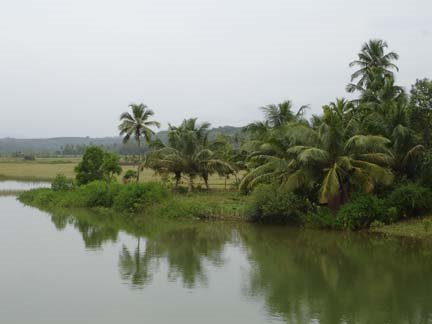
Holegadde near Honavar,Uttara Kannada dist, Karnataka

Copy? Right - but kindly remember to acknowledge!

Creative Commons License
This work is licensed under a Creative Commons Attribution 3.0 License.

" tulu-research.blogspot." ತುಳು ರಿಸರ್ಚ್. ಬ್ಲಾಗ್‌ಸ್ಪಾಟ್‌. ಇನ್

" tulu-research.blogspot."  ತುಳು  ರಿಸರ್ಚ್.  ಬ್ಲಾಗ್‌ಸ್ಪಾಟ್‌. ಇನ್
Have a nice day !