Showing posts with label Kola. Show all posts

Saturday, October 31, 2015

352. Kola and Nema: the distinction


In traditional Tulunadu, the recurrent Spirit worshiping festivals are popularly   known and celebrated either as Kola or Nema.

Kola and Nema
The term Kola appears to be a heritage word that has been brought along with early cycles of human   immigrants to our land. The ancient word Kola possibly of African origin means an agreement or convention mutually agreed upon.
The term Nema appears to be an equivalent of the word “Niyama” commonly found in many of the Indian languages including Sanskrit. Thus literally the Nema (or Niyama) means a rule or a convention to be followed).

Shri Narayana A. Bangera, Mitrapatna, in   a recent discussion with Hosabettu Vishwanath, draw our attention to the essential differences between a Nema and a Kola. Conventionally, there is a fine distinction between a Kola and a  Nema celebrations that can be summarized as follows:

In the case of Nema celebrations:
(1) There is hoisting and lowering of ‘koDi’ (=flag) to mark the commencement and culmination of the annual ceremony. This aspect is similar to the convention of flag hoisting and lowering followed up by temples in the region during the annual festivals in the temples.
(2) Besides, there is ‘Bandi-bali’ consisting of circum-ambulation by the impersonator sitting in a decorated wooden car/cart-cum-horses, around the Bhuta Sthana (=Spirit Shrine), the cart being drawn by devotees.  In some cases, Bhuta’s mask or idol is seated in the Bandi or the wooden car.  Such annual festival is also called as ‘Bandi Nema’. 

All other Bhuta festivals are called ‘Kola’.

Parava, Pambada and Rajan daiva

It is customary that only persons from the Parava tribes are only entitled to impersonate a Bhuta, who is considered as reincarnated form of specific God or divinity.
 Traditionally the persons from the Pambada tribes are authorized to impersonate or represent only Rajan Daivas. It was considered that a King after death attains divinity and becomes a Rajan daiva or a Royal Spirit.).

- Hosabettu Vishwanath

(Based on inputs  given by Narayana  A. Bangera on 30.10.2015. We heartily thank NAB for his appreciation and feed-back on differences between a Kola and a Nema.)


Monday, August 25, 2008

138. Mandekolu

'Mande-kakke' in Tulu represents rather unusual large headed crow that makes slightly different sound compared with the ordinary crow. The word 'mande' being equivalent of English 'head', in general sense, people generally think that 'mande-kakke' refers to crows with slightly larger or prominent head !
However, the actual meaning and origin of the word 'manDe' could be different!

Mandekolu
Mandekolu is an unusual sounding village name from Sullia district in the foot hills of Western Ghat .Mande-kolu for an ordinary analysis represents 'head – rod', a meaningless name. However, the meaning of the word becomes clear when we analyse these words as derived from the tribal names. The Mande and the Kols refer to tribal groups that pervaded these regions in the past. A sub-group of Kol tribes from Mande origin could have been known as Mande Kols during the undated early history.
Mandechar is the name of another Mande village from the Sullia taluk.

Mande
Mande is an ethnic group of Western Africa. Mande people of Niger-Congo region of Africa have their own set of languages. Two major episodes of environmental changes resulting in the increasing spread of deserts in Africa, ca.2000 BC and ca.100BC to 200 CE prompted Mande and Bantus to migrate to better areas. The recurrence of both these words in our language leads us to suggest that some of these tribes actually migrated and settled in our lands in the past.
Other evidences of existence of Mande people in Tulunadu exist in the form of Mande-Koraga, a sub-group among Koraga tribes.
The Garo tribes of Meghalaya,Assam and Bangladesh also call themselves Achik, Mande or Achik-Mande. Achik means hill and Mande means people in Garo language.

Kol
Kols were another ancient tribes that distributed in different parts of peninsular India. There are numerous place-names that embody the word 'Kol' or 'Koll'. Kolar, Kolur, Kollur, Kolnad, Kolchar, Kollamogaru, Kolya, etc. Kol tribes may have ben known as Kollis during later history.Kol tribes were said to be experts in metal smelting during early part of the civilization. Kollis are known as fishermen in parts of Maharastra and interior Karnataka even today.
The origin of the word 'Kol' appears to be a Turkish word that means valley region between rivers.

Mandya
In the similar line, the place-name of Mandya (Karnataka ) could have possibly been derived from the name of Mande tribes.

®

Monday, October 8, 2007

A Tulu stage play : 'Kariyajjerna katekulu'

Rangavathar stage group presented a memorable Tulu stage play on Sunday 7th October,2007 at Town-hall auditorium, Mangalore. “Kariajjerna katekulu” is based on the short stories written by award winning Tulu writer D.K.Chouta. The play was directed by Krishnamurthy Kavattar who sharpened his theatrical shills under the famed Ninasam group of Heggodu.
The drama based on collage of four short stories selected from the D.K.Chouta’s book of the same name reflects the Tulu culture and attitude effectively employing neo-style audio-visual theatrical techniques. The rural “guthu” culture, spirit worship of Lord Malaraya, the Kola and Nema, the recitation of stanzas from of Yakshagana folk theatre, the attendance of aborigines-all these elements woven deftly into the drama. The guthus (guthu= a large household of a landlord) were the traditional centres of power at rural level in Tulunad since historical times. The backdrop and props of ornate wooden pillar, buta mancha and the scarecrow (representing the paddy field) characteristic of rural Tulu homes makes the theme meaningful. The entire Rangavathar team and the writer Chouta deserve congratulations for the experimental stage play.
One particular usage in the drama that stuck me was the term “mooladakulu” to refer to the scheduled servants attending the “guthu”. (“Mooladakulu” literally means “those from the origin” or aborigines.) More about aborigines in some other posts.

Blog Archive

Books for Reference

  • A Comparative Study of Tulu Dialects By Dr. Padmanabha Kekunnaya. Govinda Pai Reserach Centre, UDupi. 1994
  • Koti Chennaya: Janapadiya Adhyayana. By Dr. Vamana Nandavar. Hemanshu Prakashana ,Mangalore.2001.
  • Male kudiyaru. Dr B. A.Viveka Rai and D.Yadupathi Gowda, Mangalore University,1996.
  • Mogaveera Samskriti By Venkataraja Punimchattaya. Karnataka Sahitya Academy.1993.
  • Mugeraru:Jananga Janapada Adhyayana. By Dr Abhaya Kumar Kaukradi.Kannada & Culture Directorate,Bangalore & Karnataka Tulu Academy, Mangalore,1997.
  • Puttubalakeya Pad-danagalu. Ed: Dr B.A.Viveka Rai,Yadupati Gowda and Rajashri, Sri Dharmasthala Manjunatheswara Tulu Peeta. Mangalore University.2004
  • Se'erige. Ed:Dr K.Chinnapa Gowda.Madipu Prakashana,Mangalagangotri,2000.
  • Studies in Tuluva History and Culture.by Dr P Gururaja Bhat (1975).Milagres College,Kallinapur,Udupi.
  • Taulava Sanskriti by Dr.B.A.Viveka Rai, Sahyadri Prakashana,Mysore 1977
  • TuLu naaDu-nuDi By Dr.PalthaDi Ramakrishna Achar, Puttur.
  • TuLu NighanTu. (Editor in Chief: Dr U.P.Upadhyaya, Govinda Pai Research Centre,Udupi. Six volumes. 1988 to 1997
  • Tulu Patero-A Philology & Grammar of Tulu Language by Budhananda Shivalli.2004.Mandira Prakashana Mangalore. p.317. (The book is in Tulu Language using Kannada script)
  • TuLunadina ShasanagaLa Sanskritika Adhyayana. By Shaila T. Verma (2002) Jnanodaya Prakashana,Bangalore, p.304.(Kannada)
  • Tuluvala Baliyendre. Compiled by N.A.Sheenappa Hegde,Polali,Sri Devi Prakashana,Parkala,1929/1999

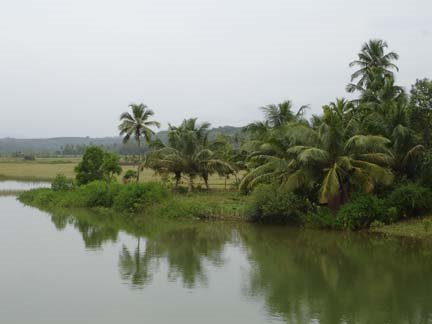
A Coastal estuary

A Coastal estuary
Holegadde near Honavar,Uttara Kannada dist, Karnataka

Copy? Right - but kindly remember to acknowledge!

Creative Commons License
This work is licensed under a Creative Commons Attribution 3.0 License.

" tulu-research.blogspot." ತುಳು ರಿಸರ್ಚ್. ಬ್ಲಾಗ್‌ಸ್ಪಾಟ್‌. ಇನ್

" tulu-research.blogspot."  ತುಳು  ರಿಸರ್ಚ್.  ಬ್ಲಾಗ್‌ಸ್ಪಾಟ್‌. ಇನ್
Have a nice day !