Showing posts with label Manjunatha. Show all posts

Friday, November 11, 2011

288.Manja in Tulu


 Words, being vehicle of thoughts and actions, are born every now and then and are ever living – generation after generation – may be with varying meanings, which crystallize with the passage of time.  Some words attain sublimity and some others notoriety.  Some are having different shades of meaning and that too  undergo changes in usage over the time.
What is striking about the word ‘Manja’?  It means different things to different people, regions and culture.  It needs no illustration for those who know about it.    To give just an example, ‘manja’ in kite flying is known to everybody, particularly in Maharashtra and Gujarat.  Here ‘manja’ is a special string, smeared with glass powder, to give it a cutting edge in kite fighting.
‘Manja’ in Tulu
‘Manja’ in Tulu language of coastal Karnataka and Kasaragod (Kerala) means generally an ‘elevated place’.  There are many usages of Manja, as documented painstakingly in Tulu Lexicon by scholars.
1.     Kayimanja:  Kaimanja is a small shrine for departed souls, also known as ‘Kayimada’.  On the burial place, a mound is made so as to place food, offered to manes.  Well-to-do people make a shed-like structure for this purpose.


Kadri Kambla 2010, Mangalore
2.    Manjotti:   In Kambala (Buffalo race), it is a raised place at other end of buffalo race slushy field.  It is a reaching point for buffalo as speedily as possible with adept handling by handler.  Speed is measured by time.  Pair of buffalos taking the least time is declared a winner.  Winning buffalos are known as ‘Manjottigone’.  There is a folk narration (PadDana) by name ‘Manjottigona’, which tells about exploits of a young he-buffalo and its tragic end.  This song is sung in group by women in agriculture field while planting nursery plants of paddy.  It is sung when buffalos are not around.
Coming to spirit worship, it means a purification ritual to ward off pollution of the shrine.
3.       Ritualistic act:  Tuluvas are animists. ‘Manja’ is an archaic use in worship of Divine Spirits in Tulunadu.  Manja ritual is a vow fulfilled periodically or on special occasions for appeasement of Divine Spirits of household, village or group of villages (Maganes). There are several Bhutas (Divine Spirits), exploits of whose are described in respective PadDanas, a kind of Tulu literature orally preserved. It is a custom (which is in vogue in Tulunadu) of offering meat (chicken), fish, etc. (with toddy in certain cases). The ritual is known as ‘Manja Balasuni/Malpuni’.
In Siri Festival, a main and lengthy ritualistic celebration, ‘Manja Balasuni’ to Siri Kumara is a less known performance.  RRC News Bulletin of Jan-March 2003 throws light on this performance (q.v. Prasanga – Udupipages.com).

4        Place & personal names: Manja is used in place names, such as Kalmanja, Ballamanja, etc., with specific meaning of ‘elevated place’.  Probably, Kalmanja means a village, beset with rocky mounds and Ballamanja, a high place, full of creepers and bushes.
As for popular names, we can cite Manja and Manjanna as male proper names and Manjakka, a feminine name.  Probably, giving these names has some bearing on physiques.
5      Times of a day:  Manja is used either for evening, darkness or early morning. So it indicates different shades of light as day proceeds.
6       Raised Platform in market: Primarily, it means a ‘raised platform’ for a seller. So, ‘Manja’ literally means a market-place.
7        Engagement Feast: ‘Manja’ is used for a ceremonial feast in bride’s place on consummation of an engagement. In these days, we do not hear this word for the function.  It is now just an engagement party in a hotel.


      Manjarur
     The term ‘Manja’ has been explicitly used in several Tulu place names. Mangalore was known as Manjarur especially during 10th and 11th Century CE. Manjanadi is a village in Mangalore Taluk, bordering with Kerala. There are several Manjanakatte, Manjara pāde, Manjarapalke, etc hamlets across Tulunadu.
      Similar analogous names exist in Uttara Kannada district also. For example Manjuguni near Ankola.
      The Lord of Kadri Temple, Mangalore is well known as Manjunatha. The Lords name was later replicated in now renowned Dharmastala temple. Manjeshwara is a coastal town in Kasargod Taluk, south of Mangalore. There is a locality known as Vamanjur in Mangalore as well as in Manjeshwara. In earlier posts we interpreted that’ Vamanjur’ could have been originally Om-manjur, named after immigrant Om tribes of Africa.
    Manjanna, Manjappa, Manjamma etc proper names were common in  Tulunadu and adjoining Kannada areas. These may have an obscure tribal heritage that needs to be explored further. The proper name 'Manja' in these could possibly be traced to an ancient Paisachi-Prakrit word 'manja' that represented man (Post 261). The old word 'manja' evidently evolved into 'manuja' with passage of time.


Words are not dead objects, though they undergo changes with passage of time.  They live with people of a region, state and country, perpetuating the  extant beliefs, traditions and culture. This is manifest on exploration of ‘manja’, pertaining to Tulunadu.
 Sometimes, in the antiquity the words have crossed borders to remote countries or words  in usage in different continents may had similar roots to begin with.Note for example: An 'Igloo' means a hut/house made of ice blocks among the Eskimos. Another parallel word 'Illu' in Tulu and some of the other Dravidian languages  means a dwelling place.

-Hosabettu Vishwanath, Pune

Tuesday, February 19, 2008

92. Avalokitesvara @ Kadire


The charming bronze idol in the Kadire Manjunatha temple represents the Avalokitesvara (or Lokeswara), a former Bodhisatva, who was considered as embodiment of compassion and an incarnation of Buddha during the Tenth century CE.
In Nepal, Macchendra Nath is being worshipped as an incarnation of Avalokitesvara, a form of Buddha modeled after Shiva. It appears that Alupe King Kundavarma installed the bronze idol during ca.968-1068 CE posthumously in honour of Macchendra Nath whose cult was absorbed into Vajrayana Buddhism and was worshipped as Avalokitesvara in Nepal and other areas. The date of installation of the idol written in the inscription at the bottom of the idol has been interpreted as 968 CE by Dr. Gururaja Bhat, whereas Manjeswara Govinda Pai reinterpreted the date as 1068 CE.
The idol reflects the art of bronze casting that was perfected in Tamilnadu during the Chola period of ca.850-1150 CE. The bronze might have been cast in situ at Kadire or brought from the Chola kingdom.
Macchendra Natha
A chronological recapitulation: Macchendra Natha, a disciple of Adinatha, who founded the Shaiva Natha cult, a school of Hatha Yoga, came from Chandragiri in Bengal to Kadire by walk around the early tenth century CE, with his disciple Gorakh Natha and settled near the Buddhist monastery known as Kadarika Vihar, near Kadire, in Mangalapura. Natha historians claim that Macchendra and Gorakh along with some of their contemporaries discovered the Kundalini system of Yoga which was advancement over the older Patanjali Yoga. The Jogis of Natha cult are known for traveling widely all over the country. Natha cult was practiced by ‘split-ear mendicants’ who wore large circular rings in their ears.(Victor M Fic, 2003) Macchendra also founded the Kaula cult at Triambakeswar, in present Maharastra. During the Tenth century Karnataka, according to Kavi-raja-marga, is said to have spread from River Kavery to River Godavary, encompassing the present Maharastra.
After his death, the Natha cult of Macchendra was absorbed into Vajrayana Buddhism, which was also known for experiments in Tantra. The Natha cult also influenced the Baula cult (Sufism). Jnaneswar or Jnanadeva (b.1275 – d.1296 CE) was a disciple of Natha cult, but later his disciples founded the Warakari cult

Manju Natha
Macchendra while at Kadire installed a memorial stone in memory of his departed son Manju Natha in the tradition of spirit worship that was vogue in the region. The selection of the name ‘Manju’ shows combined influence of native Tulu word ‘manji’ (=dew, snow, fog) and Buddhist Pali word ‘manju’(=beautiful, charming).Following Macchendra’s incarnation as Avalokitesvara, the Manju Natha was regarded as incarnation of Manjusri, the Buddha of Wisdom, or Buddhist equivalent of Lord Brahma of Hindu pantheon. A bronze idol of Manjusri was installed. The township around the temple was designated Manjarur. The name Manjarur has been recorded by Arabian travelers like Ibn Battuta during 1342 CE.
Manjunatha
With passage of time the native spirit worship was absorbed into the mainstream Hinduism and Manjunatha was regarded as a form of Lord Shiva. The Manjunatha temple is estimated to have been built around 14th century CE by Dr. Gururaja Bhat.

Thus Kadire Manjunatha temple is a window to the theological heritage of Mangalore, a convergence of cascading transitions of overlapping religious cults of Buddhist, Natha, Spirit and Shaiva traditions.
®

Wednesday, February 6, 2008

85. Kadire Manjunatha

In an earlier post I suggested that the original name of the locality, the environs of the temple of Manjunatha in Mangalore was Kadire. The present corrupted form of ‘Kadri’ may be a modification consequent of Portuguese or British period of rule in the region.
Kadire
The word ‘kadire’ in Tulu (and local Kannada) means spike of paddy corns. The locality was designated Kadire because the tradition of distribution of auspicious paddy spikes during annual Puddar festival. The name Kadire can be found in the inscriptions available in the area. Dr. P. Gururaja Bhat (1974) has provided the transliteration of inscriptions available at Kadire Manjunatha temple. Italian traveler Della Valle had also visited Kadire during 1624CE.

968 CE. The famed Lokeswara (Avalokiteswara) bronze idol of Kadire dated 968 CE contains an inscription at the base. It describes that it was installed by King Kundavarma Alupendra in the Kadarika Vihar. The word ‘Kadarika’ is a Sanskritized version of the Kadire. Secondly, at the time of installation of this idol, the place was a ‘Vihara’, a Buddhist monastery.

1386.CE. The stone inscription in the courtyard of the Kadire temple dated ca.1386 CE, belongs to the period of chieftain Banki Alupendra. and King Harihararaya (at Vijayanagar). The line 6 mentions… ‘bhogikkadaliya’, line 8 and 17 mentions Mangalur (coins).
Line 23 cites: ’.Kadiru nekkilu.’.as one of the boundary of the Manjunatha temple. The ‘bhogikkadali’ has been interpreted as Jogi Kadali by Dr.Gururaja Bhat.

1475.CE Inscription dated ca.1475 was made by Vitarsa Odeyar, a governor Mangalore and Barakur provinces, under the King Veera Pratapa Prouda Virupaksha of Vijayanagara. Jogi Mangala Natha was the chief of Jogi Mutt. The place name Kadire is mentioned twice in the inscription. The Jogi Mangala Natha was declared as Ruler (Arasa) of the Kadire. Kadire is described as the central area (headquaters) of Mangalore province.

1624 CE - P.Della Valle, an Italian traveler who visited Mangalore and Ullal during (1624) Portuguese period (Abbakka was ruling at Ullal) reports that he met Batinata, the King of Jogis at a place called ‘Cadira’(Kadira).

Manjunatha
It is said that the Manjunatha is not in the traditional list of Lord Shiva’s names. Therefore it appears that the name Manjunatha was coined specifically at Kadire, Mangalore for the first time in the history. Earlier writers have visualized that the name Manju-natha was derived from Macchendra Natha, in the order of Macchendra>Mancho>Manju.
But, the ‘Kadali Manjunatha Kshetra Mahatme’ describes that Macchendra had twelve wives from whom he had twelve sons. The son of the last wife was called Manjunatha. Another account describes that Macchendra’s youngest son was known as Manju-Natha, who was installed as the ruler of Kadire by Macchendra Natha. Thus, it follows that the name of the deity Manjunatha was derived from the name of son of Macchendra Natha.
The Natha chief traditionally calls the installed 'God'Manjunatha as 'beta'!One story recounted by Jogi Ananda Nath cites an event when one of the (later period) Natha chief was sidelined by the Brahmin Tantri in charge of temple during a car festival. The temple car(chariot) did not move forward. Finally the the Natha chief(Arasu) was brought in and he said Aao Beta! And the car rolled forth!
The 'beta' legend suggests that the installed 'God' was originally the son of the founder Natha, the Macchendra.

Manjarur
One of the interesting facts somehow ignored so far by scholars is that Mangalore was known as Manjarur for some time, possibly till the arrival of Vijayanagar rulers. It may have been ignored under the impression that foreign Arab travelers may have failed to note down the name of this properly. But at least two Arab travelers Rashiduddeen (1300 CE) and Ibn Battuta (1342 CE) have unmistakably recorded the name of the city as Manjarur. Rashiduddeen uses the phrase: the country of Manjarur. Ibn Battuta has used both the ‘Manjarur’ and ‘Budufattan’ (<.Bokkapatna), the port at the beautiful estuary or simply ‘Pattan’ (Bokkapatna).
If we analyze the word Manjara +Ooru =Manjarur, it follows that the Manjarur was named after the Manju Natha, the youngest son of Macchendra Natha who ruled Kadire, after his father. Manja-ra stands for the respectable form of Manja.
It is possible that Manju Natha was deified after his life and worshipped in the tradition of Spirit worship. It may be recalled that the recluse queen Pingala (who became ‘Mangala’ after death) was worshipped in the similar style and the area around her temple was named after her (Mangalapura). In honour of Manju Natha the area was called Manjarur.

Om-Manjur
There is one more Manju-oor in Mangalore. A minor suburb in the outskirt on the way to Mudabidri is known as Vamanjur. This place probably was originally known as Om- Manjur. It is customary to add the word ‘Om’ to sacred names, as in the case of Om Namah Shivaya.
®


Reference:
Gururaja Bhat, P. (1974) “Kadri Shri Manjunatha Devalaya: Kshetra Mahatme mattu Itihasa” Published by: trustees of the Kadri Manjunatha temple.73p.

Blog Archive

Books for Reference

  • A Comparative Study of Tulu Dialects By Dr. Padmanabha Kekunnaya. Govinda Pai Reserach Centre, UDupi. 1994
  • Koti Chennaya: Janapadiya Adhyayana. By Dr. Vamana Nandavar. Hemanshu Prakashana ,Mangalore.2001.
  • Male kudiyaru. Dr B. A.Viveka Rai and D.Yadupathi Gowda, Mangalore University,1996.
  • Mogaveera Samskriti By Venkataraja Punimchattaya. Karnataka Sahitya Academy.1993.
  • Mugeraru:Jananga Janapada Adhyayana. By Dr Abhaya Kumar Kaukradi.Kannada & Culture Directorate,Bangalore & Karnataka Tulu Academy, Mangalore,1997.
  • Puttubalakeya Pad-danagalu. Ed: Dr B.A.Viveka Rai,Yadupati Gowda and Rajashri, Sri Dharmasthala Manjunatheswara Tulu Peeta. Mangalore University.2004
  • Se'erige. Ed:Dr K.Chinnapa Gowda.Madipu Prakashana,Mangalagangotri,2000.
  • Studies in Tuluva History and Culture.by Dr P Gururaja Bhat (1975).Milagres College,Kallinapur,Udupi.
  • Taulava Sanskriti by Dr.B.A.Viveka Rai, Sahyadri Prakashana,Mysore 1977
  • TuLu naaDu-nuDi By Dr.PalthaDi Ramakrishna Achar, Puttur.
  • TuLu NighanTu. (Editor in Chief: Dr U.P.Upadhyaya, Govinda Pai Research Centre,Udupi. Six volumes. 1988 to 1997
  • Tulu Patero-A Philology & Grammar of Tulu Language by Budhananda Shivalli.2004.Mandira Prakashana Mangalore. p.317. (The book is in Tulu Language using Kannada script)
  • TuLunadina ShasanagaLa Sanskritika Adhyayana. By Shaila T. Verma (2002) Jnanodaya Prakashana,Bangalore, p.304.(Kannada)
  • Tuluvala Baliyendre. Compiled by N.A.Sheenappa Hegde,Polali,Sri Devi Prakashana,Parkala,1929/1999

A Coastal estuary

A Coastal estuary
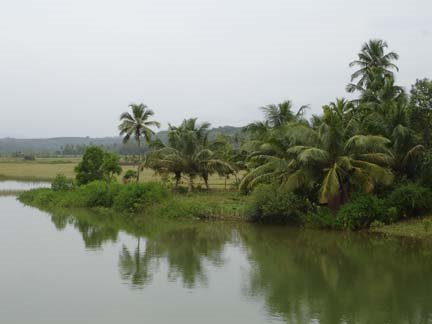
Holegadde near Honavar,Uttara Kannada dist, Karnataka

Copy? Right - but kindly remember to acknowledge!

Creative Commons License
This work is licensed under a Creative Commons Attribution 3.0 License.

" tulu-research.blogspot." ತುಳು ರಿಸರ್ಚ್. ಬ್ಲಾಗ್‌ಸ್ಪಾಟ್‌. ಇನ್

" tulu-research.blogspot."  ತುಳು  ರಿಸರ್ಚ್.  ಬ್ಲಾಗ್‌ಸ್ಪಾಟ್‌. ಇನ್
Have a nice day !