Showing posts with label Natha cult. Show all posts

Thursday, March 13, 2008

102. Legends of Parashurama


Most of the myths in Indian culture are quite ancient in origin and have evolved in multiple chronological stages over the years in tune with the periodic phases of cultural renaissances mostly sponsored by various regalities. In other words the same set of myths have been polished, reedited and repackaged several times in the history to suit the demands of the environment and time of the reprocessing.
The legend of Rama is an example. An ancient folk-lore theme of primitive Bhil archer hero was enriched and updated by Valmiki; it was either re-edited or recomposed subsequently by numerous other bards in several ‘renaissance’ stages. The original composition conceived by Valmiki based on older folk-lores as well as the revised versions by bards of successive generations have altogether enriched the overall cultural fabric of India for centuries.
Another example for the chronological evolution of legends relates to the indefatigable hero Parashurama, the Rama with an Axe.

Parashuramas
There are evidences of heroes with axe in the ancient history in the Mediterranean area like Storm God. The axe was an ancient implement in terms of human evolution. In the Stone Age, stone axes were in use, which were later replaced by iron axes. The original folk-lores of an axe wielding indefatigable hero Parashurama (‘Axe- Rama’; or ‘Rama with an axe’; Parashu =axe) was apparently repeated or revived several times in the early literary history by several generations of bards with deliberate addition of doses of supernatural myths. Thus, we find the Parashurama re-appearing in Ramayana, Mahabharata and other ancient works representing distinctly different time periods.

Vedic Parashurama
The Parashurama renowned in Vedic age was the son of sage Jamadagni and his wife Renuka. In a fit of anger on his wife, the short tempered Jamadagni ordered his son Parashurama to chop of his mothers head! Parashurama obligingly carried out his order which pleased his father. Parashurama was allowed to ask for a boon in return for the deed he accomplished; and Parashurama immediately asked his father to revive his mother!
The couples, Jamadagni and Renuka had in their possession, Kamadhenu, a mythical cow that gave whatever is wished. One mythical, fantasy character of King Kartha Veerarjun, endowed with one thousand arms (!) intervened and desired that this Kamadhenu should belong to him. He carried the Kamadhenu against the wishes of Jamadagni couple, which enraged Parashurama to pursue the fellow, subdue him and chop of his extra arms.
The legends of Vedic Parashurama may have originated around the northwestern India as these are to be popular in this region. Temples dedicated to Renuka, mother of Parashurama can be found in Himachal-Punjab region.
These legends of Vedic period appear to have been developed on an ancient platform of folk-lores that prevailed around the Mediterranean-Central Asian region.The cult and imagery of Parashurama evidently was an influential one at that time and that prompted Vedavyasa to include it as one of the ten incarnations of Lord Vishnu.

Kadamba Parashurama
The Parashurama legends reappeared and were evidently repackaged during the Kadamba period ca. 4 to 6th century CE.
Mayura Sharma (later Varma) during early part of fourth century CE, founded a new dynasty at Banavasi, near Sirsi (present Uttara Kannada district) under the mast of Kadamba (a wild flowering tree, traditionally considered as pious by the ancient Munda tribes of India).The young Mayura went to Kanchi, the ancient Tamil capital of Pallavas, in order to pursue (Vedic) studies. A guard of Pallava king somehow insulted Mayura which forced him to abandon studies and build an army to subdue the haughty Pallavas. He succeeded in recruiting local people at Banavasi into an army and staging armed attacks on the Pallavas.
The story of Kadamba Mayura Varma bears striking similarity to the legends of Parashurama who subjugated the ruling class (Kshatriya).Therefore it can be deduced that Mayura Varma or one of his descendants commissioned court bards to compose the updated myth of Parashurama. Or a few official bards, who equated the Kadamba Kings to incarnation of Parashurama, composed the legends in praise of the Kadamba rulers. The Parashurama legend now popular in the West Coast of India is a part of Sahyadri Chapter (Kanda) of Skaanda Purana. The composition of Sahyadri chapter can be related to Kadamba Kingdom at Banavasi, which is an integral part of Sahyadri or the Western Ghats.
On the basis of these circumstantial evidences, the Sahyadri Kanda and the composition of Parashurama Shristi (creation of land) legend can be dated at ca 350-500 CE. Temples dedicated to mother Renuka also popular as ‘Ellamma’ are found in northwestern Karnataka, in the region of ancient Kadamba kingdom.

Parashurama Srishti
The Sahyadri Kanda visualizes that Parashurama threw his axe into the Sea and retrieved as much land as the Axe flew from the King of Sea. A marvellous fantasy that has inspired and mesmerized the coastal folks for hundreds of years! The retrieved coastal land is called ‘Parashurama Srishti’ (creation) or Kshetra (land). Further Parashurama allocated the newly retrieved lands to Brahmins to settle down comfortably. This again is in tune with the works and ethics of Kadamba Kings, who provided lands to immigrated Brahmins to settle down in Karavali and Sahyadri.

Marine transgressions & regressions
The most curious anecdote the Kadamba/Sahyadri bards weaved into the legend is the retrieval of land from the Sea. Infact the transgression (onward march of Sea into the land) and regression (withdrawal of Sea from the land) are periodical natural phenomenon controlled by several factors connected with the earth movements.
From the standpoint of logic and geological science it needs to be clarified that no human being can ever modify or induce such regressions by wielding his modest tools in front of the mighty powers of nature. Infact, there has been several episodes of marine transgressions and regressions in the geological history of the Earth.

However, we may predict that this event of retrieval of land from the Sea visualized in 'Sahyadri Kanda' was based on an actual event of marine regression witnessed by folks that occurred in the past before the Kadamba period. The regression event by all means was a stunning imagery for the innocent folks; and it was described in detail to their kids for several generations.
Thus inclusion of the Parashurama legend in 'Sahyadri Kanda' served to explain a seemingly unexplainable past natural event to the innocent folks and at the same time it glorified one of the mythical (Parashurama) while the Kadamba King was indirectly projected as an incarnation of the mythical element.

Parashurama’s marine regression
The marine regression (retreat event) attributed to Parashurama along the West Coast of India must have actually happened sometime before the composition of the Kadamba Parashurama myths. The historical records of Srilanka discuss a marine regression that took place in the region ca. 300BC.The event must have been a regional one that affected Srilanka and southern India. Apparently the Arabian Sea receded by a distance of a kilometer or two. Since there are evidences of many regressions in West Coast, the actual affect of this particular event (the Parashurama’s regression) needs to be studied in terms of actual geological data.

Natha Parashurama
Parashurama legend did not end with Kadamba-Sahyadri episode during ca. fifth to sixth century CE. Further during tenth century CE, the Natha bards slightly modified and repackaged the Sahyadri legends of Parashurama in Kadali Mahatmye in Bharadwaja Purana to add glory and aura to the Buddhist-Natha-Shaiva center at Kadire, Mangalore.
According to the modified legends, Parashurama retrieved lands around Kadire, Mangalore and handed over to Natha Jogi monks to maintain the temple.

®

Wednesday, February 20, 2008

93. Pedestrian journeys

In the olden days walking was an essential part of life. Now it has been reduced to a dignified exercise designed to burn the extra calories we tend to accumulate.
It can be hardly believed now that most of the human migrations in the history were covered on foot. Here is an example of Natha ‘Zhundi’ to remind us how our ancestors covered long distances by walk systematically over a prolonged period.
Natha Zhundi
The Kumbha Mela at Triambakesvar (now, Maharastra) recurs once in every twelve years. Twelve regional heads of Natha (Barapanth) monks assemble at Triambakesvar during the Mela and customarily elect the Natha monk to head Kadire Jogi Mutt for the next duration of twelve years. Following the selection, a ritual holy vessel (the ‘patra devata’) is handed over to the newly elected chief of Kadire Matt and a troupe of some 600 to 700 Natha monks used to commence their long pedestrian journey from Triambakesvar to Kadire in Mangalore, a distance of about 1150 kilometers.
The pedestrian troupe covers the distance in about six month time. They halt and rest in some 78 places before reaching the destination,Kadire. Jogi Ananda Nath (2003) describes the 'Zhundi' and lists the rest points between Triambakesvar and Kadire as follows: 1.Nasik 2.Saikheda 3.Sinnar 4.Drodibudrak 5.Nadursigot 6. Sangamner 7.Haibargaon 8.Chandanapuri 9.Dolsa 10.Dhargaon 11.Peepalbandi.12.Gunjalvadi. 13.Arti. 14.Savargaon. 15.Paunda. 16. Chincholi. 17.Khilarwadi. 18.Mahalunge. 19.Badagaon..20.Manchar. 21.Khedagaon 22.Chakan 23.Mosi 24.Bhosari 25.Pune 26.Aranyesvar 27.Bairavanala 28.Hadapsara 29.Sasvad 30.Bhivandi 31.Kikvi 32.Sivale 33.Buij 34.Udthara 35.Satara 36.Koregaon 37.Kumata 38.Rahimathpur 39. Ogalewadi. 40.Karad. 41.Vadagaon..42.Macchendragad..43.Islampur. 44.Retaredharan..45.Battis Sirala 46.Mangalegaon. 47.Mohuregaon. 48.Kollapur .49.Gandhinagar. 50.Kagal. 51.Nippani. 52.Sankeswar. 53.Belgaum depot. 54.Belgaum city.55.Khanapur. 56.Donagregaon.57.Kharola.58.Balevadi.59.Londa. 60.Handibadanga..61. Nagargali. 62.Godagiri. 63.Mangalvad. 64.Haliyal. 65.Keralkatte. 66.Sambarani. 67.Yellapura. 68.Manchagiri. 69.Sirsi. 70.Chandragutti.71.Sagara. 72.Hosanagara. 73.Nagara. 74.Halavari. 75.Barkur. 76.Udupi. 77.Mulki. 78. Panambur.

Consistent long pedestrian journeys were a common feature in the historical past.
®

Sunday, January 27, 2008

80. Macchendra, Goraka and Pingala

The Natha cult represents the fusion of Buddhist Avalokiteswara and Shaivaite tantric (Kapalika, Kaula) cults. Macchendra Nath and his disciple Gorakh Nath were the prominent exponents of the Natha cult. The Natha cult eventually spread to different parts of India and Srilanka during eighth to tenth centuries. Subsequently, twelve subdivisions (bara-pantha) evolved in the cult. The Natha Jogis used to travel for long distances on foot. Influence of Nath cult can be seen in major Shaiva centres like Srishaila. The Natha is short for ‘Lokeswara Natha’, according to in the Buddhist literatures of Srilanka.
Macchendra Natha was able to acquire the goodwill of the ruling kings who awarded him the administration of lands around Kadri temple and the title of ‘Kadri Arasaru’.

Natha tantric philosophy
The practice of Yoga and Tantra was common to the Vajrayana Buddhism and (the Kapalika, Kaula and other) Shaiva cults. Natha cult was the result of the fusion of the two streams of rival cults, based on the common factor of Tantric yoga. Occult sexual practices and experiments were integral part of the Vajrayana and Kapalika Tantra philosophies.
The Natha cult advocated the physical and mental development of the individual (Yogi or Jogi). It consisted of a set of yogic techniques called Tantra for developing mental abilities through sustained control of physical activities and respiration (pranayama). The techniques were intended to activate the dormant power of Kundalini, hidden in the bottom of the spinal column of the individual; and redirecting that power upwards to the brain to attain a ‘samaadhi’ state of bliss. Experiments in retention and redirection of semen upward were conducted in achieving these goals. Exponents like Gorakh Nath apparently emphasized on the virtues of celibacy. Concentration of the mind on light leads to a state of’ ‘mindlessness’ (‘amanaskate’) or zero mental activity that is described as ‘brahmanubhava’. Attainment of this state is considered as elevation of the person to the state of God. The cult believes that God lies within the person, or that divine state can be reached by the individual. Philosophically, there is no concept of separate external God like in Advaita or Dwaita philosophies. Natha Jogis utter ‘aadesh’ while they greet each other, showing mutual respect.
Natha and other contemporary philosophies (like Vajrayana, Kapalika and Kaula) possibly influenced the growth of later philosophies like Varakari, Veerashaiva, Mahanubhava, Soofi, Kabir, Datta and Nanak cults.

Macchendra Natha
Macchendra (Matsyendra) Natha hailed from a fisher community of probably Bengal area. (However, the sculptures show him riding on fish and the legends metaphorically describe his birth from the semen of Shiva swallowed by a fish). The ‘maccha’ is a Pali word for ‘matsya’ or the fish. The Alupe kings of Mangalore probably adapted the emblem of fishes after Macchendra Nath. Macchendra Nath is the fertility God in Nepal and a national festival is celebrated in his honour.
Macchendra also had another disciple named Chourangi Nath.

Gorakha Natha
The Nath cult is alternately known as ‘Gorakh panthi’ or ‘Gorakh cult’. Gorakha (Goraksha) Natha, probably was native of Nepal. He was a discarded child and was collected from a gobar pit by Macchendra, according to the legends. Gorakh was renowned proponent of Natha cult all over India.
Nepal, also known as Gorakh-Desh or ‘the land of Gorakhs’ (>.Gorkhas, the tribe), adopted the Natha cult as official religion. Several towns in Northern India and Nepal have been named ‘Gorakhpur’ after him. Coins of Nepal carry emblem of Shiva Gorakh Nath.

Pingala
Pingala, a queen of all-women’s domain (Stri-rajya), desired to have male offspring and prayed to Lord Anjaneya. At this juncture, Macchendra travels to her place and meets her. They develop mutual attraction and in the due course they beget two male children. Macchendra forgets himself in her company settles there for several years. In the meanwhile Gorakha, Macchendra’s prime disciple, goes in search of his Guru and finds that he is lodged in a female-domain, where men were not permitted. So he dresses himself like a woman and beats a ‘maddale’ (a kind of drum), in a tune that sounds “Chal Macchendra, Gorak Aya”. Macchendra awakens from the marital pleasures and returns with Gorakha to pursue yogic practices.
On another occasion Pingala travels with Gorakh towards Triambakeswar, but expires on the way at Mangalore. The burial related 'concluding' obituary ceremony (‘mangala-acharane’) was conducted at Mangalore in the due Yogic tradition of Natha cult. Later, she was honoured as an incarnation of Tara Bhagavathi and the shrine erected in her memory became the Mangaladevi temple in the course of time.

From the point of reconstruction of history, the question that remains is whether the town was named Mangalore after her or the place name existed even before.
®

References:
Rahamath Tarikere (2006) “Karnatakada Nathapantha”(in Kannada). Prasaranga, Kannada University, Vidyaranya, Hampi.p.xii+348+xii
John Holt (1991) Buddha in the crown: Avalokitesvara in the Buddhist traditions of Srilanka. Oxford University Press. 304 p.

Blog Archive

Books for Reference

  • A Comparative Study of Tulu Dialects By Dr. Padmanabha Kekunnaya. Govinda Pai Reserach Centre, UDupi. 1994
  • Koti Chennaya: Janapadiya Adhyayana. By Dr. Vamana Nandavar. Hemanshu Prakashana ,Mangalore.2001.
  • Male kudiyaru. Dr B. A.Viveka Rai and D.Yadupathi Gowda, Mangalore University,1996.
  • Mogaveera Samskriti By Venkataraja Punimchattaya. Karnataka Sahitya Academy.1993.
  • Mugeraru:Jananga Janapada Adhyayana. By Dr Abhaya Kumar Kaukradi.Kannada & Culture Directorate,Bangalore & Karnataka Tulu Academy, Mangalore,1997.
  • Puttubalakeya Pad-danagalu. Ed: Dr B.A.Viveka Rai,Yadupati Gowda and Rajashri, Sri Dharmasthala Manjunatheswara Tulu Peeta. Mangalore University.2004
  • Se'erige. Ed:Dr K.Chinnapa Gowda.Madipu Prakashana,Mangalagangotri,2000.
  • Studies in Tuluva History and Culture.by Dr P Gururaja Bhat (1975).Milagres College,Kallinapur,Udupi.
  • Taulava Sanskriti by Dr.B.A.Viveka Rai, Sahyadri Prakashana,Mysore 1977
  • TuLu naaDu-nuDi By Dr.PalthaDi Ramakrishna Achar, Puttur.
  • TuLu NighanTu. (Editor in Chief: Dr U.P.Upadhyaya, Govinda Pai Research Centre,Udupi. Six volumes. 1988 to 1997
  • Tulu Patero-A Philology & Grammar of Tulu Language by Budhananda Shivalli.2004.Mandira Prakashana Mangalore. p.317. (The book is in Tulu Language using Kannada script)
  • TuLunadina ShasanagaLa Sanskritika Adhyayana. By Shaila T. Verma (2002) Jnanodaya Prakashana,Bangalore, p.304.(Kannada)
  • Tuluvala Baliyendre. Compiled by N.A.Sheenappa Hegde,Polali,Sri Devi Prakashana,Parkala,1929/1999

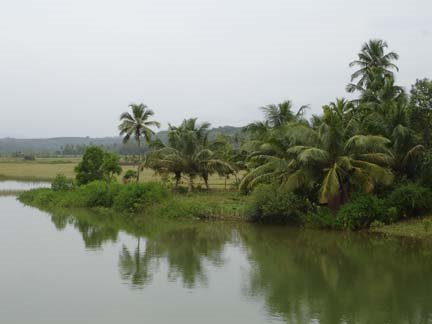
A Coastal estuary

A Coastal estuary
Holegadde near Honavar,Uttara Kannada dist, Karnataka

Copy? Right - but kindly remember to acknowledge!

Creative Commons License
This work is licensed under a Creative Commons Attribution 3.0 License.

" tulu-research.blogspot." ತುಳು ರಿಸರ್ಚ್. ಬ್ಲಾಗ್‌ಸ್ಪಾಟ್‌. ಇನ್

" tulu-research.blogspot."  ತುಳು  ರಿಸರ್ಚ್.  ಬ್ಲಾಗ್‌ಸ್ಪಾಟ್‌. ಇನ್
Have a nice day !