Showing posts with label Udyavara. Show all posts

Sunday, September 9, 2018

408. Temples of Udyavara, Udupi


Ancient Shambhu-kallu Shiva temple. Rear side. Semicircular shaped architecture..
Udyavara (in present-day Udupi District) was an ancient port city, renowned for its flourishing marine trade with Arabs and Romans.  It is also remembered as one of the Capital Cities of famous Alupa Dynasty.   They ruled Tulu Nadu in circa 450 CE to 15th C.  We  get first reference of them in Halmidi Inscription of Hoysalas. The early history of this Dynasty is hidden in the secrets of history. 

There are several temples in and around Udupi, besides the famous Krishna Math Temples complex in Udupi proper. Most of them are known as Shakti-sthalas, being centres of worship of Sapta Matrikas (Seven Mother Goddesses).  Alupa dynasty was ruling erstwhile Tulu Nadu, spanning from Gokarna/Ankola/Baindur to Kasaragod and parts of Malenadu for nearly 1200 years uninterrupted though they became vassals of Kannada Kings at certain points of time in history.  They were Hindus and embraced Jainism after coming in contact with Hoysalas of Belur-Halebeedu.  They patronized both Hindu and Jain temples.  Udyavara witnesses many Hindu temples. Please visit our recent Posts on Mangod Subramanya  and Bramha Lingeshwar Temples at  Kuthpadi.

The uniqueness of temples of Tulu Nadu is the inclusion of ancient divine spirits of original and later inhabitants and Naga shrines, inside the main temple for Vedic Gods.  This article gives glimpses of temples for Shiva and Mother Goddesses in Udyavara, located in between Udyavara Town Bus junction and Shri Dharmasthala Ayurveda College and Hospital (about 1.2 km  SW from Udupi).

Shambhu kallu Kailaseshwar- Temple
Shiva was the family-deity of Alupas at Udyavara as they were traditionally Shaivas.  This temple is built on a rocky hill and hence the popular name Shambhu-kallu Temple, facing east. Alternately, it is known as Ballaya paade. Shambhu-kallu is corrupted to Chambu-kallu, Tembukal, Tembikal, Tembkalin (or even to Sem(b)ikal) in local tongue, Tulu.  The exterior shape of this temple in the rear side   resembles the back of an elephant. ( Readers would do well if they read our Post-112, May 1, 2008: The temples of Karavali – Early Phase.)


In ancient history, it is mentioned as ‘Shambu Shaila’ in Skanda Purana, hence the name Shaileshwara. The sign board at the entrance lane (off main road), leading to the temple on the north side of rocky hill, welcomes devotees with the description “Markandeya Pratisthapita Shri Shambhu Shaileshwara Devasthana & Shri Prasanna Somanatheshwara Devasthana."

Temple complex for Matrikas
On western side of the aforesaid Shiva temple, there lies temple complex for seven deities, including Ganesha,  along the crossing road across the Udyavara Town-Kinnimulki - Udupi main road.  This complex is known as ‘Shambukallu Shri Virbhadra Durgaparameshwari Temple’.
The main temple (facing east) is consecrated for three Mother Goddesses, namely Savitri, Gayatri and Saraswati.     The statues are ‘mrinmaya murthis’, being made of earth-soil.  The legend says these murthis were first built by Rishi Markaandeya.


·  The Mother Goddess statues are about 7 ft. height.  They are   beautifully and attractively fashioned out of earthen soil. 
        Right side of these statues, the statue of Virabhadra Swami is standing in fierce mood.  He is the guardian deity of the temple.   The statue is made of red sandal wood in full size.  The statue was remade artistically during renovation of the temple and consecrated in April 2018.

     Coming out from the main temple, we find two more temples:    One for Goddess Mahankali on the east in front of the main temple.  She was given a separate place outside by her sisters, as she is fond of animal blood offerings.     The other for Panjurli, popularly known as Tembikal Panjurli (or Semikal Panjurli) in local parlance, on the north, near Mahankali temple.  Devotees from neighbouring villages come here annually to give their votive offerings, despite having their own sacred ‘mancha’ or shrine for Panjurli at their households.

·        Legend of Markandeya
The legend in Skanda Purana (Sahyadri Khand) says that these murthis were originally built by Rishi Markaandeya, who did penance here in Saraswat-vana, which is on the west of Shambhu Shaila. Shambhu Shaila with a sacred pond on its North, lies three 'yojana's to the West of Sahyadri ranges. Issueless Mrikand Muni of Sage Bhrigu clan along with wife Marudwati  meditated on Lord Shiva for a son.  They are blessed with an intelligent and pious son, destined to live a short span of sixteen years.  Sage Mrikand advises his son to pray Lord Shiva to ward off the God of Death ,Yama.  Pleased by his worship, Shiva advises Markandeya to worship Durga endowed with three qualities Satvika, Rajasa and Tamasa).  Durga (in three forms) chases away God of Death with help of Mahankali (a fierce form of Durga), Veerabhadra, Panjurli and other Shiva Ganas.

The story of Markandeya is well-known.  It is at variance with stories mentioned in other Puranas, Bhagavata and Maha Bharata.  Lord Shiva kills Yama when the noose cast to take away the soul of Markandeya, while in meditation, is entangled to Shiva Linga.  So Shiva gets the name of ‘Kaalantaka’.  There are many Shiva temples in India, connecting it to be the place of penance of Markandeya.  To cite some examples, there are such temples in Kerala, Varanasi, Kurukshetra and Yamunotri.

Perhaps, the mythological story of Durga is taken from Markandeya Purana, supposed to have been written on the Bank of River Narmada.  It is said that the earliest version of it was written around c. 250 CE.  Devi Mahatmya was added to it later on around C. 400-600 CE. 
  There is a Naaga-bana (holy grove for snakes), supposed to be the anthill ('valmika') where Markandeya did penance.   We can see his Padukas (feet), being worshipped at this place. 


Siddhi Vinayaka Temple

Going up further westward on Udyavara Town - Pithrodi Road, there is a famous Ganesha Temple.  It is said, this temple is older than the Shambu-kallu temples. Besides the main Deity, there is a separate shrine on south side, dedicated to Divine Spirit Varte.


Matrilineal System
Alupas were followers of matrilineal system of heritance.  Alupa King Soyideva made his nephew Kulashekhra Bankideva (son of Alupa Princess Chikkayitayi aka Krishnayitayi and Hoysala Veera Ballala III) as successor to the throne.  According to some legends Kulashekhara came to be known as Bhutala Pandya. (There are disputes in this issue regarding the real identity of Bhutala Pandya).  He introduced Aliya Santana Kattu-kattalegalu in Barkur-Mangaluru Hobalies.  His injunctions were honoured even in Courts during colonial rule (Read our Post- 311.Reflections on a Tulu Proverb: On falling of a tree).   The worship of Divine Mother and temples dedicated to her is wide-spread in Tulu Nadu.

-            Hosabettu Vishwanatha

Saturday, June 6, 2009

191. Udupi : an additional note

Udupi, the renowned temple town is known as ‘Odipu’ in Tulu.The present Udupi has been a shifted town probably during the lifetime of sage Madhvacharya. Originally it was located at a place nearer to the coast known as ‘Adiudupi’ (ādi=original) now.
We have discussed about the origin of the place name of Odipu along with that of Vadabhandeswara, Malpe and Udyavara in post No.184 (The Magic of Malpe). In that the association of the word ‘Mala’(hill) with place name ‘Malappe’(now called‘Malpe’) as well as the association of the ancient word ‘Odi’ with ‘Odipu’, ‘Odibande’ (later known as ‘Vadabhandeswara’) and ‘Odiara’(subsequently known as ‘Udyavara’) have been discussed.The word ‘Odi’ basically represented a magical natural phenomenon from the viewpoint of the early man.

Subsidence
Geolological evidences in the area between the St Mary group of islands and the Malpe-Vadabhandeswara-Adiudupi-Udyavara coast suggest that a slice of land mass originally located between St Mary islands and present beach-line actually broke down, sank and was submerged into the Arabian Sea.This act of breaking down and sinking of a land is described as faulting and subsidence in geological parlance.The word ‘Odi’ employed by the early man in his parlance conveyed the effect of the said geological phenomenon.The word ‘oDipuni’ or ‘uDepuni’ means to break or breech in Tulu and other Dravidian languages even today.

Udappu
There are further collateral evidences on the existence of this word suggestive of natural phenomenon of breaching in other parts of southern India and Srilanka.For example, www.TamilNet.com describes the origin of the name of a similar sounding place- name ‘Udappu’ or ‘Udaipu’ in coastal Srilanka. The village Udappu (Udaippu),in Srilanka is located at the point of 'the breach'. It was a natural breach, later made permanent by the Dutch Canal, linking the waters of the Indian Ocean and the Munthal Lake.
Tamilnet describes the Tamil word ‘Udappu’ as follows:

” A breach, the bursting of a bank, a channel cut or broken through a dam in a field (Tamil, Winslow's dictionary, Dravidian Etymological Dictionary 946); Udappu: The colloquial Tamil form of Udaippu; Odappu: Breach or bursting of a ridge in a rice field or bund (Malayalam, DED 946); from verb roots Odi and Udai: To break (Tamil, DED 946); Udappuwa, Udapuwa: The recently Sinhalicized form of the place name Udappu that doesn't have any meaning in the Sinhala dictionaries.”

-Vishwanath and Ravi
®

Monday, April 27, 2009

184. The Magic of Malpe

Reconstruction of logical history of some of the areas in Karavali Tulunadu have the potential to surprise us with unexpected results that throw open unexpected historical data before us. Let us probe the geological data on the area around Malpe and extrapolate it further in the backdrop of analysis of fossil place names.
Madhva
The Malpe -Udipi region is well known for historical events associated with sage Madhvacharya. Madhvacharya (1238-1317 CE) founded the theological doctrine of 'dwaitha' (=duality) philosophy which states that the human soul (atma) has independent identity from the Super soul (paramatma)or the God. He differed from Shankarachaya (788-820 CE) who propounded the 'adwaitha' (=unitary) doctrine that Soul and Supersoul are identical with the former unifying with the latter after the death of human body.
Once the sage Madhva was praying in the coast of Malpe-Vadabhandeswara when he saw a ship sailing south from Dwaraka got struck up near Vadabhandeswara.The sailors approached him for help. He waved his towel ('uttariya') and prayed for the safe journey of the stranded ship.Miraculously the stranded ship moved and sailed. The sailors were happy and grateful. They requested the sage to select any material from their stock as gift. Madhva opted for two lumps of ochre('gopi chandana') that are commonly used in pooja ceremonies.
Later Madhva found that the clay-ochre lumps contained idols of Krishna and Balarama. He founded the idol of Balarama at Vadabhandeswara and that of Krishna at Udupi.
Antiquity
However, apart from the anecdotes associated with sage Madhva a little is known about the early history or pre-history of the area.We shall endeavour to explore into the dark early history of the magical Malpe region.
One of the key we invoke here is the word ‘Odi’ which is almost nonexistent in current usage but has several meanings enlisted in the Tulu Nighantu (lexicon) including the magic and the hunters stop.
There are atleast three places in the area under discussion that are based on the basic word Odi: Odipu,Odiara(>.Udyavara) and Odibande(>.Vadabhandeswara).The ‘Odi Bande’ appears to the original name applied to what we now call Coconut islands in the St.Mary group of islands a national geological monument known for unusual columnar structures developed in dacite volcanic rocks.

Malpe
Malpe, the place name suggests (‘mala+pe’), a village by the side of hills. Surprisingly there are no hills nearby the present Malpe. However there is a series of strange volcanic hills which are located to the West of Malpe in the Arabian Sea in the form of islands that have been named as St Marys islands by the sea-farer Vasco da gama. It is certain that these hills were attached to the coastal mainland when the word 'Malape' was coined! A stretch of coastal land between the St Mary and the present coast floundered and submerged into the Sea as a result of rise of sea level and related earth movements and consequently the “Odi bande” were converted into strings of islands.

Odi, the ancient hunters stop
Analysis of the meanings attributed to the ancient word ‘oDi’ throws special light and perspectives on evolution of the land. One of the essential meanings of the word oDi refer to ‘hunters stop’. This possibly takes us back to pre-farming days of human civilization probably the 8000-3000 years ago. Farming started in Sumerian civilization in Mediterranean valley some 6000 years ago. However, the farming stage in peninsular India began slightly later and has been dated to be ca. <3000 a="" as="" began="" br="" had="" hunters="" hunting.="" known="" odi="" of="" old.="" place="" resting="" ritual="" the="" they="" where="" years=""> The region covering the Odi villages (Odipu,Odiyara,Odi Bande) was a familiar hunters stop during hunting stage of human civilization. The hunters tribe was known as ‘Bhils’ or later locally as ‘billavas’. The tribal name itself was derived from archery. The word ‘bhil’ represents the bow.
Being near to sea coast, the hunting fish might have been the main pastime.And the tribes possibly included members from the fishing community. Before fishing net was invented, fishing was just like hunting, i.e. chasing and hitting by sharp poles, big stones tied to a rope or 'anas' (small anchor attached to rope in deep sea) in ponds, lakes, lagoons or in deep sea. Fishermen engaged in shark fishing expedition (balyare) were described as hunters by passing ships in olden days.

Odi, the magic
At the odi,the hunters stop, early hunters worshipped their hunting weapons and prayed for the success and safe return from the hunting operation. Consequently the magical rituals or the witchcraft were also known as Odi . The Bhils had a sorcerer known as Baid or Baidya who specialized in the magical rituals and the sorcery. The rituals also led later to development of native medicine the forerunner of Ayurveda. From the ancient word ‘Baida’ the later title for native doctor ‘Vaidya’ was derived.

Odi, the submergence
There are other meanings for the word apparently adapted and developed during the later period of civilization. These include (a)to break,collapse (b) to cease, stop or decrease;(c) a drain in the agricultural field,(d) bunch of fruits,(e) measure for assessing the quantity of food grains etc. Of these the break and collapse apparently refer to the event of floundering and submergence of a strip of land between St Mary and the present Coast into the Sea.
It appears that the early generation of hunters have witnessed the unusual strange pillar type of rocks and strange happenings such as gradual rise of sea level and submergence of land into the Sea that made them wonder-struck and attach special importance and reverence to the magical powers of the Odi region.Possibly the word Odi and some of the early meanings for the word were coined in this area as a result of above discussed magical events in the area which were flabergasting and unexplainable from the viewpoint of the ordinary folks who inhabited the area.

Figure above:The reconstructed geography of Malpe region 6000 years before present.

Figure:The present geography of malpe area.
Odi bande
The reconstructed ancient name 'Odi bande' helps us to understand the real significance of the ancient word ‘Odi’, the magic!
The group of volcanic islands off Malpe Coast were named “St Mary islands” by Vasco da Gama who explored this place during 1498 CE.The natives earlier apparently called this rocks as “Odi bande”

Figure: Columnar jointed Volcanic rocks in St Mary islands

St. Mary's islands are a series of volcanic islands formed about 98 million years ago according to radiometric datings of the volcanic rocks.These volcanic rocks are quite young compared to the quite ancient Precambrian granite and gneiss hard rocks of 3000 to 2600 million years age found all along the Karavali.
However, there are several strange things about these islands.The volcanic rocks called Dacites. In Coconut islands these rocks show well developed columnar structures that appear as if a pile of rock columns were heaped together mysteriously by some unseen force in the nature.
Infact, volcanic rocks extruded under marine conditions generally show pillow structures due to rapid cooling on contact with water, whereas the volcanic rocks extruded in land conditions show columnar structures developed as a result of slower rate of cooling of the lava.
The strange thing about these volcanic rocks is that they were formed under land conditions where slower cooling of the extruding lava flow is ensured. But due to submergence of a strip of coastal land they have been converted into marine islands.! Presently the distance between the coastline at Malpe-Vadabhandeswara and the Coconut islands of St.Mary group of islands is about 5 kms.
What I described above is not something totally disbelievable! Sinking of a stretch of west coast into the Arabian Sea has been advocated by the geologists to explain for the strange submerged structures found in the continental shelf of West Coast.In Gujarat coast submerged Dwaraka is a strong evidence for the floundering of the West coast. Similarly there are geological evidences for a major rise of Sea level around 6000 years before present (BP) Rise of sea level leads to submergence of low lying areas as shown in Figure.

Figure. Sectional view of the effect of Sea level changes (Rise) around Malpe Coast and continental shelf.
'Fire torches', called 'Toote' in Tulu, were recently reported at nights in one of the uninhabited Islands. It is discovered that these lights were seen at the place of a Naga Bana and Temple structure for Kallurti. On consulting Tantris it emerged that it was a worshipping place for Nagabrahma and the Spirit God Kallutti once upon a time and now abandoned and neglected. So now there is a wave of rekindling of religious fervour among locals
Vadabhandeswara
The early settlers in the West Coast were witnesses to some of the strange magical happenings around Malpe area.In the first place the pillar like volcanic rocks were strange that they preferred to designate as “Odi bande”(=strange or magical rocks).The Odi bande appears to be the oldest name for the St Mary islands which were possibly part of the mainland at that time.After the submergence of landstrip into the Sea the village name Odibande (later refined to or Vadabhandeswara)was extended to the settlement in the Coast.
The ‘Odi banDe’ village later became a place known for temple devoted to Lord Shiva or Eswara during 5th to 10 th century CE and the village name was converted to more stylish or refined ‘Odabandeswara ‘ or ‘Vada bhandeswara’. Later in 12 th Century Shri Madhvacharya founded the Balarama temple here.

Udyavara
The recurrence of the Odi theme is evident in the old place name of Udyavara also. Udyavara in Greek literature was known as ‘Odara’! Odara appears to be a variant of Odi+ara, the magical ground.The Odiyara or the Odara was subsequently refined to Udyavara possibly after 5th century CE. Odiara or the Udyavara must have been a famous port place by the time Alupa Kings shifted their base to Udyavara from Mangalore.

Udupi
The influence of Odi further existed in the renowned place name of Udipi which was originally “Odipu”(magical village) in Tulu.The original Odipu now known as Adiudupi is quite proximal to Malpe.Originally the place Adiudupi was on the bank of a river (Malpe River) that dried up in the later centuries. Vestiges of the old Malpe river exist now in the form of small streamlet near Malpe. The place name Pandikatta near Adiudupi suggests existence of Port on the banks of dried up Malpe river nearby. It appears the original Odipu was shifted eastwards later towards present Udupi, formerly known as Shivalli, during 13 th century CE after Shri Madhwacharya established the shrine of Lord Krishna there.
Odi villages
It is somewhat strange that all the three major villages (Odipu,Odara,Odi bande) were modifications of the word Odi.This makes us to conclude that intitially ca 8000-6000 years ago, the entire region was a major Odi or hunters stop with strong beliefs in supernatural powers and where magical rites were practiced or developed.The unusual pillar like volcanic rocks and the strange event of submergence renedered special magical backdrop to the Odi region.Even the word Odi might have been coined here by the early hunters.Later villages developed in the area after farming stage, after ca.3000 years, continued the legend of Odi by naming the new villages as Odipu, Odiara Odi bande etc.
Evolution of words
Thus it appears that the words Odi,Malape,ara,bande etc were quite ancient coined by early hunters in the region. The place name Malape is repeated in Srilanka also.The word ‘Malayala’(malai+ala,= hills and rivers) aptly applied to the neighbouring southern territory of Kerala also appears equally ancient.
The word 'mala' or 'male' originally referred to lofty, tall and huge structures like hills. Another related Tulu word 'malla '(=big) seems to have been derived from the 'mala'. Tulu word 'malepini' is to act big or to threaten innocents.The word 'malla' entered Kannada with a different meaning: It means a fighter obviously referring to the huge size of the fighters physique. Similarly the word 'Odi' in Kannada means to break or disintegrate. Apparently the latter meaning is influenced by the destruction of land by submergence!
The antiquity of the word 'Odi' can be gauged by its prevalence in other parts of India especially among tribals. Various malign forms of black magic 'Odi' practices prevailed among the ancient Paravan tribes of Kerala and Tamilnadu, according to the noted work on 'The Castes and Tribes of southern India'. The dance forms of Orissa are known as 'Odissi'. The name Orissa is itself a deformed variant of the word Odissa.The Sanskrit equivalent of Orissa was 'Oudra' which sounds similar to Odera, the early form of the place name Udyavara. The Oudra(Odissa) and Bangla are placed closely together in the eastern India, whereas the place names Odera(Udyavara) and Pangala can be found in close proximity in the West Coast of India. This only speaks the spread of ancient words and culture in different parts of India.
®

Tuesday, March 31, 2009

181. Vanished Port of Udyāvara

Alupa Kings who ruled Tulunadu for centuries are known to have changed their capitals from Ancient Mangalore to Ancient Udyavara.It appears that certain major geomorphic changes that affected the coastal rivers and the ports during the relevant historical periods prompted them to do so.
Udyavara
Have you seen the picturesque Udyāvara beach and the barrier spit?
Udyāvara is a historical coastal town Southwest of Udupi and the river flowing nearby also bears the same name. Presently the west-flowing Udyāvara River takes an abrupt turn, very close to the shore, towards north and flows northward parallel to the beach forming a narrow barrier spit consisting of coastal sands in between the river and the Sea.
Well, you may be surprised to know that the present fluvial and beach scenery was not like this some 120 to 150 years ago. Infact, earlier the River Udyāvara was directly joining the Arabian Sea near Pithrodi and the barrier spit found now is a subsequent phenomenon developed during the river-mouth migration event.


Udyāvara
The place- name ‘Udyāvara’ is quite interesting. The term Udaya + avara essentially means sunrise field or ground. The word ‘Udaya’ stands for rise or onset and represents sun rise or morning sun in general. The Sanskrit word ‘Udaya’1(=rise) exists in Tulu in the form of ‘udipu’ ( ‘d’ pronounced soft as in English ‘the’).
The word ‘udaya’ 2 has also another lesser known meaning, ie ‘uncovered’. To me the usually explained meaning of ‘sunrise ground’ appears a bit odd since the place is on the West coast that is well known for sunset scenario rather than sunrise! The other possible usage of’ uncovered ground’ sounds meaningful when we see evidences of rounded water worn pebbles in the area that suggest that the area was a deserted former river-plain or an uncovered ground after the alteration and migration of the former river-plain.
Alupa Kings
It has been hinted in earlier posts that Alupa Kings were maritime merchants, or in other words their power and affluence was derived from the marine trade based on large country cargo boats known variously as ‘Pandi’, ‘Naga ‘, Kappal etc. It has also been suggested that the surname ‘Pandya’ adorned by these kings implied their Pandi -owner status. The Alupa Kings, as interpreted in earlier posts, originally hailed from the ‘Alupe’ village, located in the eastern part of present Mangalore city proximal to NH 48. The ancient Alupe town was on the northern banks of River Nethrāvati and it can be deduced that the cargo boats sailed about four kilometers upstream along River Nethrāvati and anchored in the port of Alupe, the original headquarters of Alupa Kings.
Thus it is obvious that the dynasty/family name ‘Alupa’ was a stylized form of the ancient place-name Alupe. In other words the much confused and misinterpreted title ‘Alupa’ originally meant the landlords from Alupe.
Pithrodi
Pithrodi has been interpreted as ancient burial ground (Post 178) where mortal remains as well as the memory of the ancestors (‘pithrs’) were preserved. Burying the dead was a common custom among the Megalithic civilization. The practice of cremation of the dead in the Indian subcontinent came into being during the period of late Harappa civilization. The cremation ritual may have been introduced in the Karāvali region by the immigrating Tulu tribes during the period ca.800-400 BCE. Before the introduction of cremation rituals the burial of the dead appears to be the accepted custom in the region. To have a burial ground there must have been a settlement in the area. Thus it appears there was an ancient settlement or habitation on the bank of River Udyāvara.


Udyāvara Port
On account of natural hazards in the native Mangalore-Alape Port region, possibly on account of drying up of the original Mangar/Pandeswara Port in Mangalore, the Alupa Kings were forced to shift their base (capital) to Udyāvara during ca. 720-750 CE. Since the Alupas were maritime merchants it is understandable that they shifted to another suitable port. This also suggests that Udyāvara was a natural port amenable for maritime trade at that time.
Legends among the older generation in and around Udyāvara describe that in the olden days, cargo boats used to sail up to Katapadi along the River Udyāvara. The Pithrodi area was possibly earmarked as a respect to early ancestors, and the immigrant Tulu fishermen who settled in this area in several batches occupied an area to the east of Pithrodi which is even now known as “Padinal pattana” (= 14 colonies), which was a cluster of fourteen fishing colonies. The large number of fishing colonies in the area suggests that the region was a well developed fishing port and Udyāvara was a well-populated progressive city in ancient times.
On the northern bank of Udyāvara river we have Pithrodi, Padinal Pattana, Gajane etc whereas on the southern bank we have fort area(Kote), Bolar gudde, Yenagudde, Mattu, Pangala and other hamlets and villages.
Two other localities in Udyāvara suggest historical connections: Bolar gudde and Gajane. Bolar gudde is said to be the ammunition storage centre during Tipu Sultan’s regime. The name ‘Bolar’ is reminiscent of the similar historical place-name in Mangalore city.Bolar gudde was also known as Belara gudde suggesting that it was a locality of fair skinned 'white'tribes(Bela or Bola)in the antiquity.
Gajane locality could be either (a)an ancient waterlogged, marshy area('gajani') or (b) even a historical ‘khajane’ (Treasury) of royal times.The latter opinion prevails among the locals while the former view appears a distinct possibility.
Recent geographic changes
The rivers of the West coast have changed their courses several times in the history. One of the major changes during the last two centuries is development of barrier spits along the beaches covering the estuary zones of these rivers. River Gurupur according to revenue records changed its former course abruptly during 1887 and joined River Nethrāvati after developing a barrier spit (‘Bengre’) between the river and the sea. Many of the coastal rivers similarly changed their courses about 120 to 150 years ago but the exact date or year of change has unfortunately not been documented so far.
Any of the readers who have authentic historical temporal records about these natural fluvial changes may kindly write in comments.
®

Saturday, February 28, 2009

176. Alevoor


Alevoor is a suburban village located a few kilometers to the Southeast of the famed temple town , Udupi . It is about 8km east of the West coast and the Arabian Sea. Udyavara and Korangarapadi villages separate this village from the West coast.
The place name ‘Alevoor’ spins several shades of meanings, with the terms ‘ala’ and ‘aley’1 having meanings in Tulu language such as water and butter milk respectively. The Tulu word ’ aley’2 also means old, decayed or decrepit. In that sense it is similar to the Kannada word ‘Hale ‘or the ‘old’ one.
With these literal meanings in the background we can assume that (1) the village name ‘Alevoor ‘means a old (‘Halevoor’ as in Kannada ) or disused village.
Or alternately (2) we can infer that it was Ala+oor or village on the bank of an ‘ala’ or river. The word component ‘ala’ in Tulu words like Kudala, Alupe, Aluve, Bajal etc are distinctly suggestive of proximity or spatial relation to rivers or water bodies. Infact , the village Alevoor is situated on the banks of a rivulet (‘Manipura Holey’ , a tributary to River Udyavara) which might have been a more dynamic river in the historical past.

Historical reconstruction
In the absence of any historical records, the evolution of the village “Alevoor “ can be visualized as follows:
In the early period of Tulu civilization, ‘Alavoor ‘ (ala+oor= village on the river bank) was a popular township on the bank of the River ‘Manipura Holey ‘(Holey=rivulet) which along with ‘Shirva Holey’ joined Udyavara River before disgorging into the Arabian Sea.
With passage of time the river dried up as a result of natural hazards and the people were forced to shift out the village probably to Udyavara which formed one of the ancient urban centers of Tulu civilization and royalty. The old village was then referred to as ‘Alevoor’ or ‘Halevoor’.
Those who have more authentic historical records on the subject discussed above may kindly proffer their remarks.
®
Comment by H.Viswanath:
Alevoor - an Eponym!

For want of documented records or evidences, it is difficult to construct a 'historical world' wherein things talked about stand related and consistent.

Shades of meaning given to part-word 'ale/ala', which form the basis for the place name (toponym) 'Alevoor', are perfectly all-right. Mark this word: 'aleppaatu', which means a shallow canal way for water flow in agricultural fields. 'Ale' also means 'wave'; so it is a village of river with shimmering waves.

Plausibly, 'Alevoor' is an eponym, according to me. 'Ale' also means 'wander/roam'. 'Alemaani' means either an European or a German (Latin: Alemauni, Arabic: Almaani, German: almaanii - See Tulu Lexicon Page-183). It must have been a thickly vegetated and sparsely populated vast area in those days, rendering it a suitable camping ground, say a temporary riverian resting place in the beginning, for vagabonds. Studies show that we are bunch of wanderers ('alemaarigalu'), carrying a record of our wanderings by way of chromosomal hues.

One more meaning of 'ale' is 'to get exhausted/be weary'. 'Ale' further means 'to think oneself/to meditate'. So, it is a 'alevara + ooru > alevoor. 'Alevooraya' is one of the surnames of Brahmins (See TL Page-184).

Thursday, May 1, 2008

112. The Temples of Karavali: Early phase

The evolution of the art of architecture of Temple construction and designing of idols in India during the early centuries of the CE were influenced and shared by various older religions of India like Buddhism, Hinduism and Jainism.
Buddhists were said to be the pioneers in building religious structures in India. King Ashoka (ca.273-236 BC) several commissioned construction of Buddhist monasteries, known as Viharas. A number of large cave monasteries, meditation halls and temples were dug out of basalts especially in Maharastra. Most of these were built along the Maharastra coastline. These were used as monasteries as well as lodgings for domestic and foreign travelers and merchants who visited nearby ports for trade. Later meditation halls known as Chaitya were added to the Vihara complexes. Those structures that preserved relics of Buddha were called Stupa. The globular super structures of the Stupas appear to have been influenced by the shape of granaries.

Apisidal: The type of temple architecture initially developed was based on the Buddhist Chaitya shrines consisted of a plan with a rectangular entrance and a circular rear. It has been described as Apisidal or horse shoe shape. The early Hindu temples adapted this style of architecture in temples. It is also sometimes called ‘gajaprasta’ or 'elephant back' design. This appears to have been influenced by the shape of early Buddhist cave temples.
Mahalingeswara temples at Brahmavara, Hejamadi, Kota,Bantra, and Puttur. Udupi Ananteswara temple at Udupi, Karinjeswara temple at Karinja, represent this type of U shaped or horse-shoe sectional plan.
Other temple plans have been developed on Square and on Rectangular planar sections.
Nagara and Dravida
The temple architecture in India developed along two lines: Nagara and Dravida. The Nagara style of temple architecture initially evolved in the northern India, was characterized by development of domes on the main temples. Whereas in the Dravida style, developed initially in ancient Tamilnadu, the pyramidal dome known as Gopura (gopuram) was placed on the entrance gate of the temple.
Subsequent experiments in temple construction involved a fusion of Nagara and Dravida styles known as Vesara style of architecture.


The oldest known temple in Karavali dedicated to Lord Shiva at Shambukallu,Udyavara,Udupi taluk.(Front view)

Karavali architecture
The Karavali temples like the native old style tiled houses characteristically have pyramidal sloping roofs covered with stone slabs, copper sheets or tiles. Possibly the earlier versions had similar styled wooden roofs in the past that were replaced by weathering proof stone slabs in the course of time. Narasimhamurthy (2000) proposed that this style be designated as Karavali style of architecture.
However, earlier workers like Havel have noted influence of Nepali architecture on the Karavali shrines and houses.

Skanda worship
It is generally observed that most of the old temples were devoted to the worship of Lord Shiva in various forms such as Mahalingesvara, Umamahesvara, Anantesvara etc. This is also true in the case of temples in the Karavali. The early phase of Shiva worship was followed by the worship of Ganesha, Durga Parameswari and Krishna I general.
However, it seems that in the post Vedic phase Skanda was the first God to be worshipped. The worship of Skanda or Devasenani was popular during the period of Chandrgupta Maurya and mentioned in the Artha Shastra of Kautilya (ca.250-300 BC). It is said Gautama Buddha saw idols of Skanda during his childhood.

Murungu and Murugan
Skanda is popular in southern India under the names of Kumara and Murugan. It has been suggested that the name Murugan has been derived from the Murungu the African God of Kenya. It is possible that immigrants from Africa brought the concept of God Murungu to southern India where the youthful God was designated Murugan.
The Skanda worship was strong during the Satavahana(2nd to 4th Century CE) and Kadamba period(4th to 6th Century CE) and as pointed by noted historian Sham.Ba.Joshi. The name Mayura is symbolic of Kumara worship. There are several villages in Dakshina Kannada that bear the name Kanda or the Skanda, such as Kandavara, apart from numerous places of worship of Subramanya. It appears that Kanda-Subramanya worship was dominant in Karavali during the Kadamba period. Most of the ancient Skanda temples built of mud and wood may have been destroyed due to onslaught of weathering and erosion.
The Kanda-Subramanya worship subsequently in the due course of history in Karavali was amalgamated with Naga worship.It is probable that the synthesis of Naga-Subramanya represents fusion of two cultural streams, representing two different worship ideologies(Naga and Subramanya) in the ancient Karavali society.


An Apisidal or Horse-shoe shaped Shiva temple (renovated)at Shambukall,Udyavara,Udupi district.(Back view)

Oldest temple in Dakshina Kannada & Udupi
The total number of temples in Dakshina Kannada and Udupi districts exceeds 1600. A compilation of the temples of Dakshina Kannada and Udupi districts, edited by Murulidhara Upadhya Hiriadaka and P N Narasimaha Murthy has been published (2000)by the management of Sri Janardhana and Mahakali temples of Amabalapadi, Udupi. Dr. Narasimhamurthy (2000) summarises that the Udyavara Shambukalllu temple and Vaddarse Mahalingeswara temple, both in Udupi taluk and district are the two oldest. The Vaddarse temple carries a seventh century CE inscription of King Alupendra I.
Narasimhamurthy (2000) states that the horse shoe shaped Shiva temple on Shambu kallu hillock of Udyavara, Udupi taluk, estimated to have been built originally during 4th to 5th Century CE, (now in renovated condition) is probably the oldest known temple in Dakshina Kannada and Udupi districts.The temple is built, without additional foundation, directly on a large elliptical dome of gray granite locally called Shambukallu.
The other by-product of the above data is that Udyavara near Udupi was one of the early centres of culture and power.Udyavara, incidentally means 'the ground of the rising Sun'.

Dr Padur Gururaja Bhat


Dr P.Gururaja Bhat (1924-1978) was a pioneer in the systematic study of temples of Karavali region. He analytically studied numerous temples and the idols therein and has written some 233 research papers relating to the history of temples distributed in Dakshina Kannada and Udupi districts. His books ‘Antiquities of South Kanara’ (1969) and ‘Studies in Tuluva History and Culture’ (1975) richly deserve to be reprinted now for the benefit of aficionados of the cultural evolution of the Karavali.


References
Murudhara Upadhya Hiriadaka (2000). Samapadakeeya. In: Dakshina Kannadada Devalayagalu.[Kannada].(Editors: Murulidhara Upadhya Hiriadaka and P N Narasimaha Murthy). Published by Sri Janardhana-Mahakali temple, Amabalapadi,Udupi. p.436., pp.31-60
Narasimhamurthy,P.N.(2000) ‘Prastavane’. In: Dakshina Kannadada Devalayagalu.[Kannada].(Editors: Murulidhara Upadhya Hiriadaka and P N Narasimaha Murthy). Published by Sri Janardhana-Mahakali temple, Amabalapadi, Udupi.p.436.,pp.61-84.
®

Monday, March 24, 2008

104. Formation of Barrier Spits

A barrier Spit is a coastal sandy strip of land bound by the Sea on one side and river on the other. The Bengare to Tannirbavi coastal strip west of Mangalore is a Barrier Spit. As explained in a previous post in this blog, the Bengare- Tannirbavi Barrier Spit was formed by the migration of Gurupur River in the year 1887.
However, this not the only Barrier Spit formed in the recent past history. Oral tradition preserved with the elderly people of Karavali, suggest that several Barrier Spits along the Karavali were formed in the recent past centuries, even though the exact dates are not remembered.

Mulki –Sasihitlu Spit
The Bappanad temple, Mulki, has been shifted and re-built at the present location about a couple of centuries ago. The elderly people at Mulki report that the Bappanad temple was located on the banks of Mulki River near the old port of Mulki, about half a kilometer east of the present position of the temple. At that time the merchant ships have had direct entrance to the Mulki River from the Sea.
The data suggests that the mouth of Mulki river has been shifted southwards during the recent past centuries like River Gurupur.

Hoode –Bengare Spit
Similar anecdotes are available for the Hoode-Bengare Spit in Udupi taluk where Swarna and Sita Rivers join the Sea. Oral reports from the elderly people to their young ones explain how the rivers changed their course of flow during a story monsoon.

Kapu-Udyavara Spit
One more barrier Spit exists along the Kapu-Kaipunjal–Polipu-Udyavara coast. The Udyavara River takes a northward bend parallel to the coastline forming a thin Barrier Spit that ends near Malpe. This also could have happened during the recent past like the other Spits cited above.

Time of Spit formation
Documentation of date/year of these Spit formation is important for historical as well as geo-morphological studies. It appears that this type of information is available only obscurely in oral tradition, where grandfathers/grandmothers describe the wonder of the nature to their kids.
Or it is possible that some people with sharp sense of history and documentation may have recorded the date/year and nature of such changes. Anybody having any authentic relevant information on these natural changes may kindly pass on the information to this blogger for the benefit of the society in general.
®

Blog Archive

Books for Reference

  • A Comparative Study of Tulu Dialects By Dr. Padmanabha Kekunnaya. Govinda Pai Reserach Centre, UDupi. 1994
  • Koti Chennaya: Janapadiya Adhyayana. By Dr. Vamana Nandavar. Hemanshu Prakashana ,Mangalore.2001.
  • Male kudiyaru. Dr B. A.Viveka Rai and D.Yadupathi Gowda, Mangalore University,1996.
  • Mogaveera Samskriti By Venkataraja Punimchattaya. Karnataka Sahitya Academy.1993.
  • Mugeraru:Jananga Janapada Adhyayana. By Dr Abhaya Kumar Kaukradi.Kannada & Culture Directorate,Bangalore & Karnataka Tulu Academy, Mangalore,1997.
  • Puttubalakeya Pad-danagalu. Ed: Dr B.A.Viveka Rai,Yadupati Gowda and Rajashri, Sri Dharmasthala Manjunatheswara Tulu Peeta. Mangalore University.2004
  • Se'erige. Ed:Dr K.Chinnapa Gowda.Madipu Prakashana,Mangalagangotri,2000.
  • Studies in Tuluva History and Culture.by Dr P Gururaja Bhat (1975).Milagres College,Kallinapur,Udupi.
  • Taulava Sanskriti by Dr.B.A.Viveka Rai, Sahyadri Prakashana,Mysore 1977
  • TuLu naaDu-nuDi By Dr.PalthaDi Ramakrishna Achar, Puttur.
  • TuLu NighanTu. (Editor in Chief: Dr U.P.Upadhyaya, Govinda Pai Research Centre,Udupi. Six volumes. 1988 to 1997
  • Tulu Patero-A Philology & Grammar of Tulu Language by Budhananda Shivalli.2004.Mandira Prakashana Mangalore. p.317. (The book is in Tulu Language using Kannada script)
  • TuLunadina ShasanagaLa Sanskritika Adhyayana. By Shaila T. Verma (2002) Jnanodaya Prakashana,Bangalore, p.304.(Kannada)
  • Tuluvala Baliyendre. Compiled by N.A.Sheenappa Hegde,Polali,Sri Devi Prakashana,Parkala,1929/1999

A Coastal estuary

A Coastal estuary
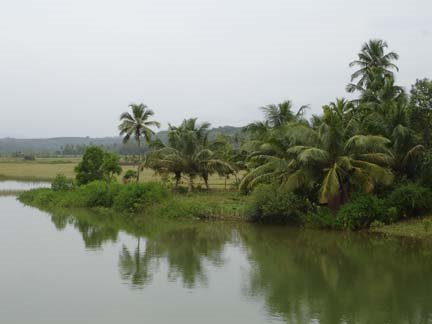
Holegadde near Honavar,Uttara Kannada dist, Karnataka

Copy? Right - but kindly remember to acknowledge!

Creative Commons License
This work is licensed under a Creative Commons Attribution 3.0 License.

" tulu-research.blogspot." ತುಳು ರಿಸರ್ಚ್. ಬ್ಲಾಗ್‌ಸ್ಪಾಟ್‌. ಇನ್

" tulu-research.blogspot."  ತುಳು  ರಿಸರ್ಚ್.  ಬ್ಲಾಗ್‌ಸ್ಪಾಟ್‌. ಇನ್
Have a nice day !