Showing posts with label garodi. Show all posts

Tuesday, January 12, 2016

354. Bhuta cult of Bermeru or Bommaiah

Our concept of the world as a global village is not new. It was a global village even in the historical past, in spite of then being handicapped by vast distances, poor transport and lack of distance communication facilities.
According to available scientific exploratory data on human evolution, the early human beings originally evolved in a relatively remote place in Africa. And with passage of time coupled with population proliferation, tribal people migrated to different lands probably in search of better opportunities, climates, security, food, shelter, comforts and prosperity.
Our ancestors strongly believed that world is one family as expressed in the adage Vasudaiva kutumbakam. Those forefathers who coined such meaningful notions in the bygone days were certainly aware of the common cultural threads among the diverse people living in other countries of the world irrespective of their language, culture, creed and other nuances.

Ancient cults of Spirit worship
Ancient people, our ancestors, beset with myriad obstacles, found solace and security in worshipping elements of the nature. Apart from worshipping the essential elements of the nature, they honored and worshipped their dead community leaders and heroes who were thought to exist in the form of souls or spirits even after their death. Since ages, the spirits or souls (the esoteric remains) of the ferocious animals to begin with and later their celebrities and heroic persons were considered to exist even after their deaths and exert influence over the common people. Such ancient beliefs and cults later led to the culture of worshipping Spirits (Bhūta) and later evolved into worship of Gods that ultimately manifested in multiple and or single forms according to ideologies floated from time to time.
 The prevailing concept of worshipping multiple forms of divinities is the result of coalition of several micro cultures developed in different regional centers in the antiquity with independent beliefs and cults that eventually fused together under tolerant dynasties along the course of evolution.
It needs to be appreciated that different forms of the Bhūta (Spirit) cults once pervaded all over Indian subcontinent as well as other  areas to begin with and with passage of time the Bhūta cults have been replaced by subsequent 'divine' forms of worship. Several forms of the ancient Bhūta  cults have still been preserved in parts of Karnataka.  The Bermer (in Dakshina Kannada, Udupi), Bommaiah (in Uttara Kannada) or Baramappa (in northern Karnataka) is one such ancient Bhūta cult.
A  Symbolic bhuta stone. (with red flowers) Earliest form of  representation of Spirits and deities.


Bhūta: the Spirit
The usage of the word Bhūta is quite interesting. Though the word has remained since ages in Tuluva culture, the term is an ancient pan-Indian word not exclusive to Tulunadu. Basically the word ‘’Bhūta’’ essentially means the (a) past.  It also means (b) the essential life force or the spirit of the dead. Thus the term stands for a Spirit of a dead celebrity or entity that lived in the past. Our ancestors believed that the spirits of the dead entities and persons of significance can influence and guide their lives.
Some authors have employed the term ‘’devil’’ to represent the notion of bhūta. The term ‘’devil’’, which carries negative shades of meaning seems inappropriate for the conveying the concept of   “bhūta”,   prevailing among the people, essentially as a protector form of deities.
Normal people encounter obstacles of varied types during their life and look for reliable and potent and infallible source of inspiration, guidance and supernatural support to tide over the problem at hand.  The cults of Bhūta, Spirits and Gods have played the role of the supernatural guides in the life and achievements of our ancestors.
Our universe is an extremely complex wonderful creation that has been designed to function incessantly and efficiently by unseen set of forces. Similarly human body is an extremely complicated inimitable system that functions extremely well and automatically for years. There are millions of such incredibly complex examples with highly complicated invisible blueprints around us, and to regard these wonders as automatically or self generated without any supernatural managerial force would simply be insane. While the science is still groping for answers to such eternal questions and paradoxes the common people since ages have designed the concepts of spirits and deities as guiding factors in their life according to the level of perception they could comprehend in their ambient environments.

Abram, an ancient leader
One of the ancient hero/celebrity worship cult that originated in ancient Mesopotamia (land between the rivers Euphrates and Tigris corresponding to present parts of Iraq, Syria and Kuwait) happens to be related to a renowned legendary leader named Abram who considered to have lived about 4000 years ago in Sumer, southern Mesopotamia.  Abram has been considered as a legendary patriarch and prophet for Jews, Christians and Muslims. According to descriptions in Genesis, his wife Sara begot him a son known as Isaac. Abram (later known as Abraham) and his son Isaac have been considered as prophets in Christianity.   Abram is known as Ibrahim in Quran and his son Ishmael has been considered as a prophet in Islam. Some researchers have doubted the precise historicity of the person and found that personal names like Abiram were common in Babylon /Sumerian civilization.

Abiram-Biram
One interesting string is that there was a tussle between two rival communities in Mid East. The ancient rival communities that separated due to animosity applied names similar but with or without   ‘A’ prefix! Thus similar contemporaneous esoteric poetic knowledge in the Avesta -Veda was shared between the two groups.  Rival tribes were called Ahura/Asura vs.-Sura.  And similarly there were Abram-Bram, Abiram-Biram etc.
 
Bermer idol at Bommara bettu Garadi, Udupi District (source: Vamana Nandavara,2001)
Birma, Bermeru
The cult of legendary celebrity Abram/Biram spread to Indian subcontinent probably around 1700-1500 BC. The anecdotes of Biram or Bram led to the growth and evolution of a cult glorifying a spirit God. The spirit deity was known variously in different regions as Baram, Beram, Berma, Bomma or Brama.
With transcontinental migration of human tribes in the course  of history, the cult spread to the various parts of southern India, including coastal Tulunadu, as Barama, Birma, Biruma, Berma or Berme (Singular) or Bermeru (honorific plural). During the early centuries of the Common Era, Prakrit/Pali languages were the administrative languages in Karnataka. The name Barama became Bomma in Prakrit/Pali  languages which was adapted in early Kannada regions.
During the period of composition of Siri pāḍ-dana in ancient Tulunadu ( estimated to be in the time span of ca. 300 BC to 300 CE), it appears that the cult of Bermer worship was well entrenched as evidenced by major reference to the Bermer deity  in the pāḍ-dana folklore. 
Nowadays our younger generation might not be aware of the fact that their ancestors worshipped a God/divine Spirit known popularly as Bermer (Berme or Bermeru or Birmer ) in the past history probably well before the widespread popularization and organized worship of Indian Gods like Shiva, Vishnu, Shakti, Ganesha and Kumara.
The Barma or Berma (Bermer) cult once upon a time prevailed all over India. Even the name of the country Burma (Brahma-desha in Sanskrit literature, now Myanmar) is said to have been derived from the Barma deity. However, the vestiges of the Barma/Berma cult have been well preserved in the West Coast of Karnataka.
There are distinct evidences of once dominant Bermer worship cult  prevailing in the Alade, Gunda, Chitteri and Garodi institutions of the Karavali in the West Coast. In Uttara Kannada district Bommaiah is still a major village God being devotedly worshipped by natives especially  in parts of Ankola.
The pāḍ-dana oral literature in Tulu language and the available inscriptions on Bermer  apparently do not provide any significant clues regarding the actual origin, history or evolution of the cult beyond myths. As such many authors appear to be still in the dark regarding the origin of the cult of Bermer and Brahma.
In West Coast of Karnataka, Alade, Chitteri, Garodi and other related traditional, heritage structures have preserved the identity of the Bermer which was widely worshipped as   principal deity once upon a time.
In my childhood there was an intensely weathered structure with plants grown over it about 50 meters behind our ancestral house in Munḍkūru village, in Udupi district. My grandmother used to describe it as Bermere gunḍa.  It took me several years to understand the meaning or significance of the term Bermere gunḍa. By then, the dilapidated structure that existed years ago has vanished due to construction of new houses.

Ancient worshipping patterns

Earliest tribes in India apparently worshipped Sun, trees on one hand and snakes and other harmful creatures on the other. Tree worships further led to preservation of groups of trees held sacred in the form of Kāvu (Kāpu), Bana, Sarana or Devarakādu. One of the early tribes, Marava were named after trees (‘’mara’’).

The oldest known forms of worship consisted of symbolic piece of stone kept at the bottom of a tree. Koraga and other early tribes used to worship a piece of stone kept under the tree called “kata”. Such simplistic symbolic stones representing spirits and deities can be seen even today in rural areas. The relevant word has been preserved in Tamil as katavalu (=God). With evolution in sculptural art forms, the symbolic stones representing spirits and deity forms were replaced by sculpted idols. After invention of pottery, globular earthen vessels, known as muri or kalasa, were kept apart and worshipped as symbolic of spirits, deities and supernatural powers. 
As the tribal families proliferated and set upon migration, the original places of settlements were designated as Mūltān  (or mooltaan or moolasthana; literally means , the original place).Within the mūltāns  they had set out a specific place for worship known Alaḍe. The ancient term Alaḍe does exist in various nook and corners of Indian subcontinent, although with passage of time, the original term has been modified locally depending upon the phonetic nuances of the native languages.

Alaḍe
The Bermer has remained the principal deity in  ancient shrines known as Alaḍe. An Alaḍe (worship place beside water; Ala=water + De=place) is ancient form of shrine or worshipping area usually located near a water body, river or lake.  In  the Alaḍe shrines, the Bermer is the principal deity associated usually with Lekkesiri (Rakteswari), Mahisandaya, Nandigona and Nāga. The ancient word Alaḍe is literally equivalent of the word  Alaya, the place of worship. In many of the ancient Alaḍe shrines there are simply no idols/sculptures or the Bermer is represented by a small piece of stone.
The Alaḍe shrines which have remained representatives of  our ancient roots mostly located inside or associated with early tribal settlements known as Multān (Moolastāna) (Posts  9,19,30,286). It appears that Alade shrines existed in Tulunadu as early as 2000 BC , if not earlier. Before the arrival of the Bermer cult Serpent (Nāga), Bullock (Nandigona), Buffaloe (Mahisandaya) and other animistic spirit deities were being worshipped by the tribals.(Post  313).

Memorial shrines-precursors of Temples

Stoopa < doope
In post- Buddha period, ca 3rd century BC onwards, mortal remains of Buddha and other Buddhist monks were preserved inside a circular enclosure with dome shaped roof, known as Stoopa (stūpa).  The Sanskrit word Stoopa appear to have been derived from ancient Indian (Pāli/Prakrit/Tulu) word Toope.
The ancient Indian word Toope or doope (means a heap) exists in Tulu even today. In Tulu rural agricultural houses, an outdoor heap of granary enclosed within dried hay talks is known as tuppe. Incidentally the traditional tuppe hay-stalk granary structures resemble the shape of stoopa. Thus it can be inferred that the architectural design of stoopa has been inspired from the shape of tuppe granaries.
Similarly, it can be noted that a memorial (usually pyramidal in shape, usually made up of bamboo frame covered with cloths) erected near the cremation site of the dead is known as doope. Note that pyramidal structures were vogue in ancient Egypt and other countries to house preserved dead bodies of celebrities known as mummies.

Chaitya, Chitteri
A Chaitya-griha is a shrine structure enclosing a stoopa (usually containing mortal remains of Buddha or later Buddhist monks) and a prayer /congregation hall for devotees. The Chaitya-griha in various parts of India were constructed  or cut in massive basaltic rocks as seen in parts of Maharashtra) as early as 2nd century BC to preserve the mortal remains of Buddha and to permit piligrims and devotees to circumbulate around the stoopa for worshipping and paying respect to the mortal remains..
Preserving the dead or relics of the dead celebrities was in vogue since antiquity as evidenced by Egyptian mummies.
Similar Chaitya-griha, usually smaller in size, were known as Chitteri or Chitrakoota in the Coastal Karnataka. Besides some of these Chitteris were designated for the worship of Bermer in  Coastal Karnataka/Tulunadu. Several places in Tulunadu such as Chitrapu and Chitrapura also remind us the vestiges of Chitteris in Tulunadu.

Bermer  Gunda
Independent shrines of the Bermer deity are usually known as Gunda.  Traditionally, a gunḍa is a more or less circular structure or enclosure designed to house a representation or image of the Bermer deity. Many of these structures have been dilapidated and weathered off due to neglect over the years  and vagaries of climate. Some of these Gunda have been incorporated in the temple complexes. One such modernized Bermer shrine can be found within the premises of renowned Durga Parameshwari Temple at Kateel, in Mangaluru Taluk.

Bermer in Garodi
The Garoḍi institutions (Kannada: Garaḍi; Tamil: Karati; Malayalam Kalari) were the traditional training centers for soldiers of that time in martial arts. Even today in most of the traditional Garoḍi schools the principal deity is the Bermer. Thus, we can infer that the Garoḍi schools   existed since ancient times when the Bermer was the ruling deity. (Post 291, 329)
The idols of the Bermer deity presently found in the Garoḍis of Tulunadu are generally represented in the form of a masculine warrior like figure with mustache and beard. He is armed with a lancer in one hand and is straddling astride on a horse. Some of the Bermer idols have depicted with a multi-seeded fruit (like Jack fruit?) in one hand. This kind of images could have been an innovation introduced probably after 5th century CE after horse and sculptural art forms were   introduced in India. (Post 6)

Worship of Bermer was dominant even during the (16th Century) period of Queen Abbakka at Ullal (as testified by Italian  tourist Pietro della Valle). Famous twin heroes Koti Chennaya who lived around later part of 16th Century (ca.1555-1585) also worshipped the Bermer God (date source: Vamana Nandavara, 2001). Dilapidated remnants of independent Bermer shrines known as Bermere gunḍa existed in Tulunadu even up to 1960-70.

Now-a-days few vestiges of such ancient shrines can be seen often amalgamated in the campus of temples as kshetrapāla or as lesser deities. This is essentially symbolic of cultural theosophical evolution of divine cults in our land (Post.103.). For example we can see one such Bermer shrine (renovated) in the precincts of Durga Parameshwari temple at Kateel. In Jain Bastis, the Bermer has been relegated to the status of Yaksha or Kshetrapāla. The term Kshetrapāla literally means the security guard of the temple.

Nāga Bermer: fusion of cults
The cult of Nāga (cobra/serpent) worship is quite ancient probably introduced before 3000 BC in Indian subcontinent. In areas where Nāga worship was dominant, the introduction of Bermer cult probably by immigrants must have lead to periodic clashes that ultimately resulted in mutual reconciliation. Reconciliation between the Nāga worshippers and the Bermer worshippers led to fusion of the two cults into Nāga- Bermer worship.

Brahma-Lingeshwara
Conflict of cults as described in the previous section between the devotees of Bermer and Shiva/ Lingeshwara eventually ended in reconciliation of beliefs and fusion of the two cults leading to the deity known as Brahma-Lingeshwara.

Brahma, the creator deity
In the post Vedic period ca.600-300 BC,  the cult of four headed Brahma, the  creator God evolved in northern India. The temple at Pushkar in Rājastān devoted to the worship of Lord Brahma, appears to be one of the first Brahma temples in India. Later the concept spread to other parts of India and also to Southeast Asian countries.
The Bermer and the Brahma cults though originated from the single source bloomed along parallel lines.(Post 4,26,28)

Trimurthi
During the period 300 - 100 BC, the three divine cults namely Brahma, Vishnu and Maheshwara (Shiva) were popular with independent followers. Reconciliation among the devotees led to fusion of the three concepts into the cult of Trimurthi.(Post  33)
 
Yaksha-Brahma at Dharmasthala. (source: Shetty,2002)
Yaksha-Brahma
While Jainism was dominant in Tulunadu and Karavali, Jain rulers while building Jain basadis transformed the Bermer into a Kshetrapāla whose image was placed at the entrance of the Basadis and designated as Yaksha-Brahma.

Tulu Sangam: Siri PaDdana
The Bermer was the ruling deity in Tulunadu at the time of composing the orature (oral+literature= pāḍ-dana) of  Siri Pāḍ-dana. This blogger considers Siri PaDdana as an ancient oral literature of Tulunadu possibly contemporaneous of  ‘Chankam’ (Sangam) literatures of Tamilnadu.(Post ..). The Siri Pāḍ-dana as a part of Tulu Sangam literature can be considered to have composed originally during the beginning centuries of the Common Era. In Siri PaDdana we find exclusive references to the God Bermer and discussions of repairing dilapidated shrine of Bermer near Basrur.(Post 94, 95,97,309)
 The town of Basrur located on the bank of river Hālaḍi in Kundapur Taluk   was originally  a marine trading port during early centuries of the Common Era. As a result of receeding  (transgression) of the Arabian Sea. (The regression of the Sea has been attributed to the mythical powers of Lord Parashurāma in the legends). The position of the Basrur port has been shifted inland as  result of regression of the Sea (Post  296 ).
Bommaiah devaru, Ankola (Two book covers: N R Nayak & Vittal Gaonkar)


Bommaiah in Uttara Kannada.
The cult of Bermeru has not been exclusive to Tulunadu. In Uttara Kannada district especially in Ankola we find Bommaiah devaru a Kannada equivalent of Tulu Bermeru. The word Bomma appears to be a Pāli/Prākrit word derived from the  original of  Barama and adapted into Kannada during early centuries of the Common Era.
At least at two places in Ankola we find the Bommaiah  spirit deity being worshipped.
Adjoining the Ankola town, atop a hillock  near Kogre hamlet located  in the middle of a group of four villages (of Basgodu, Soorve, Shetgeri and Singanamakki) we find a small shrine dedicated to the reigning deity known as Bommaiah devaru.  The Bommaiah idol has been sculpted in granite stone. It is being worshipped by regular pooja and the locals celebrate the annual Bandi habba ritual with gaiety. The idol of Bommaiah deity here has been sculpted in a large granite stone and the form is essentially similar to Bermeru.
The image of Bommaiah deity with golden shown here is taken from the cover of a recent book written by Vittal V. Gaonkar (2015).
 Bommaiah deity flanked by two heroes, Kogre, Soorve Village ,Ankola.

Bommaiah /Baramappa in northern Karnataka
The cult of Bommaiah deity appears to have been rampant all over Karnataka as evident by the prevalence of numerous villages named after the deity such as Bommanahalli, Bommasandra, etc. The Bomma in early Karnataka was not the four headed Brahma but the Spirit Barma or Barama or  the Bermer.
In villages of northern Karnataka worship of Baramappa as a rural Spirit deity (gram devata) continue to exist since long time. The cult of Bommaiah worship appears to have receded in the other parts of India under the overbearing influence of other divine cults.

Evolution of divine cults
The reconstruction of evolution of the Bermer cult may serve as a logical illustration for the unbiased persons to understand genuinely the nature and origin of some of the divine cults. The adaption of the Bermer/Bommaiah divine cult widely in southern India during the Vedic to post Vedic period distinctly evinces the intensity of influence the immigrant cults held over far-off regions in the ancient setting of the global village.


DISCLAIMER
Some of the recent literature in Kannada/English enlisted here below for further reference. The list is not exhaustive. Besides, readers kindly note that any of the analytical interpretation of the Bermer/Bommaiah cult explained in this post may differ from their opinions or inferences expressed by these authors.
However,it is hoped that this post would be useful background for analyzing and understanding the time space relations in the  contemporary field data presented in references below.


REFERENCES
Amrutha Someshwara (1999) Tulu Paḍdana Samputa. Kannada University, Hampi. [Kannada P.8+502. [Kannada]
Gururaja Bhatt, P. Dr. (1975) Studies in Tuluva History and Culture. Dr Padur Gururaja Bhatt Memorial Trust, Udupi.  Second impression, 2010, p.452+ xxxvii.
Indira Hegde, Dr (2004) Bantaru: Ondu Samajo-Samskruthika Adhyayana. Kannada Pustaka Pradhikara. Bengaluru  ,p. xviii+480. [Kannada]
Indira Hegde, Dr (2012) Tuluvara Moolataana:Adi Alade.Parampare mattu parivartane. Navakarnataka Publication, p.408. [Kannada]
Nayak, N.R , Dr (2014) Nadavara Janapada Tavanidhi. Xii+484.Karnataka Janapada University. [Kannada]
Rajshree, Dr. (2008) Tulu Janapada Kavya: Ihapara Lokadrushti. Shree Dhramasthala Manjunatheshwara Tulu peeta. Mangaluru University. Mangalagangotri. p.416. (Kannada)
Shetty, S.D., Dr. (2002) Tulunadina Jainadharma: Ondu Sankritika Adhyayana. Rashtrakavi Govinda Pai Samshodhana Kendra.MGM College, Udupi . p.xxiv+424. [Kannada]
Surendra Rao, B (2010) Bunts in History & culture. Rashtrakavi Govinda Pai Samshodhana Kendra.MGM College, Udupi & World Bunts Foundation Trust,  Mangaluru. p.viii+360.
Vamana Nandavara, Dr.(2001) Koti Chennaya. Janapadiya Adhyayana. (Phd thesis)  Mangaluru.  p.420. [Kannada]
Vittal V Gaonkar (2015). Chandada Chaukada hali and Bommaiah devaru. Sumanth Prakashan Brahmavara. P.58. [Kannada]


Friday, January 31, 2014

329. Garodi and Garodi

An interesting aspect in the study of origin and analysis of ancient historical terms and place names is that a word can have more than one meaning. This could have happened as a result of existence of similar sounding words derived from different tribal communities and time periods. For example, Odi is an ancient word with more than 17 meanings.
Some of these ancient words have the potential of opening and leading our minds into the obscure paths of the nature and evolution of words (and languages) in this land.

Garodi, the gymansium
The term ‘Garodi’ is generally considered to an ancient Tulu word for ancient system of gymnasia that dotted many villages of Tulunadu wherein young men were trained systematically in the martial arts. Interestingly in Tamil the equivalent word for Garodi happens to be karati because Tamil alphabet is devoid of consonants like Ga and Di. It has been speculated that Buddhist monks from south India carried the karati art form of martial arts to China and Japan where it was designated as karate.
Garodi, the Tulu word also means a large hall in front of the house according to Tulu Nighantu.  And this could be the actual origin of the word since martial arts were taught to disciples in large open halls called Garodi. The parallel term Kalari (kala+ri), vogue in Tamil and Malayalam region also means an open area or plot (kaLa) for conducting   exercises or games. Reference to bows, swords, spears and shields can be found in Sangam literatures like Akananuru and Purananuru. The word Kalari has appeared in Sangam literature (Tamil) like Puram and Akam to describe the war field or combat field. It can be seen that the related word kalaha means battle in languages like Kannada and Sanskrit.

Garodi, the snake charmer
However, the term Garodi is not exclusive to Tulunadu. There are persons having Garodi or Garodiya as surname and tribes known as Garodi in Western India. There are places known as Garodi or Garodiya in Gujarat and Maharastra.
The Garodis are a wandering tribe of snake charmers and jugglers in parts of northern Karnataka and Maharastra (Belgaum, Kolhapur, Sangli , Pune and Miraj). These have been considered to be a Muslim sect converted from Scheduled Castes.

Etymology
1. Garodi1= A large open hall, gymnasium.  Gara= large. Garandal= large tall, person; stalwart. Garda= (flag on) tall post, [misnomer: Garuda kamba; It should be Garda kamba]. Garābu= greed; Garime= severity, magnitude. Gar (as in garpu) to dig soil or land to level etc.

2. Garodi 2= Snake charmer.
Gara= snake, Garala (Tulu etc)=snake poison. Garuda= snake charmer/catcher bird; Eagle, Gar=snake; Odi=charm, magic trick.
Gārudi= magic tricks; snake catchers tricks? ; Shri Krishna Garudi= Magical acts of Lord Krishna.
 

®

.

Saturday, August 3, 2013

314. The Billava Community: Significant evolutionary trends


The study of historical evolution of Tulu communities is an  enchanting line of work as the strings we encounter in the due course implicitly reflect the evolutionary footprints preserved during the long journey since our early ancestors set their foots in this charming coastal terrain.
Ramanāth Kotekar has recently (2012) published an interesting and useful book on Billavas (in Kannada) entitled “Tulunadina Billavaru” (=Billavas of Tulunadu). We shall review some of the interesting aspects of the Billava evolution in the light of available data. Famous and well known historical heroic persons of the Tulunadu like Koti-Chennaya and Kantabare - Budabare twin brothers hailed from the Billava Community.

Billava diaspora                                                                                    
The Billava community population-wise constitutes the largest socio-cultural diaspora in Tulunadu. Currently, they are one of the most dynamic communities of Tulunadu. Traditionally they were archers, hunters, soldiers, toddy tappers, Spirit worshippers etc, The Billava community in Tulunadu has equivalents widespread in other parts of Southern India, like Namdhari in Uttar Kannada, Halepaika and Idiga in Shimoga and Old Mysore State areas, Tiya or Belchada (in Ullal- Kasargodu sector) in southern Tulu areas and many other analogous castes and communities spread all over India.

Multiple professions
The Billava diaspora consist of at least three major subgroups, such as (a) Billava, (b) Poojari and (c) Baida. Interestingly during the early cultural history they adapted themselves to several professional roles like the following:
1.      Archers, hunters and soldiers (Billava, Idiga, Halepaika).
2.      Gymnasts and teachers at Gymnasia (Garodi).
3.      Priests in Spirit shrines (Poojari).
4.      Traditional herbal medicine developers (Baida).
5.      Toddy tappers.
6.      Landlords (Guthu owners).

We shall discuss some aspects of these professions here below:

Billava: Archer
Archery was one of the earliest creative arts invented by mankind during its evolution from primitive stages. With development of proficiency in archery, the hunters were able to hunt efficiently wild animals for food.

The term Billava means an archer (or a hunter who makes use of bows and arrows). Archery is one of the oldest talents evolved during the hunter stage of human evolution. The word Billava  (billu+ava= person who uses bow), especially the suffix ava or avan (=he) is of Kannada origin. It suggests that the usage of the term Billava became popular during the reign of Kannada Kings in Tulunadu like Kadamba and Chalukya. The Tulu equivalent word for Billava is Biruva where biru means the bow. Thus Biruver is the equivalent word for Billavas in Tulu language.

Bhil : Sage Valmiki
However, the common Kannada word billu (=bow) is borrowed from the ancient tribal word bhil. The Bhil is an ancient tribal community of archers spread in many parts of India but presently living preponderantly in the forests of Madhya Pradesh and surrounding regions.
 The famous ancient poet of India Valmiki who is credited with the first compilation of the epic Ramayana hailed from the community of Bhils. The Bhils of Madhya Pradesh consider that the poet Valmiki was a Bhil or hunter-archer.
The ethnonym Bhil stands for bow and thus represents archers who traditionally used bows and arrows dating back to hunter stage of human evolution in the subcontinent. The alternate word for bhil was bhir, bir or biru, which was adapted in Tulu and the group was called Biruva or Biruver. Kannada people adopted the word bhill for bow and the group was designated Billava (or Billawa).

Garodi masters
Further during the course of evolution of cultures, when ambitious men acquired land and kingdoms were built to sway control over larger mass of lands, the archers were appointed by kings and chieftains to guard their territories against the enemies. Sooner the archers felt the need to acquire additional talents to fight the enemies. Thus soldiers trained in warfare were born and institutes (Garodi) to train the soldiers in the martial arts were also evolved.

The archers were also soldiers in the armies and in the due course also acquired the techniques of body building and martial arts. The Garodi (Garadi) were the native traditional gymnasia schools devoted to teaching of various techniques of martial arts such as archery, body building, wrestling, fencing or sword fighting and unarmed combat.
 It is widely believed that the modern Karate developed in Japan originated from techniques taught and spread by ancient Buddhist monks of Southern India who migrated to China and Japan for propagation of Buddhism. The ancient form of garadi was karati (as pronounced in Tamil) and the term karate apparently evolved from the southern Dravidian word karati for garadi.

Poojari
The term Poojari (=priest) stands for the traditional priest of Spirit worship ceremonies. The tradition of Poojaris devoted to Spirit worship evidently dates back to period before the expansive spread of Vedic Hinduism and worship of Hindu Gods in Temples in the subcontinent. In Garodis of Tulunadu, the principal deity is Bermer, a Spirit God widely worshipped in Tulunadu before the dominance of post-Vedic manifestation of Hindu Gods like Kumara, Shiva, Ganesha, Vishnu and Durga.

Baider
Baida or Baidya (later became Vaidya in Sanskrit) were the traditional Indian tribes that specialized in the study of forest herbs and the administration of pastes and decoctions derived from plants and herbs for curing various ailments. In fact the modern science of Ayurveda was evolved and founded by the tribe of Baidas.

Toddy tappers
The origin of the art of toddy tapping is not clear though it is generally believed that Thiyya and Ezhavas introduced the coconut palm cultivation and the techniques of tapping and brewing variety of toddies in the West Coast of India. In the Karavali, since long times, toddies extracted from the Palmyra palm (toddy palm) and the Coconut palm were in popular demand.

Bari system in Billawas
Ramanath Kotekar (2012) reports existence of the following 16 baris and additional 4 Koodubaris in his work cited above.
1. Suvarna ( Also known as Somanna, Chomann, Somannaya, Soma bannaya etc)
2. Amin ( Amananna,Ammanna,Amaranna, Ammana Bannaya)
3. Kotian (Kotianna, Koti Bannaya)
4. Kukkian (Kukkabannaya)
5. Karkera (Karamberanna, Karamberannaya,Kairanaya,Karkatanna, Karka banaya)
6. Mundan (Muyatanna, Munditanna, Mundittannaya,Munditta bannaya, Mundyan)
7. Bangera (Bangeranna, Bangaranna, Bangar bannaya,Banger bannaya).
8. Anchan (Alankanna,Alenchanna, Alenkanna,Alanka bannaya).
9. Kabera, Karbera (Kaberanna, Kaberannaya, Kabaranna, Karber,Kabera, Kabarabannaya)
10. Mulyeranna (Mulyarana,Mulyarannaya)
11. Kundar (  Ginderanna, Gundanna, Gunderannaya, Kundaranna)
12. Sanil (Chanilanna, Kundachanna, Chanale,Chanlannaya)
13. Salian, Palan(Chalyanna, Salyanna, Palanbannaya, Palan,Salan, Salyan)
14. Gujatran( Gujaranna, Gujarannaya,Gujjarabannaya)
15. Pulyatan(Bolle Aitanna, Aitanna, Bollotatanna,Bollota bannaya, Balyatanna, Baleranna, Pulyotanna, Pulyotan)
16. Kirodian, Mabian(Uppianna,Uppanna, Uppannaya, Upparanna, Uppan,Bagyotanna, Mabanna, Mabu bannnaya, Mabian)
17. Pergade
18.  Bunnan (Bannana)
19. Shirodian
20. Jattanna.

 Etc

Other commonly prevailing surnames:  Billava, Baida, Poojari etc.

Common Tulu surnames
Many of the bari surnames prevailing among Billava community are not exclusive to them but are common among different Tulu Communities like Bunts, Mogaveera etc. One of the corollaries of this fact is that Caste-Communities are relatively of recent origin compared to age old bari surnames. One of the important custom of the Tulu ancestors was to marry outside their bari (surname folds) since marriages within the fold of blood relatives were found to produce weaker or unhealthy off springs.
The surnames not found in other communities may have been expunged or modified or even renamed due to historical circumstances. Even many of the older surnames may have been obliterated owing to varied circumstances during the course of history.

Evolution of Tribes
Early undocumented history of this subcontinent is littered with profusion of tribes that vied with each other for basic amenities and comforts of primitive kind. Numerous episodes of tribal invasions followed one another. The tribes that came later along the timeline into the territory considered themselves as more evolved, civilized and advanced compared to the pre-existing natives and eventually the former dominated, subdued and marginalized the latter. This type of history has been repeated many times along the timeline of historical evolution
There are no evidences for the existence of many earlier tribes in this land except for their preservance in ancient place names!

Ama, Amara tribes  (Amin)
The bari surname Amin appears to have been derived from the tribal name of Am tribes of ancient African Origin. Surnames like Ammannaya, Ammanna-bannaya, Amaranna, are considered equivalents of the Amin bari surname. Apart from Ama tribes, Amara, Amem, Ambala etc migrant tribes of African origin had ancient settlements named after them in Karavali (and contiguous area) as indicated by place names such as Amtadi, Amtur, Amai, Amembala, Ambala Mogaru, Amara Mudnur, Amaravati, Amara Kantaka etc.

Ana tribe (Anchan)
The bari surname Anchan (An+cha+an) appears to have been derived after the An tribes. An, Ancha, Andhra etc tribes had ancient settlements named after them in places like Anagodu, Anagundi, Anadka, Andheri, etc.

Banga tribe (Banga, Bangera)
The bari surname Banga or Bangera is found extensively among variety of communities of the Karavali and in place names such as Bangadi. The Banga and Bangal  tribal names have been imparted to the regional names of Bangal (West Bengal) and Bangladesh region of Indian subcontinent.

Bolle (Bolletan), Pulyatan)
Bolle (Bellar, Gora) or white tribes could have been possibly named after their skin colour. Signature villages named after them Bola, Bolar, Bolur, Bellur, Belve etc (also Goregaon etc in Maharastra) are suggestive an historical episode when white skinned tribes arrived and settled in various parts of Indian subcontinent.
The Pulyatan surname has been considered equivalent of the Bolletan bari. The term Pulya in Tulu represents dawn or early morning. Though the origin of this word is not clear, probably it means light and represents an alternate name for the light or white skinned tribes.

Gujar (Gujaran)        
Gujar represents specific tribes migrated from the Gujarat region in general. However another theory suggests that Gujars were the original immigrants from Georgia region of Russia into India. Anyway Gujar surname predates Tulu Castes as we can find common Gujar bari among Billava, Bunt and Mogaveers.

Kabe tribe (?)*         
Kabera surname appears to have been derived from the Kabe tribes. The place called Kabatar near Balkunje appears to be the signature village for the tribe.

Karamber( Karamber)*
Karambar could have been a tribal name associated originally with ancient Munda group of Austro-Asiatic tribes. We have several villages and hamlets known as Karmabar in different parts of Tulunadu. Karam is also a word associated with Munda tribes.

Karki  (Karkera)
 The bari surname Karkera appears to have been derived after the tribal name of Karki. There are   a few hamlets in the Karavali named after the Karki tribes. One such Karki village is near Honnavar, Uttara Kannada district.

Kirodi  (Kirodian)*

Koti (Kotian)
The bari surname Kotian appears to have been derived after the tribal name of Kota or Koti. There are several places named after Kota tribes such as Kota, Koteshwara, etc.

Kukke  (Kukkian)*
The bari surname Kukkian appears to have been derived after the tribal name of Kukke. The tribal place name Kukke is associated with the famous pilgrimage center Subramanya on the foothills of Sahyadri ranges. The other places like Kukkaje,Kukkipadi,Kukkujadka,Koukradi, also vindicate the tribal name. The term Kukke means basket made from wild creepers. Possibly the term for traditional basket ( kukke) was derived from the name of the tribes that specialized in basket weaving.
There could have been certain relationship between Kukke and Toda tribes in the Karavali. One of the Spirit deities of Tulunadu is known as Toda-Kukki-naar.

Kundar (Kundaran, Ginderan)
The surname Kundar or Kundaran commonly found among Billavas and Mogaveers is apparently associated with those ancient tribes engaged in smelting or melting precious metals such as gold and silver. The term Gindi is commonly applied to the metal silver or a vessel fashioned out of silver. It appears that, later smaller pot like vessels (gindi) used for carrying liquids were also fashioned out of other metals like copper brass and bronze.

Mabian (Mabanna, )*
Mabu was a common tribal name in earlier years and some of the ferries such as Mabukala were named after the person or tribe called Mabu. Presently Mabian and Uppianna surnames are considered as equivalentssuggesting that these two tribes were closely related in earlier period.

Mulya ( Mulyarannaya)
Mulya or Kulals are associated with the art of earthen pot making. The Pot making was considered as one of the amazing discoveries of the early civilization. The wheel used for spinning and fashioning the clay into vessel was modified further and wheels for carts were supposed to have evolved from the potters wheel. On the other hand pot variously known as Kadya, kumbha, kalasha, muri or murle etc was used as an auspicious representative emblem of divinity since the early period of civilization. Subsequently the symbolic kalasha was also incorporated as pinnacles atop the stoopas and temples.
The presence of Mulyaranna bari surname suggests that a part of Mulya people were incorporated into the fold of the Billava diaspora during the course of historical time line.

Munda (Mundan)
Munda or Austro-Asiatic tribes were preponderantly distributed in various parts of Tulunadu during pre-Dravidan period. Numerous Munda signature villages in the coastal belt such as Mundkur,Mundur, Kallamundkur, Mundar, Mundagar, Mundadka etc signify the prevalence of Munda tribes in early Tulunadu. Several streams of Munda tribes were incorporated into the Billawa and other Tulu communities during the course of time.

Uppi (Uppianna), Mabian)*
Apparently the surname Uppi is associated with ancient salt makers living in estuaries of river. The equivalent name Mabian or Mabu is associated with boatmen who helped people to cross the river along ferries in the coastal rivers. For example, we can find Mabukala in River Seeta. The Mabukala appearing in the Siri paDdana could have been somewhere Kadandale in  Shambavi (or Mulki) River.

Sanil
Sanil (or in some areas Kundacchanna) surname has been derived from the ancient tribe that had the totem of squirrel. Chanil in Tulu represents the squirrel.

Salian
The Salian surname has been derived after the ancient totem tribe of spider. The term ‘talya’ or the ‘Salya’ refers to the ancient totem of Spider. Possibly it also signifies the ancient community of weavers that fashioned cloths during the antiquities. This is one of the common surnames among various Tulu Communities.

Sora tribes (Suvarana)
The surname Suvarna appears to be a recent modification of the ancient surname Soran connected with Sora tribes of Austro-Asiatic Munda tribal group that was widely spread in parts of ancient Tulunadu also. The name of Sora tribe has been preserved in several signature village names such as Sornadu, Sorga, Soor-ikumeru, Sooralpadi etc. And Sooru or Sooranna was a popular personal name in Tulunadu until recently. The edible tuber extensively used in cooking in Tulunadu, “ Soorana Kande” (=the Tuber of Sooru) probably was associated with the tribe of Sora or Soors. Possibly, the name of River Swarna has been named after the tribe of Sora.

Bunna (Bunnan,Bannan)

Shirodi (Shirodoan)*

Jatti (Jattanna)*
                                                  
*Surnames with asterisks are generally found  exclusively in the Billava Community.

Hosabettu Vishwanath suggested that the clan (bari) Pullamachutti/Pulamachi Thiyya is possibly equivalent to 'Suvarna' of  Tulu Baris ( Post-312).  Palm/coconut trees are classified under 'pullu' (grass) variety (Refer Post-278:  Pula & Pola & their derivatives).  The Billava bari 'Pullyotan/Pulyotan/Pullyotanna' may refer to group of Billavas engaged mainly on drawing toddy from Palm/coconut trees and paddy cultivation.

Tulu Bari Surnames and Communities
Some of the common inferences we derived in our earlier analysis in this blog are perfectly applicable to this analysis also.
1. Tulu Communities traditionally have dual identity system which has survived even at present. Dual identities refer to (a) Surnames [Bari, Bali or Gotra] and (b) Community tag.
2. The Surnames predate present day pattern of Communities and Castes. In another way, the surnames were the original sects or the early form of genetic groups to begin with. Marriage relations between identical bari (surnames, sects) were prohibited since our ancestors found out very early in the course of evolution that (a) the marriages between close kith and kin may result in weak .disabled or diseased progeny and (b) alliance with external tribes begot genetically stronger and better quality of generations.
3. Communities in Tulunadu evolved from the absorption and merger of tribes and sects that existed in this land before the arrival of Tulu speaking people. Earlier Tribal signatures are preserved in the form of surnames surviving even at present.
4. The existence of similar surnames in different Tulu Communities reveal that people originally belonging to a particular bari surname subsequently divided themselves into different communities for specific reasons like adoption of a specific profession or matrimony. In other words present caste/communities were formed recently and long after the formation of surname based sects.


®

Blog Archive

Books for Reference

  • A Comparative Study of Tulu Dialects By Dr. Padmanabha Kekunnaya. Govinda Pai Reserach Centre, UDupi. 1994
  • Koti Chennaya: Janapadiya Adhyayana. By Dr. Vamana Nandavar. Hemanshu Prakashana ,Mangalore.2001.
  • Male kudiyaru. Dr B. A.Viveka Rai and D.Yadupathi Gowda, Mangalore University,1996.
  • Mogaveera Samskriti By Venkataraja Punimchattaya. Karnataka Sahitya Academy.1993.
  • Mugeraru:Jananga Janapada Adhyayana. By Dr Abhaya Kumar Kaukradi.Kannada & Culture Directorate,Bangalore & Karnataka Tulu Academy, Mangalore,1997.
  • Puttubalakeya Pad-danagalu. Ed: Dr B.A.Viveka Rai,Yadupati Gowda and Rajashri, Sri Dharmasthala Manjunatheswara Tulu Peeta. Mangalore University.2004
  • Se'erige. Ed:Dr K.Chinnapa Gowda.Madipu Prakashana,Mangalagangotri,2000.
  • Studies in Tuluva History and Culture.by Dr P Gururaja Bhat (1975).Milagres College,Kallinapur,Udupi.
  • Taulava Sanskriti by Dr.B.A.Viveka Rai, Sahyadri Prakashana,Mysore 1977
  • TuLu naaDu-nuDi By Dr.PalthaDi Ramakrishna Achar, Puttur.
  • TuLu NighanTu. (Editor in Chief: Dr U.P.Upadhyaya, Govinda Pai Research Centre,Udupi. Six volumes. 1988 to 1997
  • Tulu Patero-A Philology & Grammar of Tulu Language by Budhananda Shivalli.2004.Mandira Prakashana Mangalore. p.317. (The book is in Tulu Language using Kannada script)
  • TuLunadina ShasanagaLa Sanskritika Adhyayana. By Shaila T. Verma (2002) Jnanodaya Prakashana,Bangalore, p.304.(Kannada)
  • Tuluvala Baliyendre. Compiled by N.A.Sheenappa Hegde,Polali,Sri Devi Prakashana,Parkala,1929/1999

A Coastal estuary

A Coastal estuary
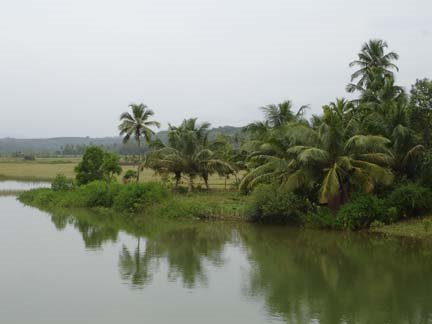
Holegadde near Honavar,Uttara Kannada dist, Karnataka

Copy? Right - but kindly remember to acknowledge!

Creative Commons License
This work is licensed under a Creative Commons Attribution 3.0 License.

" tulu-research.blogspot." ತುಳು ರಿಸರ್ಚ್. ಬ್ಲಾಗ್‌ಸ್ಪಾಟ್‌. ಇನ್

" tulu-research.blogspot."  ತುಳು  ರಿಸರ್ಚ್.  ಬ್ಲಾಗ್‌ಸ್ಪಾಟ್‌. ಇನ್
Have a nice day !