Showing posts with label kinara. Show all posts

Saturday, September 10, 2016

364. ‘Kināra’ origin of ‘Canara’


The coastal districts of Karnataka were popularly known as “Canara districts” during Portuguese and British administrations in the region. The original Canara district was bifurcated into North Canara and South Canara. During the British regime, the North Canara was part of the Bombay Province and South Canara of Madras Province. The term Canara has been quite favourite with many locals as you can still come across name plate like Canara Motor Service, Canara Transport, Canara College, Canara Coffee or Canara Book shop etc.

Some of the people did not appreciate the term, “Canara” beginning with a foreign sounding C. They introduced the term “Kanara” that made “South Kanara” and “North Kanara” which were often abbreviated to “SK” and “DK” respectively. In the due course of time, nativity lovers, preferred to translate the terms “North Kanara” and “South Kanara” into chaste Kannada words such as “Uttara Kannada” and “Dakshina Kannada”respectively. With passage of time some administrators felt that Dakshina Kannada district is too large to handle and they carved out a separate Udupi district out of the former Dakshina Kannada district.
This is all are part of our history and heritage which most of are aware.
Now how the term Canara came into being?

Kināra districts
Many of us tend to believe that the term “Canara” means “Kanara” or “Kannada” because of the transformation of words along the passage of time. The general opinion is that Portuguese and the British because of their faulty pronunciation of Indian words and eventually corrupted the native words by introducing terms like Canara. While this opinion is partly true it has been found that the origin of Canara was not Kannada but less known Kināra.

Perooru Jāru
Tulu language activist and writer,    Perooru Jāru in his   booklet,    “Tulunaadu, notes that while Mysore Tiger Tippu Sultan annexed   the coastal districts to his kingdom, (during later part of 18th Century CE) he referred   to the coastal region as the Kināra. The term Kināra in Hindi and Urdu means the coast.
However, the Portuguese contenders who were vying for capturing the coastal region were not comfortable with the pronunciation of the word Kinara which unfortunately was corrupted to stylish,   “ Canara”! 

Canarese
The Kannada language was printed in the form of a news paper and also as a dictionary for the first time by Basel Mission Press in the 'Canara' region at Mangaluru and accordingly it seems that the Britishers preferred the name of 'Canarese' for the Kannada language !

On the whole, this case should serve as an recent example of how place names and regional names change their original form, content and meaning as a result of cultural transitions as well as unintentional mistakes during the course of time.

** **
Kināra: a word analysis

The word ‘kināra’ is composed of two ancient root word units or morphemes. The prefix ki is an ancient   spatial indicative affix, denoting an area. Nāra is another ancient word which means water. Therefore, kināra is sea beach or river bank; in other words, an area by the side of a water body. The ancient word exists in many of the languages.

R


Monday, January 13, 2014

326. Nāravi and Nāra villages

The Village Nāravi (in Belthangadi Taluk, Dakshina Kannada), known for an ancient Suryanarayana temple (Post 301), is located on the bank of a stream tributary to River Gurpur (or Phalguni).  It is said that the older name of the village Naravi was Narol.
The term nāra (in Sanskrit), means water; The best explanation for the relatively less known term ‘nāra’ is the divine name of Nārayana, which is explained as one resides in water (nāra + ayana). (Wiki page on ‘Narayana’). 
In 'Satyārtha Prakāsha', Swami Dayananda Saraswati expounds the meaning of  ' nāra ', which means water and also the soul of living bodies. According to him the 'Nārāyana' means, the one whose abode (ayana) is  nāra and thus he is considered as the all pervading God. One more meaning of  nāra  is knowledge.  Thus,  Nārada  means the one who spreads knowledge. Similarly, Narial or Narikela means coconut which contains water. 
 Some attribute the term nāra to white birds frequenting the water bodies.  In Uttar Kannada nyari (or neri) in local Kannada means grassy weeds growing in water. In Dravidian languages like Tulu and Kannada nār also means fiber or fibrous weed. An variant of the nāra, the  nāla also means stream or rivulet. Thus connection of nāra to water is clear. In Dravidian languages neer means water. Thus the parallelism between the words nāra and neer is quite interesting.
A similar sounding word nara (short na) represents man or human being and similarly nāri means a woman. In poetic lines we can see nār for nāri. (As in Hindi film Padosan: Ek chatur naar ..). Thus some believe that nāra also means living beings in general.

One more striking word in usage based on the word 'nāra' and commonly used in Tulu, Kannada and Sanskrit languages is  kināra which means the sea coast or river bank (wherein the possible word origin  was ki [= place, area] + nāra [=water]) . 

Nara villages
There are numerous villages in Tulunadu having names like Narla, Narsha, Narya, Narve, Naravi etc. Of these Nārla appears to be one of the most common village names not only in Karavali/Tulunadu but also in other regions of India. Thus Nārla or similar Nāra place names are not exclusive to Tulu or Dravidian language and culture but part of the pan-Indian evolutionary scenery.

Nārla
There are villages named Nārla in different parts of the country like Karnataka,Andhra Pradesh, Orissa, Maharastra, Himachal Pradesh, Jammu & Kashmir, Rajasthan and Uttar Pradesh. Besides, we can also find Narlakantiguda, Narlapuram and Narlavaram In Andhra Pradesh, Narlavalas, in Andhra and Orissa, Narla-halli in Karnataka and Narlad in Maharastra, Narlai and Narlay in Madhya Pradesh. Etc.

Nārya
Similarly, villages named Nārya can be found in other States of India like Haryana (Naryana), Madhya Pradesh (Naryaval), Himachal Pradesh (Naryaval), Uttar Pradesh (Naryanpur), West Bengal (Naryanpur), Rajasthan (Narya ka bas) etc.

Forgotten Episodes
Present generation of Tulu people have almost forgotten the word nāra, which means water, since it has been completely replaced by the Tulu-Dravidian equivalent word neer. However, the Nāra place names have remained immortally all over India since ages as in Karavali/ Tulunadu also. This paradox can only be explained by the existence of undercurrent layers of forgotten episodes in our past history.
Â


Blog Archive

Books for Reference

  • A Comparative Study of Tulu Dialects By Dr. Padmanabha Kekunnaya. Govinda Pai Reserach Centre, UDupi. 1994
  • Koti Chennaya: Janapadiya Adhyayana. By Dr. Vamana Nandavar. Hemanshu Prakashana ,Mangalore.2001.
  • Male kudiyaru. Dr B. A.Viveka Rai and D.Yadupathi Gowda, Mangalore University,1996.
  • Mogaveera Samskriti By Venkataraja Punimchattaya. Karnataka Sahitya Academy.1993.
  • Mugeraru:Jananga Janapada Adhyayana. By Dr Abhaya Kumar Kaukradi.Kannada & Culture Directorate,Bangalore & Karnataka Tulu Academy, Mangalore,1997.
  • Puttubalakeya Pad-danagalu. Ed: Dr B.A.Viveka Rai,Yadupati Gowda and Rajashri, Sri Dharmasthala Manjunatheswara Tulu Peeta. Mangalore University.2004
  • Se'erige. Ed:Dr K.Chinnapa Gowda.Madipu Prakashana,Mangalagangotri,2000.
  • Studies in Tuluva History and Culture.by Dr P Gururaja Bhat (1975).Milagres College,Kallinapur,Udupi.
  • Taulava Sanskriti by Dr.B.A.Viveka Rai, Sahyadri Prakashana,Mysore 1977
  • TuLu naaDu-nuDi By Dr.PalthaDi Ramakrishna Achar, Puttur.
  • TuLu NighanTu. (Editor in Chief: Dr U.P.Upadhyaya, Govinda Pai Research Centre,Udupi. Six volumes. 1988 to 1997
  • Tulu Patero-A Philology & Grammar of Tulu Language by Budhananda Shivalli.2004.Mandira Prakashana Mangalore. p.317. (The book is in Tulu Language using Kannada script)
  • TuLunadina ShasanagaLa Sanskritika Adhyayana. By Shaila T. Verma (2002) Jnanodaya Prakashana,Bangalore, p.304.(Kannada)
  • Tuluvala Baliyendre. Compiled by N.A.Sheenappa Hegde,Polali,Sri Devi Prakashana,Parkala,1929/1999

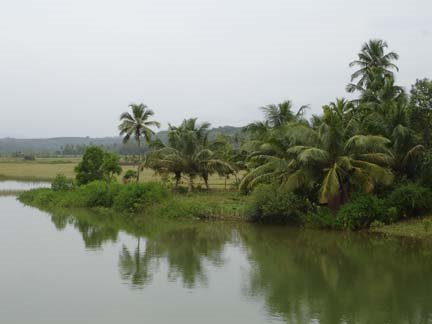
A Coastal estuary

A Coastal estuary
Holegadde near Honavar,Uttara Kannada dist, Karnataka

Copy? Right - but kindly remember to acknowledge!

Creative Commons License
This work is licensed under a Creative Commons Attribution 3.0 License.

" tulu-research.blogspot." ತುಳು ರಿಸರ್ಚ್. ಬ್ಲಾಗ್‌ಸ್ಪಾಟ್‌. ಇನ್

" tulu-research.blogspot."  ತುಳು  ರಿಸರ್ಚ್.  ಬ್ಲಾಗ್‌ಸ್ಪಾಟ್‌. ಇನ್
Have a nice day !