Showing posts with label odi. Show all posts

Tuesday, October 29, 2013

318. Udupi and Orissa: Common threads.

Understanding the origin of ancient place names and their realistic meanings can often be hampered by limitations of our perceptions of our entire gamut of history and evolution of our culture and languages. When understanding or analyzing any unusual place name, people generally resort to compare with commonly known words prevailing in the local or the most influential language, without realizing that the words involved may also possibly represent unfamiliar ancient words that at present may or may not be in current use.

Let us compare and analyze two place names Udupi and Orissa and in order to arrive at some interesting and meaningful inferences. Udupi is a coastal town in West Coast of India, whereas Orissa is a State on the East Coast of India. On account of the Arya- Dravida syndrome, usually people consider that South and North have distinctly different sets of languages. Udupi is commonly considered to have been derived from Sanskrit words, whereas,   the name ‘Orissa’ has been changed into earlier form of Odisha.
Let us analyze the available data and understand how East (Orissa) and West (Udupi) Coasts of India shared common language and culture in the remote past.
Udupi
Udupi in the Karavali (West Coast) of Karnataka is a small burgeoning town known for cultural centre of medieval Krishna cult and the dwaita religious philosophy founded by Madhvāchārya (1238-1317). The Udupi hotels are known as a brand worldwide for their exquisite delicious South Indian vegetarian food. Udupi is also known for quality education and medical facilities.
There are a number of explanations in vogue in the net for the origin and meaning of the place name Udupi (or Udupa). 
1. Udu+pa:  (Sanskrit) Udu = Star; pa= leader. Udupi=leader of stars, ie moon.
2. Udu+pa (Sanskrit) Udu= Moon; pa= bearer, Udupa= Shiva; who carries moon on his hairs.
In both these derivations, which mean the Shiva or the Moon, and there is no hint of any suffix indicative of place like village or town.

The name Udupi is the modified version of the popular Tulu name Odipu. (d pronounced as in English word Detail) . There are two more places near Odipu which possibly share the ancient name of Odipu or evolved from that name. One is Odabhandeshwara (also spelt as Vadabhandeshwara or Odapandeshwara). The other is Udyavara which could be the evolved version of the old name Odiyara. (Post.184 The Magic of Malpe ).
Even though now it is a fairly strange word, the word ‘oDi ‘carries some 18 or more meanings, as enlisted in Tulu Nighantu (see : Post No 109.Odipu-the Udupi)  . The various shades of meanings available for this word reflect the antiquity of this strange word. The meanings include:
(1) A branch of plant laden with fruits, (2)to drip, (3) to cease flowing,  (4)to control or regulate, (5).A raised divider between the agricultural fields,  (6) A narrow   strip of field   (7) A field canal, (8) Sorcery,  (9) A measure, (10)  A  tumour   (11). A hunters lodge, (12) Defeat   (13) Evil eye   (14) A pair, (15) to pull or pluck (oDipu) (16)  an union of members, [  as in 'ODi kaTTu' ] (17) A  competition,   like cock fight.(18) A raised ,high land (like ‘bettu’ in Tulu).and (19)  Odi, is a proper   name, for male person among certain tribes.
As discussed in older posts herein, the word ‘pu’ is an ancient suffix indicative of habitation as in Balapu, Mudipu, Polipu, Odipu etc place names. Probably the Sanskrit word pura (=town) was evolved (pu+ura) after the ancient suffix ‘pu’. Another related spatial suffix is –pe as in place names Didupe, ALape, Malpe etc.
Pura= pu+ura. Pu=habitation;  ur, ura or oor=town, city or village.
Therefore, an Odipu in the ancient sense of meaning   can be a magical, high land habitation or tribal village. We shall see the other important place which shares the magic of odi in the East coast of India.

Orissa
The name of Orissa State has been changed over to Odisha in the year 2011. The term Odisha cited in Pali and Sanskrit texts is considered to be the ancient name of the region. The Official Language of the State has been declared as Odia. In ancient texts it has been recorded as Odra desa or Odra Visaya or Oddaka. Greek historian Pliny recorded the region of ‘Oretes’ which is said to be the ‘Odisha’. The Mount Maleus in Plinys accounts is said to be the Malayagiri (near Pala Lahara) and the Monedes are said to be the Munda tribes that inhabited the region. A part of ancient Odisha consisting of Kalahandi,Koraput and Bastar was known as Maha-kantara (great forest) or Atavi din epics like Ramayana and Mahabharat.
The place name Odisha can be analysed as Odi+sha. According to a Wiki contributor, the term Odi is a variant of Ora or Ura. Ur was a famous ancient Sumerian city. The Dravidian word ur or oor (Village/habitation)   seems to be derived from the name of the ancient Sumerian port city Ur in Mesopotamia. It is possible that the term Odi was an ancient variant or cognate of the word Ur or Or.
Further, the ancient suffix Sa or Sha is an indicative of habitation as in place names Belashe, Avarse, Teggarshe, Vaddarse, Amashe (bail), etc (Post. 141. Village name suffixes).

Parallels between Udupi and Odisha
There are several aspects common between the place names Odipu (Udupi) and Odisha (Udisha/ Orissa). Both were probably ancient port cities that carried the name of Ur the famous Sumerian port city of Mespotamia.
There are several other villages in Odisha that carry the place name Odi such as Odiso, Odisha, Odisagarha, Odiaalapur, Odiapali, Odling, Odisagarha, Odia munda, Odijambo etc (Census of India, 2011).
Similarly around Udupi also we can find several places that carry the tag of Odi. Odabhandeshwara  or  Odapandeshwara is the name of the beach, near Malpe, West of Udupi. The place name Malpe, which probably was originally Malapu. (In Tulu usage it is ‘Malapu’ similar to ‘Odipu’.).  Mala=hill; pu/pe=habitation. The hill implied may be St Mary and Badragada group of volcanic islands located west of Malpe.We also find Brahmagiri in Udupi as well as in Orissa.
In Orissa similarly we find Malaygiri hills. A part of Orissa was known as Kantara or Maha-kantara. Similarly we have Kantara Village (or Kantavara) East of Udupi, located near Bola in Karkal taluk. An area in Orissa was known as Atavi and we have an Adve,  near Palimar, South of Udupi, on the Padubidri- Karkal Road.
Similarly we have suggested in older posts that the Udyvara could have been the modernised name of ancient place known as Odiara.
Apart from the place known as Odilnala in Belthangadi taluk , Dakshina Kannada , we have a number of places in different parts of  India that carry the tag of Odi in the place names as compiled in Census of India 2011.
Some of these places are :  Odi (Madhya Pradesh, Rajastan and Himachal Pradesh) Odina (Jammu & Kashmir),Odidra(Gujarat), Odikhor(Bihar),Odiakhurd, Odiakalan (Chattisgarh), Odi pora shahoora (Jammu & Kashmir,) Odiso, Odisha, Odisagarha, Odiaalapur, Odiapali, Odling, Odisagarha, Odia munda, Odijambo (Orissa), Odi ka pura, Odia kheraOdia kheri (Rajastan)
Odium, Odiyathur, Odianthal (Tamilnadu), Odiarthnathpur (UttarPradesh), Odiyari(Uttar khand) etc. We have also Chikkodi (Karnataka) and Tirodi (Madhya Pradesh).
The above list is obviously incomplete because Census of India, 2011 has not considered names of hamlets and smaller villages.
On the whole, the word Odi is not exclusive to Tulu Language, nor it is a pure Dravidian word. Most likely Tulu and other Dravidian languages borrowed the word from older languages that prevailed in different parts of India including the ancient Karavali. Further it proves that there were intensive tourism by migration and cultural exchanges among different parts of India even in ancient period.

Odi Oli and Ur or Oor
In ultimate analysis it seems that the word Odi is a variant of the common word Ur or Oor or Or that means village or habitation.Similarly when we compare the place names in Maharastra we find that Odi and Oli (=village) are interchangeable words having the same meaning.It is interesting that all these words Odi, Oli and Oor have been preserved in place names of Tulunadu suggesting that there was  an intimate connection and exchange of people, culture, words and language even during the remote past in spite of poor civic, and transport facilities.

[ Â [

Saturday, August 30, 2008

141.Village name suffixes

The usual word-suffixes for designating villages in Dravidian languages in southern India are -oor, palli/ halli, grama, naaD, koppal etc. However, the Karavali region has a large number of somewhat unusual village name suffixes that evidently represent specific trends in evolution of words some of which are common to all the south Indian languages. The Karavali during the various early historical periods being a settlement of assorted tribes with their own languages, we can expect input of primitive words from their languages that have formed the base from which the present set of words were evolved. Note some of the delicate implication of evolutionary trends in the following place indicators.

Ar.> Avara
It has been suggested that the Indo-European root word 'Ar' as in Aryan represents agriculture or cultivation. However similar root is found in Dravidian languages. For example 'ārankei' represented the open palm of the hand, for example, in Kolami (Dravidian)language. The word 'ārankei' later became 'angai '(palm of hand) in various Dravidian languages. Thus we can deduce that original root 'ār' or 'āran' meant open area or field.
The natural open fields that facilitated as the human settlements during the early civilization were possibly designated with the suffix -ar. There are a large number of villages/hamlets in Karavali that have the suffix -ar. For example: Todar, Bolar, Kemar, Mijar, Mudar, Madar, Palar, Pilar,Ubar etc. And Arantodu, Arambodi Arabail etc.
With passage of time the ār was converted to -āra or -āru. (Bantara, Bolāra, Kantāra, Kemaru, Mijaru etc).
New words were created later in time span by adding short modifying prefixes. For example: mār (m+ār) meant agricultural field, probably slightly elevated than ār.(For example: Malemar, Bakimar, Palimar, Palemar, Barimar etc) Similarly kār( k+ ār) represented wooded field(Ajekar, . And jār (j+ ār) for sloping ground. The -gār and -chār became variants of -kār and -jār. For example Alangar, Kannangar, Mangar, Kodichar, Kolchar etc.
Further innovation, especially Sanskritization modified and refined the ār hamlets into -avara. (Attavara, Udyavara, Banavara, Mangalavara Neelavara, Pejavara etc).

r.> L With passage of time, probably during Vijayanagar and later period, with conversion of r.> L, the 'mār' beacame 'māLa'. Names like MāLa, GomāLa, ErumāLa etc came into being.

aDi.> adka
The suffix 'aDi' possibly originally referred to cool shade of a tree, that was later extended to mean huts,hamlet or habitation etc. Nelyādi, Kalyādi, Manjanādi, Nekkilādi, Amtādi, etc An variant of -aDi was -aDa. For example Kokkada.
The PāDi (pa+aDi;= farm) developed from -aDi. Examples: Kukkipādi, Bellipādi, Baikampādi etc. In some areas -pāDi has become -bāDi. For example: Kannambādi, Kodimbādi,etc..
The suffix 'aDka', evolved from -aDi, and means open ground or yard. Possibly, it developed later as a regional variant of the suffix-ar. Examples include Kudthadka, Aladka,Pāladka, Kalladka, Mulladka, etc.

Al
The suffix -al or its later forms -ala , -alu or āL meant water course, river or stream. It was employed to represent land area or field by the side of a stream. Bajāl, Kaipunjāl, Kudala, Koppalu, Alupe, Alike, Aluve, Pāngala etc. The -sāl (s+āl), -jāl (j+āl) , -vāl (v+āl) and -chāl (ch+āl) became the modified variants of -āl. For example: Nadisāl, Kodijāl, Heranjāl, Ilavāla etc.

aN
The āN is an another basic suffix (with its later variants -aNNu, or -aNe) that represented soil, land or field. For example: Belman, Muddān, Kemman, Kondāna, Kodmān, Kokkarne, Perne, Marne etc.
Also the words KonkaNa, PaDuvaNa(=western), MooDaNa (=eastern), tenkaNa (=southern )etc.were formed in this fashion. So, the word 'konkaNa' refers to notched/crooked coastline between Goa and Gokarna: konk(crooked, hook-like,non-linear)+aNa (land).

Naturally, the common word maNNu (=soil) is a compound of m+aNNu. (Similar analysis can be extended for the word 'haNNu' (=fruit), the agricultural product.

Anj.> Aje
The -anj or -anje (along with its regional variant -ang) was one of the ancient basic word that possibly suggested developed area, shops or township. Possibly the root word '-anj' originally meant 'a sloping ground ' or 'hill-slope' as we find that in the Kolami-Gadaba languages the word 'anj' means climb.
Several zone indicators were evolved from the basic word - anj , such as:

banja. (=barren/dry)
kanja (=reddish )
kunja, (=hilly)
manja (=even land)
nanja, (=farmland)
punja, (=rocky)
renja ...(=fragrant/delightful)....etc.

Many of these words were compounded with -ar into Kunjar, Manjar (>Manjarur), Kenjar, Banjar etc.
The words angar( Naiki language), angari (Naikri language ) and angad (Parji language) mean courtyard or bazaar in ancient Dravidian languages.Thus the word 'Mangar' (m+ang+ar=Ancient Mangalore) could be an earlier variant of the word 'Manjar' (m+anj+ar) or Manjarur. The word 'angar' was an ancient equivalent of 'angadi', the bazaar. The words 'angār' and 'angaDi' (=bazaar) (as in Haleanagdi, Uppinangadi, Belthangadi, Hosanagadi Koppalangadi, Murathangadi, Mudarangadi etc) were in turn derived from --anj or -ang.
Some of these words were modified in later period. For example 'manja' (as in Ballamanja, Kalmanja) became 'maja' as in '-majalu.'(as in Kanakamajalu).
Similarly 'kanje' became 'kaje', banje .> 'baje' with passage of time.

Land classification words like nanja, punja etc are used even today in Kannada also. Examples for village names embodying -anj derivatives include: Markanja, Balkunje, Elinje, Heggunje, Kudkunja, Kedinje, Innanje, Bannanje, Surinje, Kunjathabail, Punjālkatte, The 'nanja' became 'nancha' (as in Nanchar) in some areas.

Ank, ang
The -anj had two variants namely : -ang and -ank. The -ang/e and -ank/i variant of -anj/e can be examplified by Varanga,Kodange, Parenki, Neranki, Pernakila etc. The-ank (=yard, small piece of land; e.g. Koli-anka) evolved into place names such as Manki (m+anki), Permanki etc. Even the word Lanka (island) can be considered as ( l+anka or the land within water; la- being shortened form of al/a=water). The 'ank' later evolved to represent the 'number'
The 'anj' root word with passage of time became '-aj 'or '-aje'. Variants of 'aje' include Aje(<.anje), Kaje(<.kanje), maje/majalu (<.manje) and Baje(<.banje). Village names such as Ajekār, Baje, Bajāl, Bajape Kaje, Kajekār, Konaje, Pāthaje, Derāje, etc abound in the Karavali.

Oli
The suffix word -Oli or -OLi could be of Prakrit origin as it has been traced to Marati areas as a village indicator. For example of -Oli are: Innoli, Maroli, Kudroli, etc.
One of the possibility is that the suffix '-goLi' in many of the village names (like Bajagoli, Kinnigoli, Goliangadi, Taudugoli, Asaigoli etc) could actually be a derivative of Oli (g+oli) rather than the goLi, the banyan tree, as commonly presumed so far!

Odi
The suffix Odi apparently has several meanings as enlisted in the Tulu nighantu. However, it could be geographical indicator of 'bettu' (upland) is suggested by the Kannada equivalent name 'Hosabettu' of the original Tulu place name 'Posodi'. Examples of Odi villages include Odipu, Posodi, Arambodi,
The Odi could be a regional variant of Oli as we find analogy between Oli>goLi and Odi >k+ODi, ODu>> k/g+oDu.
Further variants of -Odi are -kODi (Kodi. Aluvekodi, etc). And for -Odu and -koDu or -goDu or -toDu., we find examples in Kumragodu, Balgodu, Kasarkodu, Kasargodu, Arantodu etc.

Oor
The origin of the word oor can be traced to the name of the renowned ancient Sumerian city, Ur , that dated back to some 6000 BCE. The names of ancient Indian historical cities Mathura (Uttar Pradesh)and Madhuarai (Tamilnad) were based on the root word -ur or -oor.
Now the suffix -oor is the most common indicator (Mangalur, Bengalur, Maisur,alur, Belur, Begur, Puttur, Tumkur, Kittur, Nellur, Chittur, etc) of village/town/city names in southern India.

An old form of -oor was -uri. Place names like Naguri, Hebburi (Hebri), Uruval, etc. were based on these. The -uri form apparently was used by ancient Munda tribes as one of their language was called Naguri.

Pu.>pura
There are a number of ancient village names that end with -pu or- pe. For example:Alape, Didupe, Bajape, Belapu, Mudipu, Kudupu etc. The -pe suffix was altered to -be in some areas. (Example Perabe). The original -pe or -pu possibly represented township. Later on the -pu suffix was merged with -ur that probably led to the formation of Sanskrit suffix 'pura' (p'+ ura) as in for example Kundapura, Kalyanpura, Manipura, Sakleshpura; Kanpur, Nagpur, Jaipur etc.

Se
The suffix -se has become a place indicator in several village names such as Avarse, Vaddarse, Teggarse etc. The -se suffix could possibly be a regional variant of -pe.


Readers may offer their opinions or disagreements if any on the above topic.
®

Blog Archive

Books for Reference

  • A Comparative Study of Tulu Dialects By Dr. Padmanabha Kekunnaya. Govinda Pai Reserach Centre, UDupi. 1994
  • Koti Chennaya: Janapadiya Adhyayana. By Dr. Vamana Nandavar. Hemanshu Prakashana ,Mangalore.2001.
  • Male kudiyaru. Dr B. A.Viveka Rai and D.Yadupathi Gowda, Mangalore University,1996.
  • Mogaveera Samskriti By Venkataraja Punimchattaya. Karnataka Sahitya Academy.1993.
  • Mugeraru:Jananga Janapada Adhyayana. By Dr Abhaya Kumar Kaukradi.Kannada & Culture Directorate,Bangalore & Karnataka Tulu Academy, Mangalore,1997.
  • Puttubalakeya Pad-danagalu. Ed: Dr B.A.Viveka Rai,Yadupati Gowda and Rajashri, Sri Dharmasthala Manjunatheswara Tulu Peeta. Mangalore University.2004
  • Se'erige. Ed:Dr K.Chinnapa Gowda.Madipu Prakashana,Mangalagangotri,2000.
  • Studies in Tuluva History and Culture.by Dr P Gururaja Bhat (1975).Milagres College,Kallinapur,Udupi.
  • Taulava Sanskriti by Dr.B.A.Viveka Rai, Sahyadri Prakashana,Mysore 1977
  • TuLu naaDu-nuDi By Dr.PalthaDi Ramakrishna Achar, Puttur.
  • TuLu NighanTu. (Editor in Chief: Dr U.P.Upadhyaya, Govinda Pai Research Centre,Udupi. Six volumes. 1988 to 1997
  • Tulu Patero-A Philology & Grammar of Tulu Language by Budhananda Shivalli.2004.Mandira Prakashana Mangalore. p.317. (The book is in Tulu Language using Kannada script)
  • TuLunadina ShasanagaLa Sanskritika Adhyayana. By Shaila T. Verma (2002) Jnanodaya Prakashana,Bangalore, p.304.(Kannada)
  • Tuluvala Baliyendre. Compiled by N.A.Sheenappa Hegde,Polali,Sri Devi Prakashana,Parkala,1929/1999

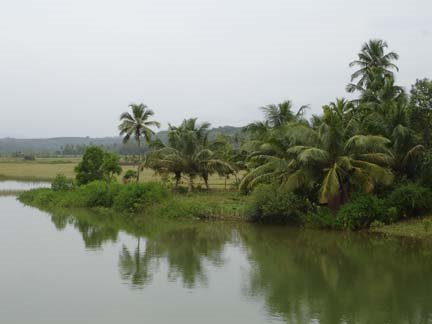
A Coastal estuary

A Coastal estuary
Holegadde near Honavar,Uttara Kannada dist, Karnataka

Copy? Right - but kindly remember to acknowledge!

Creative Commons License
This work is licensed under a Creative Commons Attribution 3.0 License.

" tulu-research.blogspot." ತುಳು ರಿಸರ್ಚ್. ಬ್ಲಾಗ್‌ಸ್ಪಾಟ್‌. ಇನ್

" tulu-research.blogspot."  ತುಳು  ರಿಸರ್ಚ್.  ಬ್ಲಾಗ್‌ಸ್ಪಾಟ್‌. ಇನ್
Have a nice day !