Sunday, March 13, 2011

271. Nanda Kings and Kongas in Sangam.


We have discussed some rudimentary data on the Nanda Kings of ancient Tulunadu in Post.268. Tamil Sangam literatures allude to Nannan, Konga and Punnata Kings who were conspicuous by their presence during the Sangam period.
One interesting analytical work in Kannada on the status and features of Kannada Nādu during Tamil Sangam period based on the analysis of Tamil Sangam literature by Professor Sh. Shettar throws some light on these obscure ancient Kings of western Karnataka and Tulunadu.
Tamils of Sangam period referred to ‘neDumoLi’(=people with imperfect Tamil) and ‘tiruvmoLi’(= people with impure Tamil) etc in their works to designate neighbours with imperfect command in Tamil language.
Tolkappiyam
Tolkappiyam (ca. 1 century CE) has been considered as one of the earliest Tamil Sangam literature dealing essentially with aspects of Tamil grammar. The title of the work, Tolkappiyam has been explained as ancient composition, wherein, Tol=ancient; kāppiyam=composition. One of the possibility is that the word ‘kāppiyam’ is influenced from the Sanskrit word ‘kāvya’ for poetry or vice versa. Similarly, one wonders if the word ‘tol’ was Tamil analogous of the word ‘Tulu’.
During the Sangam period it is said that derivation of Tamil words from Sanskrit did take place. One example given is the transformation of the word ‘Rājan’ (=king, Sanksrit).
 Rājan.(Sanskrit) >a+rajan.>arasan (Tamil).
According to Tolkappiyam the Tamil kingdoms of the Sangam period extended from ‘Kumari’ (Kanyakumari) in the south to ‘Vengadam’ (Venkatadri or Tirupati) in the north. The western or northwestern borders of the ancint Tamilgam have not been mentioned. However, Tolkappiyam mentions ‘Vadugar’(=northern people),’Vadamol’ or ‘Vadasol ‘ (=northern language; Sanskrit ? ) etc.
Erumai-nādu, Mysore.
These ‘Vadugar’ are distinguished from people of ‘Erumai-nādu’ (ancient Mysore area).The word ‘Erumai’ (=buffalo) is notable as it indicates that, like in Tulu and Tamil, the original word in old Kannada for buffalo was ‘erumai’ which transformed into ‘emme’ in later Kannada. In the later period, the ancient ‘Erumai-nadu’ or ‘Erumai-nalnadu’ under the influence of Sanskrit was renamed as ‘Mahisha-mandala’. Mahisha-mandala later became ‘Mahishur’ and ‘Mysore’ with passage of time.
Ashoka and Satiyaputo
It is opined that the Prakrit and Pali languages were apparently known in southern India because of spread of Buddhism and Jainism in the south, since ca. 3rd century BC. Pali written in Brahmi script was prevalent in ancient Srilanka (Tāmraparni) also.
Ashoka in his rock edicts, written in Pali language with Brahmi script, cites the three kings (muvendra) of south namely (Chola, Chera and Pandya) besides ‘Satiyoputo’. He does not mention any of the Erumai, Punnata, Konga, Tulu, Katumba (Kadamba), Mohur and Kosar rulers of the south. Prof Shettar suggests that these rulers were left out in the edicts because they did not comply with Ashokas religious principles or political directives.
Nan(d)an
The King Nannan (Nandan?) cited by more than twenty Sangam poets including Mamulnar, appears to be one of the Nanda Kings of the southern Karavali and Kodagu. Nannan has been depicted as king of Konga tribes in Sangam literature. He has been described as king of Konkan hill area (Eliyal hill) in Purananur. There is also reference to an area reknown for gold deposits. It could be that one of the Nannan (Nanda) King extended his kigdom upto Kolar known for substantial gold deposits. Incidentally there is a place near Kolar is called Nandagudi.
When a Chola King confronted Nannan Udayan (Nandaraya Udaya) near Karur in a war ,the latter made combined alliance with Arai, Ganga (Kangan), Punnata Kings and beheaded the Chola Commander so that Chola King had to rush to the warfield personally to take guide the army.
 Agananur cites that Nannan subjugated Pindan in the Eliyal hill and that he drove off Kosars from Tulunadu.It appears that Nannan was ruling over Tulu Konkan regions located to the northwest of Tamilgam.He was said to have had  a five layered fortress in Eliyal hill. He had another fort with high walls separated by deep trenches in Agappa hill to the north of Umablkad (= forest of elephants).
There are references to ‘Eliyal hill’, the abode of Nanda Kings, in Sangam literature. There are several possible Eliyal hills in Tulunadu or in northern Kerala.The word Eli has created confusion as it also means a rat. Elu means number seven. Otherwise ‘Eliya’ were an ancient tribe that inhabited these coastal regions.In Kerala Elimalai or Ezhimalai is a coastal hill where at present a naval academy is being built. Keralites believe that Elimali is the Eliyal hill referred to in Sangam literature.
One Eliyar padavu is located south of Mangalore near Amblamogaru village.Sangam poets refer to ‘Umblakadu’. Was this a place close to Amblamogaru? Besides, there is an Elimale in Sullia taluk. There is also one Elinje near Kinnigoli. Anyway possibly there is an interesting link between the Nanda Kings and the abode of Eliyar tribes.
There were skirmishes between Nannan and Chera Kings. In one of the wars, Noormadi Cheral surrendered his crown and necklace to Nannan. In one of the wars, Chera and Pasum Pandya (along with his subordinate Neduman Anji)combined themselves and fought against the valiant Nannan; In that skirmish Atiyaras lost his head to the pleasure of jubilant Kongas carrying shining swords.
The King Nannan cited in Tamil Sangam ultimately died in the warfield near Wagai, Tamilanadu, when fighting against a Chera King.
Konga
Shilappadigaram has described Konga tribes hailing from Kodagu area. Accordging to Sangam ‘Paditrupattu’, at one period Kongas ruled Karur in Tamilnadu and Chola Kings struggled to defeat them. The word ‘Konga’ in Tamil means honey apart from the name of the tribe.Possibly Konga tribes could have been a honey collecting tribes in the beginning. Some believe that Konga were the rulers later known   as ‘Ganga’ dynasty in Talakad, in Mysore region.
Where there Kongas in Tulunadu?
Yes, we have described in the older posts several signature villages of ancient Kom tribes in Tulunadu such as Kompadavu, Komdodi, Konchadi etc. It appears that the Kom were subsequently known as ‘Konga’. (Like Kor were subsequently known as Koraga.) The suffix –ga in these names indicates person or the group.
Kom+ga=Konga.
Kor+ga=Koraga.
At places ‘Kom’ were also known as ‘Komcha’ (as in place name ‘Konchadi’, northern Mangalore) wherein  the suffix   ‘–cha’ refers to tribes or people.
The word Konkan that refers to part of West Coast also might have had origin from Kong tribes. Such as Kong+an=Konkan.
It appears that subsequently the Kom or Kong tribes pervaded many areas of southern India. Kongas lived in areas endowed with ‘kadiru-mani’ (ruby corundum) according to Purananur. Regions to the east of Sullia, Subrahmanya, Kodagu ,Arakalagud in Hassan, Kabini  and southern Mysore are the areas known to have good deposits of ruby corundum. Konga tribes were fond of decorating themselves with rubies and yellow flowers known as ‘Kongilavam’.
There is a Komara beedu in Mysore city. Kannada people of Mysore region usually use the word ‘Kongaru’ for the Tamil people.Parts of Coimbatore and Salem districts of Tamilnadu were known as Kongu-desha in history.
Kong tribes were valiant fighters. According to Paditrupattu they employed lever based machinery (probably wooden) to throw large stones at the opponents. There were also Konga rajas during the history in Kerala. Probably a group of Kongas were later known to have formed the Ganga dynasty.One of the founders of the Ganga dynasty was known as Konguni Varma.

Assimilation
The ancient Nanda (Nandara, Nandarannaya lineages), Kom (Kommatti lineage) and Konga (Kongaru or Kongarannaya lineages) tribes have at least partly been assimilated with the Bunt-Nadava diaspora community during the progress of the Tulu history. The corresponding lineage names have survived as genetic testimonies to this observation.
*

References:
Sh. Shettar (2010). ‘Shangam Tamilagam mattu Kannada Naadu-Nudi’.  (In Kannada). Abhinava, Bangalore, p.261.
Murkot Ramunny (1993)   Ezhimala: the abode of the Naval Academy, p 104.Google books.
 
®

Sunday, February 13, 2011

270. Amara Mudnur


There is a strange heritage place name that belies mystery because of its similitude with a Sanskrit word, Amara. The word suggests a traditional practice of gift of land by Indian Kings  for perpetually maintaining military units under reliable military officers or the nayaks.
According to "Indian Epigraphical Golossary" (by Dineshchandra Sircar) Amara is a land or revenue granted by a ruler to his retainers for military service. It was the land assigned to Amara Nayaks ( traditonal military officers) who were entitled to collect only certain revenue with the obligation to raise a contingent of army for service.

Amara Mudnur, Amara Padnur
Amara was a large village set in the dense sylvan northern part of Sullia Taluk, Dakshina Kannada district. The’ Amara māgane’ was ruled by Tulu chieftains during the recorded history.The Amara ‘māgane’ (village cluster) was subsequently divided into western ‘Amara Padnur’ and eastern ‘Amara Mudnur’ villages, wherein ‘Padnūr’ (paDna+ūr) means western village and ‘Mūdnūr’ (mūDna+ūr) means eastern village.
The prefix ‘Amara’ in these place names at the first instance appears like a common Sanskrit word that means ‘immortal’. 
Amara Maagane was the traditional term used for the hereditary military grant lands or estates gifted to Amara Nayakas for raising and maintaining a unit of army in the service of the king or the ruler of the land.

ALTERNATE POSSIBILITIES
There are some alternate possibilities on the origin and source of this word .

Amara: An Ethiopian place name
Amara is also an Ethiopian African word used in Ethiopian place names as well.There are many places in Ethiopia that carry the place name prefix of Amara! Since there are several words of Ethiopian Afican origin in Tulu such as Tulu, Bantu, Kenya, Kola, Siri, Meru etc, the Amara could be another word from the same source that appears to have been brought here by the ancient African immigrants to Tulunadu.
Amhara tribes
The ‘Amara’ in the Sullia place name may also be a corruption of the African tribal name ‘Amhara’.
Ethiopia is also home to ancient Amhara nomadic tribes that speak a language known as Amharic. The Ethiopian word Amhara is usually analysed as free people (wherein am=people, hara=free or soldier).
Some suggest that African word Amara represents paradise. The latter meaning appears akin to the Sanskrit word Amara for the immortal.
There are other places along the West Coast that carry the place name Amara. For example, Amara-kantaka is a mountain peak in Vindhya/Satpura Range, giving birth to three rivers, viz. Narmada, Sone and Arvi. They drain into Arabian Sea, Ganga and Mahanadi respectively (Ganga and Mahanadi drain into  Bay of Bengal).  Word 'Amara' here is also noteworthy.

Amara in Sanskrit
Apart from the standard meaning of immortal (in Sanskrit), the term Amara was also a code for the number 33 which was supposed to be the total number of original Gods according to mythology.

Amar in Tulu
Apart from the above cited logical possibility of derivation of place name ‘Amara’ from an African root word, there are several shades of meanings attached to the widely used basic word Amar(u) in Tulu and other related Dravidian languages. Check the following range of meanings attributed to the word amar or amaru.
Amar 1=to shrink. or lag behind or stagger.
Amar 2= to adjust oneself or to arrange.
Amar 3= to settle, compose oneself.
Amar 4= to deposit (like sediment).
Amar 5=to hide or be hidden.
Amar 6= to seize, or hold or embrace.
Amar 7=twin or double
Amar 8= similar, to resemble.
Amar 9= appropriate or suitable.
Amar 10=to initiate or begin
Amar 11= wet soil or hedge of paddy field.
Amar 12= field canal.
 Also a  dividing hump or bund of a paddy field.  Note the related usages:
    (a) Amere kadpuni = Digging a shallow canal for he outflow of water for the paddy field.
    (b) Amare deepini  = Putting a dividing bund in a field or making a canal.
    (c) Amare Todu = A water canal in cultivation field.
Amar(ke) 13= space in between.
Amar 14= intimidate or threaten (Tamil, Malayalam)
Amara 15=immortal, without end or death. (Sanskrit).

-Ravi and Vishwanath.
®

Saturday, February 12, 2011

Tulu People and mother tongue

Tulu people, kindly report your mother tongue as ' Tulu' during ensuing Census of India 2011

Sunday, January 30, 2011

269.Macchendra nath at Kadri, Mangalore

An idol of sage Macchendranatha, the founder of Natha cult, Kadri, Mangalore.

Alupa Emblem of twin fishes.

 A statue of Chouranginatha, Kadri, Mangalore.

 An idol of Gorakshanatha, Kadri, Mangalore

 A view of enclosure containing tombs of Natha sages at Kadri, Mangalore.

A view of white tower of Kadri Manjunatha temple, Kadri, Mangalore.
 Older posts on Macchendra (Post No. 80). Also read Posts 77. Natha cult and 82. Buddhism in Karnataka.

For more information on Alupa coins and emblem refer:
The Alupas: Coinage and History by Govindraya Prabhu S and Nithyananda Pai, M. (2006). Published by Govindraya Prabhu, Sanoor, Karkala, Udupi District. Pages 200.

Sunday, January 23, 2011

268. Nanda Rulers of Tulunadu


Many pages of earlier history of Tulunadu are obscure and have to be pieced together with random strings of data. A Nanda ruler of Tulunadu has been immortalized by the desultory adage alluding to the introduction of leather coins during the downfall of his regime (post 266): Nandarāyas inheritance was eaten away by foxes and dogs (Nanda rāyana baduku nari-nāyi tindu ponDu). It is usually believed that Nandāvara on the southern bank of River Netravati, Bantval Taluk, was the capital of the mythical Nandarāya. There have been suggestions that Nandarāya was a relative of Nanda Kings  of Pataliputra (former Patna, Bihar).However, analytical interpreted data provides some interesting insights into the Nanda issue. The data discussed below suggest that parts of Tulunadu were ruled by Nanda(n) Kings before the Alupa Period.
Nanda settlements
An overlooked historical aspect is that there are at least five or more ancient Nanda settlements in Tulunadu, apart from the well known Nandāvara. These are (1) Nandaneshwara (Panambur) (2) Nandalike (3) Nandara-bettu (4) Nandara padpu, (5) Nandarapura and (6) Nandi-gudde. With these place names we are bound to get confused over the actual location of the capital of King Nandaraya.
A common feature of these Nanda settlements in Tulunadu is that these are (or were) mostly located on the banks of rivers or beaches. Nandavara as well as Nandarabettu are located on the southern and norther banks of River Netravati in Bantval taluk. 
Nandarapura is now a hamlet near Mullarakadu and Akash bhavan area of Derebail-Konchadi in Kavur village, Mangalore.
Nandi-gudde (near Attāvar, Mangalore) is located close the former (ancient) course of River Netravati. [The Nandi-gudde in Attavar, Mangalore, possibly was ‘Nanda-gudde’ earlier.] Similarly, Nandalike (near Karkal) is located on (now dried up) banks of an ancient minor river. Nandara padpu is near Mudipu in southern part of Mangalore Taluk. Nandalike was the hometown of modern Kannada poet Muddana. Similarly Nandavara has been popularized by  Tulu researcher, Dr. Vamana Nandavara.
Nandana
And Nandaneshwara is an ancient Shiva temple in coastal Panambur beach area, now part of New Mangalore Port. It is traditional in ancient India that the coastal temple towns were named after the Shiva temples of the area and vice versa. (For example: Pandeshwara, Manjeshwara, Mahābaleshwar, Someshwara, Murudeshwara, Dhāreshwara, Rāmeshwara, Bhubaneshwar, etc).
It is obvious that temple Nandaneshwara, of Panambur, was named after ancient King Nandana. Tamil Sangam (‘Chankam’) literature refers to a valiant Tuluva King ‘Nannan’. It appears that the ancient Tamil writers referred to this King Nandan as ‘Nannan’ rather than Nandaraya. Therefore, it appears that Nandaneshwara (Panambur) on the West Coast , was the capital of ancient Nanda Kings of Tulunadu. (Like Pandeshwara, Mangalore, was the capital of later Alupa Kings.)
Grama Paddati
The Grama Paddati (literally means "Village System") historic document of Tulu Brahmins refers to a list of 32 rulers of ancient Tulunadu. The list begins with (1) Nanda Nandana Rāya, (2) Nandana Rāya and (3) Vijaya Nandana Rāya (Nagendra Rao, 2005).Though the Grama Paddati has not assigned any specific time-span for these rulers, it may be presumed that the cited Nanda rulers of Tulunadu reigned during the period ca. 200 BC-100 AD considering that Mayura Varma (Kadamba) has been cited as nineth King in Grama Paddati.
However, in the actual history, there could have been more than three Nanda Kings, in Tulunadu , since the Grama Paddati has been compiled evidently at a later date, apparently based on legends preserved among the population of the period.

Nanda tribes
The available data suggest that Nanda were a widespread ancient tribe in Indian subcontinent as well as South-east Asia and Australia. Nanda surname can be found extensively in Punjab, Rajastan and Gujarat. Among Ahirs three sub-communities of cattle-herders are known: (1) Nanda (2) Yadu and (3) Gopa. These tribes have been cited in Bhagawat and in the legends of Shri Krishna. Shri Krishna made use of a sword called Nandaka.
(Various variants of Yadu tribes in Tulunadu, such as Yadava, Edava, Yeda, Ideya, Yeya etc have been discussed in older Posts). Apart from Nandas and Yadus, Gopa tribes also have left their signature in the West coast in place names like Goa (Gomantak), Gokarna etc.
Nandi
Nanda tribes were cattle-herders and it is but natural that Nandi, (ox) , the male species of cow, has been named after them (or vice versa). Nandi has been depicted as the vehicle of Lord Shiva. One of the peaks of Himalaya has been named as Nanda Devi.
Nanda tribes have left their signatures in ancient place names not only in Tulunadu but all over India, Bangladesh and Myanmar.There are ancient Nanda tribal settlements known as Nandagiri and Nandidurga in peninsular India. Nandi hill was known as Nandidurga or Nandagiri formerly. There  are towns known as Nandagiri near Hyderabad, Andhra Pradesh , as well is in Maharastra.One Nandagudi is near Hosakote on the way to Kolar. Nandihalli is a village proximal to Sandur in Bellary District.There is a Nandipet in Nizambad district and a Nandyala in Kurnool district of Andhra Pradesh.
Likewise there is a Nandap village near Kalyan, Mumbai, Maharastra.
Nanda Kings of Pataliputra (Bihar) who predated Chandragupta Maurya were well known in the history of India. One King Nanda ruled ancient Myanmar. Similarly Nandapur is a famous historical town in Orissa. We find similar Nandapurs in Maharastra, Punjab, Jammu & Kashmir, Assam and in Bangladesh (Swalpa Nandipur). And there are places known as Nandipur in Orissa, Bangladesh and Pakistan.There are villages called Nandivādi in Maharastra and Madhya Pradesh.

There is a ‘Nandagiri’ in Maharastra, also known as ‘Nandurbar’ which similarly was ruled by an ancient Nanda King. The region was was called 'Rasika' in olden days, bounded by  present Districts of Berar (ancient  Vidarbha), Nemad (ancient Anup) and Bhir (ancient Mulaka).  It was a part of erstwhile District of Khandesh, later on bifurcated as Dhule and Jalgaon.  In 1998, Dhule was again bifurcated as Dhule and Nandurbar districts.  Nandurbar now is a city and District headquarter, in North-western part of Maharashtra. bordered by Gujarat on West and North and Madhya Pradesh on North-east with Narmada River, determining its northern boundary.  It is predominantly a tribal district, inhabited by Bhils, Kolis and Ahirs.  Ahirs are now  cowherds in this region.  
Panambur
The Shiva temple in the Panambur beach close to the New Mangalore Port enclosure is known as “Nandaneshwara Raya” as can be seen in the name emblazoned at the entrance to the temple.Needless to say that the temple-name reminds of an ancient king Nandaneshwara Raya, who installed the original temple.It also may be possible that the temple was founded by one of his off-springs in the name of Nandaneshwara Raya.
However, it is interesting to note that the place name "Nandaneshwara " has not been preserved to date as in the case of other temple towns like Pandeshwara, Manjeshwara, etc. This could be explained by the evident dominance of Panamb (<.Pani) merchant tribes (later known as Nakara merchant class) in the ancient historic town of Panambur subsequently as recorded in the Kadire epigraphs (Post 107) .

Inferences
Nanda Kings of Tulunadu apparently had origins in nomadic cowherds who migrated south from northern India ca 500 BC or before. The civil war of Yadavas and submergence of Dwarakapuri  as depicted in the  final parts of legends of Shri Krishna possibly displaced the Yadavas to different parts of India and south-western coasts, known as 'Sapta Konkan'. might have settled in various parts of south India as cowherds as well as farmers. Their ‘Raya’ title might have been even derived from, ’raita’, the farmer. With passage of time, Raita > Raya >Rai derivation is one of the historic possibility. Nanda Kings of Tulunadu or other parts of Deccan may not be a single dynasty or related directly to the Nanda Dynasty of  Magadha (ca. 421-321 BC, ancient Bihar) as visualized by some of our historians. On the other hand, all these Nanda Kings might have had origins in ancient Nanda cowherds.

References
Nagendra Rao, Dr. (2005). Brahmanas of South India: Historical and Tradition .Gyan Books, New Delhi, 216 p. [Google Books.].

- Ravi and Vishwanath.
®

Saturday, January 8, 2011

267. Forgotten words 3: Kairangala

Among the list of ancient place names of Tulunadu, we find several names (or words) whose meaning is unknown at present. Such a condition can happen because of the drastic changes our language has undergone during the course of evolution. Words that existed once upon a time in this land as evidenced by their immortalization in the form of prolonged, surviving topo-nyms, have been forgotten by dis-usage that resulted rom drastic changes in cultural-lingual fabric of the ancient society.
Kairangala
Kairangala is a village located close to Mudipu and Konaje in southern part of Mangalore Taluk.The place-name Kair+angala is quite perplexing as there are no words like ‘kair’ in usage in the present Tulu parlance.
The word ‘angala’ [=ang+ala] means an open area .Probably to begin with open field areas by the side of rivers were known as ‘angala’, because suffix ‘ala’ is suggestive of river or river bank.
Kariangala
Interestingly, there is another similar sounding Tulu place name, usually confused with Kairangala.That is Karinagala. Kariangala is a village located on the bank of River Phalguni (Gurupur) and close to Polali, the reknowned seat of diety Rajarajeswari. The atribution of the meaning of an open area close to river or river bank,to the word ‘angala’ suits this place very well. However, the prefix ‘kari’ (=black) seems out of place, since there is nothing black or dark here, no black soils, as anyone can generally presume.There may be argument that ‘kari’ means elephant here, which again seems inappropriate.
I suggest that this place ‘Kariangala’ was also originally known as ‘Kairangala’, like the one near Mudipu discussed above, but inadvertently modified by people later to ‘Kariangala’.
In Tulunadu, we find many of the place names repeating themselves in different areas. (Some of the repeating place names include: Uchila, Someswara, Vamanjur, Pandeswara, Alike, etc.).
Kairo, Cairo
What is the meaning of this apparently strange word Kairo?  As you know, ‘Cairo’ is the name of the capital of Egypt (United Arab Republic).
The word Kair or Kairo shall make sense if you accept the theory of migration of human tribes during the early history and transfer of ‘words’ along with them! Genetic scientists are finding increasing evidences   in favour of migration of tribes out of Africa in several phases.
The word ‘Cairo’ means victory or victorious jubilation. The ancient word ‘kairos’ is also found in Greek where it means specific time event, season or celebration.
If we extend this meaning of the word ’kair’ or ‘kairo’ into our place name ‘Kairangala’, it represents an open area related with celebration of victory.
Apparently in olden days, among the rival tribes after waging fierce war in an open field, it was a practice of the victorious side to celebrate the event, by renaming the war field as ‘Kairangala’.

Kayar, kair trees
An alternate explanation for the place name would be Kayar+angala, where ‘kāyar’ is one of the divine cult trees associated with ancient royal families of Tulunadu. Kāyar trees are common in Tulunadu and place names containg Kayar trees like Kayartadka, Murukaveri (Mujikayeri in Tulu) exist in the coastal area. (Botanists may kindly help me to ascertain the binominal nomenclature of native kāyar trees of Tulunadu.)
However, the tree known as ‘khair’ in northern India is a semi-xerophytic one and is not common in precipitation rich (rainy) Tulunadu.
Thus the Kāyar trees (also known as kāyer, kāveri etc) of Tulunadu are different from the ‘khair’ (Acacia catechu or Acacia chundra) trees popular in other parts of India. The kair or khair tree is botanically known as Acacia catechu or Acacia chundra. Khair trees are also said to be referred to as Karangali. Incidentally, there is a place known as Karangalpadi in Mangalore.
All these data, add an aura of mystery to the place name Kairangala. Kair is also a place name in Delhi and similarly Kayar in Senegal.
What is interesting here is the association of kayar or khair trees with royal rites (even though different tree species represent similar sounding tree names). Kayar tree is associated with some of the royal families of Tulunadu. Parts of hard wood of Acacia catechu (Khair) were said to have been used for fashioning handles of knives swords etc since ages apart from other utilitarian items.

Kayyāra, Kaivāra
The place name ‘Kayyara’ (kai+ara) associated with one of the reverent heroes of modern Tulunadu, Kayyara Kinhanna Rai may also be mentioned here, though may not be directly related to the topic of kair. There is a similar place name ‘Kaivara’ in Kolar district.
Kayyara (kai+ara) and Kaivara (kai+vara) may be words unconnected to Kairangala as Kai+ara  possibly represents an open field ('ara' or 'vara') beside a 'kai'(stream tributary).


Kaira lineage
There is a possibility that the ‘Kair’ was the name of an ancient tribe that emigrated from Africa. It is interesting to note that the name ‘Kaira’ has also remained in Tulunadu as a lineage (bari) name among Bunt Nadava communities.
®

Wednesday, January 5, 2011

266. Kordel 2: Archaic Kulshekar, Mangalore

It appears that there are several ‘Kordels’(pron: korDel) in Tulunadu and at least two of these are in Mangalore city only! Apart from the disused place-name ‘Kordel’ (for archaic village of Tannirbavi), there is another ‘Kordel’ (also written as ‘Cordel’) on NH 13, near Kulshekar Church, Mangalore. Old name ‘Kordel’ for the Kulshekar area suggests that it was ancient colony of ‘Kor’ (>. Koraga) tribes, probably well before being ruled by Alupas.
There is one more Kordel hamlet on the way to Kuppepadavu from Yedapadavu in Manglore taluk.
Kulshekar Kordel
The location of Holy Cross Church, Kulshekar (also written and pronounced as ‘Kulashekhara’), Mangalore, is also known as ‘Cordel’ (Kordel).  The Church was founded by a French Catholic Friar Fr. Alexander Dubios on September 14, 1873.  He was fondly called as “Frad Saib of Franco Cordel”, locally known as Kulshekar.  He was also known as “Kullerda Ajjer” in Tulu (meaning ‘grand old man of Kuller’).
Kuller
 Kulshekar area of Mangalore, was named after Alupa King Vira Kulashekara (ca 1115-1155 CE). He was apparently known as ‘Kuler’ among the aborigines, possibly the word ‘Kuller’ being kings nick name.
Alternately it may be argued that the origin of the name Kuller as:  Kul+er. (‘kul’=lake, ‘er’=edge). ‘kuller’= raised edge of a lake. Another place name in the proximity ‘Saripalla’, also hints at the presence of a lake. However evidence for existence of a dried up lake in the area is yet to be traced.
Agonies of Conversions
The parishioners were migrated Goan Catholics and also the then newly converted down-trodden people of surrounding area. It can be presumed these new converts were mainly from ‘Kor’ or ‘Koraga’ tribes and other backward classes. There was a tinge of stigma connected to older generation of Christians of Mangalore.  Suspecting their allegiance to Europeans (esp. British), Tipu Sultan ordered that  60,000 Christians be taken as prisoners and were kept in captivity (from 1784 to 1799) at Srirangapatna, Mandya district (formerly, Srirangapattam).
 Note the irony of fate!  Goan Catholics along with Hindus fled Goa to Konkan and Tulunadu to escape hardships at the hands of colonialist force. Last major migration took place when fierce battle was raging between Portuguese and Maratha forces. They suffered untold miseries from both the forces).   They suffered loss of many lives on their journey through rugged terrains - to and fro on foot.  Those who remained at Srirangapatna were converted to Islam and married Muslims.  It is reported that this group is now speaking a pidgin Konkani, mixed with Kannada and Urdu.
Nandaraya- Nannan-Nandavara
Apart from Habsiga, in Tulunadu we have anecdotes of another Harijan King called Nandaraya. Possibly, the Tulu King ‘Nannan’ referred to in Tamil Sangam literature refers to ‘Nandan’ or the ‘Nandaraya’. He was said to have been born of a Brahmin woman and a Koraga man. The village name ‘Nandāvara’, Bantval Taluk, Dakshina Kannada, located on the southern bank of River Netravati) probably was derived from the name of ancient King ‘Nandan’ (or ‘Nannan’). There is also a possibility that Nanda(n) was a surname of former rulers of Tulunadu like Nanda of Magadha.
Story of Nandaraya is well-known in Tulunadu from the popular proverb: “Nandurayana badku nari-nayi thindindu” (Kannada version: ‘Nandurayana baduku nari-nayi thinditu’.  English:  ‘The inheritance of Nanduraya was eaten away by foxes and dogs).
Nanduraya was said to have raised a fighting force of hunting dogs to vanquish enemies and introduced leather money.  Ultimately when he was vanquished and his palace was in ruins, the decayed leather currency of his period, provided good food for foxes and dogs.
Nanaya, Nonaya
Nanaya  is an old proper name among Tulu and other Dravida people. A teacher in Tulu Garadi (School of Martial Arts) is traditionally called  'Nanaya'.  'Nonaya/Nanaya' proper names were in vogue till  twentieth Century.  One of my childhood and school days friend is 'Nonaya'., hailing from Doddakoppala (near Surathkal) and his father was a Mendon (a surname) then living just near my house.  I was wondering about the meaning of this name. Similar 'Nanaya'  names are found in Andhra also.   Nannaya was an Andhra Poet during Vijayanagar period.  Names like Nannayya (Bhat)  are found in Brahmins too.Apparently Tulu and other Dravida tribes acquirred this proper name from prior Kor / Koraga aborigines of this region.
It would be interesting to study further if these names Nannan/ Nandan and Nanaya/ Nonaya are related old proper names.
-Hosabettu Vishwanath, Pune.

Blog Archive

Books for Reference

  • A Comparative Study of Tulu Dialects By Dr. Padmanabha Kekunnaya. Govinda Pai Reserach Centre, UDupi. 1994
  • Koti Chennaya: Janapadiya Adhyayana. By Dr. Vamana Nandavar. Hemanshu Prakashana ,Mangalore.2001.
  • Male kudiyaru. Dr B. A.Viveka Rai and D.Yadupathi Gowda, Mangalore University,1996.
  • Mogaveera Samskriti By Venkataraja Punimchattaya. Karnataka Sahitya Academy.1993.
  • Mugeraru:Jananga Janapada Adhyayana. By Dr Abhaya Kumar Kaukradi.Kannada & Culture Directorate,Bangalore & Karnataka Tulu Academy, Mangalore,1997.
  • Puttubalakeya Pad-danagalu. Ed: Dr B.A.Viveka Rai,Yadupati Gowda and Rajashri, Sri Dharmasthala Manjunatheswara Tulu Peeta. Mangalore University.2004
  • Se'erige. Ed:Dr K.Chinnapa Gowda.Madipu Prakashana,Mangalagangotri,2000.
  • Studies in Tuluva History and Culture.by Dr P Gururaja Bhat (1975).Milagres College,Kallinapur,Udupi.
  • Taulava Sanskriti by Dr.B.A.Viveka Rai, Sahyadri Prakashana,Mysore 1977
  • TuLu naaDu-nuDi By Dr.PalthaDi Ramakrishna Achar, Puttur.
  • TuLu NighanTu. (Editor in Chief: Dr U.P.Upadhyaya, Govinda Pai Research Centre,Udupi. Six volumes. 1988 to 1997
  • Tulu Patero-A Philology & Grammar of Tulu Language by Budhananda Shivalli.2004.Mandira Prakashana Mangalore. p.317. (The book is in Tulu Language using Kannada script)
  • TuLunadina ShasanagaLa Sanskritika Adhyayana. By Shaila T. Verma (2002) Jnanodaya Prakashana,Bangalore, p.304.(Kannada)
  • Tuluvala Baliyendre. Compiled by N.A.Sheenappa Hegde,Polali,Sri Devi Prakashana,Parkala,1929/1999

A Coastal estuary

A Coastal estuary
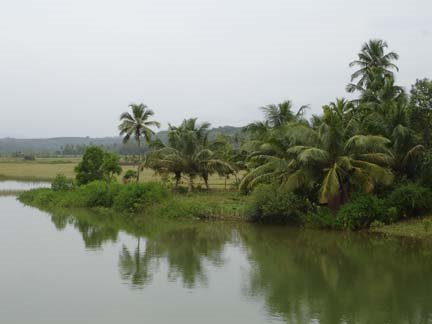
Holegadde near Honavar,Uttara Kannada dist, Karnataka

Copy? Right - but kindly remember to acknowledge!

Creative Commons License
This work is licensed under a Creative Commons Attribution 3.0 License.

" tulu-research.blogspot." ತುಳು ರಿಸರ್ಚ್. ಬ್ಲಾಗ್‌ಸ್ಪಾಟ್‌. ಇನ್

" tulu-research.blogspot."  ತುಳು  ರಿಸರ್ಚ್.  ಬ್ಲಾಗ್‌ಸ್ಪಾಟ್‌. ಇನ್
Have a nice day !