Tuesday, April 19, 2011

276. Kambala: Kambula


Kambala is a traditional ritualistic sport of Tulunadu, involving race of domesticated water buffaloes in specially prepared slushy fields. Nobody can surely say when this ritual sport was introduced in the history of this land.However the ritual and the sport has been designed to activate and invigorate the buffaloes that take important role in the agriculture as well to prepare the agricultural field for rich harvest, which was considered as wealth and prosperity (‘poli’) in the days of early civilization.
Preparations for  buffaloe race in Kadri Kambala Mangalore, December 2010
It is said that there are more than 200 locations in Tulunadu known for staging buffaloe races in the Kambala fields.Many of these Kambala field areas have become defunct during the course of history but the name Kambala attached to them have survived as toponyms.

Shekar Ajekar has compiled available historical data and calendar of Tulunadu Kambala events in an internet edition (Kannada) in www.ajekar.co.cc.
Pookare
There is a specially decorated post (or pole) erected in the the Kambala fields and it is traditionally known as 'Pookare' kamba, attributed with special magical powers. The pole is decorated usually with flowers or other material such as leaves or  coconut fronds. The post is erected to pray for the proper conduct and success of the Kambala race ceremony as well to ward off evil spirits in the process.In other words, 'pookare' represents  a decorated victory pole. The Pookare post is considered to have special magical powers to ward off evil spirits as well as to increase prosperity of the persons conducting the ceremony.In the olden days,  kings  used send their servants stealthily to steal the famous 'Pookare ' posts belonging to their rivals in order to acquire the the prosperity amassed by the latter.
Kare: Kair , totem tree.
The importance attached to 'Pookare' post suggest that it is a vestige of ancient totemistic  tree worship cult, which latter evolved into totem poles and later into 'pookare' poles. The  memory of  ancient totem tree cult is explicit in the word Poo+kare wherein 'poo' represents the decorated, flowery aspect and 'kare' is a modification of 'kair'  the symbolic  totem or victory tree of many of the ancient  tribes. The word 'kair', of African origin, means victory.It can be noted that the identity of 'kair' tree represented different arboreal species in different tribal cultures: North Indian 'kair' tree was different from Tulunadu 'kayar'. And  among the Munda(la) tribal people (and also Kadambas) 'Kaim' or 'Karm' ( also known as Kadamba.) has been the totem tree. In the last case, note the word analogy between Kair and Kaim/Karm.
Pookare victory poles have evolved along with the civilization and the modified 'pookare' poles in pairs, usually ornate with mango leaves, or with areca-nut fruits were being used  at the entrances for auspicious ceremonies. Similarly, banana plant trunks are used as welcome poles at the entrance to the ceremonial halls.In modern days, multiple  pookare poles decorated with colourful fabric designs coupled with electric lamps are used extensively in modern stage crafts by set designers like Dr Mohan Alva.

Emotion runs high during this event, as is in a 'korikattada kala' (cock fight battle field, a popular pastime in Tulunadu).  It is a game of manliness and grit, besides show of pomp and pride. Procession of participating buffaloes with their owners is a sight to enjoy.To run in a slush is a tough job, that too managing  buffaloes running in different angles or trying to skip the race.


Nowadays, in Kambala races the buffaloes are treated not very harshly, thanks to protests from animal lovers.However, in the olden days, the merciless beating of buffaloes by enraged driver , was a pitiable sight.    Oozing of blood from the body of these animals was paining to see.  There is a saying in Tulu: "ಒಂಜಿ ಕಂಬುಲ ತೂಯೀನಂಡ  ಏಳು ದೀಪ ತೂವೋಡ್ಗೆ" (Onji kambula tuuyinanduda eelu deepa tuvodge! - meaning: If you see a 'Kambula' event, you have to see seven earthen lamps, obviously, lit before a God's temple and home temple. This wise saying might have originated from the belief that it is considered a sin to see the inhuman treatment meted out  to these mute animals. 
Origin of the word: Kambala
What does the word Kambala signifies? Does it refer to the sport, the agricultural field or the buffaloe race? Let us analyse the word Kambala.
Kambala (Kannada) is popularly known as ‘Kambula’ or ‘Kambola’ in Tulu.
Kambola= kan + pola. (p>b transition occurs while the two words fuse together).
Kan= soft, tender, good, appropriate etc.
Pola=agricultural field.
Thus, ‘Poli’= agricultural produce. Agricultural produce was equated with wealth and proseperity in those days.
Kan: The ancient word ‘kan’ may appear strange to some readers. The word ‘kan’ has survived in modern Tulu in words like ‘kanni’ which also means soft, tender, young or virgin. The Tulu word ‘kanda’ has been explained as soft or good and appropriate area (kan+Da) for agriculture. The word kanda adapted into Sanskrit aquirred meanings such as a piece or piece of land or an expanse of land (=continent) in due course.The word ‘kanni-ponnu’ refers to virgin girl. The word ‘kanni-panti’ means tender grass.
It can be seen that the word 'kanni' ( as in kanni-ponnu) has been adapted into Sanskrit as 'kanya', the virgin.
Similarly, kaNNu (=eye), kan+nu represents delicate organ in the body.
Kannada: Incidentally the word Kannada may be explained as kan+naDa or soft agricultural land, wherein the adjective soft alludes to the black soil that is found expansively in northern Karnataka where Kannada was groomed during the early history.
Therefore, the word Kambola or Kambula refers to soft slushy field prepared for the sport of buffaloe race. Further, the essential sequence of the evolution of this word might have been   like this:
Kampola.>Kambola.> Kambula .> Kambala.>Kambla.

Kampa

 Some people have tried to explain the origin of the word Kambala as derived from 'kampa-kala '. or kampa+ala. In fact, the word 'Kampa'  is genetically related to 'Kambala'. 'Kampa' or 'gampa' also means slushy, muddy field. The origin of the word Kampa is kan+pa, wherein 'kan-' represents soft or slushy and  the suffix  '-pa' represents an areal attribute. (For examples of usage of '-pa' as spatial suffix, check place names like Bajape, Alape, Didupe, etc).

Kamba-ala
Vishwanath suggests that there is one more angle to look at the etymology of 'Kambla'.  Consider: Kamba (a Post or Pole with 'Nishana' (Aiming Point by means of a banner or flag) for judging height )+ la (water, i.e. water spurt during race by different buffalo pairs). 
 Poles are planted somewhere in middle of the race track length.  These poles on either sides are connected with a rope with buntings or flag. This 'nishana' is meant for pairs of buffaloes tied down with a 'palayi' (wooden pane) with holes.  The driver of buffaloes thumps as hard as possible on this pane when he nears the 'nishana'.  Water spurts so high but may not reach the mark.  One who reaches the mark early is declared a winner.  Race of buffaloes without the panes is judged by the speed.


-With Hosabettu Vishwanath.
®

Sunday, April 17, 2011

275. Geography in Puranas : Concept of Continents


Place names reflect to physical divisions of a land, mostly surrounded by a water-body.  This is revealed in toponymic studies of any region. While delving into Tulu studies, one is confronted by place names, like Khandige, Kandevu, Kandy, Kanda, etc. Similar place names also exist all over India and elsewhere outside India. These names remind one to the basic truth of geographical division of land, meeting different factors, such as ethnography, topography, profession and polity. Readers may recall the legend of ‘Kandevu’ in Post- 110 (April 20, 2008) on Mukka.
Cosmogony
Indian theological concept of the Universe revolves around   such divisions.  These divisions are mostly seen as physical ones, i.e. geographical.  In a mystic thinking, it is understood on spiritual planes as is conveyed by Indian Puranas (Historical Scriptures).  So this division could be related to   either terrestrial or astral matter.
When we talk about our Universe, i.e. a cluster of stars and planets in our Milky Way, we come across Earth Planet (Dharani Mandala), the Planet we live in.  Earth Planet is divided into seven divisions, known as ‘Khandas’ (Continents).  In Indian Scriptures, they are described as ‘Dwipas’ (Islands).
Sapta Dwipas (Seven Islands)
Vishnu Purana gives a vivid description of formation of Seven Islands of the Earth, ruled by Priyavrata, son of Swayambhuva Manu.  According to the Puranas, dwipas also refer to the seven continents of the Universe. 
Priyavrata had ten illustrious sons, besides daughters.  Three sons, namely Medha, Agnivahu and Putra, fully devoted to religious life, gave up worldly pleasures.   So kingship of these seven islands is distributed among his remaining seven sons. Their progenies ruled this Earth for 71 Cycles.
1.       Jambu Dwipa (ruled by Agnidhara), so named as Jambu (Rose Apple) trees grow in plenty there.  Area: Hundred thousand yojanas (1 Yojana = 15 Km approx.  Earth occupies 50 Crore Yojanas).
-          Surrounded by Lavana Samudra (Sea of Salt).
2.       Plaksha Dwipa (ruled by Medhathiti), so called as fig trees grow on it.  Area: Twice the size of Jambu. Worship the Moon. Inhabitants:  Aryakas and other castes
-          Surrounded by sea of Molasses (Ikshu Samudra). This is encircled by Shalmali Dwipa.
3.       Shalmali Dwipa (ruled by Vapushmat) so called because Silk Cotton (Shalmali) trees grow there.  There are seven divisions, taking names of 7 sons of Vapushmat (Sweta, Harita, Jimuta, Rohita, Vaidyuta, Manasa, and Suprabha).  Seven mountain ranges, four castes, seven rivers, capable of removing of all sins of people.
-          Surrounded by Suroda (Wine) Ocean
4.       Kusha Dwipa (ruled by Jyotishmat) so called as Kush grass grows there.  4 Castes, 7 seas, 7 continents
-          Surrounded by Ghrita Sea (Ocean of Clarified Butter), which is surrounded by Krauncha Dwipa.
5.       Krauncha Dwipa (ruled by Dyutiman), twice the size of Kusha Dwipa, seven Varshas (Divisions), named after seven sons of Dyutiman, King of Krauncha.  People are free from fear, live along with celestials.  In this Continent, the Brahamanas, the Kshatriyas, the Vaishyas and the Shudra are known as Pushkaras, Pushkalas, Dhanyas and Tishyas respectively.  Along with the 7 important rivers, there are number of small rivers.  Here Great Janardana is worshipped in the form of Rudra. (Krauncha means heron).
-          Surrounded by the Sea of Curd.  Sea of Curd is encircled by Shaka Dwipa.
6.       Shaka Dwipa (ruled by Bhavya), so called as Shaka (Teak) trees grow there.  There are 7 boundary mountains (Meru*, Malaya, Jaladhara, Raivata, Syama, Dugdasata and Kesara), which are excellent and charming.  There is a large teak tree, which is frequented by Siddhas and Gandharvas. The four castes present there are Mriga (Brahamana), Magadha (Kshatriya), Manasa (Vaishya) and Mandaga (Shudra). Shaka Dwipi Brahamans are worshippers of the Sun.  They migrated to Gujarat and Bihar (Magadha).  They are also known as Maga Brahamanas.
-          Shaka Dwipa is surrounded by the Sea of Milk (Kshiroda) on all sides, which is surrounded by Pushkara Dwipa on all sides.
-          *Note: Meru is identified with ‘Meroe’ of Sudan, or a primeval Meroe that was lost (Refer web page  ‘Shaka Dwipa in Matya Purana).
7.       Pushkara Dwipa, ruled by Savala (Savana?), Twice  the size of Shaka Dwipa. Nyagroda  (Fiscus indica) tree grows here.   Only one mighty range of Manasottara, which runs in a circular direction like an armlet. Mountain is 5000 Yojanas in height and the same in breadth – circular on all sides.  People here live for 10,000 years free from disease, sorrow, anger, and jealousy.  There is neither virtue nor vice, no jealousy, envy, fear, hatred, malice nor any moral delinquency.  The Varsha on the outside of Manasottara is called Mahavira and the one inside is called Dhataka. They are frequented by the celestials and Danavas.  In Pushkara Dwipa, there is no distinction of caste or order.  The people lived here do not perform any rites and the three Vedas, the Puranas, Ethics, Polity and laws of services are completely unknown.
-          This Dwipa is encircled by Syaduka Sea, i.e. Sea of Fresh Water.
In conclusion, we can say that the seven insular Continents are encircled by 7 seas and each ocean and island is twice the size of that which precedes it.  The water in all these oceans remains the same at all seasons, excepting dilations due to heat.  Food in Pushkara Dwipa is produced spontaneously and people there enjoy life.
Relevance of Pauranic (scriptural) Geographical System
Identification of these Sapta Dwipas (7 Continents) is conceivable but it is subjective and hence at variance.  Col. Wilfred has supposed these Dwipas as: (1) Jambhu – India, (2) Kusha – Kush of the scriptures or the countries between Mesopotamia and India, (3) Plaksha – Asia Minor, (4) Shalmali – Eastern Europe, (5) Krauncha – Germany, (6) Shaka – the British Isles and (7) Pushkara – Iceland.
The learned Narayan A. Bangera identifies them  (Ref:  Mogaveera Monthly – August 2010 Issue in his Exposition of ‘Kanakadasara Hari Bhakti Sara) as under:
Plaksha  -  South America, Pushkara – North America, Krauncha – Africa, Jambu – Asia including Bharat Varsha, Shaka – Europe, Shalmali – Australia, Kusha – Oceanea (i.e. several Pacific Ocean Islands, New Zealand, Melanesia, etc.)
Patala Khand (Subterranean region)
Thus, Parashara Muni explained to Maitreya the extent of surface of the Earth.  He further explained the depth below the surface, which is supposedly 70,000 Yojanas.  Each of the seven regions of Patala (Nether region) is called Atala, Vitala, Nitala, Gabhasmat, Mahatala, Sutala and Patala.  In the Bhagavat and Padma Purana, they are mentioned as Atala, Vitala, Sutala, Talatala, Mahatala, Rasatala and Patala.  These regions are inhabited by Danavas, Daityas, Yakshas and Great Snake Gods.  They lived delightfully in stately palaces.  The pomp and pleasure in Patala Lokas was more than that in the Heaven.  Swayamprabha Lambaka section in Brihat Katha tells stories of adventures of mortal heroes with the Naga Kanyas (Snake Nymphs).
Primordial Truth
These data, collected by us, are from Indian religious scriptures.  These religious writings of sages of par excellence are sacred truths, hidden in allegories.  Enlightened souls of sages of yore could concentrate, contemplate and enjoy the unknown mysteries of the Universe.  Theories of these sages at different ages may vary here and there but the fundamental truth remains the same.  These truths dawn upon the receptive minds of modern scientists. This unfolding, more often than not, is a mere accident.  This confirms the affinity of souls of mystics of the epic days to souls of all ages to come.  Super natural truths transcend through ages, thus confirming universal brotherhood.  Truth, trickled down orally and spread in various tongues, was encapsulated in Vedas and their branches from time to time.  Migration and communication skills of those days were instrumental in spread of knowledge – both spiritual and worldly.
- Hosabettu Vishwanath, Pune.

Saturday, April 16, 2011

274. Kata and Kandiya


Apart from the ancient spirit Gods like Kapri and Kuti, we discussed in previous post, there were lesser known Spirit Gods in ancient Tulunadu like Kata and Kandiya.  Ramappa Vormika, a traditional Shanobogue working in the Kundapur area during the British administration of Kanara territories in a report dating back to 1819 mentioned Kata and Kandiya forms of worship among the aboriginal tribes of Karavali.


Kata
Kata is a Spirit God worshipped since antiquity by Koraga tribes of Tulunadu. Like most of the primitive Spirit Gods of this land, Kata is represented by a simple piece of stone, placed usually on a pedestal, under a tree. The Koraga word 'kata' has also found place in Tamil, wherein 'Katavul' means God.However, it seems the word is missing in modern Tulu.
Very little is known at present about the origin or evolution of the cult of Spirit known as Kata.  The Koraga people also refer to 'marathadithaaye' (literally, the spirit under the tree). Places like Kata-pādi, spread in different parts of southern India,inclusive of Tulunadu, [example, (a) near Udupi and (b) near Chennai] could have been the ancient places dedicated to the cult of ancient Spirit God known as Kata.

Kandiya
The Spirit God Kandiya apparently was worshipped by ancient agricultural communities since the word   ‘kanDa’ represents an agricultural land in Tulu. Kandiya is said to have been the Spirit God worshipped by non-Koraga communities.
The origin of the word ‘kanDa’ is interesting. The Munda word ‘kan+Da’ means good land. (Kan=good, Da=land, area). The word ‘kanDa’ has been adopted in Sanskrit as (1) a   piece (of land) or (2) a continent.
Kandiya or Khandiya has evolved into several later forms like Kandevu and Khandoba. Ancient places of Khandiya worship were apparently known as Khandige. There are numerous places hamlets known as 'Kandige' in different parts of Tulunadu.
In northern Karnataka, Khandoba is popular as a Spirit God  depicted astride on a horse like the Bermer Spirit of Tulunadu.
Kandevu appears to be the old name for places now usually referred to as Kandige or Khandige. Kandevu ancient spirit worship with passage of time has apparently been replaced by subsequent and current forms of worship.
Kandevi was a form of tribal language akin to Paisachi-Prakrit and it gradually evolved into present form of  Konkani.

Kandiya was also the old name for a Greek port known presently as   Heraklion. It was founded in the 9th century   and was the capital of Crete until 1841.

®

Sunday, April 10, 2011

273. Kaprigudda, Mangalore


With regard to ancient place names handed over to us by our forefathers, we normally accept   them without questioning. We generally do not bother ourselves over their meaning, antiquity or origin. Or if we do not like just change them or replace them with some modern stylish sounding alternate place name. Infact, some of these place names are windows to the past and serve as fossil clues to a bygone dark era in the past history of this land.
One such strange placename in Mangalore city is Kaprigudda! It is another positive clue in understanding   the migration of ancient tribes from Africa to India in the remote past and concomitant transfer of their cults and beliefs.
Kaprigudda
Kaprigudda is a residential area east of Attavar or south of Phalnir, more or less corresponding with western part of Highlands. It is usually pronounced as ‘Kyāpri-guDDa’ If you ask someone aound in the area, regarding the meaning or origin of the word ‘Kyāpri’ you may not possibly get any positive answers! Capri is a common surname among Western people, so one of the possibilities   is that it was named after some special person called Capri.  Capri is also an island near Naples, Italy.But there is another clue that leads us to ancient cult of Kepheri prevalent in Egypt and surrounding African countries.
Kapri God
One interesting data recently reported in Kannada TV channels was that fishermen of Karwar were offering seasonal prayers to one ‘Kyapri devaru’ or Kapri God!
Kapri is an ancient Spirit God among coastal tribes of Karavali. The cult is still prevalent in parts of Karawar and surrounding areas. Fishermen, especially from Gaabid sect, in these areas look for the blessings of Spirit God Kapri. Generally, they offer liquor in a coconut shell bowl and lighted aroma sticks (agrabathi) to appease the Spirit that is said to wander in their wards like an old man during night times.
Apart from Kapri some of these tribes also worship a Spirit God called Kuti.
Kapri surname
Kapri is also a surname among Gorkha tribes of Nepal. The ethnonym could have been acquired from ancient migrant tribes from Africa. Bishnu Kapri, a gorkha Nepali, settled in US hosts a  ’ Kapri samaj’ page in facebok.
Kapra-Kampra
Kapra or Kaapira was also a common proper name among Tulu people. Another related proper name was Kampra or Kampara. There is a place known as Kapra-majalu near Vitla and a Kampra-bail in Bantval Taluk. Therefore the cult of Kapra or Kampara was not restricted to the Coastal track alone. Kampara is also a place in Uganda, Africa. These data suggest that Kapra and Kampra were ancient ethnonyms of African origin.

Khepri : An Egyptian God
Khepri is an ancient Egyptian God (the concept dating back to ca 2500 BC) , representing a giant Scarab beetle that can roll the Sun like a ball through the sky each morning so that it becomes morning and roll back into underworld in the evening so that the world embraces darkness! The God Khepri also known as Chepri, kheper, khepera or Kehperi etc was considered as a God of resurrection, overseeing the cycle of life and death. The emblem of Egyptian Khepri God, shows a winged Scarab beetle carrying red sun.
Migration

View of the foregoing discussion, one of the strong possibilities is that the Kapri-gudda near Attavar, Mangalore, might have been named after the Spirit God Kapri (Khepri) by some of the early African tribal settlers in this part of Mangalore. The existence of cults of Kapri Spirit God (though modified through centuries of influence of other cults of Hinduism) in Karawar area serves as a clue for further research in this dark pages of early history and civilization.
Ω
Acknowledgement: 1.Shri Vishnu Bovi for discussion on Kapri devaru of Karavar.
2.Shri Kawdoor Narayan Shetty. 


-With H Vishwanath.

®

Monday, April 4, 2011

272. Kosar Warrior tribes


Warrior tribe of Kosars have been cited in ancient Tamil Sangam literatures. Kosars are described as a honest warrior tribe who were known as ‘one word kosars’(“Onrumoli Kosar” in Tamil) because they always kept their words (promises).
Many of these refer to Kosar heroes of   ancient Tulunadu, whereas others suggest that they were nomadic tribes that lived in different parts of south India, for example Nalkur Kosars who lived in four different villages or divergent places. 
Wayfarer in his blog has made a decent documentation of distribution of known Khosa tribes. The ancient tribe were variously known as Khosa or Kosar, Kossar or Khasa.
Sangam literature
In Tamil literature, Kosars were mentioned as west Vadukas with their origin as Kolhapur near Goa. ‘Erattar’ were supposedly a branch of Kosars who became Maha Rattirar (Prakrit) or Maharashtras (Sanskrit).
Kongu army consisted of Kosars according to Silappadikkaram. The Akananooru (15, 2-7 )records: “Thokai Kavin Thulu nattu anna Varunkai Vampalaith Thankum panpin Cherintha Seri Chemmal Moothur”. Meaning, they then captured Kudaku Nadu and Erumai Nadu and settled in Tulu Nadu with Moothur as their capital. Krishnasami Aiyangar opines that the ‘Nalur Kosar ‘(meaning Kosars who settled in four places) as foreigners to the Tamil country.
 In some Tamil accounts, Kosars belonged to the Tulu country and lived to the south of the Vindhya and near the shores of western Arabian Sea. They were also referred to as ‘Ariyar’ in Tamil literature.
Kosars have been recorded as tribal people who lived near the rivers Malprabha, Gatprabha and upper the border area between Kadamba and Mauryan empire. They attacked Paazhi and captured the whole of Kadamba and its many fort cities. Then the Mauryans and their Kosar affliates entered Tamil Nadu through the kaviri-kudhirai malai pass (the present anthiyur-nallur path).
The Boar (Varaha?) was the emblem of Kosar tribes and the later Chalukyas of the Pallava time. Varaha was also the logo of the Vijayanagar empire.
Kosars were called Nar kosar or Nanmozhi Kosar in the third Sangam literature. Nannul or Tholkappiam notes them as Kannadam, Vaduku (Tulu), Kalingam (Oriya) and Telugu people. Kambaramayanam Payiram says Kosars were Vadakalai (Prakrit), Thenkalai (Tamil), Vaduku and Kannada people. Kosars were truthful to their kings, either Tamil kings or Mauryan kings and were called ‘Vai-mozhi Kosar’ (truthful in keeping their words).
The Mathurai Kanchi 508-09 & 771-74 records them as “Poyya Nallisai Niruththa punaithar, Perum peyar Maaran Thalaivan Aka, Kadanthadu vai val Elampal Kosar, Eyaneri Marabin Vai mozhi ketpa” and “Pazhayan Mokoor Avayakam vilanka Nanmozhi Kosar Thontri yanna”. Meaning, Chera dynasty’s Nedunchezhian’s army head was ‘Mohoor Pazhayan Maaran’ and in his army, Kosars were present. They followed Maran’s words in battle and were honoured for their job in his court. ‘Elampal Kosar’ (young Kosars) were present in the armies of the Cheras.
The District Gazetteer of South Kanara (1973) enlists Koosa as a Scheduled Caste tribe. This Koosa tribe is being speculated by tulu-research.blogspot.com as the Kosar tribes of Karavali described in the Tamil Sangam literature.
Koosa, Kusha
The Twin sons of Rama (in Ramayan, composed by Valmiki ca 500 BC) were named Lava and ‘Kusha’.This shows the antiquity of the proper name Kusha in India. ‘Koosa’ tribes still exist in northern parts of Udupi districts. Kosanna, Koosakka etc are common names among Tulu people in the yester-years.
  
Kosala, Kushala
‘Kosala’ an ancient Kingdom of Ramayan fame has been suggested as land of Kosa by Joseph Thangarajah Xavier.  Rama’s mother ‘Kausalya’ hailed from the kingdom of Kosala.
In the same way Kushalnagar (Kodagu) may be one of the ancient towns originally named after Kosa tribes. Kushalappa is a common proper name in Kodagu region. Kossar warrior  tribes were reported from Nepal.

Kochars
Kochanna is common personal name among older generation of Tulu people, rather irrespective of castes. The name ‘Kocha’ or ‘Kochanna’ (‘anna’=brother) appears to be a derivative of Kosha or Koshar. There are faint evidences in Karavali place names to sugest that Koshars were known as Kochars in Tulunadu. For example a hamlet in Badaga Kajekar village, Belthangadi taluk is known as 'Kocharla-palke' which literally means the valley of Kochar tribes in Tulu language.

Kochati
The name 'Kochati' also appears to be related  to the words 'Kocha'(singular) or 'Kochar'(plural). Incidentally, Kochati is a place name in Nicosia, Cyprus. Similarly, there is a Kochati (also known as Kochadai) in Madurai. These could be ancient ethnonyms.
Kochati is also an lineage (Bari/bali) among Bunts suggesting admixture a group of Kochar/Kochats with Bunts in the antiquity.
Similarly, Kochi is an important town in Kerala; this place name is possibly related to these tribes.

Migrant tribes
Kush tribes (or Kushites) were ancient tribes from Ethiopia.Khazars were Scythians from southern Russia. Khazars were a tribe of Scythian stock, who established a powerful kingdom in southern Russia. According to the legends they descended from Togarmah through his son Khozar.

Khazars and Gujars are related to Huns.There is an opinion that Kosars are related to Gujars. Kosars or Kozhars were also said to be known as Khujars. And Khujars were later known as Gujars.

There is a widespread view that Bunts were of Scythian origin. Kush tribes were Ethiopians, whereas, Khasa tribes were reported from Kazhakstan, a Central Asian Republic.
 In “A History of Pakistan and its Origins” by Christophe Jaffrelot, Kosar is mentioned Kosars as a tribe in Afghanistan. Similarly, Khosa is also recorded as tribe in the Pashtun territory around Quetta.
®

Sunday, March 13, 2011

271. Nanda Kings and Kongas in Sangam.


We have discussed some rudimentary data on the Nanda Kings of ancient Tulunadu in Post.268. Tamil Sangam literatures allude to Nannan, Konga and Punnata Kings who were conspicuous by their presence during the Sangam period.
One interesting analytical work in Kannada on the status and features of Kannada Nādu during Tamil Sangam period based on the analysis of Tamil Sangam literature by Professor Sh. Shettar throws some light on these obscure ancient Kings of western Karnataka and Tulunadu.
Tamils of Sangam period referred to ‘neDumoLi’(=people with imperfect Tamil) and ‘tiruvmoLi’(= people with impure Tamil) etc in their works to designate neighbours with imperfect command in Tamil language.
Tolkappiyam
Tolkappiyam (ca. 1 century CE) has been considered as one of the earliest Tamil Sangam literature dealing essentially with aspects of Tamil grammar. The title of the work, Tolkappiyam has been explained as ancient composition, wherein, Tol=ancient; kāppiyam=composition. One of the possibility is that the word ‘kāppiyam’ is influenced from the Sanskrit word ‘kāvya’ for poetry or vice versa. Similarly, one wonders if the word ‘tol’ was Tamil analogous of the word ‘Tulu’.
During the Sangam period it is said that derivation of Tamil words from Sanskrit did take place. One example given is the transformation of the word ‘Rājan’ (=king, Sanksrit).
 Rājan.(Sanskrit) >a+rajan.>arasan (Tamil).
According to Tolkappiyam the Tamil kingdoms of the Sangam period extended from ‘Kumari’ (Kanyakumari) in the south to ‘Vengadam’ (Venkatadri or Tirupati) in the north. The western or northwestern borders of the ancint Tamilgam have not been mentioned. However, Tolkappiyam mentions ‘Vadugar’(=northern people),’Vadamol’ or ‘Vadasol ‘ (=northern language; Sanskrit ? ) etc.
Erumai-nādu, Mysore.
These ‘Vadugar’ are distinguished from people of ‘Erumai-nādu’ (ancient Mysore area).The word ‘Erumai’ (=buffalo) is notable as it indicates that, like in Tulu and Tamil, the original word in old Kannada for buffalo was ‘erumai’ which transformed into ‘emme’ in later Kannada. In the later period, the ancient ‘Erumai-nadu’ or ‘Erumai-nalnadu’ under the influence of Sanskrit was renamed as ‘Mahisha-mandala’. Mahisha-mandala later became ‘Mahishur’ and ‘Mysore’ with passage of time.
Ashoka and Satiyaputo
It is opined that the Prakrit and Pali languages were apparently known in southern India because of spread of Buddhism and Jainism in the south, since ca. 3rd century BC. Pali written in Brahmi script was prevalent in ancient Srilanka (Tāmraparni) also.
Ashoka in his rock edicts, written in Pali language with Brahmi script, cites the three kings (muvendra) of south namely (Chola, Chera and Pandya) besides ‘Satiyoputo’. He does not mention any of the Erumai, Punnata, Konga, Tulu, Katumba (Kadamba), Mohur and Kosar rulers of the south. Prof Shettar suggests that these rulers were left out in the edicts because they did not comply with Ashokas religious principles or political directives.
Nan(d)an
The King Nannan (Nandan?) cited by more than twenty Sangam poets including Mamulnar, appears to be one of the Nanda Kings of the southern Karavali and Kodagu. Nannan has been depicted as king of Konga tribes in Sangam literature. He has been described as king of Konkan hill area (Eliyal hill) in Purananur. There is also reference to an area reknown for gold deposits. It could be that one of the Nannan (Nanda) King extended his kigdom upto Kolar known for substantial gold deposits. Incidentally there is a place near Kolar is called Nandagudi.
When a Chola King confronted Nannan Udayan (Nandaraya Udaya) near Karur in a war ,the latter made combined alliance with Arai, Ganga (Kangan), Punnata Kings and beheaded the Chola Commander so that Chola King had to rush to the warfield personally to take guide the army.
 Agananur cites that Nannan subjugated Pindan in the Eliyal hill and that he drove off Kosars from Tulunadu.It appears that Nannan was ruling over Tulu Konkan regions located to the northwest of Tamilgam.He was said to have had  a five layered fortress in Eliyal hill. He had another fort with high walls separated by deep trenches in Agappa hill to the north of Umablkad (= forest of elephants).
There are references to ‘Eliyal hill’, the abode of Nanda Kings, in Sangam literature. There are several possible Eliyal hills in Tulunadu or in northern Kerala.The word Eli has created confusion as it also means a rat. Elu means number seven. Otherwise ‘Eliya’ were an ancient tribe that inhabited these coastal regions.In Kerala Elimalai or Ezhimalai is a coastal hill where at present a naval academy is being built. Keralites believe that Elimali is the Eliyal hill referred to in Sangam literature.
One Eliyar padavu is located south of Mangalore near Amblamogaru village.Sangam poets refer to ‘Umblakadu’. Was this a place close to Amblamogaru? Besides, there is an Elimale in Sullia taluk. There is also one Elinje near Kinnigoli. Anyway possibly there is an interesting link between the Nanda Kings and the abode of Eliyar tribes.
There were skirmishes between Nannan and Chera Kings. In one of the wars, Noormadi Cheral surrendered his crown and necklace to Nannan. In one of the wars, Chera and Pasum Pandya (along with his subordinate Neduman Anji)combined themselves and fought against the valiant Nannan; In that skirmish Atiyaras lost his head to the pleasure of jubilant Kongas carrying shining swords.
The King Nannan cited in Tamil Sangam ultimately died in the warfield near Wagai, Tamilanadu, when fighting against a Chera King.
Konga
Shilappadigaram has described Konga tribes hailing from Kodagu area. Accordging to Sangam ‘Paditrupattu’, at one period Kongas ruled Karur in Tamilnadu and Chola Kings struggled to defeat them. The word ‘Konga’ in Tamil means honey apart from the name of the tribe.Possibly Konga tribes could have been a honey collecting tribes in the beginning. Some believe that Konga were the rulers later known   as ‘Ganga’ dynasty in Talakad, in Mysore region.
Where there Kongas in Tulunadu?
Yes, we have described in the older posts several signature villages of ancient Kom tribes in Tulunadu such as Kompadavu, Komdodi, Konchadi etc. It appears that the Kom were subsequently known as ‘Konga’. (Like Kor were subsequently known as Koraga.) The suffix –ga in these names indicates person or the group.
Kom+ga=Konga.
Kor+ga=Koraga.
At places ‘Kom’ were also known as ‘Komcha’ (as in place name ‘Konchadi’, northern Mangalore) wherein  the suffix   ‘–cha’ refers to tribes or people.
The word Konkan that refers to part of West Coast also might have had origin from Kong tribes. Such as Kong+an=Konkan.
It appears that subsequently the Kom or Kong tribes pervaded many areas of southern India. Kongas lived in areas endowed with ‘kadiru-mani’ (ruby corundum) according to Purananur. Regions to the east of Sullia, Subrahmanya, Kodagu ,Arakalagud in Hassan, Kabini  and southern Mysore are the areas known to have good deposits of ruby corundum. Konga tribes were fond of decorating themselves with rubies and yellow flowers known as ‘Kongilavam’.
There is a Komara beedu in Mysore city. Kannada people of Mysore region usually use the word ‘Kongaru’ for the Tamil people.Parts of Coimbatore and Salem districts of Tamilnadu were known as Kongu-desha in history.
Kong tribes were valiant fighters. According to Paditrupattu they employed lever based machinery (probably wooden) to throw large stones at the opponents. There were also Konga rajas during the history in Kerala. Probably a group of Kongas were later known to have formed the Ganga dynasty.One of the founders of the Ganga dynasty was known as Konguni Varma.

Assimilation
The ancient Nanda (Nandara, Nandarannaya lineages), Kom (Kommatti lineage) and Konga (Kongaru or Kongarannaya lineages) tribes have at least partly been assimilated with the Bunt-Nadava diaspora community during the progress of the Tulu history. The corresponding lineage names have survived as genetic testimonies to this observation.
*

References:
Sh. Shettar (2010). ‘Shangam Tamilagam mattu Kannada Naadu-Nudi’.  (In Kannada). Abhinava, Bangalore, p.261.
Murkot Ramunny (1993)   Ezhimala: the abode of the Naval Academy, p 104.Google books.
 
®

Sunday, February 13, 2011

270. Amara Mudnur


There is a strange heritage place name that belies mystery because of its similitude with a Sanskrit word, Amara. The word suggests a traditional practice of gift of land by Indian Kings  for perpetually maintaining military units under reliable military officers or the nayaks.
According to "Indian Epigraphical Golossary" (by Dineshchandra Sircar) Amara is a land or revenue granted by a ruler to his retainers for military service. It was the land assigned to Amara Nayaks ( traditonal military officers) who were entitled to collect only certain revenue with the obligation to raise a contingent of army for service.

Amara Mudnur, Amara Padnur
Amara was a large village set in the dense sylvan northern part of Sullia Taluk, Dakshina Kannada district. The’ Amara māgane’ was ruled by Tulu chieftains during the recorded history.The Amara ‘māgane’ (village cluster) was subsequently divided into western ‘Amara Padnur’ and eastern ‘Amara Mudnur’ villages, wherein ‘Padnūr’ (paDna+ūr) means western village and ‘Mūdnūr’ (mūDna+ūr) means eastern village.
The prefix ‘Amara’ in these place names at the first instance appears like a common Sanskrit word that means ‘immortal’. 
Amara Maagane was the traditional term used for the hereditary military grant lands or estates gifted to Amara Nayakas for raising and maintaining a unit of army in the service of the king or the ruler of the land.

ALTERNATE POSSIBILITIES
There are some alternate possibilities on the origin and source of this word .

Amara: An Ethiopian place name
Amara is also an Ethiopian African word used in Ethiopian place names as well.There are many places in Ethiopia that carry the place name prefix of Amara! Since there are several words of Ethiopian Afican origin in Tulu such as Tulu, Bantu, Kenya, Kola, Siri, Meru etc, the Amara could be another word from the same source that appears to have been brought here by the ancient African immigrants to Tulunadu.
Amhara tribes
The ‘Amara’ in the Sullia place name may also be a corruption of the African tribal name ‘Amhara’.
Ethiopia is also home to ancient Amhara nomadic tribes that speak a language known as Amharic. The Ethiopian word Amhara is usually analysed as free people (wherein am=people, hara=free or soldier).
Some suggest that African word Amara represents paradise. The latter meaning appears akin to the Sanskrit word Amara for the immortal.
There are other places along the West Coast that carry the place name Amara. For example, Amara-kantaka is a mountain peak in Vindhya/Satpura Range, giving birth to three rivers, viz. Narmada, Sone and Arvi. They drain into Arabian Sea, Ganga and Mahanadi respectively (Ganga and Mahanadi drain into  Bay of Bengal).  Word 'Amara' here is also noteworthy.

Amara in Sanskrit
Apart from the standard meaning of immortal (in Sanskrit), the term Amara was also a code for the number 33 which was supposed to be the total number of original Gods according to mythology.

Amar in Tulu
Apart from the above cited logical possibility of derivation of place name ‘Amara’ from an African root word, there are several shades of meanings attached to the widely used basic word Amar(u) in Tulu and other related Dravidian languages. Check the following range of meanings attributed to the word amar or amaru.
Amar 1=to shrink. or lag behind or stagger.
Amar 2= to adjust oneself or to arrange.
Amar 3= to settle, compose oneself.
Amar 4= to deposit (like sediment).
Amar 5=to hide or be hidden.
Amar 6= to seize, or hold or embrace.
Amar 7=twin or double
Amar 8= similar, to resemble.
Amar 9= appropriate or suitable.
Amar 10=to initiate or begin
Amar 11= wet soil or hedge of paddy field.
Amar 12= field canal.
 Also a  dividing hump or bund of a paddy field.  Note the related usages:
    (a) Amere kadpuni = Digging a shallow canal for he outflow of water for the paddy field.
    (b) Amare deepini  = Putting a dividing bund in a field or making a canal.
    (c) Amare Todu = A water canal in cultivation field.
Amar(ke) 13= space in between.
Amar 14= intimidate or threaten (Tamil, Malayalam)
Amara 15=immortal, without end or death. (Sanskrit).

-Ravi and Vishwanath.
®

Blog Archive

Books for Reference

  • A Comparative Study of Tulu Dialects By Dr. Padmanabha Kekunnaya. Govinda Pai Reserach Centre, UDupi. 1994
  • Koti Chennaya: Janapadiya Adhyayana. By Dr. Vamana Nandavar. Hemanshu Prakashana ,Mangalore.2001.
  • Male kudiyaru. Dr B. A.Viveka Rai and D.Yadupathi Gowda, Mangalore University,1996.
  • Mogaveera Samskriti By Venkataraja Punimchattaya. Karnataka Sahitya Academy.1993.
  • Mugeraru:Jananga Janapada Adhyayana. By Dr Abhaya Kumar Kaukradi.Kannada & Culture Directorate,Bangalore & Karnataka Tulu Academy, Mangalore,1997.
  • Puttubalakeya Pad-danagalu. Ed: Dr B.A.Viveka Rai,Yadupati Gowda and Rajashri, Sri Dharmasthala Manjunatheswara Tulu Peeta. Mangalore University.2004
  • Se'erige. Ed:Dr K.Chinnapa Gowda.Madipu Prakashana,Mangalagangotri,2000.
  • Studies in Tuluva History and Culture.by Dr P Gururaja Bhat (1975).Milagres College,Kallinapur,Udupi.
  • Taulava Sanskriti by Dr.B.A.Viveka Rai, Sahyadri Prakashana,Mysore 1977
  • TuLu naaDu-nuDi By Dr.PalthaDi Ramakrishna Achar, Puttur.
  • TuLu NighanTu. (Editor in Chief: Dr U.P.Upadhyaya, Govinda Pai Research Centre,Udupi. Six volumes. 1988 to 1997
  • Tulu Patero-A Philology & Grammar of Tulu Language by Budhananda Shivalli.2004.Mandira Prakashana Mangalore. p.317. (The book is in Tulu Language using Kannada script)
  • TuLunadina ShasanagaLa Sanskritika Adhyayana. By Shaila T. Verma (2002) Jnanodaya Prakashana,Bangalore, p.304.(Kannada)
  • Tuluvala Baliyendre. Compiled by N.A.Sheenappa Hegde,Polali,Sri Devi Prakashana,Parkala,1929/1999

A Coastal estuary

A Coastal estuary
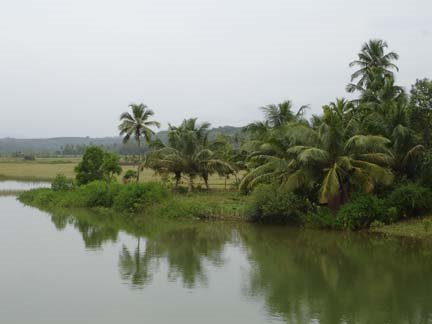
Holegadde near Honavar,Uttara Kannada dist, Karnataka

Copy? Right - but kindly remember to acknowledge!

Creative Commons License
This work is licensed under a Creative Commons Attribution 3.0 License.

" tulu-research.blogspot." ತುಳು ರಿಸರ್ಚ್. ಬ್ಲಾಗ್‌ಸ್ಪಾಟ್‌. ಇನ್

" tulu-research.blogspot."  ತುಳು  ರಿಸರ್ಚ್.  ಬ್ಲಾಗ್‌ಸ್ಪಾಟ್‌. ಇನ್
Have a nice day !