Friday, January 20, 2012

294. Mystery of Ekkār.


It is well known that the Tulu language shares many of its basic words with its sister languages like Kannada, Tamil, Malayalam and Telugu. Some of the ancient words might have become extinct in some of these languages because of various factors during the course of evolution, but preserved somehow in other languages that serve as a reminder to the past heritage.
Let us examine the case of the word Ekkār. The Ekkar (or Yekkar) is a well-known place name in Mangalore Taluk. However, meaning of the word ‘Ekkar’ has not been enlisted in Tulu Lexicon, indirectly suggesting that the original meaning of word might have been forgotten, in Tulunadu, with passage of time due to lingua-cultural changes. The Dravidian Etymological dictionary(DED) contains the word Ekkar (or Ekkal or Ekkali),  which broadly means  Sand dunes or beach sands (ie Sand heaped up by waves, or the sand caste ashore by rivers etc) in Tamil, Malayalam and Telugu languages. The lost meaning of Ekkar is significant as it throws light on the heretofore undocumented geomorphological past of the Karavali Karnataka.

Ekkār!
The DED Entry # 770  reveals that in Tamil, ‘ekkar’ or ‘ekkal’ means a sandy area or sand heaped up (as by waves)or  sand-hill. ‘Ekku/Ekki’ has the meaning of ‘to be heaped up’ (as sand on the shore). Similarly, in Telugu, ‘Ekkali’ means sand washed down by a river (DED 657)and in Malayalam, ‘Ekkal/Ekka’ means sand cast ashore by rivers.

Yekkar
Ekkar ( usually written as, Yekkar) is a large composite village in Mangalore Taluk, located about six kms East of the present Sea coast (as crow flies), presently divided into northern ‘Badaga Yekkar’ and southern ‘Tenka Yekkār’ administrative villages. [‘Badaga’=northern;’ Tenka’=southern]. The west flowing River Pāvanje (alternately known as Nandini or Kateel stream) traverses  through these village. The holy shrine of Kateel (dedicated to Goddess Jaladurga or Durga Parameshwari) is located on an island within this river. Yekkar villages are also known for the native Jarandaya and Kodamanittaya spirit shrines and the villages were in news recently for the vehement protest against the acquisition of the region for the second phase expansion of Special economic Zone (SEZ).
Kateel
The place name Kateel (or Katil) is also interesting. There are some strange interpretations for this word wherein the word ‘kati’ has been interpreted as hip or waist (of the Goddess). However, if you accept it as a simple Tulu word, then the Tulu term  ‘Kateel’ represents a built house [kaTee + illu ]. Traditionally, it is a common practice in Tulunadu to refer to houses as Posalla (new house), Paddayill (Western house), Mittill (upper house), Kedill (house beside lake) etc. Therefore, Katil in this series, simply means a later constructed house in contrast with ancient traditional house. Thus basically the place name Katil  refers to a landmark house.
 The famous temple of Kateel Durga Parameshwari  is located on a minor rocky island [made of dolerite] between the braided river of Nandini/Pavanje. The river island abode earns the epithet of ’Jaladurga’ to the Goddess.

Alternate Possibilities
There are several other possible  meanings for the forgotten word Ekkar, which we shall discuss briefly before arriving at conclusion:
1. Ekk, ekka
The word Ekkār could be split in possible either ways: (1) Ekk+ār or (2) Ek(k)+kār. It is clear that in Tulu language, both ār and kār   do exist as spatial suffixes in place names as discussed in several older posts herein. The suffix   ār means an open ground or field (for example Bayar, Bolar, Mangar etc), whereas the kār means a forest or wooded area (for example, Ajekar, Kadekar, Kajekar, Alankar etc) in general.
The prefix ‘Ekka’ survives in place names such as Ekkar, Ekkundi and Ekkadka. The Ekka could have been short for the Ekkamāle, a rustic herbal flowering plant which is also known as Ekka (in Kannada).
The root ‘ekk’ has several shades of meaning possibly suggesting sequential evolution under diverse cultural environments and subsequent admixture of sub-cultures in the antiquity. Check up the following shades of meanings offered by the word: ekk.
Ekk 1 represents wide, vast stretch or spacious as in the Tulu usage Ekka-samudra (=Vast ocean). Therfore,  Ekkar could be a spacious open field (for example like a beach).
Ekk 2 (verb) = to stretch (for example, ekkal or ekkol toopini= to  stretch ones neck in order to observe) or to reach or touch (for example, to reach or touch a distant object by stretching the hand).
Ekk 3    = (a) breath. (b) breathlessness, or choked breath (as in ekk kaTTuni). (c) to become weak (as in ekku paaruni). (d) hiccup (as in ekkude). (e)breath in  or draw the stomach in (as if in hunger).(f) decline, etc.
Ekk 4  =   specific time in the recent past; at that time; a while ago (as in ekaD or ekaT).
Ekk  5  (a) = to gin or clear the cotton.  (b) Ekka-sakka  means haphazardly or disorderly.
2. Ekkala
Besides the above usages covered by the Tulu Nighantu, there are some more  similar sounding analogous words  like:
 Ekkala = wild hog, porcupine; Ekkale =cockroach; Ekka=  A tribe called Ekka or Yaksha. Derived from’ Yaksha.’ (The term Ekkalagāna was used for Yakshagāna in medieval Kannada literature).
 In Tamil, Ekkaru also means 'a strong desire'. It is 'Ekkanale' in Tulu (a gluttonous and greedy person). 
Badaga & Tenka Yekkar Villages: Ancient beach line (ca 500 BC) and Regression of Sea.

(Y)ekkar: a place name
There are several places in southern India, Srilanka, Thailand and Mali that carry the name of Ekkar, suggesting the ancient distribution of common ancient words as well as shared tribal cultures attributable to human migrations. For example, in Changkam diction (Sangam Tamil usage), ‘vaal ekkar’ in Srilanka means white sand dunes or sandy stretches (Refer the Etymology   section of Tamilnet). Since diverse regions in southern India share similar historical place names we can conclude that Ekkar in coastal Mangalore Taluk originally referred to a sandy stretch of land.

Receded beach-line
After overall analysis and correlation with available geological data we would like to conclude that the word/place name Ekkar (Yekkar) originally referred to a sand stretch of ancient beach that existed in the area sometime around 400 to 800 BC. It appears that the Ekkar village represents a former beach front that receded with passage of time. The Sea-fronts and the Beaches all over the world are known to change their playing grounds during different periods of history, depending upon the fluctuating regional climatic conditions and ambient geological events.
On-going geological research and indirect historical evidences provides ample scope for such a proposal. The surrealistic scheme also conforms to the legend of Lord Parasurama prevalent in the West Coast of India.

 Parasurama Shristi!
  According to legends,  a valiant sage known by the name of Parasurama ( A Rama with an axe; parasu=axe) requested Varuna, the Lord of Arabian Sea to recede back  up to the mark delimited by the axe thrown by Parasurama into the Sea. The Puranic 'fairy' tale appears to have been actually based on a geological event of regression of Sea that occurred in the (geologically) recent past probably around 200-100 BC.

We shall discuss more details of this  regression event of the Arabian Sea in a later post.

Ò
-Ravi .&.  Vishwanath.

Tuesday, January 10, 2012

293. Peenya, Bangalore


Some   of the newcomers to the Karavali coast, used to express that there are a large number of odd sounding place names in Tulunadu. The Place names sound odd when we find it difficult to understand their meaning in the currently prevalent   language in usage in that area. Odd sounding place names are not exclusive to Karavali; you can find them all over India.
The Bangalore city, the capital of Karnataka, contains several such place names. Peenya is one such place name, of which most of have to struggle to understand the meaning of the word.
Peenya
Peenya is a industrial hub in the NW part of Bangalore city, now under burgeoning under fast paced  flyovers and metro developmental works.
The place name’ Peenya’ (peeN+iya) is interesting. The global suffix ‘–iya’ represents a land or region as we see in diverse place names such as Asia, Libya, Arabia, Tunisia, Australia on one hand and Sullia, Iddya, Sampya, Murulia;  Purulia, etc.
Then what is ‘piN’ or ‘peeN’? The word Peen was a tribal name. Persons were named Peena, Peenanna etc in the past. One Ajila jain chieftain   who ruled Venur region in the Karavali in the pre-British era was known as Pinnāna Ajila (1490-1515). The personal name Pinnāna could have been a modification of Pinnanna (the Pinna brother), the suffix ‘anna’ being an honorific south Indian appendage meaning an elder brother. Or as per the pronunciation it could be Pinna +aaN, ( a male named Pinna). The ‘Pinna’ or Peena could be a regional  variant of the name of Puna(r)  or Pnar tribes.
Punar, Pnar tribes
Punar tribes were widespread in southern India and their domain was known as Punnata in ancient Karnataka.
Equivalents of southern Punars known as Pnar tribes live in Khasia-Jaintia hills region Meghalaya in NE India. The Pnars are also known as Jaintia or Synteng tribes and are matrilineal. In Jaintia hill district Meghalaya, (NE region of India) they traditionally speak Pnar dialect and their religion is known as ‘Niamtre’. The Pnars are considered to be of Austro-Asiatic ( Munda)in  origin.
Place names such as Peenya remind us about some of the forgotten pages in the history and the natural spread of ancient tribes in different parts of India in the antiquity.
Ò

Friday, December 30, 2011

292.Fishing Ritual at Kandevu


Fishing, along with hunting, is considered to be one of the oldest employments practiced by early human civilizations, probably dating back to some 60,000 years before present. River Nile and the Mediterranean Sea were the earliest fishing domains for early tribes in their African homelands, and as the tribes set on paths of migration from in several episodes they carried their fishing skills to diverse shores where they eventually settled. Some of the fishing rituals adopted by Tulu and Malayalam people, since ages are also being celebrated in distant shores of Taiwan suggesting the common origin of some of the basic customs in diverse cultures. “Samudra-pooje” or ceremonial worshipping the Sea and praying for bountiful fish catches is a common ritual practiced since ages at the beginning of annual fishing season for the fishing communities living along the seashores. However, similar community fishing rituals in inland or estuarine rivers is not a common practice in Tulunadu. Thus, community fishing rituals at Kandevu and Payyanur may have special significance in terms of evolution of the coast such as the geo-morphological   retreat of the Arabian Sea coast during the course of history, attributed imaginatively to ‘Parasuram Shristi’ in the legends.
In this post we shall describe the annual fishing ritual of Kandevu Temple on the bank of River Nandini, near Surathkal, Mangalore Taluk, Dakshina Kannada and followed up with parallel examples from Payyanur, Kerala (‘Meenaruthu’) and Orchid islands, Taiwan (Flying fish festival).We shall discuss some of the implications of marine retreat theory at the end of the post.
Kandevu
There are several places called Khandige in the Karavali sector, but our present discussion pertains to the one within Chelair Village, Mangalore Taluk. Kandevu or Khandevu also known as Khandige beedu. The Chelair village in Mangalore Taluk, also hosts a major rehabilitation colony of people displaced during the construction of ONGC-MRPL mega industry.
The word Kandevu appears related to ancient God Kandiya worshipped in various parts of Southern India in the antiquity (Post 274). The Kandevu tribes who believed in God Kandiya, spoke Kandevi language which was also known as Goakanadi. It is reported that the Kandevi language was being written in a script similar to Kadamba Kannada. The modern Konkani is said to have been derived from Kandevi.
 A location map of Chellair area showing features of Pavanje River
 Chelairu
Chelairu village is located about 3km east of the West Coast and the Pavanje - Nandini River flowing by the village is affected by salt water encroachment from the Arabian Sea. In Tulu parlance, the village is called Telar.The name 'Telar', connotes a sense of river migration that occurred in the past history. 'Telavuni' in Tulu language is to drift, migrate or change course.
It is reported that the Tamil Sangam literatures cite a coastal city called ‘Cellur’ in Tulu Nadu. . Possibly , it was referring to the ancient form of Chelairu. The place is also associated with the legends of Siri, who has been compared to Kannagi of Tamil Sangam literature ‘Silappadikaram’.(Post.97http://tulu-research.blogspot.com/2008/02/97-siri-paddana-tulu-sangham-epic.html)
Maritime Merchant Guilds
  The place was definitely identified with maritime trade, with ‘Pandis’ (big sailing boats) owned by the King, or feudal lord of the area. Kandevu was inhabited by fishing and sea-faring Mogaveeras, who shifted to coastline Mukka in 1920 and this place, is named as ‘Mitrapatna’.  As we know, there were many maritime merchant guilds around the ports of Tulunadu (Eg. Mangalore, Panambur, Udyavara, Basrur-Kundapura, Honnavara, etc).  Such places are known by Nakhar or Nagar or Pattana (qv our Posts on Panambur).  It is possible that the river basin and the estuary might have been larger and deeper in those olden days to allow ships to go interior.
Dharmarasu Ullaya
Dharamarasu Ullaya the principal spirit of Kandevu is considered a reincarnation (avatar) of Lord Shiva.  According to legends, it is said that he appeared in the River Nandini in the form of a face.  Thus place is now called as (Mukha>Mugaa=face) Mukka.  The place where he ‘espied to stay’ is now called Kandya, Kandevu or Khandige.
Fishing Ritual at Kandevu
As a part of Kandevu Temple Festival, catching fish from Pavanje (aka Nandini) River in middle of May – just before the onset of summer monsoon – is a unique socio-religious custom in Tulu Nadu. It is a community fishing fair without distinction of caste and creed, connected to Khandige Beedu Temple at Chelairu or Chelar Village on the bank of Nandini.  ‘Beedu’ is the historical manor house/palace of erstwhile ruler of the area. The event - ‘Kandevuda aayanodu meenu pattuni’ - is a part of Kandevu Aayana or Chelairu Jaatre, which falls on either 14th or 15th of May month [Besha or Vrishabha Sankramana, i.e. moving from Mesha (April-May) to Besha (May-June)]. (Aāyana or Jātre means ‘a recurring annual festival on falling on a specific day,’).
Fishing ritual at Kandevu (Photo: Deccan Herald on web)

An artificial bund is constructed across the tributary of the River Pavanje (Nandini) near the Kandevu Temple, a month before the event to conserve fish as well to restrict flow of saline water upstream. Fishing is banned during this period on the stretch of this river and any culprits caught will have to pay fine. 
On the day of festival, an officiating priest known as ‘Mukkaldi’, opens the Fishing Fair by sprinkling ‘Prasadam’ at Nandini River in early morning.  He comes to the river in a procession to the beating of traditional musical instruments.  No sooner the priest signals the inauguration of fishing by bursting ‘Kadani/kadoni’ (a swivel-gun invariably used during traditional temple festivals in Tulu Nadu) than the devotees on both banks of the river rush into the river to catch fish.  The din, hurry and fervor are to catch fish more than others.  There are different kinds of fishing nets and crude devices:  Beesu Bale (Cast-net), Gorubale/Gorale (Long net with two sticks to gather/scoop and lift up, handled by one or two persons, depending on size), Kanni-bale (Oblong open net driven by two or four persons), Kuttari (a cylindrical shaped open basket made of ratten used to trap fish and remove it by hand from the narrow opening at the top.  Kuttari is also used to keep fowls covered).  There is a brisk trade of these articles before fishing starts. Those enthusiastic and fun-loving persons without any means of catching use their legs and hands to trap and catch hapless fish, escaping the nets and legs of the multitude wading through water. View of onlookers and frenzied catchers is a picturesque one. Carrying a ‘totte’ (a bag made of coconut leaves), I had accompanied my father and brother twice during my school days in fifth decade of last century.  The war-like expedition for the kill is a wonderful experience.  
Some participating devotees sell the fish on the spot.  Fish is tasty, thanks to the one month ban on fishing.  It helps fish to conserve and grow.   So it fetches high price.   Partaking curry made out of this fish caught here is considered as ‘Prasadam (Blessing of the deity).
Yermal Aayana is the harbinger of festivals of Tulu Nadu and Kandyada Aayana is end of Festivals.   It is described in Tulu as “Yermal jappu Kandevu aDepu” (Yermal beginning and Kandevu Stopping).  (See Post: 110. Mukka).
The Annual celebration includes Nema of Ullaya Daiva, Nandigona, Siri Darshana, Kumara-Siri visitations (Kumara, the son of Siri, is considered to have been bestowed with divine powers), Tambila Seva to the Serpent God, Bakimaru Chendu Nema to Parivara Daivas, etc.  Tambila and Siri Darshana (Dance of Spirit of Siri-possessed women) rituals are held at night before the fish catching ceremony in the following morning.  Hoovina Puje (Flower offering) to Ullaya Daiva and attendant ritual are held in the day time.
Payyanur Meenamrutu Festival:
A fishing festival similar to Kandevu Aayana is conducted at Payyanur, Kerala. In the Ashtamachal Bhagavathi Temple, Payyanur, Kerala, Meenamruthu is the main attraction in the month of April, besides Theyyam (Malayalam equivalent of Tulu Nema or Kola), during the 8-day long annual festival of the Temple in April.  By mid-day, old and young devotees, dive into River Kavvayi Puzha to catch fish, using nets and other accessories.  Fish, gathered by community fishing, is grouped and the excess fish is distributed to people present.  It is believed that fish, known locally as ‘nongal, maalan, and irumeen’ varieties, are liked by the Goddess.  The chosen fish bunches are taken in procession, to be offered to the Goddess. The sacred room of the Goddess is opened once in a year for the annual festival and kept closed thereafter. As in Tulu Nadu, this festival marks the end of festival season of Payyanur.  
The origin of this tradition is related to business community called ‘valnchiyarmar’, who owned and operated merchant vessels from Kavvayi Sea-port to various ports around the world, including China. Payyanur was an important business hub in olden days.   Before embarking on the voyage, they used to perform ‘meenamruthu’, seeking blessings of the Sea God and Goddess Durga for safe voyage and successful business.  Presently, the weaving community called as ‘Padmasaliya’ is conducting the festival. 
Flying Fish catching in Taiwan:
Tao Tribe, living in Orchid Islands of Taiwan, conduct a fishing ceremony begins generally in second or third month of Lunar Calendar and runs for some four months.    Flying fish come into Taiwan waters with ‘Kuroshia Currents’ from January to June.  Tribals, whose activities are connected to coming and going of flying fish, believe that these fish are a bounty from the Gods. Different Stages of Festival are: (1) Blessing of the boats, (2) Praying (facing the sea) for a bountiful catch, (3) Summoning fish, (4) First catching night ceremony, (5) Fish storing ceremony, and (6) Fishing cessation ceremony.  Participation is restricted to men, who wear loincloths, silver helmets and gold strips and pray for bountiful catch from the Sea.


Traditional conservation of fisheries 
Our forefathers were thoughtful in practicing natural conservation methods in fisheries with the aim of balanced consumption of fishes as well as preserving various species of fishes. In Tulunadu coasts, the Fishing season stops with the phenomenon, which is known as 'Tuppe Kanti Malaka' in Tulu.  'Tuppe' means granary.  It also means the constellation of stars in the shape of granary.  Setting of the Constellation is the indication of blowing of pre-monsoon strong winds and resultant rough sea, normally around May-end.  The tempest is known in Tulu parlance as 'Tuppe kanti Malaka'  - Rough sea with tidal waves (Malaka) on setting of (Kanti) the Constellation ('Tuppe'). At that period the Tuluvas have free time with the harvesting of 'Kolake' crop and the stoppage of marine-related profession. The spawning time of fish is monsoon.  Thus traditionally the marine Fishing activity is stopped by forefathers between May end to mid or end of July in the days of manual fishing.
The traditional conservation practices are meaningful in the light of modern unbridled mechanized fishing and its well known adverse effects.

Historicity of Chelairu    
It appears that the village of Chellair, recorded as Cellar in the Sangam literature of Tamilnadu, was a flourishing coastal town during Sangam period. This would mean that the coastline was a few kilometers interior than at present. Or in other words the coast has receded in recent years after the Sangam period. Thus, it appears that the historical fact of recession of the Western Coastline due to geological factors has been converted into legends of Parasuram. Legends imaginatively describe that Parasuram (who is considered as an incarnation of Lord Vishnu) threw his axe into the Sea with the demand that the Sea be receded as far as the axe fell and that the Lord of Sea obliged by receding.
It follows that the community fishing ritual of Kandevu could have been a vestige of the age old custom of ‘Samudra Pooje’ carried out, when Chelair was a coastal town.
Chelairu guttu is also associated with the historically famous Tulunadu hero known as Agoli Manjanna.

-Hosabettu Vishwanath, Pune
+ Ravi

**
Suggested reading
Paltādi Ramakrishna Achar: ‘NAGABERMER’ (Kannada Book). Supriya Prakashana, Narimogaru, Puttur-574312 (Dakshina Kannada/Karnataka).
Narayana A. Bangera: “Kandevu Kshetra Mahātme” (Greatness of Holy Place Kandevu), in Kannada.

Sunday, December 18, 2011

291. Garodi and Kalari


Ancient Garodi and Kalari schools trained youths in physical development, body building and various combat techniques in the antiquity. Well known Tulu researcher and academician Dr. Vamana Nandavara in his blog ‘Nandavara’ has compiled an informative post on the contribution of Garodi ancient martial art training schools of Karavali Tulunadu on Kalaripayattu martial art system prevalent in Kerala-Tamilnadu.
 The ancient school of martial arts and gymnasia, the ‘Garodi’ (pron: ‘garoDi’) or ‘Garudi’ (garuDi) is also known as ‘Garadi ‘(‘garaDi’) especially in Kannada regions including Karnataka. It seems the Garodi/Garudi/Garadi schools were popular since antiquity, not only in Karavali Karnataka but all over southern India. The Dravida Etymological Dictionary (DED) cites ‘Karati’ as Tamil equivalent of Garadi. In Telugu areas these were also known as Giridi. The Garadi and Karati are the same word considering that ‘ka’ and ‘Ti’ also represents ‘ga’ and ‘Di’ respectively, because of paucity of consonants in Tamil alphabet. It is believed that Buddhist missionary monks from southern India carried ancient techniques of self- defense to China and Japan that eventually developed into ‘Karate’. Thus it is possible that the word ‘Karate’ originated from the Dravidian word ‘Karati’.
Garodi
It appears that the word ‘GaroDi’ (garuDi or garaDi) originated from roots ‘garu’ and Di. The Pali (also Paisachi?) word ‘garu’ means guru or the teacher; (In Telugu suffix –gāru is appended to personal names to signify respect). Di (or Da) is a spatial attribute suffix found in ancient place names [like Kaladi, Shiridi, Niddodi, Posodi ; Baroda, Muruda etc.]. Overall, the word ‘Garodi’ means teaching area or school. In Gujarathi language Garodia means a teacher. Similarly in Tulu language, 'Garandal' (garand+aal) means a stalwart or an important person, suggesting that the word 'garand' [older variant of 'garad'] reflects a respectable [aal] person. Similarly, the flag-post in front of Temples is known as Garuda-kamba. The word 'garuda' in this usage may not be the bird vehicle of Lord Vishnu.Because the same temple flag ('dhwaja' or symbolic mast) is known as 'Garna' in Kundapur area. The word Garna, again signifies symbolic honour in front of the abode of God. Similarly, the gun powder explosive  blasted to announce auspicious ceremonies in the temple is known as 'garnaal'. 
[Note: The teacher in TuLu Garodis is usually known as 'Nanaya".This could be a subsequent or parallel development in the course of evolution of Garodis].

To begin with, the spatial halls in the front of traditional houses (ChāvaDi) or open fields were used as Garodi training grounds. This is evident from the usages like garodi (for chāvadi) and Garodi kanda (see Tulu Nighantu, Vol.3, p. 1057-1058). Subsequently, these were shifted to dedicated schools dictated by specified Vāstu norms (blog post in Nandavara).
Kalari
The meaning of the term ‘Kalari’ is generally explained as battle-field: however, origin of the word seems similar to garodi. The ancient word ‘kaLa’ means a plot or field [For example neji da kaLa means the paddy field  in Tulu language; the plot dedicated for spirit worship among early Tulu tribes is also referred to as kaLa]. Therefore, the word ‘kalari’ originally referred to the open field where the art or techniques of combat were taught and practiced. Subsequently, Kalari also meant the battle field, since battles were also held in open fields.[The  word’ kalaha‘ for combat has similar origin].
Antiquity of Garodis and Kalaris
Thus ‘garodi’ and ‘kalari’ seems to have evolved as two parallel schools of martial arts with similar origins in the antiquity. And these schools evolved by borrowing technical know-how from their friendly neighbours wherever possible. The Kalari (or Kalaripayattu) also imbibed principles of graceful movements from the ambient dance styles originated in this land during the course of its evolution.
Fig 291.1.Idol of horse mounted Bermer flanked by idols of Koti and Chennaya in a Garadi [ photo source: Dr Vamana Nandavara (2001)]

Even though the garodi and kalari schools flourished well between the period 10 th 16th Century CE, it appears their   origin dates back to early years of the Common Era or before.
Bermer
One important clue for the antiquity of garodis comes from the nature of God traditionally worshipped in garodis. The master deity of Garodi is Bermer or the concept of Brahma in original form.
Fig 291.2.Idol of horse mounted Bermer  God worshipped in a  Garadi (above picture partly highlighted).
 The cult of Bermer   mounted on horse originated before the introduction of revised cult of four-headed Brahma in Indian Puranas.The introduction of the horse mounted Bermer cult in Tulunadu possibly dates back to the period ca.400 BC to ca.400 CE.
Garadi and Karate
 Garadi ( the other verbal form of the term Garodi) was also earlier pronunced as Karati. The Tamil equivalent of Garadi was Karati as  there are paucity of consonants in Tamil alphabets wherein ka-ga and ti-di etc pairs are pronunced similarly. In the early history of  India, Buddhist teachers from southern India proficient in Garadi (Karati) and Yoga arts travelled  to China and Japan to preach or propagate Buddhism. It appears that these monks also propagated a mixture of Garadi (Karati) and Yoga as Karati or Karate in those countries.

 [If you have missed previous posts, check in for more on Bermer God.. and discussions ]
Ò                                                                                                                     
Read the Nandavara post on Contribution of Garadis to Kalaris at:
http://vamana-nandavara.blogspot.com/2011/12/contribution-of-tulunadu-garadis-to.html

Reference:
Vamana Nandavara, Dr.(2001) Kooti Cennaya: Folkloristic Study (Kannada).Hemanshu Prakashana, Mangalore,p.420.

Sunday, November 27, 2011

290. Vaiyāli-kaval: Origin and significance


Have you ever wondered about the origin or significance of some of the odd sounding place names in the burgeoning city of Bengaluru? Bengaluru (or Bangalore), originally built by Kempegowda in the year ca.1537 CE, is presently the capital of Karnataka, where Kannada is the official State language; however, you can find several local place names within Bangalore that cannot easily be explained by Kannada pundits or lexicons. Vyalikaval (Vaiyalikaval) is one such place name within Bengaluru. The significance of this place name is that the cosmopolitan  nature of Bengaluru dates back to a period not less than two millennia.
Vyalikaval
Normally pronounced as Vaiyāli-kāval, this particular area is located between Malleshwaram (Originally Mallapura village) and Sadashivanagar (named after freedom fighter Karnad Sadashiva Rao) Extensions in the Northwest part of Bangalore. The suffix ‘kāval’ refers to areas reserved as sylvan zones or protected forests during the historical regime of kings and chieftains. However the word ‘vaiyali’ appears unintelligible in general. Some have tried to explain it as a Kannada version of Tamil word ‘yali’, a mythical animal figurine displayed in temple sculptures in the form of half-lion-half elephant. The mythical ’Yali‘  is generally known as ‘Shārdūla’ in Kannada-Tulu areas.
Google map of Vayalikaval, Bangalore.

 However, the term ‘Vaiyali’ can be traced to an immigrant tribal community that settled in parts of ancient Bengaluru and spread in parts of Tamilnadu and Kerala during or before the early years of Common Era. The ancient tribe of Vayali was of Afghan origin and they used to speak a kind of Paisachi language now extinct in Southern India.
Waynad
Waynad is the name of a popular town and district in Kerala. Like the mysterious Vaiyali-kaval, the place name Waynad also begins with the unusual prefix ‘Wai’. The word Wai normally can be mistaken for ‘Vāyu’ the equivalent  Sanskrit word for the air or the wind.    
Vai  or Vaiyal tribes
Vaiyalikaval or Waynad are not the only places that bear the signature of ancient Vai or Vaiyal tribes. There are numerous villages and settlements spread across the Southern India that bear the name of Vai or Vaiyal people. In Kerala, besides Wayanād, several villages and towns like Vaikom (Kottayam dt), Vaithiri (Wayanad dt), Vayalar and Vyttila (Ernakulam dt), Vailattur (Mallapuram dt), Vaipur (Pathanamthitta dt), and Vylathur (Thrissur dt) have preserved the prefix of the ancient Vai tribes. In Tamilnadu, numerous villages and towns such as: Vayalakkavoor (Uthiramerur dt), Vaipoor and Valayakkaranai (Kundrathur dt), Vayalur (Tirukkalukundram dt), Vayalur(Minjur dt), Voyalanallur (Poonamallee dt), Veialoor (Keerapalyam dt), Vayalamoor (Panagipettai dt), Vaiyangudi (Manglur dt),Vayalur (Kilpennattur dt), Vaividanthangal (Pudupalyam dt), Vayalathur (Vembakam dt), Vaikundam (Mac Choultry dt), Vayalappatti (Mohanur dt), Voipadi (Chennimalai dt), Vaithianathanpettai (Tiruvaiyaru dt), Vaimedu (Vedaranyam dt), Vaipur (Tiruvarur dt), Vayalore (Kodavasal dt), Vaiyampatti (Vaiyampatti dt), Vaiganallur (Kulithalai dt), Vayalaur (Krishna-rayapuram dt), Vayalur (Madurai west),  Vaiyapuripatti (Singamapunari dt) still carry the tag of the extinct ancient Vai tribes. In Maharastra, Wai , Vaijapur etc places bear the signatures of these ancient Vai (or Wai) tribes.
Wai-Ala language
Vai or Vaiyala were an ancient tribe speaking a kind of Paisachi language. Waiyala or waiyali has been considered as a variant of Paisachi languages. Grierson (1906) has described Wai-Ala as one of the Dardic-Kafir languages belonging to class of modern Paisachi languages.  Waigala is a town in Nuristan, Afghanistan. Hence ,it is also known as Waigali; and other alternate names for the language in Afghanistan are Wai, Waigala, Waigalii, Waygali,  Waigeli, Kalasha-Ala, Chima-Nishei, Suki and  Zhonjigali etc.
Vāyuvya: Northwest
The Vai tribes migrated to India from the northwest direction. The Northwest is known as Vāyuvya in Sanskrit. It seems the Sanskrit word for the Wind God ‘Vāyu’ and the Northwest direction,  ‘Vāyuvya’ have been named after the Vai tribes that came from the NW direction.
Suffix -Ala                                                                                                              
The suffix ‘-Ala’ in Paisachi languages of Northwestern Indian subcontinent such as Wai-Ala, Kalasa- Ala etc remind us of the Al suffix in Tulu-Kannada  place names such as Kodiyala Kadiyali, Madivala, Ilawala, Horeyala, etc. These Tulu Kannada place names apparently have been coined while Paisachi- Prakrit was the common language in southern India during the early years of Common Era.
Immigration of Paisacha speakers
The Paisachi languages have been considered as extinct languages that originated in NW part of Indian subcontinent and spread to rest of India Before Christ and during early centuries of Common Era.  Even though any disdained these as languages of devils (pisāchi= devil), it seems the term has been totally misrepresented as the word ‘pai-sa-chi’ essentially means languages of the Pai tribes. All over Southern India including parts of Tulunadu, have place names that suggest existence of Pai-sa-chi speakers, possibly before the advent of Common Era. The Paisachi languages in the NW Indian subcontinent had several variants like Vaiyala, Basgali, Pasai, Sina, Kalasa, Kashmiri, Garwi etc of which some of the variants also survived in the southern Indian villages in the antiquity, as a result of migration of relevant human tribes, before the dominance of Dravidian languages. This aspect is evident from the elaborate list of Paisacha- Vaiyala and other related place names in Southern India. Grierson (1906) proposed that with passage of time Paisachi language evolved into Sauraseni and Maharastri Prakrit language forms.
Grierson map(1906) showing distribution of of Paisacha languages of North-western Indian subcontinent.

 Several Afghan place names like Kalasa, Hunza-nagar etc have apparently been replicated in parts of Karnataka like Kalasa (Chikmagalur dt), Huncha (Shimoga dt) suggesting that these were the ancient settlements of immigrant communities from Northwestern part of the Indian subcontinent. Similarly, place names Sindhanur (Raichur dt), Sindhudurga (Maharastra), and surname Sindhya remind us signatures of Sindh and Sindhi culture. Maiya was one of the Paisachi- Prakrit tribes and their language; likewise, the surname ‘Maiya’ or ‘Mayya’ surviving in present Tulunadu could have been a vestige of immigrant ancient Maiya tribes from the Northwest. The suffix –gāli in many of the place names such as Parthagāli, Poorigāli, is a Paisachi word meaning valley.
We have described in Older Posts the significance of the Tulu word ‘pirāk’ (=ancient) that is derived from the ancient place name Pirak, now in Pakistan.
We can see that  a number of ancient place names have survived vagaries of time and tides and  still serve as marker clues to the ancient migrations that affected this land in the bygone pages of the forgotten history.

References:
George Abraham Grierson (1906). The Pisaca languages of the North-western India. Royal Asiatic Society, London. Online source: http://www.archive.org/stream/pisacalanguageso00grie/pisacalanguageso00grie_djvu.txt
Older links herein: 
259.Bekanata and Paisachi; 
262. Significance of Paisachi language.

Monday, November 14, 2011

289. In search of Punnata


Many of us may not have heard about the existence of a Kingdom called Punnata in ancient Karnataka during the early part of Common Era. Punnata or Punanadu (pron: puNanāDu) was a minor kingdom in southern India dating back to 1st Century CE (or earlier) and persisted until 14th Century CE. The existence of Punnata has been documented in some of the ancient Tamil Sangam texts like Periyapurana, wherein it is described as a land perennially washed by rivers.
Based on Mamballi inscription (ca 5-6 Century CE) scholars consider the area between Rivers Kaveri and Kabini was the ancient Punnata kingdom, with Kittur (formerly Kirthipura) in Heggadadevanakote Taluk (Mysore district) as its capital. It is said that the boundaries of Punnata in its heydays covered parts of Dakshina Kannada, Kodagu, Hassan, Mysore and Bangalore  districts (in present Karnataka) parts of Kerala and Coimbatore (in present Tamilnadu). It is said that regal families of  Punnata  had matrimonial relations with members of Ganga dynasty. References in Sangam literature describe skirmishes between Nannan (Nanda King) and tribal kings of Punnata.
According to Chandravalli inscriptions Kadamba Mayura Sharma defeated king of Punnata during 4th Century CE. Punnata is recorded in the Shivapura inscription (ca.1320) of Doddaballapura taluk, suggesting the time range of Punnata Kings in Karnataka.
Beryls of Punnata
Greek geographers Pliny (ca 23-78 CE) and Ptolemy (ca 127 CE) have described emerald gem stones that originated from the land of ‘Pounnata’. Egyptian accounts described ‘Punt’ which is supposed to be a corruption of the word Punnata.
Emerald is a green colored precious stone, known as beryl in mineralogy. Beryl is known to be occurring in small quantities in pegmatite rocks randomly distributed around Krishnaraja sagara, in Mysore district. This mineralized area was a part of Punnata kingdom in the past and the cut and polished green colored emerald gems derived from beryl crystals were apparently exported to Mediterranean markets in the past.
Emerald or beryl is known as ‘pachche’ in Tulu as well as in Old Kannada. The term ‘pachche’ means green. The ‘che’ or ‘cha’ at the end of this word ‘pachche’ is reminiscent of the ‘-cha’ suffix in some of the Paisachi words.
Punnata Sangha
Punnata region was also known as an ancient centre of Jainism in the southern India. It is said that during 4th Century BC Jain monk Bhadrabahu accompanied Chandragupta Maurya and travelled to southern India. Chandragupta is said to have settled in Sravanabelagola at the end of his lifetime. A Jain religious association was established known as ‘Punnata Sangha’. Later these Jain monks migrated to northwestern India and branches of Punnata Sangha were subsequently found in Gujarat.
According to some authors the term ‘punnaTa’ derived its name from punal which means a stream or river. The word ‘punal’ became ‘honal’ (flow, flood or river) in modern Kannada. This interpretation is based on the fact that an ancient Tamil text Periyapurana described Punnata as a region located on the bank of a river.
However simpler analysis suggests that ‘punnaTa’ should be pun+nata wherein ‘PuNa’ represents the name of an ancient tribe and ‘nāTa’ represents a ‘nāDu, a cultivated region or a country. Therefore it can be described as a country built by PuNa or Punar tribes. Evolution of the term ‘nāDu’ from ‘naDu’ (=to plant) has been explained in earlier posts.
 In other words ‘PunnaTa’ was also known as PunnāDu or PuNa-nāDu.  Thus the term ‘Puna’ or ‘punar’ refers to the people or the tribes inhabited in Punnadu.
 In fact, we find several strings of evidence for the existence of an ancient tribe called ‘Puna’ (singular) or ‘Punar’(plural)  in names of sour fruits and in place names in various parts of Indian subcontinent. In this post let us explore traces of ‘Punnata’ and ‘Punar’ tribal people in  southern India and especially in ancient Tulunadu.
Pune, punaka
Pune, one of the major cities of India is also referred to as ‘Purna nagari’ or ‘Punya nagari’ (Purna=complete; punya=divine blessing) in some medieval Sanskrit texts. Before that it was known as “Punaka Vishaya” (Vishaya=territory). Thus it is clear that refined form of nomenclature ‘Purna’ was derived from the older name of ‘Punaka’. The term ‘punaka’ can be analysed as puna+ka wherein suffix ‘ka’ represents a village or habitation.
Now the place name ‘Punaka’ is a not unique word restricted to southern India. There is a ‘Punakha’ town Bhutan.
Origin of names of some of our popular sour fruits can be traced to ancient Punar tribes.

Punarpuli
Punarpuli (pron: puNar-puLi) is the common name in Tulu for that well known maroon coloured ethnic, wild plum or berry fruit, also alternately known as baDupuli, birinda, binda, murla hannu, kokumm, etc. Botanically it is known as Garcinia indica and is similar and related to mangosteen Garcinia mangostana L. popular in other tropical countries. It commonly used as base for sherbats and juices in Karavali and Malnad regions and is considered to be of medicinal value especially in the treatment of bile disorders, especially in controlling excessive ‘pitta’.
Now what is the origin of the conventional Tulu word Punarpuli?
The term ‘puNar’ in puNar+puli does not have a well defined genetic meaning in Tulu or in Kannada since the word ‘punar’ is non-speciifc, even though ‘puli’ clearly means sour tasting berry or plum. It is suggested here that it was a sour berry named after or discovered by the ancient Punar tribes.
Punake da puli
The conventional and widely popular source of sour ingredient in Indian cooking, the tamarind (botanical name: Tamarindus indica) is called ‘Punake da puli’ in Tulu. The term ‘Punake’ refers to the tamarind tree in general. It was ‘punase’ in Old Kannada which became ‘Hunase’ in modern Kannada. Puna-se, apparently is an old Prakrit word that means the one brought  from Puna!
Similarly,the phrase ‘Punake da puli’ in Tulu also means the sour berry from Punake, where the latter represents name of a place or region (Puna or Punak) in ancient Deccan. The English word Tamarind is derived from the Arabian word ‘Tamar Hind’ (or Indian date) that suggests that Arabs learnt about the usage of this sour berry from India. However, the Tamarind tree is said to be native of Sudan and other African countries originally where it grows wilderness. It is believed that the Tamarind was carried to India and other Asian countries along with human migrations before the Common Era.
The existing terms for some of the Indian sour berries -Punar, Punake or Punase- have analogous root affinities that may be attributed to the extinct (or assimilated) Punar tribes. One of the logical possibilities is that the ancient Punar tribes were pioneers in introducing sour berries in Indian cooking.
Location map of Punacha and Punachapadi villages, Dakshina Kannada District.

Punacha
There are several analogous place names in Tulunadu relevant to Puna tribes. One is Punacha, a large village in Bantwal Taluk, Dakshina Kannada district, near the Kerala border. This village could have been an older colony or domain of Punar tribes. Researchers may look for strings of historical data on Punar tribes in this village.
There is also one Punchame or ‘Punachame’ near Polali Kariangala, Bantwal Taluk and another Punchapādi  or Punachapādi  near Sarve village, Puttur Taluk.Besides, there is also a Punachatār near Kaniyur, Puttur Taluk.
Punimchattaya
In these place names the term ‘Punacha’ is generally being confused with similar sounding term ‘puncha’ (= anthill) the common residing place of snakes. There is another clue to conclude that the word is Punacha and not puncha. In Tulu Brahmins, there is a surname known as Punamchattaya or Punimchattaya. (This particular surname is popular since Dr Venkataraja Punimchattaya discovered several ancient texts written in Tulu script.) The surname ‘Punanachattaya’ can be analysed as Punancha+ttaya which means a person from Punancha, wherein ‘Punancha’ is an alternate old Tulu/Kannada word form of ‘Punacha’.
Poonacha
It is also pertinent here to note that proper name ‘PooNachcha’ is popular among the natives of Kodagu. It apparently is a remnant from the ancient tribe of Punars that pervaded Kodagu and surrounding regions in the past.
Punarur
 There is also a Punarur (punar+ur) near Kinnigoli, Mangalore Taluk, which has been made popular by celebrity, Kannada activist, Harikrishna Punarur.
Similarly, Tulu paDdanas refer to a legendary place in Tulunadu known as ’PuNakedoTTu’.

Prakrit vs. Paisachi
Puna+cha and its analogous place names area related to Punaka places, wherein spatial suffix ‘cha’ replaces suffix ‘ka’ or ‘ga’. There is also a ‘Punekodi’ (kodi=corner) hamlet near Addur. The suffix –cha is widely used in ancient place names of Tulunadu such as Kodachadri (Koda+cha+adri), Paichar (Pai+cha+ar), Chara (Cha+ara), Konchadi (Kom+cha+adi), etc. The suffix -cha, now obsolete, apparently was part of Paisachi language that prevailed in these areas in the early centuries of Common Era, whereas the suffix –ka (or -‘ga’) as in Punaka, Madaka, Pun(a)ga(nur), Binaga, Gadaga etc can be traced to Prakrit language.

Punattur, Punalur, Punganur
There are more such places in several other parts of southern India. Ponnani. Punattur, Punalur, Punnala, Punnaveli, Punnamada etc in Kerala; Punganur in Andhra Pradesh; Punnakayal, Pungavrnattam, Punnamallee, Ponnai, Ponmeni, Ponnarkulam (Punnayurkulam) in Tamilnadu. In Indonesia there is a Punaga beach.

Punar tribes
Overall analysis of the available strings of data suggest that enterprising Punar tribes established their own territory in parts of southern India. However their signatures can be traced as far as Bhutan in Himalayan region. They were cultivators settled on river banks, had knowledge of edible wild sour berries like Punarpuli and Punake puli, possibly also discovered ‘Punangu’ (‘punagu’) or glandular excretion (musk)  from civet cat. They had discovered green colored beryl mineral resources that could be fashioned into emerald gemstones.
It appears that Punar (Punnar)  tribes used Paisachi and Prakrit languages before the early years of Common Era as indicated by the surviving words of that period, like the term ‘pachche’ which was then absorbed into Old Tulu and Old Kannada. It is documented in inscriptions that later the Punar tribes adopted Kannada as administrative language. Punnar tribes were also spread in parts of Gujarat and Rajastan. East Indian Gazetteer by Walter Hamilton mentions that Jahrejahs of Gujarat selected their brides from Rajaput families of Punnar, Surweyo, Goel, Walla etc tribes.
It appears that the Punar tribes migrated to southern India from the north from the Himalayan region as suggested by the existence of a Punakha town in Bhutan. It is possible that Pun(n)a(r) tribe was an older variant of the Central Asian Huna tribe that later invaded northern India. It would worthwhile to delve further into the mysteries of this lost or assimilated tribe that had cast distinct footprints in the early history of southern India.

®

References:

S Shettar (2007). “Shangam Tamilagam mattu Kannada naadu nudi,” (in Kannada) Abhinava, Bangalore. p.266.  6th Edition,2010

The East Indian gazetteer: Volume 1.  Walter Hamilton M. (also in Google Books).

Friday, November 11, 2011

288.Manja in Tulu


 Words, being vehicle of thoughts and actions, are born every now and then and are ever living – generation after generation – may be with varying meanings, which crystallize with the passage of time.  Some words attain sublimity and some others notoriety.  Some are having different shades of meaning and that too  undergo changes in usage over the time.
What is striking about the word ‘Manja’?  It means different things to different people, regions and culture.  It needs no illustration for those who know about it.    To give just an example, ‘manja’ in kite flying is known to everybody, particularly in Maharashtra and Gujarat.  Here ‘manja’ is a special string, smeared with glass powder, to give it a cutting edge in kite fighting.
‘Manja’ in Tulu
‘Manja’ in Tulu language of coastal Karnataka and Kasaragod (Kerala) means generally an ‘elevated place’.  There are many usages of Manja, as documented painstakingly in Tulu Lexicon by scholars.
1.     Kayimanja:  Kaimanja is a small shrine for departed souls, also known as ‘Kayimada’.  On the burial place, a mound is made so as to place food, offered to manes.  Well-to-do people make a shed-like structure for this purpose.


Kadri Kambla 2010, Mangalore
2.    Manjotti:   In Kambala (Buffalo race), it is a raised place at other end of buffalo race slushy field.  It is a reaching point for buffalo as speedily as possible with adept handling by handler.  Speed is measured by time.  Pair of buffalos taking the least time is declared a winner.  Winning buffalos are known as ‘Manjottigone’.  There is a folk narration (PadDana) by name ‘Manjottigona’, which tells about exploits of a young he-buffalo and its tragic end.  This song is sung in group by women in agriculture field while planting nursery plants of paddy.  It is sung when buffalos are not around.
Coming to spirit worship, it means a purification ritual to ward off pollution of the shrine.
3.       Ritualistic act:  Tuluvas are animists. ‘Manja’ is an archaic use in worship of Divine Spirits in Tulunadu.  Manja ritual is a vow fulfilled periodically or on special occasions for appeasement of Divine Spirits of household, village or group of villages (Maganes). There are several Bhutas (Divine Spirits), exploits of whose are described in respective PadDanas, a kind of Tulu literature orally preserved. It is a custom (which is in vogue in Tulunadu) of offering meat (chicken), fish, etc. (with toddy in certain cases). The ritual is known as ‘Manja Balasuni/Malpuni’.
In Siri Festival, a main and lengthy ritualistic celebration, ‘Manja Balasuni’ to Siri Kumara is a less known performance.  RRC News Bulletin of Jan-March 2003 throws light on this performance (q.v. Prasanga – Udupipages.com).

4        Place & personal names: Manja is used in place names, such as Kalmanja, Ballamanja, etc., with specific meaning of ‘elevated place’.  Probably, Kalmanja means a village, beset with rocky mounds and Ballamanja, a high place, full of creepers and bushes.
As for popular names, we can cite Manja and Manjanna as male proper names and Manjakka, a feminine name.  Probably, giving these names has some bearing on physiques.
5      Times of a day:  Manja is used either for evening, darkness or early morning. So it indicates different shades of light as day proceeds.
6       Raised Platform in market: Primarily, it means a ‘raised platform’ for a seller. So, ‘Manja’ literally means a market-place.
7        Engagement Feast: ‘Manja’ is used for a ceremonial feast in bride’s place on consummation of an engagement. In these days, we do not hear this word for the function.  It is now just an engagement party in a hotel.


      Manjarur
     The term ‘Manja’ has been explicitly used in several Tulu place names. Mangalore was known as Manjarur especially during 10th and 11th Century CE. Manjanadi is a village in Mangalore Taluk, bordering with Kerala. There are several Manjanakatte, Manjara pāde, Manjarapalke, etc hamlets across Tulunadu.
      Similar analogous names exist in Uttara Kannada district also. For example Manjuguni near Ankola.
      The Lord of Kadri Temple, Mangalore is well known as Manjunatha. The Lords name was later replicated in now renowned Dharmastala temple. Manjeshwara is a coastal town in Kasargod Taluk, south of Mangalore. There is a locality known as Vamanjur in Mangalore as well as in Manjeshwara. In earlier posts we interpreted that’ Vamanjur’ could have been originally Om-manjur, named after immigrant Om tribes of Africa.
    Manjanna, Manjappa, Manjamma etc proper names were common in  Tulunadu and adjoining Kannada areas. These may have an obscure tribal heritage that needs to be explored further. The proper name 'Manja' in these could possibly be traced to an ancient Paisachi-Prakrit word 'manja' that represented man (Post 261). The old word 'manja' evidently evolved into 'manuja' with passage of time.


Words are not dead objects, though they undergo changes with passage of time.  They live with people of a region, state and country, perpetuating the  extant beliefs, traditions and culture. This is manifest on exploration of ‘manja’, pertaining to Tulunadu.
 Sometimes, in the antiquity the words have crossed borders to remote countries or words  in usage in different continents may had similar roots to begin with.Note for example: An 'Igloo' means a hut/house made of ice blocks among the Eskimos. Another parallel word 'Illu' in Tulu and some of the other Dravidian languages  means a dwelling place.

-Hosabettu Vishwanath, Pune

Blog Archive

Books for Reference

  • A Comparative Study of Tulu Dialects By Dr. Padmanabha Kekunnaya. Govinda Pai Reserach Centre, UDupi. 1994
  • Koti Chennaya: Janapadiya Adhyayana. By Dr. Vamana Nandavar. Hemanshu Prakashana ,Mangalore.2001.
  • Male kudiyaru. Dr B. A.Viveka Rai and D.Yadupathi Gowda, Mangalore University,1996.
  • Mogaveera Samskriti By Venkataraja Punimchattaya. Karnataka Sahitya Academy.1993.
  • Mugeraru:Jananga Janapada Adhyayana. By Dr Abhaya Kumar Kaukradi.Kannada & Culture Directorate,Bangalore & Karnataka Tulu Academy, Mangalore,1997.
  • Puttubalakeya Pad-danagalu. Ed: Dr B.A.Viveka Rai,Yadupati Gowda and Rajashri, Sri Dharmasthala Manjunatheswara Tulu Peeta. Mangalore University.2004
  • Se'erige. Ed:Dr K.Chinnapa Gowda.Madipu Prakashana,Mangalagangotri,2000.
  • Studies in Tuluva History and Culture.by Dr P Gururaja Bhat (1975).Milagres College,Kallinapur,Udupi.
  • Taulava Sanskriti by Dr.B.A.Viveka Rai, Sahyadri Prakashana,Mysore 1977
  • TuLu naaDu-nuDi By Dr.PalthaDi Ramakrishna Achar, Puttur.
  • TuLu NighanTu. (Editor in Chief: Dr U.P.Upadhyaya, Govinda Pai Research Centre,Udupi. Six volumes. 1988 to 1997
  • Tulu Patero-A Philology & Grammar of Tulu Language by Budhananda Shivalli.2004.Mandira Prakashana Mangalore. p.317. (The book is in Tulu Language using Kannada script)
  • TuLunadina ShasanagaLa Sanskritika Adhyayana. By Shaila T. Verma (2002) Jnanodaya Prakashana,Bangalore, p.304.(Kannada)
  • Tuluvala Baliyendre. Compiled by N.A.Sheenappa Hegde,Polali,Sri Devi Prakashana,Parkala,1929/1999

A Coastal estuary

A Coastal estuary
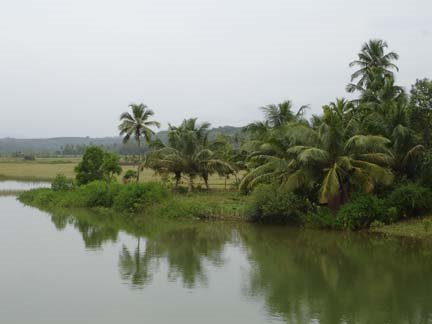
Holegadde near Honavar,Uttara Kannada dist, Karnataka

Copy? Right - but kindly remember to acknowledge!

Creative Commons License
This work is licensed under a Creative Commons Attribution 3.0 License.

" tulu-research.blogspot." ತುಳು ರಿಸರ್ಚ್. ಬ್ಲಾಗ್‌ಸ್ಪಾಟ್‌. ಇನ್

" tulu-research.blogspot."  ತುಳು  ರಿಸರ್ಚ್.  ಬ್ಲಾಗ್‌ಸ್ಪಾಟ್‌. ಇನ್
Have a nice day !