Showing posts with label Dravida. Show all posts

Thursday, August 30, 2012

304. Tulu-Dravida Relations


Tulu has been classified as a Southern Dravidian language, like Tamil, Kannada and Malayalam, all of which are considered to have been originated from a Proto-South Dravidian base. Linguists consider that from a branch of Proto-South Dravidian Tulu and Koraga languages evolved or developed.
Pre-Dravidian Languages
However, available data and studies suggest that Koraga (and other similar tribal) languages and cultures prevailed in the Karavali and in parts of southern India well before the advent of Dravidian languages proper, such as Tulu, Tamil and Kannada, even though they (the former) were subsequently modified and evolved after absorbing some of the features of Dravidian languages in the due course. Thus it is possible that Koraga and other similar tribal languages in their original form represent an earlier generation of languages that prevailed in this land. However in the race of evolution many of the tribal languages have receded in their prominence or have been weakened and erased ultimately.
South Dravidian Languages
The inter-relationship among the South Dravidian languages is interesting. All the three South Dravidian languages could have evolved simultaneously and contemporaneously, mainly through oral literature, even though Tamil has been regarded generally as the oldest because of the presence of ample ancient literatures dating back to the Sangam period. Tulu also had   its own contemporaneous Sangam period as evidenced by the presence of oral literature like the legends of Siri, preserved by the oral form of pāDdana   genre. Early Kannada also probably had similar oral forms which unfortunately may not have been preserved or documented after the introduction of written formats.
Tulu and Kannada have an intimate relationship evidently since the early centuries of Common Era. Tulu chieftains   and soldiers   migrated and found occupation with Kannada Kings in hey days. Thus old Kannada and medieval Kannada shared cultural aspects with common words, grammar and script.
Tamil and Tulu apparently had limited lingual interactions after the passage of Early Sangam period, after fourth or fifth century CE. However, they were closer to each other culturally in the early centuries of CE and period before that. Tamil Sangam literatures have documented appreciation of the merits of contemporaneous Tulu Kings and soldiers. Tulu has retained some of the old Dravidian words it shared with Tamils without alteration even after its hegemony with Kannada. Let us take for example the Tulu word kanDani.
Kandani =husband
Tulu (kanDani) shares the key word for husband with the Tamil (kanDan) which differs from the Kannada (ganDa) equivalent. [ D pronounced  as in Dog]. Check the equivalent versions in some of the southern Indian languages:
Tulu  = kanDani, kanDane           
Tamil =kanDan.
Kannada = ganDa.
Kota = ganDa.
Telugu = ganDa
**
Koraga  =( kor), koraga

It can be seen that Tamil and Tulu shared the common word ‘kanDan’ during the history. The original kanDan in Tulu modified into ’kanDani’, ‘kanDāni’ or ‘kanDane’ etc. The equivalent Kannada, Kodagu, Telugu, (also Kota, Havyaka) version is ‘ganDa’ [or ‘ganDu’=male.] which is a case of transition of consonants ka.>ga. This ka.>ga. replacement could have been a general regional variation in the pronunciation of the words or an evolutionary feature. In case this was a regional variant then it may suggest the pattern of movement and migration routes of the early Dravidian tribes (Fig 304).

 The -an suffix for masculine indicative tag prevalent in Tamil was also common in early Tulu as well as in Kannada. In Tulu it has been retained as a vestige in lineage names like Anchan, Kanchan, Maindan, Salian, etc. In some cases, the early –an became –anna as in Bangeranna, Kuberanna, Taburanna, Sundaranna etc. The lineage tag in Tulu –annāya ( for example, Saliannaya, Bangerannaya, etc) and –āya (for example, Pejattāya, Kukkillāya etc) was also evolved from the early –an suffix.

Tulu-Koraga: Dravida relations
Historical reconstructions and indirect evidences from the study of ethnonyms suggest that Koraga and other tribes had inhabited the Karavali well before the arrival of Tulu immigrants. In other words, the Koraga and other tribal languages predated the Tulu language proper. In such a situation effect of transition of predominantly prevailing language in the region to the newly introduced (and eventually dominated) language has to be visualized and understood. Thus Tulu language appears to have evolved and grown by adopting some of the words and features of the tribal languages that existed previously in the terrain. Similarly the original content and structure of the pre-existing languages, such as Koraga were apparently modified eventually as a consequence of invasion of the new Tulu language in the area. This event could have happened somewhere around  ca.700-500 BC or later.( This kind of give and take of amalgamation and transition of languages appears to have happened all over southern India especially in the case of Tamil Kannada, Telugu etc..)
It is interesting that Koraga do not have equivalent of the word kanDan or kanDani .In Koraga language the term ‘Koraga’ itself represents a man or husband.(This is the general case with many of the tribal languages wherein the name of the tribe means either man or human being or husband.). The Koraga tribes now are prevalent only in parts of the Karavali, but earlier these tribes or their equivalents pervaded all over southern India. Note that another word for husband in Tamil is ‘koruntan’. Wherein the prefix ‘kor’  clearly appears to have been borrowed during the early Tamil phase from the precursor language of Kor, Koraga or its equivalent.

Tulu-Tamil sharing
Tulu shares many words with Early Tamil like, for example, ill (=house), bākil (=door), unakal (=dried), oode (=place), okkel (=farming), kaTTa (=difficulty), tārage(=star), tingol=(moon), tirey (=wave), parel (=piece), pugar (=praise), puncha(=group), poli (=light) etc.

Saturday, February 7, 2009

172. Andhra and Dravida


There are some explanations to the origin of the terms 'Andhra' and 'Dravida' that represent major socio-linguistic groups in southern India.It appears that these two were separate tribal groups even though now Andhras are considered a part of the mega Dravida Group.
Now here is an one more attempt at fathoming the origin of these words. The two words represent mega-tribal groups that settled in parts of southern India in the antiquity. Note that these bear certain analogy with a common word component 'dra'. The common component can be employed to unravel the origin of these words.
To begin with, let us see how some of the tribal group names have come into being

Koraga
Koraga constitute an ancient tribal group in the Karavali probably with analogous or somewhat equivalent tribal groups in other parts of India like Kurukh, Kurub, Kor, etc. It is interesting to note that the word 'Koraga' represents man or husband in Koraga language. The other word Korati represents wife or the woman of this tribe. Similarly 'Bakuda' represents man or husband in their language.
Let me cite this example to show that the equivalent of the word 'man' ('Koraga' in their language) has been employed to refer to the particular tribal community. However, if you analyse a little further you find that the Koraga settlements are known as 'Kor koppa'. Since the word 'koppa' represents a hamlet or settlement, the term kor-koppa means hamlet of 'Kor' people. In other words originally the tribe was known as 'Kor'.

Dara
An ancient word that is still preserved in Tulu language-'dara' has been surveyed earlier in this blog. The basic meaning of the word as in Tulu appears to be soil, earthen bund, earth (and the world) Sanskrit word 'dhara' (Kannada: 'dare' with d as in English 'the') apparently evolved from this word dara.
However, the word has evolved widely and has several shades of meaning in the languages of the world, some of which have been enlisted below:

Dara (pre-Sanskrit/ Dravida)=soil, earthen bund/ wall,>earth.>world. > Tara=variety,class.
Dhara (Sanskrit)=Earth.> World.
Dhāra (Sanskrit)=flow,river. > Tāra (Sanskrit, Cambodian)=Star, Virgin,Girl
Dara (Africa,Bermuda)=Beautiful.
Dara (Hebrew)=wisdom
Dara (Hebrew)=compassionate
Dara (Hebrew)=mother of pearl.
Dara (Farsi)=Riches, Class.
Dara (Hebrew) =Angel of rains and rivers [<.Possibly derived from Phoenician 'In-dara']
Dara (Kannada)=Rate, price.
Tara (Kannada)= Variety,Class
Dara= A Biblical male character who symbolized wisdom.
Dāra= A Punjabi male name.
Dāra= thread.
Dāravi=a place name in Mumbai,Maharastra.
Daram(=Path).> Dharma (way of life)
Daari (Kannada)=path.

Andhra
Andhra were a tribal community to begin with in the antiquity. The word Andhra apparently evolved from its early and original form 'an-dara'. The word 'āN' represents male in several Dravidian languages. Further 'andar' represents male species of animals in at least some of the Dravidian languages. The Telugu word 'andaru' means everybody. It is possible that this word 'andar' evolved from āN+dara or 'the men of the world' or simply 'the people'.Compare this word with the application of th words Koraga or Bakuda (=man or husband) for the tribes name. Hints and shades of ancient patri-archial male dominated society can be delineated.
The ancient word 'dara' (=earth, world) has been discussed in earlier posts in relation to the word 'mudara'. Some more points on 'dara' can be added here using the base 'In-dara'.

Indra
The name of ancient Phoenician God 'In-dara ', the Storm God, helps us to trace this ancient word 'dara'. The 'Indara' was the original form of the familiar word that was adapted into Indian Vedic God 'Indra'. Conceptually, Indra is considered as the captain or leader of Gods in early Vedic period (ca.2000-1700 BC).Indra was worshiped as Storm God in many of the ancient civilizations in Europe Asia and Africa. The ancient Phoenician God 'Indara' has been considered to be the conceptual forerunner of Indra of Indian Vedas. The word 'In+dara' can be analysed as 'the leader of the world.'
Incidentally, the word 'Indra' in Telugu meant 'idiga' or the toddy tapper. Was there some relation between the word components (in)'dra 'of Andhra and 'Ida' (>ideya,idiga) of Dravida?


Dravida
Since the Robert Caldwell used this word for representing South Indian language and culture, the origin of the word has remained controversial. He borrowed the word 'Dravida' from 7th Century Sanskrit work by Kumarila Bhatta known as Tantravartika. There is a suggestion that 'Dravida' is connected to 'drava'(=liquid) and that the name derived since Dravidians were great sailors. Others argue that 'Dravida' is not a Tamil word since components like 'dra' are absent in Tamil. However many have argued that the word 'Tamil' is derived from the word Dravida.
Sediyapu Krishna Bhat opined that 'Dravida' is a Sanskrit word having a meaning of 'land full of forests'.(dru=forest,wood; ila= containing).
The sequence Dravida> Damila.> Tamira> Tamila is the most commonly argued line of evolution/transition of the words. There is another rival school of thought that propounds the vice versa that the word 'Dravida' is derived from the term 'Tamil' .Bhadriraju Krishnamurthy believes that the word dravida is later than the word 'damila'. The term 'damila' is said to have been found in early Jain literature dating back to 200 BC.
The third modified viewpoint especially from this blogger is that dravida and tamila/damila were the regional variants of the same word considering the distribution of variants of the related words ida, ideya (iddya), yedeya (Yedapadavu, Yedagonadanhalli, Yediyur), ila/ yela (Ilawal, Ilantila,Yelaniru), and yadava(Yadavagiri) in different parts of southern India.

Thus the words Dravida and damila/tamila could have been the regional variants derived from same origin:
Daravida.>dravida
Darvila/darmila.> Damilar>Tamil

Ida
However,the word 'Dravida' can be reviewed in the light of above word analyses Andara (>Andhra) and Indara(> Indra).It appears that the word daravida> dravida represented 'people of the world' if you accept the following word analysis.
The original form of the word Dravida could be Daravida or dara+ida or 'the pastoral tribes of the world'. The Ida or Ideya or Yedeya were a major pastoral tribes in southern India also known as Yadavs. It is also possible that the word 'Ideya' is also related to 'Idiga'?
The tribal tag 'Ida' (Ida.> Ila
There are distinct evidences in south Indian place names for Ida>Ila transitions, even though it is difficult to conclude whether Ila derived from Ida or the vice versa. Ide village existed during the period of Kadamba reign in Banavasi , Uttara Kannada(4to 6th Cenrtury CE).
One of the interesting observation is that the word dravida was not in use in southern India until probably Robert Caldwell employed this word to denote a special linguistic group. It is possible that the word Dravida was used in Sanskrit literature only in the beginning and in southern India the equivalent term in usage was the 'Ideya'.
Linguistic,socio-cultural and genetic evidences suggest that the ancestors of Dravida tribes migrated from Mediterranean region to India probably during the early Vedic period. A major migrant community was possibly referred to as people of the world!

Shudra
A similar word that ends with -dra suffix is 'Shudra'. By analogy of foregoing analysis we can propose that the word evolved from the original Su-dara , the inferior or labourer of the land or Earth.
Chandra
Another significant word in the 'dra' family is Chandra, the moon.

Evolution of words
With the background of foregoing discussions we can summarize the evolution of some of the words with '-dra' suffix/prefix as follows:-

In-dara ( leader of the Earth, Almighty) > Indra.
Mu-dara (wet, fertile soil) > Mudra (An imprint or stamp on the wet soil .> Mark, stamp)
Su-dara (labourer /improved on earth, Sudaar) > Shudra (=Labour class)
An-dara (men of the Earth) > Andhra
Dara-vida ( people/tribes of the Earth) > Dravida
Chen-dira (A beauty in the world).> Chandra.(=Moon)

®

Blog Archive

Books for Reference

  • A Comparative Study of Tulu Dialects By Dr. Padmanabha Kekunnaya. Govinda Pai Reserach Centre, UDupi. 1994
  • Koti Chennaya: Janapadiya Adhyayana. By Dr. Vamana Nandavar. Hemanshu Prakashana ,Mangalore.2001.
  • Male kudiyaru. Dr B. A.Viveka Rai and D.Yadupathi Gowda, Mangalore University,1996.
  • Mogaveera Samskriti By Venkataraja Punimchattaya. Karnataka Sahitya Academy.1993.
  • Mugeraru:Jananga Janapada Adhyayana. By Dr Abhaya Kumar Kaukradi.Kannada & Culture Directorate,Bangalore & Karnataka Tulu Academy, Mangalore,1997.
  • Puttubalakeya Pad-danagalu. Ed: Dr B.A.Viveka Rai,Yadupati Gowda and Rajashri, Sri Dharmasthala Manjunatheswara Tulu Peeta. Mangalore University.2004
  • Se'erige. Ed:Dr K.Chinnapa Gowda.Madipu Prakashana,Mangalagangotri,2000.
  • Studies in Tuluva History and Culture.by Dr P Gururaja Bhat (1975).Milagres College,Kallinapur,Udupi.
  • Taulava Sanskriti by Dr.B.A.Viveka Rai, Sahyadri Prakashana,Mysore 1977
  • TuLu naaDu-nuDi By Dr.PalthaDi Ramakrishna Achar, Puttur.
  • TuLu NighanTu. (Editor in Chief: Dr U.P.Upadhyaya, Govinda Pai Research Centre,Udupi. Six volumes. 1988 to 1997
  • Tulu Patero-A Philology & Grammar of Tulu Language by Budhananda Shivalli.2004.Mandira Prakashana Mangalore. p.317. (The book is in Tulu Language using Kannada script)
  • TuLunadina ShasanagaLa Sanskritika Adhyayana. By Shaila T. Verma (2002) Jnanodaya Prakashana,Bangalore, p.304.(Kannada)
  • Tuluvala Baliyendre. Compiled by N.A.Sheenappa Hegde,Polali,Sri Devi Prakashana,Parkala,1929/1999

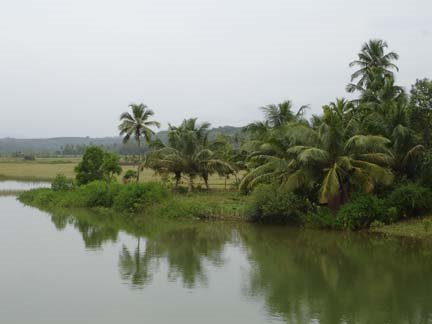
A Coastal estuary

A Coastal estuary
Holegadde near Honavar,Uttara Kannada dist, Karnataka

Copy? Right - but kindly remember to acknowledge!

Creative Commons License
This work is licensed under a Creative Commons Attribution 3.0 License.

" tulu-research.blogspot." ತುಳು ರಿಸರ್ಚ್. ಬ್ಲಾಗ್‌ಸ್ಪಾಟ್‌. ಇನ್

" tulu-research.blogspot."  ತುಳು  ರಿಸರ್ಚ್.  ಬ್ಲಾಗ್‌ಸ್ಪಾಟ್‌. ಇನ್
Have a nice day !