Showing posts with label words. Show all posts

Thursday, August 30, 2012

304. Tulu-Dravida Relations


Tulu has been classified as a Southern Dravidian language, like Tamil, Kannada and Malayalam, all of which are considered to have been originated from a Proto-South Dravidian base. Linguists consider that from a branch of Proto-South Dravidian Tulu and Koraga languages evolved or developed.
Pre-Dravidian Languages
However, available data and studies suggest that Koraga (and other similar tribal) languages and cultures prevailed in the Karavali and in parts of southern India well before the advent of Dravidian languages proper, such as Tulu, Tamil and Kannada, even though they (the former) were subsequently modified and evolved after absorbing some of the features of Dravidian languages in the due course. Thus it is possible that Koraga and other similar tribal languages in their original form represent an earlier generation of languages that prevailed in this land. However in the race of evolution many of the tribal languages have receded in their prominence or have been weakened and erased ultimately.
South Dravidian Languages
The inter-relationship among the South Dravidian languages is interesting. All the three South Dravidian languages could have evolved simultaneously and contemporaneously, mainly through oral literature, even though Tamil has been regarded generally as the oldest because of the presence of ample ancient literatures dating back to the Sangam period. Tulu also had   its own contemporaneous Sangam period as evidenced by the presence of oral literature like the legends of Siri, preserved by the oral form of pāDdana   genre. Early Kannada also probably had similar oral forms which unfortunately may not have been preserved or documented after the introduction of written formats.
Tulu and Kannada have an intimate relationship evidently since the early centuries of Common Era. Tulu chieftains   and soldiers   migrated and found occupation with Kannada Kings in hey days. Thus old Kannada and medieval Kannada shared cultural aspects with common words, grammar and script.
Tamil and Tulu apparently had limited lingual interactions after the passage of Early Sangam period, after fourth or fifth century CE. However, they were closer to each other culturally in the early centuries of CE and period before that. Tamil Sangam literatures have documented appreciation of the merits of contemporaneous Tulu Kings and soldiers. Tulu has retained some of the old Dravidian words it shared with Tamils without alteration even after its hegemony with Kannada. Let us take for example the Tulu word kanDani.
Kandani =husband
Tulu (kanDani) shares the key word for husband with the Tamil (kanDan) which differs from the Kannada (ganDa) equivalent. [ D pronounced  as in Dog]. Check the equivalent versions in some of the southern Indian languages:
Tulu  = kanDani, kanDane           
Tamil =kanDan.
Kannada = ganDa.
Kota = ganDa.
Telugu = ganDa
**
Koraga  =( kor), koraga

It can be seen that Tamil and Tulu shared the common word ‘kanDan’ during the history. The original kanDan in Tulu modified into ’kanDani’, ‘kanDāni’ or ‘kanDane’ etc. The equivalent Kannada, Kodagu, Telugu, (also Kota, Havyaka) version is ‘ganDa’ [or ‘ganDu’=male.] which is a case of transition of consonants ka.>ga. This ka.>ga. replacement could have been a general regional variation in the pronunciation of the words or an evolutionary feature. In case this was a regional variant then it may suggest the pattern of movement and migration routes of the early Dravidian tribes (Fig 304).

 The -an suffix for masculine indicative tag prevalent in Tamil was also common in early Tulu as well as in Kannada. In Tulu it has been retained as a vestige in lineage names like Anchan, Kanchan, Maindan, Salian, etc. In some cases, the early –an became –anna as in Bangeranna, Kuberanna, Taburanna, Sundaranna etc. The lineage tag in Tulu –annāya ( for example, Saliannaya, Bangerannaya, etc) and –āya (for example, Pejattāya, Kukkillāya etc) was also evolved from the early –an suffix.

Tulu-Koraga: Dravida relations
Historical reconstructions and indirect evidences from the study of ethnonyms suggest that Koraga and other tribes had inhabited the Karavali well before the arrival of Tulu immigrants. In other words, the Koraga and other tribal languages predated the Tulu language proper. In such a situation effect of transition of predominantly prevailing language in the region to the newly introduced (and eventually dominated) language has to be visualized and understood. Thus Tulu language appears to have evolved and grown by adopting some of the words and features of the tribal languages that existed previously in the terrain. Similarly the original content and structure of the pre-existing languages, such as Koraga were apparently modified eventually as a consequence of invasion of the new Tulu language in the area. This event could have happened somewhere around  ca.700-500 BC or later.( This kind of give and take of amalgamation and transition of languages appears to have happened all over southern India especially in the case of Tamil Kannada, Telugu etc..)
It is interesting that Koraga do not have equivalent of the word kanDan or kanDani .In Koraga language the term ‘Koraga’ itself represents a man or husband.(This is the general case with many of the tribal languages wherein the name of the tribe means either man or human being or husband.). The Koraga tribes now are prevalent only in parts of the Karavali, but earlier these tribes or their equivalents pervaded all over southern India. Note that another word for husband in Tamil is ‘koruntan’. Wherein the prefix ‘kor’  clearly appears to have been borrowed during the early Tamil phase from the precursor language of Kor, Koraga or its equivalent.

Tulu-Tamil sharing
Tulu shares many words with Early Tamil like, for example, ill (=house), bākil (=door), unakal (=dried), oode (=place), okkel (=farming), kaTTa (=difficulty), tārage(=star), tingol=(moon), tirey (=wave), parel (=piece), pugar (=praise), puncha(=group), poli (=light) etc.

Saturday, December 29, 2007

64. Puraal and Polali


Ancient river course of Gurpur river shown in brown short-dash lines.Present river course in blue shade. Purple double line shows main roads.

Polali is a well-known temple town on the banks of the River Phalguni (also known as River Gurupur). There is a historical temple dedicated to Rajarajeswari, one of the seven forms of Godess Shakti (or one of the Nava Durgis).
1.The place is known as ‘Puraal’ in Tulu.The word Pural means ‘flute’ according to the ‘Tulu Nighantu’.I feel that this word ‘puraal’ is originally from Mugera language ( a member of Early Munda group, since it is also used in some pad-danas connected with Mugera kolas and folk dances.
2. There is also another meaning for the word ‘puraal’, not included in the said Dictionary. It means ‘stale’ or ‘putrid’. (For example: ‘Meen puraal moori barpunDu’ means that the fish smells stale.).
3. But the geomorphology of the area suggests an altogether different view.The puraal town is located on the river bank, where the said river takes a swift and abrupt turn.The Tulu ‘pural’ or ‘purel’ means to change sides.
I believe the original Tulu name of the place ‘Pural’ came on account of the river geometry of Phalguni which takes an abrupt turn.
4.However, the word ‘Polali’ is a Kannada word which means ‘town’.Obviously the Kannada word ‘Polalu’ or the ‘Polali’ must have been introduced by Kannada rulers (Dwarasamudra Ballals or Vijayanagar Kings) in this area.The Kannada rulers must have mis-translated the original name of ‘Pural ‘as pura+al, considering that ‘pura’ in Sanskrit means a town.
The old Kannada word 'Polalu'('Holalu' in modern Kannada) is equivalent of Tulu 'Purelu'.These words puraal and Polalu signify the historical change in the course of River Gurupur.

Tuesday, October 9, 2007

42. Origin of the word Tulu -II

The word ‘Tulu’ itself is of remote antiquity. Online search shall convince you that the word Tulu is more global in dimension than we can imagine.It appears that the word 'Tulu' originally meant 'water and water related aspects' in the language of its origin, but might have acquired additional meanings subsequently due to changes in environmental situations.
In the ancient Sumerian language“tu” morpheme represented ‘water spring or well’ or ‘water connected activities like bathing or washing’ and the morpheme “lu” was indicative of quantity or abundance, people etc. There was another Sumerian word “tulu” or “tule” that meant ‘soft or placid’. (Compare similarity of the latter meaning with our ‘tuluve’ jack fruit.).Tulu is found in the list of African personal names and the word means ‘spread out in different directions’, possibly implying migratory character of the Tulu tribes. Another vocally analogous African word ‘Zulu’ also means water.
I believe that the word ‘Tulu’ existed since Sumerian period of early civilization (ca. 6000-4000 BC) in north African-Mediterranean region, where from these original ancient Tulu tribes migrated. The ancient Sumerian and related languages form the basis for the evolution of many of the Afro-Asiatic languages of present day. The word 'Tulu' originally meant (1) water or activities connected with water (2) placid and soft.These ancient meanings still survive today in spite of the passage of several millenia in the time scale. These Sumerian meanings are analogous to those interpreted by Sediyapu Krishna Bhat and Manjeswar Govinda Pai in the context of present Tulu in Tulunad.
The Ethiopia can be described as cradle of human race, since the earliest human fossils (Homo sapiens) Omo I and Omo II dated back to 165,000 years were found in Ethiopia. As reconstructed by the genome studies complemented with archeology and paleontology, human migrations started out of Ethiopia and Africa in several phases.
Tulu place names
Tulu is the name of several Ethiopian towns and settlements. ‘Tulu’ is also a surname or part of the name among the Ethiopian people. For example, Derartu Tulu is an Ethiopian female athlete. There are at least four places (towns, settlements) called ‘Tulu’ in Ethiopia, at least one each in the other neighboring African countries like Kenya, Sudan, Nigeria and Zaire. In Ethiopia there are more than 12 places in the online maps with ‘Tulu’ as prefix, such as Tulu Bolo, Tulu Bora, Tulu Ferda, Tulu Guracha etc.
Tulu Migrations
On the basis of these data I suggest that the original Tulu tribes originated in Ethiopia in northern Africa and migrated out of Africa under adverse environmental conditions.Based on environmental geological data scientists have interpreted that around 2000 BC, wide spread desertification of northern Africa prompted many tribes to migrate out of Africa. Tulu place names in other African countries are suggestive of migration of early Tulu tribes in different directions. The present African meaning of ‘spread in different direction’ for the word ‘Tulu’ could have been the result of migrations.
The exact nature of the language of the primary Tulu tribes hailing from Ethiopia is difficult to conjecture now but we can presume some of the original words are still preserved as fossils in present Tulu language.
The Tulu language has grown or evolved independently of African languages during the last 6000 years in such a way that they have entirely separate identities and characteristics. A lot of things change as a result of divergent evolutionary trends. But some fossil root words may exist still!
Outside the African continent, Tulu place names can also be found in Pakistan (‘Thulu’), Afghanistan, Mynamar, China, Bolivia, Brazil, Papua New Guinea and Phillipines.
The Afghan Television channel, at present, is called ‘Tulu TV’, the word ‘Tulu’ in the present Afghan language means something like ‘the rising’ or ‘the dawn’. Note that Afghan meaning of ‘Tulu” is different from the African roots. Afghanistan is close to Pirak where many of the tribes settled during the period ca.2000 to 500 BC. The Pirak episode of Tulu tribes has been discussed in several earlier posts in this blog.
The Tulu tribes settled and lived in the Pirak area for some 1500 years, then again migrated (ca 500-300 BC) to their present homeland in Tulunad.

The original ‘Tulu’ may have been the name of the mother who migrated from Africa to Pirak along with her family. The original ‘Tulu’ family carried several root words along with them during the migration from their early homeland. A few such Tulu families or clans were active in the last millennium also around Kundapur, Honavar and Banavasi region.
And Krishnadevaraya who ruled Vijayanagar was product of one such family that called itself Tulu clan.

41. Origin of the word Tulu -I

Origin and meaning of the word Tulu has been disputed in literary circles since pre-Independance days. Dr. Palthadi Ramakrishna Achar(1999) has compiled the available historical information on the word ‘Tulu’ in his book ‘TuLu naaDu- nuDi’. Most of the appraisals, as remarked by Dr Achar, have been made considering Tulu as a character of the territory or the people rather than the language.

1.In ‘Rajatha Peethapura Mahatme’(1913) it is described that a chieftain of Udupi called Ramabhoja offered Tulābhāra to the deity, to amend for the sin of killing a serpent. Tulābhāra is the offering of gold or other material (according to the status of the worshipper) equivalent to ones body weight. Thus the word Tulu has been suggested to have been derived from the Tulābhāra. The theory has not been accepted by experts since Rama bhoja appears to be an imaginary ruler unsubstantiated in the actual history of the land.
2.Another similar legend in ‘Keralotpatti’, an ancient work that originated from Kerala, describes the rule of one ‘Tuluban Perumal’ from Koteswara, Kundapaura area, who gave the name Tulunad for the area.This is again a figment of fertile imagination since there is documented evidence of any Tuluban Perumal ruling Tulunad.
3. Dr B. A. Salettur derived the word ‘Tulu’ from the Kannada root ‘tooL’ which means to attack. Dr. Gururaja Bhat had discounted this suggestion since Tulu people were never attacked anyone nor had any expansionist ideals.
4. Manjeswara Govinda Pai proposed that the word Tulu has been considered to have derived from the Tamil word ‘Tulai’ which means to row or play with water.
5. Kudkadi Viswanatha Rai (cited in Dr Achar,1999) suggested that the Tulu has been derived from the phrase ‘Tullal naadu’, wherein ‘tullal’ means to wriggle or to dance. Native Mera or Muger tribes describe their marriage ceremony as 'tullal'.
6. Dr. Gururaja Bhat proposed that the word Tulu is modified form of the term ‘turu’ that refers to cattle. Cattle herding and grazing is considered to be one of the earliest known professions in India. Cow-herders of Gujarat, also known as Yadavas are considered to be one of the early settlers in Tulunad. Haritha of Yadava clan was said to have ruled in Tulunad according to Harivamsha. However there are no solid evidences in favour of turu>tulu word conversion .
7. ‘Tolahars’ were a royal clan that ruled a part of Tulunad. Tola>Tulu conversion has been thought of by some workers.
8. J.Sturrock in his South Canara Manual ( Vol.I ) inferred that word Tulu possibly refers to the ‘soft’ nature of the local people, since the adjective “tuluve” is applied to the soft pulpy variety of jack fruit. However, this argument has not been accepted by experts like Dr. Gururaja Bhat.

9. Sediyapu Krishna Bhat has pointed out that the word ‘Tulu’ is connected with water. ‘Tuluve’(jack fruit) also means ‘watery’ and that should be considered instead of the ‘soft’ implication. The other water related words in Tulu are talipu, teli, teLi, teLpu, tuLipu, tulavu, tamel and additionally in Kannada are tuLuku and toLe. In Tamil tuli means water drop and tulli means the same in Malayalam.

Interestingly, earlier Manjeswar Govinda Pai also had suggested that the term Tulu is derived from the Tamil word tulai which means to row, dive or play in water.
Thus it can be concluded that the word Tulu implies ‘related to water’.

10. The term ‘Tulu’ was also used as a clan name, as recorded in the Honnali inscription of Shimoga district, dated 1203AD. Dr. Gururaja Bhat has cited several personal names with Tulu as affixes like Tuluveswara, Tuluva Chandiga, Tulu Senabova, Tuluvi Setti, Tuluvakka Heggadati,Tulu Alva, Tulai Amma etc. as have been recorded in the inscriptions. In the Basrur (in Kundapur taluk) inscription dated 1401 AD, mentions a Tuluvi Setti donating land to maintain the routine expenditures of the Tuluveswara temple of Basrur. Besides, Krishnadevaraya, the famous emperor of Vijayanagar was said to be hailing from the ‘Tuluva’ dynasty.
Thus we can conclude that the word ‘Tulu’ means ‘that connected with water’ and it is also name of a clan or group.
However the word Tulu is more global than we ordinarily imagine!

(..to be continued)

Thursday, October 4, 2007

40.Early evolution of words and languages


The concept of the African origin and migration of mankind worldwide suggests that languages also might have originated and migrated in the similar way. Prehistoric According to the mother tongue theory of origin of languages, the human migrations appear to have led to the present diverse distribution of worlds languages.
The languages appear to have originated as primitive sounds in the beginning that eventually evolved into morphemes and words. Words were combined to form sentences to supplement the gestures and to facilitate accuracy of expression. Migration of people to different locations around the globe introduced umpteen variations in the words, adoption of the new words, pattern and style of combing words into sentences, usages and grammars depending on the environment of the settlement and the association of pre-existing, resident people. Thus evolution and migrations and diverse environments have produced different and complex languages.
The primitive oral /spoken languages evolved some 130,000 years ago with development of the gene FOXP2 associated with speech. Most of the communications, including the literature and education in the early days were in oral format. Subsequently the necessity of keeping business accounts and preservation and documentation of literature led to the evolution of writing about 5000 years ago.
Linguists like Meritt Ruhlen (1994) consider that all extant languages share a common origin and similar words in different languages are usually the result of divergent evolution from a single earlier language.
Most of the basic morphemes (parts of the word) and words originated among the early civilizations and spread around the globe along with trends and patterns of human migration and habitation.
Sumerian civilization in the Mediterranean valleys of Euphrates and Tigris (now parts of Iraq and Iran) is considered to be one of the early civilizations that developed and flourished during the period 6000 to 2000 BC. There could have been contemporaneous or older civilizations in other parts of the world like India, but these have not been sufficiently documented.
In the light of basic theory of evolution of words and the languages outlined above, we can expect to find some of the basic Tulu morphemes and words in the earliest civilizations, like those developed in the vicinity of the place of origin of the mankind, the northern Africa.

Blog Archive

Books for Reference

  • A Comparative Study of Tulu Dialects By Dr. Padmanabha Kekunnaya. Govinda Pai Reserach Centre, UDupi. 1994
  • Koti Chennaya: Janapadiya Adhyayana. By Dr. Vamana Nandavar. Hemanshu Prakashana ,Mangalore.2001.
  • Male kudiyaru. Dr B. A.Viveka Rai and D.Yadupathi Gowda, Mangalore University,1996.
  • Mogaveera Samskriti By Venkataraja Punimchattaya. Karnataka Sahitya Academy.1993.
  • Mugeraru:Jananga Janapada Adhyayana. By Dr Abhaya Kumar Kaukradi.Kannada & Culture Directorate,Bangalore & Karnataka Tulu Academy, Mangalore,1997.
  • Puttubalakeya Pad-danagalu. Ed: Dr B.A.Viveka Rai,Yadupati Gowda and Rajashri, Sri Dharmasthala Manjunatheswara Tulu Peeta. Mangalore University.2004
  • Se'erige. Ed:Dr K.Chinnapa Gowda.Madipu Prakashana,Mangalagangotri,2000.
  • Studies in Tuluva History and Culture.by Dr P Gururaja Bhat (1975).Milagres College,Kallinapur,Udupi.
  • Taulava Sanskriti by Dr.B.A.Viveka Rai, Sahyadri Prakashana,Mysore 1977
  • TuLu naaDu-nuDi By Dr.PalthaDi Ramakrishna Achar, Puttur.
  • TuLu NighanTu. (Editor in Chief: Dr U.P.Upadhyaya, Govinda Pai Research Centre,Udupi. Six volumes. 1988 to 1997
  • Tulu Patero-A Philology & Grammar of Tulu Language by Budhananda Shivalli.2004.Mandira Prakashana Mangalore. p.317. (The book is in Tulu Language using Kannada script)
  • TuLunadina ShasanagaLa Sanskritika Adhyayana. By Shaila T. Verma (2002) Jnanodaya Prakashana,Bangalore, p.304.(Kannada)
  • Tuluvala Baliyendre. Compiled by N.A.Sheenappa Hegde,Polali,Sri Devi Prakashana,Parkala,1929/1999

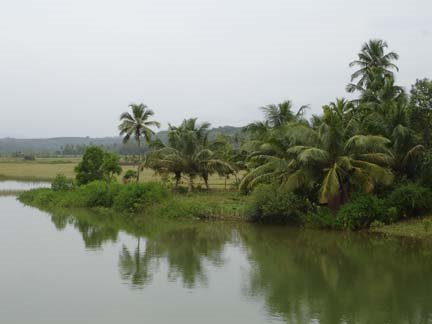
A Coastal estuary

A Coastal estuary
Holegadde near Honavar,Uttara Kannada dist, Karnataka

Copy? Right - but kindly remember to acknowledge!

Creative Commons License
This work is licensed under a Creative Commons Attribution 3.0 License.

" tulu-research.blogspot." ತುಳು ರಿಸರ್ಚ್. ಬ್ಲಾಗ್‌ಸ್ಪಾಟ್‌. ಇನ್

" tulu-research.blogspot."  ತುಳು  ರಿಸರ್ಚ್.  ಬ್ಲಾಗ್‌ಸ್ಪಾಟ್‌. ಇನ್
Have a nice day !