Showing posts with label panjurli. Show all posts

Thursday, March 1, 2012

296. Ancient port of Basarur


The ancient port town of Basarur (or Basaruru, Basrur, Basroor), is one of the oldest known ports  in the Karavali (West Coast) Karnataka that played far reaching cultural, commercial and religious roles in the historical perspective. Portuguese merchants had preferred this port during 17th Century for importing initially rice and later pepper to Europe.
Basarur
Basarur is a village presently located about 4 km east of the   coastal town of Kundapur in the district of Udupi. It is located on the southern bank of River Varahi. The present Basarur town about four square kilometers in extent boasts of heritage of of some 7 colonies (‘kEri’), 7 water ponds (‘kere’), 27 temples, 40 spirit shrines, 4 garodis, 2 agraharas,2 mutts, 2 mosques and 2 churches, besides ruins of ancient fort walls enclosing remnants of a former twin city structure.
Location map of Basarur, Kundapura Taluk, Udupi district,Karnataka.

The seven colonies are named as follows: Mandi keri (=market colony), Vilasa keri (=pleasure colony), Basadi keri (=Jain colony), Raut keri (= horse riders colony), Gudigar keri (=artists’ colony), Mel keri(=upper colony) or Saler keri(= weavers colony) and Mudu keri (=Eastern colony). The names of colonies are suggestive of evolved city with emphasis on commerce (Mandi), defence (Rauts), culture(Gudigar), fashion(Saler) and pleasure(Vilasa) in the ancient port town.
Basarur Magane traditionally consisted of adjacent villages of Anagalli, Hatti-kuduru, Balkur, Japti and Kandavara. Hattiangadi village is located on the northern bank of Varahi River and to the north of Basarur town.
Basarur: colorful history
The ancient port town of Basarur is generally considered to have been named after king ‘Vasu’ who is thought to have ruled the region in the remote antiquity. However available historical records do not throw light on the legendary king Vasu who is also considered to have constructed Kotilingeshwara temple at Koteshwara in the neighborhood of Basarur. Others consider that the town was named after ‘Basuri’ (Ficus virens), a kind of tree related to the family of banyan tree. The place name Basarur has been mentioned as ‘Vasupura’ in ‘Keladi Nripa Vijaya’ (compiled in Kannada during Nayak rule, 18th Century CE). Dr Gururaja Bhat considered that the name Vasupura has not been cited in older documents and it is a Sanskritized version of the name of the Basarur.
Village map of Basarur showing relics of old fort along with island of Hatti kuduru within River Varahi

It is possible that the name Basurur came from the name of immigrant Basu tribes. The Basu (Bashu or Bose) people were a Kayastha clan of Kshatriyas (warrior class) from Kannauj area of Uttar Pradesh who migrated to various regions. The surname Basu is widespread now in Bengal region. It is possible that the place name Basarur was derived after the ‘Basar(u)’ (the Basa or Basu people; suffix’ –ar(u)’ is a  Kannada/Tulu honorific signifying people) migrant tribes settled in the area under study.In Tulu Siri folklore(paDdana), Basarur has been recorded as 'Basalur', suggesting that it was  based on Basa-lu tribes,as in Tulu 'lu' suffix is indicative of plurals.
 In fact, the common male proper name ‘Basava’ could have originated from the ancient ‘Basa’ or ‘Basava’ people. The proper name Basu can also be found in Africa where it means brilliant. A renowned poet ‘Bhasa’ was living in medieval period in northern India.
Historical data suggests that Konkan coast was ruled by Bhargavas during early centuries of the Common Era. The Bhargavas with iron axes were generally credited with the conversion of forest lands into organized villages by cutting the densely grown trees. The legendary Parasurama (also known as Bhargava) could have been one those early heroes who actively propagated the process of converting forests into open fields suitable for inhabitation and cultivation.
The port town was under the rule of Kadambas based at Banavasi, after 4th century CE. The Kadambas were also merchants to begin with and were considered as sea pirates in some reports. It appears that the river flowing by the town of Basarur was named  Varahi, after the female form of Panjurli Spirit, now also known as ’Varte’(derived from <.’Varahiti’) during the Kadamba rule. Ancient Legends concerning the power of Panjurli are dominant in this region. Legends of Parasurama were also codified into Puranas under the Kadambas who were instrumental in reactivation of Hinduism.
Apart from the Basu settlers from the North suggested in the place name, there are evidences of visits of people to Basarur from northern India like monks of Natha cult (also known as Jogis) from Nepal and Bengal.  Signature of Kol tribes in a pond (‘kere’) named after them as ‘Kolkere’ in Basarur. Similarly, Uppara , BattaDa and other tribes resided in Basarur.
The administration and affairs of the port of Basarur was apparently controlled by Nakhara and Hanjuman merchant guilds. The Halas and Settis domicile in the town were also influential in the administration. Disputes and legal matters were resolved in the presence of these power groups as suggested in some inscriptions.
The Alupas originally from Mangalore ruled this area at Hattiangadi with capital at Barkur between 8th and 11th century CE. The Alupa Kings were also sea-faring merchants by tradition. It was followed by representatives of Vijayanagara rulers who encouraged revival of Hinduism under Natha monks. Telugara hitlu (colony) in Basarur for example documents the existence of Telugu speaking settlers possibly during Vijayanagara realm. Further, after the fall of Vijayanagara, Keladi Nayak Kings [1554-1641CE] controlled the administration of Basarur. Characteristically, the Shiva/ Mahadeva/Ishwara temples were renamed as ‘Mahalingeshwara’ Temples under the Veerashaiva Kings of Keladi.
Portuguese [1510-1646] and Dutch [1662-1748] merchants had sway over the commerce of this port. Maratha King Shivaji attacked Basarur in the year 1665 (February 8th] to strangle the foods supply chain to the Portuguese who had occupied Goa. By the time of Hyder Ali the port of Basarur lost its eminence as it turned to be an interior port, silted up with poor navigation facilities.  It is said that Hyder Ali unsuccessfully tried to repair and update the port with the help of Dutch technicians. Influence of Tippu Sultan [1784-1799] over Basarur has also been recorded.
The ‘Gudigars’, artisan experts in Temple arts (‘guDi’) and art of icon making, were considered to have been migrated here from northern parts of India. The presence of Icons of five Chinese women as spirits in an ancient Garadi of Basarur suggests cultural connections between Basarur and China in the antiquity.
Ancient Temples
The Basarur area shows evidences of several religious cults during the evolutionary course of history. It is inferred that Alupa kings initially followed ‘Pashupata’ cult, as suggested in Halmidi inscription. However during their initial reign, Jainism and Buddhism were dominant. Subsequently Bhagavati and Natha cults dominated. The Bhagavati cult culminated into Mother Goddess, Shakti (or Durga) cult, whereas the Natha cult revived Shaivism. Stamps of Janardhana as well as ’Shankara-Narayana’ (‘Harihara’ or fusion of Shiva and Vishnu concepts) cults can be seen in parts of Kundapur Taluk, where one of the villages is named after Shankaranarayana.
One of the temples in ruins at Basarur is known as Tuluveshwara Temple, which is considered to be ( PS Narasimha Murthy,1997) is older than 1400 CE. However, the original Tuluveshwara temple could be as old as 5th to 6 Century CE. The Tuluveshwara tag is quite interesting and suggestive of prevalence of Tuluva tribes in this region in the antiquity. It is possible that this region ruled also by Alupa Kings from Mangalore was earlier inhabited by Tulu speaking people, till the advent of Vijayanagara rulers who apparently encouraged Kannada in Barkur State.
Adinatheshwara Temple in Murukeri colony has been dated to 11th Century CE. Basarur region inclusive of Hattiangadi was under the sovereignty of Barkur State, ruled at that time period by Alupas (up to the end of 12th Century CE). Adinatha being the earliest Guru of Natha cult popularized by Macchendra Nath and Gorakanath represents transition from Buddhism to Natha cult in the region. Macchendra Nath and Goarkanath duo from Bengal and Nepal are also credited with the establishment of the Kadri Manjunatha Temple at Kadri, Mangalore.
Legends suggest that sometime during 13th or 14th Century CE, a Linga icon from the pond of Kadri Manjunatha temple was carried to Kuduma in Belthangadi Taluk by Annappa (who is since then revered as Spirit Annappa Panjurli) and the new temple there was renamed as ‘Dharmastala’. Similarly, during the period a new temple was consecrated at Basarur and the locality was named ‘Dharmapatna’. Somehow the latter temple did not achieve fame comparable to that of Dharmastala, but the local legends consider that it was due to skipping the exact auspicious ‘muhurta’ (initiation) time, the temple failed to reach the pinnacle of glory. Thus  in records Basarur is also known as ‘Dharmapatna’.
Another famous temple in this town is Nakareshwara Temple dedicated to Mahadeva (Shiva) which contains inscriptions of the period of Alupa King Kavi Alupendra dating back to 1154 and 1176 CE. There is a Mahisha Mardini icon in the temple, considered to be of 9th to 10th Century CE by PS Narasimha Murthy. The name Nakareshwara suggests that it was built by the Nakara (=merchant) community of Basarur.
Hanjuman referred to the association of Moslem traders of Arabic origin who entered West Coast from Kerala during 6th Century CE and were present in many of the Karavali Ports in the successive period. Thus, some of the oldest Mosques could be dated back to 8th and 9th Century CE in the Karavali Port towns.
The Keladi Nayak Kings were followers of Veera Shaiva cult who patronized the temples during 16th and 17th Centuries, changed the name of Nakareshwara temple to Mahalingeshwara Temple.
Under the Portuguese rule of Goa, Gowda Saraswats fled Goa, migrated south and settled in Karavali places like Basarur. They built Tirumala Venkateshwara, Santeri Kamakshi, Mahalsa Narayani etc Temples in Basarur. Similarly immigrant Chitpavan Brahmins established temples dedicated to Ramachandra.
With Goa falling under the rule of Portuguese ca 1571, Christianity was propagated and Roman Catholic Churches were built in Basarur as early as 1574. It is said that in the year 1783, Tippu Sultan who was under the impression that Christians would support the British destroyed several churches in Basarur.
Hattiangadi
The Hattiangadi (Pron: haTTianagdi) village is located to the north of Basarur on the opposite bank of Varahi. The Hatti (pron: haTTI; =cottage, shed)  is ancient place name suggesting antiquity of the settlement. An ‘angaDi’ refer to an open field, mostly bazaar or ‘sante’ type rural market, where commodities were sold on daily or weekly basis. The word ‘angaDi’(=open field,> bazaar,> shop) has evolved with time and presently it means a shop. Therefore it can be presumed that the original ‘Hatti’ village was renamed as ‘Hattiangadi’ after the rural bazaars were used to be held there. The ‘Hatti’ name has also been given to an island (‘kuduru’) on River Varahi, located close to Hatti-angadi. It appears that the ‘kuduru’ was part of main land, attached to Hatti village till about 1450 and subsequently separated from the Hatti mainland due to drastic changes in river channel morphology, as interpreted from geological data and from Alupa inscriptions.
Hattianagdi village, formerly ruled by Alupa Kings, has an ancient temple dedicated to Lokanatha. The Natha suffix indicates that the temple dates back to the period of dominance of Natha cult that flourished under Alupa and Vijayanagar regimes. The ‘Lokanadu’ referred to in Siri paDdana appears to a place around Lokanatha Temple in Hattiangadi. The attributed place name ‘Lokanadu’ also signifies the traces of cult of Buddhism (Lokeshwara, Avalokiteshwara forms of Buddha). (cf: Kadire).
Basarur and Barkur
It has been pointed out that the town plans of Basarur and Barkur are similar in style suggesting their inter-relationship during the evolutionary history. Basarur was called Hosa-pattana (=New town) because it was rebuilt during 12th Century CE. The position of the Port suggests that it was originally developed much earlier (probably 1000 BC or so) when the   original Basarur was located on the coastline.
 However, it seems based on geomorphic analysis that Barkur was a later developed port town than Basarur.   The old port of Barkur could have been converted into a capital (ca 10 Century CE?) after receding of the Western Sea coast and Kalianpur was the Port.
Siri paddana
Oral Songs of Siri (Siri paDdana) composed in Tulu language describe the ordeals of a brave legendary woman called ’ Siri’ and her fight for justice. The Siri paDdana has been considered as the Tulu Sangam orature (oral literature) contemporary to the traditions of Tamil Sangam. It is interesting that Basarur forms a major landmark in the story of Siri.
 The Siri was a charming, golden colored daughter of Berma Alva of ‘Satyanapura’ or ‘Satyandara’ mansion, in Majalottu, Bola village (Karkal Taluk). Berma Alva married Sommakka Devi of Basarur. After her death during child birth, as suggested by Berma Alva along with servants goes to Lokanadu, near Basarur and repairs and updated ancient shrines dedicated to various spirits worshipped by their families. After  this Birma returns to Majalottu and magically finds a charming female child in his house, who is named as  Siri and brought up by love and affection.
The Siri was married to one Kanthu Poonja, son of Shankaru Poonjedi from the mansion (‘guttu’) of Basarur. However Kanthu had ongoing illicit affair with a prostitute called Siddu (or Kinnega) in Basarur. Frustrated with deviant Kanthu, Siri divorces him and leaves Basarur with her child Kumara and servant Dāru.
Parasurama
In the west Coast of India people believe that legendary heroic sage Parasurama, endowed with divine powers, wielded his axe towards the Sea demanding that the Sea withdraw itself till the point marked by his axe. And it is believed that the Sea actually withdrew itself accordingly leaving a wide stretch of uncovered land. The legend traceable to Skanda Purana, appears to have been composed under the patronship of Kadamba Kings who were ruling the Malnad and Karavali regions [ 4th to 7th century CE]. Apart from the legendary record, there are geological evidences to suggest that a natural event of regression of Sea occurred sometime between ca 400 to 100 BC in the West Coast.
Old Port town of Basarur
It is interpreted that the port of Barace or Barcelore mentioned in Greek historical documents compiled by Ptolemy during 2nd century CE refer to Basarur. In that case it would be the old town of Basarur that was later destroyed (ca 750 CE) due drastic northward shifting of the flow channel of River Varahi.
The Basarur town was reconstructed in 12th century CE as it has been recorded as new town [‘Hosapattana’] in inscriptions dated 1154 CE [kg Vasantha Madhava1997]. This information combined with geological data suggests that that the old port town of Basarur was destroyed by natural factors between the period 8th and 11th Century CE necessitating relocation and reconstruction of the town.
Geological features of the area and the interpreted data reveals that two major events affected the region during and after the Megalithic period (ca.1000 - 400 BC).
Parasurama legend of land creation (retrieval of land from Sea) and Changes in shoreline near Basarur .0 submerged area under sea (ca 1000-200BC).1.Shoreline ca.1000 BC.2. Shoreline at present. 3.Old estuary of River Varahi ca.200 BC. 4. Present estuary of River Varahi. 5.Old estuary of Varahi  and Old Port of Basarur,ca.1000 BC. 6.Rebuilt new port of Basarur  (1150 CE).7. Old course of River Varahi  ca.700 CE.

It is interpreted that the original Basarur port was established on the estuary of river Varahi (also known as Haladi River) around 1000 BC or before when Basarur was on the   Western Sea coast and it was about 4 to 6 km inland as compared to present situation of coastline. The sea coast appears to have been receded westwards due to natural reasons during the period ca. 400-200 BC. In the legends this natural event of regression of sea has been attributed to the divine powers of legendary sage-hero Parasurama. After the regression of the Sea from the point of Basarur estuary, the port of Basarur was rendered geographically into an inland port.
Further it is interpreted (here) that the original Basarur port was destroyed around 750 CE due to migration and shifting of river Varahi and a new town was built on the southern bank of Varahi in the new place around 1150 CE. It is possible that River Varahi was unstable and shifting gradually northwards between the period 750 to 1100 CE.
Similarly due to further changes in river morphology, river bed silting and formation of river islands Basarur lost its significance after 1700 CE. According to Portuguese records, around the year 1740, major floods in the River Varahi destroyed the Basarur port and parts of the town including the fort and adjoin areas of Anagalli and Baragundi.
At present it has been reduced into a minor village due to drastic changes in historical coastal geomorphology and attendant   geopolitical circumstances.
(1) Regression of the Sea, attributed in legends to the myths of Parasurama. People were made to believe that Varuna (the Arabian Sea) receded back obediently in response to the wielding of Parasurama’s axe. The Position of Ancient Port of Basarur implies that originally it was established before the regression of the Sea attributed to Parasurama. The regression event probably occurred between  400 BC to 200 BC.
(2) The coastal rivers like Varahi (Haladi) shifted laterally towards North, possibly between the period Eighth to Eleventh Century CE due to Neo-tectonic activities in the west Coast. As a consequence of migration of Rivers, the Old Basarur was destroyed. Since the new Port town was built during 12th Century CE as per inscriptions of Alupa Kings, it can be surmised that the migration of Rivers and destruction of the old Port occurred somewhere between 8th and 11th Century CE.
It can be recalled that between 7th and 8th Century River Netravati  also suffered drastic natural disasters in terms of shifting and migration of rivers in the Mangalore region also. And it forced Alupa Kings to abandon their Mangalore port base at Pandeshwara and shift to Udyavara.

Ò
References
“Hesarāda pattana Basarūr; Ondu adhyayana” ( Renowned town Basarur: A study) - [in Kannada], Compiled and Published by Sharada College Trust, Basarur-576211,Udupi District, 1997, p.255+14.
Ashoka Alva, K, Dr. (Ed) ( 2009) 'Siri Kavya Loka': ( A text of Tulu epic sung by Smt Kargi Shedthi of Nalkur, Belthangadi Taluk, Dakshina Kannada district, Karnataka. Karnataka) Janapada Ranga Kalegala Adhyayana Kendra, MGM College Udupi. p.608+90.


Note: The interpreted dates in this post for transgression (ca 1000 BC) and regression events of the Arabian Sea (ca 400-200 BC) attributed to ‘Parasurama’ may be refined further with availability of new data in future.
**

Saturday, March 20, 2010

233. Panjurli

The cult of Panjurli, the boar spirit, is a time tested icon of the early stages in the psyche and evolution of human tribes in this land. Early tribes trusted in supernatural forces that apparently controlled the good and bad conditions of their lives. They considered that a good, comfortable and secure life is the result of blessing of the deity and conversely believed that life gets upset when the deity curses.
The evolutionary transition of tribes from forest to agricultural phases some five to seven millennia ago also laid foundation for initiation of new cults among the tribes. A Wild boar that destroyed early farmers crop became a source of awe and irritation. The boar destroyed some crops and the affected person considered that it was the curse of the deity.This could be the origin of the cult among the tribes. However, it can be seen that successive theological cults absorbed and assimilated the essence of Panjurli cult. For example, the Varaha (=boar)incarnation of Maha Vishnu is a concept based on Panjurli or its equivalent cult. Kings of Kadamba dynasty,based in Banavasi region, upheld the boar cult as seen by naming of the river as Varaahi. Similarly, Vijayanagar Kings held Varaha, the boar, as their royal insignia.

PaDdanas (=oral epic poems), trickling down through ages, are only the sources of past history in the form of recitation of anecdotes. Variation is noticeable in these paDdanas from place to place and also in length, adapted to a particular performance during annual festivals.

Oral songs and ballads (kabitas and paDdanas) are sung during annual festivals and during day to day activities, viz tilling, seedling and harvesting in paddy fields, peeling areca nuts, function of ‘madarengi’ (henna tattooing custom) on the eve of marriage, tapping toddy, and as pastime during leisure.

Panjurli

Vedic scriptures make a division of Aryans and Non-Aryans, who are shown in poor light. Scholars now say that they were of one and the same race with common culture and languages and were dependent on each other. The division of Bharatvarsha as ‘Uttarapath’ and ‘Dakshinapath’ (also known as Aryavarta and Dravidavarta) was a regional one with ‘Vindhya Ranges’ standing in the middle as a divider. Dravidapath or Dravidavarta is so called, as it is a peninsula, encircled by three seas. This is vindicated by the great Philosopher Shankaracharya of 8th Century from South, while replying Mandana Mishra’s question, “Who is he?” Myth of Aryan and Dravidian Races, which is a concept nurtured by colonialists, continues still.

Tulu traditions and orature (=oral+ literature), as a part of Dravidian culture relate to social, political and religious psyche of Tulunadu, located between Western (Sayhadri) Ghats on the East and Arabian Sea on the West. Tulunadu is an epitome of peaceful co-existence. All regions thrived in Tulunadu. Hinduism (with Vedic Gods and later on Mother Goddess, Shiva and Vishnu
Taking center stage), Buddhism (later on absorbed into Shaiva cult) and Jainism are naturally evolved into socio-religious order. Islam and Christianity took root in India under political considerations and coercion. There is a synchronization of Daivas (deified living legends or heroes of Past, including Muslims) and Vedic Gods and Goddesses. They are worshipped as personalized, Community and Group of Villages (Maagane) Gods and Godheads in shrines and temples. This is unique to Tulunadu. The peaceful living is manifest in precedence and sequences of annual festivals/celebrations in shrines and temples. The meeting of deities takes place(in the form of possessed impersonators) of one temple, where the annual festivals (āyana , teru, kola or nema) have just concluded, is the mark of starting (‘kodi erunu’, meaning raising of temple flag) and permitting of annual festivals in an adjacent village. This meeting takes at the periphery of latter temple.

The Divine Spirits are classified in three categories, firstly ‘Ullaya or Chakravarti’ (i.e Lord of Lords, considered as manifestation of Devi, Shiva and Vishnu); secondly, Rajan (considered as Kings, who lived before deification after death) and thirdly, 'Kamberlu' (Danda nayakas or Chieftains). Firstly, these Daivas manifest themselves, through a medium, in the palace of their kingdom or house of their birth when alive and are worshipped in these places, called ‘moolada mane’ (place of origin), and they are believed in other places also as their devotees are spread. Here is a case of direct contact, though through medium, with the deities. This speaks a volume how the custom of ‘Daivaradhane’ (=Spirit Worship) took root in Tulunadu (as also in adjoining Kerala with migration of certain ‘Daivas’ (also called ‘Bhootas’) to Kerala and vice versa. (Note: In Kerala, this Spirit worshipping is called ‘Theyyam’. Refer article by Dr. U.P. Upadhyaya in ‘Taranga’, a Kannada Weekly, March 4, 2010 Issue).

Significant ‘Rajan Daivas’ are: (1) Jumadhi (Sanskritised as Dhumavati), believed to be reincarnation of Aadi Shakti (Mother Goddess), (2) Jarandaya, supposed to be the reincarnation of Shiva or Dharmaraja and (3) Babbarya or Bobbarya [supposed to be the reincarnation of Shastara and born to a Mogaveera woman as Babbana at Mulki (See ‘Babbana Babbarye’ in Mogaveera January 2009 Issue, written by Narayana A. Bangera). (The other version says, he is born to a Bunt woman and a Muslim trader)

Panjurli Daiva is assistant to Rajan Daivas, as cited above, as 'Kshetrapala' (Guardian of the area), in maintaining justice and peace in the places where he is believed and worshipped. He has got seven manifestations. He is the Divine Spirit, who sits in judgement on the conduct of members of a family, village and cluster of villages. Hence he is known by different names. In South of Tulunadu, he is known as ‘Annappa Panjurli’ at Dharmasthala, in the North he protects the borders as ‘Tembikalla Panjurli’, in the East, he is worshipped as Kuppettu Panjurli, in the West he is known as ‘Bolada Panjurli’, and at individual Tuluva households he is known by simple name of ‘Panjurli’. His adventures while guarding and protecting the borders of Tulunadu and benevolence on oblating devotees are legendary.

Dr. B.A. Viveka Rai writes his impressions in “Epics in the Oral Genre System of Tulunadu” as follows:
“Interestingly, in one version, the narrative about the genesis of Panjurli is made to include even the Vedic gods, as Vishnu’s sweat is transformed into Panjurli. Likewise, Shiva has been depicted as a character possessing the qualities of both the deity and a village farmer.
More than ten paddanas exist that give an account of the adventures of Panjurli bhuta and thereby its dissemination in the Tuluva region. All of the episodes substantiate the supremacy of Panjurli bhuta and the reasons for its worship in different places. With its magical power Panjurli causes buffaloes tethered to a jackfruit tree to vanish, momentarily blinds the priest who carried the god in procession at Dharmasthala, makes the elephant of the Kepaadi temple fall sick, does the same to the cattle at Kalle beedu, kills the two wives of Hebri Ballala, and so on.
Thus it is that Panjurli bhuta exhibits its supreme power through an array of magical deeds. The people who are affected approach the soothsayer, who with the help of magical objects discovers the reason for the disaster, namely, Panjurli’s miracle. The remedy for the calamity is also provided by the soothsayer: he suggests that a shrine should be built for Panjurli and a festival performed. The people act accordingly and are saved from the disaster. These same incidents, with some variation in the manifestation of the calamity, are repeated in neighboring places. Thus Panjurli is worshipped in different places for different reasons, all concerned with untoward events involving the people, their crops, and their
cattle.”
The word: Panjurli
‘Panjurli’ as per tradition means ‘Panji kurle or kurli, i.e. a wild boar’s offspring. This offspring was created by Lord Shiva and was cursed by Goddess Parvati for his misdeeds of destroying her ‘kadalivana’ (=banana grove). The curse is mitigated by ordaining him to be born on Earth as a Divine Spirit to protect and uplift the masses from evil to good. There is another version in Bappanadu Kshetra Mahatme that he was born out of sweat of Hanuman, which fell into the ocean while carrying the mountain bearing the Sanjivani herbs.
Panjurli (Panji+urli) is a compound word wherein Panji = wild boar is clear. The exact meaning and source of 'Urli' here is baffling and is to be recognised.
‘Uri’ has the meaning of angry, savage, wild, ferocious and fierce, as we can understand in Ugra Narasimha or Uri Brahma (Uri Brahma is one of the Daivas, worshipped in Athur Bailu Mahalingeshwar Temple). The suffix ‘li’ generally represents ‘animal’ or ‘bird’, as we find in ‘pili (=tiger), ‘palli (=lizard), ‘eli’ (=rat) and ‘gili’ (=parrot), etc.
What makes it clear is that Panjurli means: an Ugra (=violent) Panji (=boar), a deity with abilities to punish for the evil deeds and bless the good. Overall, the word 'Panjurli' means a wild boar.
Uruli
There is a place in Pune District, named 'Uruli'. One part of it is called ‘Uruli Devachi', which is famous for Mahatma Gandhi Naturopathy Foundation. This place is always in news these days because of villagers’ agitation against dumping of garbage by Pune Municipal Corporation and recurrence of fire at dumping sites owing to summer heat. The other village is called Uruli Kanchan and has a railway station by that name. This word ‘Uruli’ is fascinating as it is akin to our Uruli in Tulu. This word reminds me ‘Panjurli’, a Divine Spirit, worshipped in Tulunadu and enkindles my quest for exact meaning of ‘urli’ in ‘Punjurli’

J.T Molesworth's Marathi-English Online dictionary provides the following meanings for the word 'Urli':

1) Borders or skirts or purlieus.
2) Curling or entangling (as in cloth threading)
3) Gurgling, rippling of whirling brook, purling
4) A stanchion, purlin, etc.
5) suspicious, jealous, malignant, grudge-bearing, morose, sulky, churlish.

Uruli in Tulu

This interesting Tulu word 'Uruli or Urli' is a bell metal vessel. This process of alloy making involves mixing and rolling. The utensil rolls over or tumbles down because of its round shape. Rice, cooked in this vessel, is offered to God as 'Naivedya' (Oblation) in temples (See Tulu Lexicon). Tumblers, made of brass or bronze, are also called as 'uruli or urli'. They tumble down because of its round shape, tapering at the bottom. Such tumblers are not used these days. One, who is now between 40 and above, must have eaten in trays made of bell-metal (Pitteleda battalu) and drunk water in ‘urlis’ in one’s childhood. Tulu villagers know these utensil-objects, which are now part of antiquity. Steel glass (without rim) has taken the place of brass/bell metal ‘urli’.


Panjurli and Varthe


The cult of Panjurli appears to be as old as the beginning of agricultural phase of human civilization,probably it dates back to 3000 BC or older.
The cult of Panjurli appears to have been rejuvenated around 4th Century CE during the uprise of Kadamba regime.As you know, Sanskritization was the order of the day at that period.The age old Spirit of Panjurli became Varaha and was moulded as one of the incarnation of Lord Vishnu!
Besides, the incidental information suggests that Panjurli was worshipped in female form during the Kadamba regime. It was known as Varahi. One of the rivers flowing in the Banavasi(Kadamba Kingdom)-to Kundapura region was named as Varahi! Further, it appears that the people began to worship Varahi as "Varah(i)ti" . The ti or thi suffix is indicative of female forms, as you know, from examples like gowdti,ullalti, etc.In due course, Varahti became Varti or Varte!
So there were two forms(avtars) for the same cult!There were people who worshipped both the forms together.
This has lead to the confusion of relationships between the two forms. Some people think that Panjurli and Varthe area brother and sister while others argue that they are husband and wife. It can be opined that this can resolved by considering that Panjurli and Varthe are the two forms of a single Spirit power.


**


Panjurli is a powerful Divine Spirit. He is considered to be intolerant to feuds and disharmony in a family, in a village or between villages and becomes vengeful when devotees commit mistakes. So, Marathi meaning of ‘urli ‘(i.e. suspicious, jealous, malignant, grudge-bearing, morose, sulky, churlish etc) seems relevant.

Our academic interest is limited to theoretical analysis of the word without any disrespect to the Deity or the believers. Bear in mind, there may be no connection between Uruli/ Urli of Pune District to Urli in Panjurli. It only provoked us to search for possible meaning of the word.

-By H. Vishwanath & Ravi

Monday, December 24, 2007

62.Characterization of Spirits of Tulunadu .1

Tulunadu has a tradition of Spirit worship possibly dating back to 700-800 BC coinciding with the immigration of the Early Tulu tribes who introduced the initial cults of Bermer (also pronounced as ‘Birmer’ or ‘Bermeru’) and Panjurli. The subsequent history has seen introduction of a host of Spirits. Tulu communities since early days believed in the personal powers of their community heroes and believed that they continue to roam around after sudden martyred deaths. They believed that worshipping their spirit forms would absolve them of their frailties and ensure protection against adversities like crop failure, famine, diseases etc.
Following the traditions of Tulu oral literature, oral anecdotes pertaining to some of the spirits prevalent among Tulu elder people were gathered and presented here.
The Jarandaya- Bobbariya historical encounter reflects the conflict of egos that plague our society even today.
I wish that our compatriots shall consciously overcome these frailties like clash of egos that lead to meaningless revenges and live a life of mutual understanding, friendship and universal brotherhood.
Jarandaya
‘Jarandaya’ was the ninth son of a Jain King of Barkur. He used to travel along the west coast from Barkur to Nileswar dispensing justice and solving disputes among the general public. He had an assistant (‘banta’) called ‘Koteda Babbu’ also referred to as ‘Kotdabbu’.
Koteda Babbu
Koteda Babbu (means Babbu of the Fort; ‘koTe’=fort) was a talented professional, a fort-building expert, from the Mundala community, who is said to have migrated to Barkur, from the upland Kannada area. He was a sorcerer, expert in witchcraft, water divining and native medicine.
During his sojourns from Barkur to Nileswar, the Jain Prince Jarandaya, used to take Koteda Babbu along with him, as his personal assistant. After sometime, Koteda Babbu voluntarily stopped accompanying Jarandaya as there was some difference of opinion between them.
Bobbariya
Bobbariya was a tall and well-built Muslim trader, who was influential among the fishing community of coastal Kapu area. Bobbariya was born of an alliance between a Muslim father(Sulikall Murave) and a converted Bunt woman(Patima).Born in Goa and grown up in Kochi according to Pad-danas He was engaged in fish trading and was popular in the region among the local Mogaveera community. He was usually associated with a band of dedicated youth probably drawn from the fishing community.
Bobbariya owned a provisions store near the fishing village and was having flourishing business. Gradually, he employed special carpenters from the upland area and commissioned a large boat (‘padavu’) for carrying out sea trade. He had band of sailors consisting of local fishermen and Muslims. Soon he prospered and became a leading figure in the area, on account of flourishing trade through his padvau.
Conflict of egos
Somehow, Bobbariya did not like the interference of Jarandaya, an outsider from Barkur, trespassing into his domain to solve minor local skirmishes. During one of his journeys, Jarandaya was humiliated by Bobbariya, in the Kapu area, especially when his assistant Koteda Babbu was absent. He blocked the path of Jarandaya with the help of his henchmen and asked him to kneel down and pass between his astride legs.
Jaranadya could not stomach the insult and later he consulted his advisor cum assistant Koteda Babbu, on the modus operandi of avenging the insult. Koteda Babbu thought for a while and designed a plan involving another character called Neecha Taniya.
Neecha Taniya
The revenge plan contrived by Koteda Babbu involved using pork and beef to intimidate or flabbergast Bobbariya and his team. ‘Neecha Taniya’, as the name describes (‘neecha’=lower; ‘taniya’=Saturn), was from a lower community who generally do not have inhibitions towards beef or pork.
The Revenge
Neecha Taniya went ahead with the Jarandaya revenge project. He threw cut leg of a pig at Bobbariya who was totally dumb-founded. During this moment of utter confusion, Neecha swished a sword, slashed at Bobbariya and severed one of his legs. Bobbariya, with one of his legs amputed, bled to death.
Tulu Spirits
In Tulunadu, the spirit of Jarandaya is worshipped even today along with his assistant( banta daiva ) Koteda Babbu. Similarly, Bobbariya is worshipped with Neecha Taniya.Mogaveera pattanas invariably have an Bobbariya gunda amidst the colony. Tulu fishermen believe that the spirit of Bobbariya shall protect them in the rough sea and help them get a good catch of fishes.
‘Neechag balsuni’
Many Tulu families traditionally keep aside some food at the beginning of the dinner on all auspicious days, devoted and earmarked to Neecha. They call the custom of serving food to Neecha as ‘Neechag balsuni’.
Treachery
The popularity of Koteda Babbu was not tolerated by his rivals. Some of the upper caste rival soothsayers planed to bump him of. They invited him to inspect a problematic open well at Kanchinadka, near Padubidri. Koteda Babbu descended into the well to verify the problem. By then they covered the opening of the well with stone slabs, with the intention of burying him alive. Somehow, Koteda Babbu realized that he was trapped inside the well and began shouting for help.

Tanni Managa
A local lady of Mugera community, while was passing by, heard the wails from the closed well. She came near the well and slided the slabs covered over the well. She found a person trapped inside the well and felt pity.
Koteda Babbu, trapped inside the well, asked the lady to help him out of the well. But the lady had no appliances to pull him out. Babbu suggested that she lower her sari so that he can hold it and come up. She hesitated, because the poor lady was wearing only a sari, with no other clothes underneath, as was the general custom with poor class women then. But she agreed to save him when Babbu promised that he would not look up at her nakedness.
While ascending up the wall inside the well, Babbu turned his head up to verify how much distance remained to be covered. But the lady was upset. When Koteda Babbu realized that he offended her sensibilities, he slashed his forehead several times with his sword as penance against the error he committed unknowingly.

(Acknowledgement: The oral anecdote data is gathered by Shri K Dinesh Mulki).
®

Wednesday, October 17, 2007

48. Early Tulu: Stage II 2000-800 BC


The major evidence for existence and residence of Tulu tribes in the northwestern Indian subcontinent is the existence of a fossil or relict word namely ‘Pirak’ in the present Tulu language. Incidentally, Pirak is name of the area in Baluchistan where the phase of post-Indus civilization was developed between 1800 and 800 BC. Beside there are a number of other evidences like exchange of words with Vedic Indo Aryans, adoption of the Bermer worship
One of the artifacts obtained in Indus civilization resembles boar (see photograph above). In Indus valley civilization, whether this ‘boar’ like artifact could be taken as evidence for the existence of boar worship (Panjurli/Varaha) which was a hallmark of the Tulu tribes needs further verifications. If it is confirmed it may indicate the presence of Tulu tribes in the late phase of Indus Valley civilization.
The civilization in the north western Indian subcontinent is divided into three phases namely:
(a) Mehrgarh (7000-2600 BC),
(b) Indus Valley (2600-1800 BC) and
(c) Pirak(1800-800 BC)

Mehrgarh Civilization phase 7000-2600 BC
Mehrgarh township, located at the foot of the Baluchistan hills (now in Pakistan), is the earliest known farming settlement in South Asia, established circa 7000 B.C. Several villages developed in the hills of Baluchistan and further (ca.3500BC onwards) along the western edge of the Indus plain. The people cultivated wheat and barley and raised sheep, goats and cattle, all traditions that paved the way to civilization. Stone sickles are found that provide evidence of cultivation. Besides, painted pottery, ornaments and terracotta figurines representing both humans and animals have been found.
Settlements on the Indus plain laid the foundation for the Indus Civilization. Cattle yokes and sophisticated copper/bronze implements recovered during the archeological excavations suggest growth of agricultural society in the area and the seals indicate trade with neighbors in the region. Graphic motifs on the pottery such as men with headdresses of buffalo horns may be the beginning of religious beliefs that continued into the later Indus Civilization.

Indus Valley Civilization phase 2600-1800 BC
More than 1,500 archeological sites have been discovered along the Indus (Sindhu) and Sarasvati (Ghaggar –Hakra) River valley/ catchment area by ca. 2600 BC, of which about ten known to be are well planned cities or towns. Among these, Harapa and Mohenjodaro (in Pakistan and Dholavira (Gujarat, India) are the famous sites. The towns, consisting of well planned streets and buildings, were divided into public/administrative and residential section. The use of baked bricks in architecture evolved before and during the Indus Civilization. The towns were linked with each others through rivers, which possibly served as water supply and transportation networks. The town had developed trade relationships with Persian Gulf and Mesopotamia.
Art works recovered during the archeological excavations such as human and animal terracotta figurines, gold ornaments, toys, decorative motifs painted on pottery and other objects made from copper/bronze, shell and semi-precious stones, carnelian beads with bleached white designs (etched with alkaline solution) indicate the affluent urban style of life enjoyed by the citizens of the Valley.
Buffalo horns and pipal trees were regarded as sacred. Depictions on some seals and tablets of men wearing horned headdresses decorated with pipal leaves may have represented religious as well as secular leaders. One of the published artifacts looks like the boar Varaha or the Panjurli, popular spirit in Tulu culture. Fish symbols abound in these areas that have been variously interpreted by scholars like Iravattam Mahadevan and Asko Purpola. Mahadevan suggested Indus to be a proto-Dravidian culture. Asko Purpola suggested that fish pictograms represented religious beliefs. Purpola’s suggestion appears meaningful since in later aprt of the history around 300 BC legend of fish worship was adopted as Matsyavatar, the first incarnation of Lord Vishnu.
Traditions involving the worship of nature and possibly even the "Mother Goddess" were integrated into the traditions of the Indo-Aryan speakers in the form of a reverence for cows, pipal trees, rivers and water.
Most of the cities of the Indus Civilization were abandoned by circa 1800 B.C possibly due to shifting of rivers or famine. Possibly most of these settlements were relocated to the Pirak region.
Pirak civilization phase 1800 to 800 BC
The Pirak Culture evolved consequent upon the decline of the Indus Civilization. It was near the older Mehrgarh sites on the Kachi plain and characterized by geometric polychrome pottery. Here horses and camels were domesticated for the first time in South Asia, and the riding of horses is clearly attested. Sorghum and rice were added as summer crops to the existing winter crop assemblage of wheat and barley. This saw-toothed stone sickle was probably used to harvest cereals. Early Tulu and Early Dravidian tribes picked up the cultivation and consumption of rice in this region. Possibly, the custom of making boiled rice was also initiated in this region, as mentioned in some Greek accounts of the time ca 300 BC. Several other points regarding the Pirak phase of Tulu tribes has been described in previous posts.
Evidences such as urns containing cremated bones and ashes have been recovered, suggestive of development of new tradition burning of dead bodies evolved in the Cemetery H. Horses and camels were utilized for common domestic chores.
®

Monday, September 3, 2007

32. Origin of Animal and Spirit worship

The existence, nature and form of God have been contested since thousands of years without conclusive answers. However, those who have reposed faith on some form of God have succeeded in their missions since ages because of the power of their faith. Thus it is important to have faith and belief in ones worship in the style of positive thinking. The exact nature or form of God is not important as far as goal is concerned. During the long years of evolutions of human civilization men have worshipped animal gods and their spirits in the beginning. Subsequently they switched over to hero worships and later to Gods in human forms. These evolutionary developments ultimately led to the concept of formless God.

Boar:Panjurli
Earliest form of worships in human civilizations of the Indian subcontinent was animal worship followed by spirit worship. When early nomadic tribal people became agriculturists and settled into habitations and colonies around their agricultural fields (6000 to 4000 BC), their main concern were guarding crops from wild boars. They were unable to tame them or predict their attacks in the beginning. Probably they also held the belief that these boars have a leader or reigning God and wished that by worshipping that Boar God they would be free from the pestering of boars. Apparently this is the way how boar began to be worshipped by the early primitive civilizations. The wild Boar God was the ‘Panjurli’ bhoota or ‘daiva’ of Tulu tribes.
The term ‘bhoota’ refers to spirit of the dead creatures. ‘Daiva’ refers to God. Early societies including primitive Tulu tribes attributed godly status (‘daiva’) to various spirits. The early societies believed that all living creatures continue to live as spirits even after death. This led to the development of the concept of reincarnation.

Serpent:Naga
Similar another mysterious creature that appeared suddenly around their inhabitations, sometimes biting one of their members fatally was cobra or the serpent. Sometimes it did not bite due to unexplainable reason for them at that time. They held in awe the mysterious power of the snakes to kill humans with just a poisonous bite. This led to the concept of serpent or Naga worship in the primitive tribal societies of the Indian subcontinent.
Both these forms of worship (Panjurli and Naga) were later absorbed into the pantheon of Indian Gods Panjurli, the boar revered by the early tribes became the Varāha, the third incarnation of Vishnu. Naga worship was absorbed as serpent around Shiva’s neck and as Adishesha, the poetic mattress and umbrella for the reclining Vishnu. In southern India, at places the Naga worship has subsequently been merged with the worship of Murugan or Subramanya.
. The concept of Panjurli and Naga worship was carried from the northwestern Indian subcontinent to Tulunad along with migrating Tulu tribes, where it is continued to be followed even today. The list of Spirit Gods has grown during the long historical past and the individual Tulu families believe in specific spirits since ages. Even those who subsequently embraced the worship of major Hindu Gods like Shiva Vishnu/Krishna and Shakti /Durga or even Jainism still ardently worship the spirits perpetuated by their lineages.

Fish God
Thinking on similar vein, it appears that the fish symbols portrayed in the Indus valley seals represent the Fish God worshipped by the inhabitants of Indus Valley. The citizens of Indus valley were particularly apprehensive of the floods that characterized the Indus and its tributaries. To ward off floods, possibly they believed in the Fish God that controls the rivers and the Sea. The memories of the Fish God culture survived long after the Indus Valley perished. The legend was absorbed later in the history as the first incarnation of Vishnu.
Another animal figure found in Indus seals is that of bull or bison. Subsequently the bull was adopted as the vehicle of Shiva.

®

Wednesday, August 15, 2007

29.The Rice: Vrihi and Arih

The relics of rice grains recovered from the archeological sites of Pirak area, Baluchistan suggest that the area was known for rice cultivation around 1700 BC. The mixed civilization at that time period composed of Vedic scholars and proto-Tulu, proto- Tamil and Dravidian communites at Pirak, as has been dealt in earlier posts here before.
Origin of the Sanskrit word ‘Vrihi’ that means rice (Oriza sativa) and sometimes other cereals like wheat and barley, has been discussed by Indological experts like Asko Purpola. The word is generally said to be not directly influenced by or related to the Dravidian words ‘arih’ (Tulu) and ‘arisi’ (Tamil) that represent the rice. On the other hand it has been fairly accepted that the Tamil word ‘arisi’ was adopted by Greek, Latin and also English as ‘rice’.
Sankaran Nair (2003) suggested that ‘Vrihi’ is a modified form of the word ‘varahi’. He cited that there are several varieties of rice designated as Graishmic, Hemanti, Varshic, Sharada, Salini etc described in ancient Sanskrit texts. Varahi is the female form of mythological Varaha, the boar incarnation of Lord Vishnu. (Varahi, is also the name of a river in Western Karnataka).
The word ‘Varahi’ has further ramifications. First connotation is that the Varaha was worshipped at that time by communities and cultures prevalent then at Pirak area. Spirits worshipped by the Tulu communities, even to date, include ‘Panjurli’ which is the Tulu form of Varaha. Appaently, the Panjurli or the Varaha was worshipped more widely at that time. The Varaha concept, later in the history, was absorbed as one of the ten incarnations of Lord Vishnu.
Thus the word ‘vrihi’ might have brought into Sanskrit usage as rice was predominantly grown and consumed by those who worshipped the Varaha or Panjurli. Besides, there is certain degree of similarity in pronunciation of the words ‘vrihi’ and ‘arih’.

ß

Blog Archive

Books for Reference

  • A Comparative Study of Tulu Dialects By Dr. Padmanabha Kekunnaya. Govinda Pai Reserach Centre, UDupi. 1994
  • Koti Chennaya: Janapadiya Adhyayana. By Dr. Vamana Nandavar. Hemanshu Prakashana ,Mangalore.2001.
  • Male kudiyaru. Dr B. A.Viveka Rai and D.Yadupathi Gowda, Mangalore University,1996.
  • Mogaveera Samskriti By Venkataraja Punimchattaya. Karnataka Sahitya Academy.1993.
  • Mugeraru:Jananga Janapada Adhyayana. By Dr Abhaya Kumar Kaukradi.Kannada & Culture Directorate,Bangalore & Karnataka Tulu Academy, Mangalore,1997.
  • Puttubalakeya Pad-danagalu. Ed: Dr B.A.Viveka Rai,Yadupati Gowda and Rajashri, Sri Dharmasthala Manjunatheswara Tulu Peeta. Mangalore University.2004
  • Se'erige. Ed:Dr K.Chinnapa Gowda.Madipu Prakashana,Mangalagangotri,2000.
  • Studies in Tuluva History and Culture.by Dr P Gururaja Bhat (1975).Milagres College,Kallinapur,Udupi.
  • Taulava Sanskriti by Dr.B.A.Viveka Rai, Sahyadri Prakashana,Mysore 1977
  • TuLu naaDu-nuDi By Dr.PalthaDi Ramakrishna Achar, Puttur.
  • TuLu NighanTu. (Editor in Chief: Dr U.P.Upadhyaya, Govinda Pai Research Centre,Udupi. Six volumes. 1988 to 1997
  • Tulu Patero-A Philology & Grammar of Tulu Language by Budhananda Shivalli.2004.Mandira Prakashana Mangalore. p.317. (The book is in Tulu Language using Kannada script)
  • TuLunadina ShasanagaLa Sanskritika Adhyayana. By Shaila T. Verma (2002) Jnanodaya Prakashana,Bangalore, p.304.(Kannada)
  • Tuluvala Baliyendre. Compiled by N.A.Sheenappa Hegde,Polali,Sri Devi Prakashana,Parkala,1929/1999

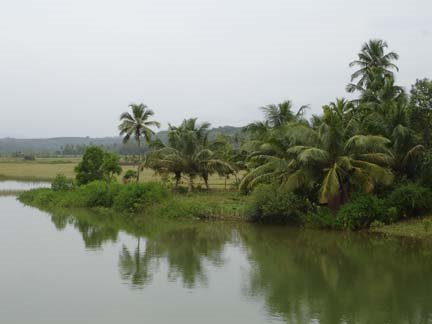
A Coastal estuary

A Coastal estuary
Holegadde near Honavar,Uttara Kannada dist, Karnataka

Copy? Right - but kindly remember to acknowledge!

Creative Commons License
This work is licensed under a Creative Commons Attribution 3.0 License.

" tulu-research.blogspot." ತುಳು ರಿಸರ್ಚ್. ಬ್ಲಾಗ್‌ಸ್ಪಾಟ್‌. ಇನ್

" tulu-research.blogspot."  ತುಳು  ರಿಸರ್ಚ್.  ಬ್ಲಾಗ್‌ಸ್ಪಾಟ್‌. ಇನ್
Have a nice day !