Saturday, December 29, 2007

64. Puraal and Polali


Ancient river course of Gurpur river shown in brown short-dash lines.Present river course in blue shade. Purple double line shows main roads.

Polali is a well-known temple town on the banks of the River Phalguni (also known as River Gurupur). There is a historical temple dedicated to Rajarajeswari, one of the seven forms of Godess Shakti (or one of the Nava Durgis).
1.The place is known as ‘Puraal’ in Tulu.The word Pural means ‘flute’ according to the ‘Tulu Nighantu’.I feel that this word ‘puraal’ is originally from Mugera language ( a member of Early Munda group, since it is also used in some pad-danas connected with Mugera kolas and folk dances.
2. There is also another meaning for the word ‘puraal’, not included in the said Dictionary. It means ‘stale’ or ‘putrid’. (For example: ‘Meen puraal moori barpunDu’ means that the fish smells stale.).
3. But the geomorphology of the area suggests an altogether different view.The puraal town is located on the river bank, where the said river takes a swift and abrupt turn.The Tulu ‘pural’ or ‘purel’ means to change sides.
I believe the original Tulu name of the place ‘Pural’ came on account of the river geometry of Phalguni which takes an abrupt turn.
4.However, the word ‘Polali’ is a Kannada word which means ‘town’.Obviously the Kannada word ‘Polalu’ or the ‘Polali’ must have been introduced by Kannada rulers (Dwarasamudra Ballals or Vijayanagar Kings) in this area.The Kannada rulers must have mis-translated the original name of ‘Pural ‘as pura+al, considering that ‘pura’ in Sanskrit means a town.
The old Kannada word 'Polalu'('Holalu' in modern Kannada) is equivalent of Tulu 'Purelu'.These words puraal and Polalu signify the historical change in the course of River Gurupur.

Friday, December 28, 2007

63.Baikampadi

North of the Mangalore city near the New Mangalore Port is a place called Baikampadi, now occupied by an industrial estate sponsored by the Government. The area is flanked by marshy area of Tokur lying between Baikampadi and Jokatte.Geologically, the area was a paleo-fluvial channel which subsequently diverted by natural processes.
This place is called Baikampadi: a bit odd sounding word.What is the meaning of the word Baikampadi?
Local Tulu people rather funnily describe that Baikampadi stands for ‘Bai+ kanth+padi’, which means ‘bring and put the hay’!
An Old Kannada word
The ‘Baikam’ appears to be an Old Kannada word, meaning ‘beggar’. It is found in ‘Oddaradhane’, an old Kannada classic text of 10th century AD. The’Padi’ is an common Tulu word meaning shrubby land.Therefore Baikampadi possibly means the camping ground reserved for beggars, vagabounds or recluses.
The word appears to have been coined during the reign of Kannada rulers during the Ballal or Vijayanagar period between 10th and 13th centuries AD.

Monday, December 24, 2007

62.Characterization of Spirits of Tulunadu .1

Tulunadu has a tradition of Spirit worship possibly dating back to 700-800 BC coinciding with the immigration of the Early Tulu tribes who introduced the initial cults of Bermer (also pronounced as ‘Birmer’ or ‘Bermeru’) and Panjurli. The subsequent history has seen introduction of a host of Spirits. Tulu communities since early days believed in the personal powers of their community heroes and believed that they continue to roam around after sudden martyred deaths. They believed that worshipping their spirit forms would absolve them of their frailties and ensure protection against adversities like crop failure, famine, diseases etc.
Following the traditions of Tulu oral literature, oral anecdotes pertaining to some of the spirits prevalent among Tulu elder people were gathered and presented here.
The Jarandaya- Bobbariya historical encounter reflects the conflict of egos that plague our society even today.
I wish that our compatriots shall consciously overcome these frailties like clash of egos that lead to meaningless revenges and live a life of mutual understanding, friendship and universal brotherhood.
Jarandaya
‘Jarandaya’ was the ninth son of a Jain King of Barkur. He used to travel along the west coast from Barkur to Nileswar dispensing justice and solving disputes among the general public. He had an assistant (‘banta’) called ‘Koteda Babbu’ also referred to as ‘Kotdabbu’.
Koteda Babbu
Koteda Babbu (means Babbu of the Fort; ‘koTe’=fort) was a talented professional, a fort-building expert, from the Mundala community, who is said to have migrated to Barkur, from the upland Kannada area. He was a sorcerer, expert in witchcraft, water divining and native medicine.
During his sojourns from Barkur to Nileswar, the Jain Prince Jarandaya, used to take Koteda Babbu along with him, as his personal assistant. After sometime, Koteda Babbu voluntarily stopped accompanying Jarandaya as there was some difference of opinion between them.
Bobbariya
Bobbariya was a tall and well-built Muslim trader, who was influential among the fishing community of coastal Kapu area. Bobbariya was born of an alliance between a Muslim father(Sulikall Murave) and a converted Bunt woman(Patima).Born in Goa and grown up in Kochi according to Pad-danas He was engaged in fish trading and was popular in the region among the local Mogaveera community. He was usually associated with a band of dedicated youth probably drawn from the fishing community.
Bobbariya owned a provisions store near the fishing village and was having flourishing business. Gradually, he employed special carpenters from the upland area and commissioned a large boat (‘padavu’) for carrying out sea trade. He had band of sailors consisting of local fishermen and Muslims. Soon he prospered and became a leading figure in the area, on account of flourishing trade through his padvau.
Conflict of egos
Somehow, Bobbariya did not like the interference of Jarandaya, an outsider from Barkur, trespassing into his domain to solve minor local skirmishes. During one of his journeys, Jarandaya was humiliated by Bobbariya, in the Kapu area, especially when his assistant Koteda Babbu was absent. He blocked the path of Jarandaya with the help of his henchmen and asked him to kneel down and pass between his astride legs.
Jaranadya could not stomach the insult and later he consulted his advisor cum assistant Koteda Babbu, on the modus operandi of avenging the insult. Koteda Babbu thought for a while and designed a plan involving another character called Neecha Taniya.
Neecha Taniya
The revenge plan contrived by Koteda Babbu involved using pork and beef to intimidate or flabbergast Bobbariya and his team. ‘Neecha Taniya’, as the name describes (‘neecha’=lower; ‘taniya’=Saturn), was from a lower community who generally do not have inhibitions towards beef or pork.
The Revenge
Neecha Taniya went ahead with the Jarandaya revenge project. He threw cut leg of a pig at Bobbariya who was totally dumb-founded. During this moment of utter confusion, Neecha swished a sword, slashed at Bobbariya and severed one of his legs. Bobbariya, with one of his legs amputed, bled to death.
Tulu Spirits
In Tulunadu, the spirit of Jarandaya is worshipped even today along with his assistant( banta daiva ) Koteda Babbu. Similarly, Bobbariya is worshipped with Neecha Taniya.Mogaveera pattanas invariably have an Bobbariya gunda amidst the colony. Tulu fishermen believe that the spirit of Bobbariya shall protect them in the rough sea and help them get a good catch of fishes.
‘Neechag balsuni’
Many Tulu families traditionally keep aside some food at the beginning of the dinner on all auspicious days, devoted and earmarked to Neecha. They call the custom of serving food to Neecha as ‘Neechag balsuni’.
Treachery
The popularity of Koteda Babbu was not tolerated by his rivals. Some of the upper caste rival soothsayers planed to bump him of. They invited him to inspect a problematic open well at Kanchinadka, near Padubidri. Koteda Babbu descended into the well to verify the problem. By then they covered the opening of the well with stone slabs, with the intention of burying him alive. Somehow, Koteda Babbu realized that he was trapped inside the well and began shouting for help.

Tanni Managa
A local lady of Mugera community, while was passing by, heard the wails from the closed well. She came near the well and slided the slabs covered over the well. She found a person trapped inside the well and felt pity.
Koteda Babbu, trapped inside the well, asked the lady to help him out of the well. But the lady had no appliances to pull him out. Babbu suggested that she lower her sari so that he can hold it and come up. She hesitated, because the poor lady was wearing only a sari, with no other clothes underneath, as was the general custom with poor class women then. But she agreed to save him when Babbu promised that he would not look up at her nakedness.
While ascending up the wall inside the well, Babbu turned his head up to verify how much distance remained to be covered. But the lady was upset. When Koteda Babbu realized that he offended her sensibilities, he slashed his forehead several times with his sword as penance against the error he committed unknowingly.

(Acknowledgement: The oral anecdote data is gathered by Shri K Dinesh Mulki).
®

Sunday, December 23, 2007

61.Native tubers


Ancient tubers
Our ancients ca. 2800-2500 BC were growing assorted tubers according to the archeo-botanical findings discussed in earlier posts.Many of the ancient tubers are on the way to extinction.
The image above shows some of the tubers currently available in an urban market at Mudabidri.1.Sambrani 2.Tevu kande 3.Tuppe kireng('butter tuber') 4.Roma kireng ('Hairy tuber') and 5. Kireng (sweet potato).

Saturday, December 22, 2007

Thursday, December 20, 2007

60. The Original Rama

In a previous post on the legend of Rama, inference was that Ramayana was composed and built around a folk-lore on a tribal hero, specifically a Bhil archer. The hero of the epic, the Rama as well as the compiler of the epic, Valmiki both hailed from the ancient Bhil archer community.
It is generally believed that the name ‘Rama’ is a Sanskrit word. However, the available clues show that the name ‘Rama’or ‘Ram’ also may have been borrowed from the ancient/pre-Sanskrit folklores.
A research paper by Malini Srivastava (2007) on Munda culture and customs describes some interesting Munda customs and festivals. Munda tribes celebrate an annual festival called ‘Karam’. The origin of the ‘Karam’ festival is explained as a simple story that is quite interesting.
There were two brothers known as ‘Karam’ and ‘Dharam’. Dharam did not work whereas Karam worked hard in the agricultural fields, got good crops and became rich. Munda tribes celebrate the victory of Karam over Dharam in the form of a festival called ‘Karam’!

Karam and Dharam
The origin of the ancient ‘Karam’ festival shows some new insight into the nature of Early Munda words. As it is obvious from the story, ‘Karam’ means action or work, whereas ‘Dharam’ stands for philosophy. The ancient Munda anecdote reinstates the evergreen wisdom that work is worship.
These same words Karam and Dharam have subsequently been taken into Sanskrit and, may be, all present Indian languages. Now, both the words have detailed shades of meaning far more complex than the original simple connotations.

Karam-Kadamba
Karam in Munda language also represented a tree called ‘Karam’ or ‘Kaim’. Later this tree was known as Kadamba tree. The Kadamaba tree must have been quite auspicious since early historical days. The royal clan founded by Mayura Sharma at Banavasi (5th century AD) designated themselves as Kadamba dynasty.
Karam is the festival of victory of the farmer (agriculturist), celebrated on the eleventh moon day of the month ‘bhado’(September). A twig of ‘Karam’ (Kadamba) tree is brought and worshipped in the courtyard of the house. Later on the day, young shoots (‘ears’) of grain are distributed among friends and relatives.
This festive custom has been adopted by Tulu people in ‘Posatt’ (‘new crop’ festivity) or the ‘Koral parba’. The impact of the ‘koral parba’ on the regional populace is so deep that it is also celebrated by local Christians, converted from Hinduism. ‘Onam’ (Kerala) and ‘Huttari ‘(Kodagu) are regional variants of this festival.

Ram-Rama
The byproduct of the story is that if ‘Karam’ and ‘Dharam’ are antique words from Munda/Bhil languages, then the word Ram also was derived from the same source.
The existence of ancient Munda personal names like Karam and Dharam suggests that there may have been personal name like Ram or Rama.
®

Saturday, December 15, 2007

59. The less evolved ancient tribes


Some of the Early tribes resisted development and remained in forest phase or hunter-gatherer phase for a prolong time, leading to gaping socio-cultural differences between the evolved and the poorly evolved. These less evolved tribes constitute the scheduled castes and scheduled tribes of present generation.
The District Gazetteer of South Kanara (1973) enlists the following scheduled castes and tribes in Dakshina Kannada (formerly South Canara).
The scheduled castes: (1) AdiAndhra, (2) AdiDravida, (3) AdiKarnataka, (4) Ajila, (5) Arunthathiyar, (6) Baira, (7) Bakuda, (8) Bandi, (9) Bellara/i (10) Chakkaliyan, (11) Chalavadi, (12). Chamar (Muchi), (13) Chandala, (14) Cheruman, (15) Devendra, (16) Kulathan , (17) Godagali, (18) Godda, (19) Gosangi , (20) Holeya , (21) Jaggali, (22) Jambuvulu, (23) Kadaiyan, (24) Kalldi, (25) Karimpalan, (26 ) Koosa, (27) Kuduban, (28) Kuruvan, (29) Madrai, (30) Madiga, (31) Maila, (32)Mala, (33) Mavilan (34) Moger, (35) Mundala, (36) Nalke, (37) Nayadi, (38) Pagadi, (39) Pallan, (40) Pamabada, (41) Panchama, (42) Pannaiandi, (43) Paraiyan, (44) Puthinai Vannan, (45) Rancyar, (46) Samagar, (47) Sambai (48) Sapayi (49) Seman (50) Thoti (51) Tiruvalluvar, (52) Valluven , ( 53) Bathada, (54) Hasti , (55) Paravan.
The following are the scheduled tribes enlisted:
(1)Adiyan, (2) Aranadan (3) Irular (4) Kadar (5) Kammara (6) Kattunayakan (7) Konda kapu (8 ) Konda reddis (9) Koraga (10) Kota (11) Kudiya/ Malekudiya (12 ) Kurichchan (13 ) Kuruman (14) Mahamalasar (15) Malasar (16) Maleya kandi (17 ) Maranthi (18) Mudugar (19) Palliyan (20) Paniyan (21) Pulavan (22) Shologa (23) Toda .
Similar list of tribes exist in the neighbouring Kerala also.( Madhava Menon et al (2002) People of India : Kerala : Volume XXVII.Anthropological Survey of India)

Notes on Early Tribes/languages
1. The ‘Koosa’ tribe may be ‘Kosar’ tribes of Karavali described in the Tamil Sangam literature.

2. The Karavali ‘Bakuda’ and 'Bathuda' tribes may be equivalent/variants of ‘Bathudi’ tribe of Chotanagpur.

3. The ‘Bellari’ language, originally might have been a variant of the Munda language, but apparently changed with time by induction of Tulu words and was later considered as a variant of Tulu rather than Munda.(Refer Manjunath’s post on Bellari). There are several places in Karavali and Karnataka mainland having names such as ‘Bellara’ or ‘Bellari’.

4. Several tribal/sub-language names have remained as place names. These ancient cultural vestiges include Bellara/Bellari, Parenki, Gadaba (Kadaba), Kharawar, etc.

5. Many place names with unknown or unexplainable meanings in the current languages in Karavali and other parts of Karnataka/southern India may have been inherited from the Early Munda substratum language and culture that existed earlier.

The native Early Munda languages prevalent in southern India before ca.800-600BC, appear to have merged with the Early Dravidian and Early Tulu languages. The vestiges of these native languages in southern India are on the way to gradual extinction due to overprinting impact of cultural changes.
®

Blog Archive

Books for Reference

  • A Comparative Study of Tulu Dialects By Dr. Padmanabha Kekunnaya. Govinda Pai Reserach Centre, UDupi. 1994
  • Koti Chennaya: Janapadiya Adhyayana. By Dr. Vamana Nandavar. Hemanshu Prakashana ,Mangalore.2001.
  • Male kudiyaru. Dr B. A.Viveka Rai and D.Yadupathi Gowda, Mangalore University,1996.
  • Mogaveera Samskriti By Venkataraja Punimchattaya. Karnataka Sahitya Academy.1993.
  • Mugeraru:Jananga Janapada Adhyayana. By Dr Abhaya Kumar Kaukradi.Kannada & Culture Directorate,Bangalore & Karnataka Tulu Academy, Mangalore,1997.
  • Puttubalakeya Pad-danagalu. Ed: Dr B.A.Viveka Rai,Yadupati Gowda and Rajashri, Sri Dharmasthala Manjunatheswara Tulu Peeta. Mangalore University.2004
  • Se'erige. Ed:Dr K.Chinnapa Gowda.Madipu Prakashana,Mangalagangotri,2000.
  • Studies in Tuluva History and Culture.by Dr P Gururaja Bhat (1975).Milagres College,Kallinapur,Udupi.
  • Taulava Sanskriti by Dr.B.A.Viveka Rai, Sahyadri Prakashana,Mysore 1977
  • TuLu naaDu-nuDi By Dr.PalthaDi Ramakrishna Achar, Puttur.
  • TuLu NighanTu. (Editor in Chief: Dr U.P.Upadhyaya, Govinda Pai Research Centre,Udupi. Six volumes. 1988 to 1997
  • Tulu Patero-A Philology & Grammar of Tulu Language by Budhananda Shivalli.2004.Mandira Prakashana Mangalore. p.317. (The book is in Tulu Language using Kannada script)
  • TuLunadina ShasanagaLa Sanskritika Adhyayana. By Shaila T. Verma (2002) Jnanodaya Prakashana,Bangalore, p.304.(Kannada)
  • Tuluvala Baliyendre. Compiled by N.A.Sheenappa Hegde,Polali,Sri Devi Prakashana,Parkala,1929/1999

A Coastal estuary

A Coastal estuary
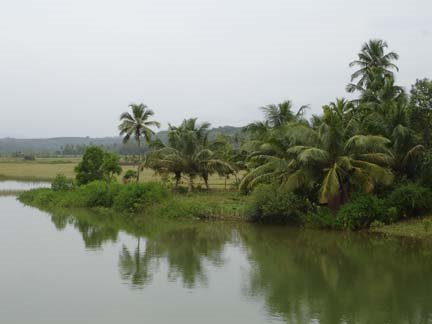
Holegadde near Honavar,Uttara Kannada dist, Karnataka

Copy? Right - but kindly remember to acknowledge!

Creative Commons License
This work is licensed under a Creative Commons Attribution 3.0 License.

" tulu-research.blogspot." ತುಳು ರಿಸರ್ಚ್. ಬ್ಲಾಗ್‌ಸ್ಪಾಟ್‌. ಇನ್

" tulu-research.blogspot."  ತುಳು  ರಿಸರ್ಚ್.  ಬ್ಲಾಗ್‌ಸ್ಪಾಟ್‌. ಇನ್
Have a nice day !