Friday, February 29, 2008

98. Changes in Gurupur River mouth, 1887

A reconstruction of Mangalore, without barrier spit, before the year 1887

Do you know that the barrier spit west of Mangalore city, known as Bengare, was formed by the shifting of Gurupur river mouth, only 120 years ago? The shape of a river is formed by its usual flow channel. Do you have an impression that the present shape (morphology) or the location of flow path of rivers is a permanent feature of landmark? 

Changing river morphology 
The rivers and their shapes are guided by the nature of surrounding landforms and these are bound to change in response to any earth movements. The coastal rivers of India have changed their shapes several times in their life history! The rivers of Tulunadu or coastal Karnataka are not an exception to this rule! Especially the Gurupur River that surrounds Mangalore has changed several times during the last three millennia. 
  Sultan battery 
Interestingly, one such change occurred in 1887 during the British rule of Mangalore. Tippu Sultan conquered Mangalore during the late eighteenth century and built a battery at Mangalore, known as Sultan’s Battery to store ammunitions to be used against invaders from the Sea. The battery was built facing the mouth of or entrance to Gurupur River from the Arabian Sea at that time. (The Mangalore port was near Bokkapatna during the Vijayanagara period). 
  Shifting of River mouth One fine rainy day in the year 1887, the Gurupur River decided to change the way it was flowing into the Sea till then. Instead of flowing into the Sea directly near Tannirbavi, opposite Sultans battery, it changed its fluvial course, flowed straight south towards the mouth of River Nethravathy some five kilometers south and joined the Sea along with Nethravathy. The whole change occurred instantaneously, without advance notice, in response to an earth movement! Thus, consequently a sand spit was newly formed between Mangalore city and the Arabian Sea. 
  Bengare 
And this event occurred in the year 1887.The historical change of river mouth produced a new barrier spit parallel to the coastline, bordering the Sea, now known as Bengare. 
 ® 

Reference: Mangalore City Municipality Centenary Souvenir 1866-1966. An anonymous compiler in the Centenary souvenir of Mangalore city Municipality (1966) has enlisted this notable event, possibly based on an older (British) version of the District gazetteer 

Acknowledgement: Thanks to Shri Sheena Moolya for providing the reference material.

Tuesday, February 26, 2008

97. Siri paDdana : A Tulu Sangham Epic

Antiquity of the Siri paDdana dates back to the period of Tamil Sangham literature. There are several Pali proper nouns in the Siri paDdana that show the backdrop of Buddhism during the composition of the oral epic. Buddhist elements have also been recognized in the environs of Tamil Sangham. The word Sangham (=association) itself is a word associated with Buddhism.
Tulu Sangham
Analogy between the Siri paDdana and the story of Kanaki in Sangham literature suggests that both epics were two different regional versions been built on the same story element. As noted by Peter Claus “there are some tantalizing similarities between the Siri cult and that of Pattini, and also between the Siri legend and that of Kanagi (Pattini)”.The similarity of story element in the Sangham Kanaki and Tulu Siri, leads us to conclude that the composition of Siri paDdana was contemporary of Tamil Sangham literature.
This leads us to visualize a period of an oral tradition of literary association that flourished for some time before Christ in Tulunadu that can be designated as Tulu Sangham. The Tulu Sangham tradition apparently added subsequent sequels in the due course like (a) Abbaga-Daraga and (b) Mayaga-Maipage to the original Siri paDdana by different bards. Minor contradictions in the different sequels possibly point to compositions by different bards at different times.

Sonne and others
Sonne is the name of daughter of Siri, the tragedy heroine. The meaning of Sonne is not zero! Sonna means gold in Pali language. The Hindi Sona and Sanskrit Suvarna are related to this word. Similarly, the proper names like Mayage (<=Mayakka), Maipage (Mayi-page) suggest Buddhist influence during the composition, the Maya(devi) being the name mother of Gautama Buddha. Even,the place names Lokanadu or Lankanadu evince Buddhist flavours. Other proper nouns Gindi (=bronze kettle type of vessel), Abbaga (=constellation of Krittika), Daraga (=constellation of Mrigashira) are not found in common Pali names and may be the usual Tulu female names in usage at that time. The usage of (male) period surnames in the paDdana like Alva, Ballaveru, Marla and Thola needs further analysis.

Chenne, the game
The word chenne is derived from the Pali word that means to relish, but the game and the cult evidently has been imported by the Tulu immigrants. Folklorist Peter Claus concludes that many of the elements found in Tulunad were imported along with the game as sort of historical baggage. The earliest representation of the game in Egypt would suggest that the game originated in the Middle East and traveled along trade routes even before Christ. The game symbolizes intelligence and cunningness and is played among peers. In India and Africa the game is represents rites connected with puberty and marriage.

Bermer
Though Pali words connected with Buddhism make interesting backdrop in the Siri paDdana, the ruling deity is Bermer, the ancient spirit God of Tulu people. The Shiva and Parvathi appear as characters in a sequel of the PaDdana, but there is no indication of their worship. Possibly the Siri PaDdana predates the period of initiation of Shiva worship.
The chief character of the paDdana, the landlord of Satyanapura is also called ‘Berma’ Alva .or ‘Berma’ Ballaveru in a sequel. Initially, he is issueless and the suggestion he gets is that his problem would be resolved if he arranges for the renovation of Bermer shrine.

Time and Tides
This leads us to interpret that Bermer worship was grossly neglected during the ascent of Buddhism in Tulunadu. The initial Buddhism being a religion without Gods, the people neglected the cult of Bermer and spirit worship that was prevalent among them. The bards of Tulu Sangham contemplated to revive the neglected Bermer worship on the wake of ascent and spread of Buddhism in the region. The story of Siri paDdana revolves around adultery and prostitution that was the major concern of thinkers of that period. Apparently, to discourage women pursuing paths of adultery, like their errant husbands, the bards poetically conceived special dignity and powers (to curse or bless) to women following paths of disciplined life.
®

.

Sunday, February 24, 2008

96. Samana-samani-savana

Some more discussion on the words: Samana, Samani and Savani. Hosabettu Viswanath has pointed out the analogy between the words Samani and Savani. He also cited related surnames like Somani among Gujarathis and frequency of proper names like Soman in Kerala. The Wiki on Shramana provides some additional leads on the word.

Shramana
Shramana> SamaNa (Pali, Prakrit) means wandering ascetic. The Shramana ascetic wandering movement was founded by Mahavira and Gautama Buddha. The word was apparently used by Buddhists as well as Jains owing to similarity (asceticism) of their faiths. It is opined that the word Samaņas (wandering monks) were more common during the early phase of Buddhism. The word was less used after the Vihara (Buddhist monasteries) were established and the wondering monks preferred to settle down. Related words like Samanera, Samaneri (=novice Buddhists), Sikhamānā (= Buddhist novice nun) were also used.
The Tulu/Kannada word ShikhamaNi may have been influenced by the Buddhist word Shikamānā.
The word Samanaeans was used by Greek philosopher Porphyry (233-305CE).The word Samanis was related to or influenced by the usage Samanaeans or vice versa. Possibly the word Samani was used for nuns.On the other hand, Jain ascetics earlier were usually known as Nighanta.Tamil Jains call themselves Samanar.

Sravana
The medieval Jains used the word Sravana>Savana more commonly than Samana or Samani. Sravana-belagola is a good example. Savaņur as well as Sāŋur (near Karkala) are derived from the same source.

However, there were no airtight demarcations between the two religions -Buddhism and Jainism-as far as usage of words are concerned as some of the Jain nuns even now have titles like Samani.
®

Saturday, February 23, 2008

95. Chenne or Mangala games

Chenne (or Chenne mane) game was popular in the rural Tulunadu since the time of Siri or even before. It is played on a wooden board with two parallel rows pf pits. The game is played using large seeds of local trees like that of ponge/pongar or coral tree.
Manqala
However this ancient game is not unique or original to Tulunadu. It is played widely in many parts of the world and there are some two hundred or more versions with as many names for the game! Now, they are generally known as Manqala (also spelt as ‘Mancala’) group of games.
Origin
Manqala games have been considered to have originated somewhere in central Africa ca. 5000 BC, according to the evidence gathered by National Geographic sponsored archaeological diggings. The word Manqala is derived from the Arabian root ‘naqala’ that means to move. Some of the names for different variants of the game include Adji-Boto, Adjito, Awale, Awari, Aware, Awele, Bantumi, Bao,Congklak, Dakar, Dao, Dara, Darra, Endovoi, Geshe, Halusa, Jodu, Kalaha, Kalah, Kale, Kalle, Lamlameta Mangala, Mandoli, Omweso,Oware, Ot-Tsjin, Solo, Songo Duala, Vai Lung Thlan, Wari, Warri,Wouri etc.
Mangala
A variant of the game played in Turkey is known as ‘Mangala’! Also note, for the sake of curiosity, that it is also called Kalah in parts of Africa. The word ‘kalah’ has shades of resemblance to the Tulu word ‘kala’ (=field).
A wealth of data is available on the internet on Manqala group of traditional games. Also a number of modified and modernized versions of the games ahave been evolved to suit the modern tastes.
Immigration
The game variant ‘Lamlameta’ played in Ethiopia is quite similar to Tulu game of Chenne (Cenne) according to Peter Claus.
The antiquity and distribution of the Manqala group of games and their similarity to the ancient Tulu game of Chenne, clearly suggest that the game concept originally evolved in Africa-Mediterranean region was brought to Tulunadu by early Tulu immigrants, possibly corresponding with the broad period of immigration ca. 750-500BC as discussed in the early posts in this blog.
®

Thursday, February 21, 2008

94. Antiquity of Siri

The living oral ballads in Tulu language known popularly as paDdanas are unwritten ancient documents that evolved along with the Tulu people, culture and language over a prolonged period of time. They not only reflect the poetic emotive talents of our ancestors, but are also mirrors of the changing culture, values and ethos of our people.

Evolved paDdanas
But the paDdanas that survived amidst us at present are the intensely evolved versions. Since paDdana are orally transmitted folk ballads generation to generation, it is logical to expect modifications over the years reflective of the environmental perspectives of the person reciting it. In the current digital parlance, they can be compared to the Microsoft Windows Vista or the Adobe Photoshop CS3. I take the liberty of this odd comparison just to convince you the difficulty of visualizing and reconstructing the earliest version of paD-danas using the current versions. And given the prolonged evolutionary history Tulu people incurred the oldest, original form of any paDdana is nebulous to decipher. Still there are some glowing indices in the current versions of paDdanas that through light on their antiquity and overall Tulu cultural evolution.

Ancient Siri paDdana
The evidences discussed below permit me to propose that the original version of the Tulu paDdana on Siri may have been orally composed during ca. 300 BC or earlier.

1.Satyanapura
The first proof: King Ashoka’s Girnar rock edict in Pali language (ca.300 BC) describes a southern State of ‘Satiyaputto’ that can be translated as Satyapura. The name of the palace in the Siri paDdana, Satyanapura is akin to Satyapura or Sati(y)aputto.
Now there are no towns having the name of Satyanapura in Tulunadu. However, it can be presumed that ‘Satyanapura’(.>Satiaputo) was a prominent Tulu City-State during the period of King Ashoka.

2.Siri -A Pali word
Second proof of the antiquity of Siri is the word itself. Siri is the heroine of the Siri paDdana. The name Siri is not commonly used name for present day Tulu females.
The word ‘Siri’ exists in Tulu language and it means tender leafy shoot of a plant like coconut palm. In Pali language the word Siri represented the Godess of luck.There is some parallelism between the two meanings: (1) tender shoot (Tulu) and (2).luck (Pali). The growth of tender shoot (Siri) is perceived as lucky.
Normally, we are taught in schools that the word ‘Siri’ is the derivative (‘tatbhava’) of the Sanskrit word ‘Shri’. But this is questionable and the truth may be the other way round, since the mythology of Lord Vishnu and his wife Shri (Lakshmi) evolved as late as 500BC or still later. The Pali and related Prakrit language existed before Vedas and it can be considered logically that Sanskrit (= refined) was a refined, evolved language after the older Prakrit (=natural) language. Since, it can be established that religious cults have borrowed from each other, it can be proposed that ‘Siri’, the Godess of luck of early Buddhist period, eventually evolved into ‘Shri’, the Godess of wealth.
To summarize: Siri.> Shri.
Thus the Pali word ‘Siri’ in the said PaDdana displays unmistakable shadows of early Buddhism in the early Tulu history dating back to ca.300 BC.

3. Ancient cult of Possession.
Third proof for the antiquity of the original Siri paDdana is the persistence of the ancient cult of possession attached to the Siri festivals.
The annual celebration of Siri festival is quite unique and unlike other kola, nema etc celebrations associated with other Tulu spirits. It is a celebration of the ancient art of trances or possessions. This cult was prevalent during the early history of the southern India and is well documented in Tamil Sangham literature that is estimated to have been compiled between the periods ca.200BC to 200AD.George Hart discusses some aspects of the cult of possessions described in Sangham literature.

4. Chenne mane: An ancient game
Peter Claus reports that Chenne Mane, a rural game associated with the Siri cult (or Mancala game as known in other parts of India and Srilanka) is known to have been played by rural folks since ca.200 BC. The game is prevalent in parts of Africa and Middle East, a fact suggestive of origin of the game in Africa-Mediterranean region. The game may have been brought to Tulunadu by the Early Tulu immigrants.

Evidently, the Siri paDdana has evolved extensively since its inception during early years of Buddhism in Tulunadu. The implicit indications of Jainism attached to it in the current versions of Tulu Siri paDdana are only reflective of the theological evolutions in the Tulunadu with the passage of times.
®

Wednesday, February 20, 2008

93. Pedestrian journeys

In the olden days walking was an essential part of life. Now it has been reduced to a dignified exercise designed to burn the extra calories we tend to accumulate.
It can be hardly believed now that most of the human migrations in the history were covered on foot. Here is an example of Natha ‘Zhundi’ to remind us how our ancestors covered long distances by walk systematically over a prolonged period.
Natha Zhundi
The Kumbha Mela at Triambakesvar (now, Maharastra) recurs once in every twelve years. Twelve regional heads of Natha (Barapanth) monks assemble at Triambakesvar during the Mela and customarily elect the Natha monk to head Kadire Jogi Mutt for the next duration of twelve years. Following the selection, a ritual holy vessel (the ‘patra devata’) is handed over to the newly elected chief of Kadire Matt and a troupe of some 600 to 700 Natha monks used to commence their long pedestrian journey from Triambakesvar to Kadire in Mangalore, a distance of about 1150 kilometers.
The pedestrian troupe covers the distance in about six month time. They halt and rest in some 78 places before reaching the destination,Kadire. Jogi Ananda Nath (2003) describes the 'Zhundi' and lists the rest points between Triambakesvar and Kadire as follows: 1.Nasik 2.Saikheda 3.Sinnar 4.Drodibudrak 5.Nadursigot 6. Sangamner 7.Haibargaon 8.Chandanapuri 9.Dolsa 10.Dhargaon 11.Peepalbandi.12.Gunjalvadi. 13.Arti. 14.Savargaon. 15.Paunda. 16. Chincholi. 17.Khilarwadi. 18.Mahalunge. 19.Badagaon..20.Manchar. 21.Khedagaon 22.Chakan 23.Mosi 24.Bhosari 25.Pune 26.Aranyesvar 27.Bairavanala 28.Hadapsara 29.Sasvad 30.Bhivandi 31.Kikvi 32.Sivale 33.Buij 34.Udthara 35.Satara 36.Koregaon 37.Kumata 38.Rahimathpur 39. Ogalewadi. 40.Karad. 41.Vadagaon..42.Macchendragad..43.Islampur. 44.Retaredharan..45.Battis Sirala 46.Mangalegaon. 47.Mohuregaon. 48.Kollapur .49.Gandhinagar. 50.Kagal. 51.Nippani. 52.Sankeswar. 53.Belgaum depot. 54.Belgaum city.55.Khanapur. 56.Donagregaon.57.Kharola.58.Balevadi.59.Londa. 60.Handibadanga..61. Nagargali. 62.Godagiri. 63.Mangalvad. 64.Haliyal. 65.Keralkatte. 66.Sambarani. 67.Yellapura. 68.Manchagiri. 69.Sirsi. 70.Chandragutti.71.Sagara. 72.Hosanagara. 73.Nagara. 74.Halavari. 75.Barkur. 76.Udupi. 77.Mulki. 78. Panambur.

Consistent long pedestrian journeys were a common feature in the historical past.
®

Tuesday, February 19, 2008

92. Avalokitesvara @ Kadire


The charming bronze idol in the Kadire Manjunatha temple represents the Avalokitesvara (or Lokeswara), a former Bodhisatva, who was considered as embodiment of compassion and an incarnation of Buddha during the Tenth century CE.
In Nepal, Macchendra Nath is being worshipped as an incarnation of Avalokitesvara, a form of Buddha modeled after Shiva. It appears that Alupe King Kundavarma installed the bronze idol during ca.968-1068 CE posthumously in honour of Macchendra Nath whose cult was absorbed into Vajrayana Buddhism and was worshipped as Avalokitesvara in Nepal and other areas. The date of installation of the idol written in the inscription at the bottom of the idol has been interpreted as 968 CE by Dr. Gururaja Bhat, whereas Manjeswara Govinda Pai reinterpreted the date as 1068 CE.
The idol reflects the art of bronze casting that was perfected in Tamilnadu during the Chola period of ca.850-1150 CE. The bronze might have been cast in situ at Kadire or brought from the Chola kingdom.
Macchendra Natha
A chronological recapitulation: Macchendra Natha, a disciple of Adinatha, who founded the Shaiva Natha cult, a school of Hatha Yoga, came from Chandragiri in Bengal to Kadire by walk around the early tenth century CE, with his disciple Gorakh Natha and settled near the Buddhist monastery known as Kadarika Vihar, near Kadire, in Mangalapura. Natha historians claim that Macchendra and Gorakh along with some of their contemporaries discovered the Kundalini system of Yoga which was advancement over the older Patanjali Yoga. The Jogis of Natha cult are known for traveling widely all over the country. Natha cult was practiced by ‘split-ear mendicants’ who wore large circular rings in their ears.(Victor M Fic, 2003) Macchendra also founded the Kaula cult at Triambakeswar, in present Maharastra. During the Tenth century Karnataka, according to Kavi-raja-marga, is said to have spread from River Kavery to River Godavary, encompassing the present Maharastra.
After his death, the Natha cult of Macchendra was absorbed into Vajrayana Buddhism, which was also known for experiments in Tantra. The Natha cult also influenced the Baula cult (Sufism). Jnaneswar or Jnanadeva (b.1275 – d.1296 CE) was a disciple of Natha cult, but later his disciples founded the Warakari cult

Manju Natha
Macchendra while at Kadire installed a memorial stone in memory of his departed son Manju Natha in the tradition of spirit worship that was vogue in the region. The selection of the name ‘Manju’ shows combined influence of native Tulu word ‘manji’ (=dew, snow, fog) and Buddhist Pali word ‘manju’(=beautiful, charming).Following Macchendra’s incarnation as Avalokitesvara, the Manju Natha was regarded as incarnation of Manjusri, the Buddha of Wisdom, or Buddhist equivalent of Lord Brahma of Hindu pantheon. A bronze idol of Manjusri was installed. The township around the temple was designated Manjarur. The name Manjarur has been recorded by Arabian travelers like Ibn Battuta during 1342 CE.
Manjunatha
With passage of time the native spirit worship was absorbed into the mainstream Hinduism and Manjunatha was regarded as a form of Lord Shiva. The Manjunatha temple is estimated to have been built around 14th century CE by Dr. Gururaja Bhat.

Thus Kadire Manjunatha temple is a window to the theological heritage of Mangalore, a convergence of cascading transitions of overlapping religious cults of Buddhist, Natha, Spirit and Shaiva traditions.
®

Blog Archive

Books for Reference

  • A Comparative Study of Tulu Dialects By Dr. Padmanabha Kekunnaya. Govinda Pai Reserach Centre, UDupi. 1994
  • Koti Chennaya: Janapadiya Adhyayana. By Dr. Vamana Nandavar. Hemanshu Prakashana ,Mangalore.2001.
  • Male kudiyaru. Dr B. A.Viveka Rai and D.Yadupathi Gowda, Mangalore University,1996.
  • Mogaveera Samskriti By Venkataraja Punimchattaya. Karnataka Sahitya Academy.1993.
  • Mugeraru:Jananga Janapada Adhyayana. By Dr Abhaya Kumar Kaukradi.Kannada & Culture Directorate,Bangalore & Karnataka Tulu Academy, Mangalore,1997.
  • Puttubalakeya Pad-danagalu. Ed: Dr B.A.Viveka Rai,Yadupati Gowda and Rajashri, Sri Dharmasthala Manjunatheswara Tulu Peeta. Mangalore University.2004
  • Se'erige. Ed:Dr K.Chinnapa Gowda.Madipu Prakashana,Mangalagangotri,2000.
  • Studies in Tuluva History and Culture.by Dr P Gururaja Bhat (1975).Milagres College,Kallinapur,Udupi.
  • Taulava Sanskriti by Dr.B.A.Viveka Rai, Sahyadri Prakashana,Mysore 1977
  • TuLu naaDu-nuDi By Dr.PalthaDi Ramakrishna Achar, Puttur.
  • TuLu NighanTu. (Editor in Chief: Dr U.P.Upadhyaya, Govinda Pai Research Centre,Udupi. Six volumes. 1988 to 1997
  • Tulu Patero-A Philology & Grammar of Tulu Language by Budhananda Shivalli.2004.Mandira Prakashana Mangalore. p.317. (The book is in Tulu Language using Kannada script)
  • TuLunadina ShasanagaLa Sanskritika Adhyayana. By Shaila T. Verma (2002) Jnanodaya Prakashana,Bangalore, p.304.(Kannada)
  • Tuluvala Baliyendre. Compiled by N.A.Sheenappa Hegde,Polali,Sri Devi Prakashana,Parkala,1929/1999

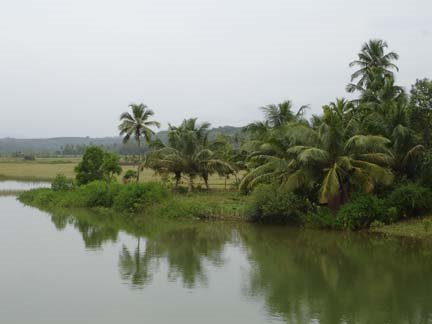
A Coastal estuary

A Coastal estuary
Holegadde near Honavar,Uttara Kannada dist, Karnataka

Copy? Right - but kindly remember to acknowledge!

Creative Commons License
This work is licensed under a Creative Commons Attribution 3.0 License.

" tulu-research.blogspot." ತುಳು ರಿಸರ್ಚ್. ಬ್ಲಾಗ್‌ಸ್ಪಾಟ್‌. ಇನ್

" tulu-research.blogspot."  ತುಳು  ರಿಸರ್ಚ್.  ಬ್ಲಾಗ್‌ಸ್ಪಾಟ್‌. ಇನ್
Have a nice day !