Tuesday, March 30, 2010

234. Padavu and PaDavu


While browsing through the old village maps of Mangalore, I happened to notice that the revenue village map encompassing present day Kulashekar, Shaktinagar,Kadri Padavu, Bikarnakatte etc area, was titled in Kannada as ‘PaDavu’. (‘D’ pronounced as in ‘dog’). The exact word ‘PaDavu’ could be recognized as ‘D’ is distinguished distinctly from ‘d’ in Kannada script. The village maps originally drafted / printed in the year 1893 contain old and original village names used during that period.
The word ‘PaDavu’ is not in current usage as a place name as it has been replaced by similar and generalized word ‘Padavu’('d' pronounced as 'the'). Even the mighty 'Tulu Nighantu', has not cited the word as a geographical indicator or place name.
Let us discuss the two geographical terms ‘padavu’ and ‘paDavu’ that are contrastingly different in meaning.
PaDavu
The Tulu Nighantu (=Tulu Lexicon) (vol 5, p.1896) describes the word paDavu’ under two heads: (1) large merchant boat or ship; also known as ‘pānDi’ and (2) oil storing utensil/ vessel. It can be seen both the above meanings are mutually related and based on the bowl like shape of the structure or the ‘container’ aspect.
However the Lexicon has inadvertently omitted the original word ‘paDavu’ which carries a geographical description. The word can be analyzed as follows:
‘paDa’ (=sunken, fallen, or depressed land)+’vu’ or ‘va’ (a spatial suffix)
Hence, ‘paDavu’= sunken land or depression; a bowl like structure or valley zone.
The word ‘paDa’ or ‘paDu’ or ‘paDDāyi’ (= western direction) is employed in Tulu (and other related Dravidian languages) as equivalent word to signify Western direction. The word ‘paDu’ appears to have been coined in west coast of India, where the western side (Coastal Karavali) is lower in elevation compared to the east (Sahyadri ranges or Western Ghats).
Padavu
The geographical indicator ‘paDavu’ is almost lost in current usage, because of confusion and replacement by another word ‘padavu’.
In current Tulu usage ‘padavu’ is used in the sense of plateau or elevated planar area.
In Christian Konkani the equivalent word is ‘pāduva’. (For example, Pāduva high school).It would be interesting to explore whether the Konkani word ‘pāduva’ was adapted form of ‘padavu’ or directly borrowed from a similar sounding Prakrit word.
Thus it appears that the word was originally ‘pāda +vu. It is possible that ‘pada’ is derived from or related to the word ‘pāda’, wherein, pāda= rocky hill. (Tulu word ‘paāde’ represents rock.).
However, the word ‘pada’ also represents higher level, elevation or grade. And thus, ‘padavu’ means an area of higher elevation or plateau. It is interesting here to note that Sanskrit word ‘padavi’ also means higher grade or honours.
It may not be surprising if the Sanskrit word ‘padavi’ was derived from or related to the ancient word ‘padavu’.However, H.Vishwanath opines that the word 'padavi' is derived from root 'pat' or 'pada' (i.e. foot) Padavi means stepped up position, rank. So Sanskrit 'Padavi' is not dervied from the word Padavu or Padavu.


Pada and Sira
While reviewing the words above, it may be pointed out that the words ‘pāde’ (=rock bed) and pāda (=foot; later, an unit) / ‘pada’(=a step, an unit, a word etc) apparently are related in derivation. Similarly the words ‘Sira’ (=peak, of rock; Sun, Light, supreme power, heaven, wealth etc) and ‘shira’ (=head) are related. The allusion of natural objects and forces , probably later, to parts of human body, like  foot and head makes an interesting study.
®

Saturday, March 20, 2010

233. Panjurli

The cult of Panjurli, the boar spirit, is a time tested icon of the early stages in the psyche and evolution of human tribes in this land. Early tribes trusted in supernatural forces that apparently controlled the good and bad conditions of their lives. They considered that a good, comfortable and secure life is the result of blessing of the deity and conversely believed that life gets upset when the deity curses.
The evolutionary transition of tribes from forest to agricultural phases some five to seven millennia ago also laid foundation for initiation of new cults among the tribes. A Wild boar that destroyed early farmers crop became a source of awe and irritation. The boar destroyed some crops and the affected person considered that it was the curse of the deity.This could be the origin of the cult among the tribes. However, it can be seen that successive theological cults absorbed and assimilated the essence of Panjurli cult. For example, the Varaha (=boar)incarnation of Maha Vishnu is a concept based on Panjurli or its equivalent cult. Kings of Kadamba dynasty,based in Banavasi region, upheld the boar cult as seen by naming of the river as Varaahi. Similarly, Vijayanagar Kings held Varaha, the boar, as their royal insignia.

PaDdanas (=oral epic poems), trickling down through ages, are only the sources of past history in the form of recitation of anecdotes. Variation is noticeable in these paDdanas from place to place and also in length, adapted to a particular performance during annual festivals.

Oral songs and ballads (kabitas and paDdanas) are sung during annual festivals and during day to day activities, viz tilling, seedling and harvesting in paddy fields, peeling areca nuts, function of ‘madarengi’ (henna tattooing custom) on the eve of marriage, tapping toddy, and as pastime during leisure.

Panjurli

Vedic scriptures make a division of Aryans and Non-Aryans, who are shown in poor light. Scholars now say that they were of one and the same race with common culture and languages and were dependent on each other. The division of Bharatvarsha as ‘Uttarapath’ and ‘Dakshinapath’ (also known as Aryavarta and Dravidavarta) was a regional one with ‘Vindhya Ranges’ standing in the middle as a divider. Dravidapath or Dravidavarta is so called, as it is a peninsula, encircled by three seas. This is vindicated by the great Philosopher Shankaracharya of 8th Century from South, while replying Mandana Mishra’s question, “Who is he?” Myth of Aryan and Dravidian Races, which is a concept nurtured by colonialists, continues still.

Tulu traditions and orature (=oral+ literature), as a part of Dravidian culture relate to social, political and religious psyche of Tulunadu, located between Western (Sayhadri) Ghats on the East and Arabian Sea on the West. Tulunadu is an epitome of peaceful co-existence. All regions thrived in Tulunadu. Hinduism (with Vedic Gods and later on Mother Goddess, Shiva and Vishnu
Taking center stage), Buddhism (later on absorbed into Shaiva cult) and Jainism are naturally evolved into socio-religious order. Islam and Christianity took root in India under political considerations and coercion. There is a synchronization of Daivas (deified living legends or heroes of Past, including Muslims) and Vedic Gods and Goddesses. They are worshipped as personalized, Community and Group of Villages (Maagane) Gods and Godheads in shrines and temples. This is unique to Tulunadu. The peaceful living is manifest in precedence and sequences of annual festivals/celebrations in shrines and temples. The meeting of deities takes place(in the form of possessed impersonators) of one temple, where the annual festivals (āyana , teru, kola or nema) have just concluded, is the mark of starting (‘kodi erunu’, meaning raising of temple flag) and permitting of annual festivals in an adjacent village. This meeting takes at the periphery of latter temple.

The Divine Spirits are classified in three categories, firstly ‘Ullaya or Chakravarti’ (i.e Lord of Lords, considered as manifestation of Devi, Shiva and Vishnu); secondly, Rajan (considered as Kings, who lived before deification after death) and thirdly, 'Kamberlu' (Danda nayakas or Chieftains). Firstly, these Daivas manifest themselves, through a medium, in the palace of their kingdom or house of their birth when alive and are worshipped in these places, called ‘moolada mane’ (place of origin), and they are believed in other places also as their devotees are spread. Here is a case of direct contact, though through medium, with the deities. This speaks a volume how the custom of ‘Daivaradhane’ (=Spirit Worship) took root in Tulunadu (as also in adjoining Kerala with migration of certain ‘Daivas’ (also called ‘Bhootas’) to Kerala and vice versa. (Note: In Kerala, this Spirit worshipping is called ‘Theyyam’. Refer article by Dr. U.P. Upadhyaya in ‘Taranga’, a Kannada Weekly, March 4, 2010 Issue).

Significant ‘Rajan Daivas’ are: (1) Jumadhi (Sanskritised as Dhumavati), believed to be reincarnation of Aadi Shakti (Mother Goddess), (2) Jarandaya, supposed to be the reincarnation of Shiva or Dharmaraja and (3) Babbarya or Bobbarya [supposed to be the reincarnation of Shastara and born to a Mogaveera woman as Babbana at Mulki (See ‘Babbana Babbarye’ in Mogaveera January 2009 Issue, written by Narayana A. Bangera). (The other version says, he is born to a Bunt woman and a Muslim trader)

Panjurli Daiva is assistant to Rajan Daivas, as cited above, as 'Kshetrapala' (Guardian of the area), in maintaining justice and peace in the places where he is believed and worshipped. He has got seven manifestations. He is the Divine Spirit, who sits in judgement on the conduct of members of a family, village and cluster of villages. Hence he is known by different names. In South of Tulunadu, he is known as ‘Annappa Panjurli’ at Dharmasthala, in the North he protects the borders as ‘Tembikalla Panjurli’, in the East, he is worshipped as Kuppettu Panjurli, in the West he is known as ‘Bolada Panjurli’, and at individual Tuluva households he is known by simple name of ‘Panjurli’. His adventures while guarding and protecting the borders of Tulunadu and benevolence on oblating devotees are legendary.

Dr. B.A. Viveka Rai writes his impressions in “Epics in the Oral Genre System of Tulunadu” as follows:
“Interestingly, in one version, the narrative about the genesis of Panjurli is made to include even the Vedic gods, as Vishnu’s sweat is transformed into Panjurli. Likewise, Shiva has been depicted as a character possessing the qualities of both the deity and a village farmer.
More than ten paddanas exist that give an account of the adventures of Panjurli bhuta and thereby its dissemination in the Tuluva region. All of the episodes substantiate the supremacy of Panjurli bhuta and the reasons for its worship in different places. With its magical power Panjurli causes buffaloes tethered to a jackfruit tree to vanish, momentarily blinds the priest who carried the god in procession at Dharmasthala, makes the elephant of the Kepaadi temple fall sick, does the same to the cattle at Kalle beedu, kills the two wives of Hebri Ballala, and so on.
Thus it is that Panjurli bhuta exhibits its supreme power through an array of magical deeds. The people who are affected approach the soothsayer, who with the help of magical objects discovers the reason for the disaster, namely, Panjurli’s miracle. The remedy for the calamity is also provided by the soothsayer: he suggests that a shrine should be built for Panjurli and a festival performed. The people act accordingly and are saved from the disaster. These same incidents, with some variation in the manifestation of the calamity, are repeated in neighboring places. Thus Panjurli is worshipped in different places for different reasons, all concerned with untoward events involving the people, their crops, and their
cattle.”
The word: Panjurli
‘Panjurli’ as per tradition means ‘Panji kurle or kurli, i.e. a wild boar’s offspring. This offspring was created by Lord Shiva and was cursed by Goddess Parvati for his misdeeds of destroying her ‘kadalivana’ (=banana grove). The curse is mitigated by ordaining him to be born on Earth as a Divine Spirit to protect and uplift the masses from evil to good. There is another version in Bappanadu Kshetra Mahatme that he was born out of sweat of Hanuman, which fell into the ocean while carrying the mountain bearing the Sanjivani herbs.
Panjurli (Panji+urli) is a compound word wherein Panji = wild boar is clear. The exact meaning and source of 'Urli' here is baffling and is to be recognised.
‘Uri’ has the meaning of angry, savage, wild, ferocious and fierce, as we can understand in Ugra Narasimha or Uri Brahma (Uri Brahma is one of the Daivas, worshipped in Athur Bailu Mahalingeshwar Temple). The suffix ‘li’ generally represents ‘animal’ or ‘bird’, as we find in ‘pili (=tiger), ‘palli (=lizard), ‘eli’ (=rat) and ‘gili’ (=parrot), etc.
What makes it clear is that Panjurli means: an Ugra (=violent) Panji (=boar), a deity with abilities to punish for the evil deeds and bless the good. Overall, the word 'Panjurli' means a wild boar.
Uruli
There is a place in Pune District, named 'Uruli'. One part of it is called ‘Uruli Devachi', which is famous for Mahatma Gandhi Naturopathy Foundation. This place is always in news these days because of villagers’ agitation against dumping of garbage by Pune Municipal Corporation and recurrence of fire at dumping sites owing to summer heat. The other village is called Uruli Kanchan and has a railway station by that name. This word ‘Uruli’ is fascinating as it is akin to our Uruli in Tulu. This word reminds me ‘Panjurli’, a Divine Spirit, worshipped in Tulunadu and enkindles my quest for exact meaning of ‘urli’ in ‘Punjurli’

J.T Molesworth's Marathi-English Online dictionary provides the following meanings for the word 'Urli':

1) Borders or skirts or purlieus.
2) Curling or entangling (as in cloth threading)
3) Gurgling, rippling of whirling brook, purling
4) A stanchion, purlin, etc.
5) suspicious, jealous, malignant, grudge-bearing, morose, sulky, churlish.

Uruli in Tulu

This interesting Tulu word 'Uruli or Urli' is a bell metal vessel. This process of alloy making involves mixing and rolling. The utensil rolls over or tumbles down because of its round shape. Rice, cooked in this vessel, is offered to God as 'Naivedya' (Oblation) in temples (See Tulu Lexicon). Tumblers, made of brass or bronze, are also called as 'uruli or urli'. They tumble down because of its round shape, tapering at the bottom. Such tumblers are not used these days. One, who is now between 40 and above, must have eaten in trays made of bell-metal (Pitteleda battalu) and drunk water in ‘urlis’ in one’s childhood. Tulu villagers know these utensil-objects, which are now part of antiquity. Steel glass (without rim) has taken the place of brass/bell metal ‘urli’.


Panjurli and Varthe


The cult of Panjurli appears to be as old as the beginning of agricultural phase of human civilization,probably it dates back to 3000 BC or older.
The cult of Panjurli appears to have been rejuvenated around 4th Century CE during the uprise of Kadamba regime.As you know, Sanskritization was the order of the day at that period.The age old Spirit of Panjurli became Varaha and was moulded as one of the incarnation of Lord Vishnu!
Besides, the incidental information suggests that Panjurli was worshipped in female form during the Kadamba regime. It was known as Varahi. One of the rivers flowing in the Banavasi(Kadamba Kingdom)-to Kundapura region was named as Varahi! Further, it appears that the people began to worship Varahi as "Varah(i)ti" . The ti or thi suffix is indicative of female forms, as you know, from examples like gowdti,ullalti, etc.In due course, Varahti became Varti or Varte!
So there were two forms(avtars) for the same cult!There were people who worshipped both the forms together.
This has lead to the confusion of relationships between the two forms. Some people think that Panjurli and Varthe area brother and sister while others argue that they are husband and wife. It can be opined that this can resolved by considering that Panjurli and Varthe are the two forms of a single Spirit power.


**


Panjurli is a powerful Divine Spirit. He is considered to be intolerant to feuds and disharmony in a family, in a village or between villages and becomes vengeful when devotees commit mistakes. So, Marathi meaning of ‘urli ‘(i.e. suspicious, jealous, malignant, grudge-bearing, morose, sulky, churlish etc) seems relevant.

Our academic interest is limited to theoretical analysis of the word without any disrespect to the Deity or the believers. Bear in mind, there may be no connection between Uruli/ Urli of Pune District to Urli in Panjurli. It only provoked us to search for possible meaning of the word.

-By H. Vishwanath & Ravi

Wednesday, March 10, 2010

232. Evolution of Word structure

-->
          
-->
It appears that the words evolved from very simple to complex during the prolonged course of human evolution. This pattern of evolution of simple to complex sequence of word structure can be recognized in the Dravidian substrata in southern India. Since the primitive sounding simple, short words with simplistic CV (C=consonant, V=vowel) linguistic structure is not found in Dravidian languages at present, we can assign these to older and primitive stages of word evolution. Present status of Dravidian languages display at least two older generations of languages recognizable in their lingual substrata. Of these, vestiges of Munda languages can be recognized as an immediate layer under the Dravidian as evident in the numerous place names of Tulunadu and related Tulu words.
Many of the tribal languages classified as Dravidian at present (for example Toda, Gondi etc) appear to have undergone similar evolution from their original primitive state. The present Dravidian linguistic structure of these languages may actually be an evolutionary feature derived and adapted during the course of passage of historical time.
Munnur = Munda
One example can be given here for illustrating the nature of lingual transition and   pattern of evolution   the languages have undergone in this land by preferentially absorbing some of the words from prior cultures and at the same time preferentially replacing some of the older words by equivalent words available in the new language.
Can you imagine that the place name ‘Munnur’ is a chronologically later replacement of the older place name Munda? There are at least two villages on the southern bank of River Nethravati   known by the name of Munnur. The evolution of the word ‘Munnur’ as a replacement for the older word ‘Munda’ is interesting. [Munnur, here  is not ‘three hundred’ as some may like to misinterpret.] The word ‘Munnur’ means a village on the bank of river. In fact, the older word ‘Munda’ also meant the same.
In the Munda language, Munda= Mun+Da.  Mun= front, face, flank etc. Di=water, river.  Da=area or place beside water. Thus the original meaning of the word Munda is a village. Subsequently the word was applied to village head or leader of the village.
Thus, Munda ‘Da’= Dravidian   ‘ur’.
Therefore, Mun+Da =Mun(n)+ur.
In the word Munnur, the prefix ‘mun’ (from Munda language) is retained but the suffix ‘-Da’ has been replaced by the equivalent Dravidian word ‘-ur’. The suffix ‘ur’ is a common   Dravidian word, considered to have been brought initially by the Mediterranean immigrants into southern India. In fact Ur was the name of a famous city in the ancient Sumerian history. The word ‘ur’ or ‘oor’   denotes   a village or a town.
This kind of word replacement (for example, ‘Da’ to ‘ur’) during the past history can be visualized,  when there was a change in the dominance of ambient language and culture from Munda to Dravidian and accordingly social preference for Dravidian words instead of Munda .
In this case, also note that the prefix ‘mun’ from Munda language is retained (and absorbed by Dravidian) and only suffix ‘ur’ has been replaced for ‘Da’.
This simple transition from ‘Da’ to ‘ur’ possibly represents a major but smoother transition of languages from Munda to Dravidian in Tulunadu and southern India. The transition can be described as smoother because some of the words such as ‘mun’ were retained and absorbed and adopted by the Dravidian.
The Munda word ‘mun’ has been aptly adapted and extensively used in Dravidian languages. ‘Munnade’ (= go forward), ‘munnota’ ( =preview), ‘munde’ (=front), ‘moNe’ (=face), ‘mundalu’ ( =leader), ‘munjane’ (=morning) etc.
[Note: The term "Munda" in general was applied to a group leader of Munda tribes or even to a young male as in Punjabi.]
Mogaru
In fact the word ‘moga’(=face), appears to have been directly related to ‘mu’ and ‘mun’. The word ‘moga’ also means flank of a river or river plain, similar to the word ‘mun’. Thus, the word ‘mogaru’ has come into being ; moga (=river flank or face) + aru (=open area).In that sense, the word ‘mogaru’ is equivalent of the words ‘munda’ and ‘Munnur’. Further, the tribals dwelling in ‘mogaru’ were designated as ‘mogera’.
Mu
While reviewing the word ‘mun’ we can also see that it contains an ancient root word ‘mu’.  We have   described in earlier posts that Tulu language has several such simple, primitive words consisting of a single consonant and a vowel.  There are ample evidences in Tulu place names to confirm that these simple words were not mere roots but were independent words to begin with. At this juncture we are not sure as to which language these words originally belonged to. But we are aware that these primitive words were seamlessly adopted and integrated into their words by the later languages like Dravidian. Munda words in southern India evolved on the platform of a still older language tentatively termed as ‘Indica’:
Behind the evolution of the word   ‘mun’   we can recognize a root of a primitive word ‘mu’
Mu=nose.
Mu= (1) river flank, nose of a river? (2) fertile.(as in ‘mudara’). River plains are a fertile land for agriculture.
The primitive word ‘mu’ has been integrated in several compound words which serve as common words in current Dravidian languages. Note some of the examples here:
Mu+N = mun (=front area, face,).
Mu+Ne=’moNe’(=front area or face). In   Tulu language.
Mu+Da= front area, sun rising area, East.
Etc.
NāDa=Navur
The example cited for the transition of Da.>ur discussed above is also noticeable  in the transition of words ‘NāDa’ to ‘Navur’. There are a few villages known as ‘NaDa’ or ‘NāDa’ in Dakshina Kannada. NāDa (or NāDu) is Nā (=cultivated) +Da (=area).The replacement of -Da by –ur  has resulted in village names like Navur, There are a few villages called ‘Nāvur’ in Dakshina Kannada. The meaning of this village names may be difficult to decipher without proper understanding of the primitive words like Na and Da.
 Note that there are villages called ‘Nāpalli’ or ‘Nāmpalli’ in other parts of southern India. Franklin Southworth, for example, has deciphered ‘Na’ in these names as indicative of ‘Nayi’ (=dog ).
KāDa=Kavur
In the lines of   ‘NāDa’ becomes ‘Nāvur’, the place name   KāDa (or KaDu) has possibly become Kāvur. The ‘kāv’ (grove) recognizable in ‘Kāvur’ and independent village names like ‘Kāvu’ is a derivative of ‘kā’ (=forest, grove of trees).
Primitive words
The   agglutinated early words  such as ‘MunDa’, ‘NāDa’ and ‘KāDa’ described above have evolved over primitive words with CV structure like Mu,  Na , Ka and Da. Fusion of simpler word components into complex words is usually known as ‘agglutinization’. These short words might have been borrowed from Sumerian/ African immigrants possibly during pre-Munda chronological  phase, or might have been evolved in southern India. For the time being we would like to assign these simple words tentatively to the   primitive  language of the terrain  ‘Indica’,  proposed in post, 230.Fossil words.
®


Tuesday, March 9, 2010

231. Sajipa

We were discussing about the fossil words and evolution of languages in the previous post. The mysterious place “Sajipa “ provides some insight into the nature of some of the inscrutable fossil words and consequently the evolution of words in Tulunadu.
Sajipa is a large village on the southern bank of River Netravathi . The village is divided into Sajipa Padu, Sajipa Nadu and Sajipa Muda sections representing west, central and east portions in the mammoth village village of Sajipa .
The exact meaning and origin of the word ‘Sajipa’ is unknown. The word is not found in Tulu Munda or Toda dictionaries. However it could a word from any of these languages. It may not be a Tulu word since it is not in current Tulu usage. Therefore it could be word from Munda, Gond or Toda languages that prevailed in the region in the past.
Sujir
Back to the inscrutable fossil words in our language! There is one more inscrutable village name That occurs to my mind: Sujir. Do you have any idea as to the meaning of these place names?
If you have any clues to the meaning of the inscrutable words like ‘Sajipa’ or ‘Sujir’, please do write in your comments.
®

Thursday, March 4, 2010

230. Fossil words


Evolution of languages is a less understood domain, in spite of extensive studies. Linguistic paleontology attempts to reconstruct the possible course of evolution of a language based on the available inputs. Similarly, several aspects of origin and evolution of the Dravidian languages are also indistinct and often controversial.
Analysis of ancient place names of Tulunadu, [and also different parts of peninsular India] reveal the presence of a number of strange words for which we may not find meanings in any of the dictionaries of Dravidian languages. Such strange forgotten words could simply be the fossil words from languages that were spoken in this land before the spread of Dravidian languages proper.
For example, based on the existence of variety of ancient place names in Tulunadu, we have been able to trace the vestigial signature words of Toda, Munda and Gond languages and tribes in this land which logically predates the spread of Dravidian languages proper.
Some of the fossil words still prevailing as place names point to the prevalence of fossil layers of fossil languages that played active role in the past in shaping the linguistic structure and foundation of this terrain.
Munda languages
Munda languages of India are recognized as of Austro-Asiatic origin, suggestive of introduction by ancient tribes who migrated into India from the south- East Asian countries in the antiquity. However, the essential linguistic structure of the Munda languages, differ from that of Mon Khmer languages of Southeast Asia. The former are characterized by falling accents, whereas the latter show rising accents.
It seems that the falling accent pattern is the inherent and essential linguistic characteristic of peninsular India. Dravidian languages have this kind of falling accent patterns. The fact that Munda languages adopted by immigrant tribes preceding Dravidians proper also show falling accent pattern, leads to the inference that this linguistic feature was already an established pattern in peninsular India before the immigration and settling of Munda tribes.
 Munda languages once upon a time prevalent in many parts of the southern India, with passage of time have been relegated certain parts of central and eastern India as seen at present.
Fossil language layers
This chain of logic leads us to conclude that a specific precursor language with falling accent pattern existed in peninsular India before the immigration of Munda tribes. The available data suggests that Munda languages evolved in India evolved on the basement of a preexisting native linguistic structure. Let us tentatively designate this precursor fossil language as ‘Indica’ for the purpose of discussions.

The structural and temporal sequence of evolution of languages in southern India can be represented as follows. This is essentially a graphical, visual representation of the sequence of evolution of languages in southern India. The contact lines between the languages may have been diffused. Time sequence is shown but the exact time durations and transitions are yet to be ascertained based on further studies.
A couple of general inferences on evolution of languages can be made from the above set of observations:
1. Languages grow and evolve on a platform of linguistic structure prevailing in the terrain.
2. Migrating tribes have carried some of their earlier ‘words’ from their place of origin to newer place of domicile. The number of immigrants being smaller in number compared to the natives, the later evolved languages carried on the linguistic structure of the natives of the land.
®

Thursday, February 18, 2010

229. MUNDKŪR: Obscure pages of history


Mundkur Durga Parameshwari temple celebrates annual car festival this year on 18th February 2010.
A friendly comment by M.A. Acharya, on an earlier rather hastily written post on ‘MunDkūr’ prompts me to add some additional data on the obscure history of this place:
Mundkur [pronounced ‘MunDukoor’] is a large village that can be met on the way from Murukaveri to Belman. Murukaveri is a place name derived from ‘three ‘kayar’. It can be reached either from Kinnigoli or Kateel. Inna hamlet that can be accessed from the Padubidri -Karkal main road constitutes northern part of the Mundkur village.
River Shāmbavi
Mundkur village is located on the bank of River Shāmbavi. River Shāmbavi originates near Saānur and flows westward and meets the Arabian Sea near Mulki town. Hence it is also known as Mulki River. Interestingly, it takes an unusual rectangular U shaped bend south of Mundkur village. This unusual shaped fluvial path has been induced by tectonic movements in the Earth surface.
Origin of the name of the river is not clear. It appears that the name ‘Shāmbavi’ is a variant of ‘Jāmbavi’ the female counterpart of ‘Jāmbava’. The name ‘Jāmbava’ is a Tulu form of ‘Jāmbavantha’, a bear character associated with Sugriva in Ramayana. A bear spirit named Jumādi (or ‘Doomavathi’) is being worshipped in Tulunadu. Thus, the River Shāmbavi has possibly been named after the ancient spirit of the region, Jumādi.
It may be recalled that a river flowing in Kundapur Taluk has been named Varāhi, possibly after the cult of Panjurli, the ancient spirit of a wild boar.
The name Shāmbavi has been considered as an incarnation of Goddess Shakti, but there are no known temples dedicated to the worship of Shāmbavi in the region.
Place-name: Mundkur
The place name Mundkur (munD+kur) has been attributed to one demon called Mundāsura, who was exterminated by Goddess Durga Parameshwari according to the Puranic lores. Apart from this, the place name carries significant vestiges of the early history of Tulunadu. The ancient words ‘mund’ and ‘munDa’ have remained in our vocabulary as a fossils providing evidence to the notion that tribes belonging to Toda and Munda group survived in these region in the past.
Toda mund
The word ‘mund’ represents a hamlet in Toda language. And the word ‘munda’ represents ‘village headman’ in Munda group of languages. The word ‘munda’ (=young man) has also survived in languages like Punjabi.
Toda tribes now live in Niligiri are a hilly tracts of Tamilnadu. It is said they migrated to southern India from the north. Toda tribes used to follow polyandry like Tibetans. Polyandry was followed among certain tribal communities in the past. Mahabharata has documented polyandry among Pandavas, with Draupati being married to five Pandava brothers. Toda were traditionally dairy farmers, closely associated buffaloes and activities. They traditionally live in huts with semicircular to conical roof sloping in either directions.
It appears that Toda tribes lived in Mundkur and Kallamundkur region in the past. There is also another village in the neighborhood known as ‘Todar’, near Mudabidri, distinctly named after Toda tribes.

Toda-Munda
Robert Caldwell and succeeding linguists have classified the language of Toda tribes under Dravidian Group of languages. However, the basic Toda word for house, ‘mund’ and its relation to the word ‘munda’ suggests connection with Munda group. It is possible that some of the tribes and their languages now linguistically classified under Dravidian were formerly members of the older Munda group of langauges.
Mundala tribe
There are several places in the West coast that carry Munda tags such as Mundadi, Mundaje, Mundugodu, Kallamundkur, Hermunde, etc. The ‘Mundāla’ tribes of the Karavali - Tulunadu are the surviving members of the ancient Munda tribes that pervaded large parts of the southern peninsula once upon a time in the antiquity. The Munda Group of Austro-asiatic tribes, are now distributed in parts of Central India like Orissa, Jharkand, Chattisgarh, Madhya Pradesh, apparently were spread all over southern India in the antiquity. Their languages have not been studied in detail. And it is possible that some of the languages presently classified under the Dravidian Group may might actually be evolved remnants of the older Munda group of languages.
Kallamundkur village is located to the south of Mundkur, separated by River Shāmbavi. Apparently, the southern Kalla-mundkur was distinguished from northern Mundkur at a later time. The ‘ kalla’ prefix in Kallamundkur probably refers to the rocky (‘kallu’=stone) outcrops in the area rather than to the kallar/ kannar or kalavar tribes.
‘Kotrupadi’ area, reminiscent of ancient ‘Kotru’ or ‘Koitur’ Gonda tribes , is a hamlet in the northern part of Kallamundkur.

Spatial suffix –kūr
The spatial suffix ‘-kūr’(or -koor) is less common in Tulunadu. It appears it developed as ‘ku’+’oor’ (= good +village). Apart from Mundkūr, we have Nandikūr village towards north. Nandi represents bull.
Some people believe that the name of Bārkūr, a major historical city of Tulunadu was derived from the words ‘bār+kūr’, where bār means paddy. However, analogy of similar place names duplicating along the West coast (such as Kalyana, Uchila, Pandeshwara, Bārke, etc) suggest that Barkur was Barka + oor. Historical reports of Ptolemy ( ca. 150 BC) for example refer to the Gulf of Cutch as Gulf of Baraka. Similarly, the Barkur during the early historical period was located in the gulf or estuary of Seetha and Swarna rivers. The combined river mouth of Seetha -Swarna has been altered during subsequent history. Besides, the estuary of Kudroli -Bokkapatna was known as ‘Barke’. The name Barke near Bokkapatna, Mangalore still exists.
Bellar: White tribes
One of the interesting features in the ancient history of Tulunadu is the documentation of arrival and settling of white races. There is a distinct set of villages carrying names of ‘Bel ‘or ‘Bellar’ (kannada) and ‘’ or ‘Bollar’(Tulu).
Tulunadu There are several villages around Mundkur that carry the names of Bella/Bolla/Vella (=white) tribes. Originally the southern India was a habitat of dark skinned tribes. Fair or white skinned tribes immigrated into these areas at a later period in the history. Village names Belman, Bola, Beluvayi, Balkunje (originally this village might have been known as ‘Belkunje’) and probably also ‘Inna’ suggest the invasion of white skinned tribes. These villages are located on the either periphery of Toda-Munda villages and probably there were historical clashes between the Toda Mundas and Bella tribes, possibly during the early centuries of the Common Era. The clashes have been glorified and reflected in the theme of Devi Mahatme.
Inna
Inna is also a strange name without any appropriate meaning in the native languages. It is possible that ‘Inna’ represents an immigrant tribe from Caucasian/Russian region. Possibly the villages with ‘kencha-‘ (=reddish) prefix also refer to such reddish tanned European immigrated into these areas during the early history.
Gururaja Bhat (2009 edition) has cited the presence of Bellar tribes in Tulunadu and other parts of southern India. He opined that they existed during the Rigveda period. Therefore it may be tentatively proposed that ‘Bellar’ white skinned immigrants entered southern India during the period ca.1200-800 BC.

Durga Parameshwari
The idol of Mundkur Durgadevi temple has been identified as Mahisha Mardini. Durga Devi is known as Durga Parameshwari in the region suggesting supremacy of Shakti cult. (‘Parameshwari’= parama + eshwari=supreme goddess).The idol in the Durga temple is 75cm in height with slim body holding conch (‘shanka’) and wheel (‘chakra’) in upper hands. It has a small crown on the head. The lower left hand is carved showing the act of seizing the tail of ‘Mahisha’ (the buffalo demon)and the lower right hand holds the trident-spear (‘trishula’) vertically slaying the Mahisha.
Based on the sculptural style, the idol has been dated at 6th Century CE. (Murulidhara Upadhya & Narasimha Murthy, 2000).
Mahisha Mardini
Several versions of “Devi Mahatme” puranas, describing the prowess of the goddess Durga Devi are in vogue. Historians believe that the Bhagavathi cult during the waning stages of Buddhism in southern India , probably under the influence of Hindu revivalist sages like Shankaracharya later developed into Durga worship cults in Kerala and Tulunadu. Devi Mahatme envisages several villainous Asura characters like like Chanda, Munda and Mahisha, who were ultimately slained by the Goddess Durga. She acquired the name ‘Mahisha Mardhini’ (mahisha=buffalo, mardhini=slayer) after slaying the Mahisha-asura. ‘Mundkur kshetra Mahatme’, a variant of ‘Devi Mahatme’ envisages that the place name Mundakūr came into being, consequent upon Goddess Durga killing the Asura Munda.
Infact, Asura tribes were one of the members of Munda tribes. Ancient tribes like Munda and Toda , being dairy farmers, held ‘mahisha ‘(=buffalo) in respect. Or in other words, the dairy animal buffalo was representative of the Todas and Mundas.
It appears that the entire concept ‘Devi Mahatme’ (ca. 6 century CE) consisting of extermination of the buffalo- demon (‘Mahishasura’) was probably built on the theme of driving off Toda tribes from the region. Buffaloes were integral part of Toda culture. The ‘Asura’ were also a sub-sect of Munda tribes. And the cult of ‘Mahisha Asura’ probably depicted the villainous elements among the Toda Munda tribes that clashed with Bellar tribes over various socio-political issues, before being driven out of the area.
Todas tribes possibly had evacuated the region (ca. 1-3 century CE) before the creation of the legend. And Mundkur region might have been the original site where the concept poetic theme of buffalo slayer ‘Mahisha Mardini’ in Devi Mahatme was conceived.
The West face: Vāstu
Originally the main entrance to the temple and the idol was built and installed facing towards the West facing the proximal segment of the Shāmbavi River. An old ‘kalyani’ (temple pond) still exists on the Western boundary of the temple, providing substantial evidence to this fact. Later the main entrance and the idol were changed to face the East direction. This appears to be the result of a major shift in the architectural (Vāstu ) concept during this period. The main entrance of many old Shiva/ Durga temples of Karavali like Sharavu (Mangalore), Chitrapura, Bappanadu etc still face Western direction. It is a Vastu concept that the devotee should face eastern direction while praying to the God.This concept might have been initiated on account of Sun worship wherein the devotee to faces Sun in the East direction. Therefore,in the Vastu concept, to enable the devotees to pray towards east the idol and the main entrance are to be placed facing west.
Somehow this concept underwent changes apparently during the eminence of Natha cult.Thus, Mangaladevi temple, Mangalore, has been built with idol and main entrance facing towards East. The Kadri Shiva temple faces north,but the main entrance to the temple premise faces East. Thus, it seems the periodical changes in the Vastu concepts,during the history, prompted alteration in the direction of idol and entrance in the Mundkur Durga temple.
®

Saturday, February 13, 2010

228. Beeri, Kotekar

Many toponym words in Karavali –Tulunadu, as we have discussed in older posts, happen to be inscrutable in general. There is a suburban road junction in southern part of Mangalore along National Highway 17 near Kotekar , called ‘Beeri’. The place name ‘Beeri’ may evoke some random meanings mnemonically based on similar sounding homonyms, in Tulu language!
However, Beeri is an ancient word originating from Munda group of languages. [We have discussed in many of the earlier posts strings of data relating to the relict signatures of Munda tribes and place names in Tulunadu.]
Beeri : the forest
‘Beeri ‘ or ‘bir’ means forest in Munda languages. Mundas tribes have been considered as ancient tribes of Austo-Asiatic origin, who entered India from the south Asian and eastern routes and settled in India in the prehistoric days probably before Dravidians. However, Munda tribes and Mon Khmer Austro Asiatic tribes and languages after their initial separation in Southeast Asia in the antiquity, have evolved independently, possibly owing to the powerful influence of lingual substrata in the lands they settled in. Mon Khmer languages are characterized by rising accent pattern whereas, the Munda languages distinctly show falling accent patterns, like many other Indian languages.(Donegan & Stampe, 1983,2004).
Though, Munda and Mon Khmer have followed linguistically divergent evolutionary paths, a few Munda words can be traced to their Austro-Asiatic roots. ‘Bir’ is one such antique word whose equivalents can be traced in Mon Khmer as well.
Thus, since the toponym ‘Beeri ‘means forest we can conclude that the place was a forest and there were tribes in the area conversant with Munda languages in the antiquity. That Beeri was a forest is also corroborated by the name of the village in the vicinity, Kotekar. The ‘kār’ in this place name ‘Kotekar ‘also signifies a forest.[ The word ‘kote’ may represent :(1) a tribe or (2) a fort. The first meaning suits here]
Biruva: forest tribe
The 'biru'(=bow) was an devise invented in the forest for hunting the wild life.The derived word 'biruve' thus not only means (1) an archer, but also (2) a person from the wilderness or a forest tribe. It is possible that the word 'biruva' might be older than the other equivalent word 'bhil' or 'billava'.This indirectly also purports that 'biruva' tribes were a part of the early Munda tribal groups in Tulunadu.
The Munda tribes are characteristically known to have O2 type of Y-chromosome haplogroups. Thus,when extensive genome data are available on Tulu people,it would be interesting to compare and study the genetic traits of 'biruva' tribes .
Beeri: wild, fire
However, the word ‘beeri’ has been absorbed and adapted by Tulu and other languages in this land. ‘Beeri ‘, subsequently also meant (1) wilderness,(2) forest fire and (3) wild, unbridled temperament. Later, it also meant (4) to catch fire, or get burnt off (5) wild pig (female species), (6) wrath of Spirits [metaphorical forest fire?] (7) to brag and (8) to harass.
From ‘wild unbridled temperament ‘, evolved more refined ‘valiant nature’ and ‘heroism’. Thus, ‘bir’ > evolved to ‘bira’ (hero). (‘Vir ‘ in Tamil and ‘Veer’ in Hindi and Sanskrit). From ‘brag’ evolved ‘flattery’ of the Spirits. (‘Satyolena bira panpini ‘).
GanDu beeri: tomboy
Apparently, the usage of wild female pig has been adopted later in Kannada as ‘ganDu beeri’ , to designate a wild, unbridled girl who behaves like a tomboy.
®

Blog Archive

Books for Reference

  • A Comparative Study of Tulu Dialects By Dr. Padmanabha Kekunnaya. Govinda Pai Reserach Centre, UDupi. 1994
  • Koti Chennaya: Janapadiya Adhyayana. By Dr. Vamana Nandavar. Hemanshu Prakashana ,Mangalore.2001.
  • Male kudiyaru. Dr B. A.Viveka Rai and D.Yadupathi Gowda, Mangalore University,1996.
  • Mogaveera Samskriti By Venkataraja Punimchattaya. Karnataka Sahitya Academy.1993.
  • Mugeraru:Jananga Janapada Adhyayana. By Dr Abhaya Kumar Kaukradi.Kannada & Culture Directorate,Bangalore & Karnataka Tulu Academy, Mangalore,1997.
  • Puttubalakeya Pad-danagalu. Ed: Dr B.A.Viveka Rai,Yadupati Gowda and Rajashri, Sri Dharmasthala Manjunatheswara Tulu Peeta. Mangalore University.2004
  • Se'erige. Ed:Dr K.Chinnapa Gowda.Madipu Prakashana,Mangalagangotri,2000.
  • Studies in Tuluva History and Culture.by Dr P Gururaja Bhat (1975).Milagres College,Kallinapur,Udupi.
  • Taulava Sanskriti by Dr.B.A.Viveka Rai, Sahyadri Prakashana,Mysore 1977
  • TuLu naaDu-nuDi By Dr.PalthaDi Ramakrishna Achar, Puttur.
  • TuLu NighanTu. (Editor in Chief: Dr U.P.Upadhyaya, Govinda Pai Research Centre,Udupi. Six volumes. 1988 to 1997
  • Tulu Patero-A Philology & Grammar of Tulu Language by Budhananda Shivalli.2004.Mandira Prakashana Mangalore. p.317. (The book is in Tulu Language using Kannada script)
  • TuLunadina ShasanagaLa Sanskritika Adhyayana. By Shaila T. Verma (2002) Jnanodaya Prakashana,Bangalore, p.304.(Kannada)
  • Tuluvala Baliyendre. Compiled by N.A.Sheenappa Hegde,Polali,Sri Devi Prakashana,Parkala,1929/1999

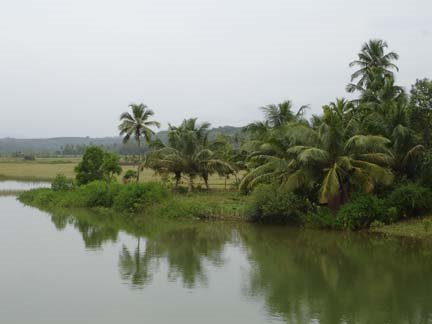
A Coastal estuary

A Coastal estuary
Holegadde near Honavar,Uttara Kannada dist, Karnataka

Copy? Right - but kindly remember to acknowledge!

Creative Commons License
This work is licensed under a Creative Commons Attribution 3.0 License.

" tulu-research.blogspot." ತುಳು ರಿಸರ್ಚ್. ಬ್ಲಾಗ್‌ಸ್ಪಾಟ್‌. ಇನ್

" tulu-research.blogspot."  ತುಳು  ರಿಸರ್ಚ್.  ಬ್ಲಾಗ್‌ಸ್ಪಾಟ್‌. ಇನ್
Have a nice day !