Monday, September 14, 2015

349. Kuppe - a historical root word


Toponymy, a division of Onomastics, is an interesting subject. A Place name may be an Endonymy, i.e. name given by the people themselves living within the locality, or an Exonymy, i.e. a name given to a place by an outsider. Our curiosity is enkindled after seeing Place Names with ‘kuppe (kuppa, guppa) ’ word element existing even outside Tulu Nadu and India.  We have been expounding on the origin of Tulu place names off and on.  It is a wonder how place names with a common prefix or suffix like ‘Kuppe’ are generally ignored.

Like ‘Ala’, an ancient place name indicator word (Our Post 315 dated 18-09- 2013), ‘Kuppe’ is a historical root word (cited in Post 234, Dated 30-3-2010) in place names in Tulu Nadu and world-wide. ‘Ala’, meaning as water, water bodies and things associated with water, is found in Arabian and Uralian languages, including Indo-Eurasian and Altaic. 
Our inquisitiveness to explore ‘Kuppe’ is further strengthened after reading a Paper (undated and in part) by Sosale Chandrasekhar at Department of Chemistry, Middle East Technical University, 06531, Ankara (Turkey) during his Sabbatical leave from Department of Organic Chemistry, Indian Institute of Science, Bangalore-560012/India.  The Paper is titled: “An apparent sprinkling of Altaic words in a Dravidian language (Kannada): Possible historical significance for South Asia“. He listed some Turkish words with their equivalents in Kannada (Altaic words.SC-Cog.pdf).
Polysemy, i.e. diversity of meanings of a word, makes it difficult to decipher exact meanings of a place name. Nevertheless, an attempt is made below to explore the word ‘Kuppe’.

Kuppe (ಕುಪ್ಪೆ)
Kuppe is a word describing the geographical and geological features of a place. It may mean (1)A heap (invariably in curved shape).(2).A spring of water (3) A marshy land or (4) A highland or hill.
The term is comparable with kuru  (ಕುರು=ಪ್ರಸ್ಥಭೂಮಿ). In many Uralic languages, ‘kuru’ means mountain or mountain forest (Note the place names in Mahabharata: Indraprastha and Kurukshetra).
[One possible line of explanation is that a native from kuru, a highlander, might have been called Kuruba (ಕುರುಬ= shepherd; An Alternate extant explanation is the one who grazes kuri (sheep) is a kuruba (sheparad).  It is possible that the evolution of word occurred like: Kuruba> Kurba> Kuppa> Kuppe].   Secluded far-flung areas of tribal inhabitants are called ‘Koppa’. (Refer Tulu Lexicon)
Kuppa (male) and Kuppi (female) were the popular Proper names heard in Tulu Nadu as late as 20th Century. 
We may compare the Dravida word Kuppe with analogous term in German and related languages.
1.       Kuppe is the term used in German speaking Central Europe for mountain or hill with a rounded summit that has no rock formation (Tor).  It is a convex land-form, similar to English knoll or dome or a hat-like covering. It is derived from Late Latin/Common Roman word ‘Kuppa, meaning Beaker.  A range of such hills is called ‘kuppenbirge’ (Eg. Dammersfeldkuppe, a kuppe or domed hill in the Rhӧn).  Wassenkuppe is the highest peak mountain within German State of Hesse.  It is large plateau formation, now developed as a sports centre for para-gliding, snow-kiting, etc. Kuppen is a common surname found in Europe.
2.       Places where sedimentary beds have bulged and where rising oil or natural gas has accumulated are also called ‘kuppen’ in German.
3.       Kopje means a small hill in Europe. Kop means a hill in South Africa.  We can deduce that the Khopoli (Khop= Sloping Mountain + oli = range) at the foot-hill of Western Ghats of Maharashtra fits to the description as said above.
(Compare the traditional Tulu jewelry ‘Koppu’, a hanging nose or ear ring, one end is fixed to hair lock above ear of that side.)

Kuppe Place names
We have culled some names from Census India and some other, known to us. These places are mostly in or around mountain areas.
Karnataka: 
·         Kuppepadavu near  Kulavoor, Mangaluru Taluk, Dakshina Kannada. Tulu Lexicon gives the meaning of Padavu (ಪದವು) as ‘a tableland or a  grassland on a plateau.’   Kuppepadavu, is a rocky granitic area covered by laterite at random.  It is undulating as usual coastal land-forms with a few elevated rocky outcrops on the bank of Phalguni (Gurupura) River.  In olden days, we have seen grass is allowed to grow in abandon in such a Padavu for grazing cattle and/or harvested for thatching house-roofs.
·         Kuppettu, Belthangadi Taluk, Dakshina Kannada:  The village is famous for the powerful Divine Spirit ‘Panjurli’.
·         Kuppalli, a village in Tirthahalli Taluk of Shimoga District.  It is the birth place of Kannada Poet and Scholar Late K.V. Puttappa (Pen name: Kuvempu)
·         Kuppe (Soraba, Shimoga)
·         Kuppe (Kunigal, Tumkur)
·         Kuppe (Nagamandala, Mandya)
·         Kuppe (Alur/Hasan)
·         Kuppe (Holenarasipura, Hasan)
·         Kuppe (Krishnarajanagara, Mysore)
·         Kuppe Hosahalli (Alur, Hasan)
·         Kuppedada (Shrirampatna, Mandya)
·         Kuppegala (Mysore)
·         Kuppehantha (Krihnarajanagara, Mysore)
·         Kuppegolakatta (Hunsur, Mysore)
·         Kuppelur (Ranibennur, Haveri)
·         Kuppemala (Magadi, Ramanagar)
·         Kuppenahalli (Sidlaghatta, Chikkaballapura)
·         Bylakuppe (Kushalnagar, Kodagu). A Tibetan refugee colony.
·         Siraguppa (Bellary): It means village with pile of wealth.

Andhra Pradesh (Undivided):
·         Kuppenakuntla (Penuballi, Khamam)
·         Kuppam (Chakraraajepet, Y.S.R.).  Dravidian University is located at Srinivasavanam, Kuppam-517426. 
·         Kuppam (Chittoor)
·         Kuppambadur (Ramachandrapuram, Chittoor)
·         Kuppampalle (Venkatagiri, Nellore)

Tamil Nadu:
·         Kuppepalayam (Coimbatore)

Jammu & Kashmir:
·         Kupwara.  It is a land of meadows, mountains, gushing waters, and fresh air.

Dravidian word
The ancient word Kuppe  (Guppe) in Tulu and Kannada are shared by other Dravidian languages Tamil (Kuppai, Kuppam, ) Telugu (kuppa), Malayalam (kuppa), Koda (Kuppi),Konda(Kupa), and Pali (kuppa, Koppa),etc.  Bhadriraju Krishnamurthy  considered the term kup- to be a Proto-Dravidian  root word.
Kuppe and Kuppasa

Kuppe is an ancient word that means dome, summit crest etc in European/ German as well as in south Indian languages. Probably it also referred to human anatomical part of breast which is domal in shape. This assumption is derived from the existence of Dravidian word (Tulu,  Kannada etc ) Kuppasa which means blouse or the garment used to cover the breast part.

Migration
In the ancient days migration was a necessity borne out of compelling circumstances – economical, socio-religious, political and calamitous events. Proverbial ancient migrations- to and fro – first from Africa to Asia and Europe and then to America was the key factor in the evolution of world languages having perceivable relationship.  The ineluctable truth is that there are many ancient heritage words in world languages, which one can judge from a broader plane.  The dissolution or evolvement of a language can be explained as an outcome of migrations from time immemorial.

Conclusion
It is inferable from our general study that the geographical term ‘kuppe’ (with its derivatives) is a root historical word. It is worthy of inclusion in the list of historical words, borne out of co-habitation, communication and evolution.

-Hosabettu Vishwanath, Pune
with Ravi Mundkur

Wednesday, July 29, 2015

348. ‘Rūmi’ in Tulu – A Foreign Word!


 Words possess acquired meanings in the beginning. They may get derived meanings during their evolutionary period.  New words are coined continuously from experiences in physical or mental planes, relating to objects, physical features, ideas and happenings around or elsewhere.  Certain words, used for describing persons or things, are mostly from historical events around a person or places. We know words, like chupi-Rustom (fighting his son Sohrab, whom he never met, without disclosing his identity, Koose (a male proper name in Tulu Nadu, styled after the brave warrior class Koshars of Tulu Nadu, who were eulogized in Tamil Sangam literature and their name is kept alive in place names like Kosraal.  We have, among many, some jocular and teasing phrases, like –
·        Govodu farengi-pelakayi (ananas) ijji panninalka (To say, there is no pine-apple in Goa.  Note: It is introduced by Portuguese in India).
·        Japanda bombu burudun (A bomb is dropped by Japan): It is a school-days teaser on seeing a hole in a boy’s pant or shirt.
Note some collective nouns, now not heard but documented in Tulu Dictionaries, for emigrants from other regions:
·        Panyamdarlu: Konkani or Marathi speaking Goans, probably migrating from Panaji area.
·        Kudumba & Kudumbetti: Christian male and female, probably known as such for their agricultural background.
·        Porbulu:  Christianized “Prabhu” community that hailed from Goa. Still known in Tulu Nadu as such, covering all Catholic Christian migrants.
Rumi or Rūmi
Here is a word ‘Rūmi/Roomi (also pronounced Rumi with short vowel), which is still extant.  Do you ever heard during your up-bringing days in Tulu Nadu, the following phrases:
·        Aaye/Imbe (He is) malla/nelya (great) Rūmi (pronounced as ‘roomy’). In conversations, elders apply this description to naughty and clever boys in derogatory sense.
·        Akulu (They are) oriyardu ori (one against the other or mutually) rūmi (trying to excel in cunning like the spirit of a rūmi). Note the comparison of competitive spirit to gain upper-hand at any cost.
In nutshell, it means: a great shrewd, brave, daring, clever, sharp or cunning person.  Though the word ‘rūmi’ is still extant, it is rarely heard. It finds its due place in Tulu Lexicon (TL page-2741) because of its relevance. TL gives its meaning as “a capable person, known for heroism, daring nature, cunning, etc.”  There is also a drilling/boring tool called ‘rumi’ used by carpenters, electricians, etc.
What is the story behind ‘rūmi’? Is it purely a Tulu word or imported? Our inquisitiveness leads us to Mediterranean region. Let us explore.
Historicity of Rum and Rūmi
It is a geographical term and description of people from that region.  ‘Rum’ stands for Romanand it is a place in Mediterranean region.It had been a part of Roman Empire with predominant Greek population then. It fell into the hands of Turks.  Still it continued to be called a part of Roman Empire by virtue of its once being a part of Roman Empire.
Rumi means a person born or associated with Anatolia, geographical area known as Rum.  Anatolian Peninsula belonged to Byzantine or Eastern Roman Empire, which was later on conquered first by Seljukian Kingdom and afterwards by Muslims, namely Turkish Muslim rulers.  Rumi is an Arabic term, literally meaning ‘Roman’.Therefore, Turks of Asia were also known as ‘Rūmi’ in India but according to Garcia de Orta and Jarric, the  expression ‘Rūmi’ applies to Turks of Ottoman Empire only and not to other Turkish Race in Asia. Therefore it refers to subjects of the Byzantine Empire or simply to people living in or things associated with Anatolia. ( Hobson-Jobson Dictionary, pp. 767 to 769).
Mark some of the meanings of 'rum (ruhm)' in English Dictionaries (Source: Dictionary.com):

  1. Arabic name of Rome, once used to designate the Byzantine Empire.  'Online Etymology Dictionary' says: It is "a very common 16th c. cant word; by c.1774, it also had come to mean 'odd, strange, bad, spurious, perhaps because it had been so often used approvingly by rogues in reference  to one another.  This was the main sense after c. 1800."
  2. Intoxicating liquor distilled from molasses or some other fermented sugar products.
  3. Peculiar, odd, strange or queer.
  4. Problematic or difficult.
Ottoman Empire
The Ottoman or Turkish Empire, was founded in 1299 AD by Orghuz Turks under Osman I in Northern Anatolia. ‘Ottoman’ is Anglicised name after the Emperor Osman I. Osman I came with 400 horsemen to help the Seljuks of Rum against the Byzantines.  After the demise of Seljuk Sultanate of Rum in 14th C, Anatolia was divided into independent Turkish states, as Ghazi Emirates.  One of the emirates was led by Osman I (1258-1326) from whom the ‘Ottoman’ was derived.
With further conquests of Murad I in Balkans between 1362 & 1389, the Ottoman Sultanate transformed into a trans-continental empire and claimed to ‘caliphate’.  The Ottomans overthrew Byzantine Empire with the conquest of Constantinople (present day Istanbul) by Mehmed, the Conqueror.  During the 16th & 17th C, Ottoman Empire was powerful multinational and multilingual Empire under reign of Suleiman, the Magnificent, controlling much of Southeast Europe, Western Asia, the Caucasus, North Africa and Horn of Africa.
In 15th and 16th Centuries, the Ottoman Empire entered into a period of expansion.  It prospered due to its control of major trade routes between Europe and Asia. 
It created naval presence on the Red Sea.  After expansion, a competition started between Portuguese Empire and Ottoman Empire.  This expansion resulted in Ottoman rule in Somalia and Horn of Africa, thereby increasing its influence in Indian Ocean to compete with Portuguese.
By the end of Suleiman reign (1566C), the Empire’s population increased to 15,000,000, extending over three Continents.  It became a dominant naval force, controlling much of Mediterranean Sea.  The success of its political and military establishment has been compared to the Roman by Italian scholar (Francesco Sansovino) and a French philosopher (Jean Bodin).
With the Constantinople as its capital and the control of lands around Mediterranean basin, the Ottoman Empire was at the centre of interactions between Western and Eastern worlds for six centuries.  Following the long periods of setbacks against European powers, the Ottoman Empire gradually declined during 19th C and allied with Germany in early 20thC, with imperial ambition of recovering lost territories but it collapsed after World War I and was dissolved by Allied Powers as State of Turkey (OttomanAnatolian heartland) and modern Balkan & Middle Eastern States.
Maritime Trade
Trade relation with Tulu Nadu Ports, a part of Western India coastal stretch, is an established fact, right from pre-Christian era with Romans and Arabs from Mediterranean region. ‘Overland route’ signifies the Mediterranean route to India, which in former days included the land journey from Antioch or thereabouts and thereafter to Ormuz, a famous maritime city in the Persian Gulf.   
Sufi Mystic of Rūmi
It would not be out of place to make a passing remark about Jalal al-Din Muhammad Rumi, who is popularly known world-over as ‘Rumi’.  He was born on September 30, 1207 AD at Vakhsh/Bakhsh (a part of Greater Persia – now Afghanistan and present day Tajikistan) and died on December 17, 1273 AD at Konya in Sultanate of Rum, Anatolia now Turkey. He is a famous 13th Century Persian Poet, jurist, Islamic scholar, theologian and Sufi mystic.  Rumi’s influence transcends national borders and ethnic divisions, viz. Iranians, Tajiks, Greeks, Pashtuns, Indians, other Central Asian Muslims and Muslims of South Asia.  He mostly wrote in Persian but also in Turkish, Arabic and Greek.  He is a well-read Sufi poet in USA by virtue of his secular love of mankind.
Mystery around Rūm
‘Rūm’ is also mentioned in religious books.  Which Nation does Rūm in Ahadith of the Last Days refer to?  The questioner Musa Cerantonio says that the identity of Rūmis important to know as there are different opinions.  He himself replies that it is Istanbul.
Conclusion
Istanbul (Constantinople of Rūm) was a prized territory for sea trade and hence was a strife-borne area right from pre-medieval period.  In our history too, we have instances of continuous battles for capturing sea and river ports by interior kingdoms, viz. Vijayanagara, Bahamani, Ikkeri Nayaks, Mysore Sultans, etc.
Tough competitions from European traders, especially of Portuguese, Arab influence on marine trade dwindled during colonial era.  But their grittiness and skill linger in our memory by lingual influence by words, like ‘rūmi’.
In overall analysis, it seems that the word Rūmi was introduced by the Arab traders in Tulunadu during medieval time.


-Hosabettu Vishwanath, Pune

Wednesday, June 3, 2015

347.‘Mogaveera Samaaja – Ondu Adhyayana’ - A Book Review

An Ethnological Book - a redaction in Kannada of its predecessor in English - on Mogaveera Community of Tulu Nadu was released on 12th October, 2014 at Uchila Mahalaxmi Temple.
Book:  Mogaveera Samaja – Ondu Adhyana
Author: Sadananda K. Uchila, A-304, Dheeraj Basera CHS Ltd, Chincholi Bunder Road, Malad(W), Mumbai-400 064  .Cell: +91 9820774912. e.mail: sadanandauchila@gmail.com
Honorary Publishers: D.K. Mogaveera Mahajana Sangha, Uchila & Mogaveera Seva Sangha (Bagwadi Hobli 1941), Mumbai; Size: Demy with 329 pages + Front & Back matters. Price: Rs.250/- (Delivery charges not mentioned).

Introduction
Genre of such ethnological books are available mostly in the form of economic surveys by respective Governments of all States where fishing is a major occupation. This book, however, is a first of its kind in Karnataka written by a Mogaveera with first-hand knowledge about the community.  The book gives an introduction to prehistory of fisher-folk, though without an exhaustive study.  A scholastic approach is needed for such a study. So the author leaves it to the future researchers.  Nevertheless, book captures exhaustive pictures of recent times on the life and culture of Mogaveeras. Kudos to the author for this yeoman’s service. Despite many Reviews in media and periodicals, this one is mainly meant for readers of this Blog.
Object
The object of the author is to mirror the history of the community, known for their co-operative way of living – socially and professionally –from hoary past to the present day.  He gives the glimpses of skilled artisanal fishing based on co-operative principle and to the modern day technologically advanced way of labour-intensive fishing with joint or individual ownership of mechanized fishing boats with Statistics.Mechanized fishing has rung a death-knell to traditional fishing, such as Ramponi, which was based on co-operation. Transformation is phenomenal of toilers of river and sea, traversing hazy past to the present. They were a mere poverty-stricken fishers providing fish-food to others with low income then and are now highly compensated, commensurate with their catch of fish.Present generation has forayed into various professional fields and trade and commerce with modern education. Authentic details given by the author prove this fact.Thanks to the foresight of community elders, who left the shores of the district (undivided South Kanara) in search of new pastures, for giving importance to education and providing financial help to primary and elementary school students through their individual village-sabhas!
Profile of Study
Profile of the Study is planned in thirteen sections. Chapters 1 to 9 deal with topics, viz. Origin of Mogaveeras, their habitats, customs, festivities, occupations,  Organizations taking care of the community from village level to federations, leading to addressing problems – social and economical, and lastly, some gems of Mogaveera community. Remaining Chapters pertain to analytical documentation of socio-religious and economic data from community annals of past and present to Government Studies and back matter (i.e. acknowledgements, References to further reading and feed-backs).
Evaluation
There is no repository of data readily available about Mogaveeras, except in legends, oral literature and caste census done during colonial era in 19thand 20th Centuries and in some other books on the erstwhile District, known as Tulu Nadu.  Legends may not be taken fully on its face value but it definitely hints at some historical truth.Extra-ordinary patience and pains taken by the author for collection of data is emulative.
Different caste names of fishing-folks in India do not make them a homogenous group. So the estimation of time of origin of Mogaveera, based on generally accepted migration theory, is debatable.
Matrilineal system, based on Goddess-mother cult, is still followed in many parts of the world. I may point out a confusion in citing a belief about Babbarya (p.173), identifying him to Babruvahana and also as son of Arjuna and Pramila, Kerala Queen (as against Arjuna and Chitrangada, the Princess of Manipur in Mahabharat). Matrilineal system is generally followed in Western Coast and also in East India.This consideration might have tempted the author to include this piece of information.
‘Mogaveera’ is an honorific appellation now adopted by fishing community of Dakshina Kannada. As an exigency, fishing classes in Karnataka known by different names,forged an alliance. So the Government applies this single nomenclature to all fishing communities of Karnataka enabling them to take advantage of Government-sponsored schemes.
The Book is valuable in that it brings out many facets of the community hitherto unknown.  The Book may generally help both budding ethnologists and scholars in Anthropology as source book in future.
Design & Style
‘What we see when we read’ is a motto of Peter Mendelsund, who is a much sought after Designer of Book Covers. The suggestive Title Cover design of this Book proves this fact.
The style is simple, straight and informal. Topics are systematically classified and explained as a conspectus.  The effectiveness of the book is enhanced by the informative picture-plates throughout the pages.
Conclusion
The author has achieved a fair measure of success in giving essential facts in a condensed form with the help of primary and secondary sources of information from coast to inland.  The Book is a welcome addition to one’s library.
About the Author                                                                
The author, known to the reviewer, was a Taxation Executive in Government and Corporate Offices. He is engaged in social work and indulges himself in activities of community organizations. Beamish photo of the author on front cover corner, reminds me a stanza in Someshwara Shataka:
ಕೆಲವಂ ಬಲ್ಲವರಿಂದೆ ಕಲ್ತು ಕೆಲವಂ ಶಾಸ್ತ್ರಗಳಂ ಕೇಳುತಂ
ಕೆಲವಂ ಮಾಳ್ಪವರಿಂದ ಕಂಡು ಕೆಲವಂ ಸುಜ್ಞಾನದಿಂ ನೋಡುತ್ತ
ಕೆಲವಂ ಸಜ್ಜನರ ಸಂಗದಿಂದಲರಿಯಲ್ಸರ್ವಜ್ಞನಪ್ಪ ನರಂ
ಪಲವುಂಪಳ್ಳ ಸಮುದ್ರವೈ ಹರಹರಾ ಶ್ರೀ ಚೆನ್ನ ಸೋಮೇಶ್ವರ.
This description of a learned fits aptly to S.K. Uchila.

- Hosabettu Vishwanath, Pune


Thursday, April 30, 2015

346. Early Spirit forms: Guliga, Jattiga, Chaundi, Rahu and Ketu


Early human beings, while paddling through multitudes of hardships in the routine course of their primitive life styles, submitted themselves to the Spirit cults evolved out of the necessity of acquiring blessings and moral support of the unseen supernatural elements around them to tide over the difficult phases. Thus, the Spirit worship was one of the earliest forms of worship in the world.
            During the course of human evolution, intellectuals among the ancients felt that the whole universe is governed by divine forces of God. Different groups and sects of human beings, time and again, have invented several cults and faiths, built and created around the concept of omnipotent God(s). Each group during the course of evolutionary history has tried to gather more and more volunteers to follow abide the terms and conditions of their specific faiths or religions. Each group maintains that the cult they adopt and follow is only the right form of realization of God. In some cases the beliefs have unfortunately been taken to extremely intolerant and violent forms.
            However, the essential motive behind every form of worship is the same even though certain people tend to demean rival forms of worship to which they do not subscribe.          In the confused modern world, tragically, the religion has been so compartmentalized that some extreme groups with expansionist theocratic ideas may even prefer to annihilate persons of rival faiths for not subscribing to their religious tenets.
Understanding the evolution of ancient cults may provide some clues to demystify and clarify certain religious confusions prevailing among us.

Early Spirit forms in Karavali /Tulunadu
Tulunadu even in the modern settings continues to host diverse forms of worship patterns ranging from varied forms of Spirit worship to elaborate divine manifestations. This aspect points to the strength and tenacity of of belief system in our people. Tulunadu through the pages of evolutionary history witnessed not only the various pre-Vedic, Vedic and post- Vedic phases of Hinduism, Natha cult, Buddhism and Jainism but also Islam, Judaism and Christianity. The cult of Spirit worship has declined in other areas but it continues to dominate in the Tulunadu region.
Many rationalists have wondered why the cult Spirit Worship exists only in Tulunadu. However, the fact is that in earlier days of history the cult of Spirit Worship existed all over the world may be in different forms. With passage of time, due to advent of other competing cults and beliefs the cult of Spirit worship has either vanished on the way to extinction. In Tulunadu, as is well known that many subsequent forms of religions have coexisted along with primitive cults of Spirit Worship.

Spirit vs. Devil
Many authors have used the term Devil worship for the cult of Bhutāradhane. (Even Dr Gururaja Bhat, a pioneer in systematic Tulu Studies, has employed the term of ‘devil worship’).
The Spirit worship is known as “Bhuta-aradhane” among   the natives.  The Tulu word “Bhuta” has equivalent word in Sanskrit also which means (1) The Past or (2) The metaphysical remains (or memories) of the dead. Aradhane means worship. There fore the appropriate English word for the Bhuta, the metaphysical remains of the dead, would be the Spirit.

However, translating the cult of Bhutāradhane as Devil Worship is unacceptable since the term Devil has negative meanings   especially, that connotes anti-God sentiments.
This is not true of Bhutāradhane. There are no negative intentions or black magic behind the cult of Bhutāradhane or the Spirit worship among the believers.
 It is to be realized and understood clearly that those who worship Bhuta carry the   immense respect,  feelings and sense of divinity toward the Bhuta and it cannot be branded as pro-devil or anti- God. It is not logical to brand a religious system of worship of a specific culture and heritage as anti-God. Because the basic psychology and motifs behind any cult of worship is the same irrespective of the type or form of God one opts for.

Ancient forgotten Spirits
The Karavali has explicitly preserved vestigial evidences on ancient immigrants of African origin and their belief systems in the west Coast.  Vestiges of ancient African Spirits are still preserved in the Karavali. For example in Karavar in Uttara Kannada region of Karavali Karnataka certain tribes continue to worship a Spirit god known as Kepri. The Kepri incidenatally is an insect Spirit God of ancient African origin. In Mangaluru city, there is   an ancient place name Kapri-gudda (=hill of Kapri) preserved near Attavara in the old city area which suggests that vestiges of Kepri (or Kapri) worship was once present, but now forgotten, in Mangaluru also.

Spirits of Guliga family
One interesting legend retold in Bunts page narrates that Guliga, Jattiga, Chaundi and Rahu Guliga were the four siblings that survived among 24 children of a mother.This legend gives us a hint that these four ancient Spirits- Guliga, Jattiga, Chaundi and Rahu were more or less contemporaneous.

Guliga: The Spirit Guliga is worshiped in the form of a small rectangular stone kept under the shade a tree. The simplicity of the symbolic structure representative of the Spirit suggests the antiquity of the Guliga cult. It can be seen that before the advent of symbolic sculptured divine forms and wooden or metal masks, the earliest spirit forms were used to be worshiped in the form of symbolic stones. For example, the Kata, the divine Spirit worshiped by Koraga tribes was also represented in the form of a piece of stone placed under the shade of tree.
During the Guliga Spirit festival (‘Kola’) celebrations   essentially consist of the Guliga character with his face weirdly painted in red, white and black colours and wearing string costume of tender palm leaves, dancing fervently around the burning firewood. A pictorial report in Daijiworld has interesting collection of   a Guliga Kola  celebrations.

Guliga is worshiped as 'Kshetrapala' in the periphery of a Temple of Devi (Primorial Supreme Female Divine Power). He moves with the Goddess during her sojourns.  He is known by different names for his heroics at different places.  Kshetrapala at Marnami Katte is known as 'Hayguliga'. He is worshipped in the form of a stone, specifically consecrated for him. It is believed that being open to sun and rain, he absorbs more energy and becomes more powerful to ward off evil spirits and diseases affecting the 'Gadipadu' (region of authority) under his purview.  He protects his devotees by bearing the brunt of Devi's fury. During 'Kola' ceremonies, he is painted in eerie looking with black and white stripes, depicting a fierce entity. He drinks the blood of sacrificial animal (mostly chicken) and eats it raw.  So he is called as 'Ambara Marle' (Frisking and high-jumping figure around the ceremonial area) and 'Masogou bayasuna sanchari daiva' (the wandering Spirit, wishing for live sacrificial animals). Though he is invoked as a "Kaanada Kadudu, Bhimaraya Thotodu, Kaat Kalludu neleoordina Daiva" (One who has settled down in the forest of Kaana, Garden of Bhimaraya on a rough-hewn stone), there is no reference to his parentage.  Legend says that he being a Shivagana, accompanies Aadi Shakti Parvati to earth.  Overwhelmed by the serene beauty and sacredness of Parashurama Kshetra, she settles down in Tulu Nadu in the form of a 'Linga' and asks him to stay as her guard to protect her devotees.
A fickle minded or half mad person is nicknamed as 'Ambara Marle'; it may be after the frenzied movements of Guliga Bhuta impersonator usually seen in annual Kola rituals.


Jattiga/ Jitiga: Legends suggest that Jattiga was a brother of Guliga. In Kundapura and surrounding areas the ancient Spirit of Jattiga is worshiped in ways similar to Gulthe form of   a symbolic stone like that of Guliga. The Jattiga is known as Jitiga in Ankola and other parts of Uttara Kannada. The Jitiga is represented in the form of crude piece of stone placed permanently in a corner of an agricultural field. The Farmers in Ankola worship this stone on a special day in the year, expecting the blessings of Jitiga in the form of good yield of crops.

Jattiga ( 't' is pronounced jaTTiga or T as  in 'Tea') is a King's name in Shilahara dynasty of Kolhapur region (third division of Shilahara Dynasty) Maharashtra. There were two Jattigas - I and II in this dynasty.  There may be other warriors also by this name who sacrificed their lives in battles for their kings.  Such heroes were immortalised by erection of Hero Stones and later worshiped  as deified divine souls or Spirits

Chaundi: Legends suggest that Chaundi was a sister of Guliga. Chaudi could be an equivalent form of Chaundi. The names such as Chauda, Chaudi, Chavunda, Chaundi, Chavundi, Chamundi etc appears to be old personal name forms among the ancient tribes in Southern India. Researcher Shamba Joshi has tried to trace the term Chaudi to the invention of threads and cloths among early civilization. It can be seen that the terms Chaudi>Chauri refers to hairs of human or other origin. Chavunda Raya was the name of a 10th century Jain minister who arranged for the sculpting and erection of monolithic Gomata in Sravana Belagola.
Ancient personal names like Chauda (>Chawdaiah) still prevail in Mysore area especially among the people of tribal origin. Thus it seems that ancient Spirit cult of Chaundi worship was transformed under the spell of Vedic influence into Chamundi (>Chamundeshwari) cult in Mysore province under Odeyar dynasty.

Rāhu Guliga: Even though Rāhu Guliga has been named as one of the brothers of Guliga, the additional tag of Guliga behind Rahu leads us to conjecture that the cult of Rahu was added to the Guliga group subsequently. Elsewhere in India, the tribal cult of Rāhu had an independent identity that was absorbed into the list of names of celestial bodies in the ancient science of astrology in India. The ancient name Rahu has remained in modern names of Rahul. The Tulu equivalent form of Rāhu was “Rāvu” which has been considered as an evil spell.

Ketu: Ketu was another ancient Spirit which was later absorbed into the list of names of astronomical entities in India. Apparently, Ketu is not a conventional member of Guliga family in Tulunadu. However in other parts of India Rāhu and Ketu are treated together especially in astrology.
The vestiges of ancient Ketu cult are still prevailing in old Mysore area where place names like Keta Mārana halli (>Kyātmarana halli), Keta-samudra (>Kyātasandra) etc have remained in modern days.
Vestiges of ancient spirit cults in astrology
Ketu and Rāhu have been a part of several legends in ancient India.
According to legends, Lord Vishnu severed the head of an Asura named Svarabhānu. After the head of Svarbhānu, an Asura, was cut off by God Vishnu, his head and body were joined together with a snake. Thus 'Ketu', represented a body without a head and ‘Rāhu’, represented a head without a body.
According to other legends in Hindu mythology, Ketu belongs to Jaimini Gotra, whereas Rāhu is from Paiteenasa gotra and suggesting that these two are separate entities and not two parts of a common body.
Ketu is generally referred to as a "shadow" planet. It is believed to have a tremendous impact on human lives and also the whole creation. In some special circumstances it helps someone achieve the zenith of fame. Ketu is often depicted with a gem or star on his head signifying a mystery light.
Astronomically, Ketu and Rāhu denote the points of intersection of the paths of the Sun and the Moon as they move on the celestial sphere. Therefore, Rahu and Ketu are respectively called the north and the south lunar nodes. The fact that eclipses occur when the Sun and the Moon are at one of these points gives rise to the understanding of swallowing of the Sun and the Moon by the snake (Rāhu).
In ancient Tamil astrological scripts, Ketu was considered as incarnation of Indra. During a war with Asuras, Indra was defeated and took a passive form and a subtle state as Ketu. Indra spent this time realizing his past mistakes, and failures and that lead to spirituality towards Lord Shiva.
In Hindu astrology Ketu represents karmic collections both good and bad, spirituality and supernatural influences. Ketu is associated with the Meena Avatar (Matsya/Fish Incarnation) of Vishnu. Ketu signifies the spiritual process of the refinement of materialization to spirit and is considered both malefic and benefic, as it causes sorrow and loss, and yet at the same time turns the individual to God. In other words, it causes material loss in order to force a more spiritual outlook in the person. Ketu is a karaka or indicator of intelligence, wisdom, non-attachment, fantasy, penetrating insight, derangement, and psychic abilities. Ketu is believed to bring prosperity to the devotee's family, removes the effects of snakebite and illness arising out of poisons. He grants good health, wealth and cattle to his devotees. Ketu is the lord of three nakshatras or lunar mansions: Ashvini, Magha and Mula.
Ketu is considered responsible for higher metaphysical realization,   the endocrine system and slender physique etc. The people who come under the influence of Ketu are said to achieve great  spiritual heights. According to a legend, Vipracitti begot one hundred and one sons with his wife Siḿhikā, of whom the eldest is Rāhu and the other  one hundred are the Ketus.

Gulika-kāl and Rāhu kāl
The ancient cult of Guliga (Gulika) is not exclusive to Tulunadu as misconceived by some people. In Indian astronomy, the 'Gulika-kaal' (or simply 'Gulik') is a period of approximately 1 hour and 30 minutes duration that repeats every day of the week. This time duration is ruled by 'Shani' (Saturn). This period is considered to be inauspicious to start any important work. However, 'Gulik Kāla' is considered a good period to initiate new projects.  This aspect as well as the black color pattern preferred by Guliga Spirit impersonators lead to us to suggest that the Guliga was later equated to the cult of Shani (Saturn) in parts of India.

- with additional inputs from Vishwanath


®

Blog Archive

Books for Reference

  • A Comparative Study of Tulu Dialects By Dr. Padmanabha Kekunnaya. Govinda Pai Reserach Centre, UDupi. 1994
  • Koti Chennaya: Janapadiya Adhyayana. By Dr. Vamana Nandavar. Hemanshu Prakashana ,Mangalore.2001.
  • Male kudiyaru. Dr B. A.Viveka Rai and D.Yadupathi Gowda, Mangalore University,1996.
  • Mogaveera Samskriti By Venkataraja Punimchattaya. Karnataka Sahitya Academy.1993.
  • Mugeraru:Jananga Janapada Adhyayana. By Dr Abhaya Kumar Kaukradi.Kannada & Culture Directorate,Bangalore & Karnataka Tulu Academy, Mangalore,1997.
  • Puttubalakeya Pad-danagalu. Ed: Dr B.A.Viveka Rai,Yadupati Gowda and Rajashri, Sri Dharmasthala Manjunatheswara Tulu Peeta. Mangalore University.2004
  • Se'erige. Ed:Dr K.Chinnapa Gowda.Madipu Prakashana,Mangalagangotri,2000.
  • Studies in Tuluva History and Culture.by Dr P Gururaja Bhat (1975).Milagres College,Kallinapur,Udupi.
  • Taulava Sanskriti by Dr.B.A.Viveka Rai, Sahyadri Prakashana,Mysore 1977
  • TuLu naaDu-nuDi By Dr.PalthaDi Ramakrishna Achar, Puttur.
  • TuLu NighanTu. (Editor in Chief: Dr U.P.Upadhyaya, Govinda Pai Research Centre,Udupi. Six volumes. 1988 to 1997
  • Tulu Patero-A Philology & Grammar of Tulu Language by Budhananda Shivalli.2004.Mandira Prakashana Mangalore. p.317. (The book is in Tulu Language using Kannada script)
  • TuLunadina ShasanagaLa Sanskritika Adhyayana. By Shaila T. Verma (2002) Jnanodaya Prakashana,Bangalore, p.304.(Kannada)
  • Tuluvala Baliyendre. Compiled by N.A.Sheenappa Hegde,Polali,Sri Devi Prakashana,Parkala,1929/1999

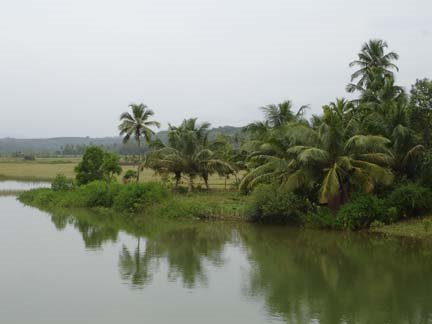
A Coastal estuary

A Coastal estuary
Holegadde near Honavar,Uttara Kannada dist, Karnataka

Copy? Right - but kindly remember to acknowledge!

Creative Commons License
This work is licensed under a Creative Commons Attribution 3.0 License.

" tulu-research.blogspot." ತುಳು ರಿಸರ್ಚ್. ಬ್ಲಾಗ್‌ಸ್ಪಾಟ್‌. ಇನ್

" tulu-research.blogspot."  ತುಳು  ರಿಸರ್ಚ್.  ಬ್ಲಾಗ್‌ಸ್ಪಾಟ್‌. ಇನ್
Have a nice day !