Thursday, October 8, 2015

350. Kāle and Kāle kola


There is an idiom ‘Kappu Kāle’ in Tulu.  It is used to describe the colour of a person, i.e. one who is pitch dark or black in complexion.  The meaning of ‘kappu’ is dark or black.  Generally, we use ‘kāle’ also with same meaning of ‘dark’ in every day usage (in Tulu, Kannada, Sanskrit, etc.) while it has a specific meaning in Tulu. Here the idiom or compound word means ‘a person who is as black/dark as a kāle’.
There are many compound words with ‘Kāle’ but ‘Toduta Kāle’ (as voracious as a kāle) and ‘Kappu Kāle’ are still extant and heard in usage.  It seems that the phenomenon of ‘Kāle’ is wiped out from the memory of present Tulu generation.  What is then the meaning of ‘Kāle’ here?
There is a Question & Answer section at the end of the Book: “Tuluvara Marnottara Kriye - Tulu Janapada Samskara”, writeen by Narayana A. Bangera (NBA) (See: Post No. 280 dated 7th June, 2011).  During the discussions, Devraj Poojari, a member of Billavara Association, Dombivli Chapter, posed a pointed question (pp. 66-68) to NBA: What is Kāle Kola?  Is it unavoidable in Tuluva After-Death/Last Rites  to a departed soul?  NAB pointed it out as a forgotten rite, which was performed by rich people in earlier days. He opined it as a chicanery while bringing out the difference between ‘kola’ and ‘nema’.  We wished to make further studies for a suitable Post but the matter skipped our memory.  Our interest is revived after seeing some information in pages 58 to 60 on ‘Kaale Kola’ in the Book: “Mogaveera Samaja – Ondu Adhyana” by Sadananda K. Uchila.(See: Post-347dated 3rd June, 2015).

Kule and Kāle
What is ‘Kule’ in Tulu is ‘Pretātma’ in Sanskrit, Kuli (Tamil & Malayalam), Kole (Havyaka Kannada), and Kolnari (Koraga - Tribal). Péyi/Péti is Tulu synonym of Kule (also having the meaning of madness or mad person in Dravidian languages). It means a ‘departed soul’ (Tulu Lexicon Vol.2; p. 774).  ‘Kāle’ is a synonym for ‘Kule’ (TL Vol.3; p. 860).  ‘Kāle Kola’ is defined in Tulu Lexicon (Ref Vol.2, p. 775) as ‘a kind of spirit worship and dance celebrated on the day of funeral rituals (usually in the Bunts community) to ward off ghosts and other evil spirits’. In Kannada, the synonymous term “kalebara” (=dead body) exists for comparison.
It is believed that a departed soul - a shadowy apparition commonly known as ghost - remains in suspended state unless and until all traditional ‘after-death purification (Samskaras) rites’ are completed (on 13th or 16th day of death).
It is believed that ‘kule’ or ‘kāle’ haunts the house, joined by other evil spirits until a particular day.  It is supposed to depart from the mourning house and stop harming inmates as soon as proper last rites are performed.  It may be noted that impersonator of ‘kāle’ in the kola ceremony symbolically wears black dress with white stripes around the chest.

Kāle in Oriental & World Folklores
Pedakāle (Pedakkāle):  One may remember a word ‘Pedakāle’ (Pedakkāle) in Tulu.  It means ‘a goblin troubling a woman in confinement, especially after the child birth.  It is an abusing word, applied to a trouble-monger, comparing him to an imp.
There are many fairy tales in Indian folk-lores.  We read during our schooling days about such goblins or ghosts of dead person appearing or disappearing as a pale shadowy apparition, haunting houses where new children were expected and where there were death of mother on child-birth or still-born children.  Rumours are spread about such incidents.   Our elders used to narrate such stories to youngsters eliciting horror. It is reported these horrifying goblins peep through windows to take stock of things.  This explains why confinement rooms were dark with tiny windows or no windows and with small doors in olden days.
Traditionally, the convalescing women were looked after by elderly women for puerperal care. Woman and her baby were never left alone.  This was to ensure that they are not harmed by wicked spirits.  Women in confinement always carry a small hand-knife while going out and in, even when an elderly woman accompanies her.  A sickle was invariably kept under her bed.  Here we can recall the cult of Mani Bāle, popularly known as Mayandāl, the legendary protector of women and the punisher of evil spirits feeding on women and children.  The Mayandāl Cult has been deeply rooted in Tulu Nadu among Tulu women. (Post-306; dt: 13th December, 2012).
GhoulThere is a word ‘Ghoul’ (pronounced as Ghool or Ghowl) in English Dictionary.  ‘Ghoul’ is comparable to ‘Kāle’ in Tulu.  It is defined as an evil spirit that robs graves and feeds on the dead.  Origin of the word is traced to Arabic word ‘Ghāla’, akin to Ghol of Persian, by Western travellers.  The meaning of the word is also applied to a person, who does or enjoys horrible things.
The Hobson-Jobson Dictionary (p.372) throws some more light on this word by culling writings of travellers of yore. We quote some of them below:
In the deserts of Africa, one can meet often-times with fairies.  They appear in the shape of men and women but they vanish soon away like fantastical illusions.
The Arabs tell many strange stories about the Ghul and their transformations, allegedly with feet of an ass.  These Ghul appeared to travellers in the night and at hours when one meets no one on the road.  They are led astray when they followed these spectres, mistaking them to be their own companions.
The Arab story mentioned above is comparable to Tulu story about ‘Kule tappu muttanaga (= on touching of leaves of plant affected by ghosts).  In olden days (when there were no battery torches) people used to go to neighbouring villages at night, carrying torches made of dried coconut leaves, for seeing Yakshagana  Bayalata (= folklore night time entertainment of a song and dance drama in open field). If they touch without intention some ghost affected plant while crossing a forest area, they were not able to reach the spot of the event easily even if they hear the sound of drum (Chande=ಚಂಡೆ) nearby but move round and round to come to the same spot from where they started. Narrator of this story laughingly finished it by saying that one from their group eased out.  Then only, they could find the way. (Note:  Kule tappu tree = the leaves of the ghost tree are used in the ritual to ward off evil effects of ghosts).
Fisher-folk of Tulu Nadu tell similar stories in which death occurs.   Group of young men go for catching fish at night with cast-nets in rivers.  One man finds another man ahead of him getting more catch by venturing into deeper water.  He goes on following that ghost-man (not knowing that he is a ghost) until he gets himself drowned.
When the writer came to Mumbai in the decade of late fifties of last Century, he heard many ghost stories of haunted buildings in Fort area where there were accidents during construction. Elderly Taxi-driver relative was telling about drivers troubled by ghosts during night trips.
In Afghanistan, the Afghans believe that each solitary mountain ranges and deserts of their country are inhabited by lonely demon, which they call ‘Ghoole Beeabaum’ (= the goule or spirit of the Waste).  The spectre is identified by them as a gigantic and frightful figure, capable devouring any passenger wandering within his haunting place.
What comes to our mind is that analogy of kāle to similar sounding words in other nations is natural.  Our ancestors passed through these regions during the course of their historical migration as enumerated elsewhere in our Blog.

Kule Pattuni/Muttuni
One from Tulu Nadu might have witnessed incidents of ‘demoniac possession’ in many households. Suffering of the possessed, writhing in pain, shivering,crawling, crying and abusing, is heart-rending. The ghost-apparent leaves his/her body after asking for a glass of water when the possessed is beaten by stick-broom. Such happening has given rise to the cult of ‘exorcism’ in many of the Oriental and Western cultures.
Some of the phrases and idioms about kāle and kule are included in the Tulu Lexicon.
Kola & Nema
Though these days these words are used interchangeably, for the ceremonial worship of a divine spirit, the Nema (Niyama in Sanskrit) means annual or periodical ceremony of worship of a particular deity by following traditionally laid down rules and regulations. Kola means ‘a game or play’. Heroics of the divine spirit are enacted/played by invoking it through a medium.  At times, the play looks like an amusement (Post-250/20.08.2010; ‘From OlaSavari to Varasari).  It is played for deity of a household, village and group of villages.  ‘Kola’ is also a part of‘nema’, which one cannot deny.

Kāle Kola Performance*
It is also called a ‘Kule Nalike’ (=Ghost Dance).  There is no specific rules for this dance drama.  It has a psychological value for relieving grief of bereaved members.
Traditional class of dancers, such as Nalike, Pambada, Panaara or Parava, are engaged to perform this ritual.  They come one night before the final ceremony of bidding farewell to a departed soul (i.e. on 13th or 16th day of death).  Kāle Kola duty is entrusted to these performers by offering them Veelya,( i.e. betel leaf and arecanut), as a token of invitation. They are given utensils and provisions for them to prepare their meals.
The ritual needs four impersonator-dancers. First two come dancing as buntas (servants) at the appointed place of dance with usual attire as is vogue with Kola dancers, i.e. wearing red-coloured loose shirt and pyjama, covered waist-down with ‘siri’, made of tender  coconut fronds split into fine strings, and adorning special jingling-anklets, called ‘gaggara’ on ankles and semi-circular shaped crown (kirita) on the head. The third one,in the guise of a horse, joins these dancing impersonators.  They keep on dancing according to some songs when the fourth dancer, with two sticks, joins them,dancing as possessed by the ‘kāle’ (departed soul) and making a frightening cry.  He is painted black fully with black dress with white stripes around chest and white circles around eyes.  They dance in the fixed arena for some time.  Ghost-impersonator consoles family members and advises them to live peacefully and harmoniously so as to keep up the family traditions and customs.
On the conclusion of the kāle kola, sticks used during the dance are kept on both sides of the ‘Doope’ (a structure in the form of a car erected outside the house or at the place of ‘dooloppu’ (heap of ash and remnant bones of the dead at the place of funeral).  Impersonator-dancers take bath in sea or river.  Family members also go for bath.  All these activities get over by midday and the performers are paid as previously agreed.  Individual family members too donate money as their last respect to the departed soul.

Conclusion
We wonder how we use certain words, such as cited above, in our childhood without knowing their meanings.  The more we modernise, the more we forget such words, leave alone their meanings.  With changed circumstances, 'kule' remained in Tulu tongues more than the use of 'kāle'.  'Kāle' remained in ritualistic performances, though kule and kāle are synonyms.  The mutual transformation of 'k' to 'g' is common in linguistics. So it is not a wonder that Kule or Kāle is the same as 'Ghoul', Ghul, Ghaala, Ghulee or Gol elsewhere.
The purpose of Kāle Kola is to pacify members (present or absent during death time) of a family of departed soul. It got acceptance among Tulu speakers. What has been started with genuine intention of showing sympathy and exhorting members for maintaining ‘undivided and joint family system’ of Tulu Nadu or maintaining ‘cordial relations’ is misused by an unscrupulous grieving family member? There are instances that ‘kāle’ impersonator becomes a mouth-piece of a member for getting things told as he/she wishes for getting major share in properties of deceased.
The phenomenon of ghost (soul of dead) is entwined with mankind from pre-history and pre-industrial age to this scientifically advanced era. Proof: The séance is still practiced.
We look forward receiving feed-backs on these practices.

REFERENCE
Mogaveera Samaja – Ondu Adhyana’ by Sadananda K. Uchil.

-Hosabettu Vishwanath, Pune


Monday, September 14, 2015

349. Kuppe - a historical root word


Toponymy, a division of Onomastics, is an interesting subject. A Place name may be an Endonymy, i.e. name given by the people themselves living within the locality, or an Exonymy, i.e. a name given to a place by an outsider. Our curiosity is enkindled after seeing Place Names with ‘kuppe (kuppa, guppa) ’ word element existing even outside Tulu Nadu and India.  We have been expounding on the origin of Tulu place names off and on.  It is a wonder how place names with a common prefix or suffix like ‘Kuppe’ are generally ignored.

Like ‘Ala’, an ancient place name indicator word (Our Post 315 dated 18-09- 2013), ‘Kuppe’ is a historical root word (cited in Post 234, Dated 30-3-2010) in place names in Tulu Nadu and world-wide. ‘Ala’, meaning as water, water bodies and things associated with water, is found in Arabian and Uralian languages, including Indo-Eurasian and Altaic. 
Our inquisitiveness to explore ‘Kuppe’ is further strengthened after reading a Paper (undated and in part) by Sosale Chandrasekhar at Department of Chemistry, Middle East Technical University, 06531, Ankara (Turkey) during his Sabbatical leave from Department of Organic Chemistry, Indian Institute of Science, Bangalore-560012/India.  The Paper is titled: “An apparent sprinkling of Altaic words in a Dravidian language (Kannada): Possible historical significance for South Asia“. He listed some Turkish words with their equivalents in Kannada (Altaic words.SC-Cog.pdf).
Polysemy, i.e. diversity of meanings of a word, makes it difficult to decipher exact meanings of a place name. Nevertheless, an attempt is made below to explore the word ‘Kuppe’.

Kuppe (ಕುಪ್ಪೆ)
Kuppe is a word describing the geographical and geological features of a place. It may mean (1)A heap (invariably in curved shape).(2).A spring of water (3) A marshy land or (4) A highland or hill.
The term is comparable with kuru  (ಕುರು=ಪ್ರಸ್ಥಭೂಮಿ). In many Uralic languages, ‘kuru’ means mountain or mountain forest (Note the place names in Mahabharata: Indraprastha and Kurukshetra).
[One possible line of explanation is that a native from kuru, a highlander, might have been called Kuruba (ಕುರುಬ= shepherd; An Alternate extant explanation is the one who grazes kuri (sheep) is a kuruba (sheparad).  It is possible that the evolution of word occurred like: Kuruba> Kurba> Kuppa> Kuppe].   Secluded far-flung areas of tribal inhabitants are called ‘Koppa’. (Refer Tulu Lexicon)
Kuppa (male) and Kuppi (female) were the popular Proper names heard in Tulu Nadu as late as 20th Century. 
We may compare the Dravida word Kuppe with analogous term in German and related languages.
1.       Kuppe is the term used in German speaking Central Europe for mountain or hill with a rounded summit that has no rock formation (Tor).  It is a convex land-form, similar to English knoll or dome or a hat-like covering. It is derived from Late Latin/Common Roman word ‘Kuppa, meaning Beaker.  A range of such hills is called ‘kuppenbirge’ (Eg. Dammersfeldkuppe, a kuppe or domed hill in the Rhӧn).  Wassenkuppe is the highest peak mountain within German State of Hesse.  It is large plateau formation, now developed as a sports centre for para-gliding, snow-kiting, etc. Kuppen is a common surname found in Europe.
2.       Places where sedimentary beds have bulged and where rising oil or natural gas has accumulated are also called ‘kuppen’ in German.
3.       Kopje means a small hill in Europe. Kop means a hill in South Africa.  We can deduce that the Khopoli (Khop= Sloping Mountain + oli = range) at the foot-hill of Western Ghats of Maharashtra fits to the description as said above.
(Compare the traditional Tulu jewelry ‘Koppu’, a hanging nose or ear ring, one end is fixed to hair lock above ear of that side.)

Kuppe Place names
We have culled some names from Census India and some other, known to us. These places are mostly in or around mountain areas.
Karnataka
·         Kuppepadavu near  Kulavoor, Mangaluru Taluk, Dakshina Kannada. Tulu Lexicon gives the meaning of Padavu (ಪದವು) as ‘a tableland or a  grassland on a plateau.’   Kuppepadavu, is a rocky granitic area covered by laterite at random.  It is undulating as usual coastal land-forms with a few elevated rocky outcrops on the bank of Phalguni (Gurupura) River.  In olden days, we have seen grass is allowed to grow in abandon in such a Padavu for grazing cattle and/or harvested for thatching house-roofs.
·         Kuppettu, Belthangadi Taluk, Dakshina Kannada:  The village is famous for the powerful Divine Spirit ‘Panjurli’.
·         Kuppalli, a village in Tirthahalli Taluk of Shimoga District.  It is the birth place of Kannada Poet and Scholar Late K.V. Puttappa (Pen name: Kuvempu)
·         Kuppe (Soraba, Shimoga)
·         Kuppe (Kunigal, Tumkur)
·         Kuppe (Nagamandala, Mandya)
·         Kuppe (Alur/Hasan)
·         Kuppe (Holenarasipura, Hasan)
·         Kuppe (Krishnarajanagara, Mysore)
·         Kuppe Hosahalli (Alur, Hasan)
·         Kuppedada (Shrirampatna, Mandya)
·         Kuppegala (Mysore)
·         Kuppehantha (Krihnarajanagara, Mysore)
·         Kuppegolakatta (Hunsur, Mysore)
·         Kuppelur (Ranibennur, Haveri)
·         Kuppemala (Magadi, Ramanagar)
·         Kuppenahalli (Sidlaghatta, Chikkaballapura)
·         Bylakuppe (Kushalnagar, Kodagu). A Tibetan refugee colony.
·         Siraguppa (Bellary): It means village with pile of wealth.

Andhra Pradesh (Undivided):
·         Kuppenakuntla (Penuballi, Khamam)
·         Kuppam (Chakraraajepet, Y.S.R.).  Dravidian University is located at Srinivasavanam, Kuppam-517426. 
·         Kuppam (Chittoor)
·         Kuppambadur (Ramachandrapuram, Chittoor)
·         Kuppampalle (Venkatagiri, Nellore)

Tamil Nadu:
·         Kuppepalayam (Coimbatore)

Jammu & Kashmir:
·         Kupwara.  It is a land of meadows, mountains, gushing waters, and fresh air.

Dravidian word
The ancient word Kuppe  (Guppe) in Tulu and Kannada are shared by other Dravidian languages Tamil (Kuppai, Kuppam, ) Telugu (kuppa), Malayalam (kuppa), Koda (Kuppi),Konda(Kupa), and Pali (kuppa, Koppa),etc.  Bhadriraju Krishnamurthy  considered the term kup- to be a Proto-Dravidian  root word.
Kuppe and Kuppasa

Kuppe is an ancient word that means dome, summit crest etc in European/ German as well as in south Indian languages. Probably it also referred to human anatomical part of breast which is domal in shape. This assumption is derived from the existence of Dravidian word (Tulu,  Kannada etc ) Kuppasa which means blouse or the garment used to cover the breast part.

Migration
In the ancient days migration was a necessity borne out of compelling circumstances – economical, socio-religious, political and calamitous events. Proverbial ancient migrations- to and fro – first from Africa to Asia and Europe and then to America was the key factor in the evolution of world languages having perceivable relationship.  The ineluctable truth is that there are many ancient heritage words in world languages, which one can judge from a broader plane.  The dissolution or evolvement of a language can be explained as an outcome of migrations from time immemorial.

Conclusion
It is inferable from our general study that the geographical term ‘kuppe’ (with its derivatives) is a root historical word. It is worthy of inclusion in the list of historical words, borne out of co-habitation, communication and evolution.

-Hosabettu Vishwanath, Pune
with Ravi Mundkur

Wednesday, July 29, 2015

348. ‘Rūmi’ in Tulu – A Foreign Word!


 Words possess acquired meanings in the beginning. They may get derived meanings during their evolutionary period.  New words are coined continuously from experiences in physical or mental planes, relating to objects, physical features, ideas and happenings around or elsewhere.  Certain words, used for describing persons or things, are mostly from historical events around a person or places. We know words, like chupi-Rustom (fighting his son Sohrab, whom he never met, without disclosing his identity, Koose (a male proper name in Tulu Nadu, styled after the brave warrior class Koshars of Tulu Nadu, who were eulogized in Tamil Sangam literature and their name is kept alive in place names like Kosraal.  We have, among many, some jocular and teasing phrases, like –
·        Govodu farengi-pelakayi (ananas) ijji panninalka (To say, there is no pine-apple in Goa.  Note: It is introduced by Portuguese in India).
·        Japanda bombu burudun (A bomb is dropped by Japan): It is a school-days teaser on seeing a hole in a boy’s pant or shirt.
Note some collective nouns, now not heard but documented in Tulu Dictionaries, for emigrants from other regions:
·        Panyamdarlu: Konkani or Marathi speaking Goans, probably migrating from Panaji area.
·        Kudumba & Kudumbetti: Christian male and female, probably known as such for their agricultural background.
·        Porbulu:  Christianized “Prabhu” community that hailed from Goa. Still known in Tulu Nadu as such, covering all Catholic Christian migrants.
Rumi or Rūmi
Here is a word ‘Rūmi/Roomi (also pronounced Rumi with short vowel), which is still extant.  Do you ever heard during your up-bringing days in Tulu Nadu, the following phrases:
·        Aaye/Imbe (He is) malla/nelya (great) Rūmi (pronounced as ‘roomy’). In conversations, elders apply this description to naughty and clever boys in derogatory sense.
·        Akulu (They are) oriyardu ori (one against the other or mutually) rūmi (trying to excel in cunning like the spirit of a rūmi). Note the comparison of competitive spirit to gain upper-hand at any cost.
In nutshell, it means: a great shrewd, brave, daring, clever, sharp or cunning person.  Though the word ‘rūmi’ is still extant, it is rarely heard. It finds its due place in Tulu Lexicon (TL page-2741) because of its relevance. TL gives its meaning as “a capable person, known for heroism, daring nature, cunning, etc.”  There is also a drilling/boring tool called ‘rumi’ used by carpenters, electricians, etc.
What is the story behind ‘rūmi’? Is it purely a Tulu word or imported? Our inquisitiveness leads us to Mediterranean region. Let us explore.
Historicity of Rum and Rūmi
It is a geographical term and description of people from that region.  ‘Rum’ stands for Romanand it is a place in Mediterranean region.It had been a part of Roman Empire with predominant Greek population then. It fell into the hands of Turks.  Still it continued to be called a part of Roman Empire by virtue of its once being a part of Roman Empire.
Rumi means a person born or associated with Anatolia, geographical area known as Rum.  Anatolian Peninsula belonged to Byzantine or Eastern Roman Empire, which was later on conquered first by Seljukian Kingdom and afterwards by Muslims, namely Turkish Muslim rulers.  Rumi is an Arabic term, literally meaning ‘Roman’.Therefore, Turks of Asia were also known as ‘Rūmi’ in India but according to Garcia de Orta and Jarric, the  expression ‘Rūmi’ applies to Turks of Ottoman Empire only and not to other Turkish Race in Asia. Therefore it refers to subjects of the Byzantine Empire or simply to people living in or things associated with Anatolia. ( Hobson-Jobson Dictionary, pp. 767 to 769).
Mark some of the meanings of 'rum (ruhm)' in English Dictionaries (Source: Dictionary.com):

  1. Arabic name of Rome, once used to designate the Byzantine Empire.  'Online Etymology Dictionary' says: It is "a very common 16th c. cant word; by c.1774, it also had come to mean 'odd, strange, bad, spurious, perhaps because it had been so often used approvingly by rogues in reference  to one another.  This was the main sense after c. 1800."
  2. Intoxicating liquor distilled from molasses or some other fermented sugar products.
  3. Peculiar, odd, strange or queer.
  4. Problematic or difficult.
Ottoman Empire
The Ottoman or Turkish Empire, was founded in 1299 AD by Orghuz Turks under Osman I in Northern Anatolia. ‘Ottoman’ is Anglicised name after the Emperor Osman I. Osman I came with 400 horsemen to help the Seljuks of Rum against the Byzantines.  After the demise of Seljuk Sultanate of Rum in 14th C, Anatolia was divided into independent Turkish states, as Ghazi Emirates.  One of the emirates was led by Osman I (1258-1326) from whom the ‘Ottoman’ was derived.
With further conquests of Murad I in Balkans between 1362 & 1389, the Ottoman Sultanate transformed into a trans-continental empire and claimed to ‘caliphate’.  The Ottomans overthrew Byzantine Empire with the conquest of Constantinople (present day Istanbul) by Mehmed, the Conqueror.  During the 16th & 17th C, Ottoman Empire was powerful multinational and multilingual Empire under reign of Suleiman, the Magnificent, controlling much of Southeast Europe, Western Asia, the Caucasus, North Africa and Horn of Africa.
In 15th and 16th Centuries, the Ottoman Empire entered into a period of expansion.  It prospered due to its control of major trade routes between Europe and Asia. 
It created naval presence on the Red Sea.  After expansion, a competition started between Portuguese Empire and Ottoman Empire.  This expansion resulted in Ottoman rule in Somalia and Horn of Africa, thereby increasing its influence in Indian Ocean to compete with Portuguese.
By the end of Suleiman reign (1566C), the Empire’s population increased to 15,000,000, extending over three Continents.  It became a dominant naval force, controlling much of Mediterranean Sea.  The success of its political and military establishment has been compared to the Roman by Italian scholar (Francesco Sansovino) and a French philosopher (Jean Bodin).
With the Constantinople as its capital and the control of lands around Mediterranean basin, the Ottoman Empire was at the centre of interactions between Western and Eastern worlds for six centuries.  Following the long periods of setbacks against European powers, the Ottoman Empire gradually declined during 19th C and allied with Germany in early 20thC, with imperial ambition of recovering lost territories but it collapsed after World War I and was dissolved by Allied Powers as State of Turkey (OttomanAnatolian heartland) and modern Balkan & Middle Eastern States.
Maritime Trade
Trade relation with Tulu Nadu Ports, a part of Western India coastal stretch, is an established fact, right from pre-Christian era with Romans and Arabs from Mediterranean region. ‘Overland route’ signifies the Mediterranean route to India, which in former days included the land journey from Antioch or thereabouts and thereafter to Ormuz, a famous maritime city in the Persian Gulf.   
Sufi Mystic of Rūmi
It would not be out of place to make a passing remark about Jalal al-Din Muhammad Rumi, who is popularly known world-over as ‘Rumi’.  He was born on September 30, 1207 AD at Vakhsh/Bakhsh (a part of Greater Persia – now Afghanistan and present day Tajikistan) and died on December 17, 1273 AD at Konya in Sultanate of Rum, Anatolia now Turkey. He is a famous 13th Century Persian Poet, jurist, Islamic scholar, theologian and Sufi mystic.  Rumi’s influence transcends national borders and ethnic divisions, viz. Iranians, Tajiks, Greeks, Pashtuns, Indians, other Central Asian Muslims and Muslims of South Asia.  He mostly wrote in Persian but also in Turkish, Arabic and Greek.  He is a well-read Sufi poet in USA by virtue of his secular love of mankind.
Mystery around Rūm
‘Rūm’ is also mentioned in religious books.  Which Nation does Rūm in Ahadith of the Last Days refer to?  The questioner Musa Cerantonio says that the identity of Rūmis important to know as there are different opinions.  He himself replies that it is Istanbul.
Conclusion
Istanbul (Constantinople of Rūm) was a prized territory for sea trade and hence was a strife-borne area right from pre-medieval period.  In our history too, we have instances of continuous battles for capturing sea and river ports by interior kingdoms, viz. Vijayanagara, Bahamani, Ikkeri Nayaks, Mysore Sultans, etc.
Tough competitions from European traders, especially of Portuguese, Arab influence on marine trade dwindled during colonial era.  But their grittiness and skill linger in our memory by lingual influence by words, like ‘rūmi’.
In overall analysis, it seems that the word Rūmi was introduced by the Arab traders in Tulunadu during medieval time.


-Hosabettu Vishwanath, Pune

Blog Archive

Books for Reference

  • A Comparative Study of Tulu Dialects By Dr. Padmanabha Kekunnaya. Govinda Pai Reserach Centre, UDupi. 1994
  • Koti Chennaya: Janapadiya Adhyayana. By Dr. Vamana Nandavar. Hemanshu Prakashana ,Mangalore.2001.
  • Male kudiyaru. Dr B. A.Viveka Rai and D.Yadupathi Gowda, Mangalore University,1996.
  • Mogaveera Samskriti By Venkataraja Punimchattaya. Karnataka Sahitya Academy.1993.
  • Mugeraru:Jananga Janapada Adhyayana. By Dr Abhaya Kumar Kaukradi.Kannada & Culture Directorate,Bangalore & Karnataka Tulu Academy, Mangalore,1997.
  • Puttubalakeya Pad-danagalu. Ed: Dr B.A.Viveka Rai,Yadupati Gowda and Rajashri, Sri Dharmasthala Manjunatheswara Tulu Peeta. Mangalore University.2004
  • Se'erige. Ed:Dr K.Chinnapa Gowda.Madipu Prakashana,Mangalagangotri,2000.
  • Studies in Tuluva History and Culture.by Dr P Gururaja Bhat (1975).Milagres College,Kallinapur,Udupi.
  • Taulava Sanskriti by Dr.B.A.Viveka Rai, Sahyadri Prakashana,Mysore 1977
  • TuLu naaDu-nuDi By Dr.PalthaDi Ramakrishna Achar, Puttur.
  • TuLu NighanTu. (Editor in Chief: Dr U.P.Upadhyaya, Govinda Pai Research Centre,Udupi. Six volumes. 1988 to 1997
  • Tulu Patero-A Philology & Grammar of Tulu Language by Budhananda Shivalli.2004.Mandira Prakashana Mangalore. p.317. (The book is in Tulu Language using Kannada script)
  • TuLunadina ShasanagaLa Sanskritika Adhyayana. By Shaila T. Verma (2002) Jnanodaya Prakashana,Bangalore, p.304.(Kannada)
  • Tuluvala Baliyendre. Compiled by N.A.Sheenappa Hegde,Polali,Sri Devi Prakashana,Parkala,1929/1999

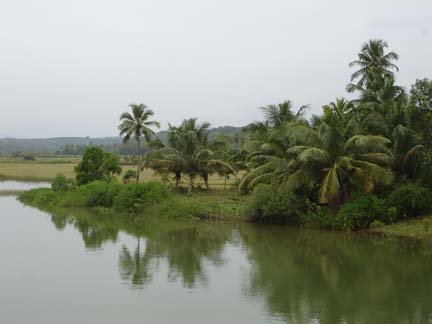
A Coastal estuary

A Coastal estuary
Holegadde near Honavar,Uttara Kannada dist, Karnataka

Copy? Right - but kindly remember to acknowledge!

Creative Commons License
This work is licensed under a Creative Commons Attribution 3.0 License.

" tulu-research.blogspot." ತುಳು ರಿಸರ್ಚ್. ಬ್ಲಾಗ್‌ಸ್ಪಾಟ್‌. ಇನ್

" tulu-research.blogspot."  ತುಳು  ರಿಸರ್ಚ್.  ಬ್ಲಾಗ್‌ಸ್ಪಾಟ್‌. ಇನ್
Have a nice day !