Friday, May 29, 2020

429. Etymology of Pernāl: A festival


 Recently our Muslim brethren at the end of the month of fasting celebrated the festival locally known as,   “ Pernāl” in Tulu as well as Byāri languages. The Pernāl is a big day or day of festival for the Muslims.

Besides Muslims, Saint Thomas Christians of Kerala have also adopted the word for “Pindikuthi Perunnāl”, a festival celebrated by their community on January 6th every year. Incidentally the term “ pindikuthi”  refers to the trunk of banana plant with torches/lamps pierced on it and  installed in front of houses during the celebration of the festival.  The term Perunnāl is equivalent of  the Tulu/Byari word  Pernāl.

 The word Pernāl is interesting  from the viewpoint of evolution of Dravidian languages and culture. The etymology of the word can be traced to various Dravidian languages as it is also found in Malayalam and Tamil languages as “Perunnāl”.

Peru=big, great; large. nāl= day. Thus, the word Pernāl means a big day ; a festival; or a day of festival

The word “peru” is common in Tulu place names such as: Peruvayi, Perla, Perne, Periadka, Peramoger and so on.  In daily usage we can find: “permari”(= big snake or python), “piriya” (=costly; an item of big value), “periyappe” (=literally: big mother; actually refers to mothers elder sister), “periyamme” ( fathers elder brother) etc. However, strangely the suffix “nāl” is missing in current usage of Tulu language. It might have been lost during the process of lingual evolution in Tulu. Contrastingly, we find the word nāl still prevailing in the neighborly Kannada language in the form of nāle (=tomorrow) and nāliddu (=day after tomorrow) etc.

In the current usage of Tulu language, the word Pernāl, is used exclusively for the Muslim festival. For other festivals, Tulu people have adopted an alternate word “parba” apparently derived from Prakrit that prevailed in the region during early centuries of the Common Era. (The Kannada equivalent is “habba”). The word “parba”, prevails in Sanskrit in the form of “parva”.

In this context, it reminds me another Dravidian word “palli”. The word palli originally represented a congregation or a group of people assembled together or a village center. The word palli also existed in old Kannada. The modern Kannada equivalent of palli is halli, the village.  Muslims settled in the coastal region probably around 7th century CE onwards, adopted the word palli to represent mosques where community gatherings were held for prayer etc. After wards, the word palli was used exclusively for mosques and other implications were discontinued.

The short note is an example just to show how changes takes place in the word usages with passage of time due to prevailing   environmental conditions.

R.


Saturday, April 11, 2020

428. Tingoḍe aka Singoḍe & Tulu Calendar


We hear occasionally some archaic words in Tulu spoken by elderly people. In the list of archaic Tulu words such as Rumi, Sāyer or Sayir  ( You may read our older Posts on these) etc,   we may add the word  Tingoe  or Singoe’ (ತಿಂಗೊಡೆ/ಸಿಂಗೊಡೆ - pronounced with short vowel.  Most of the present-day young generation may be quite unaware of such archaic word usages.

What is this word Tingoe aka Singoe signify?  Let us elucidate.

Tulu Months

In Tulu Nadu, natives follow a calendar based on Solar system (Sauramāna Paddhati).   Tulu months are:

(1) Paggu : (Mesha = Chaitra-Vaishāka, April-May),

(2) Besha : (Vrishabha = Vaishākha-Jeshtha, May-June),

(3) Kārtel : (Mithuna = Jeshtha- Āshāḍa, June-July),

 (4) Aai : (Karkataka = Āshāḍa -Shrāvana, July-Aug),

(5) Sona : (SimhaShrāvana -Bhādrapada, Aug-Sept),

(6) Kanya/Nirnāl : (Kanya  = Bhādrapada- Ashwayuja, Sept-Oct),

(7) Bontel : (Tula = Ashwayuja -Kārtika, Oct-Nov),

 (8) Jārde: ((Vrishchika = Kārtika -Margashira, Nov-Dec),

(9) Perarde: (Dhanu = Margashira-Pushya, Dec-Jan),

(10) Puyintel : (Makara =  Pushya-Māgha, (Jan-Feb),

(11) Māyi: (Kumbha = Māgha -Phalguna, Feb-March), and

 (12)  Suggi : (Meena = Phalguna-Chaitra, March-April).


Tingode > Singode

First day of a Tulu month has been designated “Tingoe or Singoe” and the last day is called “Sankrānti”.  Sankrānti means transition. In other words, Sankrānti refers to   the day when sun appears to enter a new constellation in the sky. So a day following a Sankrānti  is Tingoe or Singoe.  Inversely, a day preceding a Tingoe or Singoe is Sankrānti.

Those who are following Gregorian/Julian Calendar (English Calendar), must have heard  the  All-India Radio  (AIR) one-liner song, “Aaj pahila taarik Hai, Aaj pahila tareek hai  It is repeatedly sung before starting the other AIR programmes.  This is a reminder to listeners to give attention to money matters (namely, payment day, budgeting monthly wages/salaries, payment of recurring outgoings, like for milkman, grocery shops, etc.  We can thus visualise the importance of Tulu first day of a month, involving planning occupational priorities in an agrarian society and other socio-religious rituals.  Traditionally,  Tuluva households  conduct pooja (prayer) in family shrines for the daivas (divine Spirits) on the day of Sankrānti.

Etymology of Tingoe/ Singoe

In our opinion, the word is related to the Tulu word “tingol” (ತಿಂಗೊಳ್), meaning a month. Thus, the word:  tingoe   could have originated as:  ting +oe ( which means the beginning of the month) . 

  Either the ancient   words were designed for brevity or the original nature of these early words must have been brief.  Transition of letters in Tulu leading to regional variations in pronunciations, over a period of time, was a common phenomenon in different   regions.  The consonant   ta () has changed over to   sa (), forming   Singoe as a regional variation of the Tingoe during the passage of time. Now in different Tulu regions the words   Singoe  and   Tingoe   are used interchangeably.

Other equivalents of Tingoe/ Singoe

Other  known  regional / tribal equivalents of the  words Singoe  or   Tingoe   in Tulu language  include: Tingalou, Tingalūu, Tingaludyo, Chingae  etc ( See: Tulu Lexicon , Volume 6, page 2936)

Sauramāna Yugādi 

Sauramāna Yugādi, i.e. Solar New Year, falls on tingoe/ singoe of   Paggu, the first month of Tulu Calendar. The auspicious day is also celebrated   by name of   vishu  (Kerala) or bisu (Tulunadu).   This year, it falls on 14th April, 2020, the next day of Mesha Sankranti.  As per the Indian solar calendar system, the Sun  transits from the star Revati  to  star Ashwini in the sky, appearing to our eyes as a result of the rotation of the earth in relation to Sun. (  In terms of lunar cycle it is usually the seventh day from full moon day or poornima.). The Sauramāna Yugādi is known as Varusa-pirappu, Chitirai-visu or Putanu in Tamilnadu. In Bengal it is known as  "Pohala boishak "(literally: first of Vaishaka), "nabha barsha" (literally: new year). In Odissa, it is known as "Maha vishuba sankranti". In Assam, Sauramāna Yugādi is celebrated as : "Bohag bihu" or "Rongali bihu." In Punjab it is celebrated as "Baisakhi".

Chandramāna Yugādi /Ugādi

In the case of Chandramāna or lunar system , the Yugādi,(beginning day of the lunar year) also known as gudi padva in  Maharashtra  is on first day of the Chaitra month.  Thus,  the  Chandramāna  Yugāadi has been celebrated on 25th of March this year, i.e. on Shukla pādya or pratipada.

Naming System

In Lunar (Chandramāna) system, there is two fortnights - one for the waxing moon (Shukla Paksha)and the other for waning moon (Krishna Paksha).  Each fortnight, days (tithis) are named sequentially as: Pādya, Bidige, Tadige, Chaturthi, Panchami, Shashti, Saptami, Ashtami, Navami, Dashami, Ekādashi, Dwādashi, Trayodashi and Chaturdashi (Shukla  Paksha 14 + Krishna Paksha 14 +2 - one for Poornima (Full Moon Day) and the other for Amavashye (New Moon Day).  The month starts with Shukla Paksha and ends with Krishna Paksha.

We think, there has been a naming system for all days of a Tuluva month in Solar (Sauramāna) System.  The Tulu months   begin with tingoe/ singoe  and ends with a Sankrānti.  What were the other names used for other days in the Tulu months?  There may be some elderly people who are still   aware of these names in the traditional Tulu day naming system, now largely forgotten.   We have tried to elicit information but so far not successful.  If any of our readers are aware these forgotten names for days in Tulu month, please share the data with us in this blog.

In lighter vein, there is an old idiom in Tulu language: ಕೆಬಿ ಕೇಣಂದಿನಾಯಡ ಗುಟ್ಟು  ಪಾತೆರುನು.“  (kebi kenandināyada  guṭṭu  pāterunu). On literal translation, this means:  Discussing   a secret   with  a deaf man.  It is a ridicule of a man doing useless work.  

 We hope we are   not doing such exercises.    We sincerely anticipate meaningful feedbacks   from our readers to make our efforts worthwhile.

Suggested Reading in  this blog:  Tulu Studies - Previous Posts:

 # 338/ 24.05.2014 -   Tulu Calendar,

 #  348/ 29.07.2015 -  Rumi,

 # 358/ 02.04.2016 -   Sayer  or Sayir


We wish all our readers a happy and prosperous Sauramāna Yugādi , with a sincere prayer that the auspicious day give us all strength to renew our energy levels  to fight courageously the dreaded disease covid- 19 caused by Corona Virus, in spite of many hardships caused by lock-down.  Let us spiritedly adhere to lock-down instructions to the letter, to drive away the common foe.


Ravindra Mundkūr   &  Hosabeṭṭu Vishwanāth


Thursday, April 9, 2020

427. Ancient capitals of Tulunadu

Recently there is a Tulu quiz questionnaire on history making rounds in Whatsapp groups, presumably meant for shedding lockdown blues and the boredom. The first question was:
Which was the capital of ancient Tulunadu?
The most popular answer was: Bārkūru.

Yes, Bārkūru  (Bārakūru) is the most popular choice because of reasonably well preserved monuments and relics that remind you the glory of the bygone history of the land.
However, the popular answer also belied the fact that most Tulu people are not aware of the fact that Tulu kings known as Alupas had about four to five capitals during different periods of the past history. Some of these capitals were older than Bārkūru, but generally ignored because of absence of visible relics of monuments. And it should be remembered that Bārkūru was ruled not only by Alupas but also by Kannada rulers of Hoysala and Vijayanagara dynasties. Thus, many of the monuments we see at Bārkūru were possibly built by Vijayanagar rulers.
1. Historical Alupa capitals in Tulunadu.

The capitals (administrative centers) of Alupa dynasty in Tulunadu, chronologically are as follows:

Alape (Eastern Mangaluru):  ca. 700 BC – ca 300 CE
Mangāra (Pāndeshwara, Western Mangaluru): ca. 400 CE -700 CE
Udyavara: ca. 700 CE- 1155 CE
Bārkūru: ca. 1155 - 1370 CE  
Manjeshwara: ca 1321- 1346 CE                 
Mūdabidre: ca. 1355 - 1410 CE

The Barkur as well as the Mangaluru was further occupied by the governors of Vijayanagara kings in the year ca. 1348 onwards, though they apparently permitted the Alupas to utilize their hereditary rights.
Mangaluru (Mangalapura) appears to have continued as their headquarters/capital till the beginning of 15th century, possibly managed by members of Alupa family, even during they had additional capitals at Udyāvara, Bārkūru, Manjeshwara or Mūdabidre. Some members of their dynasty also established themselves for certain durations at Banavasi (with Kadambas) and Badami (with Chalukyas) in mainland of Karnataka.
2. Ancient places of Mangaluru significant in the Alupa history

Alape in eastern part of Mangaluru is the original village that gave the dynastic surname to the Alupa rulers. The location of administrative center/palace was to different locations within Mangaluru during the prolonged span of their rule over Tulunadu. In the early periods they named their capital/palace areas as Alake or Alaka, named after the capital of Kubera, the lord of wealth. There are at least two places known as Alake in Mangaluru even today, even though the ancient relics of the historical monuments of those days may not have survived the vagaries of time. One Alake is located within Padavu (old village limits), near Bikarnakatte; the other Alake is near Kudroli in Western Mangaluru.
King of Mangāra and hill of Mangara has been cited in certain Tulu padanas. The Mangara is the western part of present Mangala devi area, where a Būta shrine exists even now carrying the locality name of Mangāra. Kulashekara area on Mangaluru-Mudabidre road is named after one of the Alupa ruler of the same name.

Many of the points relating to the analysis of these historical aspects have been discussed earlier in our previous posts in this blog. (Note: The chronological dates mentioned could be approximate, subject to validations based on further studies.)

Friday, February 7, 2020

426. Etymology of the word Odera or Vadera

It is possible that some simple appearing words may have altogether alternate explanation etymologically. For example the word: “Odera”. If we look it as a word of Kannada origin it may simply mean owner lord or boss.
·         Odera Hobli or Vadera Hobli near Kundapur.   
·         Oderabettu in Mulki

If we look it as a word of Kannada origin it may simply mean owner lord or boss. However, there are related ancient words like:  Odi and Oda. Were these words evolved into Odera?
 Let us analyse the  expositions of pleonastic compound words used in some of the  place-names vogue in the coastal districts of Udupi and Dakshina Kannada, popularly known as Tulu Nadu.

Oda : and its variants
(I) Oda
·         Oda/Vāda= boat
·         Odera = evolved from Oda(da)r or Oda + ar/er = A boatman.  Or fisherman.
·         Vadera =alternate form of Odera.

(II) Odeya
·         Odeya=owner, lord
·         Odera = Odeya + avar/ ar.  A  landlord or a nobleman or a king.

(III) Vadda
·         Vadda (Prakrit; Sanskrit “Vriddha”) = Elderly or senior person.  Big.   
·         Vadera= a worshippable or respectable elderly or important person. (as in “Vaddāradhane”).

(IV) Odda
·         Odda= stone cutter. Also meant an artisan? Vodda, a variant of Odda.
·         Odari= artisan? Vadari an variant of Odari. 

(V) Oddu
·         Oddu 1= a small barrage across a fluvial course.
·         Oddu 2= stub remaining after harvest of paddy crop in fields.

First view
Our first impression is that Odera is derived from Oda (= boat).   So Oderabettu is a hamlet of fisherfolk.  This is evident from the predominant population of fishermen in the area, engaged in fishing in rivers and sea.
Apprehensive of our jumpy view, we feel it necessary to give a studied and discerning exposition in the matter.  What follows is our attempt to analyze the place names referred above.

Vadera Hobli
Vadera hobli is a large village, located between Kundapura and Basrur.  Basrur was a prominent port for marine trade during historical times.  Since ports were connected to fishermen colonies it can be surmised that Vadera hobli , was named after fisherfolk.
We find an alternate explanation in the following story: There is a historical connection of Vadera Hobli and Kundeshwara Shiva Temple to Shringeri Dharma Sansthana in Chikkamagaluru District.   It is popularly known as Shringeri Math, located at Shringeri-577139 on the banks of River Tunga.  It is about 85 km East of Udupi and 100 km (62 miles) Northeast from Mangaluru across Western Ghats.  There is an inscription of 1406 Century  AD found at Vadera Hobli.  Two priestly persons (Bhats) of Hangaru donated this large area to the administration of Shringeri Math when the Jagadguru Shri Narasimha Bharati was the Pontiff. So income from this land was used for religious purposes.  So it has become a land of ‘Brahmadaaya’.    Again these two Brahmins regained this vast land after paying original price (Moola Kraya).   According to the Inscription, the witness to this sale/purchase was Bettada Devaru (Lord of the Hill), i.e. Shri Malahanikareshwara in Shringeri.   Thereafter the income from this land is used for the administration of Kundeshwara Temple.   As the land is connected to Shringeri Shri Shri Sharda Math and Shri Shri Shri Narasimha Bharati Vodeyar was the Pontiff then, this has come to be known as ‘Vadera Hobli’. 

Oderabettu
Odera may reflect to boatmen or a feudal lord + bettu, meaning a high land at east Bank of R. Shambhavi in Mulki.   Mulki was ruled by vassals of Alupa/Vijayanagara.  They are called as ‘Savantas’.    So the hamlet is now popularly known as ‘Oderyarabettu > Oderabettu.

Odda places
·         Oddarse > Vaddarse.  It is in northen part of Udupi.
·         Oddathamukhi.   It is a hilly area in Sulia Taluk.
These could be derived from the Odda (senior, respectable) word probably suggestive of ancient Jain traditions.

Odera-Vadera : A riddle!
It is possible that originally the Oderabettu or Vaderahobli could have been   boatmens or fishermens colony, like the word “patna” (or “pattaNa”) originally used for the colony of fisherfolks .   It reflects to the societal preference of living in groups.   Fisherfolk living together as a community is an age old practice.  The Koragas, the original tribal inhabitants living in Tulu Nadu, refer to fishermen as ‘pattanadakulu’ or the people from the “patna” (=colony; town).  
The place names Oderahobli and Oderbettu are of recent coinage some time in 14th/15th Century AD.   It reflects the influence of Kannada.  Thus there is a possibility that the words were slightly modified with change in meaning, after the Tulu Nadu came under the rule of Kannada Kings.   It is a common factor that old place names transform into the hue of language of the conqueror.   ‘Kannadikarana’ (=Kannadaization) and Sanskritisation have played an important role in shaping and altering the place names  (as highlighted in one of our earlier Posts). Human memory is short.  It remembers only the very recent events and never bothers to know what happened in time-sand of history.

Oderabettu is a high place where the fishermen inhabited since long ago.   They engaged in fishing in ponds/lakes, streams and rivers prior to venturing to sea for fishing.  We know about the changing courses of rivers and ingress and regress of sea near the coastline.  This phenomenon is highlighted in our various Posts (on Mulki, Kaipunjal to Udyavara, Udyavara, Malpe – Magic of Malpe, Kordel, Kolalagiri, Telaru>Chelairu– Community Fishing, etc).
It may not be a remote chance to say that the riverine place Oderabettu or Vaderahobli is coined to mean a ‘colony of boatmen’.  Oderabettu in Mulki is abutting Shambhavi River and is predominantly inhabited by fishermen even today, besides other places Ulya aka Chitrapu, Mulki-Hejamadi Kodi, Hejamadi Kodi located in sand barriers, Kadike or Sasihitlu (also a sand barrier spit formed between River Nandini ( Pavanje River) and sea.  Nandini and Shambhavi pair together  and form a single estuary.  Mulky was a leading port for marine trade of yore.  Sailing boats of merchants sailed up to Olalanke (Old Mulaka > Mulki town) near Karnadu (famous for Venkataramana Temple of Gouda Saraswats.

There is one more pattern of naming places.  It is the interplay of the thing/matter/place and sense of belonging.    We give some examples below:
·    Pandya/Pandyan: Pandi = boat.   Pandya or Pandyan is one who belongs to or owns a pandi..
·      Kharvi:   Khar = Sea coast.  One belongs to Khar is Kharvi, a fisherman as called in some places of Kundapur up to Karvar(a). 
·         Kadya(n) (Kad + ya):  Kad = forest.  One who is from forest area is called Kadyan.
·      Poleya (Pola+ya): Pola = agricultural field.  One who works on or belongs to this field is Poleya. It is possible that  traditionally “poleya” were agricultural laborers.

This pattern is logical and is the original intention in coining place names Vaderahobli and Oderabettu.  It goes well with the convention that the places were named invariably by outsiders. Even Dr. P. Gururaja Bhat has raised a point in the passing in his book ‘History of Tulu Nadu’ instigating us to study the place name “Oderabettu”.

Notes on this post
1. Pleonasm means use of more words than what are necessary.

2. A group of villages as an administrative unit are traditionally called hobali or hobli (equivalents: nād or nādu or māgane) in southern India. A Taluk usually consist of a few hobalis. A hobali in turn is divided into a few firka or phāt magane.  During Alupa and Vijaya Nagar period of coastal area was divided as Barkur and Mangaluru Hobalis.
It was a common custom to call out guests as from these Hobalies during Tulu traditional marriage ceremonies while placing plates (in Tulu tongue called as ‘Kanchi’) in front of groom and bride for collecting gifts in cash or kind. The Gurikara of the village addresses the assembled guests as from Barkur and Manguluru hobalies and seeks their permission as “ಕಂಚಿ ದೀಪೆರು ಪಣ್ಪೆರೋ” (kanchi deeperu panpero) and the assemblage says, OK (ಎಡ್ಡೆ ಪಣ್ಪೆರೊ). Kundapura and villages around is called Bhagwadi Hobali, where Mahishamardini  Temple is famous.

3. ‘Vaddāradhane’, composed by Shivakoti-ācharya is the earliest available text in Kannada.  It describes stories of the elderly people, practicing Jainism.   Jainism was a predominant religion during pre-Christian Era in Karnataka including coastal Karnataka in medieval days. 
  
4. Potters community of Tulu Nadu is called as Odari/Vadari, besides other traditional names such as Moolya, Kumbāra (“Kumbhakāra” in Sanskrit), Kusave, meaning one who works with mud (potters clay) and water.  Kulāla is a Sanskritised   word and as such, a potters disc is called “Kulāla Chakra”.  They have baris (surnames – descent markers such as Kundar, S uvarna, etc.  as  is common to other communities of Tulu Nadu.    They speak Tulu, though they are believed to have immigrated to Tulu Nadu from Tulugu speaking areas. It is not clear whether the word has any connection with the tribe “Odda” or “Vodda”.

5.  The Oddas or Voddas > Odari/Vadari, are a tribe of Telugu speaking people.   They are working in quarries and as such, stone-cutters or splitters, compared to Kallu kuttiga of Tulu Nadu.   Naturally, they become shilpakaras (architects or artists in rock stones and writers of inscriptions).  They are now spread all over South India, including Maharashtra.  They are now mainly engaged by builders of building constructions. 
Refer our Posts: 124/07.07.2008 (Dissecting strange words II) and
398/22.01.2018 (Trail of Potter’s Wheel in Tulu Nadu).

6. Writer Vishwanath’s   sister-in-law is from Oderabettu.  He reminiscences school days in 1950’s. He used to visit his niece’s in-laws place at Mulki-Hejamadi Kodi by crossing river at Bappanadu ferry point or Oderabettu ferry point. Once he went to Oderabettu for Bappanadu Aayana with his eldest brother on foot along sea coast up to Nandini ferry point at Kadike Kodi and reached the east bank of Nandini by ferry boat.  Return journey by road was very tedious and time consuming. Bus route from Kulur to Pavanje terminates at Nandini Ferry Point, east of present Pāvanje river  bridge.  Pavanje-Mulki route terminates at Old Mulki ferry point.  Kulur old bridge was under construction during 1950-51. Then the passengers used to embark their next bus by crossing rivers by ferry boats. 


-Vishwanath:  with  Ravindra  

Blog Archive

Books for Reference

  • A Comparative Study of Tulu Dialects By Dr. Padmanabha Kekunnaya. Govinda Pai Reserach Centre, UDupi. 1994
  • Koti Chennaya: Janapadiya Adhyayana. By Dr. Vamana Nandavar. Hemanshu Prakashana ,Mangalore.2001.
  • Male kudiyaru. Dr B. A.Viveka Rai and D.Yadupathi Gowda, Mangalore University,1996.
  • Mogaveera Samskriti By Venkataraja Punimchattaya. Karnataka Sahitya Academy.1993.
  • Mugeraru:Jananga Janapada Adhyayana. By Dr Abhaya Kumar Kaukradi.Kannada & Culture Directorate,Bangalore & Karnataka Tulu Academy, Mangalore,1997.
  • Puttubalakeya Pad-danagalu. Ed: Dr B.A.Viveka Rai,Yadupati Gowda and Rajashri, Sri Dharmasthala Manjunatheswara Tulu Peeta. Mangalore University.2004
  • Se'erige. Ed:Dr K.Chinnapa Gowda.Madipu Prakashana,Mangalagangotri,2000.
  • Studies in Tuluva History and Culture.by Dr P Gururaja Bhat (1975).Milagres College,Kallinapur,Udupi.
  • Taulava Sanskriti by Dr.B.A.Viveka Rai, Sahyadri Prakashana,Mysore 1977
  • TuLu naaDu-nuDi By Dr.PalthaDi Ramakrishna Achar, Puttur.
  • TuLu NighanTu. (Editor in Chief: Dr U.P.Upadhyaya, Govinda Pai Research Centre,Udupi. Six volumes. 1988 to 1997
  • Tulu Patero-A Philology & Grammar of Tulu Language by Budhananda Shivalli.2004.Mandira Prakashana Mangalore. p.317. (The book is in Tulu Language using Kannada script)
  • TuLunadina ShasanagaLa Sanskritika Adhyayana. By Shaila T. Verma (2002) Jnanodaya Prakashana,Bangalore, p.304.(Kannada)
  • Tuluvala Baliyendre. Compiled by N.A.Sheenappa Hegde,Polali,Sri Devi Prakashana,Parkala,1929/1999

A Coastal estuary

A Coastal estuary
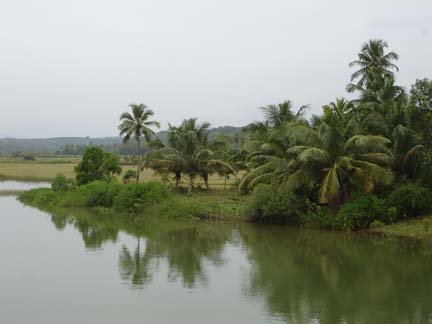
Holegadde near Honavar,Uttara Kannada dist, Karnataka

Copy? Right - but kindly remember to acknowledge!

Creative Commons License
This work is licensed under a Creative Commons Attribution 3.0 License.

" tulu-research.blogspot." ತುಳು ರಿಸರ್ಚ್. ಬ್ಲಾಗ್‌ಸ್ಪಾಟ್‌. ಇನ್

" tulu-research.blogspot."  ತುಳು  ರಿಸರ್ಚ್.  ಬ್ಲಾಗ್‌ಸ್ಪಾಟ್‌. ಇನ್
Have a nice day !