Wednesday, September 18, 2013

315. An Ancient, Place name indicator word: Ala

Languages undergo drastic changes with passage of time along the history, such that some of the earliest words may be obliterated from the memory and general usage of our people. However these words or their derivatives may still continue to live in the form of prefixes and suffixes or other modified words. 

The word ‘Ala’ was in use in Tulu and other Dravidian languages as seen in some of the older Tulu place names,  but it is not in common current usage with the traditional meaning attached to it. As an exception, some words, based on Ala with implied meaning   connected to water, are still current.

Note the following Tulu words derived from the ancient word Ala:
Ale =waves;
Lat/Latti =Return sea waves after flashing shore, colliding with incoming waves of varying force; ( It is a delightful sight to see spurting of foamy water),
Ale2 =Butter milk,
Alankunu = to splash and spill (as applicable to liquids),
Alanku = a kind of fresh water fish,
Alambu= rinse cloth in water.
Aalambu =  moss,
Aaleppatu = a small canal or ditch for water flow in fields,
Aalenji = muddy substances settled down in water and/or moss-like tiny plants growing on surface of stagnant water,
Aalikallu = hailstone,
Aalibarsa = hailstorm,
Alli poo = water-borne flower, water lily, lotus , etc.
 The word Ala seems to have been derived or borrowed from an older language that existed before Tulu.  Or else, is it a Proto-Dravidian word?  We have to find out the origin of the word.   It is bit difficult to get to the source of ‘Ala’ as it is also associated with similar sounding words in Arabic and Uralian languages, including Indo-Eurasian?  
Aal/Alam/Alas/La
In Tulunadu, there are many place names with ‘aal’ as suffix as well as prefix.    For example, we can quote some names:  As suffix in Posraal, Koosaal, Kemral, Puraal, Kadal (Sea), Kudla/Kudal, Perdala, Perla, Kerala, Panchala, Ambala, Kandla/Kandal, Khandala, Kurla and so forth. 
As Prefix in Alade, Alangar, Aluve, Alipe/Alupe, Alike, Alwar, Alawaye, Almora, Alexandria (a port city of Egypt), Alquos/Alqueze (UAE), Aleutian Islands in Alaska (USA) and so on.  There are many place-names in West Coast and East Coast with Suffix ‘kulam’ i.e. area of pond, lake or a water-body (q.v. our earlier Posts –186, etc. - on place-names). 
‘Aal’ is an ancient word, provenance of which is not attachable to any definite language. It is plausibly derived from African heritage.  It is thought to be connected to water, shore or a habitation by the side of a river.
‘Alam’ is also shortened to ‘La(m)’.  Note the word ‘Lambalaki’, meaning ‘Sagaratanaye’ (= Daughter of Ocean), in Kannada devotional song on Goddess Lakshmi (qv ಅಂಬುರುಹೇಕ್ಷಣೆ ಲಂಬಾಲಕಿ, ಜಗದಂಬ ಪೊರೆಯೆ, ಸತತ ಗಂಭೀರ ಗಜಗಮನೆ = Amburuhekshane lambalaki, jagadamba poreye, satata gambira gajagamane…). She rose from the sea while it was being churned out and chose Lord Vishnu as her spouse. Compare Samudra Mathana (Churning of Sea) of Hindu Mythology to Loss of land of Lemuria or Kumaria or Gondaranya as geological event.

Migrational aspect
A curious aspect is that it is ubiquitous in lands between two Poles.  With fragmented accounts, it may seem difficult to come to a conclusion about this ramification. Migrations may be the reason for such a phenomenon.  We have records of migrations for the recent historical events and political upheavals around the world. Some are even fresh in our memory. There are many  reasons which are instrumental for mass migrations, viz natural calamities (eg. earthquakes, tsunami, volcanoes, weather changes leading storms, incessant rains, landslides, change of river courses, global warming, glaciers,draughts, etc.) and Political, Linguistic and Religious strife. Outlining migration is difficult without the knowledge of major events in global history, spanning thousands and thousands of years. In the beginning, millions and millions years ago, the earth was one continent with one ocean.  Later it split into seven continents and seven oceans (q.v. Web-page: Timeline Index and our Post-275 of 17th April 2011: Geography in Puranas- Concept of Continents). The early intelligent people of some highly evolved civilizations were able to reach different regions quickly (as manifest in our legends).  So it is imaginable how languages travelled with people originally from Africa along coast lines to Asia, Australia and back to Africa via India and thence to Europe via Nile and Mediterranean, Turkey to Siberian and America (q.v. Journey of Mankind). When we encounter or bounce against some words, it is evident that they or their derivatives have similar meanings in various languages.  It shows an under-current of a proto language known by several linguistic/tribal groups, closeted in a region.  Going downwards in timeline, we can recover or reconstruct lost pages of history by deciphering the words percolating from past to present with their original and/or evolved meanings.
Shades of Meanings
Alam means an area around or near waterbody in most of the Indian languages.  Connection to water is attached to most of Indian place names in coastal belt right up to Kanya Kumari. However, in Persian, it means an area under rule of a king (Alamgir, Alamshaw). [Confusion may arise when one equates ‘ala’ with French compound word ‘a la’, which means ‘like or in the manner/fashion/style of’.]
Aal basically means water body, like river, lake or sea shore.  In Kannada speaking areas too we have Alur, Alamatti, Almel, etc.
‘Alu’ has another meaning of ‘snake’.  Tulu Nadu is also called as Nagara Khanda (Land of Nagas). Could we apply this meaning to have alternative explanation to ‘Aluva’ in Aluvakheda, ruled by Alupas?
Let us study ‘al’ in other languages in the World:
Al (Arabic and Tulu) = family, race, person/place of.
Al, Alb (Aryan languages) = high, hill (Albania, Alps – cognate with Latin ‘albus’ = white). Compare the word Mala, male in Dravidian languages, meaning elevated area, hill or mountains (Eg. Malpe, Malabar, Malenadu, Malad, etc.)
Al = forest
Al = Red or Gold (Turkic  & Mongolian)
Ala (Bantu) = a cliff
Alas (Russian, Uralian and Norse) = Port
La = Mountain Pass
(See: Glossary of Geographical Terms and Place names by J.N. Larned).
Ale3 has also the meaning of ‘to wander’in Tulu and Kannada.  ‘Lam’ in English and Scandinavian means ‘beat or thrash and to flee or escape or headlong flight’.
Some Cognate Place names
Toponym(y) is the study of place-names, their origins, meanings, use and typology.  It is a branch of Onomastics, i.e. Study of names of all kinds.  Settlements of people were known by the natural landscape features, such as hills, rocks, valleys, islands and harbours, from remote historical times. As man advanced to a high degree of civilization trade and commerce increased with regions within and lands without.  Maritime trade and also migrations for various reasons were instrumental in coinage of new names even from prehistoric times. Places were also named after man-made features, say forts, etc. and personages. 
Demonymy is a part of toponym(y), as are Ethnonymy, Hydronymy, Exonym and Endonym. Demonym is a Greek compound word, which means: Demo = Populace + nym = name.  It means a name for a resident of a locality, Eg. Alemanni for several Germanic tribes settled in Switzerland.  Many surnames of Tulu people are identified with their place of origin, etc.
While writing on Toponymy one has to examine the linguistic origin of place names.  Etymology is breaking up the word elements or stems to find out its origin and meaning.  Study of Toponymy is difficult. It deals with people, their culture, language, geographical features and climate, which condition the style of living of the settlers of the area. Cross cultures in a region, involving two or more languages contemporaneous in such and such periods, also play a vital role.   Linguistic convergence is the product of many factors, such as pidginisation and creolization (i.e. mixture of different language groups with specific cultures and emerging as one group).
Let us analyze some cognate place names around water-bodies world-wide:
Algeria:  This country takes its name from City of Algiers (French Alger), which in turn is derived from the Arabic word ‘al-gazair’, (= ‘the islands’).  Four islands off the city’s coast became a part of the mainland in 1525.  It is a short name for the older name ‘gazair bani mazhanna’, meaning ‘the islands of the tribe Bani Mazzhanna.’
Aland:  It is an autonomous Province in Finland.  It means a ‘Land (in the) water’ from the Germanic root ‘Ahw’ cognate with Latin Aqua.
Alasund: It is a Port City in Norway.  It could be split as ‘Alas (water) + Und’ (place).
Alemanni (aka Alamanni or Alamani):  They were a confederation of of Suebian Germanic tribes, inhabiting Upper Rhine River in modern Switzerland.  The legacy of Alemanni survives in the name of Germany in several languages (Eg. French: Allemagne, Allemand.  Portuguese: Alemanha, Alemao.  Spanish: Alemania, Aleman.  Welsh: Almaen.  Arabic: Almanya, Language Alemaniyya. Persian: Alemaan – language Alemaani. In Gothic, Alamanns means ‘totality of mankind’ – al = all + mann = man). In spite of these foreign names, they called themselves Suebi who were constantly engaged in conflicts with Roman Empire in 3-4th C.  They settled in North Switzerland and Alsace when driven from there.
Alaska (USA):  It was a Russian colony until March 30, 1867 when it was purchased by the United States. When dissected, the name ‘Alaska means Alas (water-bodied) + ka (place). Since Russian occupation, it was known for the peninsula only. It is derived from ‘Aleut’, meaning the mainland or more literally, ‘the object which the action of the sea is derived’ (q.v. Wikipedia). It is also known as ‘Alyeska’, the Great Land. It has 34,000 miles tidal shore-line, has more than three million lakes, has marshlands and wetland permafrost cover to 188,320 miles.
A part of Aleutian Arc is a group of 14 large volcanic islands and 57 smaller ones.  The topography is like a broken bridge from Asia to America.  It was a route of first human settlers of Americas, as found out by Anthropologists.  Early human sites in Alaska are supposed to have been submerged by glacial water.  The Islanders are skilled hunters, fishers and basket makers. Japanese held these islands for some time during World War II.
Altai:  In means ‘Golden Mountain’ in Turkic and Mongolian (Al = Red or Gold + Tai/tag = Mountain. Altai Mountains are a mountain range in East-central Asia, where Russia, China, Mongolia and Kazakhstan come together and where Rivers Irtysh and Ob have their head-waters. The Altai is one of the Russia’s highest-lying region and place where many cultures mix.  Telengits are one of the most ancient people.
The Altai Mountains were home to Denisovan branch of hominids who were contemporaries of Neanderthals and of Homo Sapiens (modern humans), descended from Homonids who reached Asia earlier than modern humans. Knowledge about Denisovan humans is derived from DNA evidence (dated to 40,000 years ago) and artifacts, discovered in Denisovan Caves in Altai Mountains in Southern Siberia in 2008.  During Bronze Age around the start of the 2nd Millenium BC, a massive migration of peoples from the region took place into Europe and Asia.  It is a land of many lakes (q.v. Wiki).  It is identified as a point of origin of cultural enigma (Seima-Turbino Phenomenon). It is a place of endangered animals, like snow leopard, Agrale sheep, etc.;hence a World Heritage Site.
Linguists note that there was dissolution of the Uralo-Siberian & Uralo-Yukagir language families in 6000-4000 BC.  Frederik Kortlandt of Leiden University (Netherlands) concludes that “Proto-Indo-Uralic and Proto-Altaic may have been the same thing and contemporaneous with Proto-Indo-Hittite (4500-4000)* and that Proto-Finno-Ugric and nuclear Proto-Indo-European may again have been contemporary languages (3500-3000).   This puts dissolution of the Uralo-Siberian language family in the 7th Millenium.  It now becomes attractive to identify the latter with abrupt climate change of 8200 BP or 6200 BC when severe cold struck the northern hemisphere for more than a century.  The catastrophic nature of this disastrous event agrees well with the sudden dispersal and large scale lexical replacement which are characteristic of the Uralo-Siberian languages (qv. Indo-Uralic and Altaic, www. kortlandt. nl.” *Hittites were the ancient people of Asia Minor & Syria.
Shangri La: Shang (Mountain) + La (Mountain Pass) in Tibetan language. It is a place accessible by a passage or opening between two mountains valleys.
Shambhala; Shambala: A mythical kingdom hidden in somewhere in Inner Asia – known to be Buddhist Pure Land.  Though physically hidden, it is accessible by spiritual or visionary search through meditation.  It is a Society where all inhabitants are enlightened
Latvia: It is derived from the name ‘Latgale’.  The stem ‘Lat’ is associated with several Baltic hydronyms , places named after water bodies, and other element ‘gale’ means ‘land’ or ‘boundary land’ in Baltic language.
Lebanon:  The place name is derived from Semitic root LBN, which is linked to closely related meanings in various languages, such as ‘white’ or ‘milk’. In local dialect, it is known as ‘Lubnen or Lebnan’ and ‘Lubnan’ in standard Arabic.  It refers to ‘snow capped Mount Lebanon’. It is an Arabic country in East Mediterrean basin, having a long coastline.  Located at the cross-roads of Mediterrean basin, it has rich ethnic and religious diversity.
Alabama: It is a State in USA on the South-eastern region.  It has got long navigable inland waterways.  Indigenous people of different cultures lived here many a thousand years ago before European colonisation.
Lanka: It is an Island country, famous as Golden country in ‘Ramayana’ time. When split, it means La= (in) Water + an=raised + ka=country. The term ‘Lanka’ means an island as in ‘Olalanke’ (=kuduru or river island) in Tulu/Kannada.
Alakananda: It is a river in Himalayan range in Uttarakhand State, flowing partly in Tibet.  It is a source stream for the Ganga Nadi according to hydrology. It joins Bhagirathi at Devprayag after flowing about 180 km through Alakananda Valley.  In Sanskrit ‘Alaka’ means curl or lock of hair.
Alakavati: In Mythology, it is the capital of Kubera (Vaisravana), half-brother of Ravana.  It is old name of Tibet. It means the land of flowing or braided locks.  It is named after the style of men and women of yore wearing their hairs in that way.
Lāta:  It is an old name of Gujarat and is also a ruling dynasty.  Lātas were spread from Gujarat to Karnataka.  This land of Lāta (La=Water + Ta=Region or country).  This place name is comparable to Latvia.
Lavasa:  La (Water) + Vasa (Locality/Settlement.  It is a locality in Pune on foothills of Sahyadri with a lake.
Tulu Cognates
Let us analyze at random some Tulu Place names:
Aluve: It means an estuary.
Aluvakheda of Alupas: Kheta>Kheda means a valley or depression.  Therefore, it is a valley near an estuary (aluve/aruve).  It is the original place of Alupa/Alupe Kings rather than Alike.  Alupe now is an rural area with deep valleys where, Alu, the  river course (of River Netravathi) has been shifted in the course of history.  River estuaries of Mangalore, Udyavara and Barkur were the main trading centres of Alupas under their rule.  So they used to change their capital to one of these centres owing to natural calamities or exigency.
The Alupas were indigenous family, who ruled from the coastal cities in erstwhile Tulu Nadu (Now South Kanara and Udupi Districts) for more than thousand years, were probably of the Naga Race.  Geographer Ptolemy mentions Aluvakheda as an independent unit in the 2nd Century AD.  Halmidi stone inscription of 5th C. contains a general reference to Alu, i.e. Aluva country.
Posrāl: It is an Ethnonym.  It was probably a habitation of new comers, as we find out while dissecting the word (Posara=newly arrived + Aal=people.  It is a hamlet on southern part of Mundkur Village on the bank of River Shambhavi, which debauches into Arabian Sea at Mulki. Who are these new people, who assimilated with local populace? Or is it a new area, which came into being around a water-body on some natural changes?
Kemrāl: A village of red-coloured people, viz. Kemmar or Komma people as discussed elsewhere in our Posts.
Koosal:  It was a land of Koosa tribal people. 
Puraal (Polali)/Pulinapura): An ancient Temple dedicated to Goddess Rājarājeshwari stands on the bank of River Phalguni here. F. Kittel’s Kannada-English Dictionary gives the meaning of ‘Pura’ as a stream, a rivulet, a brook, a water channel (Poral, Ponal, and Kalpura. Poora, natural water course, and drain).  In Sanskrit, ‘Poora’ means overflow or an inundation.
There is a place name Chitrapura (between Hosabettu & Baikampadi), a Sanskritised name for ‘Pori+pu’ in local tongue, about which present progeny is not aware of.  This area is part of natural storm water drainage, joining Gurupura (Phalguni) River.  This water course was bypassed to Arabian Sea before taking up the New Mangalore Harbour Project on hand.
Uppala: It is a coastal village in Kasaragod.  When dissected as Uppu+ala, it means a salty water(marshy)area. Possibly, it would have been a place for salt pans earlier.  
Volalanke: Read our Post-305; 18th October, 2012: Mulki – an emerged land.
Alevoor: Please read our Post of 2009.

Conclusion:
Sifting through available data collected from various sources, it is inferable from our general survey that ‘āl’ with its derivatives, convincingly implies connection  to water or places near water or to ‘people’ or habitation beside a water source. The usage is found in various languages of the world, including Dravidian and Sanskrit, suggesting that it could have been a very ancient word which has travelled many places along with the migrating human tribes in the history.
 It is hoped that the interesting ineluctable truth in this disquisition may spur readers to comprehend ancient heritage words in a broader plane.

-Hosabettu Vishwanath, Pune

Saturday, August 3, 2013

314. The Billava Community: Significant evolutionary trends


The study of historical evolution of Tulu communities is an  enchanting line of work as the strings we encounter in the due course implicitly reflect the evolutionary footprints preserved during the long journey since our early ancestors set their foots in this charming coastal terrain.
Ramanāth Kotekar has recently (2012) published an interesting and useful book on Billavas (in Kannada) entitled “Tulunadina Billavaru” (=Billavas of Tulunadu). We shall review some of the interesting aspects of the Billava evolution in the light of available data. Famous and well known historical heroic persons of the Tulunadu like Koti-Chennaya and Kantabare - Budabare twin brothers hailed from the Billava Community.

Billava diaspora                                                                                    
The Billava community population-wise constitutes the largest socio-cultural diaspora in Tulunadu. Currently, they are one of the most dynamic communities of Tulunadu. Traditionally they were archers, hunters, soldiers, toddy tappers, Spirit worshippers etc, The Billava community in Tulunadu has equivalents widespread in other parts of Southern India, like Namdhari in Uttar Kannada, Halepaika and Idiga in Shimoga and Old Mysore State areas, Tiya or Belchada (in Ullal- Kasargodu sector) in southern Tulu areas and many other analogous castes and communities spread all over India.

Multiple professions
The Billava diaspora consist of at least three major subgroups, such as (a) Billava, (b) Poojari and (c) Baida. Interestingly during the early cultural history they adapted themselves to several professional roles like the following:
1.      Archers, hunters and soldiers (Billava, Idiga, Halepaika).
2.      Gymnasts and teachers at Gymnasia (Garodi).
3.      Priests in Spirit shrines (Poojari).
4.      Traditional herbal medicine developers (Baida).
5.      Toddy tappers.
6.      Landlords (Guthu owners).

We shall discuss some aspects of these professions here below:

Billava: Archer
Archery was one of the earliest creative arts invented by mankind during its evolution from primitive stages. With development of proficiency in archery, the hunters were able to hunt efficiently wild animals for food.

The term Billava means an archer (or a hunter who makes use of bows and arrows). Archery is one of the oldest talents evolved during the hunter stage of human evolution. The word Billava  (billu+ava= person who uses bow), especially the suffix ava or avan (=he) is of Kannada origin. It suggests that the usage of the term Billava became popular during the reign of Kannada Kings in Tulunadu like Kadamba and Chalukya. The Tulu equivalent word for Billava is Biruva where biru means the bow. Thus Biruver is the equivalent word for Billavas in Tulu language.

Bhil : Sage Valmiki
However, the common Kannada word billu (=bow) is borrowed from the ancient tribal word bhil. The Bhil is an ancient tribal community of archers spread in many parts of India but presently living preponderantly in the forests of Madhya Pradesh and surrounding regions.
 The famous ancient poet of India Valmiki who is credited with the first compilation of the epic Ramayana hailed from the community of Bhils. The Bhils of Madhya Pradesh consider that the poet Valmiki was a Bhil or hunter-archer.
The ethnonym Bhil stands for bow and thus represents archers who traditionally used bows and arrows dating back to hunter stage of human evolution in the subcontinent. The alternate word for bhil was bhir, bir or biru, which was adapted in Tulu and the group was called Biruva or Biruver. Kannada people adopted the word bhill for bow and the group was designated Billava (or Billawa).

Garodi masters
Further during the course of evolution of cultures, when ambitious men acquired land and kingdoms were built to sway control over larger mass of lands, the archers were appointed by kings and chieftains to guard their territories against the enemies. Sooner the archers felt the need to acquire additional talents to fight the enemies. Thus soldiers trained in warfare were born and institutes (Garodi) to train the soldiers in the martial arts were also evolved.

The archers were also soldiers in the armies and in the due course also acquired the techniques of body building and martial arts. The Garodi (Garadi) were the native traditional gymnasia schools devoted to teaching of various techniques of martial arts such as archery, body building, wrestling, fencing or sword fighting and unarmed combat.
 It is widely believed that the modern Karate developed in Japan originated from techniques taught and spread by ancient Buddhist monks of Southern India who migrated to China and Japan for propagation of Buddhism. The ancient form of garadi was karati (as pronounced in Tamil) and the term karate apparently evolved from the southern Dravidian word karati for garadi.

Poojari
The term Poojari (=priest) stands for the traditional priest of Spirit worship ceremonies. The tradition of Poojaris devoted to Spirit worship evidently dates back to period before the expansive spread of Vedic Hinduism and worship of Hindu Gods in Temples in the subcontinent. In Garodis of Tulunadu, the principal deity is Bermer, a Spirit God widely worshipped in Tulunadu before the dominance of post-Vedic manifestation of Hindu Gods like Kumara, Shiva, Ganesha, Vishnu and Durga.

Baider
Baida or Baidya (later became Vaidya in Sanskrit) were the traditional Indian tribes that specialized in the study of forest herbs and the administration of pastes and decoctions derived from plants and herbs for curing various ailments. In fact the modern science of Ayurveda was evolved and founded by the tribe of Baidas.

Toddy tappers
The origin of the art of toddy tapping is not clear though it is generally believed that Thiyya and Ezhavas introduced the coconut palm cultivation and the techniques of tapping and brewing variety of toddies in the West Coast of India. In the Karavali, since long times, toddies extracted from the Palmyra palm (toddy palm) and the Coconut palm were in popular demand.

Bari system in Billawas
Ramanath Kotekar (2012) reports existence of the following 16 baris and additional 4 Koodubaris in his work cited above.
1. Suvarna ( Also known as Somanna, Chomann, Somannaya, Soma bannaya etc)
2. Amin ( Amananna,Ammanna,Amaranna, Ammana Bannaya)
3. Kotian (Kotianna, Koti Bannaya)
4. Kukkian (Kukkabannaya)
5. Karkera (Karamberanna, Karamberannaya,Kairanaya,Karkatanna, Karka banaya)
6. Mundan (Muyatanna, Munditanna, Mundittannaya,Munditta bannaya, Mundyan)
7. Bangera (Bangeranna, Bangaranna, Bangar bannaya,Banger bannaya).
8. Anchan (Alankanna,Alenchanna, Alenkanna,Alanka bannaya).
9. Kabera, Karbera (Kaberanna, Kaberannaya, Kabaranna, Karber,Kabera, Kabarabannaya)
10. Mulyeranna (Mulyarana,Mulyarannaya)
11. Kundar (  Ginderanna, Gundanna, Gunderannaya, Kundaranna)
12. Sanil (Chanilanna, Kundachanna, Chanale,Chanlannaya)
13. Salian, Palan(Chalyanna, Salyanna, Palanbannaya, Palan,Salan, Salyan)
14. Gujatran( Gujaranna, Gujarannaya,Gujjarabannaya)
15. Pulyatan(Bolle Aitanna, Aitanna, Bollotatanna,Bollota bannaya, Balyatanna, Baleranna, Pulyotanna, Pulyotan)
16. Kirodian, Mabian(Uppianna,Uppanna, Uppannaya, Upparanna, Uppan,Bagyotanna, Mabanna, Mabu bannnaya, Mabian)
17. Pergade
18.  Bunnan (Bannana)
19. Shirodian
20. Jattanna.

 Etc

Other commonly prevailing surnames:  Billava, Baida, Poojari etc.

Common Tulu surnames
Many of the bari surnames prevailing among Billava community are not exclusive to them but are common among different Tulu Communities like Bunts, Mogaveera etc. One of the corollaries of this fact is that Caste-Communities are relatively of recent origin compared to age old bari surnames. One of the important custom of the Tulu ancestors was to marry outside their bari (surname folds) since marriages within the fold of blood relatives were found to produce weaker or unhealthy off springs.
The surnames not found in other communities may have been expunged or modified or even renamed due to historical circumstances. Even many of the older surnames may have been obliterated owing to varied circumstances during the course of history.

Evolution of Tribes
Early undocumented history of this subcontinent is littered with profusion of tribes that vied with each other for basic amenities and comforts of primitive kind. Numerous episodes of tribal invasions followed one another. The tribes that came later along the timeline into the territory considered themselves as more evolved, civilized and advanced compared to the pre-existing natives and eventually the former dominated, subdued and marginalized the latter. This type of history has been repeated many times along the timeline of historical evolution
There are no evidences for the existence of many earlier tribes in this land except for their preservance in ancient place names!

Ama, Amara tribes  (Amin)
The bari surname Amin appears to have been derived from the tribal name of Am tribes of ancient African Origin. Surnames like Ammannaya, Ammanna-bannaya, Amaranna, are considered equivalents of the Amin bari surname. Apart from Ama tribes, Amara, Amem, Ambala etc migrant tribes of African origin had ancient settlements named after them in Karavali (and contiguous area) as indicated by place names such as Amtadi, Amtur, Amai, Amembala, Ambala Mogaru, Amara Mudnur, Amaravati, Amara Kantaka etc.

Ana tribe (Anchan)
The bari surname Anchan (An+cha+an) appears to have been derived after the An tribes. An, Ancha, Andhra etc tribes had ancient settlements named after them in places like Anagodu, Anagundi, Anadka, Andheri, etc.

Banga tribe (Banga, Bangera)
The bari surname Banga or Bangera is found extensively among variety of communities of the Karavali and in place names such as Bangadi. The Banga and Bangal  tribal names have been imparted to the regional names of Bangal (West Bengal) and Bangladesh region of Indian subcontinent.

Bolle (Bolletan), Pulyatan)
Bolle (Bellar, Gora) or white tribes could have been possibly named after their skin colour. Signature villages named after them Bola, Bolar, Bolur, Bellur, Belve etc (also Goregaon etc in Maharastra) are suggestive an historical episode when white skinned tribes arrived and settled in various parts of Indian subcontinent.
The Pulyatan surname has been considered equivalent of the Bolletan bari. The term Pulya in Tulu represents dawn or early morning. Though the origin of this word is not clear, probably it means light and represents an alternate name for the light or white skinned tribes.

Gujar (Gujaran)        
Gujar represents specific tribes migrated from the Gujarat region in general. However another theory suggests that Gujars were the original immigrants from Georgia region of Russia into India. Anyway Gujar surname predates Tulu Castes as we can find common Gujar bari among Billava, Bunt and Mogaveers.

Kabe tribe (?)*         
Kabera surname appears to have been derived from the Kabe tribes. The place called Kabatar near Balkunje appears to be the signature village for the tribe.

Karamber( Karamber)*
Karambar could have been a tribal name associated originally with ancient Munda group of Austro-Asiatic tribes. We have several villages and hamlets known as Karmabar in different parts of Tulunadu. Karam is also a word associated with Munda tribes.

Karki  (Karkera)
 The bari surname Karkera appears to have been derived after the tribal name of Karki. There are   a few hamlets in the Karavali named after the Karki tribes. One such Karki village is near Honnavar, Uttara Kannada district.

Kirodi  (Kirodian)*

Koti (Kotian)
The bari surname Kotian appears to have been derived after the tribal name of Kota or Koti. There are several places named after Kota tribes such as Kota, Koteshwara, etc.

Kukke  (Kukkian)*
The bari surname Kukkian appears to have been derived after the tribal name of Kukke. The tribal place name Kukke is associated with the famous pilgrimage center Subramanya on the foothills of Sahyadri ranges. The other places like Kukkaje,Kukkipadi,Kukkujadka,Koukradi, also vindicate the tribal name. The term Kukke means basket made from wild creepers. Possibly the term for traditional basket ( kukke) was derived from the name of the tribes that specialized in basket weaving.
There could have been certain relationship between Kukke and Toda tribes in the Karavali. One of the Spirit deities of Tulunadu is known as Toda-Kukki-naar.

Kundar (Kundaran, Ginderan)
The surname Kundar or Kundaran commonly found among Billavas and Mogaveers is apparently associated with those ancient tribes engaged in smelting or melting precious metals such as gold and silver. The term Gindi is commonly applied to the metal silver or a vessel fashioned out of silver. It appears that, later smaller pot like vessels (gindi) used for carrying liquids were also fashioned out of other metals like copper brass and bronze.

Mabian (Mabanna, )*
Mabu was a common tribal name in earlier years and some of the ferries such as Mabukala were named after the person or tribe called Mabu. Presently Mabian and Uppianna surnames are considered as equivalentssuggesting that these two tribes were closely related in earlier period.

Mulya ( Mulyarannaya)
Mulya or Kulals are associated with the art of earthen pot making. The Pot making was considered as one of the amazing discoveries of the early civilization. The wheel used for spinning and fashioning the clay into vessel was modified further and wheels for carts were supposed to have evolved from the potters wheel. On the other hand pot variously known as Kadya, kumbha, kalasha, muri or murle etc was used as an auspicious representative emblem of divinity since the early period of civilization. Subsequently the symbolic kalasha was also incorporated as pinnacles atop the stoopas and temples.
The presence of Mulyaranna bari surname suggests that a part of Mulya people were incorporated into the fold of the Billava diaspora during the course of historical time line.

Munda (Mundan)
Munda or Austro-Asiatic tribes were preponderantly distributed in various parts of Tulunadu during pre-Dravidan period. Numerous Munda signature villages in the coastal belt such as Mundkur,Mundur, Kallamundkur, Mundar, Mundagar, Mundadka etc signify the prevalence of Munda tribes in early Tulunadu. Several streams of Munda tribes were incorporated into the Billawa and other Tulu communities during the course of time.

Uppi (Uppianna), Mabian)*
Apparently the surname Uppi is associated with ancient salt makers living in estuaries of river. The equivalent name Mabian or Mabu is associated with boatmen who helped people to cross the river along ferries in the coastal rivers. For example, we can find Mabukala in River Seeta. The Mabukala appearing in the Siri paDdana could have been somewhere Kadandale in  Shambavi (or Mulki) River.

Sanil
Sanil (or in some areas Kundacchanna) surname has been derived from the ancient tribe that had the totem of squirrel. Chanil in Tulu represents the squirrel.

Salian
The Salian surname has been derived after the ancient totem tribe of spider. The term ‘talya’ or the ‘Salya’ refers to the ancient totem of Spider. Possibly it also signifies the ancient community of weavers that fashioned cloths during the antiquities. This is one of the common surnames among various Tulu Communities.

Sora tribes (Suvarana)
The surname Suvarna appears to be a recent modification of the ancient surname Soran connected with Sora tribes of Austro-Asiatic Munda tribal group that was widely spread in parts of ancient Tulunadu also. The name of Sora tribe has been preserved in several signature village names such as Sornadu, Sorga, Soor-ikumeru, Sooralpadi etc. And Sooru or Sooranna was a popular personal name in Tulunadu until recently. The edible tuber extensively used in cooking in Tulunadu, “ Soorana Kande” (=the Tuber of Sooru) probably was associated with the tribe of Sora or Soors. Possibly, the name of River Swarna has been named after the tribe of Sora.

Bunna (Bunnan,Bannan)

Shirodi (Shirodoan)*

Jatti (Jattanna)*
                                                  
*Surnames with asterisks are generally found  exclusively in the Billava Community.

Hosabettu Vishwanath suggested that the clan (bari) Pullamachutti/Pulamachi Thiyya is possibly equivalent to 'Suvarna' of  Tulu Baris ( Post-312).  Palm/coconut trees are classified under 'pullu' (grass) variety (Refer Post-278:  Pula & Pola & their derivatives).  The Billava bari 'Pullyotan/Pulyotan/Pullyotanna' may refer to group of Billavas engaged mainly on drawing toddy from Palm/coconut trees and paddy cultivation.

Tulu Bari Surnames and Communities
Some of the common inferences we derived in our earlier analysis in this blog are perfectly applicable to this analysis also.
1. Tulu Communities traditionally have dual identity system which has survived even at present. Dual identities refer to (a) Surnames [Bari, Bali or Gotra] and (b) Community tag.
2. The Surnames predate present day pattern of Communities and Castes. In another way, the surnames were the original sects or the early form of genetic groups to begin with. Marriage relations between identical bari (surnames, sects) were prohibited since our ancestors found out very early in the course of evolution that (a) the marriages between close kith and kin may result in weak .disabled or diseased progeny and (b) alliance with external tribes begot genetically stronger and better quality of generations.
3. Communities in Tulunadu evolved from the absorption and merger of tribes and sects that existed in this land before the arrival of Tulu speaking people. Earlier Tribal signatures are preserved in the form of surnames surviving even at present.
4. The existence of similar surnames in different Tulu Communities reveal that people originally belonging to a particular bari surname subsequently divided themselves into different communities for specific reasons like adoption of a specific profession or matrimony. In other words present caste/communities were formed recently and long after the formation of surname based sects.


®

Tuesday, April 30, 2013

313. Mooltāna Alades in Tulunadu


The recent Kannada book  on Tulu culture by Dr. Indira Hegde, entitled Tuluvara mooltāna Adi Alade Paramrapare mattu Parivartane (Tuluvas Original Abode ‘Adi Alade’: Tradition and Transformation) [Navakaranataka,Bangalore,2012,p.408] is a welcome addition to the basic resources for understanding Tulu culture and traditions in better perspective. It focuses on the nature and status of ancient settlements known as Mooltana (or moolastāna) and Alade and the pattern of ancient religious beliefs that have been persisted in Tulunadu. She has compiled voluminous data based on extensive field works and interviews with people documenting currently available information on the subject.
 Dr Indira Hegde considers that Nagabanas and Alades are the original abodes (mooltanas) of Tuluvas. Thus she opines that the Mooltana  and Adi Alade are conceptually equivalents. Each community group has its independent Mooltana in Tulunadu. For example, Bakuda community of Kasargodu who call themselves Bhumiputras have 18 bari or bedagus with 18 mooltanas. Most of the communities living in the Tulunadu, including Stanika Brahmins, Achāris, and Gaud Saraswaths have their own independent mooltanas, however these have been kept out of the scope of book for convenience.   Traditional centres of worship ,the Alades as found during her extensive field studies,  generally consist of a cluster of five shrines dedicated to Spirit Deities, namely Bermer, Rekkesiri, Maisandaya, Nandigona and Naga. The Alades containing above mentioned Spirits are known as Brahma Alade or Brahmastana.
An idol of a five headed bison (Nandigona/ Mahishandaya). ( Dr Indira Hegde,2012)

The ancient Alades are mostly located near forests. Traditionally, the places of Naga (serpent) worship are located in areas with dense growth of trees known as Nagabana. However, under the guise of renovation and aesthetic modification, most of the forest trees around ancient Nagabana are being destroyed, and being replaced by modern concrete structures, with tacit approval from Astamangala oracles, laments Dr. Indira Hegde.
 Huttina Chitteri
Dr. Indira Hegde reports interesting data on Chitteris of Kundapur Taluk. A Chitteri refers to tomb structures comparable to Buddhist structures known as Chaitya. The Chitteri  or  Chittarige are also known alternately as Mudinja, stoopa or doope in Tulunadu. The obituary structures associated with Tuluva death ceremonies, traditionally known as Nir-nirel (water-shade) and pajji madal gunda (green frond dome) are similar to these chitteris. The Chitteris were also used as centres for birth ceremonies and thus acquired the name as Huttina Chitteris (Huttina [Kannada]= related to birth). The Place names like Chitrabail, Chitrakoota, (Chitrapu, Chitrapura ) etc apparently refer to village associated with such ancient tomb structures.( The equivalent term for Chitteri in Mangalore area is Gori.For example Gori gudda.)
Nāga
The cult of Nāga (serpent) worship has wielded powerful influence on Tulu culture. The Nāgabanas in Tulunadu were the parts of forests traditionally reserved and dedicated abodes of the holy serpents. Dr. Indira cites Devarakādu as equivalents of Nāgabana in Kodagu and other parts of Karnataka. In Tulunadu, various celebratory forms of Nāga worship ceremonies are known as Dakke Bali, Nāgamandala, Pānarāta and Kādyanāta.etc.
Tulu folklores (paDdanas) visualized that mating between the Narayana God and Deyyaru Mangude (Mongoose -female) produced numerous eggs which hatched to generate serpent families. Dr Indira has compiled 13 variations of the said folk lore widely prevalent in different regions of Tulunadu.
The term Mari in Tulu also represents the Nāga or the Serpent. Thus Marikāpu means Nāgabana and Marikal means the Naga stone. The term Kādya also means serpent and the Kādyanāta represents a form of Nagamandala.
Bermer
The Bermer (or Birmer or Bermeru) is a native cult according to Dr. Indira Hegde. She explains that the derivation of the term Bermer as a relative of the word perme, which means important or great one. The shrines dedicated to the Bermer are traditionally located in structures known as ‘gunda’, which is a modified pyramidal tomb structure like Mudinja or Chitteri or stoopa or dhoope. Dr. Indira Hegde reports several variants of Bermer deity prevalent in different parts of Tulunadu such as Lingaroopi (phallic form) Bermer, Ubhayalingi (bisexual) Bermer, Half-man and half serpent Bermer, Yaksha Brahma, KIrāta (Hunter) Bermer, Tingolu (Moon) Bermer, Uri (wild) Bermer, Chaturmukha (four headed)Brahma, Naga Bermer, Brihma-Lingeshwara (Bermer with phallic god)  etc. Interestingly, the Bakuda tribes of Kasargodu(Kerala) consider and worship Naga-Bermer in the form of two serpent brothers namely, Elyanner (Younger Brother) and Nelyanner(Elder brother).
An old photograph of Bermere Gunda that has been renovated now (Indira Hegde,2012).

 The Bermer in Vandse Chitteri is a stone idol of horse mounted Bermer. Horse mounted Bermer idols also can be found in many Garodis of Tulunadu  where traditionally the principal Spirit or Deity is the  Bermer. It is also observed that inside many Bermer gundas there are no idols, suggesting also  prevalence  of amorphous or formless deity worship in ancient Tulunadu.
Dr. Indira, on the basis of presently dominant and popular Nāga-Bermer cult, concurs with the opinion of certain Spirit dancers and infers that Bermer is another alternate form of Nāga.
Kadya/Kalasha
The earthen pot or the Kadya has special significance in traditional Spirit worship in Tulunadu. The Muri, Kalasha or Kumbha (ie earthen pot) filled with water usually also known as Murli or kadya or kandel has been used symbolically in Spirit shrines to represent sacred entities like Siri,  Bermer or other Spirits.
 Kambla: Fertility rites
Dr Indira Hegde provides interesting information on the tantric styled ancient practice in some places of Kambla (or Kambula, the Buffalo race) celebrations in Tulunadu, [cited earlier by Purushottama Bilimale] . Traditionally the Kambala was a fertility rite performed in dedication to Bermer and the attendant Deities. On the previous night of Kambala, native Koraga tribes perform a ceremony known as Pani kullunu. The Pani kullunu means sitting under the dew. On the appointed night, Koraga men women and children flock around the campfire in the open field. Koraga men under the leadership of their headman, called Mukhari, begin to dance to the beat of drums around the campfire. The tempo of the dance increases as they consume toddy and  kandelda adde ( a dish made from rice batter, fermented with toddy and baked within an earthen pot ).
Dr Indira points out that the Kandel or the earthen pot is a symbol of womb. As the tempo of the dance steps up, sexual motifs unfold among the dancers pulling at each others’ cloths, such that most of them are nearly naked. The dancers, mostly men, masturbate and wash their semen in the field, with water drawn from the Kambla field. The ceremony describes a primitive fertility rite, where the tribes traditionally visualized that insemination of the agricultural field improves the chances of bumper crops and prosperity. It is believed the crop   grown in the Kambla field is divine crop that ushers prosperity to the organizers.
Pookare poles (female decorated and male plain) in Kamble fields. (Courtesy: Indira Hegde,2012).

The symbolic poles planted in the Kambla field are known as Pookare pole. Usually there will be a pair of poles, one plain pole designated as male and the other decorated pole as female. The female pookare pole is decorated with flowers and flags as if a girl, whereas male pole is left as a simple pole of areca tree.
Pookare poles in Tulu traditional  Obituary ceremonies.(Courtesy: Indira Hegde,2012)

It is interesting to note that similar Pookare poles (decorated and/or plain) are also used in traditional death ceremonies in Tulu families.
Documentation
Dr Indira Hegde’s work on Mooltana and Alades is replete with extensive documentation of data gathered at field and folk level. Though, She has not deeper into analytical aspects from the angle of evolution of cults and concepts, the compiled data shall be of immense help to researchers pursuing  further detailed studies on evolution, growth and spread of various religious cults in Tulunadu.
®

Blog Archive

Books for Reference

  • A Comparative Study of Tulu Dialects By Dr. Padmanabha Kekunnaya. Govinda Pai Reserach Centre, UDupi. 1994
  • Koti Chennaya: Janapadiya Adhyayana. By Dr. Vamana Nandavar. Hemanshu Prakashana ,Mangalore.2001.
  • Male kudiyaru. Dr B. A.Viveka Rai and D.Yadupathi Gowda, Mangalore University,1996.
  • Mogaveera Samskriti By Venkataraja Punimchattaya. Karnataka Sahitya Academy.1993.
  • Mugeraru:Jananga Janapada Adhyayana. By Dr Abhaya Kumar Kaukradi.Kannada & Culture Directorate,Bangalore & Karnataka Tulu Academy, Mangalore,1997.
  • Puttubalakeya Pad-danagalu. Ed: Dr B.A.Viveka Rai,Yadupati Gowda and Rajashri, Sri Dharmasthala Manjunatheswara Tulu Peeta. Mangalore University.2004
  • Se'erige. Ed:Dr K.Chinnapa Gowda.Madipu Prakashana,Mangalagangotri,2000.
  • Studies in Tuluva History and Culture.by Dr P Gururaja Bhat (1975).Milagres College,Kallinapur,Udupi.
  • Taulava Sanskriti by Dr.B.A.Viveka Rai, Sahyadri Prakashana,Mysore 1977
  • TuLu naaDu-nuDi By Dr.PalthaDi Ramakrishna Achar, Puttur.
  • TuLu NighanTu. (Editor in Chief: Dr U.P.Upadhyaya, Govinda Pai Research Centre,Udupi. Six volumes. 1988 to 1997
  • Tulu Patero-A Philology & Grammar of Tulu Language by Budhananda Shivalli.2004.Mandira Prakashana Mangalore. p.317. (The book is in Tulu Language using Kannada script)
  • TuLunadina ShasanagaLa Sanskritika Adhyayana. By Shaila T. Verma (2002) Jnanodaya Prakashana,Bangalore, p.304.(Kannada)
  • Tuluvala Baliyendre. Compiled by N.A.Sheenappa Hegde,Polali,Sri Devi Prakashana,Parkala,1929/1999

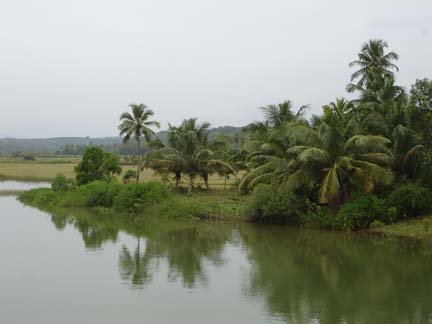
A Coastal estuary

A Coastal estuary
Holegadde near Honavar,Uttara Kannada dist, Karnataka

Copy? Right - but kindly remember to acknowledge!

Creative Commons License
This work is licensed under a Creative Commons Attribution 3.0 License.

" tulu-research.blogspot." ತುಳು ರಿಸರ್ಚ್. ಬ್ಲಾಗ್‌ಸ್ಪಾಟ್‌. ಇನ್

" tulu-research.blogspot."  ತುಳು  ರಿಸರ್ಚ್.  ಬ್ಲಾಗ್‌ಸ್ಪಾಟ್‌. ಇನ್
Have a nice day !