Showing posts with label Barakuru. Show all posts

Monday, June 3, 2019

419. Village names ending with suffix: -kūru

Beauty of  Temple chariot (Ratha or Teru), Mundkuru.


Ooru (or Ūru) is a common Dravidian word for village or habitation and it occurs as a suffix in many South Indian place names as a suffix (or last part of the word).
Comparatively, there are also several ancient village names in coastal Tulunadu that end with a suffix of –kūru. For example: Nandikūru, Mundkūru, Balkuru, Barkuru, Saukūru.. etc.  Similar –kūru ending place names are common place in the eastern parts of peninsular Andhra Pradesh/Telangana region.
Now, what was the difference between Ūru and Kūru? Or why some village-names were chosen and named with the suffix of –kūru,  while simple suffix of  Ūru would have been  suffice?
Some readers may confuse the suffix: kūru with kuru. The ‘kuru’ (as in Kurukshetra), means a hilly region, whereas kūru  (ku+ūru)  is an alternate compound form of the common Dravidian word ūr (or oor ). The kuru (and its alternate form, kor) is a part of tribal group names such as Kor, Korava, Koraga etc.
Kūru  villages
Village names such as Athikur, Bailkur, Balkur, Barkur, Betkur, Bhankur, Chowkur, Halkur, Huskur, Kandakur, Karekura, Tumkur, Nandikūru, Mundkūru, Balkuru, Barkuru, Saukūru..  in Karnataka and  Agomothkur, Andukuru, Anukuru, Atmakuru, Bhuthkur, Chillakur, Ikhuru, Kondikur, Modukuru, Nadakuru, Birkoor etc in Andhra Pradesh serve as some of the examples for villages ending with -kūru suffix.
Kūru: an analysis
Thus, the suffix word/component kūru can be analysed as: ku+ūru. Regarding the meaning of the component ku here, there can be two possible answers:
1.  The suffix tag of   -ka (or -ku or -ki ) was one of the oldest decipherable habitation indicator tag, which was used in those days of early civilization, to refer to a small human colony or habitation of say less than about 100 people. Village names like: Baraka, Bekha, Booka, Dabka, Gokak,  Hebbaka, Kabaka, Moka etc in different parts of Karnataka can be offered as examples for ancient village names ending with -ka . Here the suffix –ka  or -kha represents a habitation or a tiny ancient village.
2. In some of the ancient Indian languages, a prefix tag of “ku” served to mean good, beautiful, auspicious etc. For example: the ancient word “kumāra” was formed by joining,   ku and māra.
 Of the two options discussed above, the first one appears realistic as there are many ancient habitation names ending with -ka, -kh, -ke, -ki or -ku. ( For example: Kabaka, Moka, Gokak, Alike,Belke,Barke, Kukke,Jowku etc).

Small ancient habitations
Human evolution grew in the form of small habitations and these colonies were designated with simple suffix tags that ended with ka (or its phonetic variants) or with similarly simpler consonants such as:  ta, pa sa, ya ..etc. We shall cover more these aspects in some of our forthcoming posts. Primitive words were simpler consonants which evolved with time to form more complex words.

Antiquity of  word Ūr ( Oor)
The word Ūr ( or Oor) has widely accepted as a common word for village in Dravidian languages including Tulu. However, the word does not appear to be the exclusive property of Dravidian languages of India. Sumerian civilization, that flourished some 6000 years ago in Mediterranean region had a town known as Ur!. This confirms that about 6000 years before present the word Ur existed in Mediterranean region also! Whether the ancient Dravidians borrowed the word Ur from the ancient Sumerians or vice versa can only be finalized after intensive research into the available historical data. But the fact remains that Uru was a global word that existed at least since 6000 years.
Evolution of  -kuru suffix
The discussion above leads us to conclude that the spatial suffixes like -kuru grew as  the human settlements grew in population and size.  Words like Uru represented evolved villages that possibly contained hundreds of people.  As the size and strength of the human colonies increased new words like –uru (= village) were added to the old habitation names that previously ended with a simple  suffix such as -ka.
In other words the original or older village names were Mundaka, Nandika, Baraka etc which later with addition of –uru suffix, became Mundkūru, Nandikūru, Barkūru .. etc.
Mundaka+ūru= Mundakūru
Nandika+ūru=Nandikūru
Baraka+ūru=Barakūru
etc..
(Notes: Munda refers to the name of an ancient tribe; Nandi= a bull ; or Nanda = a tribe; Bāra= an estuary; river mouth at sea beach)

Antiquity of spatial suffix -ka
 Our proposed model of evolution of habitation/village names based on the sequence of affixation of spatial tags of -uru over –ka, suggests that the suffix -ka might be much more older than -uru , may be about 10,000 years old . Similar to the word Ur, the suffix ka is not only ancient but also global in extent as you can find similar suffix tags in African/Mediterranean ancient country names such as : Iraq , Morocco, etc.
R
The josh of temple festivities, Mundkuru, Udupi district, Karnataka.


Thursday, July 27, 2017

387. Dr. B Vasantha Shetty and the Barakuru


Recently the Karnataka Tulu Sahitya Academy, Mangaluru, has published an important thesis on the history of Tulunadu compiled by (1984)  Late Dr. B. Vasantha Shetty (1950-1997) entitled “ Barakuru: A Metropolitan city of antiquity-its history and culture.”

Dr. B. Vasantha Shetty
Dr. B. Vasantha Shetty was the Vice Principal and the Head of the Department of History and Archeology at St Marys Syrian College, Brahmavara, Udupi at the time of compiling and submitting the thesis (1984) under the guidance of Prof. Dr A.Y. Narasimha Murthy, Prof & Head, Department of Postgraduate studies and research in Ancient History and Archeology, University of Mysore at Mysore. It is sad to note that the promising historian Dr. Vasantha Shetty expired (1997) in his young age. With his rather premature death, the field of Tulu studies has lost an important researcher.

Barakanuru
Vasantha Shetty reports that the earliest documented form of name as found in the inscription (dated ca  11th Century CE) located in the Hosala Durga /Mahalakshmi temple for the town was Barakanuru. In support of this conclusion he cites two epigraphs located in areas outside the district,  dated 1122 and 1135 CE relating to the period of Hoysala King Vishnuvardhana, which also refer  to this place as  Barakanuru. Arab historian Rashi-ud-Din in his compiled work (1310) referred to this port as Fakanur, which appears to be a corrupt form of Barakanuru.  Near Barakuru there is deep pit in the river known as Barakana-gundi (or Barakana-baligundi).

Bāraha kanyāpura
The application of the name Bāraha kanyāpura  for the place appears around 1155 CE as found in an inscription of the period during the reign of Alupa King Kavi Alupendra. The Sanskritized place name Bāraha kanyāpura apparently has been associated with the legends of Bhutala Pandya. The legendary Bhutala Pandya is said to have married 12 Jaina maidens; the incident appear to have modified the name of the city to Bāraha kanyāpura.
 The data presented by Vasantha Shetty in the book leads us to infer that the legend of Bhutala Pandya was created by certain Alupa Kings with the help of royal poets of the period. However, the legends apparently do not have the support of corroborative historical evidences. Though some of the royal records and Alupa inscriptions of ca 1254-1261 CE,  period express the place name  as Bāraha kanyāpura, the foreign historians descriptions (like Fakanur or Bacanur) as well as the coins minted during the period appear to have continued to mention the place as  Barakanura gadhyana. Similarly,  contemporaries of Alupas like  the Ballala rulers who occupied Barakuru did not accepted the use of  the name of Baraha Kanyapura suggesting that the legends of Bhutala Pandya were not appealing to other rulers of the period.

Barakuru
In spite of entry of Baraha Kanyapura in contemporary official Alupa records, many common people as well as other rulers stuck to the old name of Barakanur. An inscription of Virapandyadeva-Alupendradeva dated 1257 mentioned the town “Bakur” probably due to engravers confusion or mistake. Later inscriptions of the same ruler mentions the name of the capital as Baraha-Kanyapura. However, Hoysala ruler Ballala III who married Chikkayi Tayi of Alupa lineage and  shared authority over the Alupa capital issued inscriptions in 1334 CE  carried the place name as Barakuru. Inscriptions issued by Chikkayi Tayi  in 1334 CE also carried the name of Barakuru. Other Alupa rulers like Kulashekaradeva continued the name of Baraha Kanyapura in his inscriptions of 1339 and 1345 CE.
Further the capital was acquired by Vijayanagara rulers who also preferentially adopted the name of Barakuru only. Similarly further rulers like Nayakas of Keladi also continued with the name of Barakuru, derived from the old name of Barakanuru.
  Alupas in Barakuru
Vasantha Shetty reports that the first record of Alupa ruling in Barakuru dates back to 1139 CE (Saka 1062), in the inscription attributed to Kavi Alupendra and found at Panchalingeshwara  temple, Kotekeri, Barakuru.  The said inscription mentions Tolahas of Suralu. Also mentioned in the record is the Gadyana, the Alupa coin in vogue in that period.    The  Barakuru became the capital city of Alupas with effect from the year 1155 CE during the reign of  King Kavi  Alupendra, who ruled from the  palace of Bāraha-kanyāpura, as recorded in another inscription in the area. Kavi Alupendras queen was known as Pandya-Mahādevi.

Hoysalas in Barakuru
One of the surprising historical data we find as evident in an undated inscription of Kotekeri, Barakur is regarding the joint rule of Vira Jagadevarasa (of Hoysala/Santara descent)  and Pattamāhadevi (and her son Pandya-Devarasa of  Alupa descent) in Barakuru.
During the reign of Alupa ruler Soyideva, Hoysala King Ballala III married Alupa princess Chikkayi Tāyi, and exercised  Hoysala authority over the Barakuru. An inscription dated 1336 CE at Mudukeri, Barakuru suggests that Chikkayi Tāyi, Senior queen of Vira Ballala Devarasa ruled over Barakuru at that time.

Vijayanagara rule
The Vijayanagara Kings based in Hampi deputed Governors to rule the Barakuru province. Inscriptions of the period  found at Barakuru, represent the reign of Vijayanagara Kings from Bukka I and there on wards.

Reference

Vasantha Shetty, B, Dr (2006). Barakuru: A Metropolitan city of antiquity its history and culture. (Thesis  submitted for doctoral degree in 1984).  Published by Karnataka Tulu Sahitya Academy, Tulu Bhavana, Urva Stores, Mangaluru-575006  p.xvi+ 296. (Price:  Rs.800.)

Blog Archive

Books for Reference

  • A Comparative Study of Tulu Dialects By Dr. Padmanabha Kekunnaya. Govinda Pai Reserach Centre, UDupi. 1994
  • Koti Chennaya: Janapadiya Adhyayana. By Dr. Vamana Nandavar. Hemanshu Prakashana ,Mangalore.2001.
  • Male kudiyaru. Dr B. A.Viveka Rai and D.Yadupathi Gowda, Mangalore University,1996.
  • Mogaveera Samskriti By Venkataraja Punimchattaya. Karnataka Sahitya Academy.1993.
  • Mugeraru:Jananga Janapada Adhyayana. By Dr Abhaya Kumar Kaukradi.Kannada & Culture Directorate,Bangalore & Karnataka Tulu Academy, Mangalore,1997.
  • Puttubalakeya Pad-danagalu. Ed: Dr B.A.Viveka Rai,Yadupati Gowda and Rajashri, Sri Dharmasthala Manjunatheswara Tulu Peeta. Mangalore University.2004
  • Se'erige. Ed:Dr K.Chinnapa Gowda.Madipu Prakashana,Mangalagangotri,2000.
  • Studies in Tuluva History and Culture.by Dr P Gururaja Bhat (1975).Milagres College,Kallinapur,Udupi.
  • Taulava Sanskriti by Dr.B.A.Viveka Rai, Sahyadri Prakashana,Mysore 1977
  • TuLu naaDu-nuDi By Dr.PalthaDi Ramakrishna Achar, Puttur.
  • TuLu NighanTu. (Editor in Chief: Dr U.P.Upadhyaya, Govinda Pai Research Centre,Udupi. Six volumes. 1988 to 1997
  • Tulu Patero-A Philology & Grammar of Tulu Language by Budhananda Shivalli.2004.Mandira Prakashana Mangalore. p.317. (The book is in Tulu Language using Kannada script)
  • TuLunadina ShasanagaLa Sanskritika Adhyayana. By Shaila T. Verma (2002) Jnanodaya Prakashana,Bangalore, p.304.(Kannada)
  • Tuluvala Baliyendre. Compiled by N.A.Sheenappa Hegde,Polali,Sri Devi Prakashana,Parkala,1929/1999

A Coastal estuary

A Coastal estuary
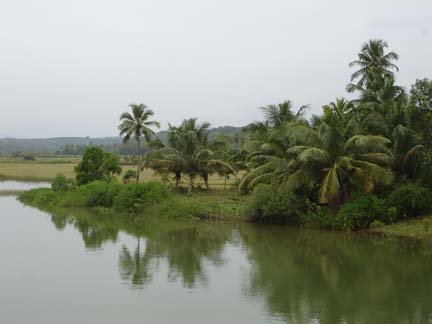
Holegadde near Honavar,Uttara Kannada dist, Karnataka

Copy? Right - but kindly remember to acknowledge!

Creative Commons License
This work is licensed under a Creative Commons Attribution 3.0 License.

" tulu-research.blogspot." ತುಳು ರಿಸರ್ಚ್. ಬ್ಲಾಗ್‌ಸ್ಪಾಟ್‌. ಇನ್

" tulu-research.blogspot."  ತುಳು  ರಿಸರ್ಚ್.  ಬ್ಲಾಗ್‌ಸ್ಪಾಟ್‌. ಇನ್
Have a nice day !