Showing posts with label Evolution of Dravidian words. Show all posts

Saturday, January 23, 2010

225. Mura, the laterite


Languages, like those of Dravidian Group, are like large botanical farms spread over millions of hectares of land, with lateral variations in morphology.Like farms, the languages also grow and evolve in situ in the region. But the words are like seeds or seedlings.They can be brought from other regions or can be carried to other regions along with the migrants. When we decipher that so and so word may have been brought from an African or other source people jump to negate instantly comparing that the two languages (donor and receipent) are starkly different in terms of linguistic structure and composition.
Like the farms, languages are not static. They evolve over a period of time. History is a prolonged period of time.The past may have been tumultuous periods when one set of well grown languages, due to socio-cultural clashes, were eventually overpowered and modified over a period of time into another set of languages.
East African word
To the list of words derived from African sources, we may add one more word now familiar in Tulu language. In the coastal region laterite is a common occurrence.Most of the area is covered by a hard cap of reddish or brownish rock known as ‘laterite’ and we call it ‘mura’ or murakallu. Murakallu is a familiar soft rock rock that hardens upon exposure to daylight.Murum is used in civil engineering also. While levelling and paving or ashpalting, rubbles are spread and murrum is put over these stone pieces.
It is difficult to estimate the period when the laterite were cut into bricks and used for construction of houses.However, if you see the traditional large axe that is employed to cut the bricks, you may be reminded of the legends of Parasurama.

The laterite in East Africa is known as ‘murrum’ in their language. It is possible that early human migrants carried this word from East Africa to the Tulunadu.
®

Saturday, July 18, 2009

199. Mane: an earthen podium


Analysis of Toponyms of the Tulunadu or the Karavali essentially tend to throw special light on the origin and evolution of certain common Dravidian words. Let us discuss the evolution of a common Kannada word ‘mane’ which simply represents house in present day parlance, with the help of analysis of certain relevant Tulu toponyms.
MaNe
We have discussed the Tulu spatial suffix –aNu (Muddanu, Belmanu) and its variants like –aNe (Perne, Marne) and -ana (Kanyana) in an earlier post.
The word aNe has also survived in usages like 'aNekatta' (=dam) etc.
Like the word ‘manja’ (ma+anja= elevated land) was derived from the root word ‘anja’(=land), the word maNe(ma+aNe=elevated platform or podium) has been derived from the suffix –aNe during early Tulu and other Dravida usage.
Since during later days the word ‘maNe’ was applied to wooden planks used as low lying seats,it appears that originally the word was employed to designate earthen podium or platform constructed probably under the shade of a tree.In primitive evolving farming cultures,this was possibly a resting place under the shade and this served as the earliest concept of dwelling house in primitive villages. Further evolution replaced the shade of tree with constructed roof and this was again called ‘mane’ as in Kannada.Thus the word ‘maNe’ forms the older Tulu version of the Kannada equivalent word ‘mane’. The word ‘mane’ has survived in Kannada even till to date while the Tulu word ‘maNe’(usage as dwelling house) has become nearly extinct except in toponyms and words like 'maNegara'(=revenue inspector)!
The suggestion that the word ‘maNe’ originally represented a podium or later a dwelling structure constructed out of earthen material (soil) is supported by its relation to the word ‘maNNu’ (=soil). Also note that the Tulu verb ‘maNpu ‘ or ‘māNpu’ (=to construct) was derived from the root ‘maN’ (of ‘maNe’). The earliest dwelling houses were constructed from the earthen (wet soil )material. The Tulu verb ‘maNpu ‘was in later days modified to ‘malpu’(=to do).
Another interesting revelation from the study of toponyms is that during the early farming days the ‘maNe’ dwelling structures were not common and only the rich or the leader of the village afforded it! It was somewhat like the early version of ‘Guttu’ houses of later landlords! This aspect can be realized when we analyse toponyms like Urmane, Manel, Karimanel,Manur, Mānur etc.

Urmane
(Ur or oor+maNe). Urmane represented a dwelling house (probably the only one)in the ancient village. Presently , Urmane is the name of a hamlet near Konaje in Mangalore taluk.
Manel
(maNe+al) = A dwelling house on the bank of a river. Manel is a hamlet on the bank of Nethravati River in Mangalore Taluk.
Karimanel (< Karumanel)
(Karu+ mane+al ).= A house on the elevated bank of a river.Karimanel is a village in Belthangadi taluk.
Manur, Mānur
(maNe+ur). A village named after a house! There are several villages designated Manur and Maanur in the Karavali.
Mani
Māni (pronounced ‘maaNi’) a village on the Mangalore-Bangalore road(NH48) could be a variant or distorted version of the word maNe.
Though 'maNe' is now used in its narrowed meaning as 'a legged wooden structure of low height, capable of seating one person or keeping picture of Gods at Puja time', its use in its strictest sense (in Tulunadu) is still current in word like 'maNegarlu or MaNegara (a Land Revenue Officer).
®

Blog Archive

Books for Reference

  • A Comparative Study of Tulu Dialects By Dr. Padmanabha Kekunnaya. Govinda Pai Reserach Centre, UDupi. 1994
  • Koti Chennaya: Janapadiya Adhyayana. By Dr. Vamana Nandavar. Hemanshu Prakashana ,Mangalore.2001.
  • Male kudiyaru. Dr B. A.Viveka Rai and D.Yadupathi Gowda, Mangalore University,1996.
  • Mogaveera Samskriti By Venkataraja Punimchattaya. Karnataka Sahitya Academy.1993.
  • Mugeraru:Jananga Janapada Adhyayana. By Dr Abhaya Kumar Kaukradi.Kannada & Culture Directorate,Bangalore & Karnataka Tulu Academy, Mangalore,1997.
  • Puttubalakeya Pad-danagalu. Ed: Dr B.A.Viveka Rai,Yadupati Gowda and Rajashri, Sri Dharmasthala Manjunatheswara Tulu Peeta. Mangalore University.2004
  • Se'erige. Ed:Dr K.Chinnapa Gowda.Madipu Prakashana,Mangalagangotri,2000.
  • Studies in Tuluva History and Culture.by Dr P Gururaja Bhat (1975).Milagres College,Kallinapur,Udupi.
  • Taulava Sanskriti by Dr.B.A.Viveka Rai, Sahyadri Prakashana,Mysore 1977
  • TuLu naaDu-nuDi By Dr.PalthaDi Ramakrishna Achar, Puttur.
  • TuLu NighanTu. (Editor in Chief: Dr U.P.Upadhyaya, Govinda Pai Research Centre,Udupi. Six volumes. 1988 to 1997
  • Tulu Patero-A Philology & Grammar of Tulu Language by Budhananda Shivalli.2004.Mandira Prakashana Mangalore. p.317. (The book is in Tulu Language using Kannada script)
  • TuLunadina ShasanagaLa Sanskritika Adhyayana. By Shaila T. Verma (2002) Jnanodaya Prakashana,Bangalore, p.304.(Kannada)
  • Tuluvala Baliyendre. Compiled by N.A.Sheenappa Hegde,Polali,Sri Devi Prakashana,Parkala,1929/1999

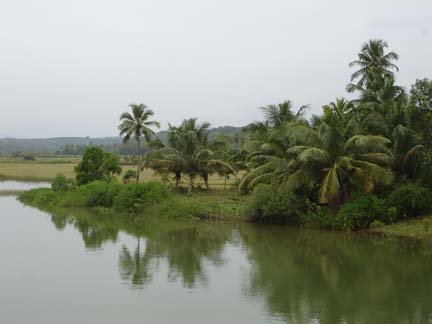
A Coastal estuary

A Coastal estuary
Holegadde near Honavar,Uttara Kannada dist, Karnataka

Copy? Right - but kindly remember to acknowledge!

Creative Commons License
This work is licensed under a Creative Commons Attribution 3.0 License.

" tulu-research.blogspot." ತುಳು ರಿಸರ್ಚ್. ಬ್ಲಾಗ್‌ಸ್ಪಾಟ್‌. ಇನ್

" tulu-research.blogspot."  ತುಳು  ರಿಸರ್ಚ್.  ಬ್ಲಾಗ್‌ಸ್ಪಾಟ್‌. ಇನ್
Have a nice day !