Showing posts with label Kambala. Show all posts

Wednesday, January 9, 2013

307.‘POOKARE’: A Ritualistic Worship of Paddy Field

There are several customs and rituals practised in agrarian society in India, some resembling to practices in Tulunadu.  There are rituals, which are very specific to Tulunadu, such as Kambala, Pookare, Karangolu, Kangil or Kangilo-Mayilo, etc.  Now-a-days, these ritualistic dances are evolved as performing arts and are staged in theatres by artists in villages and urban areas alike.
Pookare (ಪೂಕರೆ)
Pookare is associated with the buffalo race known as Kambula (Kambala). The Kambala is a religio-social function.  (Post-276; April, 2011).  This article is to give some more insight into the significance of Pookare.
Tulu Lexicon (p.2087) explains the word meaning as “an ornamental post decorated with flower set with specific rituals in some selected paddy fields and fields of buffalo-race to ward off evil spirits”.  This ritual is evolved into a dance form, in which people worship Mother Earth before starting agricultural operations. We may recall that a ‘Pookare’ dance is staged on 11th March, 2011 on the eve of World Kannada Conference held in Belagavi (Belgaum).
Pookare Kanda means a dedicated paddy field where this ornamental ‘Pookare' Post is erected for Kambala event or for remembering the dead of family.
‘Kare’ (ಕರೆ) : ‘Kare’ generally means an edge or border or shore of sea or bank of a river.  It also means a boundary of a paddy field.  In particular, it means a track laid in an agricultural field, earmarking it for annual buffalo-race or planting the Post or Staff.  It is a narrow stretch of low-lying slush field, apportioned with ridges on both sides along the track.
We learn from news in vernacular newspapers, like Udayavani, etc., that college girls of Nalanda College, Perla, Kasargod District, are acquainted with the technique of Paddy Plantation under National Service scheme.  One such event took place recently in Pookare paddy field, owned by Battunni Master at Sheni, Enmakaje Grama Panchayat.  
Paniku Kulluni
Word meaning: ‘Paniku’ (under water drop, i.e. dew) ‘ Kulluni’ (Sitting, i.e. in open field at night when dew falling is common). It is a ritual of guarding of the field designated for buffalo race (Pookare Kanda) on the previous night against evil spirits as well as against evil intentions of miscreants of rival manor houses or other landed gentry. Members of the scheduled community sing, beat drums and dance throughout the night after worshipping their deity in the night, exposing themselves to the mist of night (q.v. Tulu Lexicon P.1923).
Stealing of Pookare
Pookare, the ritualistically decorated and venerated Pole/Staff is planted on the field to declare the consummation of buffalo race. It is considered as a protector against evils and harbinger of prosperity in the form of a good harvest. It is a centre of attraction and hence a coveted piece.  The splurge and pride speaks for it. Envious manor houses used to steal such Posts, making the owners to guard it even after the racing event. (q.v. e-Book of Castes and Tribes of Southern India Vol.1 Page 16 on Bants)
A serious Concern
The area under cultivation is dwindling day by day in Tulu Nadu owing to rapid industrialization and urbanization, thereby affecting Pookare Kandas and also the agricultural related customs and rituals. These days the Kambala Committees are coordinating the Kambalas, which is a welcome sign but the old pomp and pelf is missing.
-H. Vishwanath 

Tuesday, April 19, 2011

276. Kambala: Kambula


Kambala is a traditional ritualistic sport of Tulunadu, involving race of domesticated water buffaloes in specially prepared slushy fields. Nobody can surely say when this ritual sport was introduced in the history of this land.However the ritual and the sport has been designed to activate and invigorate the buffaloes that take important role in the agriculture as well to prepare the agricultural field for rich harvest, which was considered as wealth and prosperity (‘poli’) in the days of early civilization.
Preparations for  buffaloe race in Kadri Kambala Mangalore, December 2010
It is said that there are more than 200 locations in Tulunadu known for staging buffaloe races in the Kambala fields.Many of these Kambala field areas have become defunct during the course of history but the name Kambala attached to them have survived as toponyms.

Shekar Ajekar has compiled available historical data and calendar of Tulunadu Kambala events in an internet edition (Kannada) in www.ajekar.co.cc.
Pookare
There is a specially decorated post (or pole) erected in the the Kambala fields and it is traditionally known as 'Pookare' kamba, attributed with special magical powers. The pole is decorated usually with flowers or other material such as leaves or  coconut fronds. The post is erected to pray for the proper conduct and success of the Kambala race ceremony as well to ward off evil spirits in the process.In other words, 'pookare' represents  a decorated victory pole. The Pookare post is considered to have special magical powers to ward off evil spirits as well as to increase prosperity of the persons conducting the ceremony.In the olden days,  kings  used send their servants stealthily to steal the famous 'Pookare ' posts belonging to their rivals in order to acquire the the prosperity amassed by the latter.
Kare: Kair , totem tree.
The importance attached to 'Pookare' post suggest that it is a vestige of ancient totemistic  tree worship cult, which latter evolved into totem poles and later into 'pookare' poles. The  memory of  ancient totem tree cult is explicit in the word Poo+kare wherein 'poo' represents the decorated, flowery aspect and 'kare' is a modification of 'kair'  the symbolic  totem or victory tree of many of the ancient  tribes. The word 'kair', of African origin, means victory.It can be noted that the identity of 'kair' tree represented different arboreal species in different tribal cultures: North Indian 'kair' tree was different from Tulunadu 'kayar'. And  among the Munda(la) tribal people (and also Kadambas) 'Kaim' or 'Karm' ( also known as Kadamba.) has been the totem tree. In the last case, note the word analogy between Kair and Kaim/Karm.
Pookare victory poles have evolved along with the civilization and the modified 'pookare' poles in pairs, usually ornate with mango leaves, or with areca-nut fruits were being used  at the entrances for auspicious ceremonies. Similarly, banana plant trunks are used as welcome poles at the entrance to the ceremonial halls.In modern days, multiple  pookare poles decorated with colourful fabric designs coupled with electric lamps are used extensively in modern stage crafts by set designers like Dr Mohan Alva.

Emotion runs high during this event, as is in a 'korikattada kala' (cock fight battle field, a popular pastime in Tulunadu).  It is a game of manliness and grit, besides show of pomp and pride. Procession of participating buffaloes with their owners is a sight to enjoy.To run in a slush is a tough job, that too managing  buffaloes running in different angles or trying to skip the race.


Nowadays, in Kambala races the buffaloes are treated not very harshly, thanks to protests from animal lovers.However, in the olden days, the merciless beating of buffaloes by enraged driver , was a pitiable sight.    Oozing of blood from the body of these animals was paining to see.  There is a saying in Tulu: "ಒಂಜಿ ಕಂಬುಲ ತೂಯೀನಂಡ  ಏಳು ದೀಪ ತೂವೋಡ್ಗೆ" (Onji kambula tuuyinanduda eelu deepa tuvodge! - meaning: If you see a 'Kambula' event, you have to see seven earthen lamps, obviously, lit before a God's temple and home temple. This wise saying might have originated from the belief that it is considered a sin to see the inhuman treatment meted out  to these mute animals. 
Origin of the word: Kambala
What does the word Kambala signifies? Does it refer to the sport, the agricultural field or the buffaloe race? Let us analyse the word Kambala.
Kambala (Kannada) is popularly known as ‘Kambula’ or ‘Kambola’ in Tulu.
Kambola= kan + pola. (p>b transition occurs while the two words fuse together).
Kan= soft, tender, good, appropriate etc.
Pola=agricultural field.
Thus, ‘Poli’= agricultural produce. Agricultural produce was equated with wealth and proseperity in those days.
Kan: The ancient word ‘kan’ may appear strange to some readers. The word ‘kan’ has survived in modern Tulu in words like ‘kanni’ which also means soft, tender, young or virgin. The Tulu word ‘kanda’ has been explained as soft or good and appropriate area (kan+Da) for agriculture. The word kanda adapted into Sanskrit aquirred meanings such as a piece or piece of land or an expanse of land (=continent) in due course.The word ‘kanni-ponnu’ refers to virgin girl. The word ‘kanni-panti’ means tender grass.
It can be seen that the word 'kanni' ( as in kanni-ponnu) has been adapted into Sanskrit as 'kanya', the virgin.
Similarly, kaNNu (=eye), kan+nu represents delicate organ in the body.
Kannada: Incidentally the word Kannada may be explained as kan+naDa or soft agricultural land, wherein the adjective soft alludes to the black soil that is found expansively in northern Karnataka where Kannada was groomed during the early history.
Therefore, the word Kambola or Kambula refers to soft slushy field prepared for the sport of buffaloe race. Further, the essential sequence of the evolution of this word might have been   like this:
Kampola.>Kambola.> Kambula .> Kambala.>Kambla.

Kampa

 Some people have tried to explain the origin of the word Kambala as derived from 'kampa-kala '. or kampa+ala. In fact, the word 'Kampa'  is genetically related to 'Kambala'. 'Kampa' or 'gampa' also means slushy, muddy field. The origin of the word Kampa is kan+pa, wherein 'kan-' represents soft or slushy and  the suffix  '-pa' represents an areal attribute. (For examples of usage of '-pa' as spatial suffix, check place names like Bajape, Alape, Didupe, etc).

Kamba-ala
Vishwanath suggests that there is one more angle to look at the etymology of 'Kambla'.  Consider: Kamba (a Post or Pole with 'Nishana' (Aiming Point by means of a banner or flag) for judging height )+ la (water, i.e. water spurt during race by different buffalo pairs). 
 Poles are planted somewhere in middle of the race track length.  These poles on either sides are connected with a rope with buntings or flag. This 'nishana' is meant for pairs of buffaloes tied down with a 'palayi' (wooden pane) with holes.  The driver of buffaloes thumps as hard as possible on this pane when he nears the 'nishana'.  Water spurts so high but may not reach the mark.  One who reaches the mark early is declared a winner.  Race of buffaloes without the panes is judged by the speed.


-With Hosabettu Vishwanath.
®

Wednesday, July 23, 2008

130. Todār


The footprints of Kota tribes in the Karavali has been discussed. Another related tribe is Toda (tōDa).Toda tribes at present live in the Niligiri hill area. The now famous hill station Ooty (Udagamandala) was once occupied by Todas. There is an interesting story that a British officer John Sullivan, Collector of Coimbatore, during 1823, purchased the lands that make up the present Ooty from Toda people for mere one Rupee.
Toda people speak Toda language.
Toda tribes are well known for cattle breeding and diary farming, employing especially the buffaloes. Todas believe that the goddess ‘Teikirshy’ and her brother first created the sacred buffalo and then the first Toda man. The first Toda woman was considered to have been created from the right rib of the first Toda man.

Toda
Todar (pronounced tōDār) is the signature village of Toda people in the Karavali during the early history of Tulunadu. The Todar village is located near Mijar on the Mangalore-Mūdabidri road, a part of NH 13. At present there are no vestiges of Toda tribes in the Todar except in the name of the village.
However, fossil footprints of a buffalo-oriented culture and lifestyle of the ancient Toda community has been absorbed by the people of Tulunadu.

Yermal, Yerlapadi
Apart from Todar there are several villages in Tulunad that were known for buffalo breeding. Village names like Yermal (yeru +māL =buffalo ground), Yerlapadi (yerla + paDi= habitation of buffaloes) and Kātipalla (pond of buffaloes) refer to buffalo dominated ancient societies of Tulunadu.

Mund
The Toda hamlets are known as munds. As studied in present Niligiri area, they usually consist of five huts three of which are used for dwelling, one for buffaloes and the fifth one for common dairy activities. It is also possible that most of the villages bearing ‘mund’- prefix in Tulunad were initially the settlements of Toda dairy communities.

Kambala
Toda tribes depended on buffaloes for dairy activity. Possibly these Toda tribes introduced male buffaloes (Kona, Yeru) for agricultural activity in Tulunadu. They had the practice of sacrificing male buffalo calf during an annual celebration called ‘kona shastra’.
We can predict that the buffalo-race pastime of Tulunadu the ‘Kambala’ was conceived and fostered during the Toda civilization in Tulunadu.

Mahishasura
The raw back-ground data for some of our Puranas involving buffalo-villains (Mahishāsura), Mundāsura etc may have been conceived based on Toda lifestyles by their rivals.

Hosabettu Viswanath adds:
'Masoba' spirit God (Maise/Mahisha) popular in Maharashtra may be equivalent of or derived from the Toda culture. Similarly,the well known city Mysore (= Mahisha + Ur ) must have been a habitat of Todas. It is said, Toda language is more near to Kannada than Tamil. In old History books of British time, Coimbatore, Arcot and Salem areas are called 'Carnatic' states. 'Mahishi', mother of 'Mahisaasura', was killed by Lord Ayyappa, according to lores. This shows that Todas prospered in Kerala also.

®

Blog Archive

Books for Reference

  • A Comparative Study of Tulu Dialects By Dr. Padmanabha Kekunnaya. Govinda Pai Reserach Centre, UDupi. 1994
  • Koti Chennaya: Janapadiya Adhyayana. By Dr. Vamana Nandavar. Hemanshu Prakashana ,Mangalore.2001.
  • Male kudiyaru. Dr B. A.Viveka Rai and D.Yadupathi Gowda, Mangalore University,1996.
  • Mogaveera Samskriti By Venkataraja Punimchattaya. Karnataka Sahitya Academy.1993.
  • Mugeraru:Jananga Janapada Adhyayana. By Dr Abhaya Kumar Kaukradi.Kannada & Culture Directorate,Bangalore & Karnataka Tulu Academy, Mangalore,1997.
  • Puttubalakeya Pad-danagalu. Ed: Dr B.A.Viveka Rai,Yadupati Gowda and Rajashri, Sri Dharmasthala Manjunatheswara Tulu Peeta. Mangalore University.2004
  • Se'erige. Ed:Dr K.Chinnapa Gowda.Madipu Prakashana,Mangalagangotri,2000.
  • Studies in Tuluva History and Culture.by Dr P Gururaja Bhat (1975).Milagres College,Kallinapur,Udupi.
  • Taulava Sanskriti by Dr.B.A.Viveka Rai, Sahyadri Prakashana,Mysore 1977
  • TuLu naaDu-nuDi By Dr.PalthaDi Ramakrishna Achar, Puttur.
  • TuLu NighanTu. (Editor in Chief: Dr U.P.Upadhyaya, Govinda Pai Research Centre,Udupi. Six volumes. 1988 to 1997
  • Tulu Patero-A Philology & Grammar of Tulu Language by Budhananda Shivalli.2004.Mandira Prakashana Mangalore. p.317. (The book is in Tulu Language using Kannada script)
  • TuLunadina ShasanagaLa Sanskritika Adhyayana. By Shaila T. Verma (2002) Jnanodaya Prakashana,Bangalore, p.304.(Kannada)
  • Tuluvala Baliyendre. Compiled by N.A.Sheenappa Hegde,Polali,Sri Devi Prakashana,Parkala,1929/1999

A Coastal estuary

A Coastal estuary
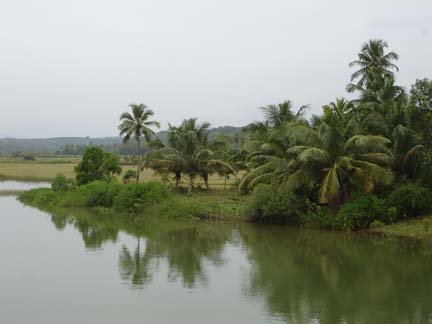
Holegadde near Honavar,Uttara Kannada dist, Karnataka

Copy? Right - but kindly remember to acknowledge!

Creative Commons License
This work is licensed under a Creative Commons Attribution 3.0 License.

" tulu-research.blogspot." ತುಳು ರಿಸರ್ಚ್. ಬ್ಲಾಗ್‌ಸ್ಪಾಟ್‌. ಇನ್

" tulu-research.blogspot."  ತುಳು  ರಿಸರ್ಚ್.  ಬ್ಲಾಗ್‌ಸ್ಪಾಟ್‌. ಇನ್
Have a nice day !