Showing posts with label Kapri. Show all posts

Sunday, May 21, 2017

385. Kāpri-gudda and Kāpri-deva


The heritage land of Tulunadu has preserved many vestiges of ancient cults in the form of Spirit worships. However, during the course of passage of time it is likely that certain ancient Spirit aspects were forgotten from the mass heritage inadvertently.  Some of these inadvertent omissions are either, rather surprisingly, preserved in ancient place names or preserved in altered or evolved   divine  forms  in regions in the neighborhood.

Kapri gudda
Let us take example of the place name Kāpri guDDa in Mangaluru. It is a local place located to the east of Attavara, specifically behind (or East of) Casa Grande Apartment Complex or South of Falnir and Highland areas. In an earlier Post 273, I suggested that Kapri or Khapri was an ancient Spirit insect form which  can be traced to some of the ancient African cultures. It is probable that in the antiquity, ancient  migrating human tribes, who  traveled great distances on a prolonged  course of time, on foot, in search of better pastures, carried their belief systems also to the places of their new settlements in Coastal India.

In olden days we had people named after Kapri, Kaprianna, Kapira, Kampara etc. Now a days usage of such tribal proper names have  declined.


Kapri or Khapri deva
 Somehow it appears that there are no remains of physical evidence of worship of Spirit Kapri existing in Kaprigudda, Mangaluru, except for the preserved place name. However, in Karwar in Uttara Kannada district, we can find the absolute evidences for the worship of cult of Kapri or "Khapri-deva" in a shrine exclusively dedicated to him. Once in a year, some specific local communities engage in the worship of this God known as Khapri deva locally. The shrine dedicated to Khapri-deva has been renovated in the recent years as you can see in the pictures enclosed in this Post.


(Acknowledgement: Thanks to Shri Panduranga V. Nayak, Ankola, Uttara Kannada- for providing the photos of the shrine).


R

Saturday, March 25, 2017

381. In search of Babru vāhana

Babru vāhana (or Babhru vāhana) was a son of Arjuna born of Manipur princess Chitrangada in the great epic of Mahabhārata. The heroic character of Babru vāhana has been made ever unforgettable by the superior histrionics of the well known veteran actor Dr Rajkumar in a Kannada movie. In Mahabharata, the valiant son Babru vahana fights against his father Arjuna on the trail of Ashwamedha.

Inspite of popularity of this particular mythological character, the essential meaning of the unusual word “babru” has remained elusive and mysterious. The suffix vāhana in the word Babruvahana represents a vehicle, essentially an animal motif well entrenched in the Indian tradition.
Thus mooshika vāhana means the one riding on a “mooshika” (=rat); mayura vāhana represents the one who travels on a mayura (=peacock), and similarly we have Nandi vāhana (nandi=bull), Simha vāhini (simha= lion)   and so on. Thus the term Babru vāhana   suggests   that the prefix   babru   is an animal. Then what exactly is the animal babru?

Totem Babru,   the mongoose
The Pali-English dictionary throws light on the meaning of the word babru. The entry on “babbu” (in page number 536) explains that babhruka in Sanskrit represent an ichneumon. The ichneomon includes animals such as mangoose, otter or beaver which was considered an enemy of dragons and crocodiles in mythology. 
In Rig Veda the word “babhru” apparently represented   the brown (color). The word “babhru” was also found in Akkadian language but it was without any clear meaning. Liny Srinivasan (2011) has reported that Prof Gordon applied the purported Vedic meaning (brown) to Akkadian word”.  

Totem Mongoose
Obviously, this leads us to a   natural confusion whether we should take babru as an animal or a color. However the name of the character Babru vāhana clearly connotes that it is a live vehicle (animal) like other mythical vahanas described in the epics. Therefore, the babhru should have been an animal most probably the common mongoose.
The serpent (Nāga) is being venerated since antiquity by numerous tribes and the traditional practice continues to date. The Nāga was the totem for many of the ancient tribes. It is possible that mongoose was also a traditional tribal totem though there is paucity of historical documented data on this aspect.
Mongoose (Babru) is a daring animal that fights against the serpent valiantly and this feature should have appealed to some of the ancient tribes to adopt it as totem.

Extention of idea with time
It is   reported   that in Rigveda, the word “babhru” refers to color of deep brown or reddish brown. The deep brown incidentally is also the color of the skin of mongoose and allied creatures.  It not clear whether the connotation of brown color was adapted from the skin color   of the animal babhru.

However, with passage of time the term “babhru” has been applied in different ways such that the original Pali/Prakrit meaning of the word has almost been lost.  Hosabettu Vishwanath has gathered a number of additional meanings implied to the word "babhru". Summarizing his data,  the term “babhru”  found to have been applied apparently in post-Mahabharata  Sanskrit  literature as follows:

1.  A   lover of red flowers, like lotus. ( Alludes to 'the Sun'.)
2.  A   reddish yellow, to red rays of dawn. ( The epithet for Sun who rides on Aruna)
3.  A   thunderbolt. (Thus the one who rides over a thunderbolt' is Indra the God of sky.)
4.  A tolerant, merciful sustainer of Universe (Vishnu).
5.  A reddish brown cow (Alludes to Shiva on a bull)
6.  Babhravi  - is a form of Goddess  Durga.
7.  Babhruka - is a constellation of stars.

These extention of the ideas to the term Babhru/Babhru-vahana, variously attribute the implied meanings to Sun, Vishnu or Shiva or even Durga. However we do not get such extended ideas in Mahabharata,   wherein Arjuna confronts his son Babhru Vahana. In other words Mahabharata does not projects the Arjunas' son Babhru-Vahana as an incarnation or form of Sun, Vishnu or Shiva or else.

Therefore, it would be apt to restrict the original meaning of the word Babhru to an animal like mongoose or a mythical dragon as implied in the Pali dictionary. The implication of a dragon appears logical as Manipur the homeland of Babhru Vahana of Mahabharata has had certain geographic affinity   to China.

Babba
The entry of the word “babba” as an accepted synonym for “babru’ (or babhru) in Pali- English Dictionary cited above is quite interesting. Incidentally the term “Babba”   is a common pet name for boys in many regions including the Tulu nadu. Such pet names appear to have been inherited from days of our tribal cultures.

Babruwada
It is interesting to note that one of the habitations (hamlet) within Ankola town near Karwar in Uttara Kannada district, Karnataka, is known as “Babruwada”. Within the colony there is a small shrine devoted to the deity known as Babru!
(I could not verify the exact present form and nature of the deity Babru - especially whether it has been transformed to any of our current Vedic forms).  However, it is clear that the worship of Babru is vestige of an   ancient practice inherited from the history.

Cult of   Akkadian   Origin?
It is possible that the Babru worship cult arrived in the West Coast (such as Ankola) along with ancient tribal immigrants during the ancient history. The existence of the word “Babru” in Akkadian (as cited above) leads me to such a suggestion.
There is another parallel example of ancient worship of exotic deity Kapri near Kadwada near Karwar, Uttara Kannada. The original cult of Kapri can also be traced to the ancient African insect deity Kapri. Traces of the forgotten cult of ancient Kapri worship can also be tracked in the city of Mangaluru, where we find a locality named as Kapri gudda, near Attavara.

Babba, Babra Villages
Coming back to the ancient forgotten totem cult of   Babru/Babba we find villages not less than   18 named as Babra or after Babba (Babrala, Babrana, Babrani, Babrapur, Babbanpur Babbidi, Babbalpur, Babbur Babruliang etc) in various parts of India, such as Bihar, Gujarat, Haryana, Maharshtra, Rajastan, Uttar Pradesh and Arunachal Pradesh.

Inferences
Based on the analysis of the available data, it appears that the ancient tribal name Babru    ( ~ Babba)  possibly represented mongoose which was an animal totem for some of the ancient  tribes of India.  The remnants of tribal cult of   Babru worship (similar to the remnant cult of Kapri) existing sporadically in the West Coast  of Karnataka appears to have prevailed among the ancient immigrant tribes from the African countries.


References
Liny Srinivasan, Dr. (2011) Desi words speak of the Past. Indo  Aryans in the ancient Near East.  572  p.  (also in Google  books.)
Rhys Davids, T.H   and William Stede [Editors]: (1921-25). The Pali -English Dictionary. The  Pali   Text   Society. 813p.


R

Sunday, April 10, 2011

273. Kaprigudda, Mangalore


With regard to ancient place names handed over to us by our forefathers, we normally accept   them without questioning. We generally do not bother ourselves over their meaning, antiquity or origin. Or if we do not like just change them or replace them with some modern stylish sounding alternate place name. Infact, some of these place names are windows to the past and serve as fossil clues to a bygone dark era in the past history of this land.
One such strange placename in Mangalore city is Kaprigudda! It is another positive clue in understanding   the migration of ancient tribes from Africa to India in the remote past and concomitant transfer of their cults and beliefs.
Kaprigudda
Kaprigudda is a residential area east of Attavar or south of Phalnir, more or less corresponding with western part of Highlands. It is usually pronounced as ‘Kyāpri-guDDa’ If you ask someone aound in the area, regarding the meaning or origin of the word ‘Kyāpri’ you may not possibly get any positive answers! Capri is a common surname among Western people, so one of the possibilities   is that it was named after some special person called Capri.  Capri is also an island near Naples, Italy.But there is another clue that leads us to ancient cult of Kepheri prevalent in Egypt and surrounding African countries.
Kapri God
One interesting data recently reported in Kannada TV channels was that fishermen of Karwar were offering seasonal prayers to one ‘Kyapri devaru’ or Kapri God!
Kapri is an ancient Spirit God among coastal tribes of Karavali. The cult is still prevalent in parts of Karawar and surrounding areas. Fishermen, especially from Gaabid sect, in these areas look for the blessings of Spirit God Kapri. Generally, they offer liquor in a coconut shell bowl and lighted aroma sticks (agrabathi) to appease the Spirit that is said to wander in their wards like an old man during night times.
Apart from Kapri some of these tribes also worship a Spirit God called Kuti.
Kapri surname
Kapri is also a surname among Gorkha tribes of Nepal. The ethnonym could have been acquired from ancient migrant tribes from Africa. Bishnu Kapri, a gorkha Nepali, settled in US hosts a  ’ Kapri samaj’ page in facebok.
Kapra-Kampra
Kapra or Kaapira was also a common proper name among Tulu people. Another related proper name was Kampra or Kampara. There is a place known as Kapra-majalu near Vitla and a Kampra-bail in Bantval Taluk. Therefore the cult of Kapra or Kampara was not restricted to the Coastal track alone. Kampara is also a place in Uganda, Africa. These data suggest that Kapra and Kampra were ancient ethnonyms of African origin.

Khepri : An Egyptian God
Khepri is an ancient Egyptian God (the concept dating back to ca 2500 BC) , representing a giant Scarab beetle that can roll the Sun like a ball through the sky each morning so that it becomes morning and roll back into underworld in the evening so that the world embraces darkness! The God Khepri also known as Chepri, kheper, khepera or Kehperi etc was considered as a God of resurrection, overseeing the cycle of life and death. The emblem of Egyptian Khepri God, shows a winged Scarab beetle carrying red sun.
Migration

View of the foregoing discussion, one of the strong possibilities is that the Kapri-gudda near Attavar, Mangalore, might have been named after the Spirit God Kapri (Khepri) by some of the early African tribal settlers in this part of Mangalore. The existence of cults of Kapri Spirit God (though modified through centuries of influence of other cults of Hinduism) in Karawar area serves as a clue for further research in this dark pages of early history and civilization.
Ω
Acknowledgement: 1.Shri Vishnu Bovi for discussion on Kapri devaru of Karavar.
2.Shri Kawdoor Narayan Shetty. 


-With H Vishwanath.

®

Blog Archive

Books for Reference

  • A Comparative Study of Tulu Dialects By Dr. Padmanabha Kekunnaya. Govinda Pai Reserach Centre, UDupi. 1994
  • Koti Chennaya: Janapadiya Adhyayana. By Dr. Vamana Nandavar. Hemanshu Prakashana ,Mangalore.2001.
  • Male kudiyaru. Dr B. A.Viveka Rai and D.Yadupathi Gowda, Mangalore University,1996.
  • Mogaveera Samskriti By Venkataraja Punimchattaya. Karnataka Sahitya Academy.1993.
  • Mugeraru:Jananga Janapada Adhyayana. By Dr Abhaya Kumar Kaukradi.Kannada & Culture Directorate,Bangalore & Karnataka Tulu Academy, Mangalore,1997.
  • Puttubalakeya Pad-danagalu. Ed: Dr B.A.Viveka Rai,Yadupati Gowda and Rajashri, Sri Dharmasthala Manjunatheswara Tulu Peeta. Mangalore University.2004
  • Se'erige. Ed:Dr K.Chinnapa Gowda.Madipu Prakashana,Mangalagangotri,2000.
  • Studies in Tuluva History and Culture.by Dr P Gururaja Bhat (1975).Milagres College,Kallinapur,Udupi.
  • Taulava Sanskriti by Dr.B.A.Viveka Rai, Sahyadri Prakashana,Mysore 1977
  • TuLu naaDu-nuDi By Dr.PalthaDi Ramakrishna Achar, Puttur.
  • TuLu NighanTu. (Editor in Chief: Dr U.P.Upadhyaya, Govinda Pai Research Centre,Udupi. Six volumes. 1988 to 1997
  • Tulu Patero-A Philology & Grammar of Tulu Language by Budhananda Shivalli.2004.Mandira Prakashana Mangalore. p.317. (The book is in Tulu Language using Kannada script)
  • TuLunadina ShasanagaLa Sanskritika Adhyayana. By Shaila T. Verma (2002) Jnanodaya Prakashana,Bangalore, p.304.(Kannada)
  • Tuluvala Baliyendre. Compiled by N.A.Sheenappa Hegde,Polali,Sri Devi Prakashana,Parkala,1929/1999

A Coastal estuary

A Coastal estuary
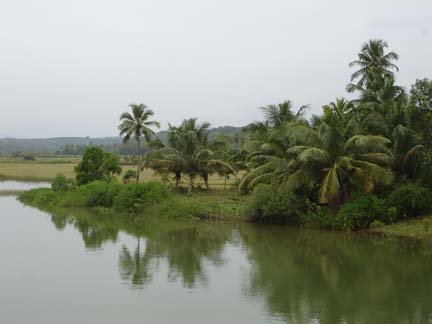
Holegadde near Honavar,Uttara Kannada dist, Karnataka

Copy? Right - but kindly remember to acknowledge!

Creative Commons License
This work is licensed under a Creative Commons Attribution 3.0 License.

" tulu-research.blogspot." ತುಳು ರಿಸರ್ಚ್. ಬ್ಲಾಗ್‌ಸ್ಪಾಟ್‌. ಇನ್

" tulu-research.blogspot."  ತುಳು  ರಿಸರ್ಚ್.  ಬ್ಲಾಗ್‌ಸ್ಪಾಟ್‌. ಇನ್
Have a nice day !