Showing posts with label Mangalore. Show all posts

Monday, December 1, 2014

345. Mysterious History of Mangaluru

The Karnataka Government has finally resolved to officially modify the place name Mangalore to Mangaluru. However, there are voices of dissent as usual, with some preferring the ancient name Kudla. Some even may prefer the exact spelling of Mangalooru to match the appropriate pronunciation in the native languages.  
            The history of the city of Mangaluru has several shades of mystery attached to it. The place was known by different names in the past. Part of the Mangaluru city was under the Arabian Sea until probably 200 CE and the subsequent regression of the Sea,  coupled with recovery of land has been attributed to the mystic powers of Lord Parashurama in our legends. It is interesting to note that the two rivers of Mangaluru, Netravati and Phalguni have mysteriously drifted in the opposite directions across the plains of   Mangaluru though the  ages.The changes in the position of rivers with attendant seismic activities in the form of earth movements with passage of time have played major role in shaping the history and destiny of the city in the past.
           In retrospection, let us glance through the available and the reconstructed data on the history of the city.

Topography of Mangaluru at present

Megalithic and later tribes
The Mangaluru area known by different names was the home for numerous tribes in the past. Megalithic stone burial structures or dolmens, known locally as Kodakkal (=umbrella stone) existed as we find place names of Kodakkal near Padil-Kannur and (modified name of) Kodikkal near Urwa. Similarly, a number of locality names such as  Konchadi (Kom tribes), Yeyyadi, Iddya (Yey or Yedia or Idiya tribe), Maroli, Marakada, Maravur (Marava tribes), Bijai (Bija tribes), Bolar, Bolur, Belma (“Boll” or Bella: white/fair skinned tribes), Derebail, Derlakatte (Dera tribes), Eliyar padavu (Eli tribes), Kannur (Kanna tribes), Panambur (Pani tribes), Maladi, Malemar (Male tribes), Kordel (Kor or Koraga tribes), Kudumbi bittil(Kudubi tribes), Kenjar (Kench or reddish tribes), Nagori(Naga tribes), Kankanadi (Kanka tribes), Gujjarkere (Gujjars), Baikampadi, Baithurli (Bai tribes), Mangar, Mangala (Mang tribes) etc. remind us of the tribes that lived in these habitations in the past.
We can probably classify the settlers into (a) tribes of North Indian origin (b) tribes of African origin, (c) tribes of European origin and (d) tribes of austro Aisatic (Munda) origin.

Early Immigrants    of   African origin
Some of the local place names in Mangaluru are suggestive of settlements of tribals of African origin. Omanjur (Vamanjur) for example, is reminiscent of Om valley of Ethiopia which is considered to be the cradle of civilization and the deduced site of Early Man, Homo Sapien. Similarly Kinya village in the Southern part of Mangaluru Taluk is reminiscent of the region Kenya in Africa. (There is also another Kenya Village in Sullia Taluk). The Kaprigudda (or Keprigudda) near Attavar in Mangaluru reminds devotees of the ancient Egyptian Spirit God Kepri. Inccidentally, the Spirit Kepri is still worshipped in Karwar and parts of coastal Uttar Kannada.Besides, there are placenames suggestive of habitations of immigrant tribes like Derebail, Derlakatte (Dere tribes); Konchadi, Komdodi, Komapadavu (Kom tribes); Koikude (Koi tribes) etc.

Immigrants with fair skin
 Biologists have inferred that the human race initiated with black skin color and the fair or the white skin evolved in due course of time. Early tribes settled in Indian subcontinent were endowed with black colored skin. It seems along the history there was a distinct period when fair skinned tribes arrived into what was a dominion of early settled blacks. This can be surmised based on the existence of words/place names referring to fair skinned tribes/colonies of fair skinned tribes in most of the Indian languages.Thus, when tribes with fair skins arrived on the scene, they were distinguished by their distinct skin color. Bola, Bolla (or Bella in Kannada; Vella in Tamil; Gore in Hindi etc) suggest white skinned people and the settlements inhabited by these whites were termed as Bola, Bolar, Bollur, Bellur, Belman, Belgaum, Goregaon etc. Tribes with white skin were referred to Bellal (later modified to>Ballal ) or in other areas ( Vellal , Vellar). Similarly people with reddish skins (“kencha”) gave terms like Kenjar, Kemral, Kenchanakatte, Kemthur, Kemmannu, Kemminje etc.

Settlers of Austro-Asiatic Orign
Settlements of tribes of Austro-Asiatic origin, generally known as Munda tribes, are known by place names with prefix of Munda. Settlements of other tribes like Mang (Mangar, Mangala, Mangalapadi, Mangalpete), Bai (Baikampadi, Bendur [<.Bayndur], Baithurli, Bekal) etc are also known.

Settlers   of   North Indian origin
Movement of tribes within India are well documented by ethnic place names such as Gujjarkere (Gujjars), Panambur (Pani, Panab), Kannarapadi, Kannur (Kanna), Kankanadi (Kanka), Yeyyadi, Yedapadavu (Yedava, Yeyy, Idava, Yadava) etc.

Mahabharata & Ramayana
Even though several unverified obscure (now obsolete) names for a number of  places in the West Coast have been cited in the ancient Indian epics of Ramayana and Mahabharata, we are not sure what exactly was the  oldest name for  the place now we know as Mangaluru.

Olokhoira
Greek historians in the beginning of Common Era appear to have referred to the place as Olokhoira. Since the Greek travellers concentrated their attention on coastal ports of the day we can assume that Olokhoira was a marine port in those times. ( Some believe that Olokhoira may refer to ancient Udyavara).  Manjeshwara Govinda Pai has suggested that the term Greek term Olokhoira refers to Aluvakheda.
 The Aluva kheda or the Alupa kheda appears to be the present day Alupe valley (kheDa=valley, moat, depression) on the eastern part of Mangaluru city.(However, perceptions differ among the historians and a few tend to believe that Aluva kheda may refer to entire Tulunadu).

Artists impression map of submerged Mangaluru area ca 100 CE.

Legend of Parashurama
Former Alupe estuary is now a dried up river course of a deep valley between Maroli and Alupe. It was right on the West coast earlier and apparently the Greek historians referred to it as Olokhoira during the beginning years of the Common Era.  There was no mention of Mangalūru or even Kudla for the place at the beginning of Common Era! The possible reason for this is that the Arabian Sea transgressed and engulfed parts of the West Coast approximately during ca. 800 BC- 500 BC and receded only during ca. 200-300 CE. The regression of the Arabian Sea (ca. 200-300 CE) has been documented in legendary anecdotes  as a magical feat performed by a superhuman Parashurama, who was able to drive back the Sea by throwing his axe towards the Sea. The Bhargava clan ruled ancient Goa and parts of West Coast during the beginning of the Common Era and it seems that Parashurama apparently was a renowned charismatic sage among the Bhargavas. Later in the history,the  folk legends of the Parashurama appears to have been incorporated in the Sahyadri Khanda of Skanda Purana possibly during the regime of Kadamba King Mayura (ca. 400-500 CE).

Kudala- Kudla-Kodialbail
Now a days native people employ the term Kudla as an alternate local name in Tulu language for the Mangaluru city. However, it seems that originally  the term referred to a specific agricultural habitation located on the bank of a river during the pre-Dravidian days. Probably it dates back to the early agricultural phase in southern India corresponding to the period ca. 1500 BCE to 2800 BCE when horse gram ('kuDu') was one the earliest known  staple cereal grown in this region as well as other parts of the southern India.
The Kudla (Kudala) is normally pronounced with short u which probably decides the nature of the originally intended meaning of the word. The term Kudla appears to have originated as kuD+ala, wherein kuD means an agricultural or farm land and ala means a settlement by the side of river/ surface water body. The related words are Kudupu, Kudpadi, Kudthadka, etc. By analogy, the earliest pulse known to have been grown in South India happens to be known as “kuDu” (=horse gram) in Tulu language. The term "kuDu" (Macrotyloma uniflorum) appears unique to Tulu as the horse gram is known as Huruli (Kannada),Ulava (Telugu),Muthira (Malayalam), Kollu or Kaanam (Tamil), Kulith (Konkani) etc in other sister languages.[Incidentally, it has been reported that the horse gram seeds consists of polyphenols and flavonoids and proteins. Traditionally it was used in the treatment of patients suffering from jaundice and other ailments and recently it has found to contain anti-diabetic and anti-oxidant properties].
Earlier, there was an argument that the place name Kudala is actually Kūdla (or Koodla) which generally means confluence of two rivers. (The earlier proponents of this theme included this blogger also). For example, the Kannada place names Koodala, Koodali and Koodala-Sangama and so on refer to the confluence of rivers. However, Kudla (with short u) apparently has a distinct meaning different from Koodala as discussed in earlier paragraph.
           The term Kudla is at present used as a Tulu equivalent of Mangaluru. However, the exact location of the original Kudla within Mangaluru is difficult to decipher. However, it seems that  Kodial bail and the surroundings were known as Kudla to begin with.
            Regression of Arabian Sea  (ca 200-300 CE) eventually exposed and retrieved a five to six km wide tract of coastal land   buried under the sea till then. At the time of regression, the twin rivers of Mangaluru, namely the (southern) Netravati and the (northern) Phalguni (Gurupur) were flowing westward on the either sides of the (present day)  light house hill. The northern River Phalguni then flowed through the Kudala bail.
Kudala (Kud+ala) was an Ala (=habitation on the river bank) characterized of kuD (=good earth; agricultural field). The Kudala became Kudla and eventually the Kodial or the Kodial-bail, with successive settlements of new invaders with passage of time. Then the Kudla River (presently known as Phalguni) joined the Arabian Sea near Alike, south of   Kudroli temple.

Pandeshwara
The River Netravati flowed in the valley of Attavar and Pandeshwar and joined the Sea near Hoigebazar, Nireshivalaya. The estuary near Nireshivalaya served as old port known as Pandela. (The term Pandela (Pandi+ala) used to mean a boat harbor. Pandi was an old term for the sailing boat).
These evidences suggest that the Shiva temple established near the said Pandela (=Port) by Alupa rulers was designated as Pandeshwara.   The name of the God was extended as a place name that represented the area around the temple.

Mangara -Mangaruth
The area to the South of the river Netravati,the Yemmekere area, around third century onwards,  was known as Mangara. The place name Mangār has also been described in Tulu PaDdanas such as a region where the rule of the King of Mangār ("Mangarda Arasu") has been described. The ancient name Mangār within Mangaluru city still exists in the Western part of Mangaladevi area close to Yemmekere, where a premise with a group of Spirit (bhoota) shrines  continues to carry the name of Mangār compound.
The name Mangār (Mang= a tribe; ār= open field) possibly originated from the Mang tribes that inhabited the area. The Mangs are also known as Matanga in Maharastra, or as Minimadigs in Gujarat-Rajastan Region. .  It appears that whole area around Mangaladevi was earlier known as Mangār prior to the worship of Mangaladevi was introduced.
Similarly we find reference to ‘Mangarda parvata’ (Mountain of Mangar) in the Tulu paDdana (folklores) which probably refers to the present day light house hill located in the heart of the city. Thus it is possible that the light house hill was earlier known as Mangar hills.

Mangarouth
Similar to Mangarada Parvata, the ancient Port (‘Pandela’) of Mangar located near Pandeshwara (ca. 7th Century CE) appears to have been known as Mangarda or Mangarta Pandela. The pronunciation of the word was apparently corrupted in the usage of foreign travelers (Cosmas ca.650 CE) who apparently employed the word Mangarouth to refer to the Port of Mangar.
Incidentally, an area near Mangaladevi Temple is known as Manki. The “Manki stand” was a station used for parking   horse drawn jataka (Tonga) during the British period onwards. The ‘Manki’ is said to be a Munda word signifying the leader of a group of Munda tribal habitations.Thus the ancient name Manki has survived from the settlement of Munda tribes in the area.

Mayikala
The Beary people residing in the Karavali (West Coast) even now refer to the city of Mangaluru as Maikala. The word has been explained variously, some considering that the term Maikala originated from the charcoal market in the ancient town.
However it seems the word dates back to the days of prevalence of  Buddhism  in the West Coast before the rennaisance and ascent of the Hindu cult of Shakti or the Mother Goddess.  Under the spell of prevalent Buddhism, the cult of worshiping Mayi, the mother of Gautama Buddha, in specific divine plots ( kaLa or primitive form of a Temple) was introduced in several places. One of such Mayi-kala (ie Temple of Mother) dedicated to the worship of Māyi, probably existed in the ancient port town of Mangaluru. Thus it seems that the Mayi temple area was referred to as Mayikala by the Arab merchants visiting the ancient Port for trade.

Mangala
The word Mangala has several shades of meaning attached to it. Nowadays the word generally stands for the auspicious aspects of life. The term Mangala also means (1) Goddess Durga, or (2) a fort, or (3) camping ground. Incidentally, the term Durga also stands for a fort. 
However, the term Mangala (like Mangāra) initially could have evolved as Mang+ala ie, ala (=riverside habitation) of Mang tribes. It is interesting to note that Mangara and Mangala coexisted in the proximal area in the past when River Netravati flowed along the ancient path of Attavara-Pandeshwara valley, north of Mangara and Mangala.
The term Mangala also means an end or death. The ‘Mangala’  stands for culminating part (end) of a devotional chanting (bhajane) or even a traditional Yakshagana folk drama play. In the Natha tradition, the ‘Mangala’ is also said to be associated with the ceremony of death.

Mangaluru

Basically, the term Mangaluru stands for mangala+ ooru which simply means auspicious village in the current regional parlance, even though the origin of the name might have been different. The name Mangaluru has been considered to have derived from the temple of Mangaladevi in southern Mangalore. However, according to the available historical sources Shankara Acharya consecrated the pre-existing Bhagavati temple in the area as mother Goddess Mangaladevi.

Pingala shrine at Mangala 
Mangaluru, especially the Kadri, was a well known ancient center of Natha cult especially between 10th and 14th centuries CE. The Natha cult represented the transition of Buddhism to revival of Hinduism in the Southern India. According to historical sources, Queen Pingala of Kerala region was a staunch disciple of Macchendra Nath, the founder of Natha cult. She travelled to Mangaluru along with Goraksha Nath, the principal disciple of Macchendra Nath for taking part in certain celebrations associated with the Natha cult. However, unfortunately she fell ill on the way and eventually died at Mangala. According to the traditions prevalent during those days,after her death she was deified and worshiped as a Spirit or Bhagavati (in the tradition of Buddhist cult) .  Later under the waves of revival of Hinduism, sage Shankaracharya is reported to have transformed many of the former Bhagavati shrines into Temples of Shakti (the Mother Goddess) worship. Thus, the Bhagavati of Pingala was subsequently known  as Devi of Mangala  or the Mangala Devi.
These reconstructed sequence of   historical   events imply that possibly the term"Mangala" was the initial name of place.

Manjarur
One of the unusual names recorded by travelers like Rashiduddin (ca.1300 CE) and Ibn  Batuta (ca 1343 CE) for the ancient Mangaluru is Manjarur. At first it seems that the ancient usage Manjarur was a corrupt form of Mangaluru. On second thoughts, it appears that the city especially the northern part was probably known as Manjaruru under the spell of Natha cult in the city during 10th to 14th Centuries CE. However, now apparently there are no places in Mangaluru that carry relicts of the past place name Manjaruru, except Manjanakatte near Kulur and Manjalapade near Padushedde, both in the northern sector of present Mangaluru. An analysis of the Natha history evolved around Kadri temple suggests that the consecration of Manju -Natha worship was initiated at Kadri under the spell of Natha cult propogated by Macchendra Natha. Macchendra Natha, a sage of Nepal origin is said to have came to Mangaluru from West Bengal and settled in Kadri, Mangaluru. Thus it seems that during the Natha period of the history of Mangaluru, the place was   renamed as Manjaruru in honour of Manju Natha.

Manjārun
The Mangalūru was named as Manjarun in the records of   traveler Ibn Batuta (ca. 1342 CE). The term Manjarun appears to be a corrupt pronunciation of the place name Manjarur.

 Mangalūru
Obviously, the prevalent term Mangalore is an anglicized and stylized version of the place name originally  known as Mangala, Mangalapura or Mangalūru probably since 4th Century CE onwards. The name Mangalūru was popularized by Kings and administrators of   Vijaynagara who ruled over the coastal region from their capital located at Hampi in Bellary District, since 13th Century CE.

Bokkapatna: Vijayanagara Port
The Mangaluru Port during the time of Vijayanagara appears to have been located at Bokkapatna, obviously named after Bokka, one of Kings of Vijayanagara. The term Patna is a common word to represent colony or township of  Mogaveera fishermen. The name Bokkapatna has survived even till today, even though the estuary/port has migrated further south due to a natural disaster and altered its location during the year 1887.
The Port of Bokkapatna was at the ancient estuary of the River Phalguni (= River Gurpur). The Bokkapatna Port and the estuary survived up to 1887 till the river took an abrupt turn and flew  towards south and joined River Netravati, between Bengre and Ullal. It can be seen that the Battery to store war explosives (hence the name: Sultan Battery) was built near Bokkapatna by Tippu Sultan during 1769.The battery was located to counter enemies entering through the Bokkapatna, Mangaluru Port.

Mangaluru vs. Kudla
In fact the name Mangaluru comes from the southern part of present Mangalore especially the area aroud Mangaladevi. The northern part (at present central part of Mangalore) especially the area round Kodialbail was historically known as Kudla. Kudla means


Mangalur & Barkur States/Provinces
Incidentally, the Vijayanagar rulers had two coastal provinces in the Tulunadu sector, namely the (1) Mangalūru and (2) Bārkūru. In traditional ceremonies in Tulunadu until recently the gurikars (community leaders) used to welcome and call out invitees from the Mangalur seeme and Barkur seeme (seeme=territory). Even robbers were traditionally designated as Mangalur Takke   and   Barkur Takke (Takka= cheat) in   Tulu folk tales.

The Vijayanagar rulers selected Mangaluru and Barkur as these were the popular port towns in those days that specialized in exporting the goods  grown in the hinter land.

**   **

Other   Mangalūrus’, outside the Mangalūru.
The place name Mangalūru is not unique in India as there are several other  villages/towns named after Mangaluru especially in different parts of Karnataka and Maharastra. Besides, there is also an airport named "Mangalore" in Australia.
There is also a Chikkamagalur which is sometimes confused as Chikka Mangaluru. The place name Chikka-magala-ur (Chikmagalur) means younger daughters village and there is a matching Hiremagalur or the elder daughter’s   village.
Further, there are villages called “Mangalore”   in Mysore (Nanjangud Taluk), Koppal (Yelburga) and Shimoga (Sorab Taluk) Districts of Karnataka. There is a Mangalore in Cuddalore District (Tuttakudi Taluk)   of   Tamilnadu.  Besides,  Mangalore, there are two Mangaluru villages in Bijapur District (one each in Bijapur and Sindagi Taluks) and One Mangaluru in Bagalkot district (Badami taluk).
Further, there are not less than 27 places known as Mangalapur (~+a/~+am) in   Andhra Pradesh (5), Karnataka (4) Maharastra (2), Orissa (13), Tamilnadu (1), and West  Bengal (2).
**

®  

Sunday, April 10, 2011

273. Kaprigudda, Mangalore


With regard to ancient place names handed over to us by our forefathers, we normally accept   them without questioning. We generally do not bother ourselves over their meaning, antiquity or origin. Or if we do not like just change them or replace them with some modern stylish sounding alternate place name. Infact, some of these place names are windows to the past and serve as fossil clues to a bygone dark era in the past history of this land.
One such strange placename in Mangalore city is Kaprigudda! It is another positive clue in understanding   the migration of ancient tribes from Africa to India in the remote past and concomitant transfer of their cults and beliefs.
Kaprigudda
Kaprigudda is a residential area east of Attavar or south of Phalnir, more or less corresponding with western part of Highlands. It is usually pronounced as ‘Kyāpri-guDDa’ If you ask someone aound in the area, regarding the meaning or origin of the word ‘Kyāpri’ you may not possibly get any positive answers! Capri is a common surname among Western people, so one of the possibilities   is that it was named after some special person called Capri.  Capri is also an island near Naples, Italy.But there is another clue that leads us to ancient cult of Kepheri prevalent in Egypt and surrounding African countries.
Kapri God
One interesting data recently reported in Kannada TV channels was that fishermen of Karwar were offering seasonal prayers to one ‘Kyapri devaru’ or Kapri God!
Kapri is an ancient Spirit God among coastal tribes of Karavali. The cult is still prevalent in parts of Karawar and surrounding areas. Fishermen, especially from Gaabid sect, in these areas look for the blessings of Spirit God Kapri. Generally, they offer liquor in a coconut shell bowl and lighted aroma sticks (agrabathi) to appease the Spirit that is said to wander in their wards like an old man during night times.
Apart from Kapri some of these tribes also worship a Spirit God called Kuti.
Kapri surname
Kapri is also a surname among Gorkha tribes of Nepal. The ethnonym could have been acquired from ancient migrant tribes from Africa. Bishnu Kapri, a gorkha Nepali, settled in US hosts a  ’ Kapri samaj’ page in facebok.
Kapra-Kampra
Kapra or Kaapira was also a common proper name among Tulu people. Another related proper name was Kampra or Kampara. There is a place known as Kapra-majalu near Vitla and a Kampra-bail in Bantval Taluk. Therefore the cult of Kapra or Kampara was not restricted to the Coastal track alone. Kampara is also a place in Uganda, Africa. These data suggest that Kapra and Kampra were ancient ethnonyms of African origin.

Khepri : An Egyptian God
Khepri is an ancient Egyptian God (the concept dating back to ca 2500 BC) , representing a giant Scarab beetle that can roll the Sun like a ball through the sky each morning so that it becomes morning and roll back into underworld in the evening so that the world embraces darkness! The God Khepri also known as Chepri, kheper, khepera or Kehperi etc was considered as a God of resurrection, overseeing the cycle of life and death. The emblem of Egyptian Khepri God, shows a winged Scarab beetle carrying red sun.
Migration

View of the foregoing discussion, one of the strong possibilities is that the Kapri-gudda near Attavar, Mangalore, might have been named after the Spirit God Kapri (Khepri) by some of the early African tribal settlers in this part of Mangalore. The existence of cults of Kapri Spirit God (though modified through centuries of influence of other cults of Hinduism) in Karawar area serves as a clue for further research in this dark pages of early history and civilization.
Ω
Acknowledgement: 1.Shri Vishnu Bovi for discussion on Kapri devaru of Karavar.
2.Shri Kawdoor Narayan Shetty. 


-With H Vishwanath.

®

Thursday, October 21, 2010

256. Mangalore: Antiquity & Evolution -3

Evolution of an ancient primitive tribal village called Manki through Mangar to Mangala, Mangalapura and Mangalur along the evolutionary timeline, with all these vestigial toponyms still surviving, evinces the changing faces and episodes the city Mangalore underwent during the last five to seven millennia.
Another significant, though controversial, toponym attributed to the ancient Mangalore is Nitra or Nitria that have been cited in the ancient Greek travel reports.
Nitra - Nitria
Greek writers Pliny (ca.23-29 CE) has mentioned Nitria and Ptolemy (ca. 150 CE) cited Nitra in their descriptions of Indian ports in the geographic accounts they compiled from their contemporary sailors. Yule and subsequently Govind Pai and others have considered these place names as old names of Mangalore because of the affinity to the name of River Netravati that flows in Mangalore.
Thus it can been considered that the name Netra or Netriya (Nitra or Nitria in Greek versions) was the old original name of the river Netravati and the adjacent port town on the bank of River Netravati.
..A Map of ancient Mangalore to be added
Netra means eye in Sanskrit. Possibly the Sanskirt language had permeated to the southern India by ca. 500 BC.
The Phalguni River was flowing in Kodialbail and Netravathi was flowing in Attavara Pandeshwara valleys during the beginning of CE.(Posts 253,254). The resultant morphology or shape of the island like land mass between Phalguni and Netravati appeared like an eye shaped peninsula, giving it the name of ‘Netra’. Thus it appears that the River Netravati derived its name from the eye shape of the land (Netra =eye) during early years of the Common Era.
Apparently the the name Netra for the port land was abandoned after the migration of said rivers and concurrent loss of the netra (eye) shape of the land. Thus the river beside Netra must also have been named ‘Netra’ or ‘Netriya’ which was later in the due course modified to ‘Netravati’.
The only connected vestigial name preserved along the river course happens to be ‘Netra-kere’ near Maripalla to the East of Mangalore.
Alupas from Alupe vilage
The merchant kings who ruled Tulunadu probably during the first fourteenth centuries of the CE were known as Alupa Kings. The origin of the word Alupa has been widely debated. They ruled parts of larger parts of Tulunadu probably from the beginnig of 4th CE upto 14 century CE,as evident from various inscriptions of the period, until taken over by Vijayanagar Kings, It appears that it is logical to assume that the name suggest the name of their hometown ‘Alupe’ a village on the banks of river Netravati in Eastern part of Mangalore (Post .74 ). It can be recalled that Govinda Pai + and Gururaja Bhat++ while discussing the various possibilities on the origin of the word, ‘Alupa’, have also felt independantly in their respective works whether Alupa was connected with the village Alupe.
Besides the village name, there are additional proofs cited below to confirm that Alupas were from Alupe village.
Aluvakheda
(1) The territory of Alupa kings has been described as ‘Aluva-kheda’ or ‘Aluvakheda 6000’ in several inscriptions. Ptolemy described the ‘Olokhoira’ which has been interpreted as Greek version of the word ‘Aluva-kheda’.
It is interesting to note that ancient suffixes –pe (as in village names Alupe, Didupe, Bajape etc) as well as –va (as in village names Shirva, Kakva etc) represent village areas. Therefore, we can deduce that the ‘Alupe’ village was also known as ‘Aluva’ village sometimes.
The word ‘Kheda’ means a gorge like depressed area bounded by steep cliffs. (Compare ‘kheDa’ with ‘kheDDā’, a large pit used traditionally to trap and tame wild elephants.). The description of the word ‘kheda,’ can be rightfully applied to the village of Alupe and Maroli, that are located in a large depressed gorge area bordered with steep cliffs.Thus it appears that the word ‘Aluvakheda ‘ was originally applied to the geography of Alupe, the hometown of Alupa Kings.
(2). The rare Sun temple of Mangalore is located within the gorge of Aluva-kheda described above.
(3).The ‘Kulashekara’ area named after one of the later Alupa Kings, called Veera Kula Shekara, is close to the Alupe- Maroli region.
Alupa Emblem
The royal seal on the Belamnnu copper plate inscription of Aluvarasa II (dated 730-760 CE) as well as Alupa coins display an emblem of twin fishes. A single fish was the emblem of Tamil Pandya Kings.The fish emblems of Pandya and Alupa Kings appear to have been inspired by earlier civilizations of Sindhu Saraswati (Harapa Mohenjodaro) where a large number of fish symbols have been discovered. The fish was a divine symbol for early marine merchant cultures as evident from the adoption of Matysa as the first incarnation of Lord Vishnu by Veda Vyasa.Thus it appears that the fish was a symbol of divinity among the ancient marine traders of India since the period of Sindhu-Saraswati civilization.
Alupa coin samples. (after: Govindaraya Prabhu & Nityanand Pai, 2006)

Pandya Dhanajaya
Alupa Kings designated themselves as ‘Shri Pandya Dhanajaya’ in the coins minted during their regime.The phrase ‘Sri Pandya Dhanajaya’adopted by the Alupa kings in their coins apparently compared themselves to the Arjuna, the hero of Mahabharat. The surname ‘Pandya’ has also been adopted by the Pandya Kings of Tamilnadu.The Tamil Pandya Kings were considered by several authors as progeny of Pāndavas of Mahabharat. However, it seemly logical that the word ‘Pandya’ or ‘Pandi-ya’ was connected to ‘Pāndi’ rather than Pandavas. The large boats used for marine trade in ancient south India were known as Pandi boats. Thus, an owner of a pāndi boat would be known as a Pāndiya or Pāndya.This explanation seems appropriate in view of the fact that Alupa Kings were Pāndi based marine traders. Probably, this explanation also applies to the origin of ancient Tamil Pandya kings.The place name ‘Pondichery’ has preserved the vestiges of Pandi marine merchant culture in the East Coast as well.
Alupas deserted Mangalore
Epigraphic inscriptions have suggest that Alupa Kings ruled ancient Mangar(u) or Mangarur from ca. 425 CE to ca. 750 CE. ** Epigraphic data for the period prior to ca. 425 CE has not been available so far, hence the earlier period is rather hazy. During ca. 750 CE Alupas abruptly changed their capital from home town Mangalore to Udyavara for historically unexplained reasons.
It appears that Alupas abruptly changed their venue due to intimidating earthquakes and consequent migration of rivers that affected ancient Mangalore ca. 750 CE.
The Netravati River was flowing through the valleys of Attavara and Pandeshwara probably till beginning of 8th Century CE. Probably, during ca. 750 CE due to sudden earth movements the Netravati changed its course and began to occupy the present path. Consequently, due to southward migration of ancient River Netravati, the port of Pandeshwara was closed down. Thus Alupa rulers abandoned Pandeshwara port of ancient Mangalore and migrated northward and settled in Udyavara, which was a upcoming port at that time ( Post ).The Alupas further returned to hometown Mangalore from Udyavara during the beginning of Tenth Century CE.
One interesting place name has preserved this hereto undocumented historic change or migration of flow path of the ancient River Netrāvati for the benefit of posterity. That wonderful place name is Jeppu!
Jappu, Jappina Mogaru
The place name ‘Jeppu’ or ‘Jeppina Mogaru’, as is known now, has been much abused and misunderstood. It should be ‘Jappu’ or ‘Jappina Mogaru’. The Tulu word ‘Jappu’ means to decline representing the historical lowering of water level in the river. (On the contrary, the erroneous usage, ‘Jeppu’ means to sleep). And ‘mogaru’ represents a river bank. Hence Jappina Mogaru represents the name adopted by the people to the river bank where the water level declined abruptly during the history.
There is one more mysterious aspect connected with the geological history of the village Jappina Mogaru. The revenue survey maps prepared by the surveyors of British regime during 1894, show two halfs of Jappina Mogaru divided by the river Netravati. It means that the original village of Jappina Mogaru has been bifurcated into two pieces during the last century , separated by the present flow position of River Netravati.
Ancient Temples of Mangalore
Apart from the Mangaladevi we discussed in the previous post, atleast ancient seven of the well known temples in Mangalore were installed before 10th Century CE. All these temples were originally installed on the banks of ancient rivers or perennial water Springs of Mangalore.
Mangalapura
Badami Chalukya epigraphs of 7th Century CE cited the name of ancient Mangalore as Mangalapura*.The name Mangalapura is popular among our Malayali neighbours even today.
To begin with, Mangalore was under the spell of Naga and Spirit worship cults since the ancient agricultural phase.Sun worship was evident during pre-Dravidian Munda cultural phase.Footprints of Buddhism were evident in the old place name ‘Mayi-kala’ for ancient Mangalore (Post 65,70). Early Skanda- Shiva- Ganesha cults collided with Buddhist cult. Bhagavathi cult evolved as a consequence of assimilation of Spirit cult and Buddhism. Rennaisance of Hinduism by Shankara led to the transition of Bhagavathi cult into widespead Durga cult.
Mayi-kala
With the advent of Arabs and later Bearys Islam made its presence in Mangalore.Some of the oldest Mosques of Mangalore (like Bunder, Kandathapalli) were also originally established during the period of 8-10 century CE. One of the old Buddhist names of Mangalore, ‘Mayikala’, has been preserved especially among the Muslim Beary community. One of the possible reasons for this could be that Mayikala existed in the Bunder region which was a major business area in the early history of Mangalore.Bearies, being a business community, frequented Mayikala area of Mangalore.
Kudupu
Kudupu appears to be an ancient village of ancient Kudu agricultural phase.It probably was an ancient center of Naga (serpent) worship. With advent of the Kumara-Skanda cult in the early centuries of CE it was developed into a temple dedicated to Kumara (Subramanya) worship. The old rivers flowing beside Kudupu changed its course with passage of time, leaving behind the evidences in the form of old river valleys that characterize the area around Kudupu.
Pandeshwara
In the olden days the large merchant boats engaged in trading rice, cereals and spices were known as ‘PānDi’ and the boat harbour was known as ‘PānDela’. River Netravati was flowing along Attavara- Pandeshwara valleys and joining the Sea near present Goodshed area where the ancient PanDela and the temple and township were located.
An Ishwara (Shiva) temple was built by the Alupa merchants in the PanDela (ancient port) area ca 4-5 century CE, and it was eventually known as PānDeshwara.
Another similar port place-name of ’PānDeshwara’ representing another ancient Alupa port exists near Hangārkatta, located between the coasts of Udupi and Kundapur.
Neere Shivalaya
The Neere-shivalaya Somanatha temple was originally an ancient Alupa temple devoted to Trimurtis- Brahma, Vishnu and Mahesha according to epigraphs found near Gollarkeri.* Neere Shivalaya is located near the ancient, Alupa period, PānDela of Mangalore.Neera Shivalaya, (neer=water) as the name suggests, was a Shiva temple (on an island) surrounded by waters of ancient River Netrāvati.
Sharavu
The Sharavu village, now part of heart of the Mangalore city area is known for an ancient temple dedicated to Lord Shiva and Ganapati. The place name Sharavu has been interpreted as ‘shara’ (=arrow) +’pura’ (=town) by legend creators of Stala-purana. However, the available geological evidences suggest that area could have been ‘Saravu’ (sara =lake, vu=village) to begin with. The waterworn pebble bearing sediments covering the Sharavu-Suchitra-Prabhat valley area suggest that area was under water (lake), connected with Phalguni river of Kudu and Kudla phase (post 253).
The original ancient temples appear to have been renovated during 10th to 11th century CE as evident from the study of idols in the temple.
Kadire
Kadire means ear or corn of paddy.It was customary to distribute corns of paddy (‘Kadire’) during ‘New crop’ (‘Posatt’, Puddar, Puttari, Onam) festival among the farming communities since ages.Now, the area is known as ‘Kadri’. During the course of history, some of the legend writers have modified the place-name also to ‘Kadali’ (=banana) or ‘Kadali-vana’ (orchard of banana).
Earthquakes resulted in upheaval of Kadri plateau ca.400-600 CE. After the earth movements, the flow path of Kudla segment of river Phalguni was diverted to new path. And a few new perennial water springs originated on the escarpment side of the Kadire cliff. The village on the top of the Kadire cliff was called ‘Nantur’ (Post 175).
Kadire was a Buddhist monastery till being occupied by the Natha sages Macchendra and Gorakha Naths. Natha sages revived Hinduism and led the transition of Buddhist to Natha/Shaiva cults during 10 th Century CE. The date of installation of the Lokeshwara bronze idol  at Kadire that evinces features indicative of transition from Buddhism to Hinduism has been reported as 968 CE.
The unique name ‘Manjunatha’ for Lord Shiva was created at Kadire.Later when a Shiva Linga was taken from Kadire temple to Dharmastala (ancient name ‘Kuduma’) another abode of Manjunatha was created.Origin of the word ‘manju’ in ‘Manjunatha’ has been debated.The word manju means beautiful (Prakrit)or mist (Tulu); the Tulu word ‘manja’ also means an elevated plateau like region. However, Manja or Manju (as in Manjanna) was also an ancient male proper name among Dravidians and pre-Dravidians. It appears that Macchendra had a son named Manju who incidentally expired in the area and Macchendra erected a memorial shrine in his memory in the tradition of Spirit worship vogue in the region.The name was extended to the form of Shiva with the signature suffix ‘Natha’ that represented the cult popularized by Macchendra Natha.
The Manjunatha Temple of Alupa period has been renovated further during Vijaynagar rule (14th Century CE) and subsequent periods.
Maroli
Maroli village, originally named after the ancient Marava tribes (Mara+Oli), is proximal to Alupe village, the home town of Alupa Kings. In this village there is a rare ancient temple, built by Alupa rulers and dedicated to the worship of Sun God (Surya-narayana).
The temple is located in a large circular valley formed after the migration of river path in the Maroli-Alupe villages.The structure of temple is said to be of ca. 11-12 century CE.
The origin of Sun worship in India dates back to ancient Munda tribal people.The cult of Sun worship (Singbonga) was also the tradition among Munda cultures that predated Tulu-Dravida civilization in the Karavali.
Attāvara
The Netravati River was flowing through the valleys of Attavara and Pandeshwara probably till 7th Century CE. Afterwards due to sudden earth movements the Netravati changed its course and began to occupy the present path.
There are two ancient temples in Attavara: One Uma Maheshwara, another Chakrapāni. The Uma Maheshwara temple is located on the banks of the old river course suggesting that originally it was built on the southern bank of the old river.Dr Gururaja Bhat suggested that the Ganapati idol of Attavara displays sculptural styles of Seventh Century CE. The original temples were renovated during subsequent periods.
Later Temples
Hanuman temple in the Gollarkeri, Mangalore was established in the 14th Century*. After the advent of Saraswaths from Portuguese Goa (ca. 16-17th Century CE), The Venkataramana (Dongarakeri, Car Street) and Mahamayi temples were installed in Mangalore. Māri temples (Halekote, Bolar and Urwa) were established during the regime of Keladi Nayaka Kings (15-17th Century CE).
Seventeenth Century also witnessed advent of Portuguese, German, French and British into Mangalore and the establishment of some of the oldest missions and churches in Mangalore like Basel Mission, Milagres and Rosario.
The Brahma Baidarkala Garodi at Kankanādi was established in the year 1874. The Kālikāmba temple, maintained by Vishwakarma community, was shifted from Mahakāli-paDpu, Jappu, to Car Street area.
Kudroli Gokarnatha temple was installed originally by Narayana Guru during the year 1912*.The name ‘Kudroli’ has been analysed by some as Kudure+Oli (a village of horse). However, the geological data suggest that it was a ‘kuduru+Oli’ (a village of river islands) as the region was covered by the estuary of the ancient river Phalguni in the historical past.
Kudroli Gokarnatha temple has been renovated in recent years into a beautiful structure such that it constitutes presently a major tourist attraction in the city of Mangalore.The annual Navaratri/Dasara celebrations centered in this temple has been known widely as Mangalore Dasara.
-
References:
Manohara Prasad. ’Nammuru’: (Serial articles on historical aspects of Tulunadu). Udayavani (Kannada Daily). Manipal.
*Temples of Dakshina Kannada (in Kannada) Ed: Murulidhar Upadhya Hiriyadaka & P.N. Narasimha Murthy. (2000). Ambalapādi. Udupi. 436 p.
**Govindaraya Prabhu, S. & Nityananda Pai, M (2006). The Alupas: Coinage and History.Sanoor, Karkala.200 p.
+ Manjeshwara Govinda Pai ( )
++Dr. Padur Gururaja Bhat (1963) Tulunadu. 228 p. Reprinted in 2009 by Dr Padur Gururaja Bhat Memorial Trust, Udupi.
®

Sunday, June 27, 2010

246. Kudla : A controversy

-->
The word ‘Kudla’ is an ancient name and refers to the city of Mangalore.What is the meaning of this word Kudla? If you answer me that ‘Kudla’ means ‘kooDla’ or a confluence of two rivers, you may not be precisely reflecting the original meaning of this word!
Let us analyse this controversy.
A Confluence  of Rivers?
 Fluvial Geography of Mangalore city at present

Yes! Most of us, including this blogger, were under the impression that ‘kuDla’ means a confluence region of two rivers, Gurpur and Nethravati. You can also find this explanation in some of the earlier posts filed in this blog or write-ups published in periodicals.This opinion is also shared by the mighty Tulu Nighantu.
The Tulu Nighantu lists three meanings for the word Kudla (p.823):
1. Mangalore town, a confluence of two rivers.
2. Again. [The Tulu usage ‘kuDala kuDala’ means to repeat again and again.]
3. (a) a confluence of two rivers, (b) a   confluence of a stream and a river. [Latter, also known as ’KooTel’]
Thus the  cited entries 1 and 3 above suggest emphatically that kuDla means a confluence.
The assertion that KuDla= confluence is based on the word koodla as in place names ‘KooDala Sangama’ (of Basaveshwara fame, Bagalkot district) or ‘KooDali’ (a confluence of Tunga and Bhadra rivers, Bhadravati Taluk).
Paleo-geography of Mangalore:
In Mangalore we have a confluence of Gurupur and Nethravati rivers between Bengare and southwestern corner of Mangalore city.However,the confluence of Gurpur with Nethravati River occurred relatively recently ie in the year 1887.That is to say that confluence as seen now did not exist in the historical past! Thus ancient word ‘kudla’ may not be referring to any recent confluence!
Secondly, the word ‘Kudla’ even though applied at present to Mangalore as a whole in general, was originally referring to apart of present Mangalore, especially the Kodialbail area.Kudla was the Kudla bail to begin with which with passage of time changed into Kodial-bail or simply Kodial. This Kudla bail or Kodial bail is a valley region once upon a time occupied by Phalguni River which changed its course (probably around 7th Century CE or earlier) further northwards in the course of time.
Thus the truth is that KuDla is not kooDla!
It was an fertile river plain in the antiquity that was amenable for good agricultural crops!
Let us explore the alternative explanation.
Agricultural settlement
Dr Gururaj Bhat (1963) in his work ‘Tulunadu’ passingly remarked that Kudla is not ‘kooDla’ or a confluence (p.29, 2009 edition). He pointed out that Kuduva tribes iniated agricultural practices in ancient Tulunadu.Kuduva tribes in different areas and times were also known as Kudi, Kudu, Kudubi, Kudumbi, Koda, Kunubi etc. The Munda word kuDa reffered to ‘good agricultural lands’ and those tribes associated with agriculture were known as KuDi or KuDubi.
Ku+ Da + ala. = An agricultural settlement on the river plains.
Ku=good, Da=land, earth. KuDa=good land, agricultural land. Ala= river plain or habitation on the river plain.
There are many villages in the Karavali having the prefix of KuDu.
KuDupu .(A village in eastern Mangalore on Nanthur -Vamanjur NH13 road).
KuDuma.  (Old name for Dharmastala, Belthangadi taluk).
KuDumbi hittil ( A residential area near Falnir, Mangalore).
KuDipäDi .( A village near Vamadapadavu, Bantval taluk)
Kudne, Maharastra
Kudle  beach, Gokarna, Uttar Kannada.
Note that in above place names suffixes –pu, Ne,-le etc are indicative of settlement or habitation areas.
According to Dr Padur Gururaja Bhat (ibid) ‘kuDu’ later transformed into ‘koDu’ as seen in place names KoDiala,KoDimbadi, KoDavur,KoDlaDi,KoDangala, KoDange etc.
KuDu
KuDu also represents horse gram which incidentally is the first agricultural food crop grown in southern India. Agriculture in southern Indian River plains was in vogue ca. 2000-2500 BC according to archeo-botanical studies. This takes the age of the place name Kudla to that period, ca 2000-2500BC. The word KuDäla is derived from ancient and pre-Dravidian Munda languages of southern India.
®

Tuesday, March 30, 2010

234. Padavu and PaDavu


While browsing through the old village maps of Mangalore, I happened to notice that the revenue village map encompassing present day Kulashekar, Shaktinagar,Kadri Padavu, Bikarnakatte etc area, was titled in Kannada as ‘PaDavu’. (‘D’ pronounced as in ‘dog’). The exact word ‘PaDavu’ could be recognized as ‘D’ is distinguished distinctly from ‘d’ in Kannada script. The village maps originally drafted / printed in the year 1893 contain old and original village names used during that period.
The word ‘PaDavu’ is not in current usage as a place name as it has been replaced by similar and generalized word ‘Padavu’('d' pronounced as 'the'). Even the mighty 'Tulu Nighantu', has not cited the word as a geographical indicator or place name.
Let us discuss the two geographical terms ‘padavu’ and ‘paDavu’ that are contrastingly different in meaning.
PaDavu
The Tulu Nighantu (=Tulu Lexicon) (vol 5, p.1896) describes the word paDavu’ under two heads: (1) large merchant boat or ship; also known as ‘pānDi’ and (2) oil storing utensil/ vessel. It can be seen both the above meanings are mutually related and based on the bowl like shape of the structure or the ‘container’ aspect.
However the Lexicon has inadvertently omitted the original word ‘paDavu’ which carries a geographical description. The word can be analyzed as follows:
‘paDa’ (=sunken, fallen, or depressed land)+’vu’ or ‘va’ (a spatial suffix)
Hence, ‘paDavu’= sunken land or depression; a bowl like structure or valley zone.
The word ‘paDa’ or ‘paDu’ or ‘paDDāyi’ (= western direction) is employed in Tulu (and other related Dravidian languages) as equivalent word to signify Western direction. The word ‘paDu’ appears to have been coined in west coast of India, where the western side (Coastal Karavali) is lower in elevation compared to the east (Sahyadri ranges or Western Ghats).
Padavu
The geographical indicator ‘paDavu’ is almost lost in current usage, because of confusion and replacement by another word ‘padavu’.
In current Tulu usage ‘padavu’ is used in the sense of plateau or elevated planar area.
In Christian Konkani the equivalent word is ‘pāduva’. (For example, Pāduva high school).It would be interesting to explore whether the Konkani word ‘pāduva’ was adapted form of ‘padavu’ or directly borrowed from a similar sounding Prakrit word.
Thus it appears that the word was originally ‘pāda +vu. It is possible that ‘pada’ is derived from or related to the word ‘pāda’, wherein, pāda= rocky hill. (Tulu word ‘paāde’ represents rock.).
However, the word ‘pada’ also represents higher level, elevation or grade. And thus, ‘padavu’ means an area of higher elevation or plateau. It is interesting here to note that Sanskrit word ‘padavi’ also means higher grade or honours.
It may not be surprising if the Sanskrit word ‘padavi’ was derived from or related to the ancient word ‘padavu’.However, H.Vishwanath opines that the word 'padavi' is derived from root 'pat' or 'pada' (i.e. foot) Padavi means stepped up position, rank. So Sanskrit 'Padavi' is not dervied from the word Padavu or Padavu.


Pada and Sira
While reviewing the words above, it may be pointed out that the words ‘pāde’ (=rock bed) and pāda (=foot; later, an unit) / ‘pada’(=a step, an unit, a word etc) apparently are related in derivation. Similarly the words ‘Sira’ (=peak, of rock; Sun, Light, supreme power, heaven, wealth etc) and ‘shira’ (=head) are related. The allusion of natural objects and forces , probably later, to parts of human body, like  foot and head makes an interesting study.
®

Friday, February 29, 2008

98. Changes in Gurupur River mouth, 1887

A reconstruction of Mangalore, without barrier spit, before the year 1887

Do you know that the barrier spit west of Mangalore city, known as Bengare, was formed by the shifting of Gurupur river mouth, only 120 years ago? The shape of a river is formed by its usual flow channel. Do you have an impression that the present shape (morphology) or the location of flow path of rivers is a permanent feature of landmark? 

Changing river morphology 
The rivers and their shapes are guided by the nature of surrounding landforms and these are bound to change in response to any earth movements. The coastal rivers of India have changed their shapes several times in their life history! The rivers of Tulunadu or coastal Karnataka are not an exception to this rule! Especially the Gurupur River that surrounds Mangalore has changed several times during the last three millennia. 
  Sultan battery 
Interestingly, one such change occurred in 1887 during the British rule of Mangalore. Tippu Sultan conquered Mangalore during the late eighteenth century and built a battery at Mangalore, known as Sultan’s Battery to store ammunitions to be used against invaders from the Sea. The battery was built facing the mouth of or entrance to Gurupur River from the Arabian Sea at that time. (The Mangalore port was near Bokkapatna during the Vijayanagara period). 
  Shifting of River mouth One fine rainy day in the year 1887, the Gurupur River decided to change the way it was flowing into the Sea till then. Instead of flowing into the Sea directly near Tannirbavi, opposite Sultans battery, it changed its fluvial course, flowed straight south towards the mouth of River Nethravathy some five kilometers south and joined the Sea along with Nethravathy. The whole change occurred instantaneously, without advance notice, in response to an earth movement! Thus, consequently a sand spit was newly formed between Mangalore city and the Arabian Sea. 
  Bengare 
And this event occurred in the year 1887.The historical change of river mouth produced a new barrier spit parallel to the coastline, bordering the Sea, now known as Bengare
 ® 

Reference: Mangalore City Municipality Centenary Souvenir 1866-1966. An anonymous compiler in the Centenary souvenir of Mangalore city Municipality (1966) has enlisted this notable event, possibly based on an older (British) version of the District gazetteer 

Acknowledgement: Thanks to Shri Sheena Moolya for providing the reference material.

Sunday, January 27, 2008

80. Macchendra, Goraka and Pingala

The Natha cult represents the fusion of Buddhist Avalokiteswara and Shaivaite tantric (Kapalika, Kaula) cults. Macchendra Nath and his disciple Gorakh Nath were the prominent exponents of the Natha cult. The Natha cult eventually spread to different parts of India and Srilanka during eighth to tenth centuries. Subsequently, twelve subdivisions (bara-pantha) evolved in the cult. The Natha Jogis used to travel for long distances on foot. Influence of Nath cult can be seen in major Shaiva centres like Srishaila. The Natha is short for ‘Lokeswara Natha’, according to in the Buddhist literatures of Srilanka.
Macchendra Natha was able to acquire the goodwill of the ruling kings who awarded him the administration of lands around Kadri temple and the title of ‘Kadri Arasaru’.

Natha tantric philosophy
The practice of Yoga and Tantra was common to the Vajrayana Buddhism and (the Kapalika, Kaula and other) Shaiva cults. Natha cult was the result of the fusion of the two streams of rival cults, based on the common factor of Tantric yoga. Occult sexual practices and experiments were integral part of the Vajrayana and Kapalika Tantra philosophies.
The Natha cult advocated the physical and mental development of the individual (Yogi or Jogi). It consisted of a set of yogic techniques called Tantra for developing mental abilities through sustained control of physical activities and respiration (pranayama). The techniques were intended to activate the dormant power of Kundalini, hidden in the bottom of the spinal column of the individual; and redirecting that power upwards to the brain to attain a ‘samaadhi’ state of bliss. Experiments in retention and redirection of semen upward were conducted in achieving these goals. Exponents like Gorakh Nath apparently emphasized on the virtues of celibacy. Concentration of the mind on light leads to a state of’ ‘mindlessness’ (‘amanaskate’) or zero mental activity that is described as ‘brahmanubhava’. Attainment of this state is considered as elevation of the person to the state of God. The cult believes that God lies within the person, or that divine state can be reached by the individual. Philosophically, there is no concept of separate external God like in Advaita or Dwaita philosophies. Natha Jogis utter ‘aadesh’ while they greet each other, showing mutual respect.
Natha and other contemporary philosophies (like Vajrayana, Kapalika and Kaula) possibly influenced the growth of later philosophies like Varakari, Veerashaiva, Mahanubhava, Soofi, Kabir, Datta and Nanak cults.

Macchendra Natha
Macchendra (Matsyendra) Natha hailed from a fisher community of probably Bengal area. (However, the sculptures show him riding on fish and the legends metaphorically describe his birth from the semen of Shiva swallowed by a fish). The ‘maccha’ is a Pali word for ‘matsya’ or the fish. The Alupe kings of Mangalore probably adapted the emblem of fishes after Macchendra Nath. Macchendra Nath is the fertility God in Nepal and a national festival is celebrated in his honour.
Macchendra also had another disciple named Chourangi Nath.

Gorakha Natha
The Nath cult is alternately known as ‘Gorakh panthi’ or ‘Gorakh cult’. Gorakha (Goraksha) Natha, probably was native of Nepal. He was a discarded child and was collected from a gobar pit by Macchendra, according to the legends. Gorakh was renowned proponent of Natha cult all over India.
Nepal, also known as Gorakh-Desh or ‘the land of Gorakhs’ (>.Gorkhas, the tribe), adopted the Natha cult as official religion. Several towns in Northern India and Nepal have been named ‘Gorakhpur’ after him. Coins of Nepal carry emblem of Shiva Gorakh Nath.

Pingala
Pingala, a queen of all-women’s domain (Stri-rajya), desired to have male offspring and prayed to Lord Anjaneya. At this juncture, Macchendra travels to her place and meets her. They develop mutual attraction and in the due course they beget two male children. Macchendra forgets himself in her company settles there for several years. In the meanwhile Gorakha, Macchendra’s prime disciple, goes in search of his Guru and finds that he is lodged in a female-domain, where men were not permitted. So he dresses himself like a woman and beats a ‘maddale’ (a kind of drum), in a tune that sounds “Chal Macchendra, Gorak Aya”. Macchendra awakens from the marital pleasures and returns with Gorakha to pursue yogic practices.
On another occasion Pingala travels with Gorakh towards Triambakeswar, but expires on the way at Mangalore. The burial related 'concluding' obituary ceremony (‘mangala-acharane’) was conducted at Mangalore in the due Yogic tradition of Natha cult. Later, she was honoured as an incarnation of Tara Bhagavathi and the shrine erected in her memory became the Mangaladevi temple in the course of time.

From the point of reconstruction of history, the question that remains is whether the town was named Mangalore after her or the place name existed even before.
®

References:
Rahamath Tarikere (2006) “Karnatakada Nathapantha”(in Kannada). Prasaranga, Kannada University, Vidyaranya, Hampi.p.xii+348+xii
John Holt (1991) Buddha in the crown: Avalokitesvara in the Buddhist traditions of Srilanka. Oxford University Press. 304 p.

Blog Archive

Books for Reference

  • A Comparative Study of Tulu Dialects By Dr. Padmanabha Kekunnaya. Govinda Pai Reserach Centre, UDupi. 1994
  • Koti Chennaya: Janapadiya Adhyayana. By Dr. Vamana Nandavar. Hemanshu Prakashana ,Mangalore.2001.
  • Male kudiyaru. Dr B. A.Viveka Rai and D.Yadupathi Gowda, Mangalore University,1996.
  • Mogaveera Samskriti By Venkataraja Punimchattaya. Karnataka Sahitya Academy.1993.
  • Mugeraru:Jananga Janapada Adhyayana. By Dr Abhaya Kumar Kaukradi.Kannada & Culture Directorate,Bangalore & Karnataka Tulu Academy, Mangalore,1997.
  • Puttubalakeya Pad-danagalu. Ed: Dr B.A.Viveka Rai,Yadupati Gowda and Rajashri, Sri Dharmasthala Manjunatheswara Tulu Peeta. Mangalore University.2004
  • Se'erige. Ed:Dr K.Chinnapa Gowda.Madipu Prakashana,Mangalagangotri,2000.
  • Studies in Tuluva History and Culture.by Dr P Gururaja Bhat (1975).Milagres College,Kallinapur,Udupi.
  • Taulava Sanskriti by Dr.B.A.Viveka Rai, Sahyadri Prakashana,Mysore 1977
  • TuLu naaDu-nuDi By Dr.PalthaDi Ramakrishna Achar, Puttur.
  • TuLu NighanTu. (Editor in Chief: Dr U.P.Upadhyaya, Govinda Pai Research Centre,Udupi. Six volumes. 1988 to 1997
  • Tulu Patero-A Philology & Grammar of Tulu Language by Budhananda Shivalli.2004.Mandira Prakashana Mangalore. p.317. (The book is in Tulu Language using Kannada script)
  • TuLunadina ShasanagaLa Sanskritika Adhyayana. By Shaila T. Verma (2002) Jnanodaya Prakashana,Bangalore, p.304.(Kannada)
  • Tuluvala Baliyendre. Compiled by N.A.Sheenappa Hegde,Polali,Sri Devi Prakashana,Parkala,1929/1999

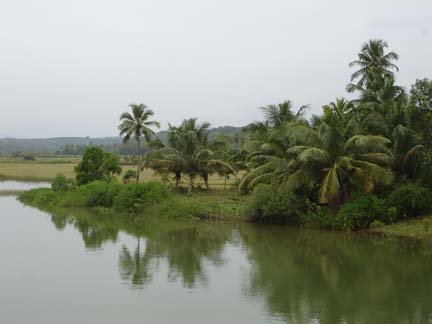
A Coastal estuary

A Coastal estuary
Holegadde near Honavar,Uttara Kannada dist, Karnataka

Copy? Right - but kindly remember to acknowledge!

Creative Commons License
This work is licensed under a Creative Commons Attribution 3.0 License.

" tulu-research.blogspot." ತುಳು ರಿಸರ್ಚ್. ಬ್ಲಾಗ್‌ಸ್ಪಾಟ್‌. ಇನ್

" tulu-research.blogspot."  ತುಳು  ರಿಸರ್ಚ್.  ಬ್ಲಾಗ್‌ಸ್ಪಾಟ್‌. ಇನ್
Have a nice day !