The Natha cult represents the fusion of Buddhist Avalokiteswara and Shaivaite tantric (Kapalika, Kaula) cults. Macchendra Nath and his disciple Gorakh Nath were the prominent exponents of the Natha cult. The Natha cult eventually spread to different parts of India and Srilanka during eighth to tenth centuries. Subsequently, twelve subdivisions (bara-pantha) evolved in the cult. The Natha Jogis used to travel for long distances on foot. Influence of Nath cult can be seen in major Shaiva centres like Srishaila. The Natha is short for ‘Lokeswara Natha’, according to in the Buddhist literatures of Srilanka.
Macchendra Natha was able to acquire the goodwill of the ruling kings who awarded him the administration of lands around Kadri temple and the title of ‘Kadri Arasaru’.
Natha tantric philosophy
The practice of Yoga and Tantra was common to the Vajrayana Buddhism and (the Kapalika, Kaula and other) Shaiva cults. Natha cult was the result of the fusion of the two streams of rival cults, based on the common factor of Tantric yoga. Occult sexual practices and experiments were integral part of the Vajrayana and Kapalika Tantra philosophies.
The Natha cult advocated the physical and mental development of the individual (Yogi or Jogi). It consisted of a set of yogic techniques called Tantra for developing mental abilities through sustained control of physical activities and respiration (pranayama). The techniques were intended to activate the dormant power of Kundalini, hidden in the bottom of the spinal column of the individual; and redirecting that power upwards to the brain to attain a ‘samaadhi’ state of bliss. Experiments in retention and redirection of semen upward were conducted in achieving these goals. Exponents like Gorakh Nath apparently emphasized on the virtues of celibacy. Concentration of the mind on light leads to a state of’ ‘mindlessness’ (‘amanaskate’) or zero mental activity that is described as ‘brahmanubhava’. Attainment of this state is considered as elevation of the person to the state of God. The cult believes that God lies within the person, or that divine state can be reached by the individual. Philosophically, there is no concept of separate external God like in Advaita or Dwaita philosophies. Natha Jogis utter ‘aadesh’ while they greet each other, showing mutual respect.
Natha and other contemporary philosophies (like Vajrayana, Kapalika and Kaula) possibly influenced the growth of later philosophies like Varakari, Veerashaiva, Mahanubhava, Soofi, Kabir, Datta and Nanak cults.
Macchendra Natha
Macchendra (Matsyendra) Natha hailed from a fisher community of probably Bengal area. (However, the sculptures show him riding on fish and the legends metaphorically describe his birth from the semen of Shiva swallowed by a fish). The ‘maccha’ is a Pali word for ‘matsya’ or the fish. The Alupe kings of Mangalore probably adapted the emblem of fishes after Macchendra Nath. Macchendra Nath is the fertility God in Nepal and a national festival is celebrated in his honour.
Macchendra also had another disciple named Chourangi Nath.
Gorakha Natha
The Nath cult is alternately known as ‘Gorakh panthi’ or ‘Gorakh cult’. Gorakha (Goraksha) Natha, probably was native of Nepal. He was a discarded child and was collected from a gobar pit by Macchendra, according to the legends. Gorakh was renowned proponent of Natha cult all over India.
Nepal, also known as Gorakh-Desh or ‘the land of Gorakhs’ (>.Gorkhas, the tribe), adopted the Natha cult as official religion. Several towns in Northern India and Nepal have been named ‘Gorakhpur’ after him. Coins of Nepal carry emblem of Shiva Gorakh Nath.
Pingala
Pingala, a queen of all-women’s domain (Stri-rajya), desired to have male offspring and prayed to Lord Anjaneya. At this juncture, Macchendra travels to her place and meets her. They develop mutual attraction and in the due course they beget two male children. Macchendra forgets himself in her company settles there for several years. In the meanwhile Gorakha, Macchendra’s prime disciple, goes in search of his Guru and finds that he is lodged in a female-domain, where men were not permitted. So he dresses himself like a woman and beats a ‘maddale’ (a kind of drum), in a tune that sounds “Chal Macchendra, Gorak Aya”. Macchendra awakens from the marital pleasures and returns with Gorakha to pursue yogic practices.
On another occasion Pingala travels with Gorakh towards Triambakeswar, but expires on the way at Mangalore. The burial related 'concluding' obituary ceremony (‘mangala-acharane’) was conducted at Mangalore in the due Yogic tradition of Natha cult. Later, she was honoured as an incarnation of Tara Bhagavathi and the shrine erected in her memory became the Mangaladevi temple in the course of time.
From the point of reconstruction of history, the question that remains is whether the town was named Mangalore after her or the place name existed even before.
®
References:
Rahamath Tarikere (2006) “Karnatakada Nathapantha”(in Kannada). Prasaranga, Kannada University, Vidyaranya, Hampi.p.xii+348+xii
John Holt (1991) Buddha in the crown: Avalokitesvara in the Buddhist traditions of Srilanka. Oxford University Press. 304 p.

A heritage blog by: Ravindra Mundkur & Hosabettu Vishwanatha
Showing posts with label Kadri. Show all posts
Showing posts with label Kadri. Show all posts
Sunday, January 27, 2008


Tuesday, January 22, 2008
79. The place: Kadiri
Kadri is one of most significant places in Mangalore in terms of historical evolution.Even though,now the place is commonly called Kadri, earlier local people used to refer to it by the name "Kadire". Manjeswara Govinda Pai has popularised the word 'Kadire' in his research works.
Many of our experts have endeavored to explain the meaning and or origin of the word. The most favored explanation is that it is a word derived from ‘kadali’ (=banana). The ‘kadali’ is also a small and sweeter variety of local species of banana that is popular in the district. But there is an alternate explanation with proof in the form of inscription under the bronze idol of Avalokiteswara installed by Alupa King Kundavarma which describes the place as ‘Kadarika vihar’. The word ‘Kadarika’ is Sanskritised version of Kadari or Kadire. (A ‘Vihar’ is a Buddhist monastery or hostel).
Kadali
In support of the aforesaid word Kadali, the place is ostensibly described as ‘Suvarna Kadali vana’(=golden banana grove). Infact, there is an suitable anecdote to match this epithet. However, on analysis of available historical data, it appears that the notion of Kadali vana came from Srishaila, another renowned Shaiva- Sidda- Natha holy place in Andhra Pradesh. At Srishaila there is a kadali vana. Historically, there was good theological relations between Kadri and Srishaila. It appears that the notion of Kadali vana may have been borrowed from that site at Srishaila.
Puddar
Tulu farming people traditionally celebrate the annual opening of harvesting season with a festival known as ‘Puddar’ or ‘Puddvar’. The origin of the word has been explained as 'pudda' (=new)+ 'baar' (=paddy).The word ‘Puddar’ has become ‘Huttari’ among Kodava people. Puddar >.puttar >.huttar >.huttari.
The festival is alternatively called ‘pasatt’(=new!) or ‘kural parba’(=spike of paddy+ festival), the latter word being more common among those converted into Christianity.
The festival is of quite ancient in origin derived from our early/proto-Munda heritage. The present Munda people of Chotanagapur area call it ‘Karam’ festival. It seems that the ‘puddar’ or ‘huttar’(Kodava) was the original word used by early Munda people who inhabited the Karavali/ Kodagu region during the early historical period.
Kadir
The key factor in the ‘puddar’ festival is a newly harvested spike of paddy called ‘kadir’ or ‘kural’ is brought from the designated place of community worship and tied to places in the entrance of the house and/or nearby trees, cattle-shed etc. It is a community festival of farmers since ages.
I suggest that the word kadiri came from ‘kadir’, the new spike of paddy. Kadiri was the ancient designated locality where they used to distribute the ceremonial ‘kadirs since ages.
Puddarkatte
There is a Puddar katte near Kadri temple, where the kadir was being distributed ceremonially since ages. The Kadri Jogis, the administrators of the temple have continued the popular ceremony of distributing kadir-s during the annual puddar festival, as cited by writer Rahamath Tarikere(2006).
®
Many of our experts have endeavored to explain the meaning and or origin of the word. The most favored explanation is that it is a word derived from ‘kadali’ (=banana). The ‘kadali’ is also a small and sweeter variety of local species of banana that is popular in the district. But there is an alternate explanation with proof in the form of inscription under the bronze idol of Avalokiteswara installed by Alupa King Kundavarma which describes the place as ‘Kadarika vihar’. The word ‘Kadarika’ is Sanskritised version of Kadari or Kadire. (A ‘Vihar’ is a Buddhist monastery or hostel).
Kadali
In support of the aforesaid word Kadali, the place is ostensibly described as ‘Suvarna Kadali vana’(=golden banana grove). Infact, there is an suitable anecdote to match this epithet. However, on analysis of available historical data, it appears that the notion of Kadali vana came from Srishaila, another renowned Shaiva- Sidda- Natha holy place in Andhra Pradesh. At Srishaila there is a kadali vana. Historically, there was good theological relations between Kadri and Srishaila. It appears that the notion of Kadali vana may have been borrowed from that site at Srishaila.
Puddar
Tulu farming people traditionally celebrate the annual opening of harvesting season with a festival known as ‘Puddar’ or ‘Puddvar’. The origin of the word has been explained as 'pudda' (=new)+ 'baar' (=paddy).The word ‘Puddar’ has become ‘Huttari’ among Kodava people. Puddar >.puttar >.huttar >.huttari.
The festival is alternatively called ‘pasatt’(=new!) or ‘kural parba’(=spike of paddy+ festival), the latter word being more common among those converted into Christianity.
The festival is of quite ancient in origin derived from our early/proto-Munda heritage. The present Munda people of Chotanagapur area call it ‘Karam’ festival. It seems that the ‘puddar’ or ‘huttar’(Kodava) was the original word used by early Munda people who inhabited the Karavali/ Kodagu region during the early historical period.
Kadir
The key factor in the ‘puddar’ festival is a newly harvested spike of paddy called ‘kadir’ or ‘kural’ is brought from the designated place of community worship and tied to places in the entrance of the house and/or nearby trees, cattle-shed etc. It is a community festival of farmers since ages.
I suggest that the word kadiri came from ‘kadir’, the new spike of paddy. Kadiri was the ancient designated locality where they used to distribute the ceremonial ‘kadirs since ages.
Puddarkatte
There is a Puddar katte near Kadri temple, where the kadir was being distributed ceremonially since ages. The Kadri Jogis, the administrators of the temple have continued the popular ceremony of distributing kadir-s during the annual puddar festival, as cited by writer Rahamath Tarikere(2006).
®
Friday, January 18, 2008
77. Natha cult at Mangalore
The Kadri Manjunatha temple at Mangalore in the present form was founded by Jogi Matsendranath of the Natha pantha (=cult) during the rule of King Kundavarma Alupa (ca. 968 CE). The Natha cult sprang from the Mahayana school of Buddhism but revived the Shaiva tradition. It marks the waning stages of Buddhism in southern India and transition of faiths from Buddhism back to mainstream Hinduism. The Jogis and the Jogi Mutt of Kadri are involved with the administration of Kadri temple since historical days. The place was known as ‘Kadarika Vihar’ during the hay days of Buddhism in Mangalore. The word ‘Natha’ means lord, owner or God.
The name Manjunatha generally means the Lord of the Snow (Himalaya or Kailasa). But, in the evolutionary terms, originally it may be the Natha representation of Manju Ghosh (Manjushri) Bodhisattva, a key disciple of Gautama Buddha. In the later case it follows that the Kadarika Vihara initiated as centre of spirit worship that eventually graduated into the worship of Lord Shiva, the Manjunatha.
Mangala of Pingala
Most of the published materials suggest that the name ‘MangaLoor’ or ‘MangaLur’ came after Malabar queen ‘Mangale’ came to this town and died here. We may have to make small corrections in this anecdote, after perusing the version provided by Jogi Anandanath (2003) of Kadri Jogi Mutt.
Pingaladevi
The queen who relinquished her regalities and followed Jogi Gorakshanath to Kudala was ‘Pingaladevi’ ( not Mangale or Mangaladevi ) according to Jogi Anandanath. Her original place was described as ‘Strirajya’(literally means ‘Womens kingdom’, possibly an allegory for the matriarchial, women dominated state in Kerala).She was disciple of Jogi Matsendranath and was the first Yogini (=female Jogi). She was actively involved in the propagation and activities of the Natha-pantha and introduced several female disciples to the Natha cult.
On the occasion of Kumbha mela at Triambakeswar, near Nasik, Maharastra, she was traveling from Kerala on foot with Jogi Goraksha Natha along the coastal path to attend the festival that recurs every twelve years. (The number twelve has auspicious significance in the Natha cult). Goraksha Nath was the eminent disciple of Matsendra Nath. Goraksha Natha halted in the southern part of (present Mangalore) town near Jeppu by installing his ‘danda’(ceremonial stick), at a place that became known as ‘Goraksha danD’.
Queen Pingaladevi attained ‘mangala’ in a nearby location. (Attaining ‘mangala’ apparently is an idiom used by Natha Jogis for death. Like Veerashaivas use the word ‘lingaikya’ or ‘shivaikya’ for death.).The specific timeline has not been given in the report for any of these events.
The word ‘mangala’ has several meanings, like (a) auspicious-[ceremony,marriage etc]- (b) fort (c) end (end part of events like bhajana session or yakshagana) and (d) end of life (death).
Thus, the location where ex-queen Yogini Pingaladevi attained ‘mangala’ (=end of life) was later named as ‘Mangalapura’ and a shrine was built there.
It follows that the worship of Mangala was initially a spirit cult in honour of the expired Yogini. Subsequently in the history, the Mangaladevi was accepted as a form of Durga or Shakti. Thus this is a clear case of eventual conversion of spirit cult into deity cult of mainstream Hinduism.
Reference:
Jogi Anandanath (2003) “Nathapantha kStetra Jogi maTa, Kadali, MangaLoor”.(in Kannada). Natha pantha prachara samiti, Mangalore. p.10+99.
The name Manjunatha generally means the Lord of the Snow (Himalaya or Kailasa). But, in the evolutionary terms, originally it may be the Natha representation of Manju Ghosh (Manjushri) Bodhisattva, a key disciple of Gautama Buddha. In the later case it follows that the Kadarika Vihara initiated as centre of spirit worship that eventually graduated into the worship of Lord Shiva, the Manjunatha.
Mangala of Pingala
Most of the published materials suggest that the name ‘MangaLoor’ or ‘MangaLur’ came after Malabar queen ‘Mangale’ came to this town and died here. We may have to make small corrections in this anecdote, after perusing the version provided by Jogi Anandanath (2003) of Kadri Jogi Mutt.
Pingaladevi
The queen who relinquished her regalities and followed Jogi Gorakshanath to Kudala was ‘Pingaladevi’ ( not Mangale or Mangaladevi ) according to Jogi Anandanath. Her original place was described as ‘Strirajya’(literally means ‘Womens kingdom’, possibly an allegory for the matriarchial, women dominated state in Kerala).She was disciple of Jogi Matsendranath and was the first Yogini (=female Jogi). She was actively involved in the propagation and activities of the Natha-pantha and introduced several female disciples to the Natha cult.
On the occasion of Kumbha mela at Triambakeswar, near Nasik, Maharastra, she was traveling from Kerala on foot with Jogi Goraksha Natha along the coastal path to attend the festival that recurs every twelve years. (The number twelve has auspicious significance in the Natha cult). Goraksha Nath was the eminent disciple of Matsendra Nath. Goraksha Natha halted in the southern part of (present Mangalore) town near Jeppu by installing his ‘danda’(ceremonial stick), at a place that became known as ‘Goraksha danD’.
Queen Pingaladevi attained ‘mangala’ in a nearby location. (Attaining ‘mangala’ apparently is an idiom used by Natha Jogis for death. Like Veerashaivas use the word ‘lingaikya’ or ‘shivaikya’ for death.).The specific timeline has not been given in the report for any of these events.
The word ‘mangala’ has several meanings, like (a) auspicious-[ceremony,marriage etc]- (b) fort (c) end (end part of events like bhajana session or yakshagana) and (d) end of life (death).
Thus, the location where ex-queen Yogini Pingaladevi attained ‘mangala’ (=end of life) was later named as ‘Mangalapura’ and a shrine was built there.
It follows that the worship of Mangala was initially a spirit cult in honour of the expired Yogini. Subsequently in the history, the Mangaladevi was accepted as a form of Durga or Shakti. Thus this is a clear case of eventual conversion of spirit cult into deity cult of mainstream Hinduism.
Reference:
Jogi Anandanath (2003) “Nathapantha kStetra Jogi maTa, Kadali, MangaLoor”.(in Kannada). Natha pantha prachara samiti, Mangalore. p.10+99.
Subscribe to:
Posts (Atom)
A Coastal estuary
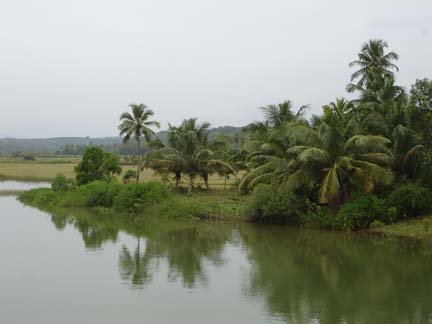
Holegadde near Honavar,Uttara Kannada dist, Karnataka
Copy? Right - but kindly remember to acknowledge!

" tulu-research.blogspot." ತುಳು ರಿಸರ್ಚ್. ಬ್ಲಾಗ್ಸ್ಪಾಟ್. ಇನ್

Have a nice day !