Showing posts with label Buddhism. Show all posts

Saturday, July 12, 2014

341. Pagoda: an early Indian word

A Pagoda represents a multi-storied, turret like or pyramidal tower like structure mostly of Buddhist or Hindu origin. In China, Japan and South East Asia, the pagodas represent Buddhist temples.  It has been proposed that the word pagoda travelled to China and Japan along with tenets of Buddhism that spread to those countries during the early centuries of the Common Era. The word is   equivalent to the word ‘temple’. In many parts of ancient India including Tulunadu the ‘Pagoda’ was the name of the currency in use in early days. The word is said to be of Indian origin even though several obscure explanations have been proposed in this regard.

Butkada
One proposal suggests that it is derived from the Persian word Butkada which means the temple of idols. There has been a suggestion in the Wiki pages that the Portuguese word Pagode is derved from the Persian word Butkada. Whether the Portuguese word Pagode was derived from the Persian word Butkada or Portuguese picked up the word pagode directly from pagoda from their Indian connections is not clear.However the Persian word in the context, Butkada is quite interesting.
Early pagodas also known as Chaityas (Chitte in Tulunadu) were constructed to preserve the mortal remains of Buddha and his disciples. The turret like (or sometimes globular) structures preserving the remains of the dead were also known as Stoopa or doopa (derived into: doope, as known commonly in Tulunadu).
The prefix būt in the Persian word Butkada reminds us of bootha (or Buta), the Spirit of the dead. Similarly, the suffix kada reminds of the Kata the early Koraga word for representation of God or divine stone. The Persian word Butkada is explained as Temple of idols. The equation of the word būt or bhoot (the spirit of the dead) with idols envisages the ancient cults of worshipping the dead in the form of idols in ancient Persia also.
Besides relating 'Kada' to 'Kata' (natural object, say a stone, tree, or a place of pyre, for identifying the Spirit of the dead for worship), it seems that 'kada' could have been a corrupted form of ''kala' (=an open field or plot). The term kala was also used by Arab traders after seeing a lot small shrines or temples along the Western coast, which is then picked up by Portuguese and afterwards by other European traders. 'Kala' also means a small shrine, akin to  'Maada or Kaimaada' for the dead.  'Kaliyata' means an annual celebration for worshipping that Divine Spirit

Origin of the word: Pagoda
There has been a suggestion that the word is influenced by the Prakrit word Bhagodi which means divinity or divine structure.
An ancient Munda word Phagu has remained till today on account of the popular Phagu festival commonly associated with Munda tribes. The meaning of the word phagu is not clear even though traditionally it was also the name of the first month in the calendar years among ancient Indian communities as we find from the vestiges of ancient cults preserved in Tulunadu (Post 338). 
There are a large number of place names in Bihar, Chattisgarh ,Jammu & Kashmir, Jharkhand, Orissa, Punjab, Rajastan, Uttar Pradesh, Uttar Khand and West Bengal that begin with the prefix of phag which in turn suggests the distribution and survival of the ancient term in larger part of  India. Similarly we can find numerous place names beginning with the prefix of bhag also.
It appears that the Munda word phag or phagu is an ancient variant of the latter Prakrit/ Sanskrit word bhag.
The pa >ba (or pha >bha) consonant transitions along the history are quite common in Indian languages. Thus the ancient Indian word phag or phagu must have become bhag with along course of passage of time. The word bhag in Indian culture represents divinity or creation or a product of creation. On one hand words like Bhagvan (=God), Bhagvati (=Goddess) have been derived from the root bhag. On the other hand, bhag also meant female organ responsible for creation of life (or organ of reproduction, to be precise). The River Ganga is also known as Bhagirati or the divine flow. Bhagamandala in Kodagu is the divine place of origin of River Kaveri. Bhagwadi hamlet in Barkur, is famous for  Mahisamardini Temple. Thus, the term 'bhag' also means embodiment of 'divine qualities' (eg. Bhagawanta, Bhagamalini, Bhagavati, etc.). Bhagambila is an ancient hamlet near Kotekar in Mangalore Taluk.

The Prakrit word bhagoda, being bhag+oda, derived from Munda language roots, thus represents a divine structure, wherein oda (ora) means a house. Further, bhagodi being derived from bhagoda means divine in Prakrit language.


Oda
The suffix Oda at present generally means a boat in Tulu, Tamil Telugu and other related languages. However, it seems the word had other shades of meanings earlier in the history, such as a structure, a construction, an idol or a coin.

Pagoda: shades of meaning
Hobson Jobson Dictionary attributes a set of three meanings for the word pagoda: (a) a temple (b) an idol and (c) a coin. Since the three meanings are interlinked, it seems that the term pagoda during the early history originally meant (a) a divine structure/construction (b) a divine sculpture or idol and (c) a divine/gold coin bearing the image of a God or Goddess. The gold (sometimes silver) coins carrying the image of then popular deities such as Varaha (Panjurli in Tulunadu), or double fishes (Pandya and Alupa emblem which also turned out to be the insignia of Fish incarnation (Matsyavatar) of Lord Vishnu)

Thus, the term pagoda appears to be an ancient Indian term (of Munda or pre Munda origin) and meant a divine structure or representation or entity.. Since Spirit worship was the order of the day in those times the pagoda represented a spirit shrine or structure intended and designed to preserve mortal remains of the dead.The term pagoda must have been in wide usage in India during the early centuries of the Common Era when tenets of Buddhism were spread to the China and Japan. 

Saturday, May 24, 2008

114. Ayikala


A few of the recognizable vestiges of Buddhism that prevailed in the Karavali / Tulunad region have been traced in some of the earlier posts herein. There may still be skeptics who doubt the extinct evidences of Buddhism in Tulunadu. Apart from the eternal confusion between the parallel paths of Buddhism and Jainism, it may also be true that Jainism that swayed strong influence over Tulunad during the later centuries of the Common Era inadvertently masked the older evidences of existence of Buddhism.

Mayikala
An ancient ‘Mayikala’ devoted to the worship of Gautama Buddha’s mother Mayadevi is traceable in the Mangalore city of early centuries of Common Era. It is existing in the form of an older name of the city, ‘Maikala’ which is still retained and used by Beary merchants as an equivalent name of Mangalore.

Ayikala
The village of Ayikala (usually now pronounced as Aikala) in the northern part of Mangalore taluk. The Aikala village is located east of Kinnigoli town and to north of Kateel the famed temple town.
One neighbouring place forming the junction between Kinnigoli, Aikala and Damaskatte is called Mooru Kaveri (or Mooji Kaveri) poetically referring to three Kaveri(Kayar) trees. Some people have reinterpreted the name as Moodu Kaveri.
The Puttige village that was a power centre of Jain chieftains in the later centuries is to the east of Aikala.
The Aikala village on the Mulki- Kinnigoli - Mudabidri road, is known for granite stone quarries. There is also a temple devoted to Shakti/Durga worship. The traces of theologic evolution of Ayi.>Bhagavathi.> Durga may be relevant here. Original location of Ayikala shrine may be quite difficult to trace now.

Aikala  refers to a 'kaLa' (=field; field shrine) occupied by or named after Ay tribes. Ay tribes were a kind of cattle breeders similar to Yeda, Ida or Yedava/Yadava tribes. Kings and chieftains from the Ay tribes were known to have ruled parts of Kerala. It is possible that they settled in parts of Mangalore Taluk like villages of Aikala.
Aihole in Bijapaur district also reminds us of the Ay tribes settled in various parts of Karnataka in the antiquity.

Prakrit pockets in Tulunadu.
Sham Baa Joshi has deciphered the existence of pockets of Prakrit language within southern Karnataka during the period (before 10th Century CE) when Maharastra and Karnataka shared common socio-political territories. It can be recalled that the medieval Kannada text Kavirajamarga (ca. 10th Century) described that Kannada country as the territory stretched between the rivers of Kaveri and Godavari.

Ayikala proves the Sham Baa Joshi’s theory of existence of pockets of settlements that employed pre-Marati Prakrit language in medieval Karnataka. The pocket settlements of Prakrit language speakers, possibly represented by Buddhist and Jain monasteries, existed in ancient Tulunadu also.
One of the possibility is that Buddhists during the early centuries of CE chose the place Ayikala known for large rocky outcrops, with the intention of carving out cave temples or Viharas.
Buddhism was dominant in the West coast of Maharastra,during the historical past, as evident by the presence of numerous cave temples and rock-cut Viharas, carved in basalt rocks . Thus, the free flow and migration of monks along the western coastal track can be visualized.

Alternate explanations

The word Aayi of present Marati language was derived from the older Prakrit language. The ‘aayi’ is equivalent of the word ‘maayi’, the mother.

The word Aikala has several possible alternate explanations.Manjunath has offered some additional details on the word 'ayi'(see 'comments' below).One of the interesting points cited by him is that the word ayi (=mother) has entered Kannada as ta-ayi!
**
Hosabettu Viswanath has explored the word Aikala further.I quote some of his points :

'Aya' or 'Ayi' has so many shades of meaning. While 'aya' means 'adrishta' (fortune/goodluck), it has also means 'a kind or mode of tax' (See p.141 of Tulu Lexicon).So 'Ayakal>Ayikal' may mean a toll gate (Sunkada katte). There must be some historical clue if it is so. Let the locals come forward with the explanation.

Following alternative explanations may also be worth noting:

1. 'Ayi' (Five) is shortened form of 'ayin' in compound words, like 'Ayigeni' (a measure of five spans); 'Ayigoli padpu' meaning 'Panchvati' (a grove of five fig trees); 'Ayineer' (a ritual bath on the 5th day after menstruation); 'Ayinadu' (a province of five villages), etc.
2. 'Ayigal/Ayigulu' means a teacher or preceptor. In olden days such teacher's house is known 'Ayigal Math' and lessons are conducted under a tree. So 'Aigala Katte' may have been shortened as Ayigala>Ayikala.
3. 'Ayi' means ''Sayi', which in English means (to) die or expire. 'Kala' means small shrine for the departed Soul/ Bhoota (Spirit). Thus, it means a monument or five monuments for the Departeed Soul or Spirit.
4.  'Ayyalkal', is a stone representing 'Kshetrapala' of a temple.

**
Ay tribes
On overall analysis it appears that the Ay tribes were a kind of cattle-herders (Yadavas) spread in parts of peninsular India during the early centuries of Common Era. In southern India, Ay tribes were ruling parts of West Coast, especially in Kerala during the early centuries of the Common Era.
Ayikala,(ay+kala) in conclusion, represents a sacred place ('kaLa') of Ay tribes.

For additional data on the words aya,ayi and iya see post 201 on Aya.

®

Friday, March 7, 2008

101. Early dormant Jainism

Readers may have noted that the earlier posts in this blog have marshaled a few strings of evidences to assert that Buddhism was present in Karavali /Tulunadu since ca. 300 BC from the times of composition of Siri paDdana upto 10 or 11th century when Shaivism gradually overtook the Buddhism as mass favoured religious cults. While the evidences in favour of Buddhism are strong during the early period (ca.300 BC to 500 CE) similar evidences are not distinctly available in favour of early Jainism in Karavali/Tulunadu.

Jainism and Buddhism
Gautama Buddha and Mahavira were contemporaries and hailed from the same province. Buddhism was founded by Gautama Buddha ,but Jains, in general, believe that Jain philosophy was founded by the first Tirthankara known as Rishaba and Mahavira has been considered as the last TIrthankara in the sequence of 24th tirthankaras. This assertion of pre-Vedic antiquity possibly suggests to the existence of basic ascetism in pre-Vedic cultures. It can be b noted that the concept of Shiva, with tiger -skin loin cloth and ash covered body, which was subsequently developed into Shaivism during post-Vedic period, is also basically a primitive path of ascetism.
Jain tradition also believes that Chandragupta Maurya (grandfather of King Ashoka) adopted Jainism and travelled to Sravanbelagola along with Jain monk Bhadrabahu. These data suggest that Jainism was introduced to southern India before the introduction of Buddhism.
However, the available evidences in the Karavali are in favour of imprints of Buddhism rather than Janinism especially during the early centuries of the Christian Era.
Dormant Jainism in Early CE
This apparent paradox has been answered by scholars. The early Jainism (Nirgrantha) was highly ascetic that did not attract common people. The Buddhism and mainstream Hinduism followed paths of Bhakti to attract common people. The Jain monks had to compete with these devotional cults like Buddhism and mainstream Hinduism, which they resorted to after 5th century CE to enhance the mass appeal according to scholars and religious analysts like M.A.Dhaky and John E .Cort.
Thus we find proliferation of Jainism only after 5th century CE in different parts of southern India including Tulunadu/Karavali.
®

Saturday, March 1, 2008

99. Kundapura

The place name Kundapura is quite interesting. The ‘Kunda’ is a Pali and Prakrit word signifying the gold. The word 'Kunda' also means 'lake' or 'pond'.There are also other meanings attached to the word such as melt,pillar,flower etc in different contexts.

Kundagrama
The historical significance is that it is the name of the village (known as Kundagrama or Kundapura) near Vaisali in Videha (part of present Bihar) where Mahavira was born. Thus evidently the place name Kundapura signifies the role of Jainism in the Karavali.

Jainism & Buddhism
Since Mahavira (ca.599-527 BC) and Buddha (ca.563- 483 BC) are contemporaries it can be considered that the Jainism and Buddhism flourished simultaneously. Jains, however, believe that Jainism was founded by Vrishabha the first of the twenty-four Tirthankars. Yet critics opine that during early period upto 5th century CE was not emphatically present. The usage of the word Jainism, like the word Hinduism, itself is said to be rather recent.
The antiquity of the place name Kundapura is historically significant as it may throw light on the ascent/spread of Jainism in the Karavali/Tulunadu.

Kundavarma
Because of the presence of the word ‘Kunda’ in Pali (Buddhist) and Prakrit (Jain) literature it is difficult to distinguish the exact religious connotation in the said word. The word ‘Kunda’ also exists in Tulu: it means either (a) pillar or (b) melt.
The Alupa King Kundavarma, who installed the idol of Avalokitesvara at Kadire, Mangalore, has been interpreted to be a Shaivaite by Dr. Gururaja Bhat. But his very name suggests that he was either a Buddhist or a Jain. It may also mean that religious affiliations were not emphatic in those days among the ruling class.

Kundaran
An interesting surname among Mogaveeras is Kundaran. In view of the significance of the word Kunda, the surname Kundaran possibly carries implications of the Jain/Buddhist heritage of a sect of Tulu Mogaveera people.
®

Tuesday, February 26, 2008

97. Siri paDdana : A Tulu Sangham Epic

Antiquity of the Siri paDdana dates back to the period of Tamil Sangham literature. There are several Pali proper nouns in the Siri paDdana that show the backdrop of Buddhism during the composition of the oral epic. Buddhist elements have also been recognized in the environs of Tamil Sangham. The word Sangham (=association) itself is a word associated with Buddhism.
Tulu Sangham
Analogy between the Siri paDdana and the story of Kanaki in Sangham literature suggests that both epics were two different regional versions been built on the same story element. As noted by Peter Claus “there are some tantalizing similarities between the Siri cult and that of Pattini, and also between the Siri legend and that of Kanagi (Pattini)”.The similarity of story element in the Sangham Kanaki and Tulu Siri, leads us to conclude that the composition of Siri paDdana was contemporary of Tamil Sangham literature.
This leads us to visualize a period of an oral tradition of literary association that flourished for some time before Christ in Tulunadu that can be designated as Tulu Sangham. The Tulu Sangham tradition apparently added subsequent sequels in the due course like (a) Abbaga-Daraga and (b) Mayaga-Maipage to the original Siri paDdana by different bards. Minor contradictions in the different sequels possibly point to compositions by different bards at different times.

Sonne and others
Sonne is the name of daughter of Siri, the tragedy heroine. The meaning of Sonne is not zero! Sonna means gold in Pali language. The Hindi Sona and Sanskrit Suvarna are related to this word. Similarly, the proper names like Mayage (<=Mayakka), Maipage (Mayi-page) suggest Buddhist influence during the composition, the Maya(devi) being the name mother of Gautama Buddha. Even,the place names Lokanadu or Lankanadu evince Buddhist flavours. Other proper nouns Gindi (=bronze kettle type of vessel), Abbaga (=constellation of Krittika), Daraga (=constellation of Mrigashira) are not found in common Pali names and may be the usual Tulu female names in usage at that time. The usage of (male) period surnames in the paDdana like Alva, Ballaveru, Marla and Thola needs further analysis.

Chenne, the game
The word chenne is derived from the Pali word that means to relish, but the game and the cult evidently has been imported by the Tulu immigrants. Folklorist Peter Claus concludes that many of the elements found in Tulunad were imported along with the game as sort of historical baggage. The earliest representation of the game in Egypt would suggest that the game originated in the Middle East and traveled along trade routes even before Christ. The game symbolizes intelligence and cunningness and is played among peers. In India and Africa the game is represents rites connected with puberty and marriage.

Bermer
Though Pali words connected with Buddhism make interesting backdrop in the Siri paDdana, the ruling deity is Bermer, the ancient spirit God of Tulu people. The Shiva and Parvathi appear as characters in a sequel of the PaDdana, but there is no indication of their worship. Possibly the Siri PaDdana predates the period of initiation of Shiva worship.
The chief character of the paDdana, the landlord of Satyanapura is also called ‘Berma’ Alva .or ‘Berma’ Ballaveru in a sequel. Initially, he is issueless and the suggestion he gets is that his problem would be resolved if he arranges for the renovation of Bermer shrine.

Time and Tides
This leads us to interpret that Bermer worship was grossly neglected during the ascent of Buddhism in Tulunadu. The initial Buddhism being a religion without Gods, the people neglected the cult of Bermer and spirit worship that was prevalent among them. The bards of Tulu Sangham contemplated to revive the neglected Bermer worship on the wake of ascent and spread of Buddhism in the region. The story of Siri paDdana revolves around adultery and prostitution that was the major concern of thinkers of that period. Apparently, to discourage women pursuing paths of adultery, like their errant husbands, the bards poetically conceived special dignity and powers (to curse or bless) to women following paths of disciplined life.
®

.

Thursday, February 21, 2008

94. Antiquity of Siri

The living oral ballads in Tulu language known popularly as paDdanas are unwritten ancient documents that evolved along with the Tulu people, culture and language over a prolonged period of time. They not only reflect the poetic emotive talents of our ancestors, but are also mirrors of the changing culture, values and ethos of our people.

Evolved paDdanas
But the paDdanas that survived amidst us at present are the intensely evolved versions. Since paDdana are orally transmitted folk ballads generation to generation, it is logical to expect modifications over the years reflective of the environmental perspectives of the person reciting it. In the current digital parlance, they can be compared to the Microsoft Windows Vista or the Adobe Photoshop CS3. I take the liberty of this odd comparison just to convince you the difficulty of visualizing and reconstructing the earliest version of paD-danas using the current versions. And given the prolonged evolutionary history Tulu people incurred the oldest, original form of any paDdana is nebulous to decipher. Still there are some glowing indices in the current versions of paDdanas that through light on their antiquity and overall Tulu cultural evolution.

Ancient Siri paDdana
The evidences discussed below permit me to propose that the original version of the Tulu paDdana on Siri may have been orally composed during ca. 300 BC or earlier.

1.Satyanapura
The first proof: King Ashoka’s Girnar rock edict in Pali language (ca.300 BC) describes a southern State of ‘Satiyaputto’ that can be translated as Satyapura. The name of the palace in the Siri paDdana, Satyanapura is akin to Satyapura or Sati(y)aputto.
Now there are no towns having the name of Satyanapura in Tulunadu. However, it can be presumed that ‘Satyanapura’(.>Satiaputo) was a prominent Tulu City-State during the period of King Ashoka.

2.Siri -A Pali word
Second proof of the antiquity of Siri is the word itself. Siri is the heroine of the Siri paDdana. The name Siri is not commonly used name for present day Tulu females.
The word ‘Siri’ exists in Tulu language and it means tender leafy shoot of a plant like coconut palm. In Pali language the word Siri represented the Godess of luck.There is some parallelism between the two meanings: (1) tender shoot (Tulu) and (2).luck (Pali). The growth of tender shoot (Siri) is perceived as lucky.
Normally, we are taught in schools that the word ‘Siri’ is the derivative (‘tatbhava’) of the Sanskrit word ‘Shri’. But this is questionable and the truth may be the other way round, since the mythology of Lord Vishnu and his wife Shri (Lakshmi) evolved as late as 500BC or still later. The Pali and related Prakrit language existed before Vedas and it can be considered logically that Sanskrit (= refined) was a refined, evolved language after the older Prakrit (=natural) language. Since, it can be established that religious cults have borrowed from each other, it can be proposed that ‘Siri’, the Godess of luck of early Buddhist period, eventually evolved into ‘Shri’, the Godess of wealth.
To summarize: Siri.> Shri.
Thus the Pali word ‘Siri’ in the said PaDdana displays unmistakable shadows of early Buddhism in the early Tulu history dating back to ca.300 BC.

3. Ancient cult of Possession.
Third proof for the antiquity of the original Siri paDdana is the persistence of the ancient cult of possession attached to the Siri festivals.
The annual celebration of Siri festival is quite unique and unlike other kola, nema etc celebrations associated with other Tulu spirits. It is a celebration of the ancient art of trances or possessions. This cult was prevalent during the early history of the southern India and is well documented in Tamil Sangham literature that is estimated to have been compiled between the periods ca.200BC to 200AD.George Hart discusses some aspects of the cult of possessions described in Sangham literature.

4. Chenne mane: An ancient game
Peter Claus reports that Chenne Mane, a rural game associated with the Siri cult (or Mancala game as known in other parts of India and Srilanka) is known to have been played by rural folks since ca.200 BC. The game is prevalent in parts of Africa and Middle East, a fact suggestive of origin of the game in Africa-Mediterranean region. The game may have been brought to Tulunadu by the Early Tulu immigrants.

Evidently, the Siri paDdana has evolved extensively since its inception during early years of Buddhism in Tulunadu. The implicit indications of Jainism attached to it in the current versions of Tulu Siri paDdana are only reflective of the theological evolutions in the Tulunadu with the passage of times.
®

Friday, February 8, 2008

86. Samani

Glancing through the descriptions of foreign travelers to west Coast of India during the historical period, in Hobson Jobson dictionary, I chanced to stumble upon the word ‘Samani’ used by Rashidudeen during the end of thirteenth century CE.

Rashiduddeen
The entry on Rashiduddeen’s report on the West Coast of India during ca.1300CE is cited below:
c. 1300. -- "Beyond Guzerat are Konkan and Tána; beyond them the country of Malibár. . . The people are all Samanís (Buddhists), and worship idols. Of the cities on the shore the first is Sindabūr, then Faknūr, then the country of Manjarūr.

In the above passage, replace and read Gujarat (for Guzerat), Thana (for Tana), Malabar (for Malibar), Goa ( for Sindbur), Barakur (for Fakanur) and of course Mangalore (for Manjarur).The explanation for the word ‘Samanis’(=Buddhists) is presumably given by the editor of the dictionary.
The origin of the word ‘Samani’ is rather obscure with a random opinion that it is possibly of Polynesian origin. However, the Pali dictionary of proper names describes Samani as a princess. In Cambodia, neophytes to Buddhism were called Samanis or nens where as senior monks were designated as ‘bhikkus’. In Srilanka, the word Samani was applied to Buddhist nuns, specifically wandering female monks. Now the word Samani is also used by Jain nuns.
It appears that Rashiduddeen employed the word Samani to Buddhist monks in general.

A Surname: Samani
The significance of the word Samani lies in the fact that it is one of the surnames of a Tulu community, specifically the present day Bunts. Some surnames help us to trace episodes of historical evolution. It has been opined that during the course of time, the Buddhists of Karavali were not driven out but eventually assimilated with the local population.
The historical Jain-Bunt and vice-versa conversions in Tulunadu are rather well known so far. The present string of data adds to our knowledge that Tulu people also have vestiges of Buddhism in their historical heritage.
®

Friday, February 1, 2008

83.Buddhism vs. mainstream Hinduism

The parallel theological evolutions in Buddhism and mainstream Hinduism coupled with historical rivalries and interferences led to eventual assimilation of Buddhism especially in southern India.
The immigrant Indo Aryans who settled in northwestern Indian subcontinent are credited with the composition of earlier Vedas. Rigveda is known to have been composed by a set of about twelve sages of Indo-Aryan lineage. If we accept that the population of the Vedic poets is about a dozen or two, there is no meaning in the hypothesis of Indo-Aryan invasion. The small group of Indo-Aryans soon must have been absorbed into the Indian mainstream. Most of the remaining Vedas must have been composed by descendants of the Indo-Aryans and natives. This is evident by successive generations of sages of native origin.
Veda Vyasa
The sage Veda-Vyasa, the highly talented and creative writer of Mahabharata and the compiler/arranger of Vedas is a shining example. Veda-Vyasa, ca.500 BC, was clearly an educated native, born to sage Parashara and Satyavathi (Matysagandhi), the daughter of Dasharaja, a boatman who used to ferry people across River Yamauna.
Veda-Vyasa is also credited with the concept and compilation of ten incarnations of Vishnu. He obviously wanted to establish the greatness of Lord Vishnu, who was a minor God during the time of Rigveda. He assembled various ten legends that existed prior in different regions of the subcontinent and welded them into a continuous collage of incarnations of the Mahavishnu.
Gautama Buddha
Gautama Buddha entered the scene around the same time, with his revolutionary agnostic philosophy. Soon he was very popular and many people embraced the philosophies propagated by him. The popularity of Buddha was detrimental to the propagation of Vishnu cult. Therefore disciples of Veda-Vyasa, modified their original scheme of ten incarnations and adapted the legend of Buddha as ninth incarnation of Vishnu. This was in a way psychological rivalry of theologies and battle for supremacy. The conversion of Buddha into an incarnation was an effort to denigrate his status and supremacy.
Mahayana
Buddhas disciples retaliated by promoting incarnations of Buddha. Initially 24 to 28 incarnations of Buddhas were visualized. In the next stage, a number of Bodhisattas who would attain Buddha-hood in the future in future were visualized. In a way, it was an open invitation that any person can achieve Buddha-hood by following specific path laid by the Mahayana school.
One channel of mainstream Hinduism was glorifying Vishnu and other was promoting Shiva and Devi or Kali, yet another school propounded the virtues of Brahma. Buddhism tried to absorb the basic concepts of these deities into Buddhism. The Avalokiteswara, the Bodhisatta (Bodhisatva) of compassion was remoulded to embrace the virtues of Shiva. Manjusri, the Bodisatta of wisdom, was modified to represent attributes of Brahma. Padmapani was a variation of Vishnu. Similarly, parallel Dhyani Buddhas were created to represent other divine elements of the Vedic mainstream. Even the concept of a future Buddha, Maitreya, who would be born after 4000 years (shade of Kalki) was conceived.
Ajanta and Ellora (6-8 c CE) in Maharastra, Krishna valley in Andhra Pradesh, Kaveripatam and Nagapattanam in Tamilandu, Banavasi, Aihole, Mangalore in Karnataka, Ratnagiri in Orissa and Srimulavasam near Ambalapuzha in Kerala were major centres of Buddhism in southern India
Vajrayana
Vajrayana cult of Buddhism delved into Tantric rituals like various groups of tantric Shaivite Kapalika, Siddha and Shakta cults during 7th and 8th centuries. The parallelism and collaborations amongst these groups led to dissolution of thin boundaries that separated them. Natha cult is clearly a fusion of Buddhist and mainstream Hinduism.

The Buddhism was not blatantly driven out of southern India as made out by some analysts, but was eventually absorbed into the mainstream Hinduism. Only those sects that were denied entry to Hindu temples at that time, like Thiya (Malayalee Billawas), continued to practice a weakened form of Buddhism.
®

Friday, January 18, 2008

77. Natha cult at Mangalore

The Kadri Manjunatha temple at Mangalore in the present form was founded by Jogi Matsendranath of the Natha pantha (=cult) during the rule of King Kundavarma Alupa (ca. 968 CE). The Natha cult sprang from the Mahayana school of Buddhism but revived the Shaiva tradition. It marks the waning stages of Buddhism in southern India and transition of faiths from Buddhism back to mainstream Hinduism. The Jogis and the Jogi Mutt of Kadri are involved with the administration of Kadri temple since historical days. The place was known as ‘Kadarika Vihar’ during the hay days of Buddhism in Mangalore. The word ‘Natha’ means lord, owner or God.
The name Manjunatha generally means the Lord of the Snow (Himalaya or Kailasa). But, in the evolutionary terms, originally it may be the Natha representation of Manju Ghosh (Manjushri) Bodhisattva, a key disciple of Gautama Buddha. In the later case it follows that the Kadarika Vihara initiated as centre of spirit worship that eventually graduated into the worship of Lord Shiva, the Manjunatha.

Mangala of Pingala
Most of the published materials suggest that the name ‘MangaLoor’ or ‘MangaLur’ came after Malabar queen ‘Mangale’ came to this town and died here. We may have to make small corrections in this anecdote, after perusing the version provided by Jogi Anandanath (2003) of Kadri Jogi Mutt.

Pingaladevi
The queen who relinquished her regalities and followed Jogi Gorakshanath to Kudala was ‘Pingaladevi’ ( not Mangale or Mangaladevi ) according to Jogi Anandanath. Her original place was described as ‘Strirajya’(literally means ‘Womens kingdom’, possibly an allegory for the matriarchial, women dominated state in Kerala).She was disciple of Jogi Matsendranath and was the first Yogini (=female Jogi). She was actively involved in the propagation and activities of the Natha-pantha and introduced several female disciples to the Natha cult.
On the occasion of Kumbha mela at Triambakeswar, near Nasik, Maharastra, she was traveling from Kerala on foot with Jogi Goraksha Natha along the coastal path to attend the festival that recurs every twelve years. (The number twelve has auspicious significance in the Natha cult). Goraksha Nath was the eminent disciple of Matsendra Nath. Goraksha Natha halted in the southern part of (present Mangalore) town near Jeppu by installing his ‘danda’(ceremonial stick), at a place that became known as ‘Goraksha danD’.
Queen Pingaladevi attained ‘mangala’ in a nearby location. (Attaining ‘mangala’ apparently is an idiom used by Natha Jogis for death. Like Veerashaivas use the word ‘lingaikya’ or ‘shivaikya’ for death.).The specific timeline has not been given in the report for any of these events.
The word ‘mangala’ has several meanings, like (a) auspicious-[ceremony,marriage etc]- (b) fort (c) end (end part of events like bhajana session or yakshagana) and (d) end of life (death).
Thus, the location where ex-queen Yogini Pingaladevi attained ‘mangala’ (=end of life) was later named as ‘Mangalapura’ and a shrine was built there.
It follows that the worship of Mangala was initially a spirit cult in honour of the expired Yogini. Subsequently in the history, the Mangaladevi was accepted as a form of Durga or Shakti. Thus this is a clear case of eventual conversion of spirit cult into deity cult of mainstream Hinduism.


Reference:
Jogi Anandanath (2003) “Nathapantha kStetra Jogi maTa, Kadali, MangaLoor”.(in Kannada). Natha pantha prachara samiti, Mangalore. p.10+99.

Wednesday, January 16, 2008

76. The Bhagavathi cult

The worship of Bhagavathi is popular and widespread in Kerala and the southern part of Karavali areas traditionally dominated by matri-archial system of families. The cult of Bhagavathi often transcends the spirit worship and overlaps into the field worship of Mother Godess or the Shakti. Thus a fusion of the cults of the Spirits and Godesses can be seen. In Kerala, the Bhagavathi worship is a part of Teyyam (spirit) worship.

The word Bhagavathi has interesting connotations and history. It is said to be the product of Buddhist heritage of southern India. The word Bhagavathi appears as female equivalent (Godess) of the word Bhagavantha, the God. However, the word ‘Bhaga’ basically has dual meanings such as: (1) prosperity and (2) female genitalia. Thus, shades of primitive genital worship notions can be found in the word. Thus the ‘Bhagavathi’ essentially stands for honorable woman, the creator and a symbol of prosperity.

Tantric origin
The second meaning of the word, the allusion to genitalia, is remnant of the Tantric origin of the Bhagavathi concept. During the course of evolution, Mahayana Buddhism developed a branch known as Vajrayana. The Vajrayana philosophy revolved around the sexually oriented tantric yoga that emphasized the occult worship of generative (reproductive) organs. In this cult, codes were used to refer to the genitalia. The word ‘vajra’(=diamond scepter) was a code for phallus and ‘padma’(=lotus) for the vulva. The germinal Buddhist mantra ‘Om mani padme hum’ is explained as code for sexual union, where the term, ‘mani’(=jewel) represents the male organ.

Tara Bhagavathi
The Bhagavathi cult was in vogue during 9th century, since a specific reference to the cult appears in the writings of the Kannada poet Pampa (born.902 AD)
The Kodangallur in Kerala is considered to be one of the oldest Bhagavathi shrines. The area appears to be originally was a Buddhist shrine devoted to the worship of Tara Bhagavathi, a Buddhist Godess. Tara is Buddhist form of Kali .The Bhagavathi cult possibly, initiated as a part of the Tantric Vajrayana practice within the Buddhism. With the downfall of Buddhism in south India and under the dominant matriarchial setting, it was gradually sanctified and absorbed into the mainstream Hindu cult of Shakti and Spirit worship.

Padmavathi
In Jainism the mother Godess is worshipped in the form of Padmavathi. With the Padma (=lotus) being a code for feminine sexuality as in texts of Vajrayana Buddhism, it appears that Tantric sexual cults with passage of time evolved in to honorable Mother Godess worship in Hindu as well as Jain philosophies..

Parallel schools
The worship of Durga, Bhagavathi and Padmavathi in Hindu, Buddhist and Jain philosophies respectively shows that similar theologic concepts developed in these religions during the historical period of 7th to 10th centuries.

Template for Divinity
The post-Buddhist Bhagavathi is a divine concept. It is not a single identity, with a sequence of martyred women occupying the status of Bhagavathi-hood. Dr.Amrita Someswara has pointed out that it is a multiple identity consisting of many Bhagavathi-s consecrated during different time periods and backgrounds. Thus, the concept of Bhagavathi has perpetuated as a template for attribution of divinity or the spirit-hood to notable women after their death.

Multiple Bhagavathis
The Bhagavathi at present is not a single identity. Several forms of Shakti and numerous martyred women are being worshipped under the form of Bhagavathi in different parts of the south India. Some of the renowned Bhagavathis are Anka Kulangara Bhagavathi, Kodangallur Bhagavathi, Pullurali Bhagavathi, Agrasahala Bhagavathi, Karingali Bhagavathi, Ambala Kadavil Bhagavathi, Cheerumba Bhagavathi, Dayaramangala Bhagavathi, Kaapad Bhagavathi, Ponnakal Bhagavathi, Kannamangala Bhagavathi, Kalarathri Bhagavathi, Mucchalotu Bhagavathi, etc.

Forms of Shakti/Durga
Similarly there are numerous Bhagavathis inspired from or bearing relation to the Shakti or Durga cult like Agni Chamundi Bhagavathi, Rakta Chamundi Bhagavathi, Rudra Chamundi Bhagavathi, Veera Kaali Bhagavathi etc. Godesses like Chamundi, Kaali etc have been considered to be various form of the Godess Durga or the Shakti.

Convergence of Spirit & Deity worships
The Spirit worship in Karavali-Malabar region was introduced about 800-600 BC. Subsequently, during the reign of major Kings like Kadamba, Chalukya and other Kings the institutionalized (well-organized Temples) worship of several forms of Deities (Shiva-Ganesha-Vishnu-Durga) was introduced with effect from 4th century AD. Since then Deity and Spirit worships continued to survive at different social levels among the folks of West Coast.
Bhagavathi cult bridged the narrow gap between the two parallel schools of worship during post 10 century period, leading to distinct convergence of Deity and Spirit worships.

Thursday, January 10, 2008

70. Mayi-Kala in ancient Mangalore II

Where was the Buddhist ‘Mayi Kala’ located in the ancient town of Kudala/Mangalore? In the earlier days people had to enter Mangalore through boats that landed at the southwestern corner of Mangalore (or through the Railway, subsequently, in the British period). Therefore it is presumed that ‘Mayi Kala’ and the ancient township of Kudala (Mangalore) existed somewhere near the old port area.
Maya-Kala at Old Port
Vishwanath Hosabettu adds some authentic information on the Mayi Kala theme:
A piece of information about 'Mayi-kala', which I learnt during my earlier school days at native place:
Mayi-kala is a place where Bearys burnt wood in lots for preparing 'iddalu' for local consumption as well as for export by sailing ships near the old port areas of Kudala. Kala is a place for specific purpose/activity, as in 'bara-kala', meaning a place for pounding paddy to get rice.
It is true that Bearys perpetuated the word 'Mayi(Mai)-kala', as it is heard (‘Maikaltu poyi/ povu’) very often from Bearys, engaged in fish trade.

Sunday, January 6, 2008

66.Taravada concept

The Nairs of Malabar have traditionally adapted to the custom of Taravada, which is a custom of reverence to the original joint-family house. The Nairs, are considered to have been immigrants from Nepal who settled in the West coast (Karavali and Malabar) during the early centuries of the Christian era. In Nepal they were known as Neyers, according to Zacharias Thundy. The immigrant Nair fraction settled in Tulunad adapted to farming and subsequently merged with local farmers, the ‘Okkelakulu’(Gururaja Bhat,1970). Thus as a consequence of assimilation of Nair fractions that followed Theravada customs, the Tulu farming community, now known as ‘Bunts or Nadavas’ have also adapted to the Taravada custom. This indirectly suggests that Buddhism was prevalent in Tulunadu, along with the cult of spirit worship, in the early centuries of the Christian Era.
Moolasthana and Taravada
The concept is chronologically later extension and evolution of the ‘Moolasthana’ concept. The ‘Moolasthana’ concept (origin and development: ca. 2000-800 BC) emphasized on the original place (hamlet or part of village) of settlement which was held sacred for the progeny of the particular group or clan (which may include several later formed communities).Whereas the Taravada or Theravada concept evolved during early Buddhist period, derived from the Theravada school (ca. 250 BC), concentrated on the reverence to the Family house of origin. The chronological evolution of notion of original habitation to original family house is notable.
Buddhist school
The concept and school of Theravada Buddhism, coincides with the life and times of King Ashoka. Theravada in Pali language means the ‘path of the elders’. [Theravada (Pali)> Sthavira-vada (Sanskrit)]. It is said that the Nairs were brought along with Brahmins by Kadamba King Mayura Sharma (ca.450 AD) to maintain newly built temples of Tulunadu. However, available evidences point to the existence of Buddhism in Tulunadu (Mayi kala and Kadarika Vihar, at Mangalore).Thus it is not clear at this moment whether the Buddhist concept of ‘Taravada’ was introduced to Tulunadu/Malabar by the Nairs or by other Buddhist monks that arrived here before the Nairs.
Gujarat connection
The word Taravada has several connections with Gujarat. Taravada, incidentally, is also the name of a village in the Amreli district of Gujarat. There is another Haripar Taravada village in Lodhika Tehsil of Rajkot district of Gujarat. In Gujarat, presently some Vaishnav Gurukuls like Swami Narayan are also called Taravada.

Friday, January 4, 2008

65. Mayi-kala at Mangalore


Left:An image of Queen Mayadevi in Nepali-Tibetan Art form

Who is the first patron Godess of Mangalore city? If you ask this question to any of the bright kids of this city, you are likely to get the answer: Mangaladevi. Yes, it is true that Mangalore city is named after a Queen of Malabar called ‘Mangale’ who visited this place in the early 10th century and expired here on account of her ill-health.
Mayadevi
But, analysis of the available stray strings of historical data on Mangalore suggests that there was another Queen, who lent her name to the city before Mangale came here! That was, incidentally, the Queen Mayadevi of Lumbini, Nepal. Mayadevi was the mother of prince Siddartha who became famous as Gautama Buddha and founded the religion of Buddhism. During the initial phase of Buddhism, the Theravada school, there was no worship of idols or Gods. Further, during Mahayana period, Mayadevi and Buddha were worshipped. Mahayana school of Buddhism itself is said to have been originated in Southern India, as a result of movement to reach Buddhism to the masses ca.100 CE and became influential and active during 2nd to 5th century CE.
Mayi kala
A historical temple devoted to Mayadevi, mother of Gautama Buddha / Siddartha, is found in Lumbini, Nepal. During the early centuries of Christian Era the ancient Mangalore was evidently under the influence of Buddhism. A similar temple devoted to Mayadevi existed in the ancient Mangalore city, somewhat built in the local style of ‘saana’ or ‘kaLa’ devoted to spirits. Possibly, here she was worshipped as a spirit Godess. The Tulu word ‘kala’ is derived from the Early Munda language, meaning ‘a holy field’ (temple or ‘saana’) devoted to spirits. The ‘Mayi-kala’, the ‘kaLa’ devoted to Mayadevi (‘Mayi’) existed in heart of ancient town of Mangalore.
It is customary to designate localities using names of nearest landmarks. For example, the locality name ‘Hampana-katta’ in Mangalore was derived from a small ‘katte’( a rectangular structure for sitting under the shade of a tree) used by one philanthropic Appanna, some hundred year ago, to dispense drinking water to the passers by. Similarly the ‘Lalbagh’ locality in Mangalore is named after a house in the locality called ‘Lalbagh’!
In this way, the town area around Mayi kala was called Mayi kala. The name Mayi kala was applied to the old town of Mangalore. The said Mayi kala (place of Buddhist worship) may have been destroyed later due to change of faiths by the rulers or due to dominance of other schools of religious thoughts.
Nepal connection
The existence of a temple devoted to Mayadevi at Mangalore, suggests transfer of people, ideas and relations between Nepal and Mangalore on the West Coast during the early centuries of the Christian Era.
Beary community
The members of the Beary merchant community of Karavali and Malabar, who frequented the ancient township around Mayi kala, used this word to refer to the city of Mangalore since historical days and continue to use the word ‘Maikala’ even today, while other communities have totally forgotten about the origin or significance of the word Maikala.
In this way, the Bearys have preserved a significant string in the historical and cultural vestige of ancient Mangalore, and an evidence for prevalence of Buddhism in Tulunadu during ethe Early centuries of the Christian Era.
.

Blog Archive

Books for Reference

  • A Comparative Study of Tulu Dialects By Dr. Padmanabha Kekunnaya. Govinda Pai Reserach Centre, UDupi. 1994
  • Koti Chennaya: Janapadiya Adhyayana. By Dr. Vamana Nandavar. Hemanshu Prakashana ,Mangalore.2001.
  • Male kudiyaru. Dr B. A.Viveka Rai and D.Yadupathi Gowda, Mangalore University,1996.
  • Mogaveera Samskriti By Venkataraja Punimchattaya. Karnataka Sahitya Academy.1993.
  • Mugeraru:Jananga Janapada Adhyayana. By Dr Abhaya Kumar Kaukradi.Kannada & Culture Directorate,Bangalore & Karnataka Tulu Academy, Mangalore,1997.
  • Puttubalakeya Pad-danagalu. Ed: Dr B.A.Viveka Rai,Yadupati Gowda and Rajashri, Sri Dharmasthala Manjunatheswara Tulu Peeta. Mangalore University.2004
  • Se'erige. Ed:Dr K.Chinnapa Gowda.Madipu Prakashana,Mangalagangotri,2000.
  • Studies in Tuluva History and Culture.by Dr P Gururaja Bhat (1975).Milagres College,Kallinapur,Udupi.
  • Taulava Sanskriti by Dr.B.A.Viveka Rai, Sahyadri Prakashana,Mysore 1977
  • TuLu naaDu-nuDi By Dr.PalthaDi Ramakrishna Achar, Puttur.
  • TuLu NighanTu. (Editor in Chief: Dr U.P.Upadhyaya, Govinda Pai Research Centre,Udupi. Six volumes. 1988 to 1997
  • Tulu Patero-A Philology & Grammar of Tulu Language by Budhananda Shivalli.2004.Mandira Prakashana Mangalore. p.317. (The book is in Tulu Language using Kannada script)
  • TuLunadina ShasanagaLa Sanskritika Adhyayana. By Shaila T. Verma (2002) Jnanodaya Prakashana,Bangalore, p.304.(Kannada)
  • Tuluvala Baliyendre. Compiled by N.A.Sheenappa Hegde,Polali,Sri Devi Prakashana,Parkala,1929/1999

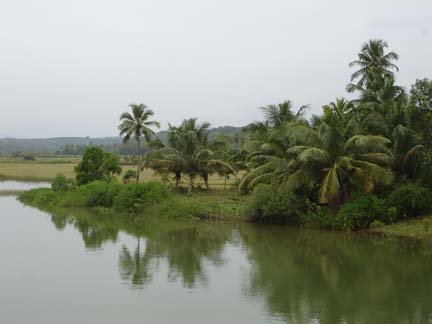
A Coastal estuary

A Coastal estuary
Holegadde near Honavar,Uttara Kannada dist, Karnataka

Copy? Right - but kindly remember to acknowledge!

Creative Commons License
This work is licensed under a Creative Commons Attribution 3.0 License.

" tulu-research.blogspot." ತುಳು ರಿಸರ್ಚ್. ಬ್ಲಾಗ್‌ಸ್ಪಾಟ್‌. ಇನ್

" tulu-research.blogspot."  ತುಳು  ರಿಸರ್ಚ್.  ಬ್ಲಾಗ್‌ಸ್ಪಾಟ್‌. ಇನ್
Have a nice day !