Showing posts with label Budha Shivalli. Show all posts

Tuesday, February 19, 2008

92. Avalokitesvara @ Kadire


The charming bronze idol in the Kadire Manjunatha temple represents the Avalokitesvara (or Lokeswara), a former Bodhisatva, who was considered as embodiment of compassion and an incarnation of Buddha during the Tenth century CE.
In Nepal, Macchendra Nath is being worshipped as an incarnation of Avalokitesvara, a form of Buddha modeled after Shiva. It appears that Alupe King Kundavarma installed the bronze idol during ca.968-1068 CE posthumously in honour of Macchendra Nath whose cult was absorbed into Vajrayana Buddhism and was worshipped as Avalokitesvara in Nepal and other areas. The date of installation of the idol written in the inscription at the bottom of the idol has been interpreted as 968 CE by Dr. Gururaja Bhat, whereas Manjeswara Govinda Pai reinterpreted the date as 1068 CE.
The idol reflects the art of bronze casting that was perfected in Tamilnadu during the Chola period of ca.850-1150 CE. The bronze might have been cast in situ at Kadire or brought from the Chola kingdom.
Macchendra Natha
A chronological recapitulation: Macchendra Natha, a disciple of Adinatha, who founded the Shaiva Natha cult, a school of Hatha Yoga, came from Chandragiri in Bengal to Kadire by walk around the early tenth century CE, with his disciple Gorakh Natha and settled near the Buddhist monastery known as Kadarika Vihar, near Kadire, in Mangalapura. Natha historians claim that Macchendra and Gorakh along with some of their contemporaries discovered the Kundalini system of Yoga which was advancement over the older Patanjali Yoga. The Jogis of Natha cult are known for traveling widely all over the country. Natha cult was practiced by ‘split-ear mendicants’ who wore large circular rings in their ears.(Victor M Fic, 2003) Macchendra also founded the Kaula cult at Triambakeswar, in present Maharastra. During the Tenth century Karnataka, according to Kavi-raja-marga, is said to have spread from River Kavery to River Godavary, encompassing the present Maharastra.
After his death, the Natha cult of Macchendra was absorbed into Vajrayana Buddhism, which was also known for experiments in Tantra. The Natha cult also influenced the Baula cult (Sufism). Jnaneswar or Jnanadeva (b.1275 – d.1296 CE) was a disciple of Natha cult, but later his disciples founded the Warakari cult

Manju Natha
Macchendra while at Kadire installed a memorial stone in memory of his departed son Manju Natha in the tradition of spirit worship that was vogue in the region. The selection of the name ‘Manju’ shows combined influence of native Tulu word ‘manji’ (=dew, snow, fog) and Buddhist Pali word ‘manju’(=beautiful, charming).Following Macchendra’s incarnation as Avalokitesvara, the Manju Natha was regarded as incarnation of Manjusri, the Buddha of Wisdom, or Buddhist equivalent of Lord Brahma of Hindu pantheon. A bronze idol of Manjusri was installed. The township around the temple was designated Manjarur. The name Manjarur has been recorded by Arabian travelers like Ibn Battuta during 1342 CE.
Manjunatha
With passage of time the native spirit worship was absorbed into the mainstream Hinduism and Manjunatha was regarded as a form of Lord Shiva. The Manjunatha temple is estimated to have been built around 14th century CE by Dr. Gururaja Bhat.

Thus Kadire Manjunatha temple is a window to the theological heritage of Mangalore, a convergence of cascading transitions of overlapping religious cults of Buddhist, Natha, Spirit and Shaiva traditions.
®

Friday, February 1, 2008

83.Buddhism vs. mainstream Hinduism

The parallel theological evolutions in Buddhism and mainstream Hinduism coupled with historical rivalries and interferences led to eventual assimilation of Buddhism especially in southern India.
The immigrant Indo Aryans who settled in northwestern Indian subcontinent are credited with the composition of earlier Vedas. Rigveda is known to have been composed by a set of about twelve sages of Indo-Aryan lineage. If we accept that the population of the Vedic poets is about a dozen or two, there is no meaning in the hypothesis of Indo-Aryan invasion. The small group of Indo-Aryans soon must have been absorbed into the Indian mainstream. Most of the remaining Vedas must have been composed by descendants of the Indo-Aryans and natives. This is evident by successive generations of sages of native origin.
Veda Vyasa
The sage Veda-Vyasa, the highly talented and creative writer of Mahabharata and the compiler/arranger of Vedas is a shining example. Veda-Vyasa, ca.500 BC, was clearly an educated native, born to sage Parashara and Satyavathi (Matysagandhi), the daughter of Dasharaja, a boatman who used to ferry people across River Yamauna.
Veda-Vyasa is also credited with the concept and compilation of ten incarnations of Vishnu. He obviously wanted to establish the greatness of Lord Vishnu, who was a minor God during the time of Rigveda. He assembled various ten legends that existed prior in different regions of the subcontinent and welded them into a continuous collage of incarnations of the Mahavishnu.
Gautama Buddha
Gautama Buddha entered the scene around the same time, with his revolutionary agnostic philosophy. Soon he was very popular and many people embraced the philosophies propagated by him. The popularity of Buddha was detrimental to the propagation of Vishnu cult. Therefore disciples of Veda-Vyasa, modified their original scheme of ten incarnations and adapted the legend of Buddha as ninth incarnation of Vishnu. This was in a way psychological rivalry of theologies and battle for supremacy. The conversion of Buddha into an incarnation was an effort to denigrate his status and supremacy.
Mahayana
Buddhas disciples retaliated by promoting incarnations of Buddha. Initially 24 to 28 incarnations of Buddhas were visualized. In the next stage, a number of Bodhisattas who would attain Buddha-hood in the future in future were visualized. In a way, it was an open invitation that any person can achieve Buddha-hood by following specific path laid by the Mahayana school.
One channel of mainstream Hinduism was glorifying Vishnu and other was promoting Shiva and Devi or Kali, yet another school propounded the virtues of Brahma. Buddhism tried to absorb the basic concepts of these deities into Buddhism. The Avalokiteswara, the Bodhisatta (Bodhisatva) of compassion was remoulded to embrace the virtues of Shiva. Manjusri, the Bodisatta of wisdom, was modified to represent attributes of Brahma. Padmapani was a variation of Vishnu. Similarly, parallel Dhyani Buddhas were created to represent other divine elements of the Vedic mainstream. Even the concept of a future Buddha, Maitreya, who would be born after 4000 years (shade of Kalki) was conceived.
Ajanta and Ellora (6-8 c CE) in Maharastra, Krishna valley in Andhra Pradesh, Kaveripatam and Nagapattanam in Tamilandu, Banavasi, Aihole, Mangalore in Karnataka, Ratnagiri in Orissa and Srimulavasam near Ambalapuzha in Kerala were major centres of Buddhism in southern India
Vajrayana
Vajrayana cult of Buddhism delved into Tantric rituals like various groups of tantric Shaivite Kapalika, Siddha and Shakta cults during 7th and 8th centuries. The parallelism and collaborations amongst these groups led to dissolution of thin boundaries that separated them. Natha cult is clearly a fusion of Buddhist and mainstream Hinduism.

The Buddhism was not blatantly driven out of southern India as made out by some analysts, but was eventually absorbed into the mainstream Hinduism. Only those sects that were denied entry to Hindu temples at that time, like Thiya (Malayalee Billawas), continued to practice a weakened form of Buddhism.
®

Thursday, March 29, 2007

Random Ruminations

I have used the title Tulu ‘research’ in my blog. ‘Research’ is probably a pompous word to be on a blog title. Somehow, I decided on the title word to give myself a dose of sincerity and seriousness to my blog work. Similarly, I felt that the word would also earn some respectability of the reader.

Similarly, I feel that it is the duty of the blogger to define and describe some of the basic words used in the blog like, Tulu, Tuluva and Tulunad.

The present day Tulunad (naaD= land) is a conglomeration of not only customs, castes and communities but also the playground of a host of languages and sublanguages, cultures and subcultures. In diversity as well as in unity, it is a micro-India. In general, the people of Dakshina Kannada district and southern Udupi district in Karnataka and parts of Kasargod district in Kerala speak Tulu. However, the enterprising Tulu communities have spread in various parts of India and globe as employees, professionals, businessmen or educationists.

Yet, basically the concept of Tulunad is entirely mythical aspiration, in that there is no specific geographic boundary or socio-political entity that can be demarcated as Tulunad. Tulunad lies in the minds of Tulu speaking people. Historically, Tulu people were part of Kannada kingdoms since several centuries and the present status continues to be the same. Socio-politically, the notional Tulunad is as a Tulu speaking region within the State of Karnataka, in India.

Thus, basically any person who speaks or writes in Tulu, whenever occasion permits, is a Tuluva. He may communicate in Tulu because it may be his mother tongue or because he has to converse with another Tuluva or simply he loves to do so. So by definition there are Tuluvas by birth and Tuluvas by choice. Tuluvas by choice may have their own mother tongues, which they nourish and cherish in their heart like all good human beings do. Thus Tuluvas by choice or Tulu associates may also communicate in Kannada, Havyaka, Nadava, Aregannada, Konkani, Beary, Koorgi, Malayalam, Tamil, Telugu, Marathi Gujarathi, Hindi, English or any other language of this land.

My definition of Tuluva includes all those who are able to or love to communicate in Tulu language and it should include both Tuluvas by birth and Tuluvas by association or choice. In realities of the global village, a Tuluva has telescopic multi-cultural identity, as besides being a Tuluva, he is also a Kannadiga. He is also an Indian and further in the sense of pervasive universal brotherhood he is a citizen of the world.

Tulu language and culture has a history of nearly four thousand years. During this extensive period, Tulu has witnessed several episodes of migration of human races, evolution of the language and customs. It is the right of every Tuluva to discover the hazy paths of remote past along which the Tulu language and cultures have evolved. The evolution of Tulu language and culture is intimately connected with the evolution of diverse languages and composite culture of India and, in essence it is the evolution in nut shell of Karnataka as well as India.

Tulu language and culture have suffered because of the absence of historical documentation. Piecing together strings of historical evidences and collation of data is not an easy job. One way of doing this is the analyses of the language, words and customs in Tulu as well as in associated languages and cultures.

My father, Budha Shivalli (1923-1982) compiled a book, ‘Tulu Patero’ (paatero=language) on the philology of Tulu language and grammar written in Tulu language using Kannada script during 1982 and it was eventually published in 2004. Like ‘the Tuluvas by birth and by choice’, I described above, there are linguists by education and linguists by choice or pure love of the language. Budha Shivalli belonged to the second category. For the benefit of those who are unable to read his original Tulu book, I am planning to provide a translation of his work in a separate blog connected to this blog. I shall inform you more about it at later.

During editing and composing the typescript of Tulu Patero, somewhere during 2004, I felt that it requires a supplementary editorial in view of the developments during the intervening period of 1982 to 2004.I gathered information from books and internet and synthesized my deductions and inferences, in the form of an editorial ‘Tulu nadath battina saadi’ (=The evolution of Tulu). Like my father I am a philologist and linguist by choice and hobby. I am geologist by profession and philologist by love of the language.

The basic aim of the said editorial was to invigorate research on the historical evolution of Tulu language and culture and definitely not to draw any mileage from sensationalism. However, some critics found the editorial ‘controversial’, without any further remarks. Branding any work, ‘controversial’ is a diplomatic way of declaring and recommending that the work is unreliable or unworthy of perusal.

Well, I started this blog originally with the intention of providing a translation of Tulu Patero. But before jumping directly into the actual translation that needs quite lot of spare time, attention and patience, I thought of practicing myself by offering some appetizers by reevaluating some of my favorite topics, earlier published in Tulu, in the form of the cited editorial. But, this bogging is like a momentum or chain reaction that induces you to contribute some more. And also I find that my line of ‘controversial’ thinking is quite away from the rather puritan style adopted by Budha Shivalli. And the ‘controversial’ label attached to me, should not discourage the people from reading and referring to his work which I feel is an invaluable contribution. In view of these, the Tulu Patero shall be on an independent blog.

Back to my blog, Tulu Research, I must confess that I have used terms like Tulu ‘tribes’ in the style and meaning used by other researchers on ancient races and groups. The word ‘tribe’ signifies those early migrant families. It is not to be confused with the socio-political modern term ‘tribe’ as in scheduled tribe or caste. Similar explanation holds well about the controversial word derivation Bantu and Bant also. It is meant for the etymological derivation of the original ancient word that is an indicator of a profession. No offence is intended to any communities that have adopted such names today.

No disdain is ever meant to any of the groups, since the author believes in the universal brotherhood and the genetic equality of human beings.

One of the joys of blogging is finding new friends to comment upon my postings. Manjunath Vadiari, who writes blogs on ‘Theories on past events,’ is a frequent commenter on my postings. I like comments, including the dissents. Dissident opinions force you to look further and check if you have made any erroneous assumptions or judgments in the course of your studies.

The blogging ethics demand that I should make my intentions transparent. The basic intention of my postings is discovery of evolutionary trends in our historical heritage. The approach to the discovery of facts pertaining to the remote historical past may be divergent and similarly the inferences drawn may be divergent, but in the long run truth alone shall prevail. Satyameva Jayate!

To reassert my commitment to the sincere discovery of facts, I would like to repeat what I wrote (1989) in the preface to my doctoral thesis on geology, under the strong and analytical influence of my guide Prof. B. Krishna Rao:

“Accepting that for any problem there can be only one real and truthful answer, new avenues towards truth should be welcome, hoping that in the long run, only those ideas that stand test of the time will prevail. In the meanwhile, some of the concepts that aim at unraveling the truth or that may lead to new ideas elsewhere have to be encouraged.”

Blog Archive

Books for Reference

  • A Comparative Study of Tulu Dialects By Dr. Padmanabha Kekunnaya. Govinda Pai Reserach Centre, UDupi. 1994
  • Koti Chennaya: Janapadiya Adhyayana. By Dr. Vamana Nandavar. Hemanshu Prakashana ,Mangalore.2001.
  • Male kudiyaru. Dr B. A.Viveka Rai and D.Yadupathi Gowda, Mangalore University,1996.
  • Mogaveera Samskriti By Venkataraja Punimchattaya. Karnataka Sahitya Academy.1993.
  • Mugeraru:Jananga Janapada Adhyayana. By Dr Abhaya Kumar Kaukradi.Kannada & Culture Directorate,Bangalore & Karnataka Tulu Academy, Mangalore,1997.
  • Puttubalakeya Pad-danagalu. Ed: Dr B.A.Viveka Rai,Yadupati Gowda and Rajashri, Sri Dharmasthala Manjunatheswara Tulu Peeta. Mangalore University.2004
  • Se'erige. Ed:Dr K.Chinnapa Gowda.Madipu Prakashana,Mangalagangotri,2000.
  • Studies in Tuluva History and Culture.by Dr P Gururaja Bhat (1975).Milagres College,Kallinapur,Udupi.
  • Taulava Sanskriti by Dr.B.A.Viveka Rai, Sahyadri Prakashana,Mysore 1977
  • TuLu naaDu-nuDi By Dr.PalthaDi Ramakrishna Achar, Puttur.
  • TuLu NighanTu. (Editor in Chief: Dr U.P.Upadhyaya, Govinda Pai Research Centre,Udupi. Six volumes. 1988 to 1997
  • Tulu Patero-A Philology & Grammar of Tulu Language by Budhananda Shivalli.2004.Mandira Prakashana Mangalore. p.317. (The book is in Tulu Language using Kannada script)
  • TuLunadina ShasanagaLa Sanskritika Adhyayana. By Shaila T. Verma (2002) Jnanodaya Prakashana,Bangalore, p.304.(Kannada)
  • Tuluvala Baliyendre. Compiled by N.A.Sheenappa Hegde,Polali,Sri Devi Prakashana,Parkala,1929/1999

A Coastal estuary

A Coastal estuary
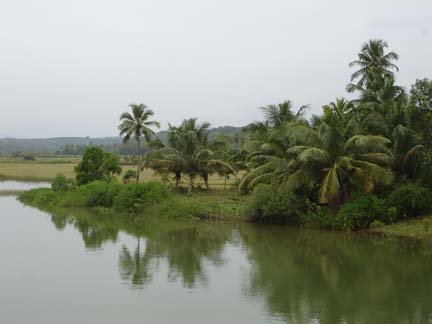
Holegadde near Honavar,Uttara Kannada dist, Karnataka

Copy? Right - but kindly remember to acknowledge!

Creative Commons License
This work is licensed under a Creative Commons Attribution 3.0 License.

" tulu-research.blogspot." ತುಳು ರಿಸರ್ಚ್. ಬ್ಲಾಗ್‌ಸ್ಪಾಟ್‌. ಇನ್

" tulu-research.blogspot."  ತುಳು  ರಿಸರ್ಚ್.  ಬ್ಲಾಗ್‌ಸ್ಪಾಟ್‌. ಇನ್
Have a nice day !