Showing posts with label spirit worship. Show all posts

Saturday, July 12, 2014

341. Pagoda: an early Indian word

A Pagoda represents a multi-storied, turret like or pyramidal tower like structure mostly of Buddhist or Hindu origin. In China, Japan and South East Asia, the pagodas represent Buddhist temples.  It has been proposed that the word pagoda travelled to China and Japan along with tenets of Buddhism that spread to those countries during the early centuries of the Common Era. The word is   equivalent to the word ‘temple’. In many parts of ancient India including Tulunadu the ‘Pagoda’ was the name of the currency in use in early days. The word is said to be of Indian origin even though several obscure explanations have been proposed in this regard.

Butkada
One proposal suggests that it is derived from the Persian word Butkada which means the temple of idols. There has been a suggestion in the Wiki pages that the Portuguese word Pagode is derved from the Persian word Butkada. Whether the Portuguese word Pagode was derived from the Persian word Butkada or Portuguese picked up the word pagode directly from pagoda from their Indian connections is not clear.However the Persian word in the context, Butkada is quite interesting.
Early pagodas also known as Chaityas (Chitte in Tulunadu) were constructed to preserve the mortal remains of Buddha and his disciples. The turret like (or sometimes globular) structures preserving the remains of the dead were also known as Stoopa or doopa (derived into: doope, as known commonly in Tulunadu).
The prefix būt in the Persian word Butkada reminds us of bootha (or Buta), the Spirit of the dead. Similarly, the suffix kada reminds of the Kata the early Koraga word for representation of God or divine stone. The Persian word Butkada is explained as Temple of idols. The equation of the word būt or bhoot (the spirit of the dead) with idols envisages the ancient cults of worshipping the dead in the form of idols in ancient Persia also.
Besides relating 'Kada' to 'Kata' (natural object, say a stone, tree, or a place of pyre, for identifying the Spirit of the dead for worship), it seems that 'kada' could have been a corrupted form of ''kala' (=an open field or plot). The term kala was also used by Arab traders after seeing a lot small shrines or temples along the Western coast, which is then picked up by Portuguese and afterwards by other European traders. 'Kala' also means a small shrine, akin to  'Maada or Kaimaada' for the dead.  'Kaliyata' means an annual celebration for worshipping that Divine Spirit

Origin of the word: Pagoda
There has been a suggestion that the word is influenced by the Prakrit word Bhagodi which means divinity or divine structure.
An ancient Munda word Phagu has remained till today on account of the popular Phagu festival commonly associated with Munda tribes. The meaning of the word phagu is not clear even though traditionally it was also the name of the first month in the calendar years among ancient Indian communities as we find from the vestiges of ancient cults preserved in Tulunadu (Post 338). 
There are a large number of place names in Bihar, Chattisgarh ,Jammu & Kashmir, Jharkhand, Orissa, Punjab, Rajastan, Uttar Pradesh, Uttar Khand and West Bengal that begin with the prefix of phag which in turn suggests the distribution and survival of the ancient term in larger part of  India. Similarly we can find numerous place names beginning with the prefix of bhag also.
It appears that the Munda word phag or phagu is an ancient variant of the latter Prakrit/ Sanskrit word bhag.
The pa >ba (or pha >bha) consonant transitions along the history are quite common in Indian languages. Thus the ancient Indian word phag or phagu must have become bhag with along course of passage of time. The word bhag in Indian culture represents divinity or creation or a product of creation. On one hand words like Bhagvan (=God), Bhagvati (=Goddess) have been derived from the root bhag. On the other hand, bhag also meant female organ responsible for creation of life (or organ of reproduction, to be precise). The River Ganga is also known as Bhagirati or the divine flow. Bhagamandala in Kodagu is the divine place of origin of River Kaveri. Bhagwadi hamlet in Barkur, is famous for  Mahisamardini Temple. Thus, the term 'bhag' also means embodiment of 'divine qualities' (eg. Bhagawanta, Bhagamalini, Bhagavati, etc.). Bhagambila is an ancient hamlet near Kotekar in Mangalore Taluk.

The Prakrit word bhagoda, being bhag+oda, derived from Munda language roots, thus represents a divine structure, wherein oda (ora) means a house. Further, bhagodi being derived from bhagoda means divine in Prakrit language.


Oda
The suffix Oda at present generally means a boat in Tulu, Tamil Telugu and other related languages. However, it seems the word had other shades of meanings earlier in the history, such as a structure, a construction, an idol or a coin.

Pagoda: shades of meaning
Hobson Jobson Dictionary attributes a set of three meanings for the word pagoda: (a) a temple (b) an idol and (c) a coin. Since the three meanings are interlinked, it seems that the term pagoda during the early history originally meant (a) a divine structure/construction (b) a divine sculpture or idol and (c) a divine/gold coin bearing the image of a God or Goddess. The gold (sometimes silver) coins carrying the image of then popular deities such as Varaha (Panjurli in Tulunadu), or double fishes (Pandya and Alupa emblem which also turned out to be the insignia of Fish incarnation (Matsyavatar) of Lord Vishnu)

Thus, the term pagoda appears to be an ancient Indian term (of Munda or pre Munda origin) and meant a divine structure or representation or entity.. Since Spirit worship was the order of the day in those times the pagoda represented a spirit shrine or structure intended and designed to preserve mortal remains of the dead.The term pagoda must have been in wide usage in India during the early centuries of the Common Era when tenets of Buddhism were spread to the China and Japan. 

Thursday, December 13, 2012

306. Mayandaal Spirit


“
All wonder is the effect of novelty on ignorance”, says Samuel Johnson, a well-known British Author and Lexicographer (17th C). When we consider Faith, could we say, “Ignorance is bliss”? Another British Author and Statesman, Lord Chesterfield (1694-1773), exclaims, “History is but a confused heap of facts”. Could we afford to dismiss all PaDdanas, revolving around Divine Spirits of Tulu Nadu- manifest or living beings who attained Godhood on Death - as mere legends and not historical facts?Answer is in the negative. This is vindicated by the Tuluva way of living and tradition even today. These Tulu oral literatures are compared to Tamil Sangam literature by ethnographers and linguists and hence the surge of well-researched books on mystic beliefs and rituals, underlying the Tuluva psyche irrespective of caste and creed.
Mayandaal PaDdana is a part of Jumadi PaDdana. Annual ritualistic celebration is held wherever Jumadi is worshipped – in manor houses (Guttus) or other households and shrines of village or cluster of villages.Popularity and propagation of Mayandaal cult is a matter of study.  The changed values – intellectually, socially, economically and scientifically – make it all more interesting to know the guiding force for the spread of the faith among women of Tulu Nadu.

Etymology

In the Pantheon of Bhutas (i.e. Divine Spirits) of Tulu Nadu, the female ‘Bhuta’ by name Mayindaal >Mayanadaal is a powerful Spirit. Etymologically, it is split as ‘Maye+ind > Maya+anda (Mystical Spirit) +aal (She who is), literally meaning ‘She who attains, on mysterious death, divinity in invisible world in sky or space’.  It is Mani Baale who is spirited away to the Realm of Mystery (Invisible Mayalok) by the Deity Jumadi aka Dhuamvathi. She is also known as Mayandamani and Mayanda Baale.  She is worshipped by women for natural delivery without any complications and also for good health of new-born (qv. Tulu Lexicon p.2516).

Pedimana (Childbirth)
It is not out of place to depict a tradition followed in Tulu Nadu, during delivery and convalescence in olden days (and in some far-flung villages even now). In a joint family system during earlier days, an utmost care is taken of a pregnant woman.  An elderly woman of the village does the act of a Padeti (midwife). She is called for when labour pains sets in.  She is mostly without schooling but is highly skilled by dint of practice and age. There is a saying in Tulu: “Pattu peddinalegu onji peddinalu buddhi pandoluge (A mother, who delivered once, gives advice to a mother, who has given birth ten times)”  The advice does not carry weight as the experience of ten-times mother is more than the one-time mother.  This midwife offers free service and hence she is a respectable figure in the village. A ‘Nele’ (hanging line) is made by tying a rope or cloth (invariably a saree) across the beam in the delivery room.  This hanging support (kayinele) is held by woman in labour pains to help putting push-pressure.  This whole event is enacted by a ‘Maadira’ (Dancing girl) of Nalke families, who swoop down a village whenever there is any ceremonial ritual (Bhuta Kola/Nema) or temple festival. Enacting of folk song of agony and ecstasy of childbirth is worth watching (even though it is vitiated by lewd remarks by elderly onlookers).  Brought up in a rural setting, I had witnessed such performances.
Main Story
Central story revolves around the historical figures of Pangala of that time.  They are: Pangala Bannara, the local feudal lord, his errand-boys, tenants of the area under his control, specifically Alibali’s household and his niece Mani Baale and midwives taking care of her, baby of Mani Baale, Sooth-sayer Bhahmin, and Jumadi Daiva (Divine Spirit Jumadi), who spins the events to unfold.  The household of the Chieftain is afflicted by a new Spirit.  Cattle of his cattle shed are falling sick and dying.  He calls for the sooth-sayer (Balmeda Bhatru), who declares that the Bannara’s house is haunted by Jumadi, who wants him to worship and propitiate it. He decides to hold a ceremonial ritual (kola/nema) by raising a shrine for the Deity in his manor house. He sends errand boys to collect the obligatory contribution of one tender coconut (bonda) and one tender coconut leaf to make a costume of fronds (siri) from each house of his subjects. It is also customary to donate arecanut flower (Pingara) on such occasions. All but one obey the orders of the king.  Alibali Nayaka refuses to give and haughtily conveys his intention by uttering:  “For one ‘bonda’ and one siri, I will send one, kayerda kayi (nut of strychnine tree) and mundevuda oli (thorny leaf of a screw pine tree).”Alibali sends these articles on the night of the nema and Bannara refuses to accept.  Bannara reports these words to Jumadi during the nema.  Jumadi assures him of punitive action.
Jumadi in the guise of Pangala Bannara visits Alibali’s house.  Standing outside the threshold of labour room of Mani Baale, the maternal niece of Alibali, the Deity asks her to bring a burning cinder (kenda = lighted coal). (Note: Match sticks were scarce then and so it was customary to carry cinders from haves by poor householders to light their hearths). She entreats that she cannot come out as she is in confinement having given birth to a baby and is under puerperal treatment under the care of her household elders and midwives. She suggests waking up any one of them but the Deity commands not to do so but to herself come out to give the cinder. The Deity spreads a spell, sending her household to deep sleep. As soon as she steps over the door-step to give, Jumadi abducts her into Spiritual Realm of Divine Power (Maya).  Mani Baale wants her baby too, so both get ‘Maya’ Form. 
Mysterious disappearance of Mani Baale and her child saddens Alibali.  He hears the echoing words of his niece lamenting: “For one siri and bonda’you have cut the family tree“.  (In matriarchal system girl is instrumental in continuing the family line).  He repents for his insubordination and sends the ceremonial things to the arena where the Kola to Jumadi is taking place to please the Deity.  Bannara in turn rejects his offerings in vengeance whereupon Mani Baale, now with Divine Powers, sits in judgement to right the wrong.  She vows to cause the same pain which Bannara has inflicted on Alibali so as to uphold the dignity and right of a subject. She abducts Bannara’s niece and also her child (as told in some version of the PaDdana) in like manner.  From thence the cult of worshipping Mayandaal comes into vogue and the mask of Mayandaal is found seated with Jumadi. This is the gist of the main story, which is expanded or changed to suit the occasions.
There is difference in between singing in agricultural fields and actual singing by traditional performers during Kolas as is generally observed and as is studied in depth by Peter J. Claus, Professor of Anthropology & Asian Studies.  Story of Mayandaal is entwined in Jumadi PaDdana but Kolato Mayandaal is held along with the main Kolas for Twin Brothers Koti and Chennaya and other deities at various Garodies (Guru Mathas, i.e. Teaching Centres for martial arts). They are Billava Heroes, popularly known as ‘Brahma Baidarkulu’. Social structure or system of those days comes into picture here.  It is based on principle of Suzerain (Dhani, i.e. Feudal Lord) and Vassals/Tenants (Uligamanya).  On this background, we assume that Alibali, the Land Tenant, belongs to Billavas, a preponderant community in Tulu Nadu.  As a community affinity, Mayindaal is considered as sister of the revered heroes, who worship Bermer.  This may be the plausible reason for relating the legend to Koti-Chennaya legend.

Emotional & Psycho-medical aspects
Emotions, attached around childbirth, are ecumenical.  It is a touching situation, concerning all women.  They identify their condition with that of Mayandaal.  Attendant agony, ecstasy and perils of pregnancy, make them to look up at Mayandaal as succour in their distress.  Jumadi is considered as reincarnation of Goddess Parvatiand Mayandaal as ‘Annapurne’, another attribute of Parvati, meaning ‘Protector and Sustainer). Divine Feminine aspect has a psychological comfort-feeling effect to medical problems.  Mayandaal and Siri cults are regarded as examples of this faith healing.
It may be interesting to know that some of the Divine Spirits manifest in bi-sexual form.  Simple-hearted devotees worship the Male form out of reverential fear.  It is observed that traditional Bhoota dance impersonators draw moustache and keep breast form on left side.  Kodamanitaye is considered as Chamumdeshwari, who came from Mysore  to bless her devout devotee Kenjanna Alva, the feudal lord of Kodaman Guttu  in Belthangadi (C 17th C), who could not go, as usual, to Mysore  for Dussera festival owing to sickness.

Puttu-Parapu of Daivas
Most of the Divine Spirits (Daivas) are manifestation or incarnation of Ganas of Shiva.  All these Daivas have   a ‘puttu’ (origin) and ‘parapu/paraad’ (spread by wandering or proliferation with same names or with added names of village/s and/or household (eg.  Shrines/Temples of Adve Garody, Kanajaru Guttu, Mijaru Guttu, Kombady, Mammer Thota,  etc.).  PaDdanas go on adding miracles and heroic deeds, played by these Deities to punish the guilty and to uphold justice (Dharma).  It is no wonder that cult of Mayandaal is spread to length and breadth of Tulu Nadu.

Conclusion
These days we hear about ‘Birthing Sanctuary’ for water birth under water, hypno-birthing for stress-free birthing, ecstatic birth or orgasmic/Let go birth and Lotus birth.  In the Lotus births the placenta is kept connected through the umbilical cord to the baby until the baby is ready to disconnect from it naturally.  Now-a-days, career women take the help of Egg-freezing Techniques to store their Ova for later use.
Contrary to the above, the memory is still ripe of tragic death of Savita Halappanavar on 14th November in Ireland for denied medical remedy of early termination because of Government ban on abortion.  Miscarriage and septicaemia, complicated by bleedings noticed from early stage of pregnancy, cost the life of a young woman.  The medicines at last stage could not save her.
What remains to be seen is why Bhutaradhana (Worship of Divine Spirits) has taken deep root in Tuluva Psyche in spite of modern trends.

Suggested Reading:
·         Our Posts-250, 233, 97, 94, 35, 62.
·         Peter J. Claus’ Research Papers and Book on Possession Cult of Tulu Nadu
·         Folk Rituals by Dr. U.P. Upadhyaya & Dr. (Mrs.) Susheela Upadhyaya & its Book Review by S.N.D. Poojary


-Hosabettu Vishwanath (Pune)

Tuesday, February 19, 2008

92. Avalokitesvara @ Kadire


The charming bronze idol in the Kadire Manjunatha temple represents the Avalokitesvara (or Lokeswara), a former Bodhisatva, who was considered as embodiment of compassion and an incarnation of Buddha during the Tenth century CE.
In Nepal, Macchendra Nath is being worshipped as an incarnation of Avalokitesvara, a form of Buddha modeled after Shiva. It appears that Alupe King Kundavarma installed the bronze idol during ca.968-1068 CE posthumously in honour of Macchendra Nath whose cult was absorbed into Vajrayana Buddhism and was worshipped as Avalokitesvara in Nepal and other areas. The date of installation of the idol written in the inscription at the bottom of the idol has been interpreted as 968 CE by Dr. Gururaja Bhat, whereas Manjeswara Govinda Pai reinterpreted the date as 1068 CE.
The idol reflects the art of bronze casting that was perfected in Tamilnadu during the Chola period of ca.850-1150 CE. The bronze might have been cast in situ at Kadire or brought from the Chola kingdom.
Macchendra Natha
A chronological recapitulation: Macchendra Natha, a disciple of Adinatha, who founded the Shaiva Natha cult, a school of Hatha Yoga, came from Chandragiri in Bengal to Kadire by walk around the early tenth century CE, with his disciple Gorakh Natha and settled near the Buddhist monastery known as Kadarika Vihar, near Kadire, in Mangalapura. Natha historians claim that Macchendra and Gorakh along with some of their contemporaries discovered the Kundalini system of Yoga which was advancement over the older Patanjali Yoga. The Jogis of Natha cult are known for traveling widely all over the country. Natha cult was practiced by ‘split-ear mendicants’ who wore large circular rings in their ears.(Victor M Fic, 2003) Macchendra also founded the Kaula cult at Triambakeswar, in present Maharastra. During the Tenth century Karnataka, according to Kavi-raja-marga, is said to have spread from River Kavery to River Godavary, encompassing the present Maharastra.
After his death, the Natha cult of Macchendra was absorbed into Vajrayana Buddhism, which was also known for experiments in Tantra. The Natha cult also influenced the Baula cult (Sufism). Jnaneswar or Jnanadeva (b.1275 – d.1296 CE) was a disciple of Natha cult, but later his disciples founded the Warakari cult

Manju Natha
Macchendra while at Kadire installed a memorial stone in memory of his departed son Manju Natha in the tradition of spirit worship that was vogue in the region. The selection of the name ‘Manju’ shows combined influence of native Tulu word ‘manji’ (=dew, snow, fog) and Buddhist Pali word ‘manju’(=beautiful, charming).Following Macchendra’s incarnation as Avalokitesvara, the Manju Natha was regarded as incarnation of Manjusri, the Buddha of Wisdom, or Buddhist equivalent of Lord Brahma of Hindu pantheon. A bronze idol of Manjusri was installed. The township around the temple was designated Manjarur. The name Manjarur has been recorded by Arabian travelers like Ibn Battuta during 1342 CE.
Manjunatha
With passage of time the native spirit worship was absorbed into the mainstream Hinduism and Manjunatha was regarded as a form of Lord Shiva. The Manjunatha temple is estimated to have been built around 14th century CE by Dr. Gururaja Bhat.

Thus Kadire Manjunatha temple is a window to the theological heritage of Mangalore, a convergence of cascading transitions of overlapping religious cults of Buddhist, Natha, Spirit and Shaiva traditions.
®

Monday, December 24, 2007

62.Characterization of Spirits of Tulunadu .1

Tulunadu has a tradition of Spirit worship possibly dating back to 700-800 BC coinciding with the immigration of the Early Tulu tribes who introduced the initial cults of Bermer (also pronounced as ‘Birmer’ or ‘Bermeru’) and Panjurli. The subsequent history has seen introduction of a host of Spirits. Tulu communities since early days believed in the personal powers of their community heroes and believed that they continue to roam around after sudden martyred deaths. They believed that worshipping their spirit forms would absolve them of their frailties and ensure protection against adversities like crop failure, famine, diseases etc.
Following the traditions of Tulu oral literature, oral anecdotes pertaining to some of the spirits prevalent among Tulu elder people were gathered and presented here.
The Jarandaya- Bobbariya historical encounter reflects the conflict of egos that plague our society even today.
I wish that our compatriots shall consciously overcome these frailties like clash of egos that lead to meaningless revenges and live a life of mutual understanding, friendship and universal brotherhood.
Jarandaya
‘Jarandaya’ was the ninth son of a Jain King of Barkur. He used to travel along the west coast from Barkur to Nileswar dispensing justice and solving disputes among the general public. He had an assistant (‘banta’) called ‘Koteda Babbu’ also referred to as ‘Kotdabbu’.
Koteda Babbu
Koteda Babbu (means Babbu of the Fort; ‘koTe’=fort) was a talented professional, a fort-building expert, from the Mundala community, who is said to have migrated to Barkur, from the upland Kannada area. He was a sorcerer, expert in witchcraft, water divining and native medicine.
During his sojourns from Barkur to Nileswar, the Jain Prince Jarandaya, used to take Koteda Babbu along with him, as his personal assistant. After sometime, Koteda Babbu voluntarily stopped accompanying Jarandaya as there was some difference of opinion between them.
Bobbariya
Bobbariya was a tall and well-built Muslim trader, who was influential among the fishing community of coastal Kapu area. Bobbariya was born of an alliance between a Muslim father(Sulikall Murave) and a converted Bunt woman(Patima).Born in Goa and grown up in Kochi according to Pad-danas He was engaged in fish trading and was popular in the region among the local Mogaveera community. He was usually associated with a band of dedicated youth probably drawn from the fishing community.
Bobbariya owned a provisions store near the fishing village and was having flourishing business. Gradually, he employed special carpenters from the upland area and commissioned a large boat (‘padavu’) for carrying out sea trade. He had band of sailors consisting of local fishermen and Muslims. Soon he prospered and became a leading figure in the area, on account of flourishing trade through his padvau.
Conflict of egos
Somehow, Bobbariya did not like the interference of Jarandaya, an outsider from Barkur, trespassing into his domain to solve minor local skirmishes. During one of his journeys, Jarandaya was humiliated by Bobbariya, in the Kapu area, especially when his assistant Koteda Babbu was absent. He blocked the path of Jarandaya with the help of his henchmen and asked him to kneel down and pass between his astride legs.
Jaranadya could not stomach the insult and later he consulted his advisor cum assistant Koteda Babbu, on the modus operandi of avenging the insult. Koteda Babbu thought for a while and designed a plan involving another character called Neecha Taniya.
Neecha Taniya
The revenge plan contrived by Koteda Babbu involved using pork and beef to intimidate or flabbergast Bobbariya and his team. ‘Neecha Taniya’, as the name describes (‘neecha’=lower; ‘taniya’=Saturn), was from a lower community who generally do not have inhibitions towards beef or pork.
The Revenge
Neecha Taniya went ahead with the Jarandaya revenge project. He threw cut leg of a pig at Bobbariya who was totally dumb-founded. During this moment of utter confusion, Neecha swished a sword, slashed at Bobbariya and severed one of his legs. Bobbariya, with one of his legs amputed, bled to death.
Tulu Spirits
In Tulunadu, the spirit of Jarandaya is worshipped even today along with his assistant( banta daiva ) Koteda Babbu. Similarly, Bobbariya is worshipped with Neecha Taniya.Mogaveera pattanas invariably have an Bobbariya gunda amidst the colony. Tulu fishermen believe that the spirit of Bobbariya shall protect them in the rough sea and help them get a good catch of fishes.
‘Neechag balsuni’
Many Tulu families traditionally keep aside some food at the beginning of the dinner on all auspicious days, devoted and earmarked to Neecha. They call the custom of serving food to Neecha as ‘Neechag balsuni’.
Treachery
The popularity of Koteda Babbu was not tolerated by his rivals. Some of the upper caste rival soothsayers planed to bump him of. They invited him to inspect a problematic open well at Kanchinadka, near Padubidri. Koteda Babbu descended into the well to verify the problem. By then they covered the opening of the well with stone slabs, with the intention of burying him alive. Somehow, Koteda Babbu realized that he was trapped inside the well and began shouting for help.

Tanni Managa
A local lady of Mugera community, while was passing by, heard the wails from the closed well. She came near the well and slided the slabs covered over the well. She found a person trapped inside the well and felt pity.
Koteda Babbu, trapped inside the well, asked the lady to help him out of the well. But the lady had no appliances to pull him out. Babbu suggested that she lower her sari so that he can hold it and come up. She hesitated, because the poor lady was wearing only a sari, with no other clothes underneath, as was the general custom with poor class women then. But she agreed to save him when Babbu promised that he would not look up at her nakedness.
While ascending up the wall inside the well, Babbu turned his head up to verify how much distance remained to be covered. But the lady was upset. When Koteda Babbu realized that he offended her sensibilities, he slashed his forehead several times with his sword as penance against the error he committed unknowingly.

(Acknowledgement: The oral anecdote data is gathered by Shri K Dinesh Mulki).
®

Monday, October 8, 2007

A Tulu stage play : 'Kariyajjerna katekulu'

Rangavathar stage group presented a memorable Tulu stage play on Sunday 7th October,2007 at Town-hall auditorium, Mangalore. “Kariajjerna katekulu” is based on the short stories written by award winning Tulu writer D.K.Chouta. The play was directed by Krishnamurthy Kavattar who sharpened his theatrical shills under the famed Ninasam group of Heggodu.
The drama based on collage of four short stories selected from the D.K.Chouta’s book of the same name reflects the Tulu culture and attitude effectively employing neo-style audio-visual theatrical techniques. The rural “guthu” culture, spirit worship of Lord Malaraya, the Kola and Nema, the recitation of stanzas from of Yakshagana folk theatre, the attendance of aborigines-all these elements woven deftly into the drama. The guthus (guthu= a large household of a landlord) were the traditional centres of power at rural level in Tulunad since historical times. The backdrop and props of ornate wooden pillar, buta mancha and the scarecrow (representing the paddy field) characteristic of rural Tulu homes makes the theme meaningful. The entire Rangavathar team and the writer Chouta deserve congratulations for the experimental stage play.
One particular usage in the drama that stuck me was the term “mooladakulu” to refer to the scheduled servants attending the “guthu”. (“Mooladakulu” literally means “those from the origin” or aborigines.) More about aborigines in some other posts.

Monday, September 3, 2007

32. Origin of Animal and Spirit worship

The existence, nature and form of God have been contested since thousands of years without conclusive answers. However, those who have reposed faith on some form of God have succeeded in their missions since ages because of the power of their faith. Thus it is important to have faith and belief in ones worship in the style of positive thinking. The exact nature or form of God is not important as far as goal is concerned. During the long years of evolutions of human civilization men have worshipped animal gods and their spirits in the beginning. Subsequently they switched over to hero worships and later to Gods in human forms. These evolutionary developments ultimately led to the concept of formless God.

Boar:Panjurli
Earliest form of worships in human civilizations of the Indian subcontinent was animal worship followed by spirit worship. When early nomadic tribal people became agriculturists and settled into habitations and colonies around their agricultural fields (6000 to 4000 BC), their main concern were guarding crops from wild boars. They were unable to tame them or predict their attacks in the beginning. Probably they also held the belief that these boars have a leader or reigning God and wished that by worshipping that Boar God they would be free from the pestering of boars. Apparently this is the way how boar began to be worshipped by the early primitive civilizations. The wild Boar God was the ‘Panjurli’ bhoota or ‘daiva’ of Tulu tribes.
The term ‘bhoota’ refers to spirit of the dead creatures. ‘Daiva’ refers to God. Early societies including primitive Tulu tribes attributed godly status (‘daiva’) to various spirits. The early societies believed that all living creatures continue to live as spirits even after death. This led to the development of the concept of reincarnation.

Serpent:Naga
Similar another mysterious creature that appeared suddenly around their inhabitations, sometimes biting one of their members fatally was cobra or the serpent. Sometimes it did not bite due to unexplainable reason for them at that time. They held in awe the mysterious power of the snakes to kill humans with just a poisonous bite. This led to the concept of serpent or Naga worship in the primitive tribal societies of the Indian subcontinent.
Both these forms of worship (Panjurli and Naga) were later absorbed into the pantheon of Indian Gods Panjurli, the boar revered by the early tribes became the Varāha, the third incarnation of Vishnu. Naga worship was absorbed as serpent around Shiva’s neck and as Adishesha, the poetic mattress and umbrella for the reclining Vishnu. In southern India, at places the Naga worship has subsequently been merged with the worship of Murugan or Subramanya.
. The concept of Panjurli and Naga worship was carried from the northwestern Indian subcontinent to Tulunad along with migrating Tulu tribes, where it is continued to be followed even today. The list of Spirit Gods has grown during the long historical past and the individual Tulu families believe in specific spirits since ages. Even those who subsequently embraced the worship of major Hindu Gods like Shiva Vishnu/Krishna and Shakti /Durga or even Jainism still ardently worship the spirits perpetuated by their lineages.

Fish God
Thinking on similar vein, it appears that the fish symbols portrayed in the Indus valley seals represent the Fish God worshipped by the inhabitants of Indus Valley. The citizens of Indus valley were particularly apprehensive of the floods that characterized the Indus and its tributaries. To ward off floods, possibly they believed in the Fish God that controls the rivers and the Sea. The memories of the Fish God culture survived long after the Indus Valley perished. The legend was absorbed later in the history as the first incarnation of Vishnu.
Another animal figure found in Indus seals is that of bull or bison. Subsequently the bull was adopted as the vehicle of Shiva.

®

Blog Archive

Books for Reference

  • A Comparative Study of Tulu Dialects By Dr. Padmanabha Kekunnaya. Govinda Pai Reserach Centre, UDupi. 1994
  • Koti Chennaya: Janapadiya Adhyayana. By Dr. Vamana Nandavar. Hemanshu Prakashana ,Mangalore.2001.
  • Male kudiyaru. Dr B. A.Viveka Rai and D.Yadupathi Gowda, Mangalore University,1996.
  • Mogaveera Samskriti By Venkataraja Punimchattaya. Karnataka Sahitya Academy.1993.
  • Mugeraru:Jananga Janapada Adhyayana. By Dr Abhaya Kumar Kaukradi.Kannada & Culture Directorate,Bangalore & Karnataka Tulu Academy, Mangalore,1997.
  • Puttubalakeya Pad-danagalu. Ed: Dr B.A.Viveka Rai,Yadupati Gowda and Rajashri, Sri Dharmasthala Manjunatheswara Tulu Peeta. Mangalore University.2004
  • Se'erige. Ed:Dr K.Chinnapa Gowda.Madipu Prakashana,Mangalagangotri,2000.
  • Studies in Tuluva History and Culture.by Dr P Gururaja Bhat (1975).Milagres College,Kallinapur,Udupi.
  • Taulava Sanskriti by Dr.B.A.Viveka Rai, Sahyadri Prakashana,Mysore 1977
  • TuLu naaDu-nuDi By Dr.PalthaDi Ramakrishna Achar, Puttur.
  • TuLu NighanTu. (Editor in Chief: Dr U.P.Upadhyaya, Govinda Pai Research Centre,Udupi. Six volumes. 1988 to 1997
  • Tulu Patero-A Philology & Grammar of Tulu Language by Budhananda Shivalli.2004.Mandira Prakashana Mangalore. p.317. (The book is in Tulu Language using Kannada script)
  • TuLunadina ShasanagaLa Sanskritika Adhyayana. By Shaila T. Verma (2002) Jnanodaya Prakashana,Bangalore, p.304.(Kannada)
  • Tuluvala Baliyendre. Compiled by N.A.Sheenappa Hegde,Polali,Sri Devi Prakashana,Parkala,1929/1999

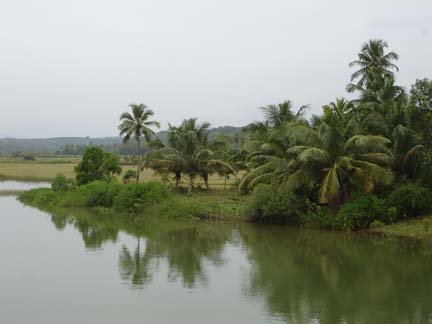
A Coastal estuary

A Coastal estuary
Holegadde near Honavar,Uttara Kannada dist, Karnataka

Copy? Right - but kindly remember to acknowledge!

Creative Commons License
This work is licensed under a Creative Commons Attribution 3.0 License.

" tulu-research.blogspot." ತುಳು ರಿಸರ್ಚ್. ಬ್ಲಾಗ್‌ಸ್ಪಾಟ್‌. ಇನ್

" tulu-research.blogspot."  ತುಳು  ರಿಸರ್ಚ್.  ಬ್ಲಾಗ್‌ಸ್ಪಾಟ್‌. ಇನ್
Have a nice day !