Showing posts with label Naga. Show all posts

Friday, October 14, 2016

366. Mystery of Gokarna and Havyaka

Many of the place names that appear simple on the face may in fact be more complex in reality because of the obscurity in the historical evolution of our land.   It is necessary that care should be taken, while deciphering the original meaning intended and attributed to the place name, by our ancestors who gave the particular name at a remote point in the past history.     Similarly it would be wise to discard the apparent  but untrue meanings that may be attached to  the  name because  of      limitations  in  our  understanding the history and meaning of  the original word. Let us analyze the place name Gokarna and its relation to ethnic words Ha(v)iga and Havyaka.
Legends of Gokarna
Gokarna is a well known place in West Coast of Karnataka, located on the flank of Aghanāshini River in Kumta Taluk, Uttara Kannada district.  The Gokarna is a renowned tourist spot famous for Hindu religious ceremonies especially in the celebration of traditional posthumous rites apart from attractive beaches like Om beach, Kudle beach and main Gokarna beach.
Legends related to the epic Ramayana describe the Gokarna as the place where Asura King Rāvana, while carrying Ātma-linga requested Lord Ganapati (Ganesha) to hold the Ātma-linga for a short while as he wanted a brief respite from the burden. But legends envisage that   the Lord Ganapati tactfully or rather playfully placed the Linga on the coastal sand which was installed permanently. The Rāvana who returned to the site was perplexed to find that the Linga could not be moved from the place in spite his best physical efforts. Ultimately, Rāvana had to leave the Ātma-linga entrenched in that place which later became famous shrine of the Lord Shiva in the name of Mahābaleshwara.
Toponym : Gokarna
The analysis of the toponym (place-name) Gokarna appears quite simple at the outset as it apparently contains two rudimentary Sanskrit words:  Go (=cow) and karna (=ear).  Therefore Gokarna=Cow’s ear. There are legends supporting the hypothesis of Cows ear stating that the Ātma-linga came out a cow’s ear.
However, if you are a serious   student of Indian place names, you may feel that it is unusual that a place should be named after the ear of a cow (in spite of our respect for the holy cow).
The basic reasons for dissent are:
(1) The place names coined by our ancestors reflect the words selected from the language existing at that time in that region.
(2)  Most of our place names are desi words which may have been modified in the due course of time. (The term desi usually reflects the words derived from Prakrit, Munda or Dravida languages.)
(3)  Most of our ancient place names end with characteristic spatial indicator suffixes or morphemes like –na, -ka, -ga, -sa, -ba, -va,-ma, -la,-ala, etc (or their variants and modifications.).  (You may peruse previous/older posts in this blog dealing with toponymic analyses).
(4)  If you apply such a kind of logical place name analysis, then, the origin of the word would be: Gokarna = gokar + Na.
Many Gokarnas' !
It may surprise you to know that there are many places in India,  known by the name of Gokarna. The census of India 2011 database reveals that that are several villages distributed in different states of India, carrying the name “Gokarna” with or without additional modifier suffixes. A few places named exactly as "Gokarna" also exist in Gujarat and West Bengal besides Karnataka.
This may lead to controversy  as to which was the actual Gokarna referred to in the epic Ramayana.  Note that there is a village by the name of “Gokarni” in West Bengal. In Uttar Pradesh, there are "Gokhar" as well as "Gokhari" villages. In Uttara-khand, "Gokhuri"  and in Rajastan, "Gokhri" named villages are found.  Besides, there are many villages bearing  varying names such as: "Gokhara", "Gokharpada", "Gokarnapur", "Gokarnabinda", "Gokarneshwar", "Gokarnakhal", "Gokarnameri" and "Gokharkuda" especially in the State of Odissa. There is village known as "Gokhar Bedi" in Madhya Pradesh.  In Gujarat, "Gokharva" and "Gokharwala", villages are found. In Andhra Pradesh, apart from villages named as “Gokarnapuram” you will also find “Gokarnapalle” and “Gokaram”. In Bangalore District near Devanahalli there is a “Gokare” village. You can also find villages named “Gokhar” in Uttar Pradesh and Nepal.

Gokhar: the Nāga cult
Gokhar (or Gokar) means Nāga, cobra or serpent in Prakrit and its derived languages like Odissi.  Therefore, places known as Gok(h)arna  were ancient villages, originally were named after the  cult of Nāga, which was a holy deity for the native tribes.   The prevalence of ancient cult of Nāga worship  has been well known in different parts of ancient India.
Thus, the Gokarna and its derivative toponyms are suggestive of ancient areas dedicated to the cult of Nāga worship in the antiquity. These place names also indicate that in these regions Austro-Asiatic Munda and/or Prakrit languages prevailed during a specific period in the past history.
That the toponym Gokarna originally meant place of serpent cult can also be proven by the existing alternate historical name for the Uttara Kannada (region around Gokarna) by the name of  “Haiga” ( or Haviga).

Haiga, Haviga = Gokarna
The analysis of the place name "Gokarna" (= village of Nāga ) throws light further on another disputed term in the Indian history : Haiga or Havika. The Kannada dialect in Uttara Kannada district is generally pronounced little bit faster ,such that some of the words unintentionally get mutilated or distorted in the spoken language. Thus the term "Haviga" is generally pronounced as "Haiga" in the local dialect of Gokarna and surrounding areas. We can see that 
the word “Haviga” [Hāv+(i)+ga] in Kannada is equivalent of  Prakrit word "Gokarna," as hāvu means Nāga or serpent in Kannada and –ga is an ancient suffix indicative of a settlement, habitation or village. Thus Haviga (also Havika or Haiga) is the Kannada eqivalent of the Prakrit place name Gokarna.

Lingual transition: Prakrit to Kannada
Thus, the place name Gok(h)arna on translation to Kannada has become Havika or Haviga, where in suffix -ka or -ga is indicative of habitation, similar to the prefix -na in Gokharna. This is suggestive of an important historical fact which documents the change of administrative language in the region from Prakrit to Kannada. The date of lingual transition probably can be assigned as ca.300 CE.

Havyaka
Thus it can be realized that the Brahmins originating from Havika or Haviga (Uttara Kannada district) area of Karnataka are traditionally designated as Havika or Havyaka Brahmins.  The word Gokhar is known as Haavu in Kannada. 

Controversies
However, the origin of the word “Havyaka” has also been disputed in learned circles. Basically,
 so far there are two schools of explanations in vogue with regard to the origin of the word "Havyaka".
(1) It has been suggested that the category of Brahmins traditionally engaged in the rituals of offering Havana (Havya) and Homa were considered as Havyaka.
(2) Alternately, the category of Brahmins,  hailing from the region of "Haiga" were known as "Havyaka".

(3) It can be seen that the origin of the word "Haiga" ( or Haviga) is itself has been somewhat controversial, as there is  a school of thought suggesting that the word "Haiga" might have been derived from the term "
Pashuka". There has been a suggestion that Haviga came from "aavu" which means cow in Old Kannada.


Of all the hypotheses discussed above, it appears that the word "Haviga" (shortened to Haiga as it is customary in the dialectical version of Kannada of Uttara Kannada) gave rise to the word Havyaka - one related to the region of Havika/Haviga.  Clearly, the term "Havika/Haviga" is the Kannada translation of the Prakrit place name word "Gokarna". 
Thus, the Gokarna region of Uttara Kannada,   has been known as “Haiga” (or “Haviga”) in historical documents probably after 3rd Century  CE. The native (Kannada) word ”Haiga” was the deformed version of the Kannada word Hāviga.  

Ucchila(=Gokarna, Haviga)
In this context, we can study a similar meaning, analogous place name from Tulunadu. The place name "Ucchila" is equivalent of Gokarna or Haviga as Ucchu+ila means habitation (-ila) of the Serpent (Ucchu). There are at least two coastal villages in Tulunadu (1.Near Kapu, Udupi district and 2.Near Manjeshwar, Kasargodu District, Kerala) bearing the name of Ucchila.

Historical implications
Thus it is concluded that term “Hāviga” or “Haiga “ as employed  in historical inscriptions refer specifically to the region of Gokarna in Uttara Kannada. Corroborative historical data (discussed elsewhere and also in our older posts,) suggests that Prakrit language prevailed as administrative language in Karnataka probably up to ca. 200 or 300 CE.  Further, Kannada language dominated and took the place of regional administrative language, which is also evident by the natural translation of the Prakrit term Gokarna into Hāviga. 
Thus, it can be concluded that "Haiga" was the Kannada term for the "Gokarna" (in Karnataka) and the term Havyaka as applied to the group of people meant the Brahmins of Gokarana (or Haiga) region.  
It is interesting to note that out of the two analogous terms, Gokarna and Haiga (Haviga), the latter has gone out of usage in the long run, whereas the former has remained in active usage. The term Gokarna stayed with the people as favorite, possibly because of its  appeal as a word apparently akin to Sanskrit, the widely respected language, . 
R

Tuesday, January 12, 2016

354. Bhuta cult of Bermeru or Bommaiah

Our concept of the world as a global village is not new. It was a global village even in the historical past, in spite of then being handicapped by vast distances, poor transport and lack of distance communication facilities.
According to available scientific exploratory data on human evolution, the early human beings originally evolved in a relatively remote place in Africa. And with passage of time coupled with population proliferation, tribal people migrated to different lands probably in search of better opportunities, climates, security, food, shelter, comforts and prosperity.
Our ancestors strongly believed that world is one family as expressed in the adage Vasudaiva kutumbakam. Those forefathers who coined such meaningful notions in the bygone days were certainly aware of the common cultural threads among the diverse people living in other countries of the world irrespective of their language, culture, creed and other nuances.

Ancient cults of Spirit worship
Ancient people, our ancestors, beset with myriad obstacles, found solace and security in worshipping elements of the nature. Apart from worshipping the essential elements of the nature, they honored and worshipped their dead community leaders and heroes who were thought to exist in the form of souls or spirits even after their death. Since ages, the spirits or souls (the esoteric remains) of the ferocious animals to begin with and later their celebrities and heroic persons were considered to exist even after their deaths and exert influence over the common people. Such ancient beliefs and cults later led to the culture of worshipping Spirits (Bhūta) and later evolved into worship of Gods that ultimately manifested in multiple and or single forms according to ideologies floated from time to time.
 The prevailing concept of worshipping multiple forms of divinities is the result of coalition of several micro cultures developed in different regional centers in the antiquity with independent beliefs and cults that eventually fused together under tolerant dynasties along the course of evolution.
It needs to be appreciated that different forms of the Bhūta (Spirit) cults once pervaded all over Indian subcontinent as well as other  areas to begin with and with passage of time the Bhūta cults have been replaced by subsequent 'divine' forms of worship. Several forms of the ancient Bhūta  cults have still been preserved in parts of Karnataka.  The Bermer (in Dakshina Kannada, Udupi), Bommaiah (in Uttara Kannada) or Baramappa (in northern Karnataka) is one such ancient Bhūta cult.
A  Symbolic bhuta stone. (with red flowers) Earliest form of  representation of Spirits and deities.


Bhūta: the Spirit
The usage of the word Bhūta is quite interesting. Though the word has remained since ages in Tuluva culture, the term is an ancient pan-Indian word not exclusive to Tulunadu. Basically the word ‘’Bhūta’’ essentially means the (a) past.  It also means (b) the essential life force or the spirit of the dead. Thus the term stands for a Spirit of a dead celebrity or entity that lived in the past. Our ancestors believed that the spirits of the dead entities and persons of significance can influence and guide their lives.
Some authors have employed the term ‘’devil’’ to represent the notion of bhūta. The term ‘’devil’’, which carries negative shades of meaning seems inappropriate for the conveying the concept of   “bhūta”,   prevailing among the people, essentially as a protector form of deities.
Normal people encounter obstacles of varied types during their life and look for reliable and potent and infallible source of inspiration, guidance and supernatural support to tide over the problem at hand.  The cults of Bhūta, Spirits and Gods have played the role of the supernatural guides in the life and achievements of our ancestors.
Our universe is an extremely complex wonderful creation that has been designed to function incessantly and efficiently by unseen set of forces. Similarly human body is an extremely complicated inimitable system that functions extremely well and automatically for years. There are millions of such incredibly complex examples with highly complicated invisible blueprints around us, and to regard these wonders as automatically or self generated without any supernatural managerial force would simply be insane. While the science is still groping for answers to such eternal questions and paradoxes the common people since ages have designed the concepts of spirits and deities as guiding factors in their life according to the level of perception they could comprehend in their ambient environments.

Abram, an ancient leader
One of the ancient hero/celebrity worship cult that originated in ancient Mesopotamia (land between the rivers Euphrates and Tigris corresponding to present parts of Iraq, Syria and Kuwait) happens to be related to a renowned legendary leader named Abram who considered to have lived about 4000 years ago in Sumer, southern Mesopotamia.  Abram has been considered as a legendary patriarch and prophet for Jews, Christians and Muslims. According to descriptions in Genesis, his wife Sara begot him a son known as Isaac. Abram (later known as Abraham) and his son Isaac have been considered as prophets in Christianity.   Abram is known as Ibrahim in Quran and his son Ishmael has been considered as a prophet in Islam. Some researchers have doubted the precise historicity of the person and found that personal names like Abiram were common in Babylon /Sumerian civilization.

Abiram-Biram
One interesting string is that there was a tussle between two rival communities in Mid East. The ancient rival communities that separated due to animosity applied names similar but with or without   ‘A’ prefix! Thus similar contemporaneous esoteric poetic knowledge in the Avesta -Veda was shared between the two groups.  Rival tribes were called Ahura/Asura vs.-Sura.  And similarly there were Abram-Bram, Abiram-Biram etc.
 
Bermer idol at Bommara bettu Garadi, Udupi District (source: Vamana Nandavara,2001)
Birma, Bermeru
The cult of legendary celebrity Abram/Biram spread to Indian subcontinent probably around 1700-1500 BC. The anecdotes of Biram or Bram led to the growth and evolution of a cult glorifying a spirit God. The spirit deity was known variously in different regions as Baram, Beram, Berma, Bomma or Brama.
With transcontinental migration of human tribes in the course  of history, the cult spread to the various parts of southern India, including coastal Tulunadu, as Barama, Birma, Biruma, Berma or Berme (Singular) or Bermeru (honorific plural). During the early centuries of the Common Era, Prakrit/Pali languages were the administrative languages in Karnataka. The name Barama became Bomma in Prakrit/Pali  languages which was adapted in early Kannada regions.
During the period of composition of Siri ḍ-dana in ancient Tulunadu ( estimated to be in the time span of ca. 300 BC to 300 CE), it appears that the cult of Bermer worship was well entrenched as evidenced by major reference to the Bermer deity  in the ḍ-dana folklore. 
Nowadays our younger generation might not be aware of the fact that their ancestors worshipped a God/divine Spirit known popularly as Bermer (Berme or Bermeru or Birmer ) in the past history probably well before the widespread popularization and organized worship of Indian Gods like Shiva, Vishnu, Shakti, Ganesha and Kumara.
The Barma or Berma (Bermer) cult once upon a time prevailed all over India. Even the name of the country Burma (Brahma-desha in Sanskrit literature, now Myanmar) is said to have been derived from the Barma deity. However, the vestiges of the Barma/Berma cult have been well preserved in the West Coast of Karnataka.
There are distinct evidences of once dominant Bermer worship cult  prevailing in the Alade, Gunda, Chitteri and Garodi institutions of the Karavali in the West Coast. In Uttara Kannada district Bommaiah is still a major village God being devotedly worshipped by natives especially  in parts of Ankola.
The ḍ-dana oral literature in Tulu language and the available inscriptions on Bermer  apparently do not provide any significant clues regarding the actual origin, history or evolution of the cult beyond myths. As such many authors appear to be still in the dark regarding the origin of the cult of Bermer and Brahma.
In West Coast of Karnataka, Alade, Chitteri, Garodi and other related traditional, heritage structures have preserved the identity of the Bermer which was widely worshipped as   principal deity once upon a time.
In my childhood there was an intensely weathered structure with plants grown over it about 50 meters behind our ancestral house in Munkūru village, in Udupi district. My grandmother used to describe it as Bermere guna.  It took me several years to understand the meaning or significance of the term Bermere guna. By then, the dilapidated structure that existed years ago has vanished due to construction of new houses.

Ancient worshipping patterns

Earliest tribes in India apparently worshipped Sun, trees on one hand and snakes and other harmful creatures on the other. Tree worships further led to preservation of groups of trees held sacred in the form of Kāvu (Kāpu), Bana, Sarana or Devarakādu. One of the early tribes, Marava were named after trees (‘’mara’’).

The oldest known forms of worship consisted of symbolic piece of stone kept at the bottom of a tree. Koraga and other early tribes used to worship a piece of stone kept under the tree called “kata”. Such simplistic symbolic stones representing spirits and deities can be seen even today in rural areas. The relevant word has been preserved in Tamil as katavalu (=God). With evolution in sculptural art forms, the symbolic stones representing spirits and deity forms were replaced by sculpted idols. After invention of pottery, globular earthen vessels, known as muri or kalasa, were kept apart and worshipped as symbolic of spirits, deities and supernatural powers. 
As the tribal families proliferated and set upon migration, the original places of settlements were designated as Mūltān  (or mooltaan or moolasthana; literally means , the original place).Within the mūltāns  they had set out a specific place for worship known Alae. The ancient term Alae does exist in various nook and corners of Indian subcontinent, although with passage of time, the original term has been modified locally depending upon the phonetic nuances of the native languages.

Alaḍe
The Bermer has remained the principal deity in  ancient shrines known as Alaḍe. An Alaḍe (worship place beside water; Ala=water + De=place) is ancient form of shrine or worshipping area usually located near a water body, river or lake.  In  the Alaḍe shrines, the Bermer is the principal deity associated usually with Lekkesiri (Rakteswari), Mahisandaya, Nandigona and Nāga. The ancient word Alaḍe is literally equivalent of the word  Alaya, the place of worship. In many of the ancient Alaḍe shrines there are simply no idols/sculptures or the Bermer is represented by a small piece of stone.
The Alaḍe shrines which have remained representatives of  our ancient roots mostly located inside or associated with early tribal settlements known as Multān (Moolastāna) (Posts  9,19,30,286). It appears that Alade shrines existed in Tulunadu as early as 2000 BC , if not earlier. Before the arrival of the Bermer cult Serpent (Nāga), Bullock (Nandigona), Buffaloe (Mahisandaya) and other animistic spirit deities were being worshipped by the tribals.(Post  313).

Memorial shrines-precursors of Temples

Stoopa < doope
In post- Buddha period, ca 3rd century BC onwards, mortal remains of Buddha and other Buddhist monks were preserved inside a circular enclosure with dome shaped roof, known as Stoopa (stūpa).  The Sanskrit word Stoopa appear to have been derived from ancient Indian (Pāli/Prakrit/Tulu) word Toope.
The ancient Indian word Toope or doope (means a heap) exists in Tulu even today. In Tulu rural agricultural houses, an outdoor heap of granary enclosed within dried hay talks is known as tuppe. Incidentally the traditional tuppe hay-stalk granary structures resemble the shape of stoopa. Thus it can be inferred that the architectural design of stoopa has been inspired from the shape of tuppe granaries.
Similarly, it can be noted that a memorial (usually pyramidal in shape, usually made up of bamboo frame covered with cloths) erected near the cremation site of the dead is known as doope. Note that pyramidal structures were vogue in ancient Egypt and other countries to house preserved dead bodies of celebrities known as mummies.

Chaitya, Chitteri
A Chaitya-griha is a shrine structure enclosing a stoopa (usually containing mortal remains of Buddha or later Buddhist monks) and a prayer /congregation hall for devotees. The Chaitya-griha in various parts of India were constructed  or cut in massive basaltic rocks as seen in parts of Maharashtra) as early as 2nd century BC to preserve the mortal remains of Buddha and to permit piligrims and devotees to circumbulate around the stoopa for worshipping and paying respect to the mortal remains..
Preserving the dead or relics of the dead celebrities was in vogue since antiquity as evidenced by Egyptian mummies.
Similar Chaitya-griha, usually smaller in size, were known as Chitteri or Chitrakoota in the Coastal Karnataka. Besides some of these Chitteris were designated for the worship of Bermer in  Coastal Karnataka/Tulunadu. Several places in Tulunadu such as Chitrapu and Chitrapura also remind us the vestiges of Chitteris in Tulunadu.

Bermer  Gunda
Independent shrines of the Bermer deity are usually known as Gunda.  Traditionally, a gunḍa is a more or less circular structure or enclosure designed to house a representation or image of the Bermer deity. Many of these structures have been dilapidated and weathered off due to neglect over the years  and vagaries of climate. Some of these Gunda have been incorporated in the temple complexes. One such modernized Bermer shrine can be found within the premises of renowned Durga Parameshwari Temple at Kateel, in Mangaluru Taluk.

Bermer in Garodi
The Garoi institutions (Kannada: Garai; Tamil: Karati; Malayalam Kalari) were the traditional training centers for soldiers of that time in martial arts. Even today in most of the traditional Garoi schools the principal deity is the Bermer. Thus, we can infer that the Garoi schools   existed since ancient times when the Bermer was the ruling deity. (Post 291, 329)
The idols of the Bermer deity presently found in the Garois of Tulunadu are generally represented in the form of a masculine warrior like figure with mustache and beard. He is armed with a lancer in one hand and is straddling astride on a horse. Some of the Bermer idols have depicted with a multi-seeded fruit (like Jack fruit?) in one hand. This kind of images could have been an innovation introduced probably after 5th century CE after horse and sculptural art forms were   introduced in India. (Post 6)

Worship of Bermer was dominant even during the (16th Century) period of Queen Abbakka at Ullal (as testified by Italian  tourist Pietro della Valle). Famous twin heroes Koti Chennaya who lived around later part of 16th Century (ca.1555-1585) also worshipped the Bermer God (date source: Vamana Nandavara, 2001). Dilapidated remnants of independent Bermer shrines known as Bermere gunḍa existed in Tulunadu even up to 1960-70.

Now-a-days few vestiges of such ancient shrines can be seen often amalgamated in the campus of temples as kshetrapāla or as lesser deities. This is essentially symbolic of cultural theosophical evolution of divine cults in our land (Post.103.). For example we can see one such Bermer shrine (renovated) in the precincts of Durga Parameshwari temple at Kateel. In Jain Bastis, the Bermer has been relegated to the status of Yaksha or Kshetrapāla. The term Kshetrapāla literally means the security guard of the temple.

Nāga Bermer: fusion of cults
The cult of Nāga (cobra/serpent) worship is quite ancient probably introduced before 3000 BC in Indian subcontinent. In areas where Nāga worship was dominant, the introduction of Bermer cult probably by immigrants must have lead to periodic clashes that ultimately resulted in mutual reconciliation. Reconciliation between the Nāga worshippers and the Bermer worshippers led to fusion of the two cults into Nāga- Bermer worship.

Brahma-Lingeshwara
Conflict of cults as described in the previous section between the devotees of Bermer and Shiva/ Lingeshwara eventually ended in reconciliation of beliefs and fusion of the two cults leading to the deity known as Brahma-Lingeshwara.

Brahma, the creator deity
In the post Vedic period ca.600-300 BC,  the cult of four headed Brahma, the  creator God evolved in northern India. The temple at Pushkar in Rājastān devoted to the worship of Lord Brahma, appears to be one of the first Brahma temples in India. Later the concept spread to other parts of India and also to Southeast Asian countries.
The Bermer and the Brahma cults though originated from the single source bloomed along parallel lines.(Post 4,26,28)

Trimurthi
During the period 300 - 100 BC, the three divine cults namely Brahma, Vishnu and Maheshwara (Shiva) were popular with independent followers. Reconciliation among the devotees led to fusion of the three concepts into the cult of Trimurthi.(Post  33)
 
Yaksha-Brahma at Dharmasthala. (source: Shetty,2002)
Yaksha-Brahma
While Jainism was dominant in Tulunadu and Karavali, Jain rulers while building Jain basadis transformed the Bermer into a Kshetrapāla whose image was placed at the entrance of the Basadis and designated as Yaksha-Brahma.

Tulu Sangam: Siri PaDdana
The Bermer was the ruling deity in Tulunadu at the time of composing the orature (oral+literature= ḍ-dana) of  Siri Pāḍ-dana. This blogger considers Siri PaDdana as an ancient oral literature of Tulunadu possibly contemporaneous of  ‘Chankam’ (Sangam) literatures of Tamilnadu.(Post ..). The Siri Pāḍ-dana as a part of Tulu Sangam literature can be considered to have composed originally during the beginning centuries of the Common Era. In Siri PaDdana we find exclusive references to the God Bermer and discussions of repairing dilapidated shrine of Bermer near Basrur.(Post 94, 95,97,309)
 The town of Basrur located on the bank of river Hālai in Kundapur Taluk   was originally  a marine trading port during early centuries of the Common Era. As a result of receeding  (transgression) of the Arabian Sea. (The regression of the Sea has been attributed to the mythical powers of Lord Parashurāma in the legends). The position of the Basrur port has been shifted inland as  result of regression of the Sea (Post  296 ).
Bommaiah devaru, Ankola (Two book covers: N R Nayak & Vittal Gaonkar)


Bommaiah in Uttara Kannada.
The cult of Bermeru has not been exclusive to Tulunadu. In Uttara Kannada district especially in Ankola we find Bommaiah devaru a Kannada equivalent of Tulu Bermeru. The word Bomma appears to be a Pāli/Prākrit word derived from the  original of  Barama and adapted into Kannada during early centuries of the Common Era.
At least at two places in Ankola we find the Bommaiah  spirit deity being worshipped.
Adjoining the Ankola town, atop a hillock  near Kogre hamlet located  in the middle of a group of four villages (of Basgodu, Soorve, Shetgeri and Singanamakki) we find a small shrine dedicated to the reigning deity known as Bommaiah devaru.  The Bommaiah idol has been sculpted in granite stone. It is being worshipped by regular pooja and the locals celebrate the annual Bandi habba ritual with gaiety. The idol of Bommaiah deity here has been sculpted in a large granite stone and the form is essentially similar to Bermeru.
The image of Bommaiah deity with golden shown here is taken from the cover of a recent book written by Vittal V. Gaonkar (2015).
 Bommaiah deity flanked by two heroes, Kogre, Soorve Village ,Ankola.

Bommaiah /Baramappa in northern Karnataka
The cult of Bommaiah deity appears to have been rampant all over Karnataka as evident by the prevalence of numerous villages named after the deity such as Bommanahalli, Bommasandra, etc. The Bomma in early Karnataka was not the four headed Brahma but the Spirit Barma or Barama or  the Bermer.
In villages of northern Karnataka worship of Baramappa as a rural Spirit deity (gram devata) continue to exist since long time. The cult of Bommaiah worship appears to have receded in the other parts of India under the overbearing influence of other divine cults.

Evolution of divine cults
The reconstruction of evolution of the Bermer cult may serve as a logical illustration for the unbiased persons to understand genuinely the nature and origin of some of the divine cults. The adaption of the Bermer/Bommaiah divine cult widely in southern India during the Vedic to post Vedic period distinctly evinces the intensity of influence the immigrant cults held over far-off regions in the ancient setting of the global village.


DISCLAIMER
Some of the recent literature in Kannada/English enlisted here below for further reference. The list is not exhaustive. Besides, readers kindly note that any of the analytical interpretation of the Bermer/Bommaiah cult explained in this post may differ from their opinions or inferences expressed by these authors.
However,it is hoped that this post would be useful background for analyzing and understanding the time space relations in the  contemporary field data presented in references below.


REFERENCES
Amrutha Someshwara (1999) Tulu Padana Samputa. Kannada University, Hampi. [Kannada P.8+502. [Kannada]
Gururaja Bhatt, P. Dr. (1975) Studies in Tuluva History and Culture. Dr Padur Gururaja Bhatt Memorial Trust, Udupi.  Second impression, 2010, p.452+ xxxvii.
Indira Hegde, Dr (2004) Bantaru: Ondu Samajo-Samskruthika Adhyayana. Kannada Pustaka Pradhikara. Bengaluru  ,p. xviii+480. [Kannada]
Indira Hegde, Dr (2012) Tuluvara Moolataana:Adi Alade.Parampare mattu parivartane. Navakarnataka Publication, p.408. [Kannada]
Nayak, N.R , Dr (2014) Nadavara Janapada Tavanidhi. Xii+484.Karnataka Janapada University. [Kannada]
Rajshree, Dr. (2008) Tulu Janapada Kavya: Ihapara Lokadrushti. Shree Dhramasthala Manjunatheshwara Tulu peeta. Mangaluru University. Mangalagangotri. p.416. (Kannada)
Shetty, S.D., Dr. (2002) Tulunadina Jainadharma: Ondu Sankritika Adhyayana. Rashtrakavi Govinda Pai Samshodhana Kendra.MGM College, Udupi . p.xxiv+424. [Kannada]
Surendra Rao, B (2010) Bunts in History & culture. Rashtrakavi Govinda Pai Samshodhana Kendra.MGM College, Udupi & World Bunts Foundation Trust,  Mangaluru. p.viii+360.
Vamana Nandavara, Dr.(2001) Koti Chennaya. Janapadiya Adhyayana. (Phd thesis)  Mangaluru.  p.420. [Kannada]
Vittal V Gaonkar (2015). Chandada Chaukada hali and Bommaiah devaru. Sumanth Prakashan Brahmavara. P.58. [Kannada]


Sunday, May 31, 2009

188. Kudupu: layers of history

Our inadequacy in understanding the original historical and pre-historical environs and the socio-cultural settings, often introduces certain degree of ambiguity in the interpretation of place-names and the actual meanings originally intended by our forefathers. This aspect has been adequately emphasized in several of our previous posts.
Kudupu is one such village name that deserves attention of aficionados of evolution of our language and culture. Kudupu is a minor temple town located in the outskirt of present Mangalore city, known as abode of combined Subramanya and Naga worship. Many devout people consider this place on par with ‘Kukke Subramanya’ known for the atonement of what is described as ‘Naga-dosha’ in religious circles.

Three layers of history
At least three superposd layers of theologic history -with estimated periods of origin -can be delineated in the Kudupu area,which was a part of the Alupa domain of ancient Mangalore. The Kudupu is geographically located to the North of Kulashekar and Alape area of historical significance:
1.Early Kudupa/Koda (Naga) worship ca.400BC -400 CE
2.Kanda/Kumara (Subramanya) worship ca 400CE -800 CE
3.Ananta Padmanabha worship ca.800CE-1200CE

The three layers of history overalapped one after the other sequentially, wherein the chronologically earlier cults were absorbed and fused into the subsequent cults.

Naga worship
Let me draw your attention to the available evidences relating to the definite antiquity of this place before going to the analysis of the place name. The Naga worship is apparently quite ancient in Tulunadu possibly not younger than ca 600-400 BC. There are several villages in Tulunadu that carry place-names suggestive of Naga worship. Naguri, Nagur, Nagarbavi, Nagarkall, Uchila, Ujjodi, etc.
I prefer to add Kudupu and Kodavur to this list of Naga villages.
Kudupu is now famous for the temple built around ancient anthills representative of Naga worship cult and the worship of the popular Deity Anantha Padmanabha.

River that dried up

There are ’sthala - purana’ (site/village history) that describe the religious sanctity of the temple-town. In the cited theological ‘village history ‘ there is an interesting reference to a river “ Bhadra Saraswati Tirtha” flowing nearby the temple of Kudupu. The person who put together the village history was aware of the geographic fact that a river and later a lake (partial remains of a dried up river) existed in the area. It is interesting because presently there is no river near Kudupu. Since the village history is built around the devotion of Subramanya and Anantha Padmanabha ,possibly in that sequence, it can be predicted that it was originally compiled between the period of 4th to 7th Century CE. Thus it can be predicted that the river dried up somewhere during this period. The original Naga worship predates the phases of Subramanya and Anantha Padmanabha worships, and hence the initiation of Naga worship at Kudupu can be dated back to a period older than 4th Century CE.
However, the distinct valleys near Kudupu suggest that a river was flowing in the area once upon a time!

Etymology of Kudupu
Kudupu= to shrug off, to shiver (b) a variant of ‘kodapu’ (=to sting ) (c) ‘kudumpa’= a large stinging ant. (d) Kudupa/Kudpa= a male name (of tribal origin); possibly a stinging serpent or Serpent God, the usage derived from the one who stings. Therefore, the term ‘Kudupa’ originally represented a tribe who worshipped serpent God, a Naga worshipping tribe and Kudupu was their hamlet.
‘Kedu’= a boil or growth on the skin or infection. Earlier generation of Tulu people believed that skin boils, carbuncles etc were developed due to curse of Naga God and they prayed and offerings to Naga God for cure and relief from such scourges.
Later the food grain (horse gram) grown by the natives was also called Kudu. Kudu (=horse gram) one of the earliest food crops grown in south India, looks similar to ‘kedu’ outgrowths on the skin or vice versa.
‘Kudubi’= a tribal farmer, originally one who grows ‘kuDu’.
Kudubi, kudupa, kuduba, kuruba, kuduma, kodama, korama, kor, and koraga etc early tribal names might have been the variants applied to related or unrelated tribes spread in spatially different regions.
‘Kudpa’ or ‘Kudupa’ was a popular male name among the earlier generation of Tulu people. It is also true that many of the popular names were borrowed from actual tribal names, for example Koraga, Mudda, etc. Kuduma or Kodama was also a variant name of a former tribe, apart from being a personal name. There are villages in Tulunadu that bear the name ‘Kuduma’ or Kodamānu. Incidentally , renowned temple town Dharmasthala was formerly known as Kuduma.

Koda mani
The other variant ‘Kodama’ is also preserved in the village name ‘Kodaman’. There are several other ‘KoDa-‘ villages such as Kodavur,Kodanjikal,Kodange,Kodakal,Kodapadavu, Kodimbadi, etc.
There is one more proof for the above suggested derivation of ‘KoDa’=Naga. It is the name of a Tulu Spirit, namely the ‘Kodamanittaya’. The puzzling unexplained word ‘KoDa-mani’ should be the equivalent of the ‘naga-mani’ or the mythical gem on the hood of the Naga God.
Therefore, based on the foregoing analysis it may be tentatively concluded that the village ‘Kudupu’ was an early habitation of serpent worshipping tribes called ‘Kudupas’. And in their language, the word Kudupa, Kodapa or Koda represented the Naga, their God.
®

Wednesday, October 22, 2008

158. Pandyas & cargo boats


A wooden nagaa under construction at Ullal. A white arrow inserted shows the size of a man for comparison

Panemangalore and Pandimar, the place names, hold key to the ancient boat based trade culture of the Karavali. The word 'Pandi' (= a large cargo boat) appears to have been connected with ancient rulers of the south known as Pandyas. Apart from the Pandya Kings that ruled parts of Tamilandu during historical period, several Alupa Kings of Tulunadu have adorned the title of Pandya. The 'Pandya' surname appears to have been derived from the word 'Pāndi'. The capital of Pandyas, the original Madhurai, as well as those of Alupas were coastal port towns. It is logical to presume that ancient rulers of the coastal lands were affluent traders who employed large boats to ferry their merchandise to various destinations. Thus the ancient Tulu -Dravida coastal people were proficient in building huge boats to transport food-grains and other items on sea-route and coastal fluvial courses . Large tree trunks woods were cut down in the dense forests of Western Ghats and were transported downstream to coastal boat making centres through the major rivers like Nethravati.

Oda
The common 'Oda'(d as in dog) is a narrow linear wooden boat employed to traverse through rivers as well as used for fishing in the sea. On the analogy of morphology (shape) of Oda, the Tulu village name /suffix 'Odi' (as in Odipu, Posodi, Niddodi etc) can be described as a lane like habitation with houses arranged in a linear fashion.Odi can have several other shades of meaning like sloping land:it also may be an equivalent of the word 'Oli'(Compare village names 'Airoli' with 'Airodi'). As suggested by Hosabettu Viswanath the 'Oda' apparently evolved later into 'Ota', the run.
Besides 'Oda ', there are a number of words that describe large sized cargo boats in Tulu. Words like Pāndi, Koti, Nagā, Manji, Padavu and Kappāl were in usage to refer to large cargo boats implying that the ancient Tulu people were proficient in marine trade and navigation. Note that most of these words also reflect a large size or a huge number.

Pāndi , Pandya
Pandi is large boat used to carry merchandise and the boat-owner was usually known as Pandia or Pāndya. The legend of Bhutala Pandya highlights the life and times of a Pāndi owner or Pāndya. There is a suggestion that some of these Pandia were rich fishermen who were also experts in sea-faring and sailing cargo boats.
Pāndyas of Tamilnadu as well as Tulunadu (Alupa Kings)adopted the insignia of twin fishes. Adoption of this insignia might have been conncted to their heritage of fisherfolk /sailor culture or it may have been derived from the roots of fish worship cult of Sindhu- Saraswathi (Indus valley) civilization.

Sediyapu Krishna Bhat suggested that the surname Pandya or Pandia was originally applied to the owner of the large boat known as Pandi. Pandya were one of the the earliest dynasties that ruled ancient Tamilnadu. He has also proved that the word Pandi was once a Dravida word widespread in southern India. The place names Pondicherry and Pondi Bazar in Tamil areas are obviously the relics of the ancient Dravida word Pāndi.
Pandi probably was known in Gujarat coast also as pointed out by Sediyapu. The 'Pānde' surname popular in northern India might have been an offshoot of the word 'Pāndi'.

Bandi
Another interesting point is that the word 'Pandi' is related to or evolved to 'Bandi' (p>b transition) which now literally represents a wheeled vehicle, but originally the word banDa meant goods or merchandise and therefore 'banDi' meant a goods transport vehicle. Note the word 'banDasāle' (d pronounced as in 'dog') in Tulu represents a store-house.

Koti
Koti (t pronounced as in tea) is a large boat like Pandi. The funny expression 'KoTi or PānDi' is used by Tulu people usually as a pun. A Koti also represents a store-house or large number ( a crore or one hundred lakhs). However the personal name of 'Koti' (of Koti- Chennya fame)is said to have been derived from the name of deity Kotilingeswara.

Nagā
Nagāa also means a hill. The word was applied to (1) a hill-like large boat (2) a boat carrying valuable goods that brought cash to the owner of the boat upon trade transactions. The word nagā also evolved later to represent valuables like gold and jewelry ( as in 'naga nattu' ) or currency (as in 'naga nānya'), The Dravida word for cash 'nagad' is also derived from the word 'nagā'.

Manji
The words 'manjā' or 'manji' in Tulu meant a raised structure or elevated land and it was also applied to large sized boats. So the original word coined by the Nātha monks at Kadire (Mangalore) for the deity Manjinatha (later refined to 'Manjunatha') actually referred to the God of the heights, the heights possible connoted either the Mount Kailas ( the Himalayas) and/or the 'manja' or 'manji' (elevated plateau of the Kadire hills.
Of course there are words apparently of different origin but sounding similar to 'manji' with dissimilar meanings like (1) 'manj' or 'manji', the dew or fog and (2) 'mānji' a flat fish, known also as pamphret.

®

Monday, January 7, 2008

67. Bunts and Nairs

Contributed by Narayana T.Shetty

The tulu proverb says ”mara puttinalpane, naramani poyinalpane” (tree remains where it grown, man remains anywhere he goes). But a curiosity to know our past, origin still remains in major parts of human beings, including Bunts.
According to paDdanas (oral tradition of tuluva legends) we came from aichatra maDastana. This ahichchatra according to “purananaama choodamani” is a city in uttara paamchaala country of Drupada, the father of Draupadi. This is in “Uttaranchala” state today which is surrounded by Tibet in north and Nepal on east. The city is now called “Ram Nagar”.
According to another legend ahikshetra was a place on the banks of Saraswati river. “ahi” means snake (chiefly serpent). It is believed that we Bunts were “naga or serpent worshipers prior to being buta/boota or spirit worshipers. Of course, we worship our ancestors in spirits (kule) too and thus have various ways/rituals to pray and remember them (agel to kulekulu, new dress to kulekulu, marriage of kule etc.). So there is reason to believe that bunts were mainly serpent worshipers and many groups of us might have come from north.
Nairs or Nayars and bunts belong to same cast. Like Bunts and Nadavas (and other tuluva people) Nairs too follow their own form of inheritance called Marumakkathayam, which is “ali katt”. Bunts have “Nayaranna bali” (bali = matriarchal lineage). Last ruler/king of Kanajar (a village in Karkala Taluk) was Nayar Hegde. In this village it was prohibited to take name of the king. So Kanajar folks always called the plough equipment commonly known as nayer/naver in tulu as guddal (from kannada ‘guddali’). The royal house (oMjane ill) of my village Kowdoor (adjacent to Kanajar) is “Naayara bettu”. Nayara is one of the 93 Bunts surname. Varma is a common surname of Nairs and Bunts.
According to K. M. Parinikar "The Nayars [Nairs] were not a caste, they were a race”. Some think nair is the honorific plural of nayan which is derived from the Sanskrit nayaka (leader).
Again “Nayak” is a Bunts surname, mainly from Nakre village in Karkala Taluk. Majority of Nadavas of North Canara have got surname Nayaka. Father of famous queen Chennamma was Siddappa Shetty and her husband was (Siva) Nayaka.
Others derive nair from the naga (snakes) which they worship. The Brahmin-inspired Keralolpathi regards them as the descendants of the Sudras who accompanied the Brahmin immigrants from outside Kerala. There is a theory that they came from the Nepal Valley, adjacent to Tibet. Some consider them to be early descendants of the Newars of Nepal. Serpent worship is one of common custom between the Newars and Nairs. Dr. Zacharias Thundy’s theory is that groups of Newars who were partially Aryanized and would be later Dravidianized joined the Munda exodus and finally settled down in Kerala after a long period of sojourn in the eastern plains of Tamil Nadu. The Nairs were in Kerala before the Brahmins arrived in the seventh century A.D. The Chera kings were Nairs, and the Nairs were also Dravidians and not Kshatriya Aryans; the Brahmins, in fact, considered them as Sudras.
If I am not wrong “Mundal” of Tulunadu and the “Munda” have same synonym.
There is also a belief that the Nairs are Nagas and were already present in Kerala when Namboodiris came to Kerala. Nairs were martial Dravidian Nagas who had migrated like them, from the North. Like Bunts, affinity of the Nair community to Serpents and Serpent worship is indisputable. The mythical version says that Nairs being Kshatriyas belonging to the Nagavansham who removed their “Janivara” (sacred thread) and escaped to south to evade Parasurama. In the old Tamil texts, the Nairs were mentioned as Naka (Naga) Lords who ruled as feudal lords in the Chera kingdom.

-Contributed by N.T.Shetty

Blog Archive

Books for Reference

  • A Comparative Study of Tulu Dialects By Dr. Padmanabha Kekunnaya. Govinda Pai Reserach Centre, UDupi. 1994
  • Koti Chennaya: Janapadiya Adhyayana. By Dr. Vamana Nandavar. Hemanshu Prakashana ,Mangalore.2001.
  • Male kudiyaru. Dr B. A.Viveka Rai and D.Yadupathi Gowda, Mangalore University,1996.
  • Mogaveera Samskriti By Venkataraja Punimchattaya. Karnataka Sahitya Academy.1993.
  • Mugeraru:Jananga Janapada Adhyayana. By Dr Abhaya Kumar Kaukradi.Kannada & Culture Directorate,Bangalore & Karnataka Tulu Academy, Mangalore,1997.
  • Puttubalakeya Pad-danagalu. Ed: Dr B.A.Viveka Rai,Yadupati Gowda and Rajashri, Sri Dharmasthala Manjunatheswara Tulu Peeta. Mangalore University.2004
  • Se'erige. Ed:Dr K.Chinnapa Gowda.Madipu Prakashana,Mangalagangotri,2000.
  • Studies in Tuluva History and Culture.by Dr P Gururaja Bhat (1975).Milagres College,Kallinapur,Udupi.
  • Taulava Sanskriti by Dr.B.A.Viveka Rai, Sahyadri Prakashana,Mysore 1977
  • TuLu naaDu-nuDi By Dr.PalthaDi Ramakrishna Achar, Puttur.
  • TuLu NighanTu. (Editor in Chief: Dr U.P.Upadhyaya, Govinda Pai Research Centre,Udupi. Six volumes. 1988 to 1997
  • Tulu Patero-A Philology & Grammar of Tulu Language by Budhananda Shivalli.2004.Mandira Prakashana Mangalore. p.317. (The book is in Tulu Language using Kannada script)
  • TuLunadina ShasanagaLa Sanskritika Adhyayana. By Shaila T. Verma (2002) Jnanodaya Prakashana,Bangalore, p.304.(Kannada)
  • Tuluvala Baliyendre. Compiled by N.A.Sheenappa Hegde,Polali,Sri Devi Prakashana,Parkala,1929/1999

A Coastal estuary

A Coastal estuary
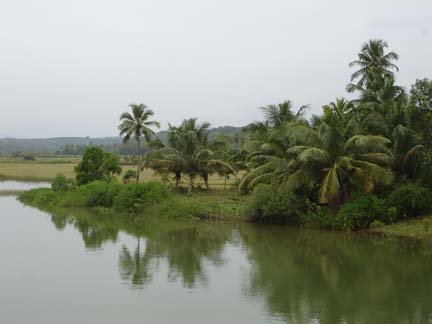
Holegadde near Honavar,Uttara Kannada dist, Karnataka

Copy? Right - but kindly remember to acknowledge!

Creative Commons License
This work is licensed under a Creative Commons Attribution 3.0 License.

" tulu-research.blogspot." ತುಳು ರಿಸರ್ಚ್. ಬ್ಲಾಗ್‌ಸ್ಪಾಟ್‌. ಇನ್

" tulu-research.blogspot."  ತುಳು  ರಿಸರ್ಚ್.  ಬ್ಲಾಗ್‌ಸ್ಪಾಟ್‌. ಇನ್
Have a nice day !