Showing posts with label Brahma. Show all posts

Tuesday, January 12, 2016

354. Bhuta cult of Bermeru or Bommaiah

Our concept of the world as a global village is not new. It was a global village even in the historical past, in spite of then being handicapped by vast distances, poor transport and lack of distance communication facilities.
According to available scientific exploratory data on human evolution, the early human beings originally evolved in a relatively remote place in Africa. And with passage of time coupled with population proliferation, tribal people migrated to different lands probably in search of better opportunities, climates, security, food, shelter, comforts and prosperity.
Our ancestors strongly believed that world is one family as expressed in the adage Vasudaiva kutumbakam. Those forefathers who coined such meaningful notions in the bygone days were certainly aware of the common cultural threads among the diverse people living in other countries of the world irrespective of their language, culture, creed and other nuances.

Ancient cults of Spirit worship
Ancient people, our ancestors, beset with myriad obstacles, found solace and security in worshipping elements of the nature. Apart from worshipping the essential elements of the nature, they honored and worshipped their dead community leaders and heroes who were thought to exist in the form of souls or spirits even after their death. Since ages, the spirits or souls (the esoteric remains) of the ferocious animals to begin with and later their celebrities and heroic persons were considered to exist even after their deaths and exert influence over the common people. Such ancient beliefs and cults later led to the culture of worshipping Spirits (Bhūta) and later evolved into worship of Gods that ultimately manifested in multiple and or single forms according to ideologies floated from time to time.
 The prevailing concept of worshipping multiple forms of divinities is the result of coalition of several micro cultures developed in different regional centers in the antiquity with independent beliefs and cults that eventually fused together under tolerant dynasties along the course of evolution.
It needs to be appreciated that different forms of the Bhūta (Spirit) cults once pervaded all over Indian subcontinent as well as other  areas to begin with and with passage of time the Bhūta cults have been replaced by subsequent 'divine' forms of worship. Several forms of the ancient Bhūta  cults have still been preserved in parts of Karnataka.  The Bermer (in Dakshina Kannada, Udupi), Bommaiah (in Uttara Kannada) or Baramappa (in northern Karnataka) is one such ancient Bhūta cult.
A  Symbolic bhuta stone. (with red flowers) Earliest form of  representation of Spirits and deities.


Bhūta: the Spirit
The usage of the word Bhūta is quite interesting. Though the word has remained since ages in Tuluva culture, the term is an ancient pan-Indian word not exclusive to Tulunadu. Basically the word ‘’Bhūta’’ essentially means the (a) past.  It also means (b) the essential life force or the spirit of the dead. Thus the term stands for a Spirit of a dead celebrity or entity that lived in the past. Our ancestors believed that the spirits of the dead entities and persons of significance can influence and guide their lives.
Some authors have employed the term ‘’devil’’ to represent the notion of bhūta. The term ‘’devil’’, which carries negative shades of meaning seems inappropriate for the conveying the concept of   “bhūta”,   prevailing among the people, essentially as a protector form of deities.
Normal people encounter obstacles of varied types during their life and look for reliable and potent and infallible source of inspiration, guidance and supernatural support to tide over the problem at hand.  The cults of Bhūta, Spirits and Gods have played the role of the supernatural guides in the life and achievements of our ancestors.
Our universe is an extremely complex wonderful creation that has been designed to function incessantly and efficiently by unseen set of forces. Similarly human body is an extremely complicated inimitable system that functions extremely well and automatically for years. There are millions of such incredibly complex examples with highly complicated invisible blueprints around us, and to regard these wonders as automatically or self generated without any supernatural managerial force would simply be insane. While the science is still groping for answers to such eternal questions and paradoxes the common people since ages have designed the concepts of spirits and deities as guiding factors in their life according to the level of perception they could comprehend in their ambient environments.

Abram, an ancient leader
One of the ancient hero/celebrity worship cult that originated in ancient Mesopotamia (land between the rivers Euphrates and Tigris corresponding to present parts of Iraq, Syria and Kuwait) happens to be related to a renowned legendary leader named Abram who considered to have lived about 4000 years ago in Sumer, southern Mesopotamia.  Abram has been considered as a legendary patriarch and prophet for Jews, Christians and Muslims. According to descriptions in Genesis, his wife Sara begot him a son known as Isaac. Abram (later known as Abraham) and his son Isaac have been considered as prophets in Christianity.   Abram is known as Ibrahim in Quran and his son Ishmael has been considered as a prophet in Islam. Some researchers have doubted the precise historicity of the person and found that personal names like Abiram were common in Babylon /Sumerian civilization.

Abiram-Biram
One interesting string is that there was a tussle between two rival communities in Mid East. The ancient rival communities that separated due to animosity applied names similar but with or without   ‘A’ prefix! Thus similar contemporaneous esoteric poetic knowledge in the Avesta -Veda was shared between the two groups.  Rival tribes were called Ahura/Asura vs.-Sura.  And similarly there were Abram-Bram, Abiram-Biram etc.
 
Bermer idol at Bommara bettu Garadi, Udupi District (source: Vamana Nandavara,2001)
Birma, Bermeru
The cult of legendary celebrity Abram/Biram spread to Indian subcontinent probably around 1700-1500 BC. The anecdotes of Biram or Bram led to the growth and evolution of a cult glorifying a spirit God. The spirit deity was known variously in different regions as Baram, Beram, Berma, Bomma or Brama.
With transcontinental migration of human tribes in the course  of history, the cult spread to the various parts of southern India, including coastal Tulunadu, as Barama, Birma, Biruma, Berma or Berme (Singular) or Bermeru (honorific plural). During the early centuries of the Common Era, Prakrit/Pali languages were the administrative languages in Karnataka. The name Barama became Bomma in Prakrit/Pali  languages which was adapted in early Kannada regions.
During the period of composition of Siri ḍ-dana in ancient Tulunadu ( estimated to be in the time span of ca. 300 BC to 300 CE), it appears that the cult of Bermer worship was well entrenched as evidenced by major reference to the Bermer deity  in the ḍ-dana folklore. 
Nowadays our younger generation might not be aware of the fact that their ancestors worshipped a God/divine Spirit known popularly as Bermer (Berme or Bermeru or Birmer ) in the past history probably well before the widespread popularization and organized worship of Indian Gods like Shiva, Vishnu, Shakti, Ganesha and Kumara.
The Barma or Berma (Bermer) cult once upon a time prevailed all over India. Even the name of the country Burma (Brahma-desha in Sanskrit literature, now Myanmar) is said to have been derived from the Barma deity. However, the vestiges of the Barma/Berma cult have been well preserved in the West Coast of Karnataka.
There are distinct evidences of once dominant Bermer worship cult  prevailing in the Alade, Gunda, Chitteri and Garodi institutions of the Karavali in the West Coast. In Uttara Kannada district Bommaiah is still a major village God being devotedly worshipped by natives especially  in parts of Ankola.
The ḍ-dana oral literature in Tulu language and the available inscriptions on Bermer  apparently do not provide any significant clues regarding the actual origin, history or evolution of the cult beyond myths. As such many authors appear to be still in the dark regarding the origin of the cult of Bermer and Brahma.
In West Coast of Karnataka, Alade, Chitteri, Garodi and other related traditional, heritage structures have preserved the identity of the Bermer which was widely worshipped as   principal deity once upon a time.
In my childhood there was an intensely weathered structure with plants grown over it about 50 meters behind our ancestral house in Munkūru village, in Udupi district. My grandmother used to describe it as Bermere guna.  It took me several years to understand the meaning or significance of the term Bermere guna. By then, the dilapidated structure that existed years ago has vanished due to construction of new houses.

Ancient worshipping patterns

Earliest tribes in India apparently worshipped Sun, trees on one hand and snakes and other harmful creatures on the other. Tree worships further led to preservation of groups of trees held sacred in the form of Kāvu (Kāpu), Bana, Sarana or Devarakādu. One of the early tribes, Marava were named after trees (‘’mara’’).

The oldest known forms of worship consisted of symbolic piece of stone kept at the bottom of a tree. Koraga and other early tribes used to worship a piece of stone kept under the tree called “kata”. Such simplistic symbolic stones representing spirits and deities can be seen even today in rural areas. The relevant word has been preserved in Tamil as katavalu (=God). With evolution in sculptural art forms, the symbolic stones representing spirits and deity forms were replaced by sculpted idols. After invention of pottery, globular earthen vessels, known as muri or kalasa, were kept apart and worshipped as symbolic of spirits, deities and supernatural powers. 
As the tribal families proliferated and set upon migration, the original places of settlements were designated as Mūltān  (or mooltaan or moolasthana; literally means , the original place).Within the mūltāns  they had set out a specific place for worship known Alae. The ancient term Alae does exist in various nook and corners of Indian subcontinent, although with passage of time, the original term has been modified locally depending upon the phonetic nuances of the native languages.

Alaḍe
The Bermer has remained the principal deity in  ancient shrines known as Alaḍe. An Alaḍe (worship place beside water; Ala=water + De=place) is ancient form of shrine or worshipping area usually located near a water body, river or lake.  In  the Alaḍe shrines, the Bermer is the principal deity associated usually with Lekkesiri (Rakteswari), Mahisandaya, Nandigona and Nāga. The ancient word Alaḍe is literally equivalent of the word  Alaya, the place of worship. In many of the ancient Alaḍe shrines there are simply no idols/sculptures or the Bermer is represented by a small piece of stone.
The Alaḍe shrines which have remained representatives of  our ancient roots mostly located inside or associated with early tribal settlements known as Multān (Moolastāna) (Posts  9,19,30,286). It appears that Alade shrines existed in Tulunadu as early as 2000 BC , if not earlier. Before the arrival of the Bermer cult Serpent (Nāga), Bullock (Nandigona), Buffaloe (Mahisandaya) and other animistic spirit deities were being worshipped by the tribals.(Post  313).

Memorial shrines-precursors of Temples

Stoopa < doope
In post- Buddha period, ca 3rd century BC onwards, mortal remains of Buddha and other Buddhist monks were preserved inside a circular enclosure with dome shaped roof, known as Stoopa (stūpa).  The Sanskrit word Stoopa appear to have been derived from ancient Indian (Pāli/Prakrit/Tulu) word Toope.
The ancient Indian word Toope or doope (means a heap) exists in Tulu even today. In Tulu rural agricultural houses, an outdoor heap of granary enclosed within dried hay talks is known as tuppe. Incidentally the traditional tuppe hay-stalk granary structures resemble the shape of stoopa. Thus it can be inferred that the architectural design of stoopa has been inspired from the shape of tuppe granaries.
Similarly, it can be noted that a memorial (usually pyramidal in shape, usually made up of bamboo frame covered with cloths) erected near the cremation site of the dead is known as doope. Note that pyramidal structures were vogue in ancient Egypt and other countries to house preserved dead bodies of celebrities known as mummies.

Chaitya, Chitteri
A Chaitya-griha is a shrine structure enclosing a stoopa (usually containing mortal remains of Buddha or later Buddhist monks) and a prayer /congregation hall for devotees. The Chaitya-griha in various parts of India were constructed  or cut in massive basaltic rocks as seen in parts of Maharashtra) as early as 2nd century BC to preserve the mortal remains of Buddha and to permit piligrims and devotees to circumbulate around the stoopa for worshipping and paying respect to the mortal remains..
Preserving the dead or relics of the dead celebrities was in vogue since antiquity as evidenced by Egyptian mummies.
Similar Chaitya-griha, usually smaller in size, were known as Chitteri or Chitrakoota in the Coastal Karnataka. Besides some of these Chitteris were designated for the worship of Bermer in  Coastal Karnataka/Tulunadu. Several places in Tulunadu such as Chitrapu and Chitrapura also remind us the vestiges of Chitteris in Tulunadu.

Bermer  Gunda
Independent shrines of the Bermer deity are usually known as Gunda.  Traditionally, a gunḍa is a more or less circular structure or enclosure designed to house a representation or image of the Bermer deity. Many of these structures have been dilapidated and weathered off due to neglect over the years  and vagaries of climate. Some of these Gunda have been incorporated in the temple complexes. One such modernized Bermer shrine can be found within the premises of renowned Durga Parameshwari Temple at Kateel, in Mangaluru Taluk.

Bermer in Garodi
The Garoi institutions (Kannada: Garai; Tamil: Karati; Malayalam Kalari) were the traditional training centers for soldiers of that time in martial arts. Even today in most of the traditional Garoi schools the principal deity is the Bermer. Thus, we can infer that the Garoi schools   existed since ancient times when the Bermer was the ruling deity. (Post 291, 329)
The idols of the Bermer deity presently found in the Garois of Tulunadu are generally represented in the form of a masculine warrior like figure with mustache and beard. He is armed with a lancer in one hand and is straddling astride on a horse. Some of the Bermer idols have depicted with a multi-seeded fruit (like Jack fruit?) in one hand. This kind of images could have been an innovation introduced probably after 5th century CE after horse and sculptural art forms were   introduced in India. (Post 6)

Worship of Bermer was dominant even during the (16th Century) period of Queen Abbakka at Ullal (as testified by Italian  tourist Pietro della Valle). Famous twin heroes Koti Chennaya who lived around later part of 16th Century (ca.1555-1585) also worshipped the Bermer God (date source: Vamana Nandavara, 2001). Dilapidated remnants of independent Bermer shrines known as Bermere gunḍa existed in Tulunadu even up to 1960-70.

Now-a-days few vestiges of such ancient shrines can be seen often amalgamated in the campus of temples as kshetrapāla or as lesser deities. This is essentially symbolic of cultural theosophical evolution of divine cults in our land (Post.103.). For example we can see one such Bermer shrine (renovated) in the precincts of Durga Parameshwari temple at Kateel. In Jain Bastis, the Bermer has been relegated to the status of Yaksha or Kshetrapāla. The term Kshetrapāla literally means the security guard of the temple.

Nāga Bermer: fusion of cults
The cult of Nāga (cobra/serpent) worship is quite ancient probably introduced before 3000 BC in Indian subcontinent. In areas where Nāga worship was dominant, the introduction of Bermer cult probably by immigrants must have lead to periodic clashes that ultimately resulted in mutual reconciliation. Reconciliation between the Nāga worshippers and the Bermer worshippers led to fusion of the two cults into Nāga- Bermer worship.

Brahma-Lingeshwara
Conflict of cults as described in the previous section between the devotees of Bermer and Shiva/ Lingeshwara eventually ended in reconciliation of beliefs and fusion of the two cults leading to the deity known as Brahma-Lingeshwara.

Brahma, the creator deity
In the post Vedic period ca.600-300 BC,  the cult of four headed Brahma, the  creator God evolved in northern India. The temple at Pushkar in Rājastān devoted to the worship of Lord Brahma, appears to be one of the first Brahma temples in India. Later the concept spread to other parts of India and also to Southeast Asian countries.
The Bermer and the Brahma cults though originated from the single source bloomed along parallel lines.(Post 4,26,28)

Trimurthi
During the period 300 - 100 BC, the three divine cults namely Brahma, Vishnu and Maheshwara (Shiva) were popular with independent followers. Reconciliation among the devotees led to fusion of the three concepts into the cult of Trimurthi.(Post  33)
 
Yaksha-Brahma at Dharmasthala. (source: Shetty,2002)
Yaksha-Brahma
While Jainism was dominant in Tulunadu and Karavali, Jain rulers while building Jain basadis transformed the Bermer into a Kshetrapāla whose image was placed at the entrance of the Basadis and designated as Yaksha-Brahma.

Tulu Sangam: Siri PaDdana
The Bermer was the ruling deity in Tulunadu at the time of composing the orature (oral+literature= ḍ-dana) of  Siri Pāḍ-dana. This blogger considers Siri PaDdana as an ancient oral literature of Tulunadu possibly contemporaneous of  ‘Chankam’ (Sangam) literatures of Tamilnadu.(Post ..). The Siri Pāḍ-dana as a part of Tulu Sangam literature can be considered to have composed originally during the beginning centuries of the Common Era. In Siri PaDdana we find exclusive references to the God Bermer and discussions of repairing dilapidated shrine of Bermer near Basrur.(Post 94, 95,97,309)
 The town of Basrur located on the bank of river Hālai in Kundapur Taluk   was originally  a marine trading port during early centuries of the Common Era. As a result of receeding  (transgression) of the Arabian Sea. (The regression of the Sea has been attributed to the mythical powers of Lord Parashurāma in the legends). The position of the Basrur port has been shifted inland as  result of regression of the Sea (Post  296 ).
Bommaiah devaru, Ankola (Two book covers: N R Nayak & Vittal Gaonkar)


Bommaiah in Uttara Kannada.
The cult of Bermeru has not been exclusive to Tulunadu. In Uttara Kannada district especially in Ankola we find Bommaiah devaru a Kannada equivalent of Tulu Bermeru. The word Bomma appears to be a Pāli/Prākrit word derived from the  original of  Barama and adapted into Kannada during early centuries of the Common Era.
At least at two places in Ankola we find the Bommaiah  spirit deity being worshipped.
Adjoining the Ankola town, atop a hillock  near Kogre hamlet located  in the middle of a group of four villages (of Basgodu, Soorve, Shetgeri and Singanamakki) we find a small shrine dedicated to the reigning deity known as Bommaiah devaru.  The Bommaiah idol has been sculpted in granite stone. It is being worshipped by regular pooja and the locals celebrate the annual Bandi habba ritual with gaiety. The idol of Bommaiah deity here has been sculpted in a large granite stone and the form is essentially similar to Bermeru.
The image of Bommaiah deity with golden shown here is taken from the cover of a recent book written by Vittal V. Gaonkar (2015).
 Bommaiah deity flanked by two heroes, Kogre, Soorve Village ,Ankola.

Bommaiah /Baramappa in northern Karnataka
The cult of Bommaiah deity appears to have been rampant all over Karnataka as evident by the prevalence of numerous villages named after the deity such as Bommanahalli, Bommasandra, etc. The Bomma in early Karnataka was not the four headed Brahma but the Spirit Barma or Barama or  the Bermer.
In villages of northern Karnataka worship of Baramappa as a rural Spirit deity (gram devata) continue to exist since long time. The cult of Bommaiah worship appears to have receded in the other parts of India under the overbearing influence of other divine cults.

Evolution of divine cults
The reconstruction of evolution of the Bermer cult may serve as a logical illustration for the unbiased persons to understand genuinely the nature and origin of some of the divine cults. The adaption of the Bermer/Bommaiah divine cult widely in southern India during the Vedic to post Vedic period distinctly evinces the intensity of influence the immigrant cults held over far-off regions in the ancient setting of the global village.


DISCLAIMER
Some of the recent literature in Kannada/English enlisted here below for further reference. The list is not exhaustive. Besides, readers kindly note that any of the analytical interpretation of the Bermer/Bommaiah cult explained in this post may differ from their opinions or inferences expressed by these authors.
However,it is hoped that this post would be useful background for analyzing and understanding the time space relations in the  contemporary field data presented in references below.


REFERENCES
Amrutha Someshwara (1999) Tulu Padana Samputa. Kannada University, Hampi. [Kannada P.8+502. [Kannada]
Gururaja Bhatt, P. Dr. (1975) Studies in Tuluva History and Culture. Dr Padur Gururaja Bhatt Memorial Trust, Udupi.  Second impression, 2010, p.452+ xxxvii.
Indira Hegde, Dr (2004) Bantaru: Ondu Samajo-Samskruthika Adhyayana. Kannada Pustaka Pradhikara. Bengaluru  ,p. xviii+480. [Kannada]
Indira Hegde, Dr (2012) Tuluvara Moolataana:Adi Alade.Parampare mattu parivartane. Navakarnataka Publication, p.408. [Kannada]
Nayak, N.R , Dr (2014) Nadavara Janapada Tavanidhi. Xii+484.Karnataka Janapada University. [Kannada]
Rajshree, Dr. (2008) Tulu Janapada Kavya: Ihapara Lokadrushti. Shree Dhramasthala Manjunatheshwara Tulu peeta. Mangaluru University. Mangalagangotri. p.416. (Kannada)
Shetty, S.D., Dr. (2002) Tulunadina Jainadharma: Ondu Sankritika Adhyayana. Rashtrakavi Govinda Pai Samshodhana Kendra.MGM College, Udupi . p.xxiv+424. [Kannada]
Surendra Rao, B (2010) Bunts in History & culture. Rashtrakavi Govinda Pai Samshodhana Kendra.MGM College, Udupi & World Bunts Foundation Trust,  Mangaluru. p.viii+360.
Vamana Nandavara, Dr.(2001) Koti Chennaya. Janapadiya Adhyayana. (Phd thesis)  Mangaluru.  p.420. [Kannada]
Vittal V Gaonkar (2015). Chandada Chaukada hali and Bommaiah devaru. Sumanth Prakashan Brahmavara. P.58. [Kannada]


Saturday, March 22, 2008

103. Rituals of religious transitions

The Karavali/Tulunadu is a mini India where one can study the cultural vestiges of the transition of religious cults that occurred down the time lane of history. The Spirit worship was introduced to Karavali/Tulunadu ca.750-600 BC followed by Buddhism and Jainism ca.300BC and mainstream Hindu temple culture ca.350-400 CE. Infact, all these religious cults are related to each other in some way or the other, being born and grown in the Indian subcontinent under different spatial-temporal environments.

Mainstream Hinduism
Our writers and philosophers have a tendency to brand the mainstream Temple culture, relating to the worship of Gods Shiva, Shakti, Vishnu etc as Vedic culture. That may not be the true picture of facts. Many of the core concepts of the Temple culture are pre-Vedic in origin and some of the concepts have obviously been added in the post Vedic period. And if we are referring to the word ‘Hinduism’ to the set of beliefs and practices grown and practiced in this country then the word ‘Hinduism’ should rightfully include Spirit worship, Jainism and Buddhism along with the mainstream Temple culture. Therefore this blog has preferred to use the distinguishing word ‘mainstream Hinduism’ to represent what other authors generally refer to as Vedic culture.


An image of flag-hoisting ceremony, Bappanad Durga temple,Mulky.

Rituals of transition of cults
The temples of Karavali evince a number of traditional rituals whose meanings have been obscure with passage of time. Have you ever analysed the nature and meaning of some of these rituals? I would like to draw your attention to a few rituals in the temples of Tulunadu/Karavali that reminds the conflicts developed during the shift of faiths.

A temple flag hoisting ritual
Flag hoisting is a ceremony that marks the beginning of festive activities (usually a week long) that culminate in the car festival of the temple. The occasion is known as ‘Kodi Eruni’ (=flag hoisting).In front of the temples there is a tall wooden flag post, usually covered with copper or brass sheets. The ceremony is centered on hoisting a flag (‘koDi’) representing a ‘Vetala’ or ‘Garuda’ (that looks like an image of a naked man) on the ornate flag-post called ‘kodimara’.
The flag hoisting ceremony of the Bappanad (pronounced: bappa naaD or naaDu.) Durga Parameswari temple, Mulki, located about 30 kms north of Mangalore city, recently occurred on March 20, 2008. The Bappanad temple is known to have been built by a Muslim sea-faring merchant called Bappa.


A Procession of Utsava-murthy at Bappanad after the flag-hoisting event.

Symbolic conflict of cults
An interesting sub-event of is celebrated on the occasion at Bappanad temple. This is symbolic of historical confrontation of the Spirit and Kapalika /Natha cults with Shakti cult. A group of people led by two persons dressed in the costumes of a human medium of a Spirit (darshana paatri of Bhoota) with a traditional curved sword (kaDsale) in the hand and a trident holding Kapalika/Natha arrive at the southwestern gate of the temple. The two characters are shivering in the typical style of Spirit trances. They watch the flag-hoisting proceedings with rapt attention and while the flag is being hoisted suddenly turn their bodies in the opposite direction of flag-post as if they do not wish to see the hoisting ceremony. They revert back to normal position after completion of hoisting event. The darshana patri of the Goddess who carries the utsava murthy on his head and walks around the temple in ceremonial procession approaches the two representatives of the Spirit and Natha cults. The Spirit-Natha duo confronts the ‘Goddess’-bearer as if questioning or complaining rebelliously that their rightful place and honour have been confiscated by the Goddess! (Eyewitnesses report that earlier days in the history scolding and foul languages were used).These Spirit-Natha duo are selected from the Malayalee Thiya(formerly Buddhists)community residing at nearby Sasihitlu village.
This enactment forms an integral part of the annual flag-hoisting ceremony at Bappanad. Similar events can be witnessed in Durga temples in the Karavali. The ‘Bali’ ceremony in Durga temples (like in Mundkur) also displays similar symbolic rebellious ‘confrontation’ between the Goddess-bearer and the Spirit medium.


The spirit-medium (in red headgear)and Kapalika/Natha (with trident)at Bappanad.

Throes of transition of cults
The origin and the socio-psychological interpretation of the above ritual are candid and clear. Infact, the cited celebrations are the representative vestiges of the historical confrontation between the rival cults. The native people worshipped Spirits since early historical days. The basic psychology of faith on the Supernatural works out in the same way irrespective of whether one worships a Spirit, a God or Goddess. When a new system of faith, another cult, was thrust upon them they were confused. While the common man was confused, the protagonists of the two rival cults were at loggerheads. At that time, the common man had to be convinced that cult 2 is superior to cult1.The new temples at that time in the history were architecturally and aesthetically superior, patronized by kings and chieftains and were more organized with ornamental and floral decorations, music, lights and rituals compared to that of the older cults.

OTHER STATIC EVIDENCES OF TRANSITION
Apart from the rituals of the sort described above there are a number of static evidences or relics of evidences in and around the Temples of Tulunadu that point towards the effect of transition from the Spirit cult to the Temple culture.A few of them are cited below:

Kshetrapala
Most of the temples have a ‘khetrapala’ (=protector of the premises) with a small shrine analogous to the modern security guard or chief with a cabin. The kshetrapala is mostly a vestige of Spirit formerly worshipped in the area.In the Bappanad temple the Kshetrapala Spirit was the Panjurli.
Again the psychology of the nomination of ‘Kshetrapala’ is candid. A Spirit worshipped by the natives formerly was not destroyed (as it would raise a rebellion) but was absorbed into the temple culture and psychologically reduced to the post of a security chief of the newly built temple!
In many temples initially the shrine of Kshetrapala was quite large like regular Spirit temples (Sana). With periodic modernization of temples (known as Brahmakalasha) the size of shrine of Kshetrapala were reduced consistently. Some of the lesser known Kshetrapala have been removed altogether during ceremonial renovations.

Vetala
The Vetala (Betala) raised as a flag in the temples is also a form of Spirit worshipped formerly in parts of northern Karnataka, Maharastra and Andhra. Similar to the concept of Kshetrapala, the ancient cult of Vetala worship was absorbed into the temple culture and was made into a flag.

Brahma, the Jain Yaksha
The concept of absorption of Spirit cult as Kshetrapala is not exclusive to mainstream Hindu temples. The Jain temples have an imposing rock-pillar called mana-sthambha in the front. Many of these rock pillars have Brahma as a Kshetrapala or Yaksha. The Brahma on the mana-sthambha is not the four headed creator popular in the post Vedic traditions, but the Bermer, the horse mounted Spirit deity traditionally worshipped by the Tulu communities.
®

Friday, October 26, 2007

51.Stage III: Migration from Pirak . 800-500BC

The Pirak civialization phase was reported to have culminated around 800 BC. Tulu language even today has the retained word “pirak” that means ‘ancient’ or ‘aspects connected to remote past’.This can be considered as the fossil memory of Tulu people of their residence at Pirak. In other languages like Kannada the word survived as ‘prak’(=ancient) and Prakrit can be considered as the language of the pirak (prak) area. Prakrit is also considered to be the unrefined form of Sanskrit. Tulu and other south Indian languages have ample Prakrit words in them. Mostly, these were borrowed and assimilated during their residence in Pirak area. At the same time, early Tulu and other early Dravidian language groups lent some words that were absorbed into prakrit and Sanskrit.
During the 800-500 BC period most of the resident groups left Pirak region and entered India proper (as is now) and settled in comfortable areas nearer to water sources like rivers and perennial springs. Possibly, the groups left in different batches, maybe each of some 5 to 10 individual families of able bodied members and found their ways through the new territory before settling in relatively comfortable zones. It is possible that early South Dravidian groups consisting of early Tulu, Tamil, Kannada and Malayalam tribes migrated in different batches during the period.At this stage these early Dravidian languages were similar to each other and were more like regional variations of a single language. Predictably they settled intermittently at several places on the way before reaching their ultimate destinations in select parts of Southern India. The identity of early Kannada and early Malayalam ancestors probably carried different name tags then, since the present identity names ‘Kannada’ and ‘Malayalam’ were coined chronologically later and in situ in the present habitat.

Theological evolution
During the period Upanishads and Puranas were being compiled. The Rigvedic Gods Mitra, Indra,Varuna, Agni and others took back seat in favour of ascendacy of Brahma, Vishnu and Mahesha independantly among three different tribal groups. Brahma atained the status of Almighty Creator. The concept was further extended to include the all-pervasive cosmic force of Brahman. Valmiki, a hunter turned into bard and sage compiled the epic of Ramayana, based on primitive legend of Rama, that originally dated back to the post-LGM period when the sea-levels receded and Srilanka was accesible from Indian mainland on foot.The epic that highlighted the supremacy of the Lord Brahma, was subsequently edited and interpolated by several later authors, with liberal addition of fantasies and exaggerations.During the period, the Mahabharata was also being compiled, as an expanded and blown up version of battle of ten kings described in the Rigveda.
Another group, possibly led by the cattle-herders (Yadavas), upgraded and expanded the ancient legend of Vishnu. Vishnu, worshipped by early pre-Vedic, dark-colored tribes, was a minor god of lesser grade than the lord of Sea, Varuna for the Vedic sages during the compilation of Rigveda. Ten different theologic legends of the region were compiled together under the ten incarnations of Vishnu.(More on Vishnu and ten incarnations, cf. post 34 ).
Similarly, another group advocated the supremacy of Lord Shiva, who was tribal superman who possibly advocated the cult of phallus worship. Thus the phallic worship gradually merged with the Shaiva cult.Several tantric and mystic cults evolved during the period.
Yet there were many who did not subscribed to any of these theological cults.These dissatisfactions led to the development of Jainism and Buddhism. In response these diversions the followers of Brahma, Vishnu and Mahesha joined hands together and formed the concept of Trimurthy.
Similarly the primitive cult of Yoni worship assimilated with parallel Mother Godess worship that eventually evolved into the cult of Shakti or the Durga later in the history.
The Panjurli (Boar or Varaha) cult apparently originated in N Africa and Central Asia. The boar (or swine or Sus scrofa) is native of central Europe, Mediterranean, Atlas mountains, N.Africa and Asia. In Celtic mythology boar was sacred to Godess Arduinna. In Persian (Iran) Sassnid Empire, the boar was respected as a brave and fierce animal; the title of ‘boraz ‘or ‘Goraz’ (=boar) was added to the personal names of the braves. In Belgium, boar is the mascot of one of the infantry divisions of the Belgian army. In Chinese horoscope, boar is one of the twelve months of the zodiac

Early Tulu migration
Tulu tribes carried the Panjurli and Bermer cults of spirit worship from Pirak to Tulunadu as described in earlier posts. The early Tulu tribes were not inspired or influenced by theological evolution of Brahma, Vishnu or Mahesha. They adhered to their cults of spirit and serpent (Naga) worships. Tulu tribes picked up words from the languages existing in the regions they travelled through. Throughout the route from Rajasthan border to Tulunadu, we find numerous settlements named after Naga: Nagur, Nagor, Nagori etc. Similarly along the same route we find relics of ‘Bermer’ (horse mounted deity )worship that were later converted to ‘Brahma’(the creator God) worship especially in north India(example: Pushkar, Rajasthan).

Early Tamil migration
The early Tamils carried the Shiva cult, along with the assimilated primitive phallus worship cult, with them when they migrated and eventually settled in the present Tamilnadu. The early Tamils were inspired by the style of compilation of Vedas and Upanishads were by group of Vedic sages. They adopted the concept and composed the Tamil Sangam literature in early Madhurai kingdom, established near Kanyakumari during ca.300BC .

Thursday, September 13, 2007

35. Ancient Spirit worship: Horse mounted heroes


Many are under the impression that the spirit worship is characteristically restricted to the coastal Tulunad (‘Bhutārādhane’) and Kerala (‘Teyyam’).The impression is created by the persistence and growth of the spirit cult in to an elaborate art forms in these regions.
The primitive cult of worshiping of spirits after the death of their mass heroes, under the belief that potent souls continue to live after death, existed widely the early historical societies. The spirit of Brahma, derived from the mass hero Abraham was one of the earliest spirit worships in the early civilizations around 2000-500 BC. Migrating Tulu tribes and their associates carried Bermer (<. Brahma) cult around 500 BC from the NW Indian subcontinent to the Karavali (coastal Karnataka) which became their subsequent homeland, the Tulunadu. The Tulu Bermer was imaged originally as a horse riding hero, probably a bearded one like Abraham. Similar horse riding hero image was retained for Bommayya (<. Brahma) by Halakki and other tribes of Uttara Kannada district. The Uttara Kannada area is in the migration route of the early Tulu tribes.
The image of horse riding Bermer was a dominating cult and concept for several subsequent centuries and the image was applied to many subsequently added spirits of that time. The spirit worship continued in the region.
The spirit worship was widespread in southern India in the beginning centuries of the Christian era. Khandoba and Mallanna are spirits of that time in the Deccan region. These spirits were shown in the images of horse riding heroes.
Khandoba is an ancient spirit deity worshipped originally by shepards and hunters in Maharastra.The spirit/ folk deity is also known as Khanderao, Khanderaya, and Malhari Martand. In Andhra Pradesh, the equivalent spirit is called Mallanna and in Karnataka he was variously called Mallappa, Mallaya, Mallara or Mailara Linga. The original image of Khandoba or Khanderao or Mallappa was in the form of a hero riding on a horse (or a bull as a later modification).
In Tulunadu, Mundittaya, a hero turned spirit, possibly dated back to 5th century AD, is also shown a horse riding spirit. Mundittaya possibly represents a hero from the Munda community that prevailed in the coastal region during early historical days.
With the ascent and domination of Shiva worship, between 6th and 10th centuries AD, the concept of Kandoba/ Mallappa spirit was modified and considered as Mārtanda Bhairava, an incarnation of Shiva. Mailara Linga was depicted in the form of a Lingam.

It appears that the Shiva cult or the Shaivism was also introduced to south India by Dravidian tribes that migrated to southern India and settled in the present Tamilnad, possibly during the period 500 to 100 BC.

®

Tuesday, September 4, 2007

33. Brahma-Vishnu-Mahesh

The historical evolution of theological concepts and pantheon in the Indian subcontinent is very interesting for the sociological studies. Primitive Indian societies believed in the special powers of the generative organs to procreate. Thus male and female sexual organs were ritually worshipped. The phallus (Linga) worship later was absorbed into Shaiva cult and the Linga became a representation of Shiva. On similar lines the primitive cult of vulva (Yoni) worship and Mother Godess worship amalgamated with Shakti/ Devi worship.
Brahma is probably the earlier major God in this subcontinent. Until then Vedic Aryans worshipped various elements of the nature in the form of Indra, Agni, Marut, Mitra, Varuna etc.
The legend of Abraham, the mass leader of Jews, who is also credited to have built the Kaaba at Mecca in association with his father, was so powerful in the region that any communities resorted to the worship of his spirit after his death. The Tulu settlers absorbed the Brahma legend in original form northwestern India, carried the concepts when they subsequently migrated south, still retain the vestiges of early forms of Brahma worship in the coastal Karavali Karnataka. The other migrant people also carried the concepts but these concepts changed with time and changes in the concept of Brahma. Apparently the ancient Jainism also adopted the concept of Brahma.
With ascendance of concept Brahma, the natures Gods were reduced to minor or lesser Gods. Brahma originally a horse mounted, bearded hero slowly evolved into a four headed creator, the four heads representing the four Vedas. Ramayana also showcased the ten headed Brahma. Myths and fantasy were added with detailed poetic imaginations and fantasies to elevate the status and power of the divine elements at popular level.
At the same time Shiva and Vishnu came into prominence among different cultural groups that made the Indian society at that period. Similar to Brahma, the original legends and characters of Shiva and Vishnu might have been based on the lives of exceptional mass heroes of that time. Incidentally both of these Gods were dark or black skinned like their natives of that time but were poetically called ‘blue skinned’ (Shyamala Varna).The dark skin indicates that these were Gods of dark skinned Dravida/ Munda tribes.
The Vedic Aryans when they moved out of their settlements into domains of various provincial kings they had serve under the Dravida/Munda kings for livelihood. Dravida/ Munda Kings who believed in their dark skinned Heroes turned to Gods rather than Vedic Gods (like Mitra, Varuna, Indra, Agni) or the white- skinned bearded Brahma (derived from Abraham). The Vedic Aryans then subsequently converted into Brahmins because of their knowledge of Vedas, had to switch over from Vedic Gods to native dark skinned Gods like Vishnu and Shiva (Mahesh).
At a point in the history, especially after witnessing development of three lines of divine concepts an effort was made to integrate the trilinear faiths into an unified concept of trinities: Brahma (the creator), Vishnu (the keeper) and Maheswara (the destroyer) were amalgamated into trinity. The famous Trimurthy sculptures of Elephanta caves, Mumbai is an example of this acceptance of merging of three faiths.

It is interesting that Tulu and the Malayali people were not influenced by these Gods in the beginning, especially the later-evolved four headed Brahma, the Vishnu and the Shiva.Shiva was being worshipped by Tamils,settled in Madurai, at least since the beginning of the Christian era (Sangam literatuire period).
Shiva temples were introduced in Tulunad during 5th Century AD, coinciding with Kadamba dynasty at Banavasi.And Vishnu and Krishna concepts came to Tulunad still later.
®

Monday, August 27, 2007

31. Tulu tribes - Migration from Pirak : 1000-600 BC

The Tulu identity and civilization as it exists now in Tulunad is a composite culture developed chronologically over not less than the last four thousand years. Like numerous rivers and streams flowing into the sea, several individual cultural streams have merged with the Tulu culture at different periods during the long historical past. One of the recognizable major events in the evolution of Tulu language and culture is the contribution of Tulu tribes that migrated to this Tulunad in the remote historical past dating back to the period 1000 to 600 years BC. [I quote the broad period of 400 years – i.e. 1000 to 600 BC- because I am not able to sharpen it more at present. With availability of more historical data, hopefully, we can narrow down this period.]
Iravattam Mahadevan suggested that the Indus valley civilization was an early form of Dravidian culture. Further after the decline of Indus valley civilization, possibly due to migration of rivers and abrupt floods, ca.1900 BC, Dravidians apparently moved out of the Indus valley region and lived in the north and northwest parts of the Indian subcontinent, before the advent of the Aryans. Brahui, a Dravidian language still spoken in Baluchistan, parts of Iran and adjoining areas is evidence in favour of the existence of Dravidians in those parts.
Among those who lived in the northwestern part of Indian subcontinent around Pirak, Mehrgarh, Multan and surrounding areas (now a part of Pakistan) ca.1900 to 1500 BC are Tulu and other Dravidian tribes. Aryans, migrated from Indo-European homelands also settled in these areas and composed the famous Vedas, initially in the oral tradition prevalent at that time.
That Tulu tribes were one of the groups of settlers in this area during the period cited above can be deduced by Atleast four lines of evidences recapitulated here below:
1. Presence of distinct Tulu words in Rigveda like : okha, aaNi, pala/ pela etc. These cited words have been considered by Michael Witzel as words borrowed into the early Sanskrit, since they do not conform to the linguistic word structure of Indo-European language in which the Vedas were composed. Rigveda, in original oral form, has been dated ca.1700-1500 BC. There may be more such words, for example like the suffix -aaN in braahmaN. [cf: previous posts 20,25,28 ]
2. The absorption of the legend of Abraham, into Tulu tradition as Bermer (Brahma) in the original form as a horse mounted hero.
Abraham, a popular leader of masses (legendary prophet for Jews, Christians and Muslims,) lived approximately 2000 BC in the NW Indian subcontinent-Asia Minor-Central Asia region. After his death in the tradition of spirit worship he became the “Bermer(u)” for Tulu tribes. Vedic Aryans converted the Abraham legend into the Brahman, the supreme cosmic creative power. Gradually with time Brahman evolved into the God Brahma with ten or four heads in different Purana epics, by the time of composition of the Ramayana ca. 800-500 BC. The dominance of Lord Brahma in Ramayana has been analysed in detail by SSN Murthy.
Since Tulu tribes carried their original horse mounted “Bermer” image with them to Tulunad before the evolution of the Brahma concept into ten or four headed God of creation, in northern India, the time of Tulu tribe migration can be fixed as pre 500 BC. [cf: previous posts 4, 5, 26,28 ]
3. The presence of ample Prakrit words in Tulu language, speaks of the heritage from their erstwhile homeland in Northwest Indian subcontinent. Especially the word Pirak is interesting. “Pirak” in Tulu language means ‘anything related to remote past’. Incidentally Pirak was the area of early civilization ca. 1700-800 BC. [cf: previous posts 3,6].
4. The basic “moolasthana”( literally means ‘primary inhabitation’ or ‘original homeland’) concept of Tulu tribes settled in Karavali Tulunad homeland is derived from the original concept of the tribes in their former homeland of northwest Indian subcontinent. Even today, Multan is a town in the Punjab province of Pakistan. [cf: previous posts: 9.18.19 30].There is a temple devoted to Prahlada at Multan.The legend of Prahlada,Hiranyakashipu and Narahari might have originated around this place.Incidentally,as pointed out by Manjunath,Prahlada is the grandfather of King Bali(also known as Baliyendra) who is reverred by Tulu and Malayali people since remote historical times.

®

Tuesday, August 14, 2007

28.Significance of the Brahma

One well-wisher who read my post on Brahma commented that I erred in equating the Brahma with Brāhman (pronounced ‘BraahmaN’).
It is not that I equated the two but expressed that the word Brahma gave rise to the word BraahmaN. The latter word came into represent ‘the one who knew about Brahma’. Here the ‘Brahma’ or the ‘Brahman’ (pronounced ‘brahman’) meant the refined theological / metaphysical and esoteric concept of Brahma, the cosmic power that created the universe as well as the supreme power that pervades the universe. Subsequently, the word ‘brahma’ also meant large and gigantic (‘bruhat’). Words like Brahmanda ( literally means ‘the gigantic egg’ =universe), brahma-rakshsha, brahma-ratha, naga-brahma etc came into usage.
My objective of reconstructing the original legend and further the concept of Brahma is to understand the evolution of our religious beliefs from the historical and sociological viewpoint. I am not elaborating the theological aspects that are reasonably well known since it has been dealt extensively by others so far.
A historic heroic person, a leader of masses, Abraham, who claimed to be the creator of tribes, became a legend during his life time and also after his death. He is cited in the Bible and is revered as a leader by the Jews and as a prophet (Ibrahim) by Muslims. The Vedic scholars accepted him as the creator and the ultimate cosmic power. The legend of Abraham/Brahma was spread throughout the connected geographic region of West Asia-Asia Minor-and Central Asia.
The Vedic people and contemporaneous Jews had deep-seated rivalry, in spite of both communities sharing many common concepts and beliefs. Whatever words starting with A the Jews used, Vedics used it without initial A. (It may be the other way round also.) So Ahura or Asura of Jews became Sura for Vedics. (Recall the Sura-Asura wars described in Puranic legends.) Avesta became Veda. Abraham became Brahma and so on.
Some more discussion on the word ‘braahmaN’: The word is composed of ‘brahma + aN’. The word ‘aaN’ is a Tulu word meaning a male person. AaN+ jovu (literally ‘male being’ refers to man) in Tulu. Interestingly, the word ‘jovu’, currently used in Brahmin Tulu to refer to the girl child, is also related to the Sanskrit word ‘jeeva’.
It appears to me that the word ‘aaN’ was borrowed into early Sanskrit from Tulu like some of other words discussed in earlier postings. So the word braahmaN originally meant young male who studied scriptures relating to the knowledge of Brahma, the cosmic power. Perhaps, Prof Michael Witzel may throw better light on the status of the suffix /word ‘aaN’ in Brahman and also ‘jovu’ to ‘jeeva’ conversion or vice versa.
On the whole, these discussions further affirm my theory that atleast some Tulu ancestors dwelled in the Pirak civilized habitation in Sind, Baluchistan during the early historical period when Vedas were composed. The Tulu ancestors that migrated carried the worship of Brahma in the form of ‘Bermer(u)’ to Tulunad their subsequent homeland.
The image of Tulu Bermer (Brahma) was akin to the original form of Abraham, the horse riding hero. In a way these Tulu ancestors were following the ancient cult of hero worship that became the spirit worship after the death of the Abraham. The cult of hero worship (example: Koti- Chennaya, Kanthabare- Boodabare etc) and spirit worship (example Panjurli, Kalurti, Kodamanthaya etc) have continued to persist in Tulu culture even to date.
On second thinking, it appears that cult of Brahma worship was more widespread in India in the past till the ascent and domination of Shaivism. Along with the Tulu people, migrating other Dravidian like Kannada and Tamil ancestors carried the Brahma cult to different parts of southern India as evidenced by the relics of Brahma temples and Brahma name tags like Brahmaiah, Bommaya, Brahmasandra etc. The Jainism absorbed many features of the Brahma cult.

Therefore, the legend of Brahma stands testimony to trace the evolution and transition of our theological faiths from the primitive hero/spirit worship to the concept abstract cosmic powers at higher philosophic metaphysical levels on one hand and that of Hindu Gods in human forms at the other popular level.

®

Sunday, June 3, 2007

26 Origin of the concept of Brahma

The story of Brahma, the deified hero who is considered as the creator and one of the Trinity (Trimurthy) and ultimately the generally forgotten God, is a very interesting episode in the origin and evolution of culture and religious beliefs in the Indian subcontinent as well as Asia Minor and Africa.

Brahma is also one of the earliest Gods in India. Early Vedics who initially worshipped natural forms like mitra (sun), agni (fire), varuna (sea) and indra (atmosphere) switched over to the brahman, the invisible and absolute force. The Brahma worship is an initial step in the evolution of religious concepts and transition from the primitive spirit/hero worship to the concept of divine worship.

The Brahma worship initiated in the present northwestern India and the concept migrated and spread wide in southern India, possibly along with the migration of tribes in the early historical period. In north India, the only Brahma temple remaining is at Pushkar in Rajasthan. However, in Tulunad (southwestern coastal Karnataka) and in Konkan coast (northwestern coastal Karnataka), the remnants of ancient Brahma worship remain even today as Bermer and Bommaya devaru respectively. Coastal townships by names like Brahmavara, Brahmagiri etc remain fossils of Brahmas erstwhile popularity. Brahmasthanas (=Brahma temple) and garodis (=ancient style gymnasia) of Tulunad still worship Bermer, the Tulu form of Brahma. In the Kannada mainland, some of the ancient names like Brahmasandra, Bommasandra, Bommadevarahalli etc carry the long forgotten relics of Brahma worship. There is a Brahma temple at Uttamar Koyil, Tamilnadu, indicating the span and spread of the Brahma concept in southern India.

The Tulu Bermer (e in bermer is pronounced as initial e in ‘eligible’) [‘berme’(< brahma) is the singular form andbermer’ is the plural or respective form of address] is a dialectical corruption of the Vedic word Brahma. This leads to the suggestion that Tulu tribes then living with Vedic scholars were mostly ‘illiterate’ folks, who modified the high sounding Vedic words to suit their preferred pronunciation styles. The possible coexistence of Tulu tribes with Vedic scholars at Pirak during Rigvedic times is suggested in the previous posting (No. 25) on Pala and antiquity of Tulu words.

We go back in the timeline to about 1900 BC in search of the origin of Brahma. Then Indus valley civilization at Mohenjodaro and Harappa came to an end almost abruptly because sudden changes in the course of Rivers Indus, Saraswati and its tributaries. River Saraswati dried up or changed its morphology and was partly captured by River Yamuna due to tectonic earth movements. The rivers migrated and changed their courses abruptly in tune with earth movements and the appalled inhabitants were forced to abandon their carefully built townships in favour of safer habitation. They migrated to Pirak and surrounding areas, which form parts of the present day Baloochistan State in Pakistan. At Pirak, the human society at that time was a mixed one consisted of proto-Dravidian, Proto-Tulu and proto-Kannada and Vedic tribes who were all migrants from different surrounding areas or States. They spoke all proto-Dravidian languages, Prakrit, (possibly the official language of Pirak area) and Indo-Aryan language. The proto Dravidian languages, Tulu, Kannada and Tamil borrowed heavily from Prakrit and also lent many words and enriched the Prakrit language. The general population was not educated and the few educated ones, may be about a dozen rishis, orally composed Vedic hymns, estimated around 1700-1500 BC, that became parts of the Rigveda. Writing was not properly developed at that time. The Tulu tribes probably composed their own paD-dana, (oral folk songs). Similarity of many Tulu and Tamil words and their presence in Vedas suggest coexistence of Tulu-Tamil tribes in the area. Iruvattam Mahadevan suggested that Indus valley civilization was proto-Dravidian in nature.

The educated few (Vedic tribes) initially composed hymns of Veda in their native Indo-Aryan language. Similarity of Indo-Aryan Vedic hymns and hymns of Iranian Avesta have lead experts like Michael Witzel to suggest that Indo Aryans might have migrated from Iran area ca.1700 BC. Subsequently they borrowed words from proximal languages and also refined the native Prakrit and introduced the Sanskrit language for composing the Vedic hymns.

The character of Abraham has been described in the Bible (Genesis) and later retold in the Anacalypsis. Abraham (or the Brahma) was actually a mass hero, an uncommon leader of early tribes, born ca. 1900 BC, more or less during the chaotic time of earth movements, migration of major rivers and mass exodus of tribes from the Indus Valley civilization.

Abraham is said to have been lived for a period of 175 years. (The cited lifespan appears to be an exaggerated figure, characteristic of hero worship societies, nevertheless may imply that Abraham was a strong, dynamic character and had considerably long healthy lifespan.) Different tribes called him slightly differently depending upon the style of pronunciation native to them. He was called Abraham by Jews and subsequently by Christians. Arabs called him ‘Ibrahim’ whereas IndoAryans referred to him as Brahma. His father, ‘Terah’ originally came from a place known as Ur of Chaldees or Culdees, a part of Asia Minor.

Terah had a beautiful daughter called ‘Sara’ (or ‘Saraswati’ for Indo- Aryans and cohabitants of Pirak and northwest India) born to another wife who was not Abraham’s mother. Abraham or the Brahma fell in love with Sara and married her. For this or other reasons the Abraham and Sara left Ur and settled in Mesopotamia. There he organized Jews and became a venerated hero figure. Abraham has been considered as the founder of Jews. Similarly, Muslims believe ‘Ibrahim’ to be one of their early leader or founder. The original Kaba temple (later a mosque) at Mecca is said to have been built in honour of Abraham or the Ibrahim.

At that time, the present day Asia minor-Indian subcontinent region consisting of Iran, Iraq, Afghanistan, Pakistan and India (though had different individual provincial names at that time) were all contiguous states where communications and concepts freely exchanged among diverse townships. The Abraham (or the Brahma) was a dynamic leader of the masses and the ordinary people believed that he was the creator of the tribes. The legend of Abraham continued after his death and continued to inspire or haunt memories of the tribes living in the Asia minor-Indian subcontinent region. The legend of Abraham inspired Vedic tribes and others alike. This is the initiation the concept of Lord Brahma the creator of universe in Hindu mythology. Abraham became the Brahma the supreme God after couple of centuries following his demise. In the primitive cultures accustomed to spirit worship, the legendary Brahma, who organized tribes, represented a supreme hero capable of creation of tribes and later the universe itself. Legends turned into myths and Brahma was deified and considered supreme God.

The people of Pirak worshipped him as a hero, the creator of the tribes. Thus original Brahma as worshipped by Tulu tribes was a hero straddling on a horse. This leads me to suggest that Abraham was a horse rider. The original concept of horse seated Brahma was transported by migrant proto-Tulu tribes from Pirak to Tulunad. (see postings 4 and 5).The Bermer idol in garodis of Tulunad even today consist of idol of brahma (abraham>berme) in the form of soldier seated on a horse. The garodis, the ancient institutions of Tulunad, established to propagate the art of body building, physical development and techniques of warfare, continue to have brahma as worshipping idols. The legendary Tulu heroes Koti and Channayya worshipped the Bermer according to the paD-dana folklore. There were many brahmasthans in Tulunad in olden days that have been dilapidated or destroyed on the wake of people changing over to Shiva, Shakti or Krishna worships in later times. The primitive form of brahma worship among Tulu people suggest that these tribes migrated southward into Tulunad, before the Brahma the God was transformed into a ten-headed or four-headed concept in the post Vedic Ramayan period.

Vedic tribes venerated his legends as Brahma, the almighty, the creator of universe and incorporated the concept into Vedas. The word ‘Brahma’ gave rise to ‘braahman’(=educated person), ‘brahmaanDa’ (=universe), ‘brahma kalasha (=the holy pot used in the installation of temples and also the connected ceremony)’, brahma-ratha (=large temple chariot), brahma-rakshsa (= a huge demon), brahma-sthana (=temple of brahma) etc. The words root ‘brih’ to mean big or great was developed as a consequence of Brahma worship.

Brahma worship was at its peak during the composition and writing of Ramayana (ca.300 BC to 200AD). Then Brahma became a fusion of a creator deity with the impersonal absolute Brahman in a more popular and personalized form according to indology experts. S.S.N.Murthy (2003) of J.N. University of New Delhi, analyses that Ramayana is composed in praise of Brahma the God. Brahma is eulogized as a ten headed or four headed deity. Then onwards Brahma was worshipped as four headed God.

However, the subsequent ascent of Shiva and later Vishnu worships sent the initial God Brahma into the background.

Thus the Tulu concept of horse riding Brahma may be older than the ten or four headed Brahma depicted in Ramayana and the Tulu tribes were not aware of the transformation of initial horse riding Brahma into four headed God. In that case, it appears that Tulu tribes migrated from Pirak and northern India into coastal Tulunad before composition of the Ramayana.

Blog Archive

Books for Reference

  • A Comparative Study of Tulu Dialects By Dr. Padmanabha Kekunnaya. Govinda Pai Reserach Centre, UDupi. 1994
  • Koti Chennaya: Janapadiya Adhyayana. By Dr. Vamana Nandavar. Hemanshu Prakashana ,Mangalore.2001.
  • Male kudiyaru. Dr B. A.Viveka Rai and D.Yadupathi Gowda, Mangalore University,1996.
  • Mogaveera Samskriti By Venkataraja Punimchattaya. Karnataka Sahitya Academy.1993.
  • Mugeraru:Jananga Janapada Adhyayana. By Dr Abhaya Kumar Kaukradi.Kannada & Culture Directorate,Bangalore & Karnataka Tulu Academy, Mangalore,1997.
  • Puttubalakeya Pad-danagalu. Ed: Dr B.A.Viveka Rai,Yadupati Gowda and Rajashri, Sri Dharmasthala Manjunatheswara Tulu Peeta. Mangalore University.2004
  • Se'erige. Ed:Dr K.Chinnapa Gowda.Madipu Prakashana,Mangalagangotri,2000.
  • Studies in Tuluva History and Culture.by Dr P Gururaja Bhat (1975).Milagres College,Kallinapur,Udupi.
  • Taulava Sanskriti by Dr.B.A.Viveka Rai, Sahyadri Prakashana,Mysore 1977
  • TuLu naaDu-nuDi By Dr.PalthaDi Ramakrishna Achar, Puttur.
  • TuLu NighanTu. (Editor in Chief: Dr U.P.Upadhyaya, Govinda Pai Research Centre,Udupi. Six volumes. 1988 to 1997
  • Tulu Patero-A Philology & Grammar of Tulu Language by Budhananda Shivalli.2004.Mandira Prakashana Mangalore. p.317. (The book is in Tulu Language using Kannada script)
  • TuLunadina ShasanagaLa Sanskritika Adhyayana. By Shaila T. Verma (2002) Jnanodaya Prakashana,Bangalore, p.304.(Kannada)
  • Tuluvala Baliyendre. Compiled by N.A.Sheenappa Hegde,Polali,Sri Devi Prakashana,Parkala,1929/1999

A Coastal estuary

A Coastal estuary
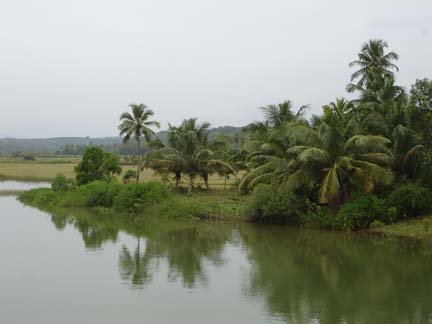
Holegadde near Honavar,Uttara Kannada dist, Karnataka

Copy? Right - but kindly remember to acknowledge!

Creative Commons License
This work is licensed under a Creative Commons Attribution 3.0 License.

" tulu-research.blogspot." ತುಳು ರಿಸರ್ಚ್. ಬ್ಲಾಗ್‌ಸ್ಪಾಟ್‌. ಇನ್

" tulu-research.blogspot."  ತುಳು  ರಿಸರ್ಚ್.  ಬ್ಲಾಗ್‌ಸ್ಪಾಟ್‌. ಇನ್
Have a nice day !