Showing posts with label Khandoba. Show all posts

Saturday, April 16, 2011

274. Kata and Kandiya


Apart from the ancient spirit Gods like Kapri and Kuti, we discussed in previous post, there were lesser known Spirit Gods in ancient Tulunadu like Kata and Kandiya.  Ramappa Vormika, a traditional Shanobogue working in the Kundapur area during the British administration of Kanara territories in a report dating back to 1819 mentioned Kata and Kandiya forms of worship among the aboriginal tribes of Karavali.


Kata
Kata is a Spirit God worshipped since antiquity by Koraga tribes of Tulunadu. Like most of the primitive Spirit Gods of this land, Kata is represented by a simple piece of stone, placed usually on a pedestal, under a tree. The Koraga word 'kata' has also found place in Tamil, wherein 'Katavul' means God.However, it seems the word is missing in modern Tulu.
Very little is known at present about the origin or evolution of the cult of Spirit known as Kata.  The Koraga people also refer to 'marathadithaaye' (literally, the spirit under the tree). Places like Kata-pādi, spread in different parts of southern India,inclusive of Tulunadu, [example, (a) near Udupi and (b) near Chennai] could have been the ancient places dedicated to the cult of ancient Spirit God known as Kata.

Kandiya
The Spirit God Kandiya apparently was worshipped by ancient agricultural communities since the word   ‘kanDa’ represents an agricultural land in Tulu. Kandiya is said to have been the Spirit God worshipped by non-Koraga communities.
The origin of the word ‘kanDa’ is interesting. The Munda word ‘kan+Da’ means good land. (Kan=good, Da=land, area). The word ‘kanDa’ has been adopted in Sanskrit as (1) a   piece (of land) or (2) a continent.
Kandiya or Khandiya has evolved into several later forms like Kandevu and Khandoba. Ancient places of Khandiya worship were apparently known as Khandige. There are numerous places hamlets known as 'Kandige' in different parts of Tulunadu.
In northern Karnataka, Khandoba is popular as a Spirit God  depicted astride on a horse like the Bermer Spirit of Tulunadu.
Kandevu appears to be the old name for places now usually referred to as Kandige or Khandige. Kandevu ancient spirit worship with passage of time has apparently been replaced by subsequent and current forms of worship.
Kandevi was a form of tribal language akin to Paisachi-Prakrit and it gradually evolved into present form of  Konkani.

Kandiya was also the old name for a Greek port known presently as   Heraklion. It was founded in the 9th century   and was the capital of Crete until 1841.

®

Thursday, September 13, 2007

35. Ancient Spirit worship: Horse mounted heroes


Many are under the impression that the spirit worship is characteristically restricted to the coastal Tulunad (‘Bhutārādhane’) and Kerala (‘Teyyam’).The impression is created by the persistence and growth of the spirit cult in to an elaborate art forms in these regions.
The primitive cult of worshiping of spirits after the death of their mass heroes, under the belief that potent souls continue to live after death, existed widely the early historical societies. The spirit of Brahma, derived from the mass hero Abraham was one of the earliest spirit worships in the early civilizations around 2000-500 BC. Migrating Tulu tribes and their associates carried Bermer (<. Brahma) cult around 500 BC from the NW Indian subcontinent to the Karavali (coastal Karnataka) which became their subsequent homeland, the Tulunadu. The Tulu Bermer was imaged originally as a horse riding hero, probably a bearded one like Abraham. Similar horse riding hero image was retained for Bommayya (<. Brahma) by Halakki and other tribes of Uttara Kannada district. The Uttara Kannada area is in the migration route of the early Tulu tribes.
The image of horse riding Bermer was a dominating cult and concept for several subsequent centuries and the image was applied to many subsequently added spirits of that time. The spirit worship continued in the region.
The spirit worship was widespread in southern India in the beginning centuries of the Christian era. Khandoba and Mallanna are spirits of that time in the Deccan region. These spirits were shown in the images of horse riding heroes.
Khandoba is an ancient spirit deity worshipped originally by shepards and hunters in Maharastra.The spirit/ folk deity is also known as Khanderao, Khanderaya, and Malhari Martand. In Andhra Pradesh, the equivalent spirit is called Mallanna and in Karnataka he was variously called Mallappa, Mallaya, Mallara or Mailara Linga. The original image of Khandoba or Khanderao or Mallappa was in the form of a hero riding on a horse (or a bull as a later modification).
In Tulunadu, Mundittaya, a hero turned spirit, possibly dated back to 5th century AD, is also shown a horse riding spirit. Mundittaya possibly represents a hero from the Munda community that prevailed in the coastal region during early historical days.
With the ascent and domination of Shiva worship, between 6th and 10th centuries AD, the concept of Kandoba/ Mallappa spirit was modified and considered as Mārtanda Bhairava, an incarnation of Shiva. Mailara Linga was depicted in the form of a Lingam.

It appears that the Shiva cult or the Shaivism was also introduced to south India by Dravidian tribes that migrated to southern India and settled in the present Tamilnad, possibly during the period 500 to 100 BC.

®

Blog Archive

Books for Reference

  • A Comparative Study of Tulu Dialects By Dr. Padmanabha Kekunnaya. Govinda Pai Reserach Centre, UDupi. 1994
  • Koti Chennaya: Janapadiya Adhyayana. By Dr. Vamana Nandavar. Hemanshu Prakashana ,Mangalore.2001.
  • Male kudiyaru. Dr B. A.Viveka Rai and D.Yadupathi Gowda, Mangalore University,1996.
  • Mogaveera Samskriti By Venkataraja Punimchattaya. Karnataka Sahitya Academy.1993.
  • Mugeraru:Jananga Janapada Adhyayana. By Dr Abhaya Kumar Kaukradi.Kannada & Culture Directorate,Bangalore & Karnataka Tulu Academy, Mangalore,1997.
  • Puttubalakeya Pad-danagalu. Ed: Dr B.A.Viveka Rai,Yadupati Gowda and Rajashri, Sri Dharmasthala Manjunatheswara Tulu Peeta. Mangalore University.2004
  • Se'erige. Ed:Dr K.Chinnapa Gowda.Madipu Prakashana,Mangalagangotri,2000.
  • Studies in Tuluva History and Culture.by Dr P Gururaja Bhat (1975).Milagres College,Kallinapur,Udupi.
  • Taulava Sanskriti by Dr.B.A.Viveka Rai, Sahyadri Prakashana,Mysore 1977
  • TuLu naaDu-nuDi By Dr.PalthaDi Ramakrishna Achar, Puttur.
  • TuLu NighanTu. (Editor in Chief: Dr U.P.Upadhyaya, Govinda Pai Research Centre,Udupi. Six volumes. 1988 to 1997
  • Tulu Patero-A Philology & Grammar of Tulu Language by Budhananda Shivalli.2004.Mandira Prakashana Mangalore. p.317. (The book is in Tulu Language using Kannada script)
  • TuLunadina ShasanagaLa Sanskritika Adhyayana. By Shaila T. Verma (2002) Jnanodaya Prakashana,Bangalore, p.304.(Kannada)
  • Tuluvala Baliyendre. Compiled by N.A.Sheenappa Hegde,Polali,Sri Devi Prakashana,Parkala,1929/1999

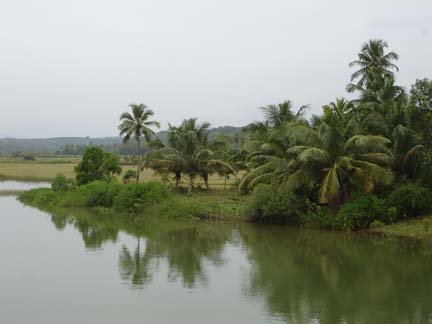
A Coastal estuary

A Coastal estuary
Holegadde near Honavar,Uttara Kannada dist, Karnataka

Copy? Right - but kindly remember to acknowledge!

Creative Commons License
This work is licensed under a Creative Commons Attribution 3.0 License.

" tulu-research.blogspot." ತುಳು ರಿಸರ್ಚ್. ಬ್ಲಾಗ್‌ಸ್ಪಾಟ್‌. ಇನ್

" tulu-research.blogspot."  ತುಳು  ರಿಸರ್ಚ್.  ಬ್ಲಾಗ್‌ಸ್ಪಾಟ್‌. ಇನ್
Have a nice day !