Showing posts with label bali. Show all posts

Saturday, August 13, 2011

285. Nagavanshi Kshatriyas


In the recent years some of the communities, like some Rajaputs, Jats, Nairs and Bunts, are claiming that they are Nagavanshi Kshatriyas. Nagavanshi means one derived from the dynasty of the Naga or the serpent. And the term ‘kshatriya’ represents the warrior community.
Bari, Gotra and Vamsha
During the Vedic period, the identification, recognition and classification system among groups of civilized people was essentially based on the concept of gotras . The term "Go-tra" refered to the name of the cattle-shed to which a family of blood relatives  engaged in managing a specific herd of cows were connected, during those times (ca.1500-2000 BC).
Apparently, the "Vamsha" concept was floated later to differentiate different dynasties of rulers. Rulers during the history usually declared that they were either from "Surya Vansha" or  from "Chandra Vansha" literally tracing origin of their families directly to Sun or Moon.
Ancient Tulu people followed a heritage system of genetic   identification, classification and recognition known as bari or bali system which was similar to the concept of Gotras.. Since the Bari system is analogous to the system of Gotras followed during Vedic times, we can assume that it is as old as, if not older than, the Gotra system.
Tulu people also followed a system of recognition of original places or Mulastaana (literally, the original place of domicile). The concept of Moolastaana (place of origin or original place/settlement of  the particular group of people)  is still prevalent among Tulu communities living in Tulunadu.
For instance, the town of Multan (mool=origin + taan =place), now located in present Pakistan, still carries the ancient name of one of such original place of ancient settlement/domicile of Tulu and Dravidian and other tribes who migrated to their present homelands following  this route of migration during the early history. We suggest that ancient Tulu people also followed this migration route since the ancient concept of Moolastaana do still exist among Tuluvas.

Chaturvarna
 The recognition of communities based on the division of labour or profession was said to have been initiated during the regime of Chandragupta Maurya. The broad brush communities (Chaturvarna, literally four colours) of Brahmana (preist), Kshatriya (warrior), Vaishya (merchant) and Shudra (menial servant) were recognised and uncivilized tribes were treated as Panchams (the fifth category).

Vansha
Ancient Kings considered themselves to be off springs of great dynasties originating from major celestial bodies like Sun and Moon. Thus the imaginative attribution of dynasties of Sun (Surya Vamsha) and Moon (Chandra Vamsha) were popular among ancient rulers. It appears that ancient Kings adopted such fancy dynasty names to glorify themselves. Legends describe that during the Gupta regime, some of the pre-Aryan Nāga tribes were elevated into the status of ‘kshatriyas’. Thus, it appears that fancy dynasty titles like Naga Vansha (=Dynasty of Serpent) and Agni Vamsha (Dynasty of Fire God) were added later as part of regal glorification processes.

Naga cult: Antiquity and spread

The fear and worship of Naaga   is one of the oldest cults in the world   that dates back to early days of civilization. This fear lead to worship of serpents among early tribes. Distribution of such cults revering the serpents is widespread all over the world suggesting that  it is an very ancient cult that was spread among the tribes along with ancient tribal migrations.

Totem Surnames: Besides, many ancient tribes considered that they were originated or derived from specific animals like tigers, lions, serpents, rabbits, rats, ants or even spiders. This was the concept of totems. A symbolic totem pole was erected at the entrance of the community settlement. Even these totem concepts do exist among Tulu tribes as we find for instance surnames like "Sanil" (named after totem of rabbit, Sanil/Chanil), "Saliyan" (named after totem of spider, Taliya/Salia) etc.

In this fashion, some of the ancient tribes considered themselves to have originated from totem of serpents or the Naagas.There are still tribes that designate them as Naagas in northern and northeastern parts of India. There is a suggestion that Naga were a tribe originally from ancient Ethiopia. Ethiopia in Africa has been considered as the cradle of earliest   human civilization. Some believe that ancient Naga tribes from Ethiopia, migrated and ruled parts of ancient India. There are persons in Ethiopia having the name of Naga. 
However, cities named Naga are found far and wide in Phillipines as well in Japan (Nagasaki), showing the spread of this ancient cult. There are Naga tribes of Austro-Asiatic origin in northeastern part of India and in parts of Kashmir. The spread of Naga cult can also be found in Srilanka where Kings with surnames of Naga ruled during the early centuries of the Common Era.
It appears that during the compilation of Puranas in India, the Nāga tribes had become rare minorities. Some of the Puranas and legends, imaginatively described the Naga tribes as mythical creatures with half-human, half-serpent bodies.
It appears that Old Indian words ‘nagna’, ‘nanga’ and old English word ‘naked’ are all genetically connected to the word Nāga.

Nāga worship
In Tulunadu, there are no distinct evidences to suggest that the ancient rulers were from Naga tribes or considered themselves as kshatriyas distinctly or were derived exclusively from any specific Nāga dynasty.
 The cult of worshiping Nāgas,  no doubt, was not exclusive to Tulunadu but widespread all over India. It should be understood that Tulunadu still hosts a number of cults and traditions which formerly existed all over India. However, it is difficult at present to pin point which Tulu community was derived exclusively from ancient Nāga tribes. The available evidences rather suggest that most of Tulu communities are admixtures of several ancient tribes through the dark lanes of prolonged history. The Alupa rulers were basically marine merchants and that may be one of the reason why they exclusively categorised themselves with four division Chaturvarna classification. Even the Bunt-Nadavas of Tulunadu were professional admixtures of warriors (Bunt), cultivators (Nadava) and merchants (Shetty< Shresti).
Vansha vs. Bari
Some of our Readers have enquired innocently whether Mogaveeras are also derived from Nagavanshi kshatriyas, since some of the Bunts claim that they were from such a Nagavanshi dynasty.
Our inference is that only warrior communities (kshatriyas) derived directly from the ancient Nāga tribes should claim such a descent. 
In Tulunadu, as well as in rest of Karavali and Karnataka, you will find many ancient place-names reminding the presence of ancient  settlements of certain Naga tribes such as Nagur, Nagori, Nagarakatti, Nagarbavi, Nagasandra, Nagarahole, Nagapatna, Nagavara, Nagamangala etc. 
However, the available data suggest that the ancient Nāga tribe was only one of the numerous ancient tribes that existed in ancient India. Basically, as discussed already, none of the communities and castes in Tulunadu described themselves exclusively as ‘Kshatriyas’ during the history, because they (especially, the part time warrior groups) adopted multiple professions in their lifetime.

Thus, it may be summarized that it may not be appropriate to adopt some fancy titles adopted by bygone rulers unless you are convinced of your exclusive derivation from any specific Naga tribal lineage. 
In case you are looking for your original roots, the Tulu ‘bari’ lineage genetic recognition system would  be more meaningful and appropriate heritage link than the rather superfluous Vansha system.

® updated on 28-10-015

Friday, October 30, 2009

211. Gotra , Bari: Genetic tags

A comment from Purushotham Puthran rather innocently enquires: “May I also Know what to say when the Temple priest ask us for the GOTRA.”
Many of us who piously follow Hindu traditional worship patterns and customs, like Purushotham , may have encountered certain degree of embarrassment, especially if you are from non-brahmin lineages , when the temple priest asks you the name of your Gotra,.
Gotra system
The ‘Gotra’ is an ancient system (origin ca. 1700 BC or older) of identifying and classifying the individual. Then there were no genome studies. The individual hymns in the Vedas were said to have been composed by a set of (twelve or so) sages independently and then collated together as a consensus after presenting them in a like- minded group discussion forum or seminar.
Yadava : cow lineage
It seems the Vedic sages adopted a scheme of identification of families earlier used and adopted by pre-Vedic Yadava group (Idiya, Yedava etc equivalents) that specialized in cattle-herding. Or it could be that Yadava cattle camps in the due course adopted a Vedic sage or Guru for guiding them in various physical and metaphysical aspects of life. In other words ancient families were attached to specific cowsheds, since dairy products were one of the primary source of wealth in those days. It was designated Gotra system (go=cow, tra=line), since the classification was based on the name of the cowshed to which joint families were attached at that time.
One of the possibility is that the ‘tra’ (tra=thread; tara,dhara=flow) or lineage system was in vogue among civilized people and the Yadava tribes specially formulated a ’go-tra’ (cow- lineage) system to identify and distinguish persons from their community. The Vedic poet-sages were associated with or sponsored by camps of cattle-herders (Yadava) who depended on dairy products for their livelihood. With passage of time, when families in each camp grew in size, persons were identified by the cow-pen which was named after the priest (Guru) of the camp.
Thus then it was a convenient general practice to identify individuals based on the name of their camps. Subsequently, post-Vedic people of dominant communities (brahmin, kshatriya and vaishya groups) had also the option of joining or adopting any of the pre-existing set of ‘ gotra’ camps, and the opted ‘gotra’ tag was continued in their progeny from father to son.
Thus the gotra tag during the timeline was either innate or acquired. Some of the common ancient gotra were named after sages Agashtya, Angirasa, Athri, Brighu, Bharadwaja, Kashyapa, Vasishta, Vishwamitra etc. (The gotra system obviously evolved over a period of long time. For example Bhardwaja was said to be a descendant of Angirasa. Jamadagni was said to be a descendant of Bhrighu and so on).These sages were scholars of that time and it should be remembered that many of the sages like Valmiki, Vyasa and Markandeya during the history originated from so called backward classes.
Since the ‘gotra’ system was like an identity tag for individual that was perpetuated over the years for the purpose of matrimonial alliances etc, there are inheritors of this ‘gotra’ system even today. The temple priest who asks the name of your ‘gotra’ is only trying to identify you in terms of the original Vedic camps your forefathers possibly belonged to!
However, it should be remembered that were also other people in the antiquity who did not belong to any of these gotra camps or subscribed to their theories.
Bari system
However, there were similar wise systems of identifying persons from different groups was in vogue at that time in the subcontinent. Tulu-Dravida ancestors, for example, had adopted the ‘Bari’ system or the ‘Bali ‘system.
The word ‘bari’ specifically means a side or a flank. In an early civilized human settlement, there were several families residing in a colony and each house was designated specifically based on the origin of the senior persons/parents in the house.
The word ‘bali’ is said to be a variant of the word ‘bari’. However the word ‘bali’ specifically means a forest creeper that was used as thread or rope in the olden days. Therefore the word ‘bali’ means lineage, like the suffix ‘tra’ in gotra. Obviously in the later system there is no mention of 'gow' or the cow, which leads us to surmise that in the beginning this system probably was originally designed by non- Yadava sects and subsequently adopted by Yadavas as gotra system.
Therefore we can conclude that lineage (bali) or side (bari) system was probably prevalent in (at least) north-western India during pre-Vedic (ca. 1700 BC) and ensuing periods. The concept spread to other regions later along with migrating people.
Gotra or Bari
Now back to the dilemma posed by Purushottam Puthran. What to say when your priest asks the name of your Gotra? The answer basically depends on your convictions and beliefs. If you feel that following a ‘gotra’ of Vedic to post Vedic period elevates you, please select (adopt as many have done traditionally) a ’gotra’ name and utter it. Many priests spontaneously classify you as ‘Kashyapa’, ‘Viswamitra’ or ‘Markandeya’, when you are unable to tell your gotra.
Or if you are scientific in your temper, tell the Priest your actual ‘bari ‘. Note that Brahmin families in Tulunadu have adopted surnames based on the names of their family houses such as Kakkilaya, Pejathaya, Kalluraya etc. If the ancient ‘gotra’ system was ever enduring and satisfactory this kind of subsequent adoption of family names was not required.

If you are a ‘Puthran’ in terms of ’bari’ system, I suggest that you should adopt ‘Puthran’ tag as your both ‘bari’ and ‘gotra’.It would be more meaningful than adopting some unknown or unrelated genetic tags.

®

Saturday, December 15, 2007

58. Evolution of Early communities

Archeological researches have unearthed evidences for the primitive agricultural communities in the river valleys of south India. Similar agricultural-cattle breeding communities existed in Karavali also, though detailed data are not available. However, the sporadic evidences of relics such as megalithic burial structures (‘Sasindiri’ at Pandavara kallu, near Madyanthar, Belthangadi taluk) suggest that ancient Munda tribal settlements existed in the Karavali.
The Karavali being a zone of intense rainfall and sea-level fluctuations, many of the delicate archeological evidences might have been washed away or obliterated due to the impact of the natural hazards. Further, systematic searches may yield invaluable new archeological data.

Early Munda Groups
The early agricultural-pastoral communities that pervaded before the arrival of early Tulu/ Dravidian immigrants into southern India evolved into elaborate subgroups and communities in India. The word ‘Munda’ means headman of a village. Presently in the Chotanagapur area, several Munda tribes and languages have survived.
Some of the Munda languages that exist presently in India (in parts of Chotanagapur (Jharkhand), Chattisgarh, Bengal, Orissa and Andhra Pradesh) and Bangladesh are:

Agariya, Bijori, Korku, Mavasi, Mundari, Bhumji, Asuri, Koda, Ho, Birhor, Santali, Mahali, Turi, Kharia, Juang, Gata, Bondo, Bodo Gadaba, Parengi, Sora, Koraput, Korba, Bidaho, Kurmali,Nagesia, Sounta (Toori),Majhi, Majhwar etc. Some of these tribes are called Asur, Baiga, Banjara, Bathudi, Bedia, Birhor, Bhumij, Karmali, Kharwar, Lohra etc. Many of these tribes and their dialects are on the verge of extinction. Similarly there are Bhil tribes have survived in the western and central parts of India.

Early Munda tribes in Karavali
Anthropological socio-cultural evolution proceeded from primitive phase to hunter-gatherer stage to pastoral (cattle-breeding) and agricultural stages. This evolution, however, was not an en masse progressive transformation; it progressed in batches and there could be phases of reversals. It may be visualized that a part of hunters adopted themselves to farming and agriculture, while many others remained in the hunter/gatherer or still primitive stages.

Bhil/Billava
Primitive hunters devised tools stone axes to begin with and further developed bows and arrows. The specialists who were able to use the bow and arrows (the archers) were called ‘bhils’ (bhil=bow) in central and northern India; similar tribes in Karavali were called ‘billavas. The mark in the timeline was ca.5000-4000 BC.
The core story of the original Ramayana was built around the legend of a bhil/billava (archer) called Ram or Rama. It was popular for ages among the early cultures in the form of folk-lore or pad-dana. Later, ca. 500 BC, the folk-lore story was retold by another bhil called ‘Valia’ (the sage Valmiki) in the form an elaborate epic, with ample elements of fantasy thrown in to increase the mass appeal of the story.

Mogera Fisherfolk
The Karavali, with mighty Arabian Sea and many of rivers, hosts enormous fishery wealth. A section of hunter-gatherer tribes evolved the art of marine and inland fishing. They lived collectively in fishing community villages that were later called ‘pattana’(=towns). They had group leaders called ‘gurikara’ or ‘gurkara’. The custom of having community leaders who take judgments and decisions on behalf of the group is a common feature of surviving Munda tribes even today.

Bhumiputra/Okkelme
The native farmer is called ‘Okkelme’ and the group was called ‘Okkelakulu’in Tulu language. ‘Bhumij’ is a farming tribe among Mundas. In ‘Tuluvala Baliyendra’ (the Tulu version of Baliyendra folklore) the legendary Bali is referred to as ‘bhumiputra’. Note analogy between the words ‘bhumij’ and ‘bhumiputra’. The time of initiation of agriculture in Karnataka according to archeological data is ca.3000-2800 BC.

Sunday, November 18, 2007

54. The legend of Bali

Deepavali is a very popular festival in India and the significance is explained as a celebration symbolic of our innate aspiration to progress towards light from darkness, towards knowledge from ignorance and towards prosperity from poverty. It is also described as a festival of thanks-giving to the Mother Nature. Deepavali means array of lights.
In spite of this modern, positive-thinking style of explanations, the fact remains that the festival was originally conceived and celebrated by his subjects as an annual welcome- back ceremony for their beloved exiled King Bali. King Bali variously described as Baliyendra or Bali or Maha-Bali or Bali Chakravarthy (emperor).Remnants of what was originally a pan-Indian custom in ancient days of early civilization remains even today in Tulunadu and Kerala.
Vamana incarnation
The legend of King Bali and Vamana, the dwarf, has been absorbed into Purana-s, with Vamana considered as one of the incarnations of Lord Vishnu. (cf. Post 34: Ten incarnations).According to the viewpoint of Vishnu’s followers, Bali (a follower of Shiva cult) was pictured as a despicable Asura who deserved to be subjugated. This was in conformity with the Sura-Asura conflict of pro-Vishnu and pro-Shiva cultures in ancient India.
However, the other side of the story is more interesting and throws light on the theological-cultural conflicts during the early historical period.
Asura King Bali
What was the great sin done by this Asura Bali?
He was a philanthropist to the core, who willingly gave away free gifts to the needy people!
If we brush aside all humanly impossible fantasies woven into the said legend, the remaining core story is that King Bali, was fond of giving away gifts desired by the recipient! The standing offers was that Bali would give whatever is asked of him! One clever, dwarf beggar (Vamana) came and begged him to grant land enough to place his three steps.(Or maybe, he asked that he should be given wherever he places his steps ).King Bali agreed to provide him whatever the dwarf desired and the mischievous Vamana placed his foot on Bali’s head! Thus, Bali had no other choice than offer himself to the wishes of the dwarf, who sent him to exile to a place called Patala.
The word ‘bali-daan’ (means ‘sacrifice’, but literally ‘gift of Bali’) might have been coined from the self-sacrificing act of King Bali.
Patala
The concept of Patala in Purana-s, describe it as a nether world, a parallel world beneath the Earth. Since, there is no realistic/scientific basis for such a illusory world, we can presume that the ‘Patala’ fantasy represented a sinking island beneath the sea level. Early historical Greek reports like ‘Indika’ report a sinking island called ‘Patala’ near the Gulf of Cutch.
Deepavali in Tulunadu
In spite of depiction of Bali as a villain by the followers of Vishnu, the actual subjects of Bali fondly remembered and continued to respect their exiled King! They believed that their King would return and pay a visit to his subjects once in a year. They celebrated annual welcome their King festival in the form of Deepavali!
The chant of ‘Poli Poli Baliyendra’ in rural Tulunadu during the Deepavali night echoes the age-old custom of welcoming King Bali. Similar customs prevail in Kerala also.
Onam
Dr Zacharias Thundy in his ‘Kerala story’ reports similar legends on Bali from Kerala. Onam, in Kerala, is the celebration of the return of Maha Bali,(or 'Maveli') the legendary former and future king of the land. The King Bali according to the folklores, ruled over the Kerala during the Golden Age before castes existed, "when all men were equal, when no one was poor, when there was neither theft nor dread of thieves.
Mahabalipuram, Mavalli
It appears that in the early historical (pre-Sangam) period, the legend of Bali pervaded throughout the south India. In Tamilnadu, Mahabalipuram in the East coast is a town built in honour of King Bali.
Similarly,the town Mavelikkara in Kerala is named after the Maveli or the Mahabali.There are villages named Mavalli in Karnataka also.(One such 'Mavalli' is part of Bangalore city now)
Asura-Munda culture
Dr.Thundy reports that the Munda tribes of Chotanagapur area also have legends (somewhat different from those prevalent in Tulunadu and Kerala) built around their Asura King Bali. Asura is a group within Munda tribes. Bali is a common name among Munda tribes.
Munda substratum
All these data lead to the suggestion that King Bali was ruling Munda people in early historical days before. It was before the castes existed according to folklores. Caste system was systematically enforced ca.300 BC during the reign of Maurya dynasty. A large section of Early Munda people that inhabited all over southern India once upon a time were a civilized society that honored truth, democracy, philanthropy and other good values of life. Munda tribes were ruled by benevolent Kings like Bali. Possibly this led to the conceptual classification of civilization era into Satya, Treta, Dwapara and Kali Yuga-s (epochs).
Assimilation of cultural components
The immigrant Tulu, Malayali and Tamil and other (south) early Dravidian tribes that came and settled in various parts of southern India during the period 700 to 400 BC, peacefully coexisted, merged and assimilated with the early Munda culture. In the subsequent years Dravidian languages became powerful vehicles of mass communication. Consequently, the independant identity of early Munda culture in southern India was totally masked under the burden of evolving societies. Remnants of original Munda tribes in southern India are represented by some of the tribal groups living today.
Genetic studies
The genetic haplogroup studies apparently are in favor of such a theory of assimilation of immigrant tribes with the aborigines that settled and evolved in southern India during Paleolithic- Neolithic period. Manjunath is making concerted efforts to compile the available data on the genome studies done so far.

The current Tulu, Malayalam Tamil and other south Dravidian languages still carry an implicit undercurrent of Munda cultural elements and words in them. The persisting legend of King Bali in Tulunadu and Kerala is only an example of such assimilated undercurrent of Munda elements in our unified culture.

Monday, August 27, 2007

31. Tulu tribes - Migration from Pirak : 1000-600 BC

The Tulu identity and civilization as it exists now in Tulunad is a composite culture developed chronologically over not less than the last four thousand years. Like numerous rivers and streams flowing into the sea, several individual cultural streams have merged with the Tulu culture at different periods during the long historical past. One of the recognizable major events in the evolution of Tulu language and culture is the contribution of Tulu tribes that migrated to this Tulunad in the remote historical past dating back to the period 1000 to 600 years BC. [I quote the broad period of 400 years – i.e. 1000 to 600 BC- because I am not able to sharpen it more at present. With availability of more historical data, hopefully, we can narrow down this period.]
Iravattam Mahadevan suggested that the Indus valley civilization was an early form of Dravidian culture. Further after the decline of Indus valley civilization, possibly due to migration of rivers and abrupt floods, ca.1900 BC, Dravidians apparently moved out of the Indus valley region and lived in the north and northwest parts of the Indian subcontinent, before the advent of the Aryans. Brahui, a Dravidian language still spoken in Baluchistan, parts of Iran and adjoining areas is evidence in favour of the existence of Dravidians in those parts.
Among those who lived in the northwestern part of Indian subcontinent around Pirak, Mehrgarh, Multan and surrounding areas (now a part of Pakistan) ca.1900 to 1500 BC are Tulu and other Dravidian tribes. Aryans, migrated from Indo-European homelands also settled in these areas and composed the famous Vedas, initially in the oral tradition prevalent at that time.
That Tulu tribes were one of the groups of settlers in this area during the period cited above can be deduced by Atleast four lines of evidences recapitulated here below:
1. Presence of distinct Tulu words in Rigveda like : okha, aaNi, pala/ pela etc. These cited words have been considered by Michael Witzel as words borrowed into the early Sanskrit, since they do not conform to the linguistic word structure of Indo-European language in which the Vedas were composed. Rigveda, in original oral form, has been dated ca.1700-1500 BC. There may be more such words, for example like the suffix -aaN in braahmaN. [cf: previous posts 20,25,28 ]
2. The absorption of the legend of Abraham, into Tulu tradition as Bermer (Brahma) in the original form as a horse mounted hero.
Abraham, a popular leader of masses (legendary prophet for Jews, Christians and Muslims,) lived approximately 2000 BC in the NW Indian subcontinent-Asia Minor-Central Asia region. After his death in the tradition of spirit worship he became the “Bermer(u)” for Tulu tribes. Vedic Aryans converted the Abraham legend into the Brahman, the supreme cosmic creative power. Gradually with time Brahman evolved into the God Brahma with ten or four heads in different Purana epics, by the time of composition of the Ramayana ca. 800-500 BC. The dominance of Lord Brahma in Ramayana has been analysed in detail by SSN Murthy.
Since Tulu tribes carried their original horse mounted “Bermer” image with them to Tulunad before the evolution of the Brahma concept into ten or four headed God of creation, in northern India, the time of Tulu tribe migration can be fixed as pre 500 BC. [cf: previous posts 4, 5, 26,28 ]
3. The presence of ample Prakrit words in Tulu language, speaks of the heritage from their erstwhile homeland in Northwest Indian subcontinent. Especially the word Pirak is interesting. “Pirak” in Tulu language means ‘anything related to remote past’. Incidentally Pirak was the area of early civilization ca. 1700-800 BC. [cf: previous posts 3,6].
4. The basic “moolasthana”( literally means ‘primary inhabitation’ or ‘original homeland’) concept of Tulu tribes settled in Karavali Tulunad homeland is derived from the original concept of the tribes in their former homeland of northwest Indian subcontinent. Even today, Multan is a town in the Punjab province of Pakistan. [cf: previous posts: 9.18.19 30].There is a temple devoted to Prahlada at Multan.The legend of Prahlada,Hiranyakashipu and Narahari might have originated around this place.Incidentally,as pointed out by Manjunath,Prahlada is the grandfather of King Bali(also known as Baliyendra) who is reverred by Tulu and Malayali people since remote historical times.

®

Saturday, March 24, 2007

9.The Moolasthana concept

Do we have moolasthana concept in other parts of India?

Many of the TuLu communities have the concept of a moolasthana, moola (original) +sthana (place), where the ancestors of their lineage originally settled and lived. The lineage is called bari (pronounced as short ba as in bun) in Tulu. It is equivalent of bali (pronounced as short ba as in bun, li as heavy Li common in south Indian languages) or baLLi in Uttara Kannada and gotra in Brahmin communities. The term baLLi means plant creeper, which is symbolic of the family lineage. The term bari must be Tulu equivalent of the word old Kannada word baLLi. This explanation is required because in TuLu, word bari has another meaning ‘the side’.

The moolasthanas in Tulunad have a small temple dedicated to the divine spirit (Daiva or Bootha), Naaga or the Bermer′. As a consequence of socio-cultural evolution, many of these moolasthanas have replaced the original deities with subsequent deities like Durga or other Gods and are located near the beaches or in the proximal areas in the coast. Tulu families have a ritual of visiting their respective moolasthanas at least annually. At the small temple there they conduct ceremonial worships.

I visited one such moolasthana near Hoode, about ten kilometers north of Udupi town. Hoode hamlet is located near the estuary of Sita and Swarna rivers. The word Hoode is a place indicator. ‘Ade, ide, ode’ etc place indicators mean ‘there,here,where’ respectively in Tulu.(Similar words exist in Malayalam).

The moolasthana is located at Bengare near Hoode. The word bengare or bangere has equivalent meaning of a sand spit. Ben+kare stands for ‘a place opposite coastline or beach ’. The lineage indicator bangera is apparently derived from bangare. This is the moolasthana of TuLu people of bangera lineage. Interestingly, all TuLu communities belonging to the lineage of bangera have designated this site as their moolasthana. The present day castes like poojari, sapalya, moolya, marakala etc have been formed on the basis of their trades or professions. But all these TuLu communities carry common lineages tags (surnames) like bangera, putran, anchan etc. Lineage of a person is affixed based on the lineage of his mother (as in matriarchic society).

The common lineage for diverse communities indicates that the lineage system predates the classification of people into diverse communities based on trade or profession. It seems the trade based classification, the varna system, came into being in the post Vedic times after elucidation of chaturvarna. By Chandragupta (ca. 340-293 BC) and Chanakya period (ca. 350-283 BC), it was firmly entrenched in Indian society as reported by Greek historians. Therefore, it can be inferred that the maternal lineage system of Tuluva people is probably of late Vedic age.

The moolasthanas appear to the earliest settlements of Tulu people in the west coast. (Possibly, there were other inhabitants in the land before the arrival of Tulu tribes. Like, the early Munda tribes that gave plethora of village names with Munda prefix. (cf. 8.Mundkur, Munder) It is interesting to note there is a similar sounding place Mool-thaan (Multan) near Salt Ranges. The word thaan in Prakrit is analogous to sthan in Sanskrit. The inhabitants of Pirak and Mehrgarh area had settled near a place they called Multan or original place.

However, due to various reasons, several families migrated southward through Rajasthan Gujarat, Maharastra and settled in sites in the West Coast. It appears that when their offsprings/progenies migrated again within Tulunad, these coastal settlements were again called moolasthanas.

Do we have moolasthana concept in other parts of India?

I request other researchers to comment or contribute with any relevant information that they may have.

Blog Archive

Books for Reference

  • A Comparative Study of Tulu Dialects By Dr. Padmanabha Kekunnaya. Govinda Pai Reserach Centre, UDupi. 1994
  • Koti Chennaya: Janapadiya Adhyayana. By Dr. Vamana Nandavar. Hemanshu Prakashana ,Mangalore.2001.
  • Male kudiyaru. Dr B. A.Viveka Rai and D.Yadupathi Gowda, Mangalore University,1996.
  • Mogaveera Samskriti By Venkataraja Punimchattaya. Karnataka Sahitya Academy.1993.
  • Mugeraru:Jananga Janapada Adhyayana. By Dr Abhaya Kumar Kaukradi.Kannada & Culture Directorate,Bangalore & Karnataka Tulu Academy, Mangalore,1997.
  • Puttubalakeya Pad-danagalu. Ed: Dr B.A.Viveka Rai,Yadupati Gowda and Rajashri, Sri Dharmasthala Manjunatheswara Tulu Peeta. Mangalore University.2004
  • Se'erige. Ed:Dr K.Chinnapa Gowda.Madipu Prakashana,Mangalagangotri,2000.
  • Studies in Tuluva History and Culture.by Dr P Gururaja Bhat (1975).Milagres College,Kallinapur,Udupi.
  • Taulava Sanskriti by Dr.B.A.Viveka Rai, Sahyadri Prakashana,Mysore 1977
  • TuLu naaDu-nuDi By Dr.PalthaDi Ramakrishna Achar, Puttur.
  • TuLu NighanTu. (Editor in Chief: Dr U.P.Upadhyaya, Govinda Pai Research Centre,Udupi. Six volumes. 1988 to 1997
  • Tulu Patero-A Philology & Grammar of Tulu Language by Budhananda Shivalli.2004.Mandira Prakashana Mangalore. p.317. (The book is in Tulu Language using Kannada script)
  • TuLunadina ShasanagaLa Sanskritika Adhyayana. By Shaila T. Verma (2002) Jnanodaya Prakashana,Bangalore, p.304.(Kannada)
  • Tuluvala Baliyendre. Compiled by N.A.Sheenappa Hegde,Polali,Sri Devi Prakashana,Parkala,1929/1999

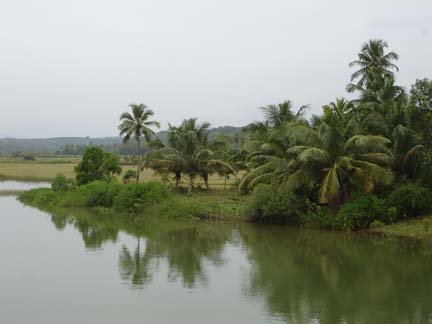
A Coastal estuary

A Coastal estuary
Holegadde near Honavar,Uttara Kannada dist, Karnataka

Copy? Right - but kindly remember to acknowledge!

Creative Commons License
This work is licensed under a Creative Commons Attribution 3.0 License.

" tulu-research.blogspot." ತುಳು ರಿಸರ್ಚ್. ಬ್ಲಾಗ್‌ಸ್ಪಾಟ್‌. ಇನ್

" tulu-research.blogspot."  ತುಳು  ರಿಸರ್ಚ್.  ಬ್ಲಾಗ್‌ಸ್ಪಾಟ್‌. ಇನ್
Have a nice day !