Showing posts with label Pandavara kallu. Show all posts

Tuesday, January 8, 2008

68. Pandavara kallu: Neolithic tombs


On the Bantwal –Belthangadi road, take a deviation at Madyanthar township off Uppinangadi cross road for about three kilometers, you shall reach Pandavara kallu, a site of archeological importance that forms a part of Badaga Kajekar village (Belthangadi taluk, Dakshina Kannada district.).
Archeological site
The name ‘Pandavara kallu’ (Stones of Pandava) has come from an odd group of stone structures consisting of erect slabs of granite, covered by flat slabs of granite. Eye witnesses inform that the structure was intact several years ago but now dilapidated with stone slabs scattered helter-skelter thanks to the intervention of land developers as well as irresponsible urchins. However, a local institution has put up a sign post declaring the area as historical monument.
Sasandiri
The structure was called 'Stones of Pandavas' because of their large size. Local people believed that Pandava brothers on exile came and lived in this village for some time, hiding inside these stone structure specially created by them.
But this assumption of local people may not be true. The structure is a megalithic burial structure called ‘dolmen’ or ‘Sasandiri’.(Sasan=burial ground or ‘Smashan’; diri=erected stone slabs) among Munda tribes.Similar Neolithic 'dolmen' burial structures have been reported from different parts of the world. Malini Srivastava (2007) in a research paper, available online, describes the ‘Sasandiri’ burial structures prevalent among Munda tribes of Chotanagapur.
Significance
The stone burial structure (Sasindiri) at Pandavara kallu is a vestige of Early Munda culture that predated the present Tulu culture and civilization. It was a general practice among the early tribes to bury the dead, before the arrival of Tulu immigrants, ca. 800-600BC, who introduced the custom of cremating the dead bodies. The notion of cremation of dead bodies was initiated during the cemetery H culture of Indus valley.
There could many more such vestiges, unreported and lying in various stages of preservation in other remote corners of the District. Those who can recognize such structures should make it a point to report them promptly to the archeologists/historians for further studies.

Saturday, December 15, 2007

58. Evolution of Early communities

Archeological researches have unearthed evidences for the primitive agricultural communities in the river valleys of south India. Similar agricultural-cattle breeding communities existed in Karavali also, though detailed data are not available. However, the sporadic evidences of relics such as megalithic burial structures (‘Sasindiri’ at Pandavara kallu, near Madyanthar, Belthangadi taluk) suggest that ancient Munda tribal settlements existed in the Karavali.
The Karavali being a zone of intense rainfall and sea-level fluctuations, many of the delicate archeological evidences might have been washed away or obliterated due to the impact of the natural hazards. Further, systematic searches may yield invaluable new archeological data.

Early Munda Groups
The early agricultural-pastoral communities that pervaded before the arrival of early Tulu/ Dravidian immigrants into southern India evolved into elaborate subgroups and communities in India. The word ‘Munda’ means headman of a village. Presently in the Chotanagapur area, several Munda tribes and languages have survived.
Some of the Munda languages that exist presently in India (in parts of Chotanagapur (Jharkhand), Chattisgarh, Bengal, Orissa and Andhra Pradesh) and Bangladesh are:

Agariya, Bijori, Korku, Mavasi, Mundari, Bhumji, Asuri, Koda, Ho, Birhor, Santali, Mahali, Turi, Kharia, Juang, Gata, Bondo, Bodo Gadaba, Parengi, Sora, Koraput, Korba, Bidaho, Kurmali,Nagesia, Sounta (Toori),Majhi, Majhwar etc. Some of these tribes are called Asur, Baiga, Banjara, Bathudi, Bedia, Birhor, Bhumij, Karmali, Kharwar, Lohra etc. Many of these tribes and their dialects are on the verge of extinction. Similarly there are Bhil tribes have survived in the western and central parts of India.

Early Munda tribes in Karavali
Anthropological socio-cultural evolution proceeded from primitive phase to hunter-gatherer stage to pastoral (cattle-breeding) and agricultural stages. This evolution, however, was not an en masse progressive transformation; it progressed in batches and there could be phases of reversals. It may be visualized that a part of hunters adopted themselves to farming and agriculture, while many others remained in the hunter/gatherer or still primitive stages.

Bhil/Billava
Primitive hunters devised tools stone axes to begin with and further developed bows and arrows. The specialists who were able to use the bow and arrows (the archers) were called ‘bhils’ (bhil=bow) in central and northern India; similar tribes in Karavali were called ‘billavas. The mark in the timeline was ca.5000-4000 BC.
The core story of the original Ramayana was built around the legend of a bhil/billava (archer) called Ram or Rama. It was popular for ages among the early cultures in the form of folk-lore or pad-dana. Later, ca. 500 BC, the folk-lore story was retold by another bhil called ‘Valia’ (the sage Valmiki) in the form an elaborate epic, with ample elements of fantasy thrown in to increase the mass appeal of the story.

Mogera Fisherfolk
The Karavali, with mighty Arabian Sea and many of rivers, hosts enormous fishery wealth. A section of hunter-gatherer tribes evolved the art of marine and inland fishing. They lived collectively in fishing community villages that were later called ‘pattana’(=towns). They had group leaders called ‘gurikara’ or ‘gurkara’. The custom of having community leaders who take judgments and decisions on behalf of the group is a common feature of surviving Munda tribes even today.

Bhumiputra/Okkelme
The native farmer is called ‘Okkelme’ and the group was called ‘Okkelakulu’in Tulu language. ‘Bhumij’ is a farming tribe among Mundas. In ‘Tuluvala Baliyendra’ (the Tulu version of Baliyendra folklore) the legendary Bali is referred to as ‘bhumiputra’. Note analogy between the words ‘bhumij’ and ‘bhumiputra’. The time of initiation of agriculture in Karnataka according to archeological data is ca.3000-2800 BC.

Blog Archive

Books for Reference

  • A Comparative Study of Tulu Dialects By Dr. Padmanabha Kekunnaya. Govinda Pai Reserach Centre, UDupi. 1994
  • Koti Chennaya: Janapadiya Adhyayana. By Dr. Vamana Nandavar. Hemanshu Prakashana ,Mangalore.2001.
  • Male kudiyaru. Dr B. A.Viveka Rai and D.Yadupathi Gowda, Mangalore University,1996.
  • Mogaveera Samskriti By Venkataraja Punimchattaya. Karnataka Sahitya Academy.1993.
  • Mugeraru:Jananga Janapada Adhyayana. By Dr Abhaya Kumar Kaukradi.Kannada & Culture Directorate,Bangalore & Karnataka Tulu Academy, Mangalore,1997.
  • Puttubalakeya Pad-danagalu. Ed: Dr B.A.Viveka Rai,Yadupati Gowda and Rajashri, Sri Dharmasthala Manjunatheswara Tulu Peeta. Mangalore University.2004
  • Se'erige. Ed:Dr K.Chinnapa Gowda.Madipu Prakashana,Mangalagangotri,2000.
  • Studies in Tuluva History and Culture.by Dr P Gururaja Bhat (1975).Milagres College,Kallinapur,Udupi.
  • Taulava Sanskriti by Dr.B.A.Viveka Rai, Sahyadri Prakashana,Mysore 1977
  • TuLu naaDu-nuDi By Dr.PalthaDi Ramakrishna Achar, Puttur.
  • TuLu NighanTu. (Editor in Chief: Dr U.P.Upadhyaya, Govinda Pai Research Centre,Udupi. Six volumes. 1988 to 1997
  • Tulu Patero-A Philology & Grammar of Tulu Language by Budhananda Shivalli.2004.Mandira Prakashana Mangalore. p.317. (The book is in Tulu Language using Kannada script)
  • TuLunadina ShasanagaLa Sanskritika Adhyayana. By Shaila T. Verma (2002) Jnanodaya Prakashana,Bangalore, p.304.(Kannada)
  • Tuluvala Baliyendre. Compiled by N.A.Sheenappa Hegde,Polali,Sri Devi Prakashana,Parkala,1929/1999

A Coastal estuary

A Coastal estuary
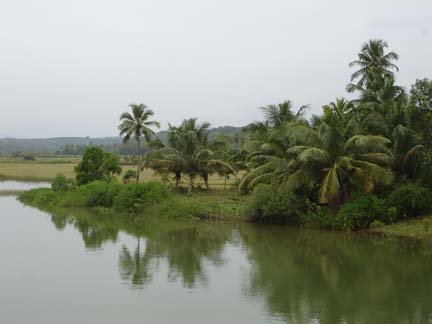
Holegadde near Honavar,Uttara Kannada dist, Karnataka

Copy? Right - but kindly remember to acknowledge!

Creative Commons License
This work is licensed under a Creative Commons Attribution 3.0 License.

" tulu-research.blogspot." ತುಳು ರಿಸರ್ಚ್. ಬ್ಲಾಗ್‌ಸ್ಪಾಟ್‌. ಇನ್

" tulu-research.blogspot."  ತುಳು  ರಿಸರ್ಚ್.  ಬ್ಲಾಗ್‌ಸ್ಪಾಟ್‌. ಇನ್
Have a nice day !