Showing posts with label bangera. Show all posts

Thursday, March 8, 2018

401. Inscription stones of Bengalore


Inscription stones of  Bengalore is an enthusiastic  project group  dedicated to the preservation of historical inscriptions located in and around Bengaluru. Shri Uday Kiumar and Vinay Kumar on behalf of the group presented interesting information on the importance of preserving, studying and understanding the inscriptions of Bengaluru recently (4-3-2018) at the Centre for Internet & Society at Domlur, Bengaluru. (You can find the facebook page on #InscriptionStonesOfBangalore.)

Inscriptions
Inscriptions are ancient memorials that provide windows into the bygone history of the land. Many of the inscriptions directly or indirectly throw invaluable light on the status of land, language, customs and circumstances of the period of erection of these stones.
In those days, the death in war or by sacrifice was glorified with the promised expectations of glamorous benefits in the life after death.
An enticing Sanskrit couplet explains thus:

Jitena labhyate laxmiamritenapi surangana
Kshana vidhvansini kaaye kaa chintaa maranerane.

(Victory in war begets opulence; or else,   if martyred you get divine beauties. Why do you worry,   in the battle field to discard your body,   which anyway is destroyable within a moment.)

Martyr stone inscriptions
The historical inscriptions preserved in Karnataka region are mostly served as
(1) Martyr stones (Veeragallu, hero-stone) erected during the past history are usually written and erected in honor of legendary heroes laid their life in the service of public or the State.
(2) Mastikallu (stones honoring immolation of women of the martyred heroes along with (sahagamana) or after the death (anugamana) of her husband.
Or other types of martyrs such as
 (3) Ooralivu (died during defending the village)
(4) Gadi-kalaga ((died during defending the border of the State)
(5) Go-grahana/ Turugol ((died during defending the cattle)
(6) Pendirdadeurchu/Penbuyyal ((died during defending the women)
(7) Bete (died during hunting)
(8) Keelgunte (self burial)
(9) Siditale (sacrifice by blasting the head)
(10) Nisidi (self sacrifice in a holy place or occasion-especially in Jain monks) etc. (source: Karnataka itihasa academy .org).

Mysore Archeological Department
Benjamin Lewis Rice, the early British Director of Mysore Archeological Department studied, compiled facsimiles of hundreds of stone and copper plate inscriptions distributed all over the region of old Mysore State and published them in the form of volumes of  Epigraphiya Carnatica during 1898. The work was continued by other officers of the department. Rice (1898) reported some 1023 inscriptions from Bengaluru Taluk of which  merely  some 30 have survived and traceable now.
Begur inscription 890 Ce, Bengaluru

Begur inscription
One of these inscriptions found at Begur (South-eastern part of the modern Bengaluru city, near Electronic city) and dated at the end of ninth century (890 CE) is interesting as it contains probably the oldest documented   reference to the city of Bengaluru.
The inscription reads:
“Srimat Nagatarana manevagati pervona shetti Bengalura kaalegadol Nagatarana magmaam buttana pati sattam.”

 The inscription was discovered by R. Narasimhachar, an officer in charge of  Mysore Archeological Research, in the year 1915.

Bengaluru-Bangaluru
A printed post card containing the photograph and description of the  celebrated Begur  inscription, with chalk markings for enhancing the chiseled letters, was provided by the  Uday-Vinay  presentation team of #InscriptionStonesOfBangalore. One interesting point is that the photograph of the 890 CE Begur inscription shows the place name of Bengaluru  as Banguluru.

Vengaluru
Surprisingly the ancient inscriptions of Bengaluru can be found in Tamil and Telugu apart from Kannada, which indicates that the region was multilingual even during the past.  About six kilometers from Begur, in the Someshwara temple located at Madivala the outer wall of the temple contains an inscription written in Tamil and Grantha scripts dated at 1247 CE. The Tamil inscription contains reference to Vengaluru which is clearly the Tamil pronunciation of Bengaluru.

Benda kālur: a recent interpretation
So far it was in vogue that the place name Bengaluru was derived from the phrase “benda-kaalu-ooru “( literally: the village of boiled beans).  However, the discovery of the Begur and Madivala inscriptions refutes this hypothesis of the village of boiled beans, since the place was known as Bangaluru as early as 890 CE and Bengaluru or Vengaluru even during 1247 CE.
 Thus the interpretation of the village of boiled beans appears an imaginary hypothesis  of relatively recent origin and  does not have support in the ancient inscriptions.

Bengal+uru
The Begur inscription of 890 CE has documented the name of the city as Banguluru  or Bangaluru which has far reaching historical  implications than apparent.
First of all. it shares  analogous name with Bengal (or the Bangal) since Bengaluru (or Bangaluru )r represents Bengal + uru. (or Bangal+uru ), suggesting socio-cultural ties between the two regions in the antiquity.

Banga tribes
Beng+al (or Bang+al) is a ethnonym, evidently named after the now forgotten ancient Banga tribes. Masked signatures of the ancient Banga tribes can be found in not only in Bengal and Bengaluru but also widely in the West Coast of India (Tulunadu) as well in South east Asian countries.
In the Tulu regions of West Coast of Karnataka, minor kings and chieftains of Banga dynasty, followers of Jain traditions, ruled for years. Bangera (plural form of Banga in Tulu language) were a widespread tribe in ancient Tulunadu as we find them assimilated into various Tulu castes and communities but still retain their surname as Bangera.

Ancient migration of Banga tribes to Southeast Asian countries (or vice versa) has been preserved in their place names such as Bangkok.

References
http: //idb.ub.uni-tuebengen.de/diglit/EC_09_1905B/

Friday, December 27, 2013

321. Bangalore: Origin of the place name

Some places like Bangalore have standard explanations for the origin of place name that is being accepted and believed by people without questioning. This includes the explanation for the worlds’ favorite software city, Bangalore. Some smart one dared to think of the origin of Bengaluru (Bangalore) as a village of boiled beans (benda + kaalu + ooru)  and it has been accepted in general.
However, many like me may have their own doubts as to how the Benda-kaalu-ooru can become Bengal-ooru? In formal and/or common dialectical Kannada, benda-kaalu (=boiled beans) is not usually abridged to Bengaalu!  Only in poetry such a union or words can be expected. And it is quite unusual that a poetic term should become   accepted as a place for Bangalore.

Alternate theory for Origin
How about an alternate explanation for the origin of place name Bengaluru? The name Bengaluru could have been a modification of original Bangalur. The place name of Bangal+ur, the ooru (village) of Bengal or Bangal is similar to the Bengal or Bangal in origin.

Bengāl / Bangal
Surprisingly, the name Bengal in Bengaluru or Bangalore is also shared by Bengal (West Bengal, East Bengal, Bangladesh) region, where there is no widely accepted explanation for the origin of the word Bengal, even though the current wiki page on Bengal suggests that the term Bengal or Bongo may have been derived from the Bang tribes of Dravidian origin. In this blog we have explained that the suffix –al represents an (ancient) habitation located by the side of a river.
Banga being a tribe the Bengal or Bangal (Banga + al) means an ancient habitation located on the bank of a river. In fact even today, the Bangal or the Bengal is located on the banks of river Ganges.
Bangalore is not on the banks of any river at present but the geological and geomorphological evidences suggest that there was a river flowing on the western side of Bangalore once upon a time. The river appears to have dried up during the course of history.

Banga tribes
In different parts of India we have hundreds of place names associated with or attributable to ancient Banga tribes (Banga, Bangaria, Bangaon, Banganapalle, Bangarpalle, Bangarpete, Bangadi, .Bangara, Bangaro, Bangatiya, Bangawa, Bangama, Bangai, Banganj, etc ) Some of these places have been modified into prefix of Benga (Benali, Bengahi, Bengabari, Benga male,. Banganur, Baengadi, Bengama, Bengaipatti, Bengabad etc) . The Banga were an African tribe that apparently migrated and settled in different parts of India during ancient period.
As in Bengal, the term Vanga has been a regional modification of the term Banga.  Some of the Vanga villages in India are Vangara, Vangapalle, Vangai, Vangarai, Vangala, Vangali, Vangaon, Vangam, Vangad, Vangapalle, etc. Similarly, especially in southern India, the term Banga has become Panga (as in village name Pāngala) in some regions. Some of the Panga- villages in different parts of India are Pangal, Pangali, Pangam, Pangama, Pangar, Pangare, Pangari, Pangadi, Pangan, Pangaon, Pangaiyan, Pangath, Pangarkhed etc.

Surname:  Banga and Banger
The term Banga has survived as a surname among the Jains of Tulunadu.  Jain kings and chieftains with the surname Banga or Banga-arasa ruled parts of Tulunadu until independence.
Banger or Bangera is a most popular surname in Tulunadu common to many communities irrespective of their socio-communal status. The Banger is a plural or respectable for of the word Banga.
According to African mythology the Banga was a water God of the Ngbandi people. According to the African legends the Banga God created the white races. It is possible that Banga tribes in India were part of the white or fair skinned immigrants who have been documented distinctly as white tribes (Bola and Boller Tulu; Bellar -Kannada; Gore - Marati/Prakrit/Hindi etc) especially in the place names of the Southern India.

Â


Saturday, September 3, 2011

286. Bari system predates Castes


The recognition and practice of human genetic lineages or the Lineage system (alternately known as Bari, Bali or Gotra system) among civilized ancient communities in India is distinctly older in origin and date than the caste system.

A reader has asked about the caste of Tulu people that migrated into southern Tamil country during early history corresponding with Sangam age.In my opinion, there were no modern castes (like Bunt, Billawa, Mogaveera) in Tulunadu at that time. In the early period the Tulu People were recognized by their bari lineages (matrilineal and patrilineal) and persons of the same bari could be seen practicing different professions like those of Bunt (warrior and defense assistant), Billawa (archer), Salian(weaver), Baidya (tribal doctor), Nadava (cultivator; one who plants crops), Okkeleme(farm worker; farm settler), Poojari(tribal preist), Maddela (washerman), Mogera (fish catcher), Kottari (Store-keeper), Kulala (potter) Sapalya(musician) etc without people being assigned to or divided into distinct caste/community  groups as known now.And those who did not subscribed this bari system of genetic lineage recognition, especially older generation of tribals, were recognized by various tribal group names.

Alupas of four lineages

The aspect of antiquity of existence of Baris over castes shall be more evident when we study the lineages of Alupa Kings who ruled early Tulunadu.  Data from early inscriptions reveal that Alupas belonged to four lineages which suggest that in the progress of time Alupas had offsprings from persons hailing from four different lineages; however the specific castes have not been attributed to Alupas in the inscriptions, because castes in Tulunadu did not exist at that point of time. Alupas also had matrimonial relationships with Kannada Kings like Kadamba, Chalukya and Rastrakutas.

Ancient Bari lineages in Tulunadu
In other words, to begin with there were no castes but only lineages in early India. And the distict division of people into dufferent castes developed later in the history.This is especially evident in Tulunadu which provides distinct evidences in favour of antiquity of the lineage system over the caste system.
The Gotra system prevailed among the Vedic sages-cowherds of ancient Indo-Aryan communities of Indian subcontinent appears to be as old as 1900 BC or older.It seems ‘bari’ or ‘bali’ linege types of genetic identification or recognition system similar to Gotra lineage system coupled with recognition of original place of domicile /settlement (‘Moolastana’) prevailed among Dravidian communities contemporaneous to early Vedic sages. Multan in Prakrit language means the Moolastana. Multan in present day Pakistan still carries the name of one of the earliest Dravidian settlements in Northwest Indian subcontinent and is useful in tracking the route of early Dravidian (including Tulu) immigrants into southern India.
Tulu Baris
Indira Hegde (2001) compiled a list of 61 Baris currently prevailing among Bunts and Nadavas. She has also enlisted some 55 Baris recorded in inscriptions and generally considered to extinct at present. Similarly there are some 20 known baris enlisted among Mogaveers. Mogaveeras have Amin, Bangera, Chandan, Gujaran, Kanchan, Karkera, Kotian, Kunder, Maindan, Mendon, Naika, Pangal, Puthran, Rao, Salian, Sapaliga, Shriyan, Suvarna, Thingalaya, and Tholar lineages. And Billawas and other Tulu communities also have numerous baris.Even Tulu Brahmins adopted a system of bari lineages.New Baris have evolved and were added throughout the history with passage of time.Similarly, many baris must have been lost during the long history of our communities due to various natural factors.

Baris before Caste system
However, on analysis we find that atleast five baris are common to most of the Tulu communities.This leads us to propose that such common baris have been in existence before the arrival of distict caste system in Tulunadu. We find that Bari lineages known as Banger (or Banga), Salia (or Salian), Putra (or Putran), Kundra (or Kundaran) and Gujar (or Gujaran) are common to many of the Tulu Castes at present. The presence of common bari lineages among diverse castes suggest prevalence of these baris before the consolidation of caste system in Tulunadu.It appears that there were  more such baris common to different castes but became partially or fully extinct. Among the common bari examples that became partially extinct in some Tulu communities, we may include Suvarna and Tingalaya baris. The Suvarna bari has been preserved among Mogaveers and Billawas. Tingalaya bari/surname is found retained among Mogaveers and Brahmins.Similarly, Menda/Mendon and Tolar bari lineages are shared among the present day Bunts and Mogaveers.
We shall discuss the five bari lineages generally found distributed in most of the communities/castes of Tulunadu.
Banga, Banger.
In an early post in this blog we considered that Bangera were the settlers in Bengare (Sand Spits) areas in the coast.This earlier interpretation of Bengare settlers may not be appropriate as we find ‘Bangera’ or ‘Banger’ (Banga+yer) in Tulu language is a respectful version of the Banga lineage, who ruled parts of Tulunadu as Jain Kings.


Banga tribes: Banga or Bangera appears to be one of the oldest lineages in Tulunadu. Ancient tribes known as ‘Banga’ still survive in parts of Nigeria in Africa. In India, the delta region of River Ganga is traditionally known as Banga or Vanga desha. (It is alternately known as Gowda or Gaur desh also). The regional place names Bangal (or Bengal) [Banga+al] means river-side settlements of the Banga tribes. Banga dance form is still popular in Kalingga region of Phillipines.Banga means earthen pot in Phillipines. It is possible that early Banga tribes were potters by profession. The association of terms ‘Banga’ and ‘Kalingga’ in Phillipines is interesting to note. In India, Banga (Bangal) region exists by the side of Kalinga (Orissa)!

According to some the term Banga is derived from Bong which was Sun God (Sing Bonga) worshipped by Munda tribes of Austro-Asiatic origin. Thus, the Banga tribes relate to either early African immigrants or subsequent Austro Asiatic immigrants into Gangetic delta. The tribes from Gangetic delta migrated to West coast probably before the advent of Dravidians forming the Banga or Bangera lineage.
There is also a Banga town in Punjab. Surnames Bangar (Bangad/Bangur) exists among Marwari/Marathi communities and proper names such as Bangari among Telugu (Bangarusamy, Bangaramma) people.
Bangalore: The origin of the place name of capital of Karnataka, Bengaluru is generally attributed to the phrase ‘benda kalu ooru’ (Village of boiled pulses). However, it could have been originally Bang+al+oor also, where the term 'Bangal' originally  referred to a settlement of ancient Banga tribes. (All the ancient Banga tribes need not necessarily be considered as Bengalis, as  erroneously interpreted by certain historians.) In support of the Banga+al theory cited here ('al'= water source like river, or a settlement besides a water course), geological data suggests that a tributary of Kaveri flowed in the western side of Bangalore during early history that dried up later.

Salia, Salian
Salia or Talia represents spider in Tulu language.One of the oldest known bari lineage, apparently derived from the ancient weavers of cloths or tribes having a totem of Spider. The Sāl tree [the silk cotton tree] also represents weaving of cloths and it was a holy tree traditionally worshipped by several early Munda tribes.Some historians opine that the ‘Saluva’ dynasty that ruled Vijayanagar Empire is related to Salia or Salian lineage. 

Putra, Putran
Exact origin of the surname Putra or Putran is not available at present.However two possibilities can be discussed.1. The word Puto or Putra in Prakrit generally represents a town For example the cpital of Magadha Empire was Pataliputra. Similarly King Ashoka mentioned ‘Satiaputo’ which is considered to represent (possibly a part of) Tulunadu. Therefore we can consider that Putran means a person from the ‘Putra’ possibly ancient city of Pataliputra.2. Putra in Sanskrit and many of the Indian languages mean son. Since relevance to this meaning of the word can only guessed we can wait for additional data on the origin of this surname.The lineage is also known as Putrannaya. There are Putra surnames in Indonesia and also in Saudi Arabia.

Kundra, Kundaran
Budhi Kundaran an Indian international cricketer of yester years hailing from Mogaveera community of Udupi, was one of the first among coastal Tuluvas in the recent years to popularize the surname of Kundars. Similarly, recent Hindi Film industry in Mumbai (Bollywood) has a celebrity known as Shirish Kundar. Shirish Kunder, who is an Electronic Engineer from SDM College of Engineering & Technology, Dharwad,   became a celebrity in Bollyhood as an Editor and Director of Hindi Films.  He has married Farah Khan, a famous Choreographer and Director of Hindi Films. In the recent years popular Bollywood heroine Shilpa Shetty, originally from Mangalore has popularized the Kundar surname in Tulunadu after her marriage with Raj Kundra of north Indian origin.


While the exact origin of the name Kundar is not available at present, it can be traced to ancient Kunda tribes of African heritage. However we find that early Jains and Buddhist literatures carry the term Kunda. Originally the Kundars in ancient India could have been a tribe specialized in the skill of gold smelting since the term ‘kunda’ generally refers to (1) gold and (2) melt. A popular sweet dish in Belgaum produced from the desiccated milk and sugar is known as ‘kunda’. In common Tulu parlance ‘kunda’ means a pillar.

Kundar: A lineage (‘bari’) based surname among Bunts and Mogaveers, originally derived from an ancient immigrant Kundra or Kundar ancestor from northern India. Kundarannaya   means a person born in the Kundaran lineage.

There are numerous place names having a prefix or suffix of Kunda all over India.For example, Kundapur, Kundagola, Navalgunda, Nargunda etc. It is possible that the kunda in such ancient place names refer to ancient victory pillars (totem poles) erected in those villages.


Gujar, Gujaran
Gujar or Gujaran is a surviving surname that provides solid support to the theory of amalgamation of immigrant tribes among Tulu and other communities in the antiquity. It is said that Gujars originated in Georgia, in southern Russia ( Georgia is  also known as Gurjiya in Persian) and migrated to Afghanistan, Pakistan and India during the early centuries of Common Era.Descendants of ancient Gujar migrants are found in the States of Kashmir, Punjab, Rajastan  and Gujarat. Incidentally, the State of ‘Gujarat’ derives its name from Gujar tribes.
A famous hero of Tulunadu, Agoli Manjanna was from the Gujaran lineage of Bunts.
Gujaran: A lineage (‘bari’) based surname among Bunts and Mogaveers, originally derived from an ancient immigrant Gujar ancestor. Gujarannaya means a person from the Gujaran lineage.
Gujje: A species of Jack fruit apparently introduced originally by Gujar tribes. Presently the term is applied to any variety of unripe or raw jack fruit.
Gujjadi: A place named after Gujj or Gujar tribes in Udupi district.
Gujjarabettu:  An elevated dryland (plateau) named after Gujar tribes near Kemmannu village in coastal Udupi Taluk.
Gujjarkere An ancient pond, presently dried up named after Gujar tribes in Jappina mogaru locality, southern part of Mangalore.


Suvarna
The Suvarna bari has been preserved among the present day Billawa and Mogaveer communities.The origin of Suvarna bari name can be interpreted based on data existing on the words like Suvarna and Suvarnbhumi. The term ‘Suvarna’ means (1) good colour and (2) gold. Sanskrit and Buddhist texts referred to Burma, Indonesia, Java, Sumatra countries as Suvarnabhumi. It appears that the term ‘Suvarna bhumi’ referred to people of golden (yellowish) skin colour rather than golden land. This leads us to infer that originally the ancient ‘Suvarna’ people of Austro-Asiatic heritage came to Tulunadu from Suvarnabhumi countries.It can also be recalled that a coastal river flowing in Udupi district is also called ‘Suvarna’ or ‘Swarna’ River.


***
End piece Trivia:


It is obvious that Words sounding similar can have divergent meanings. Bangar as well as Suvarna in Tulu and Kannada  means gold.
Prajwal pointed out that 'Bangar' in Marathi/Mumbai Hindi as well as 'Gujari' in Tulu/Kannada refers to scraps! 

-With inputs from H. Vishwanath.
®

Enhanced by Zemanta

Saturday, June 7, 2008

116. The Saliana lineage

Many of us are curious to know what our lineage (Bari or Bali) names mean or how they were derived. We can coordinate the available data to understand the origin and antiquity of some of the lineage names.

Bangera Suvarna
Some of the Baris like Bangera and Suvarna are derived from the names of Moolastanas (or the sites of original inhabitation of the immigrant colonies). The Bangera word may be a variant of Bangare,or Bengare, the sand spit beach that formed an initial Bangera settlement or Moolasthana from the immigrants from the north. The Bengare Moolastana near Hoode is located on the beach spit developed at the confluence point of Rivers Swarna and Seetha in Udupi taluk. Similarly the Suvarna is derived from the settlement on the banks of Suvarna or Swarna River, Udupi Taluk.
However, at least a few Bari names apparently are derived from older genetic generations and later merged with the Moolastana system in Karavali/Tulunadu.

Bari
Tulu communities have adopted characteristic ‘Bari’ or ‘Bali’ (lineage) names derived from mothers (matrilineal) and fathers (patrilineal) hereditary successions since ages. Persons from the same matrilineal lineage are routinely prohibited from marrying each other. Since the persons from the same lineage are considered as brothers or sisters and thus marriage was taboo among them. Modern geneticists also discourage marriages among close relatives as it may lead to genetic disorders or abnormalities.

Bari vs. Castes
The Tulu Bari system is basically older than the Tulu Caste system. In other words, Moolastana concept existed before creation of the castes.The Baris have been later shared into different castes.For example, some of the primary Baris like Bangera, Saalian etc.,can be recognised in Mogavira, Billava and Bunt communities.
**
Early tribes
Sham.Baa. Joshi (1967) has made some interesting analysis of the early tribes in the peninsular India. One of the earliest tribes were tree worshippers known as ‘Marava(ru’).In other parts of India they were known as ‘JaaDi ‘or ‘Zaadi’, the word being Prakrit equivalent of the word ‘Mara’ or the tree. Early tribes had intimate dependency on the trees. They found many of the fruits, leaves and roots were edible. Trees also protected them from rains and from the wild creatures. Gradually they believed that trees contain special spirits that were worshipped for the safety and well being of the tribes.

Early weavers
They depended on leaves of trees for covering their nakedness. In the next stage they used thin sheets made out of barks of the trees as primitive cloths. Further innovations led to separation of fibers from the bark and other parts of the trees that were woven into cloths. These refined people who could weave and wear cloths were called Saalis. At that stage of early evolution and culture, weaving a cloth should have been a special refined art.
The word Saala and Saali could have been derived from name Sala or the Salmala (Shalmala), the silk cotton tree or vice versa. The word Saali is usually pronounced as Taali in Tulu. Taaliye in Tulu refers to the spider that magically weaves astonishing webs.
However, it needs to be emphasized that the people of Saaliana or Taaliana lineage are not related to the Shettigars, the community traditionally connected with weaving. The Shettigars, incidentally have distinct set of Bari names that are not common to other Tulu communities.
The word Sali also represented a refined artisan as it is further used in words like Akkasaali (goldsmith), Padmasaali (weaver), Bhanushaali, Chakrashaali(potter) etc. It would not be surprising if the word Saala and Saali (art, artisan) led to the derivation of another respectable word Shaala, the school that taught arts.

Early farmers
The word Saale is also used to represent refined rice (as in Gandha saale, Jeera saale etc). Similarly the related word Salai represents pulses (as in ‘togari salai’ for dhal).
It is also possible that since Saala represented refined art it was further applied to refined varieties of food grains like special rice breeds and pulses.

Saalian Taaliana
Thus it is concluded that the word Sali in the Tulu lineage names Saalian or the equivalent Taaliana could have been derived from the words:
(a) Saali the refined weaver or artisan, and/or
(b) The Farmer who grew refined, special rice varieties and pulses.
(c) Saali, the expert or the refined artist.

The above suggestions are open for debate and learned readers may pose their opinions for or against the proposal.
®

Saturday, March 24, 2007

9.The Moolasthana concept

Do we have moolasthana concept in other parts of India?

Many of the TuLu communities have the concept of a moolasthana, moola (original) +sthana (place), where the ancestors of their lineage originally settled and lived. The lineage is called bari (pronounced as short ba as in bun) in Tulu. It is equivalent of bali (pronounced as short ba as in bun, li as heavy Li common in south Indian languages) or baLLi in Uttara Kannada and gotra in Brahmin communities. The term baLLi means plant creeper, which is symbolic of the family lineage. The term bari must be Tulu equivalent of the word old Kannada word baLLi. This explanation is required because in TuLu, word bari has another meaning ‘the side’.

The moolasthanas in Tulunad have a small temple dedicated to the divine spirit (Daiva or Bootha), Naaga or the Bermer′. As a consequence of socio-cultural evolution, many of these moolasthanas have replaced the original deities with subsequent deities like Durga or other Gods and are located near the beaches or in the proximal areas in the coast. Tulu families have a ritual of visiting their respective moolasthanas at least annually. At the small temple there they conduct ceremonial worships.

I visited one such moolasthana near Hoode, about ten kilometers north of Udupi town. Hoode hamlet is located near the estuary of Sita and Swarna rivers. The word Hoode is a place indicator. ‘Ade, ide, ode’ etc place indicators mean ‘there,here,where’ respectively in Tulu.(Similar words exist in Malayalam).

The moolasthana is located at Bengare near Hoode. The word bengare or bangere has equivalent meaning of a sand spit. Ben+kare stands for ‘a place opposite coastline or beach ’. The lineage indicator bangera is apparently derived from bangare. This is the moolasthana of TuLu people of bangera lineage. Interestingly, all TuLu communities belonging to the lineage of bangera have designated this site as their moolasthana. The present day castes like poojari, sapalya, moolya, marakala etc have been formed on the basis of their trades or professions. But all these TuLu communities carry common lineages tags (surnames) like bangera, putran, anchan etc. Lineage of a person is affixed based on the lineage of his mother (as in matriarchic society).

The common lineage for diverse communities indicates that the lineage system predates the classification of people into diverse communities based on trade or profession. It seems the trade based classification, the varna system, came into being in the post Vedic times after elucidation of chaturvarna. By Chandragupta (ca. 340-293 BC) and Chanakya period (ca. 350-283 BC), it was firmly entrenched in Indian society as reported by Greek historians. Therefore, it can be inferred that the maternal lineage system of Tuluva people is probably of late Vedic age.

The moolasthanas appear to the earliest settlements of Tulu people in the west coast. (Possibly, there were other inhabitants in the land before the arrival of Tulu tribes. Like, the early Munda tribes that gave plethora of village names with Munda prefix. (cf. 8.Mundkur, Munder) It is interesting to note there is a similar sounding place Mool-thaan (Multan) near Salt Ranges. The word thaan in Prakrit is analogous to sthan in Sanskrit. The inhabitants of Pirak and Mehrgarh area had settled near a place they called Multan or original place.

However, due to various reasons, several families migrated southward through Rajasthan Gujarat, Maharastra and settled in sites in the West Coast. It appears that when their offsprings/progenies migrated again within Tulunad, these coastal settlements were again called moolasthanas.

Do we have moolasthana concept in other parts of India?

I request other researchers to comment or contribute with any relevant information that they may have.

Blog Archive

Books for Reference

  • A Comparative Study of Tulu Dialects By Dr. Padmanabha Kekunnaya. Govinda Pai Reserach Centre, UDupi. 1994
  • Koti Chennaya: Janapadiya Adhyayana. By Dr. Vamana Nandavar. Hemanshu Prakashana ,Mangalore.2001.
  • Male kudiyaru. Dr B. A.Viveka Rai and D.Yadupathi Gowda, Mangalore University,1996.
  • Mogaveera Samskriti By Venkataraja Punimchattaya. Karnataka Sahitya Academy.1993.
  • Mugeraru:Jananga Janapada Adhyayana. By Dr Abhaya Kumar Kaukradi.Kannada & Culture Directorate,Bangalore & Karnataka Tulu Academy, Mangalore,1997.
  • Puttubalakeya Pad-danagalu. Ed: Dr B.A.Viveka Rai,Yadupati Gowda and Rajashri, Sri Dharmasthala Manjunatheswara Tulu Peeta. Mangalore University.2004
  • Se'erige. Ed:Dr K.Chinnapa Gowda.Madipu Prakashana,Mangalagangotri,2000.
  • Studies in Tuluva History and Culture.by Dr P Gururaja Bhat (1975).Milagres College,Kallinapur,Udupi.
  • Taulava Sanskriti by Dr.B.A.Viveka Rai, Sahyadri Prakashana,Mysore 1977
  • TuLu naaDu-nuDi By Dr.PalthaDi Ramakrishna Achar, Puttur.
  • TuLu NighanTu. (Editor in Chief: Dr U.P.Upadhyaya, Govinda Pai Research Centre,Udupi. Six volumes. 1988 to 1997
  • Tulu Patero-A Philology & Grammar of Tulu Language by Budhananda Shivalli.2004.Mandira Prakashana Mangalore. p.317. (The book is in Tulu Language using Kannada script)
  • TuLunadina ShasanagaLa Sanskritika Adhyayana. By Shaila T. Verma (2002) Jnanodaya Prakashana,Bangalore, p.304.(Kannada)
  • Tuluvala Baliyendre. Compiled by N.A.Sheenappa Hegde,Polali,Sri Devi Prakashana,Parkala,1929/1999

A Coastal estuary

A Coastal estuary
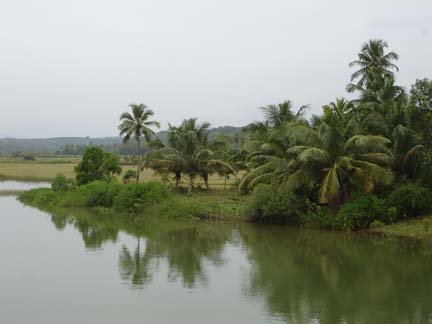
Holegadde near Honavar,Uttara Kannada dist, Karnataka

Copy? Right - but kindly remember to acknowledge!

Creative Commons License
This work is licensed under a Creative Commons Attribution 3.0 License.

" tulu-research.blogspot." ತುಳು ರಿಸರ್ಚ್. ಬ್ಲಾಗ್‌ಸ್ಪಾಟ್‌. ಇನ್

" tulu-research.blogspot."  ತುಳು  ರಿಸರ್ಚ್.  ಬ್ಲಾಗ್‌ಸ್ಪಾಟ್‌. ಇನ್
Have a nice day !