Showing posts with label Munda. Show all posts

Friday, May 3, 2019

417. Baje and allied place names


Many of the toponyms or the place names serve as useful   components   in deciphering strings of history, as we have suggested in some of our previous posts herein.
 There are a number of   villages (and hamlets) in Tulunadu that bear the place name “Baja1” or “Baje1” or a prefix component of similar word. The ancient   word “baje” in general represents a dry barren or hard topped area. Related   modern Kannada words, such as “banje” (=infertile) and “banjaru” (=dry, waste land) connote the significant meaning of the term “baje”.
Further, the “baje” word in the commonly found: an oil-fried coastal vegetarian dish, ”golibaje” (popularly designated as “Mangaluru bajji” in  Bengaluru)  also declares the dry, fried status of the delicious  eatable.  (In Kannada, it has become "bajji"). Besides, there is also a “baje” a dried medicinal root material used as a household  Ayurvedic medicine in  villages of Tulunadu. Similarly, "bajant" (or bejant) in Tulu is dried cow dung cake.
The scope of the meaning of the word “baj-” can be further elucidated with the help of “bajra” the ancient word form of “vajra” (bajra>vajra = diamond), wherein baj+ra stands for hardest known mineral or gem stone.
That the term “bajra”   means hard and strong is further vindicated by the name “Bajrang-bali”,  referred to Hanuman, the faithful servant of Rāma. The term Bajra+ang+bali means a powerful  person (“bali”) having body (“ang”) like “bajra”(diamond).


There are several usages in Tulu having  ”baje” as a word component: For example:
Bajant; bejant= dry cow dung cakes
Baji; bajee= empty;waste;
Bajee banji=empty stomach; bajee mande=bald head.
Bajikre; bejikre= dry leaves.
Bajavu=dry leaves
Bajil= dry rice flakes ; beaten rice; avalakki

Bajel= (water for) quenching thirst


Baja1 or Baje1 and allied Villages
Let us study the following place names, carrying   the prefix of   ‘Baja’ or ‘Baje’:

Baje: the location of water supply dam on the banks of River Swarna, near the Udupi town.
Bajape:  the village associated with Mangaluru international airport.
Bajāl: a village located on the bank of River Netrāvathi in the outskirts of Mangaluru city.
Bajagoli:  a rocky village on the Karkal -Kudremukh road.
Bajathur: a village near Uppinangadi, close to Mangaluru-Bengaluru  National Highway.


Bajre: a village near Venur,  Beltangadi Taluk, Dakshina Kannada district.

Baje
Now, the village of Baje, near Udupi is located on the bank of River Swarna. A dam has been built at Baje village to store water for the Udupi city agglomerate. Thus, by present day standards, you cannot now classify this village as a dry, hard, unfertile or barren region.  But when the village name was coined by our ancestors probably some two thousand (or more) years ago, the village was quite dry, barren by standards of that time. To complement this, the geological data suggests us that the coastal rivers have migrated and changed their position due to neo- tectonic movements during the recent geological past.
Bajape
In this village name Bajape, the prefix baja- has a suffix of -pe  (baja+pe) attached to it. The suffix variants such pa, pu or pe represent ancient spatial units such as habitation or village.examples: Mudipu, Odipu>Udipi, Kudupu, Aryapu, Didupe, Balapa, Kadapa etc).
 
  The Bajape is a laterite plateau located to the north of Mangaluru city and part of the village has been area adopted for the Mangaluru international airport.
By modern standards the Bajape village now is not exclusively a dry or barren area, being endowed with adequate ground water resources that are being tapped by deep open wells and bore-wells. However, when the village was named some two millennia ago it was considered a dry region being away from rivers and lakes.
Bajāl
The Bajāl (baja+āl) village is rather dry area with hard granite outcrops, even though currently it is located on the northern bank of Netrāvati river. The suffix –al   denotes that the place is located close to river or lake.
Bajagoli
Bajagoli is an interesting place name because some people may try to analyse the word as baja+goli, wherein the suffix term  ‘goli’ usually may be confused with Goli tree (Ficus benghalensis, the Ala tree).
The correct analysis of the place name should be baja+ga+oli, wherein ga is a short suffix for village (as commonly found in Gadaga, Binaga etc place names) and oli also means village. Therefore, goli (ga+oli) simply means village and not the banyan tree.
Bajathur
The village name can be analysed as baja+ta+ur, where ta means of or related to and ur (oor) means the village. Thus the original meaning of the word happens to be the village of barrenness.


Bajre

The Bajre village can be accessed on the Siddakatte  to Venoor road in Beltangadi Taluk. In the place name Bajre (baj+re), re (ar,ara, ra,re, ri) is a spatial suffix suggestive of open field or ground (as also found in numerous place names such as Bolar, Kombar, Kadire, Ujire, Hebri, Naguri, etc).
Baja: a word of Prakrit/Munda origin
Since, I chose some examples from traditional Tulunadu for the Baja/Baje village names in this  post, do you get a feeling that this is an exclusive Tulu word? No,  it is a borrowed word in Tulu!
If you check up the list of Baj/Baja/Baje/Baji - prefixed village names in the database of Census of India 2011, you will find that there are not less than 750 number of villages distributed mostly all over India. (And this does not include the list of sub-village/ hamlet names). Most of these “Baj” and “Baj+ “ village names are found in the States of  Uttar Pradesh(157), West Bengal (87), Madhya Pradesh (65), Rajasthan (62),Uttaranchal (58), Bihar (52), Jharkhand (47),Orissa (46),Himachal Pradesh (42), Assam(29), Punjab (28), Maharashtra(22) and so on.


Baj villages in India
 A few of the interesting baj place names distributed in India, along with their interpreted etymological analysis are given here below:
Baj. Variants: Bajda (baj+da), Bajna (baj+na) etc
Baja.  Variants:  Bajha (baj+[h]a); Bajah (baj+a[h]); Bajai(baj+ai); Bajaili(Baj+ai+li) , etc.
Bajad (baja+d). Variants: Bajadi (baja+di), Bajaddi (baja+ddi),Bajadih(baja+dih) etc
Bajai (baj+ai).Variants: Bajaihal (baj+ai+hal) etc.
Bajaj (baj+aj). Variants: Bajaji (baj+aji) etc.
Bajak (baj+ak), Bajakhana (baja+ka+na) etc.
Bajal (baj+al). Variants: Bajali(baj+al+i) etc
Bajan (baj+an).  Variants: Bajania (baja+an+ia); Bajana(baja+na); Bajang (baja+ng); Bajania (baja+n+ia) etc
Bajar (baj+ar). Variants: Bajarda(baj+ar+da), Bajardih(baj+ar+dih), Bajari (baj+ari) etc
Bajata (baja+ta)
Bajau (baj+au)
Bajar (baj+ar). Variants: Bajara,(baj+ara); Bajari (baj+ar+i); Bajahar(baja+[h]ar); etc
Bajarda (baj+ar+da)
Baje.  Variants: Bajel( baje+al)
Baji. Variants: Bajida(baji+da), Bajidapur (baji+da+pur), Bajira(baji+ra), Bajiya(baji+ya) etc.
Bajor (baj+or). Variants: Bajora(baj+ora)
Bajol (Baj+ol); variants; Bajoli(baj+oli);
Bajra (baj+ra); variants: Bajre(baj+re),Bajrol (baj+r+ol), Bajrakot(baj+ra+kot), etc.
Bajwa (baj+wa) ; variants: Bajwad (baj+wa+d);Bajwala (baj+wa+ala), Bajwar(baj+wa+ar); Bajwas (baj+wa+as) etc

Bajyoli (baj+y+oli), Bajyora (baj+y+ora);Bajyura (baj+y+ura) etc.
Inferences
The distribution of these Baje place names and their antiquity suggests that the origin of this ancient word is Prakrit or Munda languages of India. King Ashokas epitaphs were inscribed in Prakrit language (ca 300 BCE). It has been found that until three centuries of the CE, Prakrit was the common administrative language in Deccan, including ancient Karnataka and Tulunadu. It appears that during this period Kannada and Tulu imbibed words from Prakrit (and Munda) languages.


Homonyms of   the word ‘baje’
Additionally, the word “baje” also has other homonyms in Indian languages, with following meanings:
(1) baje2 (Hindi, Punjabi) = hour
(2) bhaja[+n]3= devotional sound, prayer or music.

Baja caves

Note that there are Baja (Bhaja) caves with carvings connected with Buddhist historical prayer halls located at Maval , near Lonavala, in Maharashtra.


Phonetic evolution: pa>ba>va
We have noted in passing above that ba>va phonetic evolution has taken place along the timeline. Similarly indications suggest that an apparently older variation of ba was pa. Among other similar relevant places, we also find the place name Pājaka , near Udupi, being the birthplace of Madhvacharya.
Therefore the overall phonetic evolution in Indian subcontinent, at least, in these consonants  along the historical timeline  appears to be: pa>ba>va. Apart from the present example under discussion, another example that comes to mind immediately is : panga>banga>vanga.

Since the ba->va- word transitions apparently are associated with renaissance of Sanskrit probably corresponding to the period of ca. 100 BCE-500 CE, it is tempting to suggest that ba- words (and pa>ba words ) possibly dominated along with Prakrit languages during 1000 to 100 BCE. The pa-words could have been the regional variants of ba words or  probably were associated with an older period of time-span. This is a rough linguistic model amenable for further refinement with additional data inputs. (Reader comments and suggestions welcome)
Phonetic transition: pa>ha

While Kannada language evolved from old (“hale”)Kannada to new (“hosa”)Kannada words beginning with pa- were transformed into ha- words.(For example: palasu>halasu (jack fruit)). Similar pa>ha changes were applied to place names also, like Pejamādi>Hejamādi; Perur> Herur; Pangalūru > Hangalūru etc.. The p>h transitions are also apparent in some European languages. However, the pa>ha transitions are not evident in Tulu language. More detailed relevant studies are required into these aspects.
R
-Ravindra Mundkur  with Hosabettu Vishwanatha.

Saturday, July 12, 2014

341. Pagoda: an early Indian word

A Pagoda represents a multi-storied, turret like or pyramidal tower like structure mostly of Buddhist or Hindu origin. In China, Japan and South East Asia, the pagodas represent Buddhist temples.  It has been proposed that the word pagoda travelled to China and Japan along with tenets of Buddhism that spread to those countries during the early centuries of the Common Era. The word is   equivalent to the word ‘temple’. In many parts of ancient India including Tulunadu the ‘Pagoda’ was the name of the currency in use in early days. The word is said to be of Indian origin even though several obscure explanations have been proposed in this regard.

Butkada
One proposal suggests that it is derived from the Persian word Butkada which means the temple of idols. There has been a suggestion in the Wiki pages that the Portuguese word Pagode is derved from the Persian word Butkada. Whether the Portuguese word Pagode was derived from the Persian word Butkada or Portuguese picked up the word pagode directly from pagoda from their Indian connections is not clear.However the Persian word in the context, Butkada is quite interesting.
Early pagodas also known as Chaityas (Chitte in Tulunadu) were constructed to preserve the mortal remains of Buddha and his disciples. The turret like (or sometimes globular) structures preserving the remains of the dead were also known as Stoopa or doopa (derived into: doope, as known commonly in Tulunadu).
The prefix būt in the Persian word Butkada reminds us of bootha (or Buta), the Spirit of the dead. Similarly, the suffix kada reminds of the Kata the early Koraga word for representation of God or divine stone. The Persian word Butkada is explained as Temple of idols. The equation of the word būt or bhoot (the spirit of the dead) with idols envisages the ancient cults of worshipping the dead in the form of idols in ancient Persia also.
Besides relating 'Kada' to 'Kata' (natural object, say a stone, tree, or a place of pyre, for identifying the Spirit of the dead for worship), it seems that 'kada' could have been a corrupted form of ''kala' (=an open field or plot). The term kala was also used by Arab traders after seeing a lot small shrines or temples along the Western coast, which is then picked up by Portuguese and afterwards by other European traders. 'Kala' also means a small shrine, akin to  'Maada or Kaimaada' for the dead.  'Kaliyata' means an annual celebration for worshipping that Divine Spirit

Origin of the word: Pagoda
There has been a suggestion that the word is influenced by the Prakrit word Bhagodi which means divinity or divine structure.
An ancient Munda word Phagu has remained till today on account of the popular Phagu festival commonly associated with Munda tribes. The meaning of the word phagu is not clear even though traditionally it was also the name of the first month in the calendar years among ancient Indian communities as we find from the vestiges of ancient cults preserved in Tulunadu (Post 338). 
There are a large number of place names in Bihar, Chattisgarh ,Jammu & Kashmir, Jharkhand, Orissa, Punjab, Rajastan, Uttar Pradesh, Uttar Khand and West Bengal that begin with the prefix of phag which in turn suggests the distribution and survival of the ancient term in larger part of  India. Similarly we can find numerous place names beginning with the prefix of bhag also.
It appears that the Munda word phag or phagu is an ancient variant of the latter Prakrit/ Sanskrit word bhag.
The pa >ba (or pha >bha) consonant transitions along the history are quite common in Indian languages. Thus the ancient Indian word phag or phagu must have become bhag with along course of passage of time. The word bhag in Indian culture represents divinity or creation or a product of creation. On one hand words like Bhagvan (=God), Bhagvati (=Goddess) have been derived from the root bhag. On the other hand, bhag also meant female organ responsible for creation of life (or organ of reproduction, to be precise). The River Ganga is also known as Bhagirati or the divine flow. Bhagamandala in Kodagu is the divine place of origin of River Kaveri. Bhagwadi hamlet in Barkur, is famous for  Mahisamardini Temple. Thus, the term 'bhag' also means embodiment of 'divine qualities' (eg. Bhagawanta, Bhagamalini, Bhagavati, etc.). Bhagambila is an ancient hamlet near Kotekar in Mangalore Taluk.

The Prakrit word bhagoda, being bhag+oda, derived from Munda language roots, thus represents a divine structure, wherein oda (ora) means a house. Further, bhagodi being derived from bhagoda means divine in Prakrit language.


Oda
The suffix Oda at present generally means a boat in Tulu, Tamil Telugu and other related languages. However, it seems the word had other shades of meanings earlier in the history, such as a structure, a construction, an idol or a coin.

Pagoda: shades of meaning
Hobson Jobson Dictionary attributes a set of three meanings for the word pagoda: (a) a temple (b) an idol and (c) a coin. Since the three meanings are interlinked, it seems that the term pagoda during the early history originally meant (a) a divine structure/construction (b) a divine sculpture or idol and (c) a divine/gold coin bearing the image of a God or Goddess. The gold (sometimes silver) coins carrying the image of then popular deities such as Varaha (Panjurli in Tulunadu), or double fishes (Pandya and Alupa emblem which also turned out to be the insignia of Fish incarnation (Matsyavatar) of Lord Vishnu)

Thus, the term pagoda appears to be an ancient Indian term (of Munda or pre Munda origin) and meant a divine structure or representation or entity.. Since Spirit worship was the order of the day in those times the pagoda represented a spirit shrine or structure intended and designed to preserve mortal remains of the dead.The term pagoda must have been in wide usage in India during the early centuries of the Common Era when tenets of Buddhism were spread to the China and Japan. 

Saturday, May 24, 2014

338. Tulu calendar begins with Pagu month


Even though now in routine most us follow the Western or Gregorian calendar that consist of twelve months commencing with January and ending with December, Tulu people traditionally had have a specific calendar which consist of twelve months in the serial order such as Paggu, Besha, Kārtel, Āti, Sona, Nirnāla, Bontyel, Jārde, Perārde,Puyintel, Māyi and Suggi. It is interesting to note that the first Tulu month Paggu literally corresponds with the last month Phalguna in the General Indian Calendar. What is the significance of Paggu and why it was chosen as the first month would make an interesting revelation.
Nowadays these twelve months are equated with twelve months of the Standardized Indian calendar, in the order of Chaitra, Vaishaka, Jeshta, Ashada, Shravana, Bhadrapada, Ashvina, Kartika, Agrahayana, Pausha, Magha and Phalguna.

Orbit of Moon around Earth
The moon orbits around the Earth in a period of 27.32 days each or roughly one month. The   practice of dividing the calendar year into twelve months (the   sexagesimal  system), was essentially based on the lunar cycles that lasted about 28 days each, is as old as   our human civilization. The concept of lunar calendar, with each month beginning   on a new moon day is said to have been conceived during the ancient Sumerian civilization. Subsequently the concept spread to various loci of civilizations.

Orbit of Earth around Sun
The Earth rotates around its own axis in a day and besides it also orbits around the Earth in an elliptical orbit path in 365.24 days or one year.However, generally it appears that Sun is moving around the Earth as people earlier erroneously believed. The axis of Earths rotation is tilted 23.5° to the plane of its orbit around the Sun. The tilted axis of the Earth causes different seasons as Earth proximity to Sun varies along the elliptical path, with a part of the Earth exposed to Sun and the opposite part being hidden from the Sun. During the obit of Earth around the Sun along an elliptical plane, it looks as if Sun is passing through various constellations during the course of a year. Our ancestors have identified 12 such constellations (groups of stars) that appear to share 1/12 part each of the elliptical plane. These 30° parts correspond with the twelve Zodiac constellations such as Aries (Mesha), Taurus (Vrishabha), Gemini (Mithuna), Cancer ( Karkataka), Leo (Simha), Virgo (Kanya), Libra (Tula), Scorpio (Vrischika), Sagittarius (Dhanu), Capricorn (Makara), Aquarius (Kumbha) and Pisces (Mina).

Equinoxes
Two days in year are characterized by equal duration of day and nights. These are called vernal (spring) and autumnal (fall) equinoxes. Traditionally, the astrologers considered the day of Vernal or Spring equinox as the beginning of a new year which corresponded to Sun (apparently) transiting through the constellation Aries or the Mesha.
It has been discovered that the date of equinoxes (or the point of equinox) shifts anticlockwise by 30° every 2150 years.Thus about 6000 years ago Sun was transiting in Aquarius; about 4000 years ago (ie ca. 2000 BC) Sun was passing through Aries (Mesha) and 2000 years ago ie, during initial period of the Common Era, the Sun was “passing through” the zodiac constellation of Pisces (Mina).

Annual Calendars

During the history, there was also alternate convention of dividing years into ten months. For example, in the old Roman calendar the year was divided into ten months and the calendar started from March as also indicated by names of months like September (septa means 7th month), October (Octo, for 8th   month) November (novem, for 9th   month) and December (Decem, for 10th month) months.
Julius Caesar introduced his calendar (Julian calendar) in 45 B.C.E. wherein each year commenced on January 1st. The present Western calendar known as Gregorian calendar was introduced by Pope Gregory XIII (1502 - 1585).

Indian Calendar
The Indian astrological calendar with twelve months (like the ancient Sumerian calendar) evolved probably during the Vedic period ca 1700-1500 BC. In this calendar lunar months were to correspond with solar months. Thus the month of Chaitra corresponded with zodiac constellation of Mesha (Aries). During the Vedic period the Sun was apparently transiting through the constellation of Aries during the Vernal equinox.
The twelve Solar Months in Indian calendars:
Mesha, Vrishabha, Mithuna, Karka, Simha, Kanya, Tula, Vrushchika,Dhanu, Makara,Kumbha, and Meena.
The lunisolar calendar combines lunar and solar features and adopts lunar calendar such that it corresponds to solar calendar. The First day in Mesha (Meshadi) is considered as beginning of Chaitra.
Thus the Indian system of calendar appears to have been improvised by Vikramaditya who started the Vikram Shaka during early years of Common Era. Now the Indian calendars consist of tweleve lunar months such as:

1. Chaitra (30 / 31 Days) -Begins March 22 / 21
2. Vaisakha (31 Days) -Begins April 21
3. Jyaistha (31 Days) -Begins May 22
4. Asadha (31 Days) -Begins June 22
5. Shravana (31 Days) -Begins July 23
6. Bhadra (31 Days) -Begins August 23
7. Asvina (30 Days) -Begins September 23
8. Kartika (30 Days) -Begins October 23
9. Agrahayana (30 Days) -Begins November 22
10. Pausa (30 Days) -Begins December 22
11. Magha (30 Days) -Begins January 21
12. Phalguna (30 Days) -Begins February 20

In most parts of the India this calendar is being used probably since past two millennia. Tamils use Tamil equivalent names for the months like Chittirai, Vaikaci, Ani, Adi etc for the twelve months. Malayalees have adopted the equivalent zodiac /rashi month names  that begin with Chingam (Leo), Kanni (Virgo) Tulam (Libra) etc. Interestingly, the Bengal and Nepali calendars the year begins with the month of Baishakh (=Vaisakha) and ends with Chaitro (Chaitra). Gujarati calendar starts with the month Kārtika.

Paggu   month: Tulu.
The Tulu calendar year characteristically starts with Paggu month, unlike rest of the known calendars of India.The Tulu calendar also contains unusual month names such as Nirnal, Bontyel, Jārde, Perarde and Puyinthel. The names are unusual because apparently nobody knows the meanings or origin of these strange sounding words.

Tulu months (SW India)
Indian months
(General)
Paggu
Chaitra 
Besa
 Vaisakha 
Kaartel
 Jyaistha 
Aati
Asadha 
       Sona
 Shravana 
Nirnaala
 Bhadra 
Bontyolu
 Asvina 
Jaarde
 Kartika 
Peraarde
Agrahayana 
Ponny/Puyinthel
 Pausa 
Maayi
 Magha 
Suggi
 Phalguna 

The Tulu Nighantu just nmentions names as name of Tulu months without explaining the source origin or meaning of thse words. In general it seems Tulu calendar has possibly borrowed these strange sounding words for names of the months from lingual substrata that prevailed in the land before the domination of Tulu language and culture.
Of these words, the name of the first month Paggu provides us some obscure clues regarding its origin and significance.

Paggu festival

Paggu (or Phagu or Phagun) is an annual festival celebrated by Austro-Asiatic Munda tribes in commemoration of victory of Rama and Laxmana over the villainous Ravana. Communities of Munda tribes of Chotanagpur-Jharkhand areas still celebrate the Phagu festival. Whether the epic Ramayana compiled by Valmiki, a hunter turned poet, was based on a realistic event that occurred during bronze era or a folk tale that was prevalent among ancient Indian tribes, the Munda tribes were definitely aware of the theme and enjoyed celebrating the festival of victory during a specific day in the year. In the Karavali region of south western India Mundala tribes presently constitute a small insignificant component in the society, the available evidences suggest that the Munda tribes were a dominant community with distinct cultural inclinations that prevailed before the arrival, ascent and domination of Tulu speaking people.
Even though precise information not available on the calendar system among the ancient Munda people, it is evident that the Tulu people borrowed the name of the festive month of Paggu from the Munda people.
Similarly, it is also possible that the inscrutable words like Nirnal, Bontyel, Jārde, Perarde and Puyintel were borrowed from one of the substrata languages that prevailed in the terrain.

Inferences
1. In the Tulu calendar the first month is known as “Paggu” (which is also known as Phagu, Paghun, Pankuni,   Phalguna in other lingual areas.). The Tulu people have the word Paggu preserved unknowingly in their language, even though now they have forgotten the meaning and heritage of the word.

Paggu is the name of a popular festival of the Munda tribes, who ceremoniously celebrate the victory of Lord Rama and Laxmana over the demonic Ravana. Munda tribes living in other parts of India (like Chotanagapur, Jharkhand area) still celebrate the Paggu festival. The Holi festival celebrated all over India appears to be a modified form of the ancient Paggu festival. The tradition of celebration of the Paggu festival, suggests that the original Story of Ramayana was familiar to tribes of India like the Mundas since historic days.

2. In Tulunadu, vestiges of ancient Munda culture have been preserved in the form of place names, fossil words and cults. Possibly the Paggu festival attributed to Munda tribes was being celebrated in Tulunadu in ancient days during the Paggu month, even though such a festival is rather unknown at present in Tulunadu.

3. The term Paggu, (Paghu or Paghun) has eventually become Phalgun in Sanskrit literature and has been adopted as the twelfth month in the general Indian calendar.

4. The first month Chaitra was designated based on position of intersection of Earth- Sun axis towards constellation Aries on the day of Vernal equinox about 4000 years ago.  

5. However, about 2000 years ago during the initial period of Common Era, at the time of the Vernal equinox, the notional intersection of Sun- Earth alignment corresponded with the Zodiac constellation of Pisces. This period corresponds with the lunar month of Phalguna.

6.  Who introduced the Tulu Calendar in Tulunadu? During the early period of Common Era (ca. 2-6 Centuries CE), Alupa kings ruled over Tulunadu. However, the status of astronomic studies during Alupa period of reign is not known as basically Alupas were engaged in trade.
On the other hand, the Kadamba kings Like Mayura Sharma / Varma were deeply interested in education, literature and probably astronomy. Mayura went to Kanchi to acquire higher education; even though he was denied entry there, it shows his keen interest in education distinctly. After establishing a new Kingdom at Banvasi (Uttara Kannada) he extended his suzerainty over Karavali /Tulunadu as well. He is also credited with bringing Brahmins from Ahichatra to manage and maintain Temples in Tulunadu and Malnad (Banvasi). It is possible that Kadamba Mayura Varma ca 4-5 Century CE, consulted experts in astrology and revised the calendar for the Karavali and Malnad region   over which he ruled.
The Kadamba Kings are considered by some people as of Munda origin. Kadamba Kings are known to have adopted the Kadamba tree as their royal insignia. Traditionally, the Kadamba (Kaim) tree is of religious significance to Munda tribes. Besides, the Paggu was an important holy festival traditionally for the people of Munda origin.
Thus, the words of unknown meanings in the Tulu Calendar such as Paggu, Bontyel, Jarde, Perarde, Puyintel etc could have been the heritage Munda terms designated  for different seasons and those prevailed during the reign of  the Kadamba Kings  .

7. Thus, it appears that the Kadamba Kings revised and updated the then prevalent calendar to correspond the corrected alignment of the zodiac constellation of Pisces with Sun on Vernal equinox as was visible during their period. The solar month of Pisces corresponded with the lunar month of Paggu or Phalguna. Hence, the Kadamba subjects including the Tulu people appears to have adopted the Paggu month as beginning of the year during the regime of Kadamba Kings.

8. It seems with passage of time the original significance of the initial Tulu month Paggu was forgotten and eventually has been equated inadvertently with the first month in General Indian calendar, namely the Chaitra.

Thus, the term Paggu in the traditional Tulu calendar has interesting hidden strings of history preserved for the benefit of  retrospection by the posterity.

¯


Blog Archive

Books for Reference

  • A Comparative Study of Tulu Dialects By Dr. Padmanabha Kekunnaya. Govinda Pai Reserach Centre, UDupi. 1994
  • Koti Chennaya: Janapadiya Adhyayana. By Dr. Vamana Nandavar. Hemanshu Prakashana ,Mangalore.2001.
  • Male kudiyaru. Dr B. A.Viveka Rai and D.Yadupathi Gowda, Mangalore University,1996.
  • Mogaveera Samskriti By Venkataraja Punimchattaya. Karnataka Sahitya Academy.1993.
  • Mugeraru:Jananga Janapada Adhyayana. By Dr Abhaya Kumar Kaukradi.Kannada & Culture Directorate,Bangalore & Karnataka Tulu Academy, Mangalore,1997.
  • Puttubalakeya Pad-danagalu. Ed: Dr B.A.Viveka Rai,Yadupati Gowda and Rajashri, Sri Dharmasthala Manjunatheswara Tulu Peeta. Mangalore University.2004
  • Se'erige. Ed:Dr K.Chinnapa Gowda.Madipu Prakashana,Mangalagangotri,2000.
  • Studies in Tuluva History and Culture.by Dr P Gururaja Bhat (1975).Milagres College,Kallinapur,Udupi.
  • Taulava Sanskriti by Dr.B.A.Viveka Rai, Sahyadri Prakashana,Mysore 1977
  • TuLu naaDu-nuDi By Dr.PalthaDi Ramakrishna Achar, Puttur.
  • TuLu NighanTu. (Editor in Chief: Dr U.P.Upadhyaya, Govinda Pai Research Centre,Udupi. Six volumes. 1988 to 1997
  • Tulu Patero-A Philology & Grammar of Tulu Language by Budhananda Shivalli.2004.Mandira Prakashana Mangalore. p.317. (The book is in Tulu Language using Kannada script)
  • TuLunadina ShasanagaLa Sanskritika Adhyayana. By Shaila T. Verma (2002) Jnanodaya Prakashana,Bangalore, p.304.(Kannada)
  • Tuluvala Baliyendre. Compiled by N.A.Sheenappa Hegde,Polali,Sri Devi Prakashana,Parkala,1929/1999

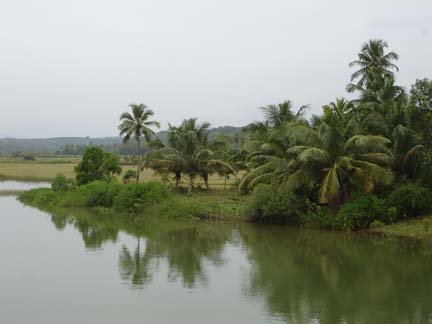
A Coastal estuary

A Coastal estuary
Holegadde near Honavar,Uttara Kannada dist, Karnataka

Copy? Right - but kindly remember to acknowledge!

Creative Commons License
This work is licensed under a Creative Commons Attribution 3.0 License.

" tulu-research.blogspot." ತುಳು ರಿಸರ್ಚ್. ಬ್ಲಾಗ್‌ಸ್ಪಾಟ್‌. ಇನ್

" tulu-research.blogspot."  ತುಳು  ರಿಸರ್ಚ್.  ಬ್ಲಾಗ್‌ಸ್ಪಾಟ್‌. ಇನ್
Have a nice day !