Showing posts with label early Kannada. Show all posts

Monday, March 3, 2008

100. Kadamba Dynasty


An image of Halmidi inscription with Buddhist wheel at the top.

The period of Mayura Sharma (later he was known as King Mayura Varma), who established possibly the first Kannada dynasty and his successors (ca.345-525 CE) at Banavasi (near Sirsi in the present Uttara Kannada district) is a significant milestone for both Kannada and Tulu history. There is a viewpoint that he came from northern India and settled in Banavasi area.

Kadamba tree
The traditional accounts describe him as a Brahmin turned Kshatriya. However there are claims that he hailed from an ancient tribe known as ‘Kadambu’ tribe, who worshipped Kadamba tree. The early Munda civilization that was prevalent in peninsular India since ca.3000BC had a cult of worshipping Kadamba trees. The Kadamba trees are worshipped as apart of festivals even today by the Munda tribes presently living in Chotanagapur areas.
It is possible that the selected from brighter students from the population were trained in Vedic studies and made priests (Brahmins).It is possible that Mayura thought high of an educated priestly career but could not accomplish it because of the humiliation he suffered.

Mayura Sharma/Varma
His background is quite interesting. He was said to be a student and went to Kanchi, (now a part of Tamilnadu), a major educational centre of that time for pursuing Vedic studies. On an occasion, he was slighted and insulted by Pallava guard at Kanchi. The young Mayura could not bear the humiliation and vowed to avenge for it. He returned to his place, organized the people and built an army. He fought against the ruling Pallava Kings and retrieved the Kannada areas around Banavasi and other areas. The Alupas of Tulunadu were chieftains under the Kadamba Kings.
Obviously the Mayura Varma was influenced by the Tamil language and literary activities. He was impressed by the use of Tamil script for documenting literary works and temple culture of the Tamils. The Tamils had a flourishing temple culture at that time.

Introduction of Script for Kannada
Therefore when he established a new kingdom at Banavasi, he introduced a script for the archaic form of Kannada (now known as old Kannada) prevalent at that time. The script was based on the Brahmi script but was deeply influenced by the Tamil script of that time.

Halmidi inscription
The Kadamba period is a datable event since the Halmidi inscription (ca.450CE) belongs to the reign of Kakusthavarma. Possibly, he can be credited for laying the foundation for evolving and popularizing the initial form of Kannada script. The script used in Halmidi (near Belur, Hassan district) used Brahmi characters but was influenced by Tamil script. Interestingly, a wheel has been sculpted at the top of the Halmidi inscription. The wheel is a symbolic of existence of Buddhism and the King who installed the Halmidi inscription (Kakustha varma?) may have been a Buddhist in faith. However, some have interpreted the wheel as ‘Sudarshan Chakra’ of Lord Vishnu.It seems that the Kadamba kings favoured all religious cults including Jainism and Buddhism.

Introduction of Temples and Brahmins
Mayura Varma, influenced by the Tamil temple culture, initiated the temple culture in Karnataka and Tulunadu. He built several new temples and organized people to run the temples in an orderly manner. This necessitated the immigration of priests (Brahmins) to regularly carry out the ceremonial pooja in the temples. He is said to have brought Brahmins (those trained in Vedic studies) from Ahicchatra and granted 144 villages (agrahara) for Brahmins to settle in the area. The exact location of Ahicchatra has been disputed with opinions ranging from banks of Godavari River to parts of Uttar Pradesh.
Until then the spirit cult was the dominant form of religious faith in both Karnataka and Tulunadu. The Spirit cult was largely centered on families and landlords, whereas the temple cult became a community affair that involved the people of the whole village or cluster of villages. New communities like Sapaligas were introduced to play musical notes in the Karavali temples. Devadiga were introduced to look after sundry works in the temple premises.

Parashurama cult
The cult of Parashurama was re-introduced during Kadamba period. The story of Mayura Sharma and his conquest of Pallava kings bear similarity to the legend of Parashurama.. Moreover the legend is a part of ‘Sahyadri Kanda’, the Sahyadri being the environs of Banavasi, the Kadamba capital. It was probable that myths of his time considered Mayura Varma to be an incarnation of Parashurama the saviour of sages and priests (Brahmins) from the tyranny of the ruling class (Kshyatriyas).
Consequent upon the introduction of Parashurama cult and the associated myths, the coastal Karavali, Malabar, Konkan people were made to believe that their land was retrieved from the Sea.
®

Friday, November 2, 2007

53. More on Munda influence on Tulu.

The substratum of Munda language and culture that prevailed in the Karavali region has been amalgamated with the overall Tulu culture during passage of some past 2500 or more years of recent history. Yet the present Tulu language and culture has still hidden vestiges of Munda words and culture that can be deciphered. I have compiled some of the Munda words and cultural characteristics from online sources.
The Munda words cited here below are adopted from Munda Kharia lexicon compiled by Patricia J.Donegan and David Stampe (2004) base on field studies in present day Chotanagapur region in North-Central India. Apart from the chance of missing many original ancient words in the cited dictionary, it should be remembered that Munda words also have evolved regional variations like Dravidian or other languages. Some of the actual original, ancient proto-Munda words of south India may have been more nearer to present Tulu and other Dravidian words. And there could be many more words missing in this list that were eventually absorbed by Tulu language.

Tulu words adopted from older Munda language
Ajja ( aja=grandfather), aeri (aer =ridge), ajao (ajo’D =dry up), appa(apa=father), anDu (anDu =testicle), arka(arkhi=liquor), baar(ba), bala (bha=come on), batti (bati=wick), bave (bav=brother-in-law), churi (churi=knife), aena (ena=what,for), anjov (anDia=male), kanile (karil=bamboo shoot), sapura (sakura=thin), saal(sa:l=year), muDi (muDhi=puffed rice), pura (pura=complete), punnime (puni=fullmoon), Samudra (Samudra=sea), purku (purkha=generation), satyo(sat=truth), suru (suru=begin), Taari (ta:R,taaRi=palm), ter(=temple car)<(ter=to prepare, apply)>tayar., theriya( =round, necklace like)( theriya =plate, round necklace), tiga (tiG=to weave (hive?),toppi (Topi=cap), tuj / duj (tuj(=arrow), umma (um=no), ulTa,(ulTa =topsy turvey, upside down), urdu (urid=black gram), tude (tuDa=to float, water)


Munda based Tulunad place names!
Tulunadu has several villages with odd sounding or unintelligible place names whose meanings cannot be ascertained in present Tulu language! Meanings of many of these puzzling names can be solved by tracing their Munda roots.
Sirwa (=red thread), Parkala (=mirror), Parengi (= a variant of Munda tribe/language, meaning unknown presently), Nagori (= a variant of Munda tribe/language, means Naga settlement), Ubar (=two) For two-rivers? Uphe (=three) > Uppinangadi?. Bold words above indicate Munda words.
Some village names of Tulunadu are similar to Telugu words and earlier were considered to have been derived from the latter. For example: Rayi and Manchakal. It has to be verified whether these words came from Telugu or from proto-Munda, that gave words to both Tulu and Telugu.

Munda inspired Tulu month names!
In traditional Tulu calendar, the year start with the month ‘paggu’, beginning someday in January or February. The word ‘paggu’, apparently, does not have any understandable meaning in the current Tulu. ‘Phagu’ is an annual Munda festival celebrated at the beginning of Munda New Year, during Jan-Feb every year! So, some of the unusual or seemingly odd sounding month-names in the Tulu calendar may have been borrowed from the precursor language of Munda!

Munda inspired Tulu festivals
Origin of some of the traditional Tulu (also Malayali and Kodava) festivals may have roots in the ancient Munda culture. The Munda ‘Karam’ festival may have influenced the ‘Koral parba’/’Posatt’, ‘Onam’ and ‘Huttari’ festivals! The Munda word ‘Karam’ also known as ‘kaim’ or ‘kaddam’ refers to Kadamba tree. The Munda Karam festival begins with bringing flowers from the Kadamba tree. (Mitragyne parvifolia).The festival has similarity with ‘Kural’(=‘posatt’) festival of Tulu people that starts with bringing home new ‘Kural’ (fresh ear of paddy grains).
The Kadamba tree was considered auspicious during the earlier historical days. The Kannada dynasty founded (5th Century AD) by Mayura Sharma/Varma was known as Kadamba dynasty. It is said there was a Kadamba tree in front of Mayura Sharma’s residence at Banvasi.

Direction names in Tulu and Kannada?
The roots of two direction indicators in Tulu, Kannada and other Dravidian languages are derived from Munda language. muDu and paDu. Mudu =east .< (mu=come out), paDu (=west) .<(puD=jump, sink?).
The data relating to the origin of other two directional words: ‘baDa’(=north) and ‘tenka’(=south) is not available at present.

Munda words in Kannada
Early Kannada and early Tulu languages during and before Kadamba period were very similar to each other except for local variations and local influence of proto Munda words in Tulu and Kannada areas.
Note that the following Kannada words are of Proto-Munda origin.
Ajja (aja), aeri(aer=ridge), anDu (anDu),Hege (ighay=how?) enu (ena=what?), banda (banDa=castrated), churi (churi), bava (bav), baa (bha=come), baDagi (baDhi=carpenter), appa (apa), bhaga(bhag=share), bati (bati=wick), dhoti (dhoti), iswi (iswi=year), joru (joar, johar=greet), kamba (=pillar), kumbar(=potter), kaRba (karba=plough handle), mudhaliar (mudha=village head), suru(suru=begin), suley(suley=hot), ter (ter=to prepare, apply)>tayar, toppi(Topi=cap), turtu (turte=quick), ele(ula=leaf),Ri,re (re,ri =form of address).

Debatable origin of few Sanskrit words?
Some of the words are currently commonly used in Sanskrit and we generally assume them to be original Sanskrit words. However, there is need to verify whether these could be the words borrowed into Sanskrit from earlier Munda roots. For example:
Puja (=sacrifice), balidaan (=sacrifice), dharama (=supreme spirit), sa:t (=truth, seven). The word ‘Puja’ has previously been suggested to of non-Sanskrit origin. ‘Balidaan’ is a special word. Bali is a common Munda name. It is also the name of a righteous legendary Munda king, who sacrificed all of his territories in favour of a dwarf (Vamana) only to ensure his promise of Gift. It may not be surprising if this word ‘balidaan’ (=gift of Bali) has originated from that legendary/historical event.
The Tulu word ‘parba’ is generally assumed to be derivative of Sanskrit word ‘parva’. Could the Munda parab (=festival) be the original word from which Tulu ‘parba’ and Sanskrit ‘parva’ were evolved?

Friday, October 26, 2007

51.Stage III: Migration from Pirak . 800-500BC

The Pirak civialization phase was reported to have culminated around 800 BC. Tulu language even today has the retained word “pirak” that means ‘ancient’ or ‘aspects connected to remote past’.This can be considered as the fossil memory of Tulu people of their residence at Pirak. In other languages like Kannada the word survived as ‘prak’(=ancient) and Prakrit can be considered as the language of the pirak (prak) area. Prakrit is also considered to be the unrefined form of Sanskrit. Tulu and other south Indian languages have ample Prakrit words in them. Mostly, these were borrowed and assimilated during their residence in Pirak area. At the same time, early Tulu and other early Dravidian language groups lent some words that were absorbed into prakrit and Sanskrit.
During the 800-500 BC period most of the resident groups left Pirak region and entered India proper (as is now) and settled in comfortable areas nearer to water sources like rivers and perennial springs. Possibly, the groups left in different batches, maybe each of some 5 to 10 individual families of able bodied members and found their ways through the new territory before settling in relatively comfortable zones. It is possible that early South Dravidian groups consisting of early Tulu, Tamil, Kannada and Malayalam tribes migrated in different batches during the period.At this stage these early Dravidian languages were similar to each other and were more like regional variations of a single language. Predictably they settled intermittently at several places on the way before reaching their ultimate destinations in select parts of Southern India. The identity of early Kannada and early Malayalam ancestors probably carried different name tags then, since the present identity names ‘Kannada’ and ‘Malayalam’ were coined chronologically later and in situ in the present habitat.

Theological evolution
During the period Upanishads and Puranas were being compiled. The Rigvedic Gods Mitra, Indra,Varuna, Agni and others took back seat in favour of ascendacy of Brahma, Vishnu and Mahesha independantly among three different tribal groups. Brahma atained the status of Almighty Creator. The concept was further extended to include the all-pervasive cosmic force of Brahman. Valmiki, a hunter turned into bard and sage compiled the epic of Ramayana, based on primitive legend of Rama, that originally dated back to the post-LGM period when the sea-levels receded and Srilanka was accesible from Indian mainland on foot.The epic that highlighted the supremacy of the Lord Brahma, was subsequently edited and interpolated by several later authors, with liberal addition of fantasies and exaggerations.During the period, the Mahabharata was also being compiled, as an expanded and blown up version of battle of ten kings described in the Rigveda.
Another group, possibly led by the cattle-herders (Yadavas), upgraded and expanded the ancient legend of Vishnu. Vishnu, worshipped by early pre-Vedic, dark-colored tribes, was a minor god of lesser grade than the lord of Sea, Varuna for the Vedic sages during the compilation of Rigveda. Ten different theologic legends of the region were compiled together under the ten incarnations of Vishnu.(More on Vishnu and ten incarnations, cf. post 34 ).
Similarly, another group advocated the supremacy of Lord Shiva, who was tribal superman who possibly advocated the cult of phallus worship. Thus the phallic worship gradually merged with the Shaiva cult.Several tantric and mystic cults evolved during the period.
Yet there were many who did not subscribed to any of these theological cults.These dissatisfactions led to the development of Jainism and Buddhism. In response these diversions the followers of Brahma, Vishnu and Mahesha joined hands together and formed the concept of Trimurthy.
Similarly the primitive cult of Yoni worship assimilated with parallel Mother Godess worship that eventually evolved into the cult of Shakti or the Durga later in the history.
The Panjurli (Boar or Varaha) cult apparently originated in N Africa and Central Asia. The boar (or swine or Sus scrofa) is native of central Europe, Mediterranean, Atlas mountains, N.Africa and Asia. In Celtic mythology boar was sacred to Godess Arduinna. In Persian (Iran) Sassnid Empire, the boar was respected as a brave and fierce animal; the title of ‘boraz ‘or ‘Goraz’ (=boar) was added to the personal names of the braves. In Belgium, boar is the mascot of one of the infantry divisions of the Belgian army. In Chinese horoscope, boar is one of the twelve months of the zodiac

Early Tulu migration
Tulu tribes carried the Panjurli and Bermer cults of spirit worship from Pirak to Tulunadu as described in earlier posts. The early Tulu tribes were not inspired or influenced by theological evolution of Brahma, Vishnu or Mahesha. They adhered to their cults of spirit and serpent (Naga) worships. Tulu tribes picked up words from the languages existing in the regions they travelled through. Throughout the route from Rajasthan border to Tulunadu, we find numerous settlements named after Naga: Nagur, Nagor, Nagori etc. Similarly along the same route we find relics of ‘Bermer’ (horse mounted deity )worship that were later converted to ‘Brahma’(the creator God) worship especially in north India(example: Pushkar, Rajasthan).

Early Tamil migration
The early Tamils carried the Shiva cult, along with the assimilated primitive phallus worship cult, with them when they migrated and eventually settled in the present Tamilnadu. The early Tamils were inspired by the style of compilation of Vedas and Upanishads were by group of Vedic sages. They adopted the concept and composed the Tamil Sangam literature in early Madhurai kingdom, established near Kanyakumari during ca.300BC .

Blog Archive

Books for Reference

  • A Comparative Study of Tulu Dialects By Dr. Padmanabha Kekunnaya. Govinda Pai Reserach Centre, UDupi. 1994
  • Koti Chennaya: Janapadiya Adhyayana. By Dr. Vamana Nandavar. Hemanshu Prakashana ,Mangalore.2001.
  • Male kudiyaru. Dr B. A.Viveka Rai and D.Yadupathi Gowda, Mangalore University,1996.
  • Mogaveera Samskriti By Venkataraja Punimchattaya. Karnataka Sahitya Academy.1993.
  • Mugeraru:Jananga Janapada Adhyayana. By Dr Abhaya Kumar Kaukradi.Kannada & Culture Directorate,Bangalore & Karnataka Tulu Academy, Mangalore,1997.
  • Puttubalakeya Pad-danagalu. Ed: Dr B.A.Viveka Rai,Yadupati Gowda and Rajashri, Sri Dharmasthala Manjunatheswara Tulu Peeta. Mangalore University.2004
  • Se'erige. Ed:Dr K.Chinnapa Gowda.Madipu Prakashana,Mangalagangotri,2000.
  • Studies in Tuluva History and Culture.by Dr P Gururaja Bhat (1975).Milagres College,Kallinapur,Udupi.
  • Taulava Sanskriti by Dr.B.A.Viveka Rai, Sahyadri Prakashana,Mysore 1977
  • TuLu naaDu-nuDi By Dr.PalthaDi Ramakrishna Achar, Puttur.
  • TuLu NighanTu. (Editor in Chief: Dr U.P.Upadhyaya, Govinda Pai Research Centre,Udupi. Six volumes. 1988 to 1997
  • Tulu Patero-A Philology & Grammar of Tulu Language by Budhananda Shivalli.2004.Mandira Prakashana Mangalore. p.317. (The book is in Tulu Language using Kannada script)
  • TuLunadina ShasanagaLa Sanskritika Adhyayana. By Shaila T. Verma (2002) Jnanodaya Prakashana,Bangalore, p.304.(Kannada)
  • Tuluvala Baliyendre. Compiled by N.A.Sheenappa Hegde,Polali,Sri Devi Prakashana,Parkala,1929/1999

A Coastal estuary

A Coastal estuary
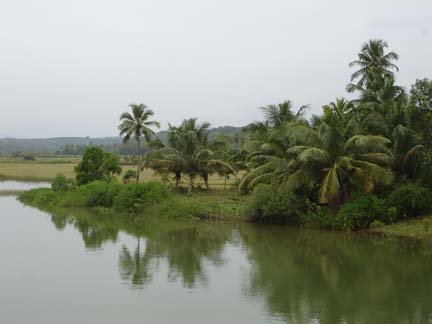
Holegadde near Honavar,Uttara Kannada dist, Karnataka

Copy? Right - but kindly remember to acknowledge!

Creative Commons License
This work is licensed under a Creative Commons Attribution 3.0 License.

" tulu-research.blogspot." ತುಳು ರಿಸರ್ಚ್. ಬ್ಲಾಗ್‌ಸ್ಪಾಟ್‌. ಇನ್

" tulu-research.blogspot."  ತುಳು  ರಿಸರ್ಚ್.  ಬ್ಲಾಗ್‌ಸ್ಪಾಟ್‌. ಇನ್
Have a nice day !